

Enterprise Robotics 2026
TL;DR: Enterprise robotics market reaches $73.64 billion in 2025, projected to hit $185.37 billion by 2030. Industrial robots deliver 10-25% ROI within 3-5 years with median payback of 1.3 years, while service robots show 30-40% cost reductions in logistics. Humanoid deployments accelerate from hundreds in 2025 to projected 50,000-100,000 units in 2026, driven by sub-$20,000 pricing and physical AI breakthroughs. This comprehensive analysis examines deployment economics, capability gaps, and strategic adoption pathways across manufacturing, logistics, healthcare, and emerging sectors.

The enterprise robotics landscape has reached a critical inflection point. Where industrial automation once dominated with rigid, task-specific machines confined behind safety cages, a new paradigm has emerged. Physical AI, collaborative systems, and adaptive service robots are fundamentally reshaping how organizations deploy automation capital.
Global industrial robot installations hit a record $16.5 billion in 2025, according to the International Federation of Robotics. Simultaneously, collaborative robots grew from $1.26 billion to projected $3.38 billion at an 18.9% CAGR, while the broader robotics market expanded to $73.64 billion with forecasts reaching $185.37 billion by 2030. This represents more than incremental growth – it signals a structural transformation in enterprise automation strategies.
The distinction between industrial and service robotics has become strategically critical yet increasingly blurred. Manufacturing executives face decisions between proven industrial systems with 1.3-year payback periods versus flexible collaborative robots that enable human-robot workflows without infrastructure redesign. Meanwhile, logistics operators weigh autonomous mobile robots against emerging humanoid platforms that promise human-compatible versatility at rapidly declining price points.
Understanding the operational realities, economic tradeoffs, and deployment trajectories of these systems has become essential for enterprises allocating capital toward automation in 2025 and beyond. This analysis synthesizes current market data, deployment economics, and technical capability assessments to provide decision-makers with actionable intelligence on enterprise robotics strategies.
Understanding Enterprise Robotics: Core Distinctions and Market Segmentation
Enterprise robotics encompasses three distinct but increasingly interconnected categories, each serving different operational requirements and economic models.
Industrial Robotics: The Automation Foundation
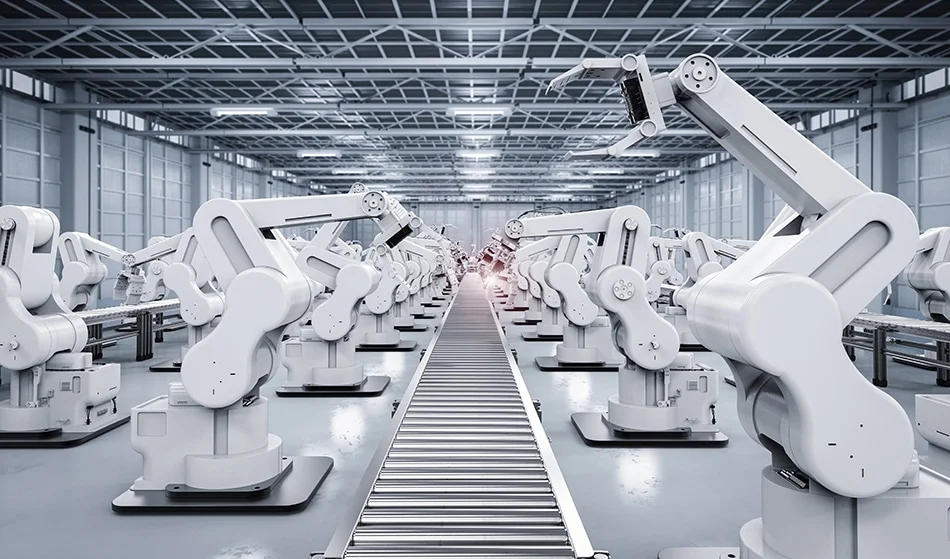
Industrial robots represent the mature segment of enterprise automation, characterized by high-speed, high-precision manipulators designed for structured manufacturing environments. The global industrial robotics market reached $17 billion in 2025, with projections of modest 2% CAGR growth to $19.6 billion by 2030, according to ABI Research.
These systems typically operate in fixed locations, executing repetitive tasks with exceptional consistency. Six-axis articulated robots dominate automotive assembly lines, handling payloads from 5kg to over 100kg with repeatability tolerances of ±0.02mm. SCARA (Selective Compliance Assembly Robot Arm) configurations excel in electronics assembly, while delta robots deliver high-speed pick-and-place operations in packaging applications.
The operational profile of industrial robots reflects their manufacturing heritage. They require structured environments, pre-programmed task sequences, and safety infrastructure that physically separates human workers from robot work cells. This constraint drives both their reliability advantages and their deployment limitations.
Major industrial robot manufacturers include FANUC, ABB, KUKA, Yaskawa, and Mitsubishi Electric, collectively controlling over 60% of global market share. Their products target automotive (31% of installations), electronics (20%), metal fabrication (15%), and plastics/polymers (10%), with deployment concentrated in China, Japan, Germany, South Korea, and the United States.
Collaborative Robots: Bridging Industrial and Service Applications
Collaborative robots, or cobots, emerged in the 2010s to address industrial robotics’ flexibility constraints. The global cobot market grew from $1.26 billion in 2024 to projected $1.42 billion in 2025, with forecasts reaching $3.38 billion by 2030 at an 18.9% CAGR.
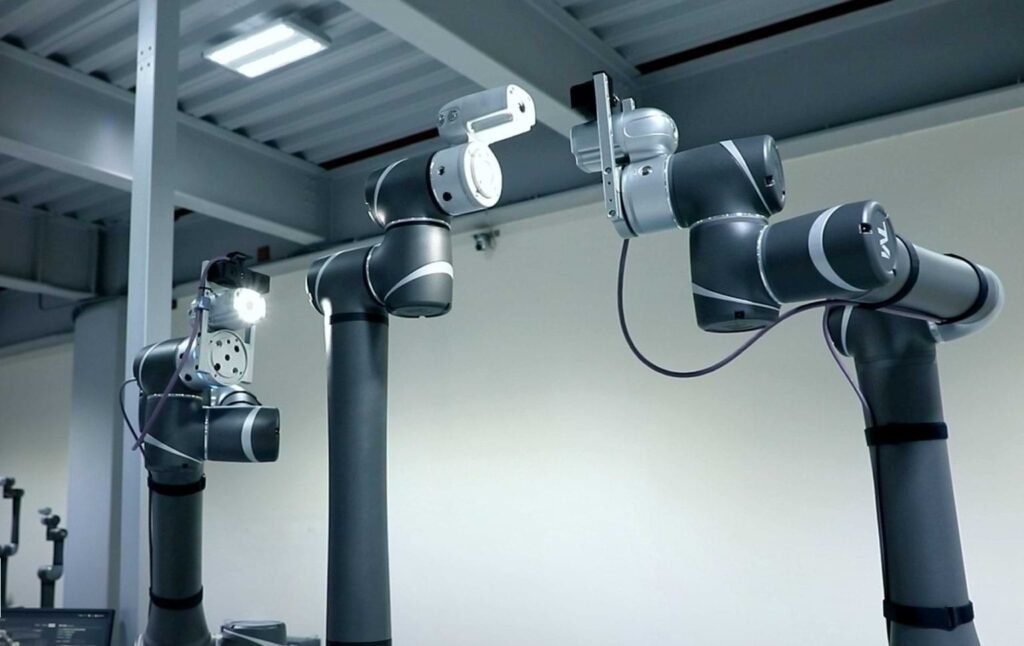
Cobots incorporate force-limiting technology, integrated sensors, and rounded designs that enable safe operation alongside human workers without physical barriers. Typical specifications include payloads up to 20kg, reach distances of 850-1300mm, and programming interfaces designed for non-specialist operators. Universal Robots, FANUC, ABB, and KUKA lead this segment, with newer entrants like Techman Robot and AUBO Robotics gaining market share.
The payload distribution reveals market segmentation: 52% of deployed cobots handle loads up to 5kg (electronics assembly, quality inspection), 33% manage 6-10kg (material handling, light machining), and 15% exceed 10kg (palletizing, heavy-duty applications). This granularity reflects cobots’ role as manufacturing Swiss Army knives rather than specialized tools.
Economic models differ fundamentally from traditional industrial robots. Cobots typically cost $25,000-$150,000 for complete systems including integration, versus $50,000-$500,000 for industrial robot cells. More importantly, deployment timelines compress from months to weeks, and reconfiguration for new tasks requires hours rather than extensive reprogramming.
Service Robotics: Expanding Beyond Manufacturing
Service robots represent the fastest-growing segment, projected to reach $25+ billion by 2025 across professional and consumer applications. Unlike their industrial counterparts, service robots operate in unstructured, human-centric environments including hospitals, hotels, warehouses, and retail spaces.
This category encompasses autonomous mobile robots (AMRs) for material transport, cleaning robots for facility maintenance, delivery robots for last-mile logistics, surgical robots for healthcare procedures, and increasingly, humanoid platforms for general-purpose tasks. Service robot pricing spans $30,000-$200,000+ depending on AI sophistication, with advanced humanoid systems currently ranging $90,000-$150,000 but projected to reach $15,000-$20,000 at volume production.
Key differentiators include:
Autonomy requirements: Service robots must navigate dynamic environments, avoiding humans, obstacles, and other robots in real-time. This demands sophisticated perception systems including LiDAR, depth cameras, and increasingly, vision-language-action models that enable contextual understanding.
Human interaction capabilities: Unlike industrial robots that minimize human proximity, service robots actively engage with people through natural language processing, gesture recognition, and social interaction protocols. Healthcare robots assist patients, hospitality robots communicate with guests, and warehouse humanoids coordinate with human workers on shared tasks.
Operational flexibility: Service robots must handle task variability without reprogramming. A hospital transport robot encounters different floor plans, elevator systems, and human traffic patterns across facilities. This variability drives the integration of generative AI and physical AI technologies that enable adaptive behavior.
Deployment economics: Service robots often deploy through Robot-as-a-Service (RaaS) models that eliminate capital expenditure requirements. Organizations pay monthly subscription fees covering hardware, maintenance, software updates, and performance guarantees. This shifts risk from deployers to vendors while enabling easier pilot programs and scalability adjustments.
Industrial Robotics: Operational Characteristics and Strategic Applications
Industrial robotics has evolved from simple pick-and-place mechanisms into sophisticated cyber-physical systems integrating advanced motion control, machine vision, force sensing, and increasingly, AI-driven adaptive capabilities.
Core Operational Capabilities
Modern industrial robots deliver performance characteristics that define manufacturing competitiveness. Six-axis articulated robots from FANUC’s M-series or ABB’s IRB family achieve positional repeatability of ±0.02mm across 1,800mm+ reach envelopes. This precision enables automotive door fitting, aerospace component assembly, and electronic device manufacturing at tolerances impossible for human operators.
Cycle time performance separates industrial robots from alternatives. Delta robots execute 200+ pick-and-place cycles per minute in food packaging lines. Spot welding robots complete 10-15 weld points per minute with consistent penetration depth and minimal spatter. Surface finishing robots maintain constant feed rates and tool paths across complex geometries, eliminating quality variation from operator fatigue or technique differences.
Payload handling defines application scope. Light-payload robots (5-25kg) dominate electronics and precision assembly. Medium-payload systems (25-100kg) serve automotive body-in-white assembly and material handling. Heavy-payload robots (100kg+) handle engine blocks, large castings, and palletizing operations. The heaviest industrial systems exceed 1,000kg payload capacity for specialized applications like shipbuilding and heavy equipment manufacturing.
Energy efficiency has improved dramatically. According to calculations by Factory Automation Systems, a medium-sized 100kg payload robot consuming 7.35kW at $0.10/kWh costs approximately $0.75 per operating hour. Over a 15-year service life at two-shift operation, total energy costs remain orders of magnitude below equivalent human labor expenses.
Primary Industrial Applications
Automotive Manufacturing: The automotive sector remains the largest consumer of industrial robotics, accounting for 31% of global installations. Body welding cells deploy 20-50 robots per production line, executing 3,000-5,000 spot welds per vehicle at 60 units per hour throughput. Paint robots apply consistent coating thickness while minimizing overspray waste. Assembly robots install engines, transmissions, wheels, and trim components with positioning accuracy that enables zero-defect assembly strategies.
Recent developments include Tesla’s use of large-format casting robots that handle single-piece body components exceeding 100kg, eliminating dozens of traditional stampings and welds. BMW’s partnership with Figure AI tests humanoid robots for automotive subassembly tasks, exploring whether general-purpose platforms can match specialized industrial systems’ efficiency.
Electronics Manufacturing: Electronics assembly requires ultra-high precision at extreme speed. SCARA robots place surface-mount components at rates exceeding 50,000 components per hour with ±0.05mm accuracy. Selective soldering robots apply precise heat profiles to through-hole components without damaging adjacent surface-mount devices. Inspection robots equipped with machine vision systems identify defects at pixel-level resolution, catching flaws invisible to human inspectors.
Semiconductor manufacturing represents the precision frontier. Wafer handling robots operate in cleanroom environments with particle contamination below 1 particle per million. These systems maintain positional accuracy better than ±0.01mm while transferring delicate silicon wafers through multi-step lithography, deposition, and etching processes.
Material Handling and Palletizing: Industrial robots excel at repetitive material movement that causes ergonomic injuries in human workers. Palletizing robots stack boxes, bags, or containers in optimized patterns at rates of 1,000-2,000 cases per hour. Machine tending robots load raw materials into CNC mills, lathes, or injection molding machines, retrieve finished parts, and queue them for secondary operations.
Gartner research indicates that autonomous picking robots eliminate 60% of non-productive walking time in manual picking operations. During peak periods, robotic systems can be scaled up or down more flexibly than hiring and training temporary workers, particularly valuable for seasonal operations like e-commerce fulfillment.
Welding and Surface Finishing: Arc welding robots maintain consistent torch angle, travel speed, and wire feed rates that produce stronger, more consistent welds than manual operations. Laser welding robots deliver precision joining for dissimilar materials including aluminum-to-steel automotive components. Deburring and grinding robots apply controlled force to remove excess material while avoiding damage to finished surfaces.
The economic advantage compounds over time. While initial robot cells cost $100,000-$300,000 including integration and safety systems, operating costs remain predictable. Maintenance intervals for major components extend to thousands of operating hours, and programming can be reused across similar product variants.
Return on Investment Dynamics
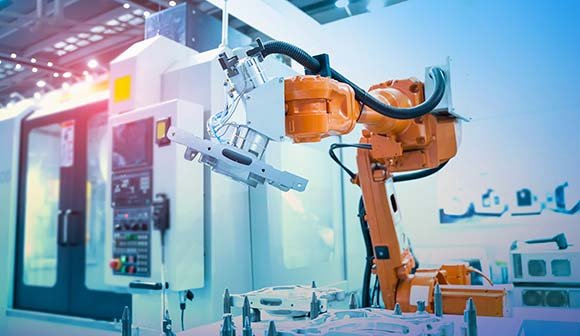
Industrial robot ROI follows well-established financial models validated across thousands of deployments. According to Boston Consulting Group research cited by Automation World, industrial companies typically achieve 10-15% ROI within the first year, rising to 20-25% ROI within 3-5 years. The Robotics Industries Association reports median ROI payback of 1.3 years for US industrial robot installations.
A representative calculation for a three-shift automotive parts manufacturing operation illustrates the economics:
System costs: Three robots at $85,000 each = $255,000 total capital expenditure including integration, tooling, and safety infrastructure.
Current labor costs: Six operators across three shifts at $100,000 fully-loaded compensation = $600,000 annually.
Robotic labor costs: Estimated at 25% of current labor for supervisory oversight and maintenance = $150,000 annually.
Annual labor savings: $600,000 – $150,000 = $450,000.
First-year net benefit: $450,000 – $255,000 = $195,000 positive cash flow.
This simple calculation excludes additional value drivers including productivity increases (robots work consistently at design speed), quality improvements (reduced scrap and rework), safety benefits (elimination of injury claims), and secondary capacity gains (robots enable lights-out operation during previously unstaffed shifts).
The payback calculation improves dramatically in subsequent years. After capital cost recovery in year one, the operation generates $450,000 annual labor savings against minimal operating costs for energy ($15,000-$20,000), maintenance ($10,000-$15,000), and occasional parts replacement. Over a typical seven-year robot replacement cycle, cumulative net benefits exceed $3 million.
Small and medium enterprises (SMEs) have historically faced barriers to industrial robotics adoption due to capital constraints and technical complexity. Collaborative robots and Robot-as-a-Service models address these challenges, with systems deployable for $40,000-$150,000 including integration and typical contract terms eliminating large upfront investments.
Technical Limitations and Deployment Constraints
Despite proven ROI and mature technology, industrial robotics faces persistent constraints that limit adoption scope:
Flexibility limitations: Traditional industrial robots require extensive programming for task changes. Reprogramming a welding robot for a new product variant can consume weeks of engineering time and validation testing. This makes industrial robotics most economical for high-volume, stable production runs rather than high-mix, low-volume manufacturing.
Infrastructure requirements: Industrial robots typically require dedicated floor space, safety fencing or light curtains, material handling systems that deliver components in precise orientations, and integration with plant control systems. Retrofitting existing facilities can be prohibitively expensive compared to building automation into greenfield plants.
Task specificity: Industrial robots excel at repetitive tasks in structured environments but struggle with variation. A robot programmed to pick randomly oriented parts from a bin requires sophisticated machine vision and grasp planning that remains an active research area. Tasks involving compliant materials, complex assembly sequences, or uncertain part tolerances challenge industrial automation.
Labor displacement concerns: Manufacturing automation faces social and political resistance in some markets. Labor unions negotiate automation provisions into collective bargaining agreements. Some jurisdictions impose automation taxes or require enhanced severance packages for displaced workers.
These constraints explain why industrial robotics adoption, while extensive, has not achieved universal penetration even in sectors with strong economic rationale. The next generation of industrial automation increasingly incorporates collaborative capabilities, AI-driven adaptability, and easier programming to address these limitations.
Service Robotics: Capabilities, Applications and Market Trajectories
Service robotics represents the automation frontier, deploying intelligent systems into dynamic, human-centric environments that industrial robots cannot address. The service robotics sector is projected to reach $25+ billion in 2025 revenue, growing faster than industrial robotics due to expanding application scope and improving technology economics.
Autonomous Mobile Robots (AMRs) and Logistics Applications
AMRs have become the most commercially successful service robotics category, transforming warehouse operations, hospital material transport, and manufacturing facility logistics. The global AMR market grew to $30 billion in 2025 with projections of $75 billion by 2030 at 16.5% CAGR, driven by e-commerce fulfillment demands and labor shortage mitigation.
Modern AMRs integrate simultaneous localization and mapping (SLAM) algorithms that enable autonomous navigation without permanent infrastructure. A warehouse deployment requires minimal setup: the AMR drives the facility perimeter to build an environmental map, operators designate pick stations and drop zones, and the robot begins autonomous operation. This contrasts dramatically with Automated Guided Vehicles (AGVs) that require magnetic strips, reflective tape, or wire-guided paths.
Leading AMR platforms from Mobile Industrial Robots (MiR), Fetch Robotics (now Zebra Technologies), and Locus Robotics navigate dynamic warehouse environments, avoiding humans, forklifts, and other robots while optimizing travel paths in real-time. Typical specifications include 200-500kg payload capacity, 1.0-1.5 meters per second travel speed, and 8-16 hour battery life with opportunity charging.
Economic benefits emerge from multiple sources. Ocado’s Porter AMR handles 1,500kg payload capacity for pallet and roll-cage transport, eliminating forklift congestion in cross-dock operations. Belden deployed 37 Brightpick Autopicker mobile manipulators targeting 4,000+ items per hour throughput and 88,000 daily picks in a 300,000 square foot facility, operating on Robotics-as-a-Service models that align vendor incentives with customer performance.
Amazon Robotics operates over 750,000 robots across its fulfillment network, including drive units that transport entire inventory pods to human pickers. This goods-to-person model eliminates worker walking time while enabling higher inventory density through vertical stacking strategies that humans cannot access safely.
Hospital logistics represents another mature AMR application. Aethon TUG robots and similar platforms transport medications, laboratory specimens, meals, and linens throughout medical facilities, operating elevators and navigating corridors autonomously. These systems deliver documented labor savings by redeploying hospital staff from transport tasks to direct patient care while reducing controlled substance diversion risks through secure medication compartments.
Service Robots in Hospitality and Cleaning
Cleaning robots have achieved significant commercial traction in airports, shopping malls, warehouses, and commercial office buildings. These systems autonomously clean large floor areas using rotating brushes, vacuum systems, and scrubbing mechanisms while avoiding obstacles and humans.
Avidbots Neo floor scrubber robots operate in over 500 locations globally, cleaning areas up to 75,000 square feet per battery charge. These systems collect performance data including area covered, cleaning time, and obstacle encounters, enabling facility managers to optimize cleaning schedules and resource allocation.
Hospitality service robots deliver food and beverages in restaurants, transport amenities in hotels, and assist with room service in high-rise buildings. Companies like Keenon Robotics deploy specialized platforms including T-series dining robots for restaurant aisles, M-series medical robots for healthcare environments, and H-series home service robots. These systems navigate narrow spaces, manage elevator access, and interact with customers through touchscreen interfaces and voice communication.
The economic proposition for service robots differs from industrial applications. Rather than direct labor replacement, service robots augment human staff by handling repetitive transport and cleaning tasks while human workers focus on customer interaction and complex problem-solving. A hotel deployment might reduce overnight staffing requirements from three employees to two while improving service response times for guest requests.
Healthcare and Medical Robotics
Medical robotics encompasses surgical systems, rehabilitation robots, hospital logistics platforms, and increasingly, care assistant robots for aging populations. This segment generates over $5 billion annually with surgical robotics alone exceeding $4 billion.
Surgical robotics has been dominated by Intuitive Surgical’s da Vinci platforms, which have performed over 10 million procedures globally. These systems provide surgeons with 3D visualization, motion scaling that filters hand tremor, and articulating instruments that exceed human wrist dexterity. Clinical outcomes show reduced blood loss, shorter hospital stays, and faster patient recovery compared to open surgery in many procedures.
New entrants including Medtronic, Johnson & Johnson, and specialized companies like CMR Surgical and EndoQuest Robotics are deploying systems targeting lower price points and expanded procedural capabilities. Competition is driving per-procedure costs down while broadening adoption beyond major hospital systems to ambulatory surgical centers and rural facilities.
Rehabilitation robotics assists patients recovering from stroke, spinal injury, or orthopedic trauma. Exoskeleton systems from Ekso Bionics and ReWalk enable paralyzed patients to walk during therapy sessions, providing neurological benefits beyond traditional wheelchair-bound rehabilitation. These systems typically cost $75,000-$150,000 per unit but enable therapy sessions that would otherwise require two or three physical therapists to safely support the patient.
Diligent Robotics’ Moxi robot represents an emerging category: hospital staff assistance robots that handle routine tasks like retrieving supplies, delivering specimens to laboratories, and setting up patient rooms. By automating these tasks, Moxi aims to give nurses 20-30% more time for direct patient care, addressing healthcare labor shortages while improving patient satisfaction scores.
Professional Service Robots: Construction, Agriculture, and Inspection
Professional service robots are expanding into traditionally labor-intensive sectors including construction, agriculture, mining, and infrastructure inspection.
Construction robotics includes masonry robots that lay bricks faster and more consistently than human masons, concrete finishing robots that screed and smooth large floor slabs, and demolition robots that work in hazardous conditions. Boston Dynamics’ Spot quadruped robot has been deployed for construction site inspection, capturing 360-degree imagery that documents progress and identifies safety hazards.
Agricultural robots automate crop monitoring, precision spraying, and increasingly, selective harvesting. Strawberry picking robots use computer vision to identify ripe fruit and pneumatic grippers to detach berries without damaging them. These systems work continuously during harvest season, addressing labor shortages that have threatened crop losses in developed economies.
Inspection robots access dangerous or difficult environments including electrical transmission towers, oil and gas platforms, nuclear facilities, and sewer systems. ANYbotics’ ANYmal quadruped conducts autonomous inspections of industrial facilities, using thermal cameras to detect overheating equipment, acoustic sensors to identify gas leaks, and visual inspection of analog gauges. According to SAP, integrating inspection intelligence with enterprise asset management systems enables predictive maintenance strategies that prevent failures before they affect production.
The economic proposition for inspection robots combines labor cost savings with enhanced safety and more frequent inspection cycles. An offshore oil platform inspection might cost $50,000-$100,000 using human inspectors who require helicopter transport, safety gear, and work restrictions due to weather. A robot conducts the same inspection for $10,000-$15,000 in equipment time and can operate in conditions that would pose unacceptable human safety risks.
Humanoid Robots: The Emerging General-Purpose Platform
Humanoid robots represent the most ambitious service robotics category, aiming to create general-purpose platforms that operate in human-built environments without modification. The sector has reached a critical inflection point in 2025-2026, transitioning from research prototypes to commercial deployments.
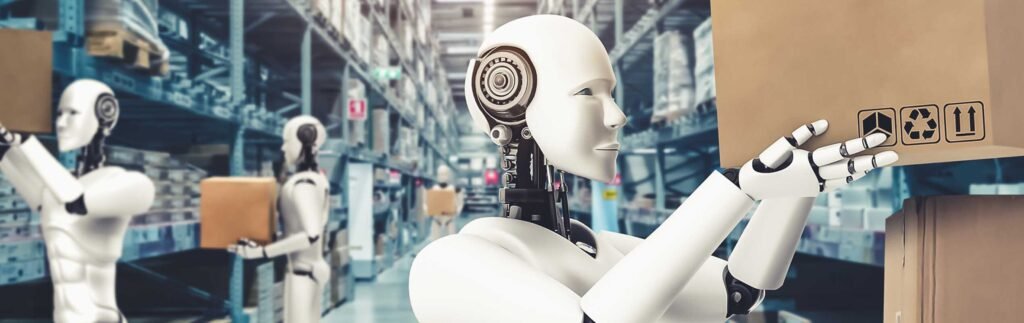
The humanoid robot market is experiencing unprecedented capital inflows and manufacturing scale-up. China recorded over 610 robotics investment deals totaling $7 billion in the first nine months of 2025, representing 250% year-over-year growth. Tesla targets 5,000 Optimus robots in 2025 with plans to scale to 100,000 by 2026. Chinese manufacturer BYD aims for 1,500 humanoids in 2025, ramping to 20,000 by 2026.
Cost barriers are collapsing faster than industry forecasts projected. Unitree shocked markets by launching its R1 humanoid at $5,900 in July 2025, following the G1 model at $16,000 and H1 at $90,000. Goldman Sachs reported manufacturing costs declined 40% year-over-year versus earlier 15-20% annual projections. Current costs range $30,000-$150,000 depending on configuration, with volume economics projected to reach $15,000-$20,000 per unit.
Key humanoid platforms advancing toward commercial deployment include:
Tesla Optimus: Designed for factory tasks, Optimus operates in Tesla’s own manufacturing facilities performing material handling and basic assembly operations. The system stands approximately 1.7 meters tall with 20-30kg payload capacity. Tesla’s advantages include vertical integration of AI software, battery technology, and manufacturing expertise from its automotive business. Projected pricing of $20,000-$30,000 aims for economic viability competing with human labor.
Agility Robotics Digit: A specialized logistics humanoid deployed in Amazon and GXO logistics facilities. Digit handles repetitive tote movement in warehouse environments, currently operating in semi-segregated zones due to safety system limitations and regulatory gaps. The company expects to ship hundreds of units in 2025 from its Oregon factory capable of 10,000+ annual production.
Figure 02: Partnered with BMW for automotive assembly applications and backed by Microsoft’s investment. Figure recently announced BotQ manufacturing facility in Austin with 12,000 unit initial capacity scaling to 100,000 annually. The company sees a path to 100,000 robots deployed by 2029.
Apptronik Apollo: Collaborating with Jabil for manufacturing applications and Google DeepMind for AI capabilities. Apollo weighs approximately 70kg with swappable batteries enabling 4-hour operation cycles. The modular design prioritizes maintenance and upgrades.
1X Technologies EVE and NEO: Norwegian company 1X has deployed EVE robots in security and logistics applications while developing NEO for domestic consumer markets. The company emphasizes safe human-robot interaction through biologically-inspired motion characteristics.
Current humanoid capabilities remain limited to relatively simple tasks in controlled environments. Most deployments focus on material transport, basic pick-and-place operations, and simple assembly tasks. Dexterous manipulation, complex assembly sequences requiring multi-step reasoning, and fully autonomous operation in unstructured environments remain future development targets.
The autonomous gap between demonstrations and production deployment is significant. Many publicized demonstrations involve teleoperation or heavily scripted environments that mask technical limitations. Industry observers compare the current state to autonomous vehicles circa 2016: impressive capabilities in controlled conditions, but substantial development required for robust real-world performance.
Adoption timelines are accelerating despite technical constraints. Bain & Company analysis indicates 2026-2027 as the period when humanoids transition from pilots to specific use cases in automotive and logistics sectors. McKinsey research published in October 2025 identifies four critical “bridges” to scaled deployment: certified fenceless safety, shift-equivalent uptime in customer sites, task-reliable dexterity benchmarks, and documented bill-of-materials cost curves enabling profitable economics.
Regional ecosystem dynamics shape development pace. China’s Ministry of Industry and Information Technology issued a 2024 roadmap calling for a full-stack humanoid ecosystem by 2025, incentivizing domestic component production and funding pilots in logistics hubs and factories. The U.S. leverages strong AI research capabilities and venture capital availability. Europe emphasizes safety standards, regulatory clarity through the EU AI Act (2025) and EU Machinery Regulation (effective 2027), and precision component suppliers.
The consensus forecast from Goldman Sachs, Bank of America Global Research, and Morgan Stanley projects 50,000-100,000 humanoid robot shipments in 2026, accelerating to hundreds of thousands by 2028 and potentially reaching millions annually by 2035. The total addressable market is estimated at 5 billion units targeting the $30 trillion global labor market, though such projections carry enormous uncertainty given early-stage technology maturity.
Comparative Analysis: Industrial vs Service Robotics Deployment Decision Framework
Organizations allocating automation capital face increasingly complex decisions comparing mature industrial robotics, established collaborative systems, and emerging service platforms including humanoids. The optimal choice depends on operational requirements, economic constraints, technical capabilities, and strategic horizons.
Performance and Capability Comparison
Industrial robots excel in speed, precision, and payload handling within structured environments. A six-axis FANUC M-20iD executes motions with ±0.02mm repeatability at 2,000mm/second maximum speed, handling 25kg payloads continuously for years with minimal degradation. This performance enables manufacturing applications where human capabilities cannot match requirements.
Service robots prioritize adaptability and human interaction over pure performance specifications. An AMR travels at 1.0-1.5 meters per second (versus 5+ m/s for AGVs) because it must safely navigate around humans. A surgical robot provides motion scaling and tremor filtering rather than raw speed. A humanoid robot demonstrates human-compatible manipulation but cannot match specialized industrial robots’ cycle times.
The capability frontier is shifting due to AI integration. Vision-language-action models enable robots to understand instructions like “pick up the red box and place it on the second shelf” without explicit programming. Reinforcement learning allows robots to improve performance through experience. Generative AI enables robots to plan multi-step tasks and adapt to unexpected situations.
Physical AI represents the convergence of these trends. SAP’s Project Embodied AI demonstrates industrial robots integrating business context awareness, enabling automation that seamlessly adapts to shifting operational priorities in real-time. Early proof-of-concept results show up to 50% reductions in unplanned downtime, up to 25% improvement in productivity, and significant reductions in operational errors across manufacturing, warehouse automation, and quality inspection.
Economic and ROI Considerations
Industrial robotics provides the most predictable and documented ROI, with payback periods as short as 1.3 years and multi-year positive cash flows after capital recovery. This makes industrial robots the preferred choice for high-volume, stable production where automation can run continuously with minimal variation.
Collaborative robots offer faster deployment and lower capital requirements, typically $40,000-$150,000 for complete systems versus $150,000-$500,000 for industrial robot cells. More importantly, cobots enable automation of tasks that industrial robots cannot address economically due to safety requirements or task variability. A manufacturing SME might deploy a cobot for machine tending that would not justify a full industrial robot cell.
Service robots introduce different economic models. Rather than pure labor replacement, they augment human capabilities, take over the most repetitive or dangerous tasks, and enable service models not previously viable. A hotel with robot concierges may not reduce headcount but differentiates service offerings and handles overnight coverage with reduced staffing.
Robot-as-a-Service (RaaS) models shift economics from capital expenditure to operational expense. Organizations pay monthly fees covering hardware, software updates, maintenance, and performance guarantees. This eliminates large upfront investments, accelerates deployment timelines, and transfers technical risk to vendors. RaaS adoption is growing rapidly in AMRs, cobots, and increasingly humanoid platforms.
The collaborative robot market’s 18.9% CAGR reflects RaaS model proliferation. Service robot subscriptions reduce upfront costs, provide enhanced flexibility, simplify maintenance through vendor responsibility, enable data-driven insights into operational performance, and make automation accessible to organizations lacking in-house robotics expertise.
Deployment Complexity and Technical Requirements

Industrial robots require the most extensive deployment planning but deliver the most predictable outcomes. A typical industrial robot cell deployment involves:
- Application engineering to define robot type, reach, payload, and end effector requirements
- Work cell design including safety barriers, material handling interfaces, and sensor integration
- Robot programming and motion path optimization
- Integration with plant control systems, quality systems, and enterprise resource planning
- Safety validation and compliance with OSHA, ISO, and industry-specific standards
- Operator training for supervision, basic troubleshooting, and emergency procedures
This process typically consumes 3-6 months for straightforward applications, longer for complex multi-robot cells. System integrators specializing in specific industries and applications reduce risk and accelerate timelines but add cost.
Collaborative robots simplify deployment through intuitive programming interfaces, pre-integrated safety systems, and smaller footprints. Many cobot deployments complete in 4-8 weeks from purchase to production. End users can reprogram tasks without specialist support, enabling flexible manufacturing strategies.
Service robots emphasize autonomous deployment. An AMR maps a warehouse in hours, operators designate work zones through tablet interfaces, and the system begins operation. However, service robots face different complexities including dynamic obstacle avoidance, fleet coordination, integration with warehouse management systems, and handling edge cases when autonomous systems encounter situations outside their training.
Humanoid robots currently require the most intensive deployment support despite promises of general-purpose capability. Pilot programs involve vendor technical teams on-site for weeks or months, teleoperation systems for remote support when autonomous systems fail, and extensive data collection to improve AI models. As the technology matures, deployment complexity should decrease, but current adopters should expect hands-on vendor involvement.
Scalability and Future-Proofing
Industrial robots offer proven scalability for high-volume manufacturing. Automotive OEMs operate production lines with 50+ robots per line across dozens of facilities globally. The technology maturity, supplier stability, and standardized programming interfaces enable multi-site deployments with consistent performance.
Collaborative robots scale effectively for flexible manufacturing strategies. Organizations deploy small initial installations, validate applications, and expand incrementally. The lower capital requirements and shorter payback periods enable experimentation with new automation opportunities. Cobots can be redeployed to different tasks as production requirements change, protecting automation investments against product lifecycle shifts.
Service robots scale through fleet management platforms. A warehouse deploys 5 AMRs initially, validates performance gains, and expands to 50+ robots managed through centralized orchestration software. The robots coordinate autonomously to avoid congestion, optimize travel paths, and balance workloads dynamically.
Future-proofing considerations favor platforms with AI adaptability, software updateability, and vendor ecosystem vibrancy. Industrial robots from major manufacturers benefit from long-term support commitments (NVIDIA IGX Thor platforms offer 10-year lifecycle support) and extensive integrator networks. Collaborative and service robots from venture-backed startups carry higher vendor risk but may offer faster innovation cycles.
The strategic question is whether to optimize for current needs with proven technology or position for future capabilities with emerging platforms. Organizations with stable, high-volume production favor industrial robots. Those facing uncertainty, labor constraints, or desires for rapid automation deployment lean toward collaborative and service systems.
Risk Assessment and Mitigation Strategies
All robotics deployments carry technical, economic, and organizational risks requiring active management.
Technical risks include system reliability below expectations, integration challenges with existing equipment or software, and performance degradation over time. Mitigation strategies include pilot programs to validate capabilities before full deployment, vendor selection emphasizing support quality and financial stability, and maintenance contracts that guarantee uptime and response times.
Economic risks center on ROI falling short of projections due to lower-than-expected productivity gains, higher-than-anticipated operating costs, or faster-than-planned technology obsolescence. Conservative ROI modeling with pessimistic assumptions protects against disappointment. RaaS models transfer much of this risk to vendors whose economic incentives align with customer success.
Organizational risks involve workforce resistance, insufficient technical capabilities to maintain and optimize systems, and management commitment wavering when deployment challenges emerge. Change management programs that involve affected workers in automation planning, training investments that build internal expertise, and executive sponsorship that maintains focus through inevitable setbacks all reduce organizational risk.
Safety and liability risks require particular attention for service robots operating in human-centric environments. Industrial robots benefit from decades of safety standards development and well-understood containment strategies. Service robots, especially humanoids, lack comparable regulatory frameworks. Current deployments operate in semi-segregated zones or under continuous human supervision. Organizations deploying service robots should expect evolving safety requirements and potential liability exposure as regulatory frameworks catch up to technology capabilities.
Market Dynamics: Investment Trends, Regional Developments and Industry Adoption Patterns
The enterprise robotics market is experiencing fundamental restructuring driven by technology convergence, shifting supply chains, and escalating labor challenges across developed economies.
Investment and Funding Landscape
Venture capital and strategic investments in robotics reached record levels in 2025, with robotics startups raising over $2.26 billion in Q1 2025 alone according to PitchBook data. Humanoid robotics attracted particular attention, with Chinese companies securing over $7 billion across 610 investment deals in the first nine months of 2025.
Major strategic investments signal corporate commitment to robotics integration:
- NVIDIA announced partnerships with leading U.S. manufacturers deploying Omniverse digital twin platforms and physical AI to accelerate manufacturing. The company’s IGX Thor edge computing platform powered by Blackwell architecture delivers 8x AI compute performance versus previous generation Orin for real-time robotics applications.
- SAP expanded physical AI partnerships with Galbot, Humanoid, Unitree Robotics, Agibot, and ANYbotics, demonstrating enterprise software integration with robotic systems. The collaborations target autonomous operations across manufacturing, logistics, and field services.
- Microsoft backed Figure AI’s humanoid development, leveraging Azure cloud services and AI capabilities for robotic intelligence. The partnership established BotQ manufacturing facility targeting 12,000-100,000 unit annual capacity.
- Google DeepMind collaborates with Apptronik, merging AI research capabilities with Apollo humanoid hardware platforms for general-purpose robotic applications.
These investments reflect strategic positioning for physical AI as the next major computing platform. Companies viewing robotics as transformative as smartphones or cloud computing are allocating capital to secure ecosystem positions before market leaders entrench.
Regional Market Dynamics and Geopolitical Considerations
Asia-Pacific dominates global robotics with 38.1% market share in 2024, driven by China, Japan, South Korea, and rapidly industrializing Southeast Asian nations. However, regional growth patterns are diverging significantly.
China leads humanoid development velocity through coordinated state policy and agile domestic supply chains. The Ministry of Industry and Information Technology’s roadmap targeting full-stack humanoid ecosystems by 2025 drives coordinated development across components, assembly, AI software, and pilot deployments. China produced 76,300 industrial robots in September 2025, up 28.3% year-over-year, while companies like Unitree, Agibot, UBTECH, and BYD race toward mass production.
Manufacturing cost advantages, extensive electronics supply chains, and large domestic markets enable Chinese companies to price humanoid robots at $5,900-$16,000, well below U.S. and European competitors at $90,000-$150,000. However, geopolitical tensions raise questions about Western adoption of Chinese robotics platforms given cybersecurity concerns and potential supply chain vulnerabilities.
United States accounts for 15% of global robotics manufacturers but leads in AI software, service robotics innovation, and defense applications. U.S. robotics startups attracted $3.5 billion in venture capital in 2024, with strength in autonomous systems, surgical robotics, and logistics platforms. Companies like Agility Robotics, Figure AI, and Tesla pursue humanoid development with focus on manufacturing and logistics applications.
The U.S. faces challenges including higher manufacturing costs, limited domestic supply chains for robotic components, and political resistance to automation in some industries. However, strong universities, AI research capabilities, and substantial venture capital provide innovation advantages. Tariff policies and reshoring initiatives drive domestic automation investments as companies seek labor cost mitigation strategies.
Japan maintains dominance in industrial robot supply with companies like FANUC, Yaskawa, Kawasaki Robotics, and Denso Wave controlling over 45% of global industrial robot exports according to International Federation of Robotics data. Japan’s aging population and labor shortages drive both robotics development and adoption, with particularly strong focus on service robots for elder care and healthcare assistance.
Germany contributes 12% of global robotics manufacturers and leads European industrial automation. As Europe’s industrial powerhouse, Germany emphasizes Industry 4.0 integration, precision component manufacturing, and regulatory compliance frameworks. The EU AI Act (2025) and EU Machinery Regulation (effective 2027) provide certified deployment paths for robotics in regulated sectors, potentially positioning Europe as a “trusted humanoid corridor” despite slower scaling versus China and the U.S.
Middle East shows fastest regional growth at 21.84% CAGR driven by sovereign fund automation investments and logistics hub development. Countries including UAE and Saudi Arabia deploy robotics as part of economic diversification strategies reducing petroleum dependence.
Industry-Specific Adoption Patterns and Outlook
Adoption patterns vary dramatically across industries based on technical requirements, economic drivers, and organizational readiness.
Automotive: Most mature robotics adopter with 31% of collaborative robot market share and dominant industrial robot consumption. Focus shifting from traditional assembly automation toward humanoid pilots for flexible manufacturing. Mercedes-Benz tests Apollo robots from Apptronik for physically demanding, repetitive tasks. BMW pilots Figure 02 robots for subassembly operations. BYD commits to 1,500 humanoids in 2025 scaling to 20,000 in 2026 for in-house manufacturing.
Electronics and Semiconductor: Ultra-precision requirements drive continued industrial robot adoption with 20% of installations. Emerging applications include humanoid robots for cleanroom operations, though maintaining semiconductor-grade cleanliness standards remains challenging. Cobots expand in electronics assembly due to product variant proliferation requiring flexible automation.
Logistics and E-commerce: Fastest-growing sector for service robotics with 31.7% CAGR. Amazon operates 750,000+ robots across fulfillment network. Warehouses deploy AMRs, mobile manipulators, and increasingly humanoid pilots for general-purpose material handling. RaaS models dominate new deployments, with vendors guaranteeing throughput metrics tied to contract terms.
Healthcare: Surgical robotics approaches $4+ billion annually with expanding competition driving down per-procedure costs. Service robots for hospital logistics, pharmacy automation, and patient care assistance growing rapidly driven by nursing shortages and pandemic-related burnout. Rehabilitation robotics and elder care robots address aging population needs, particularly acute in Japan and Western Europe.
Food and Beverage: Hygiene requirements, product variability, and seasonal volume fluctuations drive selective automation. Collaborative robots represent 8% of food production facilities, primarily for packaging, pick-and-place, and labeling. Meat and poultry processing explores robots for cutting and deboning operations addressing chronic labor shortages and injury risks.
Construction: Early-stage robotics adoption for masonry, concrete finishing, demolition, and site inspection. Boston Dynamics Spot deployments for construction progress documentation and safety monitoring show tangible value. However, unstructured job sites, extreme environmental conditions, and highly variable tasks limit current automation scope.
Agriculture: Precision agriculture robots for crop monitoring, spraying, and increasingly selective harvesting. Labor shortages in fruit picking drive development of computer-vision-guided harvest robots for strawberries, apples, and other crops. Economics remain challenging given seasonal operation patterns and robots’ current speed limitations versus human pickers.
Technical Frontiers and Capability Trajectories
The performance gap between robotics demonstrations and production deployments is narrowing through multiple technology advances converging simultaneously.
Physical AI and Foundation Models
Physical AI represents the integration of large language models, computer vision, and robot control into unified systems that understand instructions, perceive environments, and execute actions. This contrasts with traditional robot programming that requires explicit specification of every motion and decision point.
Vision-language-action (VLA) models enable robots to follow natural language commands. A worker can instruct “move the box from the conveyor to pallet position B3” without programming specific coordinates. The robot uses computer vision to locate the box, understands spatial relationships from its foundation model training, and generates motion plans to complete the task.
Google DeepMind’s Robotics Transformer (RT) models, deployed in partnership with companies like Apptronik, demonstrate impressive dexterity improvements. Training on diverse manipulation datasets including simulated environments and real-world teleoperations enables robots to handle objects with varied properties without task-specific programming.
NVIDIA’s Isaac platform and Cosmos world foundation models generate training datasets for robot learning, dramatically reducing the time and cost required to develop new robotic capabilities. Rather than collecting thousands of real-world examples for each task, robots train on synthetic data representing physical interactions, then fine-tune on smaller real-world datasets.
SAP’s enterprise AI integration enables robots to access business context including production schedules, inventory levels, component specifications, and quality requirements. A robot receiving parts inspection tasks automatically adjusts inspection criteria based on customer requirements for that specific order, identifying defects that would be acceptable for other applications.
Sensor Technologies and Environmental Perception
Robot perception capabilities determine operational scope. Industrial robots in structured environments relied on simple position encoders and basic proximity sensors. Service robots navigating dynamic spaces require sophisticated sensor fusion.
Modern perception stacks combine:
LiDAR (Light Detection and Ranging): Provides precise 3D mapping of environments at ranges up to 100+ meters. AMRs use LiDAR for obstacle detection and path planning. Autonomous vehicles and outdoor robots depend on LiDAR for long-range perception.
Depth cameras: Intel RealSense, Microsoft Azure Kinect, and similar depth sensors provide short-range 3D perception at lower cost than LiDAR. Essential for manipulation tasks requiring precise object localization.
High-resolution RGB cameras: Enable computer vision tasks including object recognition, scene understanding, quality inspection, and human pose estimation for safety systems. Camera improvements in resolution, frame rates, and low-light performance expand robotic capabilities.
Tactile sensors: Critical for dexterous manipulation. Humanoid hands require tactile feedback to handle fragile objects, detect slip, and modulate grasp force. Companies like Sensobright develop tactile sensing systems that provide “fingertip to full-body awareness.”
Force-torque sensors: Enable compliant manipulation where robots must respond to contact forces. Assembly tasks requiring part insertion or surface finishing benefit from force control that adjusts robot motion based on sensed forces.
Radar and ultrasonic sensors: Provide redundant perception for safety-critical applications. Automotive robots use multiple sensor modalities to detect human presence even when optical sensors might be obscured.
The sensor fusion challenge involves integrating data from multiple sensor types into coherent environmental models that support decision-making. Modern robots process gigabytes of sensor data per second, requiring edge computing platforms like NVIDIA IGX Thor that deliver 5,581 FP4 teraflops of AI compute with 400GbE connectivity.
Actuators, Motion Control and Mechanical Design
Actuator technology directly determines robot performance including payload capacity, speed, precision, and energy efficiency. The robotics actuators market reached $17.8 billion in 2025 with projections of $46.3 billion by 2035 at 10% CAGR, driven by precision motion control demands.
Electric actuators dominate with 46.8% market share, favored for precision in industrial robots. Brushless motors combined with harmonic drive or planetary reducers provide high torque density in compact packages. Recent advances in torque-dense actuators from suppliers like Harmonic Drive and Schaeffler improve performance without sacrificing collaborative safety features.
Hydraulic actuators serve heavy-load applications in construction, mining, and specialized industrial tasks. Boston Dynamics’ Atlas humanoid research platform uses hydraulic actuators to achieve impressive dynamic performance including running, jumping, and backflips. However, hydraulic systems’ complexity, maintenance requirements, and energy consumption limit commercial applications.
Pneumatic actuators offer compliance and safety advantages for human-robot interaction. Soft robotic grippers using pneumatic control gently handle delicate objects. However, pneumatics’ lower precision and force control versus electric systems limit applications.
The shift toward collaborative and service robots drives actuator development emphasizing:
Series elastic actuators that include compliant elements between motors and output, enabling force control and impact safety. When a collaborative robot contacts a human, the elastic element absorbs energy while sensors detect the collision and halt motion.
Direct-drive motors eliminate gearboxes for applications requiring smooth motion and zero backlash. Surgical robots and precision assembly systems benefit from direct-drive designs despite higher motor costs.
Modular actuator designs that simplify maintenance and enable configuration flexibility. Humanoid robots use modular joint units that can be swapped quickly if failure occurs, reducing downtime versus integrated designs requiring full limb replacement.
Software Architectures and Integration Challenges
Robot software determines how effectively hardware capabilities translate into operational value. The robotics software market is growing faster than hardware, projected at 23.62% CAGR through 2030, as AI integration and cloud connectivity shift value capture toward software and recurring services.
Modern robot software stacks include:
Motion planning and control: Generates collision-free paths, optimizes trajectories for cycle time, and executes smooth motion profiles. Industrial robots use well-established motion planning but collaborative and service robots require real-time replanning as environments change.
Perception and scene understanding: Processes sensor data to build environmental models, identify objects, track humans and other robots, and enable semantic understanding of scenes. Vision-language models enable robots to understand spatial relationships and object properties without explicit programming.
Task planning and decision-making: Translates high-level goals into sequences of actions. Warehouse robots plan optimal paths to complete picking tasks given current robot locations, inventory positions, and priority orders. AI planning systems handle complex multi-step tasks and adapt to unexpected situations.
Fleet management and orchestration: Coordinates multiple robots to avoid conflicts, optimize resource utilization, and balance workloads. A warehouse with 50 AMRs requires centralized orchestration to prevent traffic jams, ensure charger access, and maximize throughput.
Enterprise integration: Connects robots with business systems including ERP, warehouse management, manufacturing execution, and quality management. This integration enables robots to access production schedules, component specifications, customer requirements, and quality standards without human relay.
Safety systems: Monitors robot operation to detect hazards, enforce safety zones, and execute emergency stops when humans enter restricted areas. Humanoid robots require sophisticated safety systems given their complexity and human-like form factor.
Interoperability remains challenging despite standardization efforts. The OPC UA framework aims to enable multi-vendor robot ecosystems, but gaps persist. Organizations deploying mixed fleets from multiple vendors face integration complexity that increases costs and limits operational flexibility.
Workforce Implications: Labor Displacement, Skills Evolution and Collaborative Models
Enterprise robotics deployment invariably triggers questions about workforce impacts including job displacement, required skills evolution, and optimal human-robot collaboration models.
Labor Displacement Realities and Economic Context
Robotics automation does displace some workers from specific roles, particularly repetitive manual tasks that robots can perform more efficiently. The scale and speed of displacement varies significantly across industries and geographies.
Manufacturing has experienced steady automation for decades, yet U.S. manufacturing employment patterns show complexity beyond simple displacement. While certain production roles declined, demand increased for maintenance technicians, quality engineers, process engineers, and supervisors overseeing automated systems. The net employment impact depends on whether automation enables production growth that creates offsetting jobs versus pure labor substitution.
Warehousing and logistics automation raises different questions. Amazon’s deployment of 750,000+ robots correlates with employment growth from 125,000 employees in 2012 to over 1.5 million in 2025. Robots handled the physical movement of inventory, enabling humans to focus on picking, packing, problem-solving, and customer service. However, critics note that worker injury rates increased as productivity demands intensified, and job quality metrics including wage growth lagged other sectors.
The International Labour Organization reports that global manufacturing faces persistent labor shortages, driven by demographic change and aging populations in leading economies including the United States, Japan, China, South Korea, and Germany. In this context, robots enable production to continue despite insufficient human labor supply rather than displacing available workers.
Economic modeling suggests differentiated impacts. A 2025 analysis by McKinsey indicates that robotics automation will disproportionately affect routine, physically repetitive roles while creating demand for technical positions requiring problem-solving, system integration, and human judgment. Workers displaced from production roles may lack qualifications for emerging technical positions without significant retraining investments.
Skills Requirements and Workforce Development
Effective robot deployment requires workforce capabilities spanning:
Robot programming and operation: Even collaborative robots with intuitive interfaces require operators understanding coordinate systems, motion profiles, safety zones, and error recovery. Industrial robots demand specialized programming skills using proprietary languages like FANUC’s KAREL or ABB’s RAPID.
System integration: Connecting robots with material handling equipment, sensors, safety systems, and enterprise software requires mechatronics knowledge combining mechanical, electrical, and software expertise.
Maintenance and troubleshooting: Robots require scheduled maintenance including lubrication, sensor calibration, and component replacement. Unplanned failures demand rapid diagnosis and repair to minimize production downtime.
Process engineering: Optimizing automated systems requires understanding production flows, quality requirements, cycle time tradeoffs, and continuous improvement methodologies.
Educational institutions and industry associations are developing robotics curricula addressing these needs. Community colleges offer industrial maintenance programs including robotics modules. Universities provide degrees in mechatronics, robotics engineering, and automation. Professional associations including the Robotics Industries Association and PMMI (Association for Packaging and Processing Technologies) deliver training and certification programs.
However, workforce development faces challenges including:
Scale mismatches: The pace of robotics deployment exceeds educational system capacity to produce qualified technicians. Estimates suggest tens of thousands of unfilled robotics technician positions globally.
Geographic concentrations: Robotics expertise clusters in major manufacturing regions, leaving smaller cities and rural areas with limited technical support. This constrains automation adoption among SMEs without access to local integration and maintenance services.
Rapid technology evolution: Skills developed for traditional industrial robots don’t directly transfer to collaborative robots, AI-enabled systems, or humanoid platforms. Continuous learning becomes essential in rapidly evolving fields.
Equity concerns: Automation-displaced workers often lack resources for retraining programs that might enable career transitions. This exacerbates economic inequality as displaced workers face long-term unemployment or wage reduction in alternative employment.
Optimal Human-Robot Collaboration Models
The most successful robotics deployments don’t simply replace humans with machines but redesign workflows to leverage complementary human and robot capabilities.
Manufacturing applications increasingly deploy collaborative cells where humans and robots share workspaces. A automotive trim installation might use a robot to hold large door panels in precise positions while human workers install clips, connect electrical harnesses, and verify quality. The robot handles the physically demanding holding task requiring consistency, while humans perform dexterous manipulation and judgment-based quality verification.
Warehousing evolved through multiple collaboration models. First-generation systems used fixed automation including conveyor systems and AS/RS. Second-generation goods-to-person systems like Amazon’s Kiva/Amazon Robotics moved inventory pods to human pickers, eliminating walking time. Third-generation mobile manipulators like Brightpick Autopicker perform the entire pick-pack-consolidate-dispatch workflow autonomously, though humans still handle exceptions and quality checks.
Healthcare collaboration emphasizes complementary roles. Surgical robots provide stable camera platforms, motion scaling, and instrument articulation that exceed human capabilities, but surgeons make all clinical decisions and control robot actions. Hospital transport robots handle routine material movement, but nurses maintain patient care responsibilities requiring empathy and clinical judgment.
Service industries including hospitality, retail, and food service deploy robots for routine tasks while human staff focus on customer interaction. A hotel robot delivers amenities to guest rooms, but human staff handle check-in, special requests, and problem resolution requiring communication skills and discretion.
The collaborative design principle emphasizes that humans retain judgment, creativity, problem-solving, and interpersonal skills while robots handle repetitive, physically demanding, precise, or dangerous tasks. This division typically generates better outcomes than fully autonomous systems or entirely manual operations.
Future Outlook and Strategic Recommendations
The enterprise robotics landscape in 2026 and beyond will be shaped by converging technology trends, evolving economics, and strategic choices by manufacturers, vendors, and policymakers.
Technology Trajectory: Near-Term and Long-Term Projections
Near-term developments (2025-2027) will focus on:
Humanoid robot commercialization: The industry consensus projects 50,000-100,000 humanoid units shipping in 2026, primarily to automotive manufacturing and logistics applications. Early deployments will target simple, repetitive tasks in controlled environments with strong vendor technical support. Success metrics including uptime reliability, task completion accuracy, and total cost of ownership will determine expansion pace.
Physical AI integration: Robot intelligence will increasingly leverage large language models and vision-language-action models that enable natural instruction following and adaptive behavior. Expect rapid capability improvements as training datasets expand and foundation models specifically optimized for physical tasks emerge.
Robotics-as-a-Service expansion: RaaS models will capture growing market share across all robot categories. Economic advantages including eliminated capital expenditure, guaranteed performance, and vendor-managed maintenance align with enterprise preferences for operational expense over capital investment.
Safety system evolution: Regulatory frameworks will catch up to technological capabilities. Expect certification pathways for collaborative and service robots enabling broader deployment without extensive physical barriers. The EU Machinery Regulation (effective 2027) and evolving U.S. standards from OSHA and ASTM will provide clearer compliance requirements.
Mid-term developments (2027-2030) may include:
General-purpose platform emergence: Current specialized robots may give way to fewer general-purpose platforms handling multiple tasks through software configuration. The economic logic resembles smartphones replacing cameras, GPS devices, music players, and calculators with unified platforms.
Autonomous mobile manipulation dominance: The International Federation of Robotics now classifies Autonomous Mobile Manipulation Robots (AMMRs) as both industrial and service robots, reflecting hybrid capabilities. These systems combining mobility with manipulation may emerge as the dominant warehouse and light manufacturing platform.
AI-driven process optimization: Robots will increasingly optimize their own operation through reinforcement learning and data analytics. A pick-and-place robot analyzes successful and failed grasp attempts to improve grasp strategy. Warehouse robots collectively optimize travel patterns based on order history and seasonal demand patterns.
Ecosystem consolidation: The current fragmented robotics vendor landscape may consolidate through acquisitions, failures, and market-leading platforms achieving dominant positions. Expect traditional industrial robot vendors acquiring collaborative and service robot startups to offer integrated portfolios.
Long-term possibilities (2030+) include:
Household robot adoption: Consumer humanoid robots for domestic tasks remain technologically and economically challenging but could reach early adopter markets by the early 2030s. Key barriers include cost (requiring sub-$10,000 pricing), reliability (must work without technical support), and capability (must handle real-world home environment variation).
Autonomous robot swarms: Coordinated robot teams could tackle tasks requiring collective intelligence including construction projects, disaster response, and large-scale agricultural operations.
Human augmentation integration: Exoskeletons and wearable robots that enhance human capabilities rather than replacing humans may achieve broader adoption, particularly in physically demanding roles including construction, caregiving, and logistics.
Strategic Guidance for Enterprise Decision-Makers
Organizations developing automation strategies should consider several key principles:
Start with business outcomes, not technology: Define specific operational problems including productivity constraints, quality inconsistencies, safety risks, or labor shortages before evaluating technology solutions. Many failed automation projects selected impressive technology that didn’t address actual business needs.
Pilot before scaling: Even proven technologies face integration challenges in specific environments. Pilot programs validate technical capabilities, economic assumptions, and organizational readiness before committing to large-scale deployments. Structure pilots to enable objective assessment including quantified metrics for productivity, quality, cost, and safety.
Develop internal capabilities: Organizations dependent on external integrators and vendors for all robotics expertise face higher costs and slower response to operational issues. Invest in training programs that build internal robotics competency including basic programming, troubleshooting, and process optimization.
Design for human-robot collaboration: The most successful deployments redesign workflows to leverage complementary human and robot capabilities rather than simply replacing humans with machines. Involve production workers in automation planning to identify opportunities and address concerns early.
Balance proven and emerging technologies: Industrial robots with decades of deployment history offer predictable ROI but may not address all automation needs. Emerging technologies including collaborative robots and AI-enabled systems provide flexibility but carry higher uncertainty. A portfolio approach balancing proven and emerging technologies manages risk while positioning for future capabilities.
Consider ecosystem vibrancy: Vendor financial stability, support network quality, and third-party ecosystem breadth determine long-term automation success. A robot from a well-established vendor with extensive integrator networks and component suppliers provides more security than technically impressive systems from thinly capitalized startups.
Engage workforce proactively: Automation projects face organizational resistance when workers fear job loss and feel excluded from planning. Transparent communication about automation rationale, commitments to workforce transition support, and involvement of affected workers in deployment planning build acceptance and identify practical insights that improve outcomes.
Policy Considerations and Regulatory Outlook
Governments play crucial roles in robotics development and deployment through research funding, safety regulation, trade policy, and workforce transition support.
Safety standards evolution: Current industrial robot safety standards reflect decades of experience but don’t fully address collaborative robots, service robots, or humanoids. The EU leads with comprehensive frameworks including the EU AI Act (2025) and EU Machinery Regulation (effective 2027). U.S. standards organizations including ANSI, ASTM, and UL are developing comparable frameworks. Organizations deploying emerging robotics should anticipate evolving requirements and design safety systems with adaptation capacity.
International trade and supply chains: Robotics supply chains span multiple countries with concentration risks. China dominates certain component categories, raising concerns about supply security. The U.S. and European nations pursue onshoring strategies through subsidies and procurement preferences. Organizations planning multi-year automation programs should assess supply chain resilience and diversification strategies.
Workforce transition support: Governments can smooth automation transitions through unemployment insurance extensions, retraining program funding, and incentives for companies providing displaced worker support. Denmark’s “flexicurity” model combining labor market flexibility with strong social safety nets provides one approach. Singapore’s SkillsFuture initiative funds continuous education helping workers adapt to technological change.
Research and development investments: Government-funded robotics research generates public goods including open-source software, training datasets, and fundamental knowledge that private companies build upon. The U.S., EU, Japan, South Korea, and China all operate significant robotics research programs. Industry benefits from sustained public investment in robotics foundations even when commercial applications lag research by years.
Conclusion: Navigating the Enterprise Robotics Transformation
Enterprise robotics has reached a critical juncture where proven industrial systems, maturing collaborative platforms, and emerging service robots including humanoids present organizations with unprecedented automation options and complex strategic decisions.
Industrial robotics continues delivering strong ROI with median 1.3-year payback periods and proven capabilities for high-volume manufacturing. Organizations with stable production requirements, capital availability, and engineering capabilities to manage deployment complexity should leverage industrial robots’ speed, precision, and reliability.
Collaborative robots democratize automation access for SMEs and enable flexible manufacturing strategies through lower costs, simpler deployment, and task reconfigurability. Organizations facing product variety, changeover frequency, or space constraints find cobots address automation needs that traditional industrial robots cannot economically serve.
Service robotics expands automation scope beyond manufacturing into logistics, healthcare, hospitality, and eventually households. AMRs have achieved commercial maturity with proven economic models. Humanoid robots are transitioning from research to commercial deployment, with 2026 marking the beginning of mainstream adoption despite remaining technical limitations.
The convergence of physical AI, declining hardware costs, and maturing safety systems is accelerating the automation timeline beyond previous industry projections. Organizations deferring automation decisions risk competitive disadvantages as labor constraints intensify and automation economics improve.
Success requires moving beyond technology evaluation to comprehensive deployment strategies addressing economic justification, workforce implications, organizational change management, vendor selection, integration planning, and long-term capability development. Organizations that combine proven technologies for immediate needs with selective pilots of emerging platforms position themselves to benefit from both current automation opportunities and future capability breakthroughs.
The enterprise robotics transformation will continue reshaping manufacturing, logistics, services, and eventually daily life throughout the coming decade. Organizations, workers, and policymakers navigating this transition with strategic foresight, operational excellence, and social responsibility will capture the substantial economic benefits while managing disruption and ensuring broad prosperity sharing.
FAQ: Enterprise Robotics Industrial Service Applications
What is the difference between industrial robots and service robots?
Industrial robots are designed for manufacturing tasks in structured environments with high-speed, high-precision repetitive operations typically behind safety barriers. Service robots operate in dynamic, human-centric environments including warehouses, hospitals, and hotels, prioritizing adaptability and safe human interaction over pure speed. Industrial robots excel at welding, assembly, and material handling in factories, while service robots handle delivery, cleaning, inspection, and customer interaction tasks.
What is the typical ROI for industrial robot deployments?
Industrial robot ROI typically ranges from 10-15% in the first year, increasing to 20-25% within 3-5 years according to Boston Consulting Group research. The Robotics Industries Association reports median payback of 1.3 years for U.S. installations. A typical automotive parts manufacturing operation investing $255,000 in three robots generates $450,000 annual labor savings, yielding $195,000 first-year net benefit after capital recovery.
How much do collaborative robots cost compared to traditional industrial robots?
Collaborative robots typically cost $40,000-$150,000 for complete systems including integration and basic tooling, compared to $150,000-$500,000 for traditional industrial robot cells requiring safety barriers, fixed installation, and more complex programming. Cobots’ lower capital requirements, faster deployment (weeks versus months), and easier reconfiguration make them economically attractive for SMEs and flexible manufacturing applications.
What are humanoid robots and when will they become commercially available?
Humanoid robots are bipedal, human-shaped platforms designed to operate in environments built for human workers without modification. Leading examples include Tesla Optimus, Agility Robotics Digit, Figure 02, and Apptronik Apollo. Commercial availability is accelerating with projections of 50,000-100,000 units shipping in 2026, primarily to automotive manufacturing and logistics. Prices are declining rapidly from current $90,000-$150,000 toward projected $15,000-$20,000 at volume production.
Which industries are adopting robotics most rapidly?
Automotive manufacturing leads with 31% of collaborative robot adoption and dominant industrial robot consumption. Logistics and e-commerce show fastest growth at 31.7% CAGR driven by fulfillment center automation and AMR deployment. Healthcare robotics including surgical systems and hospital logistics grows rapidly addressing nursing shortages. Electronics manufacturing maintains strong robotics integration for precision assembly. Food and beverage, pharmaceuticals, and metals processing show selective but growing adoption.
What is Physical AI and how does it improve robotic capabilities?
Physical AI integrates large language models, computer vision, and robot control into unified systems that understand natural language instructions, perceive environments, and execute actions without explicit programming. Vision-language-action models enable robots to follow commands like “pick up the red box and place it on the second shelf” by combining visual perception with language understanding and motion planning. SAP’s Physical AI projects demonstrate 50% reductions in unplanned downtime and 25% productivity improvements.
How do Robot-as-a-Service (RaaS) models work?
RaaS models shift robotics from capital expenditure to operational expense through monthly subscriptions covering hardware, software updates, maintenance, and performance guarantees. Organizations avoid large upfront investments, accelerate deployment timelines, and transfer technical risk to vendors whose economic incentives align with customer success. RaaS is growing rapidly in AMRs, collaborative robots, and emerging humanoid platforms, making automation accessible to organizations lacking capital or in-house robotics expertise.
What are the main barriers to robotics adoption for small and medium enterprises?
SME barriers include capital constraints (though RaaS models help), limited in-house technical expertise for deployment and maintenance, concerns about ROI uncertainty, lack of vendor support in smaller markets, skills shortages for robot programming and troubleshooting, and organizational resistance to change. Collaborative robots address many barriers through lower costs, simpler deployment, and intuitive programming, but technology provider selection and support quality remain critical success factors.
How will robotics automation affect employment?
Robotics automation displaces workers from specific repetitive roles while creating demand for technical positions including robot programmers, maintenance technicians, system integrators, and process engineers. Net employment effects vary by industry and context. Manufacturing faces global labor shortages due to demographic aging, suggesting robots enable production continuation rather than displacing available workers. Long-term workforce implications depend on retraining program effectiveness and whether automation enables production growth creating offsetting jobs.
What safety requirements apply to collaborative robots versus traditional industrial robots?
Traditional industrial robots require physical barriers (fences, light curtains) separating them from human workers per OSHA and ISO standards. Collaborative robots incorporate force-limiting technology, integrated sensors, and rounded designs enabling safe operation alongside humans without physical barriers. However, cobots must comply with ISO/TS 15066 technical specifications including power and force limiting, hand guiding, speed and separation monitoring, or safety-rated monitored stop modes. Service robots and humanoids face evolving safety frameworks as the EU AI Act (2025) and EU Machinery Regulation (effective 2027) establish certification pathways.
How can organizations prepare for humanoid robot deployment?
Organizations should pilot emerging technologies through small-scale trials validating capabilities and economics before committing to large deployments. Build internal robotics competency through training programs. Monitor vendor ecosystem development, manufacturing scale-up, and cost trajectory. Evaluate specific use cases where humanoid versatility offers advantages versus specialized automation. Engage workforce early to address concerns and identify practical applications. Expect hands-on vendor support during early deployments as technology matures. Target 2026-2027 for initial pilots in automotive and logistics applications based on industry consensus timelines.
What role does AI play in next-generation robotics?
AI enables robots to handle variability without explicit programming, understand natural language instructions, perceive and reason about environments, improve performance through experience, and coordinate with other robots and humans. Vision-language-action models, reinforcement learning, generative AI for simulation and training data, and foundation models adapted for physical tasks are transforming robots from programmable machines to adaptive, learning systems. This shift enables service robots to operate in unstructured environments and supports humanoid platforms’ general-purpose capabilities.
About Axis Intelligence
Axis Intelligence delivers comprehensive analysis and strategic intelligence on emerging technologies, enterprise automation, and digital transformation trends. Our research combines market data, technical assessments, and deployment case studies to provide actionable insights for technology leaders, investors, and policymakers navigating rapidly evolving technology landscapes.
For inquiries regarding strategic consulting, custom research, or speaking engagements, contact us through axis-intelligence.com.