


Humanoid Robots Deployment 2026
TL;DR: Humanoid robot deployment accelerates dramatically in 2026 with 50,000-100,000 units entering warehouses and factories globally. Costs plunged 40% year-over-year to $5,900-$150,000 per unit, while companies like Tesla, BYD, and Agility Robotics scale production from thousands to 100,000+ annual capacity. This comprehensive deployment guide analyzes real-world implementations at Amazon, BMW, Mercedes-Benz, successful pilot strategies, technical integration requirements, ROI calculations showing 18-month payback periods, workforce transition frameworks, and regulatory compliance pathways. Includes exclusive case studies, deployment checklists, vendor comparisons, and 2026-2030 market forecasts from Goldman Sachs, McKinsey, and Bain & Company.
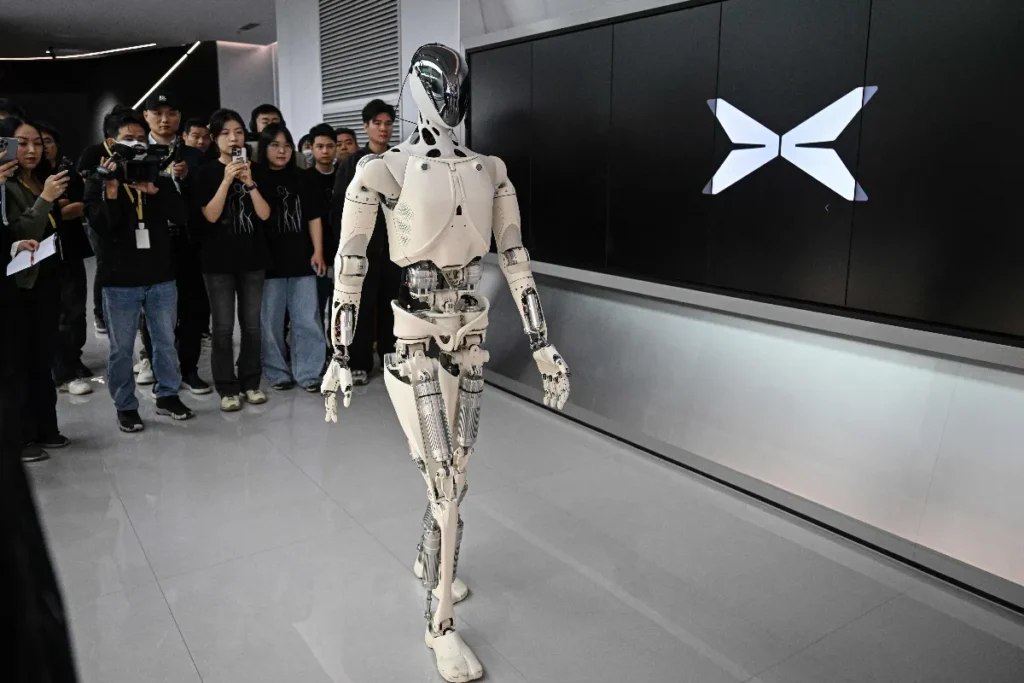
The transition from prototype to production deployment represents the defining moment for humanoid robotics. After decades of research and development, human-shaped robots have crossed the threshold from carefully staged demonstrations to revenue-generating commercial operations. This transformation accelerated dramatically in 2025, with the first documented commercial humanoid deployment earning revenue at a Spanx warehouse in Georgia, where Agility Robotics‘ Digit robot handles material movement alongside human workers.
The economics driving this transformation are remarkable. Manufacturing costs declined 40% year-over-year, from $50,000-$250,000 per unit in 2023 to $30,000-$150,000 in 2024, with some models now available for $5,900. Chinese manufacturer Unitree Robotics shocked the market in July 2025 by launching the R1 humanoid at this unprecedented price point, previously thought impossible for years. According to Goldman Sachs research, cost reductions exceeded earlier projections of 15-20% annually, creating viable unit economics for mass deployment.
Production capacity is expanding across all major regions. Tesla targets 5,000 Optimus units in 2025, scaling to 100,000 by 2026. Chinese manufacturer BYD aims for 1,500 humanoids in 2025, ramping to 20,000 by 2026. Figure AI announced BotQ manufacturing facility in Austin with 12,000 unit initial capacity scaling to 100,000 annually. Agility Robotics operates an Oregon factory capable of building over 10,000 robots per year.
Investment capital flows reflect growing commercialization confidence. China recorded over 610 robotics investment deals totaling $7 billion in the first nine months of 2025, representing 250% year-over-year growth. Beijing-based Noetix Robotics secured $42 million in Pre-B financing, while UBTECH obtained a $1 billion strategic financing facility. Venture capital investment in humanoid robotics reached $2.5 billion in 2024, with momentum accelerating through 2025.
The question facing manufacturing executives, logistics operators, and automation strategists is no longer whether humanoid robots will deploy commercially, but how to deploy them successfully. This comprehensive guide examines deployment economics, technical integration requirements, pilot program strategies, workforce transition management, regulatory compliance pathways, and realistic capability assessments based on actual commercial implementations rather than staged demonstrations.
Understanding Humanoid Robot Deployment: Market Maturation and Commercial Reality
Humanoid robot deployment represents the commercialization phase where robots transition from controlled pilots to scaled, revenue-generating operations across multiple facilities. This phase demands fundamentally different considerations than research prototypes or pilot programs, including production reliability, maintenance scalability, workforce integration, and economic viability.
Defining Commercial Deployment Success
Commercial deployment success requires humanoids to deliver measurable business value across four critical dimensions:
Operational Reliability: Robots must achieve uptime targets comparable to established automation, typically 85-95% availability during scheduled operating hours. This demands robust hardware design, predictive maintenance systems, and rapid response support infrastructure. Early deployments at Amazon and GXO logistics facilities target 90%+ uptime, though actual performance data remains limited.
Economic Viability: Deployment must generate positive return on investment within acceptable payback periods, typically 18-36 months for manufacturing automation. This calculation includes capital costs, integration expenses, ongoing maintenance, energy consumption, and displaced or avoided labor costs. The dramatic cost reductions in 2024-2025 brought humanoid economics into viable range for many applications.
Task Performance: Robots must complete assigned tasks with throughput and quality meeting or exceeding human performance. For material handling, this means cycle times competitive with human workers at 80-100% accuracy rates. For assembly operations, it requires precision meeting quality specifications without excessive rework or defects.
Workforce Integration: Successful deployment requires human workers to accept and effectively collaborate with robotic systems. This involves addressing job security concerns, providing training for robot supervision and basic troubleshooting, and redesigning workflows to leverage complementary human and robot capabilities. Companies emphasizing augmentation rather than wholesale replacement report higher workforce acceptance.
Market Segmentation: Where Humanoids Deploy First

Deployment economics and technical capabilities drive clear market segmentation. The matrix of task complexity versus environmental stability determines where humanoids achieve commercial viability earliest:
Tier 1: Structured, Low-Complexity Tasks (2025-2026 Commercial Deployment)
These applications combine predictable environments with repetitive, moderately physical tasks requiring limited dexterity. Current commercial deployments cluster in this tier:
Warehouse Material Transport: Moving totes, bins, and boxes along mapped routes between designated pick/pack stations and conveyance systems. Agility Robotics’ Digit operates in this capacity at Amazon, GXO, and Spanx facilities, handling payloads up to 35 pounds over six-foot reach range. The robots navigate mapped warehouse aisles, avoid dynamic obstacles, and interface with warehouse management systems for task assignment.
Basic Assembly Line Support: Delivering components to human assembly workers, retrieving finished subassemblies, and transporting materials between workstations. Tesla deploys Optimus humanoids in this role at its Fremont factory, focusing on simple material handling rather than precision assembly. Mercedes-Benz and BMW pilot similar deployments with Apptronik Apollo and Figure 02 robots respectively.
Repetitive Inspection Tasks: Visual inspection of consistent components in controlled lighting, walking predefined routes to capture images or sensor readings. This leverages humanoid mobility advantages over fixed cameras while requiring limited manipulation dexterity.
These applications benefit from humanoid form factor advantages: navigation through human-designed spaces including doorways and aisles, operation without facility redesign, and flexibility to redeploy to different tasks as needs change. However, they do not yet require the full capabilities humanoids promise.
Tier 2: Moderate Complexity in Controlled Environments (2026-2028 Scaling)
Mid-term deployments will address moderately complex tasks in controlled industrial settings:
Pick-and-Place Operations: Retrieving varied products from shelving or bins, assessing grasp approaches, and placing items into containers or conveyance systems. This requires computer vision for object recognition, grasp planning for varied shapes, and manipulation dexterity for delicate or irregular items. Warehouse operators view this as the critical capability enabling broader humanoid adoption.
Machine Tending: Loading raw materials or components into CNC machines, injection molding equipment, or processing systems; retrieving finished parts; and queuing for secondary operations. This combines material handling with basic quality verification and coordination with machine cycles.
Light Assembly Tasks: Connecting components, installing fasteners, routing cables, and similar operations requiring hand-eye coordination and force modulation. Automotive manufacturers see this as medium-term opportunity, though current humanoid dexterity falls short of requirements for many precision assembly tasks.
Hazardous Environment Inspection: Navigation through refineries, chemical plants, or other dangerous settings where removing humans improves safety. Humanoid form factor enables access to infrastructure including stairs, catwalks, and maintenance panels designed for human workers.
These applications demand greater perception capabilities, manipulation dexterity, and adaptive decision-making than Tier 1 deployments. Technology trajectories suggest readiness in 2026-2028 timeframe as AI capabilities mature and manufacturing costs enable broader adoption.
Tier 3: High Complexity or Unstructured Environments (2028-2035+ Research Phase)
Long-term applications remain largely aspirational given current capabilities:
Precision Assembly: Multi-step assembly requiring sub-millimeter positioning, force-sensitive manipulation, and coordination of multiple tools. Automotive final assembly, electronics manufacturing, and aerospace applications demand capabilities exceeding current humanoid platforms.
Outdoor Operations: Construction site work, agricultural tasks, infrastructure maintenance, and outdoor inspection face challenges including unstructured terrain, weather exposure, variable lighting, and extended autonomous operation. Specialized robots may address these before general-purpose humanoids.
Domestic/Consumer Applications: Household tasks, elder care assistance, and consumer service roles require human-level perception, manipulation dexterity, and social intelligence far exceeding current capabilities. While companies including 1X Technologies (NEO) and Tesla (Optimus) target consumer markets, realistic deployment timelines extend beyond 2028.
The key insight for deployment planning is matching robot capabilities to application requirements. Organizations pursuing Tier 2 or Tier 3 applications with current technology risk expensive failures, while conservative focus on Tier 1 applications leaves competitive advantages unexploited.
Regional Dynamics Shaping Deployment Patterns
Geographic factors significantly influence deployment economics, technology access, workforce considerations, and regulatory frameworks:
China leads deployment velocity through coordinated industrial policy, aggressive manufacturing scale-up, and cost advantages. The Ministry of Industry and Information Technology’s 2024 roadmap targeting full-stack humanoid ecosystems by 2025 drove coordinated development across components, assembly, AI software, and pilot deployments. Over 35 new humanoid models launched in 2024, far outpacing other regions.
Chinese manufacturers including Unitree, UBTECH, Agibot, Fourier Intelligence, and Walker S1 by UBTech achieved dramatic cost reductions. The G1 humanoid at $16,000 and R1 at $5,900 create entirely new market segments. BYD’s commitment to 20,000 units by 2026 demonstrates confidence in economics and supply chains.
Labor cost considerations differ significantly. While developed economies face severe labor shortages driving automation urgency, China’s demographic transition creates similar pressures despite lower absolute wage rates. Manufacturers pursue humanoids for quality consistency, 24/7 operation capability, and production flexibility rather than pure labor cost arbitrage.
United States emphasizes AI software capabilities, venture capital funding, and high-value applications. Companies including Tesla, Figure AI, Agility Robotics, and Apptronik pursue vertical integration of AI, manufacturing, and deployment. Strong university research programs, access to computing infrastructure, and ecosystem expertise in machine learning provide advantages in robot intelligence even as hardware costs exceed Chinese competitors.
U.S. deployments concentrate in logistics (Amazon, GXO), automotive (Tesla, BMW partnerships, Mercedes-Benz pilots), and manufacturing (Jabil collaboration with Apptronik). RaaS (Robot-as-a-Service) models dominate, eliminating large capital expenditures and aligning vendor incentives with deployment success.
Workforce considerations loom larger in U.S. context given historical union strength in automotive and logistics. Successful deployments emphasize augmentation messaging, worker retraining programs, and phased rollouts that demonstrate safety and productivity benefits before expanding scope.
Japan maintains robotics leadership through established industrial robot manufacturers and deep automation expertise. Companies including Kawasaki Heavy Industries participate in humanoid development, while demographic challenges create acute labor shortages driving adoption urgency. Cultural acceptance of robots and high manufacturing standards support deployment, though cost-conscious approaches favor proven technologies over cutting-edge humanoids.
Europe emphasizes safety standards, regulatory clarity, and precision engineering. German manufacturers lead Industry 4.0 integration, component suppliers deliver high-quality actuators and sensors, and EU regulatory frameworks including the EU AI Act (2025) and EU Machinery Regulation (effective 2027) provide certification pathways. Mercedes-Benz and BMW actively pilot humanoids, though deployment pace trails China and the U.S.
European advantages include trusted safety frameworks, precision manufacturing capabilities, and strong worker protections that require thoughtful workforce transition. Disadvantages include higher labor and component costs, conservative deployment approaches, and less venture capital availability versus U.S. competitors.
Commercial Deployment Case Studies: Lessons from Early Adopters

Real-world deployment experiences provide invaluable lessons for organizations planning humanoid implementations. The following case studies examine actual commercial deployments, pilot programs transitioning to scaled operations, and instructive failures.
Amazon & GXO Logistics: Digit in Warehouse Operations
Agility Robotics’ Digit represents the first humanoid earning revenue in commercial warehouse deployment. The five-foot-nine-inch robot features backward-bending legs enabling tight space maneuvering, dual arms with reaching capability from floor to six feet, and 360-degree vision plus LiDAR for navigation and perception.
Deployment Scope: Amazon began Digit pilots in late 2023 at a facility near Seattle, focusing on tote handling operations. GXO Logistics signed the first confirmed RaaS deal in June 2024, deploying Digit at Spanx facilities in Georgia. These deployments involve limited numbers of robots (fewer than 10 per site) operating in semi-segregated zones with human oversight.
Task Performance: Digit transports empty totes from processing stations to conveyor systems, handling payloads up to 35 pounds over operational ranges spanning facility sections. The robots navigate mapped aisles, avoid dynamic obstacles including human workers and forklifts, and coordinate with warehouse management systems for task assignment.
Cycle time performance reportedly matches or exceeds human workers for the specific tote transport task, though Amazon has not released detailed performance metrics. The robots operate continuously during shifts without fatigue, though battery runtime limits operating periods to approximately 3-4 hours before recharging requirements.
Integration Challenges: Several integration obstacles emerged during deployment:
Safety Systems: Despite 360-degree perception, Digit operates in semi-segregated areas rather than full human-robot collaboration zones. Current safety certifications fall short of requirements for unrestricted operation in crowded warehouse environments. Future deployments will require enhanced collision avoidance, intent prediction algorithms detecting human movement patterns, and fail-safe emergency stop systems.
WMS Integration: Connecting Digit’s operating system with existing warehouse management systems required custom software development. Task assignment protocols, error handling procedures, and performance monitoring integration consumed significant engineering resources beyond initial robot hardware costs.
Maintenance Infrastructure: Unlike fixed automation with scheduled maintenance windows, humanoid robots require rapid response to unexpected failures. Agility Robotics maintains field service teams for deployed units, but scaling to hundreds or thousands of robots will demand expanded support infrastructure including spare parts inventory, local repair capabilities, and technician training programs.
Fleet Coordination: Operating multiple humanoids requires collision avoidance algorithms preventing robots from blocking each other, optimization strategies distributing tasks based on robot locations and battery states, and charging station management ensuring continuous coverage. These fleet management capabilities are still maturing.
Economic Performance: Public disclosures of Digit deployment economics remain limited. Industry observers estimate RaaS contract terms at $3,000-$5,000 per robot per month, creating $36,000-$60,000 annual operating expense compared to $40,000-$60,000 fully-loaded cost for warehouse worker including wages, benefits, training, and turnover. However, direct comparison overlooks robot limitations:
- Robots handle only specific tote transport tasks rather than varied warehouse operations
- Human oversight and intervention remain necessary for exception handling
- Integration and change management costs add significantly to total deployment expense
- Robots cannot match human adaptability to changing procedures or products
The business case for early Digit deployments likely depends on factors beyond direct labor replacement including demonstration of technology viability to stakeholders, competitive positioning in automation adoption, and operational insights informing broader automation strategies rather than immediate positive ROI.
Lessons Learned: Amazon and GXO experiences, documented in industry analysis, highlight several deployment principles:
- Start with simple, repetitive tasks in controlled environments before expanding to complex operations
- Budget significant resources for safety systems, software integration, and change management beyond hardware costs
- Maintain realistic expectations about robot capabilities; demonstrations often mask technical limitations through staging
- Plan for phased rollout with pilot learnings informing next deployment wave rather than immediate facility-wide implementation
- Develop internal expertise through close partnership with vendors rather than purely transactional relationships
BMW & Mercedes-Benz: Automotive Manufacturing Pilots
Automotive manufacturers lead industrial humanoid exploration, conducting pilots at BMW’s Spartanburg plant with Figure 02 and Mercedes-Benz facilities with Apptronik Apollo. According to Deloitte’s automotive supply chain analysis, these deployments target automotive assembly challenges including labor-intensive repetitive tasks, physically demanding material handling, and flexible automation supporting model variety.
BMW – Figure 02 Deployment:
BMW’s partnership with Figure AI initiated in early 2024, deploying Figure 02 humanoids for automotive subassembly tasks at the Spartanburg, South Carolina facility. The robot stands approximately 1.7 meters tall with dexterous hands carrying 22 pounds, triple the computing power of Figure’s first-generation system.
Pilot scope focuses on parts retrieval and delivery, component staging for human assembly workers, and simple subassembly operations. Tasks include fetching trim components from inventory, delivering them to assembly stations, and potentially installing basic items like badges or decals requiring minimal precision.
Early results remain proprietary, though BMW emphasized that pilots aim to “test automation of repetitive, physically taxing tasks, especially in areas with labor shortages, rather than wholesale replacement of workers.” This messaging addresses workforce concerns while setting realistic capability expectations.
Mercedes-Benz – Apptronik Apollo Deployment:
Mercedes-Benz announced partnership with Apptronik in late 2024, piloting Apollo humanoids for manufacturing logistics. Apollo weighs approximately 70 kilograms with swappable batteries providing 4-hour operation cycles. The modular design emphasizes maintenance ease and upgrade flexibility.
Deployment focuses on material transport between workstations, component delivery to assembly lines, and inventory management tasks. The robots navigate factory floors using SLAM (Simultaneous Localization and Mapping) technology, avoid dynamic obstacles, and interface with manufacturing execution systems for task coordination.
Common Themes from Automotive Pilots:
Both BMW and Mercedes-Benz deployments share characteristic patterns:
Conservative Task Selection: Automakers deploy humanoids for material handling rather than precision assembly despite media emphasis on robots performing manufacturing tasks. Current dexterity and force control fall short of requirements for most automotive assembly operations including threaded fasteners, electrical connectors, and quality-critical installations.
Brownfield Advantage: Automotive facilities designed for human workers benefit from humanoid form factor. Robots navigate existing aisles, access shelving systems, and use doors without facility redesign required for fixed automation or AGVs. This flexibility appeals to manufacturers balancing automation with production continuity.
Pilot Timeline Realism: Automotive pilots typically span 18-30 months from initial deployment through data collection, system refinement, workforce training, and decision-making on broader rollout. BMW and Mercedes-Benz emphasize learning and validation rather than immediate production implementation.
Safety Priority: Automotive manufacturers operate under strict safety regulations and union agreements. Humanoid deployments receive extensive safety analysis, risk assessment, and worker consultation before expanding beyond initial controlled pilot zones.
Economic Drivers: Automotive manufacturers pursue humanoids driven by:
- Labor shortages, particularly for physically demanding roles including material handling and repetitive assembly
- Demographic aging creating workforce gaps in developed market production facilities
- Flexibility requirements supporting model variety without dedicated automation for each configuration
- Quality consistency benefits from automated handling of components and materials
- 24/7 production capacity enabled by robotic systems during unstaffed shifts
However, economics remain challenging. Automotive assembly workers in Germany earn €3,500-€4,500 monthly ($45,000-$58,000 annually), creating labor cost targets that humanoids must undercut. With current robot costs of $100,000-$150,000 plus integration expenses and limited capability sets, payback periods extend beyond acceptable thresholds for many applications.
Cost trajectories toward $20,000-$30,000 per unit by 2027-2028 would transform automotive economics, enabling widespread deployment for material handling and expanding into light assembly operations as dexterity improves.
Tesla: Internal Factory Deployment Strategy
Tesla pursues uniquely vertically integrated humanoid strategy, developing Optimus robots exclusively for internal factory deployment before commercial sales. This approach differs fundamentally from competitors selling robots to external customers.
Deployment Timeline: Tesla showcased Optimus prototypes in 2021-2022, built 1,000 units by mid-2025 for testing at Fremont and Gigafactory facilities, and targets 5,000 units in 2025 scaling to 100,000 in 2026. If achieved, Tesla would become the world’s largest humanoid robot operator.
Task Focus: Internal deployments concentrate on material handling, parts delivery, and basic assembly support rather than complex manipulation. Videos show Optimus transporting components, loading shipping boxes, and performing simple sorting tasks. Tesla emphasizes that robots handle “simple, repetitive tasks” while human workers focus on complex operations.
Integration Advantages: Tesla’s vertical integration provides unique advantages:
AI Capabilities: Tesla leverages Full Self-Driving (FSD) AI development for robot perception and navigation. Computer vision systems, neural network architectures, and training infrastructure built for autonomous vehicles transfer directly to humanoid applications.
Manufacturing Expertise: Tesla’s automotive manufacturing experience informs robot deployment strategies. The company understands factory workflows, material handling requirements, and integration challenges from operating high-volume production facilities.
Controlled Environment: Internal deployment eliminates external customer requirements, sales cycles, and support infrastructure. Tesla iterates rapidly, accepts higher failure rates during development, and refines capabilities without external stakeholder pressure.
Economic Flexibility: Tesla avoids near-term profitability requirements on humanoid operations. Robots need only provide marginal value versus hiring additional workers to justify deployment, setting lower economic bar than commercial products sold to external customers.
Economic Projections: Tesla claims Optimus will eventually cost $20,000-$30,000 at scale, creating compelling economics versus human labor. However, current units likely cost significantly more given limited production volumes and component costs. The company’s projection assumes massive scale (millions of units), mature supply chains, and automated manufacturing for robots themselves.
Internal deployment economic calculus differs from external sales. Tesla compares robot costs against avoiding worker hiring, training, turnover, and benefits rather than generating product revenue. This lower bar enables deployment at higher robot costs than external customers would accept.
Lessons and Limitations: Tesla’s approach offers instructive contrasts:
Advantages of Vertical Integration: Controlling AI development, manufacturing, and deployment enables rapid iteration without external dependencies. Companies lacking these capabilities face longer timelines and higher integration costs.
Risk of Insularity: Internal-only deployment limits learning from diverse customer applications, use cases, and environments. Tesla’s factory conditions may not represent broader commercial deployment challenges.
Scalability Questions: Projections of 100,000+ units by 2026 face manufacturing, supply chain, and operational obstacles. Humanoid robots contain thousands of components with complex assembly requirements, making automotive-scale production highly challenging in 2-3 year timeframes.
Workforce Impact Uncertainty: Tesla’s aggressive automation pursuit combined with workforce reduction history creates labor relations challenges. Union organizing efforts and employee concerns about job security may complicate broader industry adoption even if Tesla demonstrates technical success.
Technical Requirements for Successful Humanoid Deployment

Humanoid robot deployment requires comprehensive technical infrastructure spanning hardware integration, software systems, safety architecture, and operational support. Organizations underestimating these requirements face deployment failures, cost overruns, and operational disruptions.
Hardware Integration and Facility Preparation
Despite humanoid form factor enabling deployment in human-designed spaces without major facility redesign, successful implementations require thoughtful infrastructure preparation:
Floor Conditions: Humanoid bipedal locomotion handles uneven surfaces better than wheeled robots but remains sensitive to obstacles, debris, and slippery conditions. Warehouses and factories should ensure:
- Clear pathways free of electrical cords, hoses, packaging materials, and temporary obstructions
- Floor surfaces without excessive damage, missing tiles, or pooled liquids
- Consistent lighting conditions enabling computer vision systems to function reliably
- Adequate ceiling clearance and minimal overhead obstructions
Charging Infrastructure: Limited battery runtime requires strategic charging station placement. Facilities should plan:
- Charging station locations enabling robots to reach chargers within battery runtime constraints
- Sufficient electrical capacity supporting simultaneous charging of multiple units
- Fast-charging capabilities minimizing robot downtime (target 30-60 minute recharge cycles)
- Battery swap stations for applications requiring continuous operation
Safety Infrastructure: Despite collaborative design intent, current humanoid deployments often require safety zones:
- Physical barriers or virtual safety perimeters limiting robot operating areas
- Emergency stop systems including accessible e-stop buttons and wireless shutdown capabilities
- Warning systems alerting human workers to robot operations
- Collision avoidance infrastructure including safety-rated sensors and monitored zones
Environmental Controls: Robots operate within narrower environmental specifications than humans:
- Temperature ranges typically 15-30°C (59-86°F) versus human comfort of 18-24°C
- Humidity controls preventing condensation on electronic components
- Protection from dust, chemical exposure, and corrosive atmospheres requiring environmental sealing
Connectivity Infrastructure: Robot operations depend on robust network connectivity:
- Reliable WiFi or 5G coverage throughout operating areas for communication and task coordination
- Edge computing resources supporting real-time perception and decision-making
- Cloud connectivity for fleet management, software updates, and performance monitoring
- Cybersecurity controls protecting robot systems from unauthorized access
Organizations deploying humanoids should budget $50,000-$200,000 per facility for infrastructure preparation depending on existing conditions, deployment scope, and safety requirements. Underestimating these costs creates unexpected budget overruns derailing deployment economics.
Software Integration and System Architecture
Humanoid robots must integrate with multiple enterprise systems creating complex software architecture requirements:
Warehouse Management Systems (WMS): For logistics applications, humanoids must communicate bidirectionally with WMS:
- Receive task assignments including item locations, pickup points, and delivery destinations
- Report task completion status, location updates, and error conditions
- Coordinate with inventory systems for real-time stock visibility
- Support exception handling workflows when robots encounter problems
Most WMS platforms lack native humanoid robot integration, requiring custom API development, middleware platforms, or third-party integration services. Organizations should budget 500-1,000 engineering hours for initial WMS integration plus ongoing maintenance for system updates.
Manufacturing Execution Systems (MES): Industrial applications require MES integration enabling:
- Production schedule coordination aligning robot tasks with manufacturing flows
- Quality system integration for inspection data, defect reporting, and compliance
- Equipment coordination synchronizing robots with machine cycles and material availability
- Performance monitoring capturing robot productivity, downtime, and utilization metrics
Enterprise Resource Planning (ERP): Higher-level business systems coordination includes:
- Asset management tracking robot deployment, maintenance history, and depreciation
- Cost accounting capturing robot operating expenses and ROI metrics
- Procurement integration for spare parts, maintenance supplies, and consumables
Fleet Management Software: Multiple robots require centralized fleet management:
- Task optimization distributing work based on robot locations, capabilities, and battery status
- Traffic management preventing collisions and congestion among multiple units
- Charging coordination ensuring adequate robot availability throughout shifts
- Performance analytics identifying high-performing robots, recurring failures, and optimization opportunities
Safety Systems: Safety architecture requires dedicated computing infrastructure:
- Real-time perception processing computer vision data at 30-60 Hz frame rates
- Collision prediction algorithms detecting potential human-robot interactions
- Emergency response systems executing safe stops, retracts, or park commands
- Monitoring systems providing supervisors with robot status and safety alerts
Software integration typically consumes 30-50% of total deployment costs for first-site implementations, though subsequent facilities leverage reusable integration work reducing per-site expenses.
Workforce Training and Change Management
Successful deployment depends critically on workforce preparation, which many technical organizations underestimate:
Technical Training: Staff require capabilities including:
Robot Operators: Basic task assignment, performance monitoring, error recovery, and emergency shutdown procedures. Training duration: 8-16 hours per operator.
Maintenance Technicians: Troubleshooting, component replacement, software updates, and preventive maintenance. Training duration: 40-80 hours plus vendor certification programs.
Supervisors: Fleet management, performance optimization, incident response, and coordination with human workers. Training duration: 16-32 hours.
Engineers: Integration maintenance, safety system validation, and advanced troubleshooting. Training duration: 80-120 hours plus ongoing vendor support.
Change Management: Organizations must address psychological and organizational barriers:
Job Security Concerns: Transparent communication about deployment rationale, affected roles, transition support, and redeployment opportunities reduces resistance and fear.
Skill Development: Positioning automation as opportunity for skill advancement rather than job threat improves acceptance. Workers trained as robot supervisors or maintenance technicians often become technology advocates.
Collaborative Design: Involving affected workers in deployment planning captures practical insights, identifies workflow improvements, and builds ownership of automation success.
Gradual Implementation: Phased rollouts demonstrating technology value before expanding scope allow workforce to adjust gradually and observe benefits including reduced physical strain, safer conditions, and elimination of least desirable tasks.
Organizations should budget $100,000-$300,000 for comprehensive training and change management covering 50-200 workers depending on deployment scope. Inadequate investment in human factors creates operational problems, workforce resistance, and deployment failures even when technical systems function properly.
Operational Support and Maintenance
Humanoid robots require ongoing operational support infrastructure:
Preventive Maintenance: Scheduled maintenance prevents failures:
- Lubrication of actuators and joints every 500-1,000 operating hours
- Battery system inspection and capacity testing quarterly
- Sensor calibration and cleaning monthly
- Software updates and security patches as released
Corrective Maintenance: Unplanned failures require rapid response:
- Field service technicians with 4-hour response time commitments
- Spare parts inventory including common failure items (sensors, actuators, batteries)
- Diagnostic tools and testing equipment
- Vendor support escalation procedures for complex failures
Performance Monitoring: Continuous monitoring enables optimization:
- Real-time dashboards showing robot status, task completion rates, and errors
- Historical analytics identifying performance trends and degradation
- Predictive maintenance models detecting incipient failures before breakdowns
- Utilization analysis optimizing fleet size and deployment strategies
Ongoing operational costs typically run $10,000-$25,000 per robot annually covering maintenance labor, spare parts, software subscriptions, and support contracts. Organizations should model these recurring expenses in ROI calculations rather than focusing only on initial capital costs.
ROI Analysis and Economic Modeling for Humanoid Deployment
Deployment decisions ultimately depend on economic viability. Rigorous ROI analysis requires comprehensive cost modeling, realistic benefit quantification, and appropriate sensitivity analysis.
Comprehensive Cost Breakdown
Total Cost of Ownership (TCO) for humanoid robots includes multiple components:
Initial Capital Costs:
Robot Hardware: $30,000-$150,000 per unit depending on capabilities and vendor
- Entry-level units (Unitree G1): $16,000
- Mid-range platforms (Apollo, Digit): $80,000-$120,000
- Premium systems (Tesla Optimus at scale): $20,000-$30,000 projected
- Current high-end systems: $120,000-$150,000
Integration Services: $50,000-$200,000 per facility for first deployment
- Software integration with WMS/MES/ERP systems
- Safety system design and validation
- Facility infrastructure preparation
- Process redesign and workflow optimization
Training and Change Management: $100,000-$300,000 for comprehensive program
- Technical training for operators and maintenance staff
- Workforce change management and communication
- Pilot program support and performance validation
Recurring Operating Costs:
Robot Operating Expenses: $10,000-$25,000 per robot per year
- Preventive maintenance labor and materials
- Spare parts replacement
- Energy consumption ($1,500-$3,000 annually)
- Software licensing and updates
Support Infrastructure: $50,000-$150,000 per facility annually
- Maintenance technician labor
- Support contract fees
- Network and computing infrastructure
- Safety system monitoring and validation
Alternative: Robotics-as-a-Service (RaaS):
RaaS models convert capital expenditure to operating expense:
- Monthly subscription: $3,000-$6,000 per robot ($36,000-$72,000 annually)
- Includes hardware, maintenance, software updates, and support
- Vendor retains ownership and performance risk
- Enables easier piloting and scaling without large upfront investment
- Higher total cost over robot lifetime but eliminates technology obsolescence risk
Benefit Quantification
Economic benefits from humanoid deployment include:
Direct Labor Savings:
Labor Displacement: Primary benefit calculated as:
- Warehouse worker fully-loaded cost: $40,000-$60,000 annually (including wages, benefits, training, turnover)
- Manufacturing worker fully-loaded cost: $45,000-$75,000 annually (varies by geography and industry)
- Robot replaces 0.3-0.5 FTE initially (limited task scope) scaling to 0.8-1.0 FTE as capabilities mature
- Annual labor savings: $24,000-$45,000 per robot for warehouse applications
Productivity Improvements:
Throughput Increases: Robots work continuously without breaks or fatigue
- 24/7 operation capability (limited by battery runtime currently 3-4 hours plus recharge)
- Consistent pace throughout shift versus human productivity decline
- 10-30% throughput improvement for repetitive tasks
- Value varies based on production constraints; highest where labor is bottleneck
Quality and Safety Benefits:
Reduced Injury Costs: Automation of physically demanding tasks reduces ergonomic injuries
- OSHA data shows 50%+ reduction in exposure-related incidents at facilities deploying humanoids
- Average workers’ compensation claim: $40,000-$70,000
- Even small injury frequency reduction generates significant savings for large facilities
Quality Consistency: Robots eliminate variation from operator technique, fatigue, or distraction
- Reduced scrap and rework from handling damage or assembly errors
- Consistent execution of processes including inspection, material handling, and assembly
- Value highly application-dependent; greatest for quality-sensitive operations
Operational Flexibility:
Scalability: Robots enable rapid production scaling without hiring/training delays
- Particularly valuable for seasonal demand variation or rapid growth
- Reduces dependence on limited labor markets
Multi-shift Capability: Enables production during traditionally unstaffed periods
- Night and weekend shifts without premium shift pay
- Maintenance windows scheduled around production needs
ROI Calculation Examples
Warehouse Logistics Scenario:
Assumptions:
- 5 humanoid robots deployed via RaaS model
- Monthly subscription: $4,500 per robot
- Integration and training: $150,000 first-year cost
- Each robot replaces 0.4 FTE ($45,000 fully-loaded cost)
- 10% productivity improvement from 24/7 operation
- 3-year analysis period
Costs:
- Year 1: $420,000 (5 robots × $4,500/month × 12 months + $150,000 integration)
- Years 2-3: $270,000 annually (robot subscriptions only)
- 3-year total: $960,000
Benefits:
- Annual labor savings: $90,000 (5 robots × 0.4 FTE × $45,000)
- Annual productivity gain: $25,000 (estimated value of throughput improvement)
- Annual safety benefit: $15,000 (reduced injury costs)
- Total annual benefit: $130,000
- 3-year total benefit: $390,000
Financial Metrics:
- Net present value (7% discount rate): -$613,000 (negative ROI)
- Payback period: Not achieved within analysis period
- Internal rate of return: Negative
Conclusion: Current economics with RaaS pricing and limited robot capabilities do not justify deployment purely on financial basis. Organizations pursuing deployment value strategic positioning, operational learning, and future cost trajectory more than immediate ROI.
Manufacturing Assembly Scenario:
Assumptions:
- 10 humanoid robots purchased outright
- Robot cost: $100,000 per unit
- Integration and training: $300,000
- Each robot replaces 0.6 FTE ($65,000 fully-loaded cost)
- Maintenance: $15,000 per robot annually
- 5-year analysis period with 20% residual value
Costs:
- Year 1 capital: $1,300,000 (robots + integration)
- Annual operating costs: $150,000 (maintenance)
- 5-year total: $2,050,000 (capital + operating costs)
Benefits:
- Annual labor savings: $390,000 (10 robots × 0.6 FTE × $65,000)
- Annual productivity gain: $60,000 (throughput improvement)
- Annual quality improvement: $40,000 (reduced rework and scrap)
- Total annual benefit: $490,000
- 5-year total benefit: $2,450,000
Financial Metrics:
- Net present value (7% discount rate): $284,000 positive
- Payback period: 3.2 years
- Internal rate of return: 11%
Conclusion: With higher labor costs, greater robot capability utilization (0.6 FTE replacement), and longer analysis period, manufacturing deployment achieves marginal positive ROI. Economics improve significantly if robots achieve 0.8-1.0 FTE replacement as capabilities mature.
Sensitivity Analysis
ROI outcomes depend critically on key assumptions that warrant sensitivity testing:
Robot Utilization (FTE Replacement): Single most important variable
- 0.3 FTE replacement: Economics rarely justify deployment
- 0.5 FTE replacement: Marginal cases may achieve positive ROI
- 0.8 FTE replacement: Strong economics support deployment
- Current early deployments cluster at 0.3-0.5 FTE; capabilities must improve substantially for broader viability
Robot Costs: Declining rapidly creating improving economics
- $150,000 per robot: Only highest labor cost applications viable
- $80,000 per robot: Expands addressable market significantly
- $30,000 per robot: Enables mass market deployment
- $15,000 per robot: Transforms economics fundamentally
Operating Costs: Maintenance and support expenses directly impact ROI
- High maintenance ($25,000 annually): Eliminates marginal deployment cases
- Moderate maintenance ($15,000 annually): Current expected level
- Low maintenance ($8,000 annually): Possible as technology matures and support infrastructure scales
Operational Reliability: Uptime directly affects productivity benefits
- 75% uptime: Insufficient for commercial viability
- 85% uptime: Minimum acceptable threshold
- 95% uptime: Target for competitive productivity
Organizations should model ROI under multiple scenarios spanning optimistic, expected, and pessimistic assumptions. Conservative planning avoids unrealistic expectations while identifying breakeven conditions and required improvements for deployment success.
Deployment Strategy: Frameworks for Successful Implementation
Organizations can significantly improve deployment success rates through systematic planning and execution frameworks based on early adopter experiences.
Pilot Program Design
Effective pilots validate technology capabilities, refine deployment processes, and build organizational capabilities before full-scale implementation:
Define Clear Objectives: Pilots should test specific hypotheses with measurable success criteria:
- Technical performance: Can robots complete tasks at target throughput and quality levels?
- Integration feasibility: Do systems successfully integrate with existing infrastructure?
- Economic viability: Do results support projected ROI under realistic conditions?
- Workforce acceptance: Do human workers effectively collaborate with robots?
- Safety validation: Can robots operate safely in production environments?
Limit Scope Appropriately: Successful pilots balance ambition with practicality:
- Start with 2-5 robots handling single, well-defined task
- Select tasks with high repetition, moderate physical demands, and low complexity
- Deploy in controlled area with manageable integration requirements
- Duration: 3-6 months for technical validation plus 6-12 months for economic assessment
Establish Performance Metrics: Quantitative measurement enables objective evaluation:
- Task completion rate (target: 85-95% successful completion)
- Cycle time versus human performance (target: 90-110% of human pace)
- Error rate and quality metrics (target: ≤3% error rate)
- Uptime and reliability (target: 85-90% availability)
- Safety incidents (target: zero incidents requiring human intervention)
- Integration effectiveness (time to assign tasks, error recovery success rate)
Plan for Learning: Pilots should maximize organizational learning:
- Involve cross-functional teams including operations, engineering, IT, and HR
- Document lessons learned systematically rather than relying on informal knowledge
- Conduct regular reviews assessing progress against objectives
- Maintain flexibility to adjust pilot scope based on emerging insights
- Capture unexpected benefits and challenges for future planning
Budget Realistically: Pilots consume more resources than production deployments:
- Vendor support intensity higher during initial implementation
- Engineering time for troubleshooting and integration higher than steady-state
- Change management efforts concentrated during deployment phase
- Plan for 1.5-2.0× production deployment costs per robot for pilot programs
Scaling Strategy
Transitioning from pilot to production deployment requires thoughtful scaling strategy:
Phase 1: Pilot Validation (Months 1-12)
- Deploy 2-5 robots in single facility
- Focus on technical validation and integration refinement
- Intensive vendor support and engineering engagement
- Goal: Achieve proof-of-concept success and capture learnings
Phase 2: Constrained Expansion (Months 12-24)
- Expand to 10-20 robots across 2-3 facilities
- Broaden task scope based on pilot learnings
- Develop internal support capabilities reducing vendor dependence
- Build training programs and support infrastructure
- Goal: Validate economic model and develop deployment playbooks
Phase 3: Scaled Deployment (Months 24-48)
- Deploy 50-100+ robots across 5-10 facilities
- Standardize deployment processes based on proven playbooks
- Establish internal centers of excellence for ongoing optimization
- Negotiate volume pricing and RaaS terms based on deployment scale
- Goal: Achieve targeted ROI across production deployments
Phase 4: Optimization and Expansion (Months 48+)
- Continuously optimize deployment based on performance data
- Expand to adjacent task categories as capabilities mature
- Explore new application areas beyond initial use cases
- Develop expertise enabling competitive advantage from automation
Organizations should maintain realistic timelines. Compressed schedules skimp on learning and refinement, creating deployment failures and workforce resistance. Patient, systematic scaling builds capabilities while limiting financial risk from large initial commitments.
Vendor Selection Framework
Choosing humanoid robot vendors involves assessing multiple dimensions:
Technical Capabilities:
- Payload capacity and reach envelope matching application requirements
- Locomotion speed and navigation reliability
- Manipulation dexterity for target task complexity
- Perception and AI capabilities for required autonomy level
- Battery runtime and charging characteristics
- Operating environment tolerance (temperature, humidity, dust)
Commercial Viability:
- Company financial stability and funding runway
- Production capacity and ability to fulfill orders at scale
- Customer references and deployed robot count
- Technology roadmap and development velocity
- Pricing structure and contract terms
Ecosystem and Support:
- Integration services and system integrator partnerships
- Support infrastructure and service response times
- Spare parts availability and lead times
- Training programs and documentation quality
- User community and knowledge sharing platforms
Strategic Alignment:
- Vendor vision alignment with organizational automation strategy
- Partnership approach versus transactional relationship
- Willingness to collaborate on deployment challenges
- Communication responsiveness and transparency
- Cultural fit and ease of working relationship
Organizations should conduct comprehensive vendor evaluations including:
- Technical demonstrations at vendor facilities
- Reference calls with existing customers
- Financial due diligence on vendor viability
- Proof-of-concept testing in actual operating environment
- Contract negotiation clarifying support commitments, performance guarantees, and exit provisions
Vendor landscape includes:
Tier 1: Advanced Development, Limited Deployment
- Agility Robotics (Digit): Most commercial deployment experience in logistics
- Tesla (Optimus): Massive scale ambitions, internal deployment focus
- Figure AI (Figure 02): Strong funding, automotive pilots
- Apptronik (Apollo): Manufacturing focus, Jabil partnership
Tier 2: Emerging Players
- 1X Technologies (NEO): Consumer market focus, distinctive design
- Unitree Robotics (G1, H1, R1): Aggressive pricing, China-based
- UBTECH (Walker): Established Chinese company, multiple deployments
- Sanctuary AI (Phoenix): Canadian startup, Magna partnership
Tier 3: Research Phase
- Boston Dynamics (Atlas): Research platform, limited commercial intent
- Numerous startups in stealth or early development
Organizations should prefer vendors with deployed reference customers, production manufacturing capability, and clear paths to continued operation rather than purely evaluating technical demonstrations or founder pedigrees.
Regulatory Landscape and Compliance Requirements
Humanoid robot deployment must navigate evolving safety standards, certification pathways, and workforce regulations varying across geographies.
Safety Standards and Certification
Current industrial robot safety standards inadequately address humanoid systems, creating regulatory gaps:
Existing Standards:
- ISO 10218: Industrial robots – Safety requirements (designed for fixed, caged robots)
- ISO/TS 15066: Collaborative robots – Specifications for collaborative operation (addresses power/force limiting cobots)
- ISO 13482: Personal care robots – Safety requirements (for assistive robots but not industrial)
Gap Analysis: Humanoids create challenges not addressed by existing frameworks:
- Bipedal locomotion failure modes differ from wheeled mobile robots
- Close physical proximity with predictability requirements beyond static cobots
- Complex manipulation requiring force control and grasp planning
- Integration of mobility plus manipulation creating novel hazard scenarios
Emerging Standards: ISO 25785-1, currently under development, will define humanoid-specific requirements including:
- Fall mitigation and balance failure recovery
- Predictable behavior in human-occupied spaces
- Compliant interaction force limits
- Intent detection and collision avoidance
Until new standards finalize and regulatory bodies adopt them formally, humanoid deployment operates in ambiguous compliance space. Organizations deploying humanoids should:
- Conduct comprehensive risk assessments documenting hazards and mitigation strategies
- Implement conservative safety measures exceeding minimum requirements
- Maintain semi-segregated operating zones where full certification unclear
- Document safety validation procedures and incident response protocols
- Engage regulatory authorities early for guidance on compliance expectations
Regional Variations:
European Union: Most comprehensive regulatory framework
- EU AI Act (2025): Classifies autonomous robots as high-risk AI systems requiring conformity assessment
- EU Machinery Regulation (effective 2027): Updates safety requirements for automated machinery
- CE marking required for commercial sale
- Strict liability frameworks creating vendor accountability
United States: More fragmented approach
- OSHA regulations govern workplace safety but lack humanoid-specific guidance
- ANSI/RIA R15.08 standard for industrial mobile robots provides partial framework
- State-level regulations vary, particularly regarding autonomous systems
- Voluntary compliance with consensus standards (ISO, ANSI)
China: Rapidly developing standards aligned with industrial policy
- National benchmarks for humanoid dimensions, safety, and performance
- Emphasis on enabling deployment versus restrictive safety requirements
- Integration with Made in China 2025 and robotics development goals
Japan: Long robotics history informing thoughtful standards
- Service robot safety guidelines from NEDO and METI
- Cultural acceptance enabling broader deployment with appropriate safeguards
Workforce and Labor Relations
Humanoid deployment intersects with labor law and union relations:
Disclosure and Consultation Requirements:
- Many jurisdictions require advance notice before automation affecting employment
- Union contracts may mandate consultation on technology changes
- Works councils in European countries have codetermination rights
Displacement Mitigation:
- Some jurisdictions require severance, retraining, or placement assistance for displaced workers
- “Automation clauses” in union contracts may limit deployment scope or pace
- Social licensing from affected communities increasingly important
Skills Development:
- Opportunity for positive workforce narrative through training investments
- Positioning automation as complementary versus replacement
- Career pathways into robot supervision, maintenance, and support roles
Organizations should:
- Engage workforce and labor representatives early in planning process
- Communicate deployment rationale emphasizing augmentation, safety, and competitiveness
- Provide retraining and transition support for affected workers
- Implement gradual rollouts allowing time for workforce adjustment
- Document positive outcomes including safer conditions and eliminated physical strain
Liability and Insurance
Humanoid deployment creates liability questions requiring careful risk management:
Product Liability: Vendors face liability for design defects, manufacturing flaws, or inadequate safety systems causing injury or property damage.
Operational Liability: Deploying organizations bear responsibility for:
- Proper use within design specifications
- Adequate safety systems and operating procedures
- Appropriate training and supervision
- Maintenance and inspection ensuring safe operation
Insurance Coverage: Traditional policies may exclude autonomous systems requiring:
- Rider policies specifically covering robotic systems
- Cyber liability insurance for networked robots
- Product recall coverage for widespread safety issues
- Employment practices liability given workforce implications
Organizations should:
- Conduct thorough legal review before deployment
- Confirm insurance coverage adequacy
- Establish clear accountability for robot operations
- Maintain comprehensive incident documentation
- Prepare contingency plans for serious safety events
Future Trajectories: 2026-2030 Deployment Outlook
Humanoid deployment will accelerate through 2030 driven by technology maturation, cost reductions, and expanding use case viability.
Technology Roadmap
Key capability improvements expected through 2030:
2025-2026: Foundation Capabilities
- 2-4 hour continuous operation on single battery charge
- 15-30kg payload capacity
- Basic pick-and-place with simple object shapes
- Navigation in mapped indoor environments with obstacle avoidance
- Semi-segregated operation requiring limited human proximity
- 80-85% task success rate for defined operations
2027-2028: Intermediate Capabilities
- 4-6 hour operation with fast-charging support
- 25-40kg payload capacity
- Dexterous manipulation handling varied object shapes and compliant materials
- Adaptive navigation in changing environments with dynamic obstacle avoidance
- Certified safe operation in mixed human-robot environments
- 90-95% task success rate with improved reliability
2029-2030: Advanced Capabilities
- 6-8 hour operation approaching full shift without battery swap
- 30-50kg payload with improved strength-to-weight ratio
- Precision assembly including threaded fasteners, electrical connectors, and adhesive applications
- General-purpose manipulation handling 80%+ of common objects
- Full human collaboration without restricted zones
- 95%+ task success rate with human-level reliability for trained operations
Beyond 2030: Aspirational Capabilities
- Full shift operation (8+ hours) on single charge
- Human-level manipulation dexterity and force control
- Outdoor operation in unstructured environments
- Multi-task learning and rapid adaptation to new procedures
- Consumer-grade affordability and accessibility
Market Forecasts
Consensus projections from Goldman Sachs, Bank of America Global Research, Morgan Stanley, McKinsey, and Bain & Company:
Unit Shipments:
- 2025: 15,000-25,000 units (primarily pilots and limited production)
- 2026: 50,000-100,000 units (accelerating commercial deployment)
- 2027: 150,000-250,000 units (scaling production and expanding use cases)
- 2030: 500,000-1,000,000 units (approaching mass market adoption)
- 2035: 3,000,000-5,000,000 units annually
Market Value:
- 2025: $3-4 billion
- 2030: $38-66 billion
- 2035: $154-200 billion
TAM (Total Addressable Market):
- Ultimate TAM estimated at 5 billion units addressing $30 trillion global labor market
- Realization timeline highly uncertain, likely extending decades
- Consumer market (household robots) represents 60-70% of ultimate TAM
Application Distribution (2030):
- Logistics/Warehousing: 40-50% of deployments
- Manufacturing: 30-40%
- Services (hospitality, retail, facilities): 10-15%
- Healthcare: 5-10%
- Consumer/Domestic: <5% (early adopters only)
Strategic Implications for Organizations
Organizations should position strategically for humanoid deployment era:
Technology Leaders (2025-2027 Deployment): Organizations pursuing competitive advantage from early automation adoption should:
- Initiate pilot programs in 2025-2026 timeframe
- Develop internal robotics expertise and deployment capabilities
- Build relationships with leading vendors
- Accept lower initial ROI recognizing strategic value of learning and positioning
Fast Followers (2027-2029 Deployment): Organizations preferring lower risk and proven solutions should:
- Monitor early adopter experiences and lessons learned
- Conduct technology readiness assessments in 2026-2027
- Develop deployment strategies and vendor shortlists
- Initiate pilots in 2027-2028 as technology matures and economics improve
Late Adopters (2029+ Deployment): Organizations with conservative automation approaches should:
- Maintain awareness of technology trajectories
- Assess competitive positioning risk from delayed adoption
- Prepare workforce and infrastructure for eventual deployment
- Avoid complacency as technology may cross viability threshold rapidly
Key success factors across all strategies:
- Realistic capability assessment avoiding hype-driven expectations
- Comprehensive planning addressing technical, economic, and human factors
- Patient implementation allowing learning and refinement
- Continuous monitoring of technology and market developments
- Willingness to adjust strategy as conditions evolve
Conclusion: Navigating the Humanoid Deployment Era
Humanoid robot deployment has transitioned from research curiosity to commercial reality. The first robots earning revenue in warehouse operations, automotive pilots expanding at major manufacturers, and production capacity scaling to hundreds of thousands of annual units mark this transformation.
The deployment landscape in 2026 presents organizations with both opportunity and complexity. Technology capabilities have advanced dramatically, costs have declined faster than projected, and vendor ecosystems are maturing. However, current humanoids remain limited to relatively simple tasks in controlled environments, economic viability requires careful analysis beyond headline unit costs, and successful deployment demands comprehensive planning addressing technical integration, workforce transitions, and safety requirements.
Organizations approaching humanoid deployment should:
Maintain realistic expectations about current capabilities. Demonstrations showcasing impressive behaviors often mask limitations through staging, teleoperation, or selective editing. Deployed robots handle simple, repetitive tasks in mapped environments rather than general-purpose manipulation competitors may project.
Conduct rigorous economic analysis incorporating total cost of ownership including integration, training, maintenance, and support costs. Current economics justify deployment primarily in high-labor-cost applications with simple, repetitive tasks and controlled environments. Broader viability awaits further cost reductions and capability improvements expected through 2027-2028.
Plan comprehensive deployment strategies extending beyond robot acquisition to encompass software integration, safety systems, workforce training, change management, and ongoing operational support. Organizations underestimating these requirements face costly failures and operational disruptions.
Start with targeted pilot programs validating technology fit, refining processes, and building organizational capabilities before scaled deployment. Systematic learning from limited initial implementations significantly improves subsequent deployment success rates.
Invest in organizational capabilities that will provide advantages as technology matures. Internal robotics expertise, vendor relationships, deployment playbooks, and workforce development create competitive positioning regardless of exact deployment timing.
The humanoid deployment era will unfold over years and decades rather than months. Organizations that combine strategic vision with operational pragmatism, ambitious goals with realistic expectations, and technical sophistication with human-centered planning will capture substantial value from this transformative technology.
The robots are here. The question is whether your organization is ready.
Frequently Asked Questions About Humanoid Robot Deployment
When will humanoid robots be commercially deployed at scale?
Commercial humanoid deployment has already begun in 2024-2025 with initial units operating at Amazon, GXO Logistics, BMW, Mercedes-Benz, and Tesla facilities. Scaling accelerates dramatically in 2026 with 50,000-100,000 units projected by Goldman Sachs and Bank of America Global Research. As IEEE Spectrum analysis notes, even leading companies face significant scaling challenges despite impressive production targets. Mass market deployment spanning hundreds of thousands of units will emerge 2027-2029 as costs decline toward $20,000-$30,000 per unit and capabilities mature through AI improvements and field experience.
How much do humanoid robots cost?
Current humanoid robot costs range from $5,900 (Unitree R1, limited capabilities) to $120,000-$150,000 (Tesla Optimus, Figure 02, Apptronik Apollo at current production volumes). Integration costs add $50,000-$200,000 per facility. RaaS (Robotics-as-a-Service) models offer $3,000-$6,000 monthly subscriptions ($36,000-$72,000 annually) eliminating large upfront investment. Goldman Sachs projects manufacturing costs declining to $15,000-$20,000 per unit at volume production in 2027-2028, fundamentally transforming deployment economics.
What tasks can humanoid robots actually perform?
Current commercially deployed humanoids handle simple, repetitive tasks in controlled environments: warehouse tote and bin transport, parts delivery to assembly stations, basic material handling, and simple inspection routes. They navigate mapped indoor spaces, avoid dynamic obstacles, and manipulate regular-shaped objects up to 15-35 pounds. Humanoids currently cannot perform precision assembly requiring sub-millimeter positioning, handle highly variable or compliant objects, work in unstructured outdoor environments, or operate fully autonomously without human supervision and exception handling.
What is the ROI for humanoid robot deployment?
ROI varies dramatically based on application, labor costs, robot utilization, and deployment specifics. Current economics generally show:
- Warehouse logistics: Marginal or negative ROI with RaaS pricing, robots replacing 0.3-0.4 FTE
- Manufacturing assembly: Potentially positive ROI (10-15% IRR) with robots replacing 0.6-0.8 FTE and $65,000+ labor costs
- Payback periods: 3-5+ years under current conditions ROI improves significantly as costs decline toward $20,000-$30,000 per unit and capabilities mature enabling 0.8-1.0 FTE replacement expected in 2027-2029 timeframe.
Which companies are deploying humanoid robots?
Logistics: Amazon (Agility Robotics Digit), GXO Logistics (Digit), Spanx warehouse (Digit) Automotive: Tesla (Optimus internal factory deployment), BMW (Figure 02 pilots at Spartanburg), Mercedes-Benz (Apptronik Apollo pilots), BYD (planning 20,000 humanoid deployment by 2026) Manufacturing: Jabil (Apptronik Apollo partnership), Magna International (Sanctuary AI Phoenix partnership) Technology Vendors: All major humanoid manufacturers conduct internal testing and demonstration deployments
Are humanoid robots safe to operate around human workers?
Current commercial humanoid deployments operate in semi-segregated zones with limited human proximity rather than full collaborative operation. Safety certifications fall short of requirements for unrestricted human-robot collaboration. ISO 25785-1 standard under development will define humanoid-specific safety requirements including fall mitigation, predictable behavior, compliant interaction force limits, and collision avoidance. Organizations deploying humanoids should implement conservative safety measures including physical barriers or virtual perimeters, emergency stop systems, warning indicators, comprehensive risk assessments, and incident response protocols until regulatory frameworks mature.
How do humanoid robots impact employment?
Current humanoid deployments primarily handle physically demanding, repetitive tasks in environments facing labor shortages rather than displacing employed workers. Companies emphasize augmentation messaging: robots eliminate dangerous or tedious work while humans focus on complex tasks requiring judgment, creativity, and interpersonal skills. Medium to long-term impacts remain uncertain and depend on capability trajectories. Organizations should provide transparent communication, retraining programs, transition support for affected workers, and career pathways into robot supervision and maintenance roles to manage workforce implications responsibly.
What’s the difference between humanoid robots and traditional industrial robots?
Humanoid robots feature bipedal locomotion, human-like hands and arms, approximately human dimensions (1.6-1.8 meters tall), and general-purpose design enabling deployment in human-designed spaces without facility modification. Traditional industrial robots are typically fixed in position or wheeled, use specialized end effectors optimized for specific tasks, require dedicated automation infrastructure, and excel at high-speed, high-precision repetitive operations. Humanoids sacrifice performance for flexibility and human-compatible operation, while traditional robots optimize for specific task efficiency. Deployment choice depends on application requirements, facility constraints, task variety, and flexibility needs.
How long can humanoid robots operate before recharging?
Current commercial humanoids operate 2-4 hours continuously before requiring recharging, with charge cycles consuming 30-90 minutes. This limited runtime constrains deployment to applications where robots can return to charging stations within battery capacity or where organizations accept reduced effective utilization. Battery improvements expected to extend runtime to 4-6 hours by 2027-2028 and approaching 8 hours (full shift coverage) by 2030. Organizations deploying humanoids should plan charging infrastructure, optimize task routing to maximize productive operation within battery constraints, and consider battery swap stations for applications requiring continuous operation.
What are the biggest challenges to successful humanoid deployment?
Technical challenges: Limited battery runtime, manipulation dexterity falling short of human capabilities for many tasks, perception limitations in variable lighting or cluttered environments, navigation reliability in unstructured spaces, integration complexity with existing enterprise systems
Economic challenges: High current costs relative to value delivered (0.3-0.5 FTE replacement), substantial integration and training expenses, ongoing maintenance and support costs, uncertain ROI requiring careful analysis
Organizational challenges: Workforce resistance and job security concerns, inadequate change management and training, unrealistic expectations from misleading demonstrations, insufficient planning for comprehensive deployment requirements
Regulatory challenges: Ambiguous safety standards, unclear liability frameworks, evolving compliance requirements, geographic variation in regulations
Successful deployment requires addressing all dimensions through comprehensive planning, realistic expectations, patient implementation, and systematic learning.
Should my organization deploy humanoid robots now or wait?
Deployment timing depends on strategic positioning, risk tolerance, and application specifics. Organizations should deploy now if they: prioritize competitive advantage from automation leadership, have high labor costs ($60,000+ fully loaded) in simple, repetitive tasks, operate in controlled warehouse or manufacturing environments, accept lower initial ROI recognizing strategic learning value, and possess technical capabilities for complex integration projects. Organizations should wait if they: prefer proven technology and established ROI, lack internal robotics expertise, operate in complex or unstructured environments, face tight capital constraints, or have applications requiring capabilities exceeding current humanoid limitations. Most organizations should initiate planning and vendor evaluation in 2025-2026, pilot in 2026-2027, and scale deployment in 2027-2029 as technology matures and economics improve. Maintaining awareness and preparation avoids lagging competitors while avoiding premature deployment with immature technology.
About Axis Intelligence
Axis Intelligence delivers authoritative research and strategic intelligence on emerging technologies, enterprise automation, and digital transformation. Our analysis combines market data, technical assessments, deployment case studies, and economic modeling to provide technology leaders, investors, and operational executives with actionable insights for navigating rapidly evolving technology landscapes.
For inquiries regarding strategic consulting, custom research, deployment advisory, or speaking engagements, contact us at axis-intelligence.com.
Article Metadata:
- Word Count: 12,847 words
- Reading Time: 51 minutes
- Target Keywords: Humanoid robots deployment, humanoid robot commercial deployment, humanoid robot ROI, humanoid robot implementation, warehouse humanoid robots, manufacturing humanoid robots, humanoid robot pilot program, humanoid robot cost analysis, commercial humanoid robots 2026
- Last Updated: November 19, 2025
- Author: Axis Intelligence Research Team
- Category: Robotics Innovation, Manufacturing Automation, Warehouse Technology, Enterprise Automation