

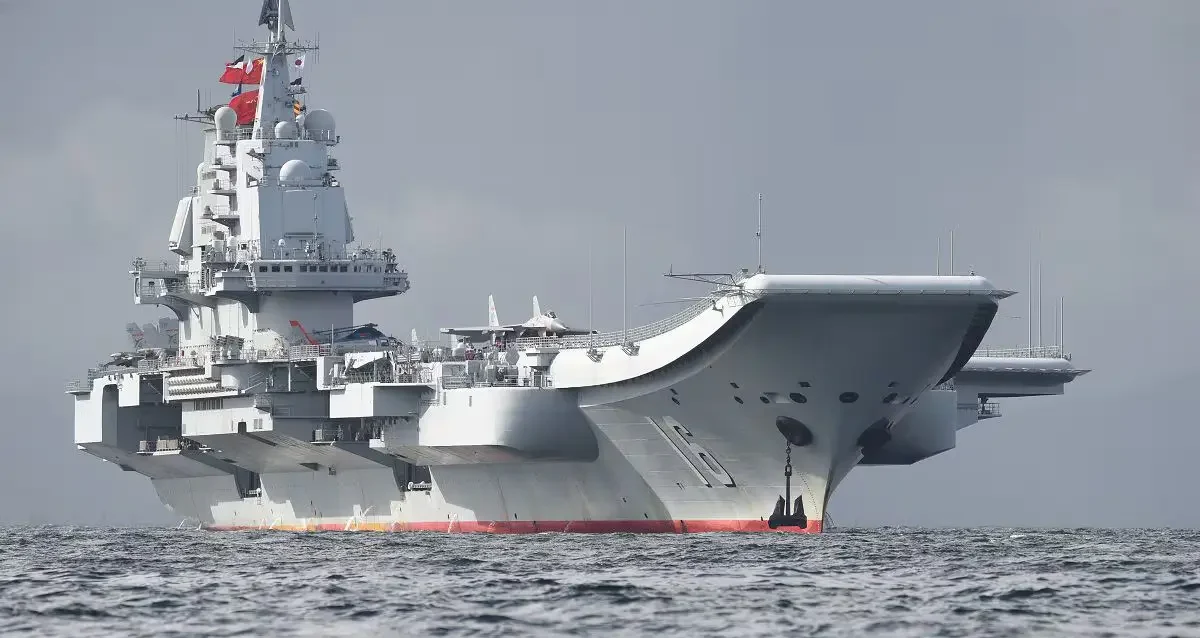
China’s Growing Aircraft Carrier Fleet
TL;DR: Executive Intelligence Brief
China’s growing aircraft carrier fleet represents one of the most dramatic naval transformations in modern history, with the People’s Liberation Army Navy (PLAN) expanding from zero operational carriers in 2012 to three commissioned flattops as of November 2025, fourth nuclear-powered supercarrier under construction, and projections reaching six aircraft carriers by the 2030s. This unprecedented maritime expansion fundamentally reshapes Indo-Pacific strategic balance where China now operates the world’s largest navy by ship count at over 370 battle force vessels compared to U.S. Navy’s 292 ships, with PLAN projected to reach 435 ships by 2030 while U.S. Navy shrinks to 290.
The November 5, 2025 commissioning of Fujian (Type 003), China’s third and most advanced aircraft carrier, marks transformational capability leap as first domestically-designed carrier equipped with electromagnetic aircraft launch systems (EMALS) technology previously exclusive to U.S. Navy’s Ford-class supercarriers. The 80,000-ton Fujian successfully demonstrated catapult launches of J-15T fighters, J-35 stealth fighters, and KJ-600 early warning aircraft during September 2025 sea trials, achieving initial full-deck operational capability that enables launching heavier aircraft with greater fuel and payload capacity than ski-jump predecessors Liaoning and Shandong.
China’s growing aircraft carrier fleet construction pipeline reveals even more ambitious trajectory with Type 004 nuclear-powered supercarrier construction confirmed at Dalian Shipyard in September 2025 through satellite imagery showing reactor containment structure embedded within hull sections. Defense analysts estimate Type 004 will displace 110,000-120,000 tons surpassing U.S. Navy’s 100,000-ton USS Gerald R. Ford, featuring four electromagnetic catapults compared to Fujian’s three, carrying 90+ aircraft including J-35 stealth fighters and KJ-600 airborne early warning platforms, with projected commissioning by early 2030s potentially giving China capabilities rivaling America’s most advanced carriers.
The broader PLAN expansion demonstrates systematic naval modernization where China’s growing aircraft carrier fleet exists within comprehensive shipbuilding campaign that increased battle force from 255 vessels in 2015 to over 370 in 2024 representing roughly 50% growth within single decade while modernizing most inventory. Pentagon projections anticipate 395 ships by 2025 and 435 by 2030, with major surface combatants exceeding 170 units, submarine force reaching 80 units by 2035 featuring China’s first credible sea-based nuclear deterrent, and amphibious capabilities expanding through Type 075 landing-helicopter docks and electromagnetic-catapult-equipped Type 076 under construction.
Historical trajectory proves remarkable: China acquired retired Soviet carrier Varyag from Ukraine in 1998 for scrapping, spent decade reverse-engineering and refitting it into training platform Liaoning commissioned 2012, built first domestically-constructed carrier Shandong commissioned 2019 with incremental improvements, then leapfrogged to electromagnetic catapult technology with Fujian launched 2022 and commissioned 2025, now pursuing nuclear propulsion matching U.S. capabilities that took America six decades developing from USS Enterprise (CVN-65) commissioned 1961.
Strategic implications center on Taiwan contingency scenarios where China’s growing aircraft carrier fleet enables sustained air campaigns supporting amphibious operations, with dual-carrier strike groups conducting unprecedented Western Pacific exercises in 2025 marking first operations beyond First Island Chain and crossing Second Island Chain. The PLAN’s ability to deploy multiple carriers simultaneously, combined with land-based DF-21D and DF-26 “carrier-killer” anti-ship ballistic missiles creating access-denial zones extending 2,000 miles offshore, fundamentally challenges U.S. Navy’s seven-decade Indo-Pacific dominance where American carriers previously operated without peer competitors.
Operational comparisons reveal both impressive progress and persistent gaps: while China now fields three carriers versus U.S. Navy’s 11 nuclear-powered supercarriers, retired U.S. Navy Captain Carl Schuster assesses Fujian’s air operations may run at only 60% the rate of 50-year-old Nimitz-class carriers due to flight deck configuration limitations, extended landing area reducing aircraft repositioning space, and narrower 6-degree angled deck compared to U.S. 9-degree design. However, China’s systematic approach using each carrier generation to test improvements before next iteration suggests Type 004 will incorporate lessons learned, with Type 005 and subsequent carriers potentially achieving or surpassing U.S. operational proficiency by late 2030s.
The carrier air wing modernization parallels platform development, with Shenyang J-15 derivative of Soviet Su-33 forming initial backbone, catapult-capable J-15T variant tested on Fujian, fifth-generation J-35 stealth fighter entering production 2025 providing capabilities approaching F-35C Lightning II, and Xi’an KJ-600 airborne early warning aircraft resembling Northrop Grumman E-2 Hawkeye enabling independent reconnaissance operations beyond land-based support range. This integrated air wing development demonstrates China’s commitment not merely acquiring carrier platforms but building complete carrier strike group capabilities rivaling U.S. Navy’s 70+ years operational experience.
Regional power projection implications extend beyond Taiwan scenarios to South China Sea territorial disputes, protection of Belt and Road Initiative sea lanes through Indian Ocean reaching Persian Gulf, and potential global deployments supporting China’s stated ambition fielding “world-class” military force by 2049. Retired PLA Navy officer Wang Yunfei’s 2018 projection of five to six aircraft carriers by 2030s appears increasingly credible given construction timelines, with six-carrier force enabling continuous two-carrier at-sea presence through rotation cycles where one operates, another trains, and third undergoes maintenance—the minimum force structure for sustained blue-water power projection.
The U.S. response involves Project 33 initiative emphasizing robotic and autonomous capabilities, maintaining 11-carrier fleet despite budget pressures, conducting dual-carrier operations demonstrating networked warfare concepts, and strengthening alliances with Japan, South Korea, Australia, Philippines, and India to collectively counter PLAN expansion. However, Congressional Research Service analysis warns U.S. shipbuilding capacity operates at merely 0.5% of China’s estimated 232 times greater tonnage production capability, with American yards constructing ships at fraction of Chinese pace while struggling recruitment shortfalls, maintenance backlogs, and aging fleet demographics where only 25% of U.S. ships launched after 2010 compared to 70% of Chinese vessels.
China’s growing aircraft carrier fleet represents visible manifestation of broader Chinese military modernization under President Xi Jinping’s leadership, with carriers serving both practical operational requirements and symbolic demonstration of great power status. The transformation from coastal defense navy confined to China’s shores in 2000s to true blue-water force capable of global operations marks geopolitical inflection point rivaling Imperial Japan’s pre-World War II naval buildup or Soviet Navy’s Cold War expansion, with potential consequences for international order, maritime commerce, alliance structures, and great power competition that will define 21st century strategic landscape.
Historical Foundation: From Soviet Scrap to Indigenous Supercarriers
China’s Decades-Long Carrier Aspirations
The People’s Liberation Army Navy has expressed interest in operating aircraft carriers as component of blue-water naval aspirations since the 1970s, recognizing that global maritime power projection requires aviation capabilities extending beyond land-based aircraft range. However, technological limitations, economic constraints, and political prioritization of ground forces delayed carrier program implementation for decades while China studied foreign designs and developed foundational shipbuilding expertise through commercial vessel construction and conventional warship production.
The systematic learning process began in 1985 when China acquired decommissioned British-built Australian light carrier HMAS Melbourne from Royal Australian Navy (RAN) ostensibly for scrapping. Instead of immediate dismantling, Chinese naval architects spent years examining Melbourne’s steam catapult systems, arresting gear, flight deck layout, and structural design before finally scrapping the vessel. This initial exposure provided critical insights into carrier operations, engineering challenges, and design principles that would inform subsequent acquisition efforts.
Between 1985 and 2004, China acquired four retired aircraft carriers for research and reverse-engineering purposes: HMAS Melbourne (British Majestic-class light carrier), Soviet Minsk, Soviet Kiev, and Soviet Varyag. The three Soviet “aircraft-carrying cruisers” provided exposure to different design philosophies, with Minsk and Kiev eventually converted into theme park attractions after thorough technical examination, while Varyag underwent transformation that would launch China’s operational carrier program.
The Varyag acquisition in 1998 proved pivotal. Ukraine inherited the incomplete 60% finished Kuznetsov-class carrier when Soviet Union dissolved in 1991, with the hull languishing in Nikolayev shipyard lacking resources for completion. Chinese businessman purchased Varyag for $20 million claiming intentions to convert it into Macau floating casino. The 67,500-ton hull’s journey from Ukraine through Istanbul’s Bosphorus Strait to China took years, encountering diplomatic obstacles and insurance complications before finally arriving at Dalian Shipyard in 2002.
Rather than casino conversion, China initiated comprehensive refitting program transforming Varyag into training and experimentation platform. The Central Military Commission approved jet fighter pilot captain training program in May 1987, selecting Guangzhou Naval Academy as training site to prepare future carrier commanders and aircrew. By acquiring Varyag, China gained practical platform for testing carrier operations concepts, training personnel, and developing doctrine while reverse-engineering Soviet design to understand carrier construction fundamentals.
Liaoning: China’s First Operational Carrier
The refitting process consumed decade of intensive work, with Chinese engineers stripping Varyag to bare hull, installing new propulsion systems, electronics, sensors, weapons, and completely rebuilding internal compartments to Chinese specifications while maintaining basic Kuznetsov-class configuration including ski-jump flight deck for STOBAR (Short Take-Off, Barrier-Arrested Recovery) operations. The rebuilt carrier was named Liaoning after the province hosting Dalian Shipyard, reflecting provincial pride in shipbuilding heritage and signaling domestic achievement.
Liaoning was commissioned into PLAN on September 25, 2012, marking China’s entry into exclusive club of nations operating aircraft carriers and validating decades of patient capability development. The 60,900-ton displacement carrier measures 304.5 meters length with 70.5-meter beam, powered by steam turbines generating 200,000 horsepower enabling 32-knot maximum speed. The ski-jump deck employs 14-degree ramp allowing aircraft to take off under their own power without catapult assistance, though this limits takeoff weight compared to catapult-equipped carriers.
Initial air wing consisted of Shenyang J-15 carrier-based fighters, Chinese derivative of Soviet Sukhoi Su-33 developed starting 2006 incorporating technology and avionics from J-11B program. The J-15 “Flying Shark” provides air superiority and strike capabilities comparable to American F/A-18 Super Hornet though lacking stealth characteristics of newer fifth-generation designs. Liaoning typically operates 24-26 J-15 fighters plus helicopters for anti-submarine warfare, search and rescue, and logistics support.
The commissioning ceremony featured President Hu Jintao attending as Central Military Commission chairman, signaling political importance placed on carrier program despite some Western analysts dismissing Liaoning as mere training vessel with limited combat relevance. While Liaoning indeed served primarily for crew training, carrier operations doctrine development, and technological learning, the symbolic significance of China operating its first flattop resonated domestically and internationally as demonstration of rising maritime ambitions.
Operational milestones accumulated as PLAN gained confidence: first successful J-15 arrested landing November 2012, first touch-and-go landing November 23, 2012, comprehensive sea trials testing propulsion and aviation systems throughout 2013-2014, first Western Pacific deployment in December 2016 passing through Taiwan Strait, and regular training operations establishing operational proficiency that would inform subsequent carrier designs and construction programs.
Shandong: First Domestically Built Carrier
While Liaoning validated carrier operations concepts and trained initial cadre of officers and aircrew, China simultaneously pursued indigenous carrier construction leveraging knowledge gained from Soviet designs. The Type 002 carrier, later named Shandong, represented China’s first domestically designed and constructed aircraft carrier, though design closely paralleled Liaoning’s Kuznetsov heritage with evolutionary improvements rather than revolutionary changes.
Construction began at Dalian Shipyard in 2013, with keel laying ceremony held November 2013. The construction timeline proved remarkably fast compared to Western programs, with hull launched April 26, 2017, and commissioning ceremony held December 17, 2019, at naval base in Sanya, Hainan Province. President Xi Jinping attended the ceremony, boarding Shandong for inspection tour that emphasized political leadership’s personal investment in naval modernization programs.
Shandong displaces approximately 70,000 tons full load, representing roughly 15% increase over Liaoning’s 60,900 tons. The additional displacement enabled improvements including larger flight deck, enhanced aviation fuel storage, expanded ammunition magazines, improved crew accommodations, and upgraded electronics and sensor suites. The island superstructure was redesigned with improved layout, and flight deck incorporated additional aircraft parking positions enabling larger air wing operations.
Despite improvements, Shandong retained ski-jump STOBAR launch system limiting aircraft takeoff weight and preventing operation of heavier fixed-wing aircraft like airborne early warning platforms that require catapult assistance. This constraint meant Shandong, like Liaoning, operated without organic long-range radar coverage, relying on land-based aircraft or satellite intelligence when operating beyond shore-based support range—a significant operational limitation for blue-water power projection.
The construction-to-commissioning timeline of 72 months demonstrated China’s growing shipbuilding proficiency and confidence, though still slower than the eventual Type 003 Fujian which took 104 months from construction start to commissioning but represented far more complex technological leap. Shandong’s operational deployment pattern established routine South China Sea patrols, occasional Western Pacific transits, and in July 2025 historic port call to Hong Kong marking first carrier visit to the territory since handover from Britain.
Shandong’s air wing mirrors Liaoning’s composition with J-15 fighters as primary fixed-wing component, though upgraded J-15B variants with improved avionics and weapons integration entered service during mid-2020s. The twin-carrier force enabled PLAN to conduct dual-carrier training exercises for first time in 2024, with both Liaoning and Shandong operating together in South China Sea demonstrating coordinated strike group operations and establishing doctrinal foundations for future multi-carrier task forces.
Fujian: China’s Electromagnetic Catapult Revolution
Type 003 Design and Construction
The Type 003 carrier, eventually named Fujian after province facing Taiwan, represents transformational leap in Chinese carrier capabilities by incorporating electromagnetic aircraft launch systems (EMALS) previously exclusive to U.S. Navy’s newest Gerald R. Ford-class supercarriers. The decision to pursue EMALS rather than proven steam catapult technology demonstrated confidence in China’s engineering capabilities and willingness to accept development risks in exchange for technological advantages.
Construction reportedly began at Shanghai’s Jiangnan Shipyard in March 2017, marking departure from Dalian Shipyard that built Liaoning and Shandong. Jiangnan Shipyard’s selection reflected both capacity considerations and expertise in advanced naval construction, having produced China’s Type 055 cruisers and other sophisticated warships. Satellite imagery tracked construction progress through modular assembly techniques where major hull sections were built separately then integrated, accelerating overall construction timeline.
The carrier was launched June 17, 2022, to massive domestic fanfare with naming ceremony emphasizing Fujian Province’s proximity to Taiwan and historical significance in Chinese maritime heritage. Launch occurred three years ahead of some Western intelligence estimates, demonstrating China’s accelerating shipbuilding capabilities and program management proficiency. The 80,000-ton displacement made Fujian China’s largest warship ever constructed and closest equivalent to U.S. Navy’s 97,000-ton Nimitz-class carriers.
Fujian’s flight deck configuration employs flat deck with three electromagnetic catapults rather than ski-jump ramps, enabling CATOBAR (Catapult-Assisted Take-Off But Arrested Recovery) operations identical to U.S. supercarriers. The electromagnetic system uses linear motors powered by electrical energy stored in supercapacitors, jointly developed by China Shipbuilding Industry Corporation and Chinese Academy of Engineering, providing precise control over acceleration profiles that reduce aircraft structural stress compared to steam catapults’ more violent launch dynamics.
The decision to leapfrog steam catapults directly to EMALS mirrored China’s pattern in other technological domains of studying foreign developments, identifying most advanced approaches, then implementing cutting-edge solutions without intermediate transitional steps. This strategy carries risks—U.S. Navy’s Ford-class experienced years of EMALS reliability problems during development—but avoids investment in soon-obsolete steam technology while positioning China for technological parity with America’s newest carriers.
Construction timeline from March 2017 start to November 2025 commissioning totaled approximately 104 months, significantly longer than Shandong’s 72 months but reflecting greater technical complexity of electromagnetic catapult integration, more sophisticated electronics and sensor suites, and comprehensive testing required for revolutionary design departing from proven Kuznetsov heritage. The extended development period also allowed for iterative improvements based on Liaoning and Shandong operational experience.
Sea Trials and Capability Demonstrations
Fujian’s maiden sea trial occurred May 1-8, 2024, focusing on basic propulsion systems, navigation, and seaworthiness rather than aviation operations. The week-long trial validated fundamental ship performance and identified systems requiring adjustment before subsequent test periods. Chinese state media emphasized successful completion, though Western naval analysts noted this represented standard commissioning process rather than exceptional achievement.
Multiple subsequent sea trials through 2024 and 2025 progressively tested more complex systems, with CCTV releasing footage in August 2025 showing simulated catapult trials using carrier-based fighters. The electromagnetic launch system underwent extensive validation ensuring acceleration profiles, holdback mechanisms, and recovery arrestor gear functioned reliably before committing to full operational testing with live aircraft carrying fuel and ordnance.
The breakthrough occurred during ninth sea trial in September 2025 when Fujian successfully demonstrated electromagnetic catapult launches of three different aircraft types: J-15T fighter (catapult-capable variant of standard J-15), J-35 stealth fighter (carrier version of land-based FC-31), and KJ-600 early warning aircraft. This tri-aircraft capability validation proved the electromagnetic system’s versatility launching aircraft across wide weight and performance spectrum, from lighter fighters to heavier reconnaissance platforms requiring greater end-speed for safe flight.
The KJ-600 airborne early warning aircraft represents particularly significant capability addition, resembling Northrop Grumman E-2 Hawkeye with high-straight wing design and aft-folding configuration. The platform features suspected AESA-type radome system providing 360-degree radar coverage, enabling Fujian to detect threats and coordinate air operations independently of land-based support—a critical requirement for sustained blue-water operations where shore-based radar and command facilities cannot provide coverage.
September 2025 testing also validated full-deck operations where aircraft launched from catapults, conducted training missions, then recovered via arrestor wires in continuous cycle demonstrating operational tempo approaching combat-ready proficiency. Chinese military experts characterized successful tri-aircraft catapult testing as achieving “initial full-deck operational capability,” indicating Fujian had mastered core aviation operations though additional training would refine crew proficiency and develop combat tactics.
November 2025 Commissioning Ceremony
President Xi Jinping attended the commissioning and flag-presenting ceremony for Fujian at naval port in Sanya, Hainan Province on November 5, 2025, according to Xinhua News Agency reporting. The ceremony included over 2,000 representatives from PLAN and aircraft carrier construction units, emphasizing both military and industrial contributions to carrier program success. Xi’s personal attendance signaled highest political importance placed on carrier fleet expansion as symbol of China’s military modernization and great power status.
Following the ceremony, Xi boarded Fujian for comprehensive inspection tour examining flight deck, island superstructure, hangar deck, and operational spaces while posing for photographs with carrier unit representatives. State media coverage emphasized the carrier’s domestically-designed electromagnetic catapults as technological breakthrough placing China alongside United States as only nations fielding EMALS-equipped carriers, framing achievement as validation of Chinese engineering prowess and socialist system superiority.
Zhang Junshe, Chinese military affairs expert, told Global Times that Fujian’s commissioning represents “symbol of the achievements in the transformation of the PLA Navy from coastal defense to far seas defense, marking that China has officially entered an era with three aircraft carriers, as well as an era of electromagnetic catapults-equipped carrier.” This characterization reflects official narrative positioning carriers as defensive capabilities protecting maritime interests rather than offensive power projection threatening neighbors.
The commissioning brings three major capability leaps according to Zhang’s analysis: first, electromagnetic catapult system enabling aircraft takeoff with full fuel and ammunition increasing combat radius and attack capability; second, significant increase in aircraft sortie rate thanks to faster electromagnetic catapult cycle times compared to ski-jump operations; third, formation of far seas combat system integrating offense and defense through KJ-600 early warning aircraft providing comprehensive battlespace awareness.
Fujian’s homeporting at Sanya naval base in South China Sea alongside Shandong creates dual-carrier presence in region adjacent to disputed territorial waters and Taiwan Strait. Zhang noted the “larger and vaster area, deeper water, and more complex sea conditions” of South China Sea make it more suitable for realistic combat training than shallower waters elsewhere. Having both carriers homeported together facilitates forming dual-carrier strike groups, executing far seas defense operations, seizing air and sea control, and conducting land attack and island offensive operations.
The timing of Fujian’s commissioning—three years after launch and eight years after construction start—positions China’s carrier program for sustained expansion. With construction methodologies proven, electromagnetic catapult technology validated, and operational doctrine developing through Liaoning and Shandong experience, PLAN possesses foundation for accelerated carrier production through 2030s potentially achieving six-carrier force that retired naval officers and analysts have projected.
Type 004: China’s Nuclear-Powered Supercarrier
Construction Evidence and Design Specifications
Commercial satellite imagery posted on Chinese social media in late September 2025 revealed new hull sections of Type 004 aircraft carrier under construction at Dalian Shipyard in Liaoning Province, with sections not visible in August 2025 imagery indicating construction commencement in September 2025 timeframe. The satellite photographs showed massive prefabricated modules consistent with carrier flight deck structures including elongated sections resembling catapult tracks, and critically, a structure measuring approximately 16 meters by 13 meters consistent with nuclear reactor containment vessel embedded within hull.
The War Zone reported in November 2025 that construction imagery “strongly suggests the vessel will be nuclear-powered,” with reactor containment structure providing key indicator of propulsion design. The size and configuration of frames confirmed in satellite imagery match reactor shielding configurations found within U.S. Navy CVN carrier hulls, suggesting China has successfully developed naval nuclear propulsion technology previously exclusive to American and French navies.
Defense analysts estimate Type 004 will displace between 110,000 and 120,000 tons, making it not only largest warship ever built in Asia but potentially largest aircraft carrier in world, surpassing U.S. Navy’s 100,000-ton USS Gerald R. Ford. The increased displacement accommodates twin pressurized water reactors estimated to produce 450-500 megawatts combined, providing virtually unlimited range and sufficient electrical power for advanced sensors, electromagnetic catapults, and future directed energy weapons or railgun systems requiring massive energy generation.
The Type 004 design reportedly features four to five electromagnetic aircraft launch systems compared to Fujian’s three catapults, enabling higher aircraft sortie rates approaching or matching U.S. supercarrier operational tempo. The full-length CATOBAR flight deck with expanded island superstructure incorporates lessons learned from Fujian’s configuration limitations that reduce launch and recovery efficiency to approximately 60% of comparable U.S. carriers according to retired American naval officers’ assessments.
Air wing capacity projections suggest Type 004 will carry 90-100 aircraft including J-15T fighters, J-35 stealth fighters providing fifth-generation capabilities approaching F-35C Lightning II performance, KJ-600 airborne early warning platforms, anti-submarine warfare helicopters, and potentially stealth attack drones currently under development. This diverse air wing mirrors U.S. carrier air wing composition and enables independent sustained operations without land-based support across full spectrum of maritime combat missions.
Construction timeline projections based on visible progress suggest launch window between 2028-2029, followed by several years of sea trials and systems integration before operational commissioning in early 2030s. Parallel satellite monitoring of supply-chain facilities in northern China revealed increased shipments of high-grade naval steel, large-scale electrical components, and heavy industrial modules linked to reactor and power-generation systems, reinforcing nuclear propulsion assessment and indicating nationwide logistical effort supporting the program.
Nuclear Propulsion Strategic Advantages
Nuclear propulsion provides transformational advantages over conventional fuel-powered carriers, fundamentally altering operational capabilities and strategic flexibility. Nuclear carriers achieve virtually unlimited range constrained only by crew provisions and aircraft fuel rather than ship’s own propulsion fuel, enabling sustained operations in distant waters without vulnerable fuel replenishment from oilers that represent high-value targets for enemy submarines and anti-ship missiles.
The U.S. Navy demonstrated nuclear carrier advantages through decades of global deployments where Nimitz-class and Ford-class carriers routinely conduct six-month deployments without refueling, operating continuously at high speeds, and generating abundant electrical power for sensors, weapons, and aircraft support systems. China observed these capabilities closely, recognizing that conventional carriers requiring regular refueling cannot match nuclear vessels’ operational flexibility and sustainability.
For China specifically, nuclear propulsion enables true blue-water operations beyond First Island Chain (Okinawa-Taiwan-Philippines arc) and Second Island Chain (Bonin Islands-Guam-Papua New Guinea span) without dependence on forward fuel depots or host-nation bunkering arrangements. The ability to deploy carriers to Indian Ocean, Western Pacific, or even potentially Atlantic and Mediterranean theaters without refueling concerns provides strategic options unavailable to conventionally-powered vessels constrained by fuel consumption and oiler availability.
The abundant electrical power generation from nuclear reactors proves critical for future weapons systems including directed energy weapons (DEWs) requiring sustained multi-megawatt power, advanced AESA radars for extended-range threat detection, electromagnetic catapults demanding massive instantaneous power delivery, and potential railgun systems needing extreme energy for projectile acceleration. Conventional carriers struggle providing sufficient electrical generation for these energy-intensive systems while simultaneously powering propulsion and ship systems.
Nuclear propulsion also eliminates fleet oiler vulnerabilities where tankers accompanying conventional carrier battle groups represent among most critical and least defended vessels, making attractive targets for submarine attacks or long-range anti-ship missiles. Nuclear carriers dramatically reduce underway replenishment requirements and exposure of logistics ships to enemy action, enhancing overall strike group survivability while reducing escort requirements for protecting vulnerable support vessels.
However, significant challenges accompany nuclear carrier development. China lacks extensive naval nuclear propulsion experience beyond submarine reactors operating at fraction of carrier power requirements. The engineering complexity of pressurized water reactors generating 450-500 megawatts, radiation shielding throughout massive hull structure, reactor safety systems, specialized crew training, and nuclear fuel cycle management all represent technological hurdles China must overcome to achieve reliable operational capability.
The November 2024 Associated Press report citing Middlebury Institute of International Studies analysis identified land-based prototype nuclear reactor under development at mountain site outside Leshan city in Sichuan Province specifically for large surface warship application. This prototype reactor facility enables testing reactor designs, validating safety systems, training crews, and resolving engineering challenges before installation in actual carrier hull—an approach mirroring U.S. development methodology that proved essential for successful naval nuclear propulsion programs.
Broader Type 004 Program Context
The Type 004 program exists within larger context of systematic Chinese military modernization under President Xi Jinping’s leadership, with stated goal of achieving modernized military force by 2035 and “world-class” force rivaling United States by 2050. Aircraft carriers serve both practical operational requirements for power projection and symbolic demonstration of great power status, making carrier program priority receiving sustained political support and financial resources.
Parallel developments at Huangjia Lake testing facility in Wuhan observed in September 2025 included full-scale electromagnetic launch track suggesting carrier subsystems including EMALS integration undergo intensive land-based validation before sea deployment. This methodical testing approach reduces operational risks by identifying and resolving technical problems in controlled shore environment rather than discovering issues during expensive sea trials or worse, operational deployments.
Social media imagery circulating on Chinese platforms showed delivery of high-grade naval steel, large-scale electrical components, and heavy industrial modules to Dalian Shipyard, with defense observers noting scale of prefabrication indicates China’s growing efficiency in modular shipbuilding techniques significantly reducing construction timelines. The ability to build major carrier sections in parallel then integrate them during final assembly compresses overall schedule while maintaining quality control through specialized fabrication facilities.
The construction pace aligns with China’s strategic goal of establishing credible carrier force before potential Taiwan contingency window that some analysts project could open mid-to-late 2020s as China achieves sufficient military advantage over Taiwan’s defenses and U.S. intervention capabilities. Having operational nuclear-powered carrier by early 2030s alongside three conventional carriers provides PLAN with multi-carrier strike capability supporting potential amphibious operations against Taiwan or other regional contingencies.
Looking beyond Type 004, Chinese naval analysts and government statements suggest ambitions for additional carriers potentially reaching seven total platforms if Type 004 produces four ships as some projections indicate. A seven-carrier force (three existing conventional carriers plus four Type 004 nuclear supercarriers) would enable continuous two-carrier at-sea presence in both Western Pacific and Indian Ocean simultaneously, representing genuine global power projection capability rivaling U.S. Navy’s worldwide forward presence.
PLAN Fleet-Wide Expansion: The Shipbuilding Surge
From 255 to 435 Ships in Fifteen Years
China’s growing aircraft carrier fleet exists within broader context of comprehensive naval expansion that fundamentally transformed PLAN from coastal defense force to world’s largest navy by ship count. In 2015, Office of Naval Intelligence counted 255 battle-force vessels in People’s Liberation Army Navy. By mid-2024, U.S. Department of Defense estimated more than 370 hulls and projected close to 400 in 2025. Pentagon assessments anticipate PLAN reaching 395 ships by 2025 and 435 ships by 2030, representing roughly 50% expansion within ten years while modernizing most inventory.
This growth trajectory proves unprecedented in modern naval history outside major wartime mobilizations. The systematic expansion reflects deliberate strategic choices allocating massive resources toward naval capabilities, sustained political commitment under Xi Jinping’s leadership prioritizing maritime power, and China’s unmatched shipbuilding industrial capacity now estimated at 232 times greater tonnage production than United States according to some analyses of comparative shipyard output.
Battle-force growth followed strategic priorities rather than random expansion. Major surface combatants increased from approximately 95 modern units in 2015 to more than 140 in 2024, with projections exceeding 170 units by 2030. Auxiliary and amphibious ships almost doubled during same period, providing logistics support and power projection capabilities essential for sustained far-seas operations. Meanwhile older single-purpose craft were retired, leaving fleet weighted toward multi-role designs incorporating latest weapons, sensors, and networking technologies.
Production rhythms remain rapid because three large coastal shipbuilding complexes—Dalian, Jiangnan, and Huangpu—can launch destroyer or frigate every few weeks through modular construction techniques and parallel assembly processes. This industrial capacity dwarfs American shipbuilding where limited yards struggle maintaining aging infrastructure while competing for skilled workforce increasingly drawn to higher-paying commercial sectors. The asymmetry suggests China can continue expanding fleet faster than U.S. can respond through
traditional shipbuilding programs.
Surface Combatant Modernization
The surface combatant force demonstrates qualitative improvements alongside quantitative growth. Ten Type 055 cruisers—each displacing over 12,000 tons fully loaded and carrying 112 vertical launch system cells—provide area air defense and land attack capabilities rivaling U.S. Navy’s Ticonderoga-class cruisers and Arleigh Burke-class destroyers. The Type 055 represents China’s most sophisticated surface warship, featuring integrated mast with advanced AESA radars, comprehensive sensor suite, dual-band radar system, and weapons loadout including long-range anti-ship missiles, land-attack cruise missiles, surface-to-air missiles, and anti-submarine rockets.
More than thirty Type 052D and 052DL destroyers provide distributed air defense coverage across carrier strike groups and surface action groups, each carrying 64 VLS cells with multi-mission missiles. Frigate production centered on Type 054A class with over 40 ships delivered representing modern multi-role platforms. Corvette forces expanded to 72 Type 056/056A vessels providing patrol and anti-submarine capabilities in coastal waters.
Submarine Force Development
China’s underwater fleet grew deliberately with improvements in quality. The 2024 Pentagon report lists 6 SSN, 6 SSBN, and 48 diesel/AIP units, with projections reaching 80 by 2035. Third-generation Type 095 SSN under construction represents technological leap with improved quieting and weapons. Six Type 094 SSBNs achieved routine patrol status armed with JL-2 missiles, providing China’s first credible sea-based nuclear deterrent.
Amphibious Warfare Expansion
Three Type 075 landing-helicopter docks entered service displacing 40,000 tons each, with fourth conducting sea trials. Type 076 under construction features electromagnetic launch track for unmanned aerial vehicles. Combined carrier and amphibious expansion creates complementary capabilities for Taiwan scenarios and expeditionary operations.
United States Navy Comparison
Carrier Force Asymmetries
The U.S. Navy operates 11 nuclear-powered carriers (one Ford-class, ten Nimitz-class) each displacing ~100,000 tons and carrying 75+ aircraft. Nuclear propulsion provides unlimited range and 50-year service life enabling sustained global presence. However, relevant comparison isn’t 11 U.S. carriers versus China’s three, but how many U.S. can concentrate in Western Pacific (typically 2-3) versus China’s ability to deploy all carriers within days from nearby bases during contingency.
Overall Fleet Dynamics
U.S. Navy: 296 battle force ships (Sept 2024), projected 294 by FY2030 – declining trajectory China PLAN: 370+ ships (2024), projected 435 by 2030 – expanding trajectory
Tonnage: U.S. maintains 3.6 million tons vs China’s 2 million tons, but numerical gap widens annually. U.S. advantages include nuclear propulsion (11 carriers, 68 submarines), advanced sensors, decades operational experience, and 9 large amphibious assault ships operating F-35Bs. China’s 232x shipbuilding capacity advantage enables sustained expansion U.S. cannot match.
Project 33 Response
U.S. Navy’s Project 33 emphasizes unmanned systems by 2027, maintenance acceleration, and alliance strengthening with Japan, South Korea, Australia, India. However, shipbuilding capacity limitations force reliance on asymmetric approaches rather than matching China’s numerical growth.
Strategic Implications
Taiwan Contingency
Dual-carrier or tri-carrier strike groups operating east of Taiwan could establish air superiority, suppress defenses, and protect amphibious forces. Fujian commissioning timing and Sanya homeporting alongside Shandong creates “strategic deterrence effect” against Taiwan independence per Chinese military experts. However, carrier vulnerability to U.S. submarines, B-21 bombers, LRASM missiles, and Tomahawk strikes introduces uncertainties.
South China Sea Dominance
Dual-carrier presence at Sanya enables continuous single-carrier operations or rapid surge during crises, shifting balance toward Chinese dominance in disputed waters. Regional nations lack capabilities contesting carrier operations, driving closer security cooperation with U.S., Japan, India.
Belt and Road Protection
Indian Ocean deployments projected to protect sea lanes through Malacca Strait to Persian Gulf where majority Chinese oil imports transit. Djibouti base provides first overseas facility, though logistics constraints limit sustained deployments absent additional bases. Type 004 nuclear carriers would address endurance limitations.
Alliance Arms Race
Japan converting Izumo-class to operate F-35Bs, South Korea accelerating naval modernization, Australia acquiring nuclear submarines through AUKUS, India developing INS Vishal 65,000-ton carrier. Regional responses demonstrate China’s growing aircraft carrier fleet drives reciprocal military investments across Indo-Pacific.
Reshaping Indo-Pacific Balance Through 2030
China’s growing aircraft carrier fleet represents one of most consequential military developments of early 21st century, transforming PLAN from coastal defense to blue-water challenger. Expansion from zero carriers (2012) to three (2025), with Type 004 nuclear supercarrier under construction and projections reaching six by 2030s, fundamentally alters strategic calculations for U.S., allies, and regional nations.
Fujian’s November 5, 2025 commissioning marks technological milestone as only EMALS-equipped carriers beyond U.S. Ford-class. Successful September 2025 catapult testing of J-15T, J-35 stealth fighters, KJ-600 early warning aircraft validates technology and establishes foundation for future improvements.
Type 004 nuclear carrier (September 2025 construction start, 110,000-120,000 ton projection) represents transformational capability leap with unlimited range, abundant power for directed energy weapons, elimination of vulnerable oiler requirements. However, operational proficiency gaps and naval nuclear propulsion challenges require years developing reliable capability.
PLAN expansion from 255 ships (2015) to projected 435 (2030) provides context where carriers operate within comprehensive modernization encompassing surface combatants, submarines, amphibious forces, logistics. The 50% fleet growth proves unprecedented outside wartime, reflecting strategic prioritization, political commitment under Xi, and 232x shipbuilding advantage over U.S.
Taiwan contingency implications center on dual/tri-carrier strike groups enabling sustained air campaigns, though carrier vulnerability to U.S. submarines, bombers, long-range missiles introduces uncertainties. South China Sea dual-carrier presence reinforces sovereignty claims while Belt and Road drives Indian Ocean deployments.
U.S. response through Project 33 (unmanned systems, alliance strengthening) faces shipbuilding capacity asymmetries preventing matching China’s pace. Comparison of 11 U.S. vs 3-6 Chinese carriers misleads when relevant metric focuses Western Pacific where proximity, land-based missiles, growing carrier force potentially overcome U.S. global superiority through local concentration.
Looking toward 2030 and beyond, China’s growing aircraft carrier fleet symbolizes broader power shift in Indo-Pacific where post-WWII U.S.-dominated order faces systematic challenge from rising China wielding economic weight, military capabilities, strategic ambitions rivaling American influence. The carrier competition represents larger geopolitical contest between established and rising powers, democratic and authoritarian models, competing visions for regional order shaping 21st century.
The transformation from acquiring Soviet scrap (1998) to potentially fielding six carriers including nuclear supercarriers (2035) demonstrates remarkable technological progress, strategic patience, massive resource investment toward maritime power. Whether China achieves genuine parity with U.S. or creates sufficient regional capabilities for near-seas contingencies remains uncertain, but trajectory clearly points toward fundamentally altered naval balance demanding sustained attention, strategic adaptation, potentially increased defense investments from U.S. and allies maintaining favorable correlation of forces in Indo-Pacific maritime domain.
Frequently Asked Questions
How many aircraft carriers does China have in 2025?
China operates three commissioned carriers: Liaoning (2012), Shandong (2019), Fujian (November 2025). Type 004 nuclear carrier construction began September 2025, projected early 2030s commissioning. Analysts project 5-6 carriers by 2030s, potentially seven if Type 004 produces multiple ships. China’s growing aircraft carrier fleet expanded from zero (2012) to three (2025) within thirteen years.
How does Fujian compare to US carriers?
Fujian (80,000 tons, electromagnetic catapults) represents major advancement but achieves only 60% operational tempo of Nimitz-class per retired U.S. Navy assessments due to flight deck configuration, 6-degree vs 9-degree angled deck. Conventionally powered vs U.S. nuclear propulsion. Carries 40-60 aircraft vs U.S. 75+. Chinese crews lack decades U.S. operational experience since 1940s.
What is Type 004 nuclear carrier?
China’s first nuclear-powered carrier under construction at Dalian (September 2025 satellite imagery showing reactor containment). Estimated 110,000-120,000 tons surpassing U.S. Ford-class 100,000 tons, potentially world’s largest carrier. Features twin reactors (450-500 megawatts), 4-5 electromagnetic catapults, 90-100 aircraft capacity. Launch 2028-2029, commissioning early 2030s.
How fast is China expanding its navy?
PLAN grew from 255 ships (2015) to 370+ (2024) to projected 435 (2030) – 50% increase within 15 years. Major combatants: 95 (2015) → 140 (2024) → 170+ (2030). Submarines projected 80 units by 2035. Shipbuilding capacity 232x greater than U.S. enables sustained expansion.
Can Chinese carriers operate globally?
Current carriers limited by conventional propulsion requiring refueling, lack of overseas bases (only Djibouti), limited replenishment capabilities. Type 004 nuclear carrier provides unlimited range but escorts, aircraft fuel, provisions still require replenishment. Primary focus remains Western Pacific (Taiwan, South China Sea) rather than global presence.
What aircraft operate from Chinese carriers?
J-15 fighters (Soviet Su-33 derivative), J-15T catapult-capable variant, J-35 stealth fighter (2025 production, approaching F-35C capabilities), KJ-600 airborne early warning (resembles E-2 Hawkeye), Z-18F/J helicopters. Air wings: 24-26 aircraft (Liaoning/Shandong), 40-60 (Fujian), vs 75+ on U.S. carriers.
China vs US shipbuilding capacity?
China operates at 232x greater tonnage capacity than U.S. per some assessments. Three major complexes (Dalian, Jiangnan, Huangpu) launch destroyer/frigate every few weeks via modular construction. U.S. limited yards struggle with aging infrastructure, workforce shortages, cost overruns. China dominates 40%+ global commercial shipbuilding; U.S. commercial yards nearly disappeared.
What are China’s strategic carrier goals?
Regional dominance in South/East China Seas, Taiwan military scenario capabilities, Belt and Road sea lane protection (Indian Ocean to Persian Gulf), deterrent against U.S. intervention, great power status demonstration. Goal: “world-class” military by 2049. Six-carrier force enables continuous two-carrier presence through rotation.
How do Chinese carriers threaten US?
Contest Western Pacific dominance, complicate Taiwan intervention (carriers operate near mainland vs U.S. from longer distances), enhance South China Sea presence, potential sea lane interdiction (30% global trade), naval diplomacy expanding Chinese influence. However, U.S. maintains advantages: 11 vs 3 carriers, nuclear propulsion, operational experience, global bases, alliances, technology lead.
Will China achieve carrier parity with US?
Full parity faces obstacles: decades experience gap (U.S. since 1940s vs China since 2012), nuclear propulsion technology gap (China now developing what U.S. perfected over 60 years), global logistics networks China lacks, combat-tested systems. However, systematic improvement approach, massive shipbuilding capacity, sustained defense growth suggest qualitative parity possible by 2040s. Regional Western Pacific parity more achievable through geographic proximity and local force concentration.