

Best Home EV Chargers 2026
Last updated: May 2026
The verdict at a glance
- Best overall — ChargePoint Home Flex (~$549). The most flexible charger on the market: 16–50 amps adjustable, plug-in or hardwired, the best companion app, and the lowest field-failure rate we found. Axis Score: 89/100.
- Runner-up / best for mixed-EV homes — Tesla Universal Wall Connector (~$600). The only charger with both NACS and J1772 built into one unit, plus the longest warranty. Axis Score: 86/100.
- Best value — Emporia Classic (~$399). A capable 48-amp smart charger for the price of a basic one. Axis Score: 73/100.
The best home EV charger in 2026 is not the one with the biggest number on the box. It is the one that finishes charging inside your real parking window, works with the EV you will own in three years, and does not quietly trigger a $5,000 electrical-panel upgrade. Most roundups rank chargers on speed and app features and stop there. We built a scoring framework that also weighs the two things that actually decide whether a charger is right for your house: how it interacts with your panel, and how futureproof its connector is.
Below are six chargers worth buying in 2026, each scored out of 100 on the Axis Home Charger Scorecard, plus an honest note on who should skip each one. Prices move constantly and utility rebates are common, so treat every figure as a current street price, not a fixed quote.
Table of Contents
How we scored every charger
Affiliate-driven roundups have a structural incentive to crown whichever charger pays the highest commission. We removed that variable by scoring each unit against a fixed rubric — the Axis Home Charger Scorecard — so the ranking reflects the hardware, not a payout.
Each charger earns up to 20 points in five categories, for a total out of 100:
- Charging performance — rated amperage and real-world kW delivered.
- Install flexibility — plug-in versus hardwired options, amperage adjustability, and whether the charger can adapt to a constrained electrical panel.
- Connector futureproofing — NACS availability and how cleanly the charger handles the J1772-to-NACS transition.
- Smart features & ecosystem — app quality, scheduling, energy monitoring, solar integration, and voice control.
- Reliability & support — warranty length, build quality, observed field-failure rates, climate tolerance, and safety certification.
Scores draw on verified manufacturer specifications, current pricing across major retailers, certification records (UL and Energy Star), and field-reliability patterns reported by professional installers and owners. Our full method is described in the how we evaluated section. The scorecard rewards a feature-complete ideal — which means a deliberately no-frills charger like the Grizzl-E loses points for omitting an app it was never meant to have. Where that happens, we say so.
The 2026 home EV charger comparison table
| Charger | Best for | Max amperage | Connector | Install | Cable | Warranty | Price (approx.) | Axis Score |
|---|---|---|---|---|---|---|---|---|
| ChargePoint Home Flex | Overall / flexibility | 50A (12 kW) | J1772 or NACS | Plug-in or hardwired | 23 ft | 3 years | $549 | 89 |
| Tesla Universal Wall Connector | Tesla & mixed-EV homes | 48A (11.5 kW) | NACS + J1772 (both) | Hardwired only | 24 ft | 4 years | $600 | 86 |
| Emporia Pro | Tight electrical panels | 48A (11.5 kW) | J1772 or NACS | Plug-in or hardwired | 25 ft | 3 years | $589 | 82 |
| Wallbox Pulsar Plus | Small spaces | 48A (11.5 kW) | J1772 or NACS | Plug-in or hardwired | 25 ft | 3 years | $499 | 81 |
| Emporia Classic | Budget smart charging | 48A (11.5 kW) | J1772 or NACS | Plug-in or hardwired | 24 ft | 3 years | $399 | 73 |
| Grizzl-E Classic | Rugged / cold climates | 40A (9.6 kW) | J1772 or NACS | Plug-in or hardwired | 24 ft | 3 years | $399 | 67 |
A note on the numbers: a 40-amp charger draws on a 50-amp circuit and adds roughly 25–30 miles of range per hour; a 48-amp charger needs a 60-amp circuit and adds about 32–44 miles per hour. But your car sets the real ceiling — if your EV’s onboard charger accepts only 7.7 kW of AC power, an 11.5 kW charger cannot go faster. Check your vehicle’s maximum AC charge rate before paying for amperage you cannot use.
Best overall: ChargePoint Home Flex
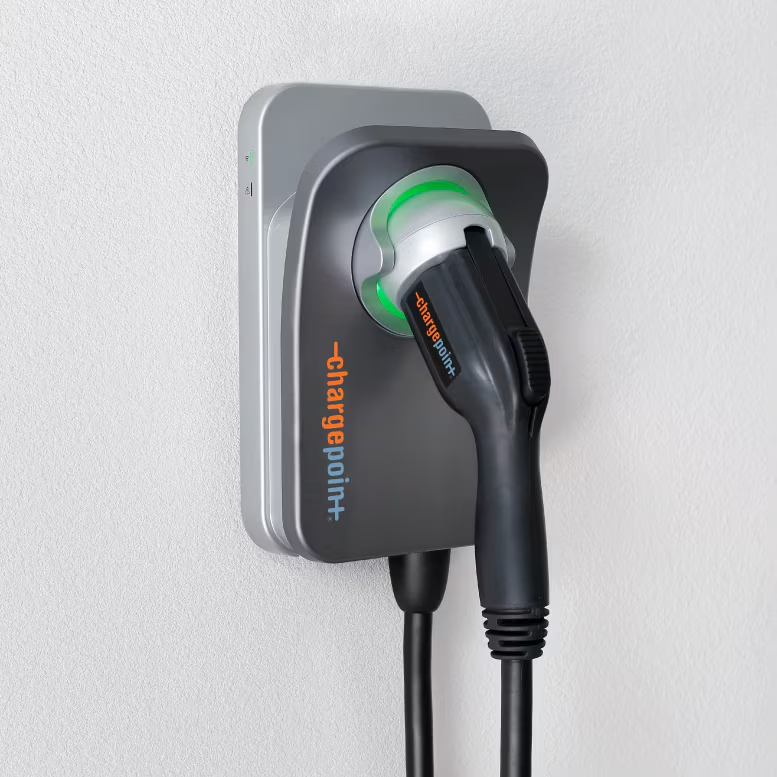
Axis Score: 89/100 · ~$549
The Home Flex has sat at the top of home-charger rankings for years, and in 2026 it still earns the position. It is the most adaptable charger you can buy, and adaptability is what separates a charger that fits your house from one that fights it.
What stands out. The amperage is adjustable from 16 to 50 amps — the widest range here — so if your panel cannot safely support a full 50-amp circuit, you can dial the charger down rather than pay for a panel upgrade. It installs either as a plug-in unit (into a NEMA 6-50 or 14-50 outlet) or hardwired, which almost no other premium charger offers. At a full 50 amps it delivers 12 kW, around 37 miles of range per hour. The ChargePoint app is the best in the category: it ties your home charging together with the public ChargePoint network in one dashboard, schedules off-peak charging, tracks per-session energy and cost, and supports Alexa. In our research it also showed the lowest field-failure rate of any charger here — one installer reported issues on roughly 2% of units, against 10–12% for some budget rivals. It is available with a J1772 or a NACS connector, and existing owners can buy a NACS cable conversion kit. If you also use public ChargePoint stations, our complete ChargePoint Stations guide explains how the home-and-public ecosystem fits together.
Where it falls short. It is the priciest mainstream pick. You must choose J1772 or NACS at purchase — unlike the Tesla Universal, you do not get both. The app has no solar integration and no Bluetooth fallback, so a garage with weak Wi-Fi can be frustrating to set up. And some owners on GFCI-protected circuits report nuisance tripping on the plug-in version; if your local code requires a GFCI breaker, choose the hardwired install.
Who should look elsewhere. Tesla-only households can save money with a Tesla charger. Buyers on a tight budget who do not need a polished app will get 90% of the capability from the Emporia Classic for $150 less.
Runner-up: Tesla Universal Wall Connector
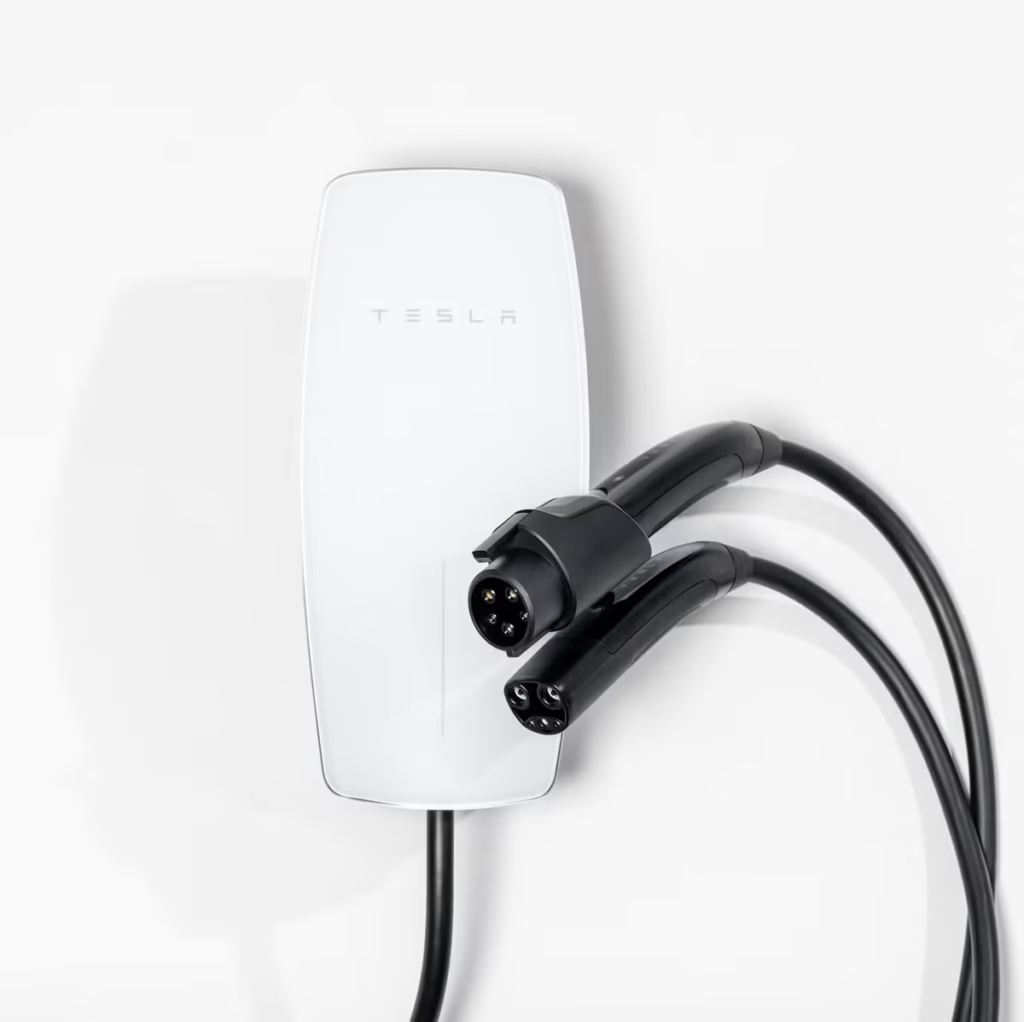
Axis Score: 86/100 · ~$600
The connector standard is mid-transition: most EVs sold before 2025 use J1772, most sold after use NACS. The Tesla Universal Wall Connector is the only charger here that refuses to make you bet on the outcome.
What stands out. It has both a NACS connector and a built-in J1772 adapter in one housing, so it natively charges a 2019 Chevy Bolt and a 2026 Tesla without a loose adapter to lose. It delivers 48 amps (11.5 kW), carries the longest warranty in the category at four years, and supports power sharing — multiple units can split one circuit, which is genuinely useful for a two-EV garage. For households with a Tesla and solar, it integrates with the Powerwall to charge from surplus solar production. Build quality is excellent, and the 24-foot cable is the longest here.
Where it falls short. It is hardwired only — there is no plug-in option, so it becomes a permanent fixture you cannot take with you if you move, and installation must be done by an electrician. The Tesla app’s smart features (scheduling, monitoring) are richest for Tesla vehicles; non-Tesla drivers get a more basic experience. At $600 it is the most expensive pick, though the dual connector arguably justifies it.
Who should look elsewhere. If you rent, move often, or want a charger you can unplug and take with you, choose a plug-in unit. Tesla-only households that will never own another brand can buy the standard (NACS-only) Tesla Wall Connector for around $475 and save $125 for hardware they will not miss.
Best for tight electrical panels: Emporia Pro
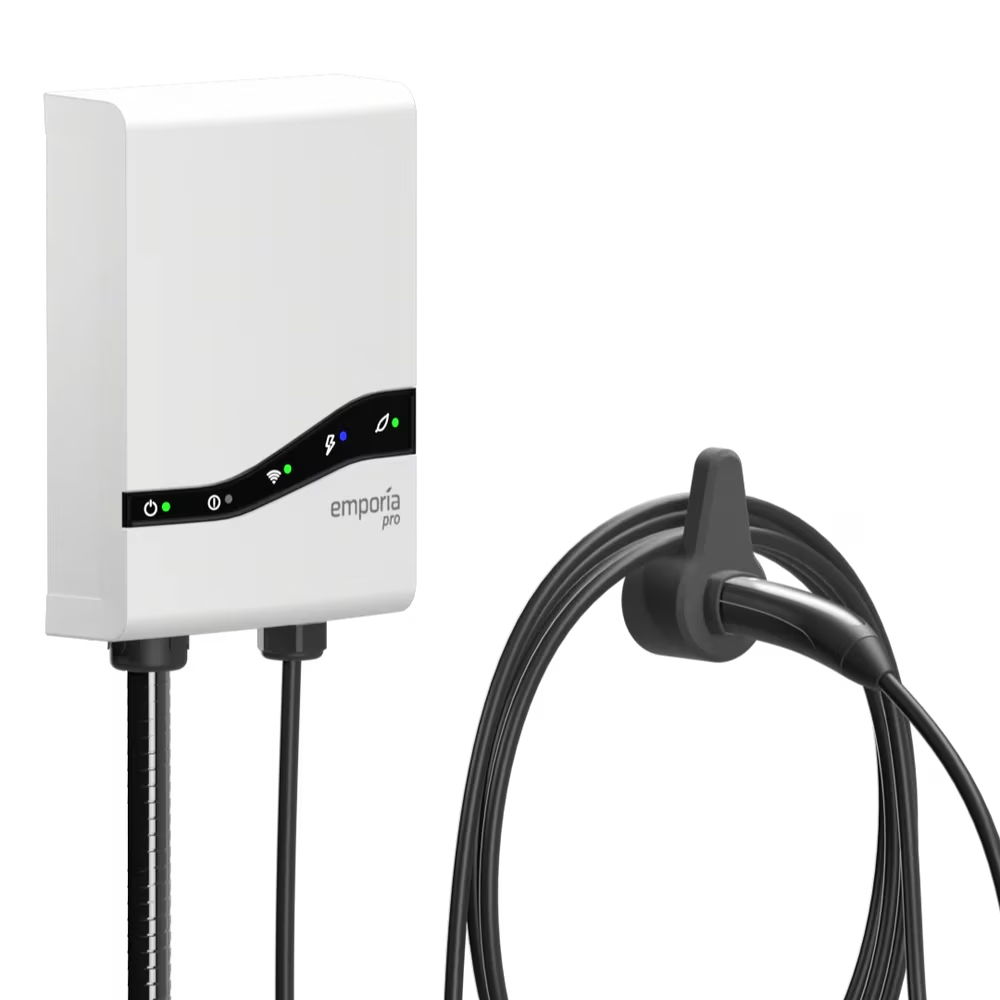
Axis Score: 82/100 · ~$589
Here is the trap most charger roundups never mention: the “best” charger on paper can demand an electrical service your house does not have, turning a $550 purchase into a $4,000–$9,000 project. The Emporia Pro is built specifically to dodge that trap.
What stands out. Its standout feature is PowerSmart dynamic load management. The Pro monitors your home’s real-time electrical draw and automatically throttles charging when other big loads — an oven, an HVAC system — are running, so a high-power charger can operate safely on a panel that could not otherwise support it. On a modern, safe 100-amp panel, that can eliminate the need for a service upgrade entirely. It includes the Emporia Vue home energy monitor, giving you whole-home energy visibility, not just charging data. It delivers 48 amps (11.5 kW), installs plug-in or hardwired, has the longest cable here at 25 feet, and is available with a J1772 or NACS connector.
Where it falls short. Reliability is the weak spot. Professional installers report meaningfully higher early-failure rates on Emporia units — in the range of 10–12% within the first couple of years — than on ChargePoint or Tesla hardware. Load management is also not a fix for a genuinely unsafe panel; if your panel is an old Federal Pacific or Zinsco unit, the honest answer is a panel replacement, not a smart charger layered on top. You also choose your connector at purchase.
Who should look elsewhere. If your home already has 200-amp service with headroom, you do not need load management, and a ChargePoint Home Flex buys you better reliability for a similar price.
Best for small spaces: Wallbox Pulsar Plus
Axis Score: 81/100 · ~$499
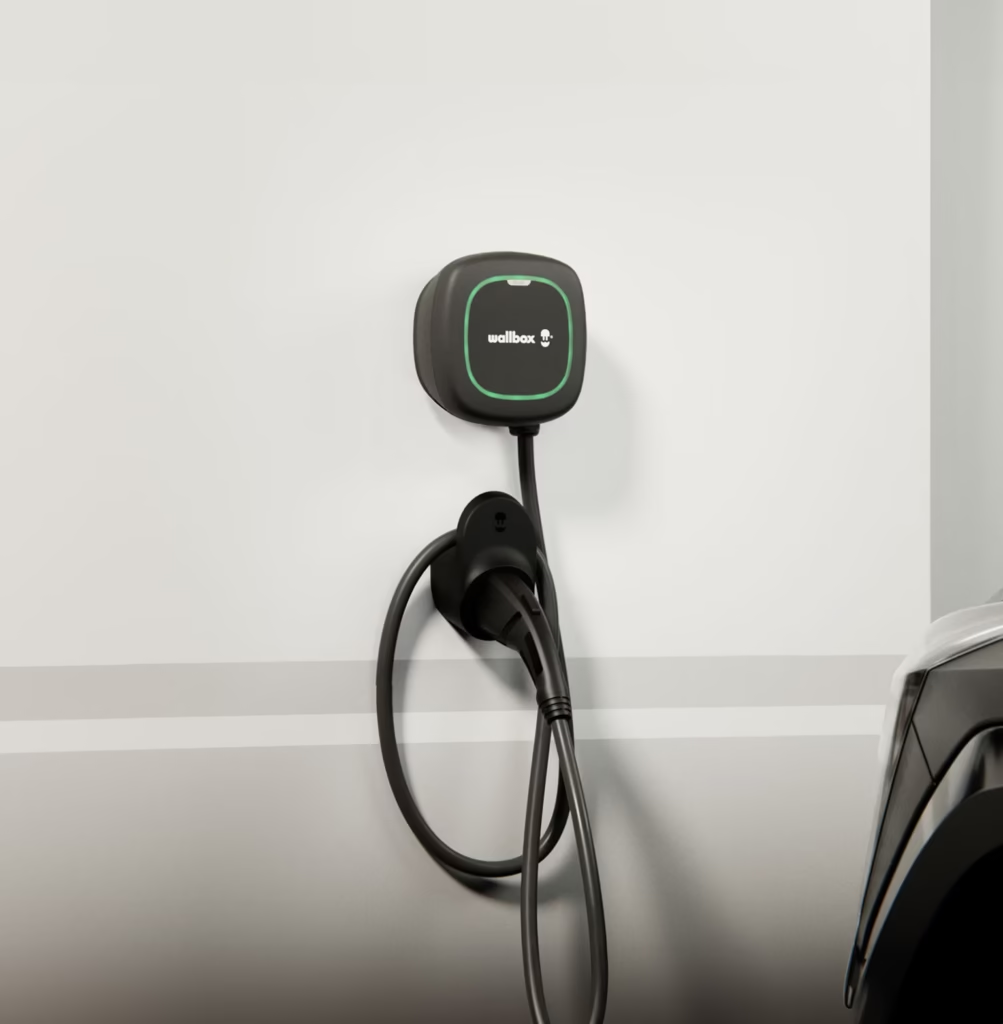
Not every garage has a clear stretch of wall. The Wallbox Pulsar Plus packs a full 48 amps into one of the smallest enclosures in the category — it is roughly the size of a hardback book.
What stands out. The compact footprint is genuinely useful in tight or cluttered garages. It delivers 48 amps (11.5 kW), installs plug-in or hardwired, and has a 25-foot cable. Critically, it offers both Wi-Fi and Bluetooth — so if your garage has weak Wi-Fi, you still have a reliable local connection, an advantage over the ChargePoint app. It includes Power Boost for solar-aware and dynamic charging, Power Sharing for multi-charger setups, and works with Alexa and Google Assistant.
Where it falls short. The Wallbox app has historically drawn more mixed reviews than ChargePoint’s — functional, but less polished. The cable, while a good length, is on the stiffer side in cold weather. Pricing varies more than most: depending on amperage tier and retailer, you may see it anywhere from roughly $449 to $649, so shop carefully.
Who should look elsewhere. If wall space is not a constraint, the ChargePoint Home Flex and Emporia Pro offer stronger ecosystems for similar money.
Best value: Emporia Classic
Axis Score: 73/100 · ~$399
The Emporia Classic answers a simple question: what is the least you can spend and still get a real, capable, smart Level 2 charger? The answer is around $399 — and reviewer Tom Moloughney has previously named Emporia’s charger his best-value pick for good reason.
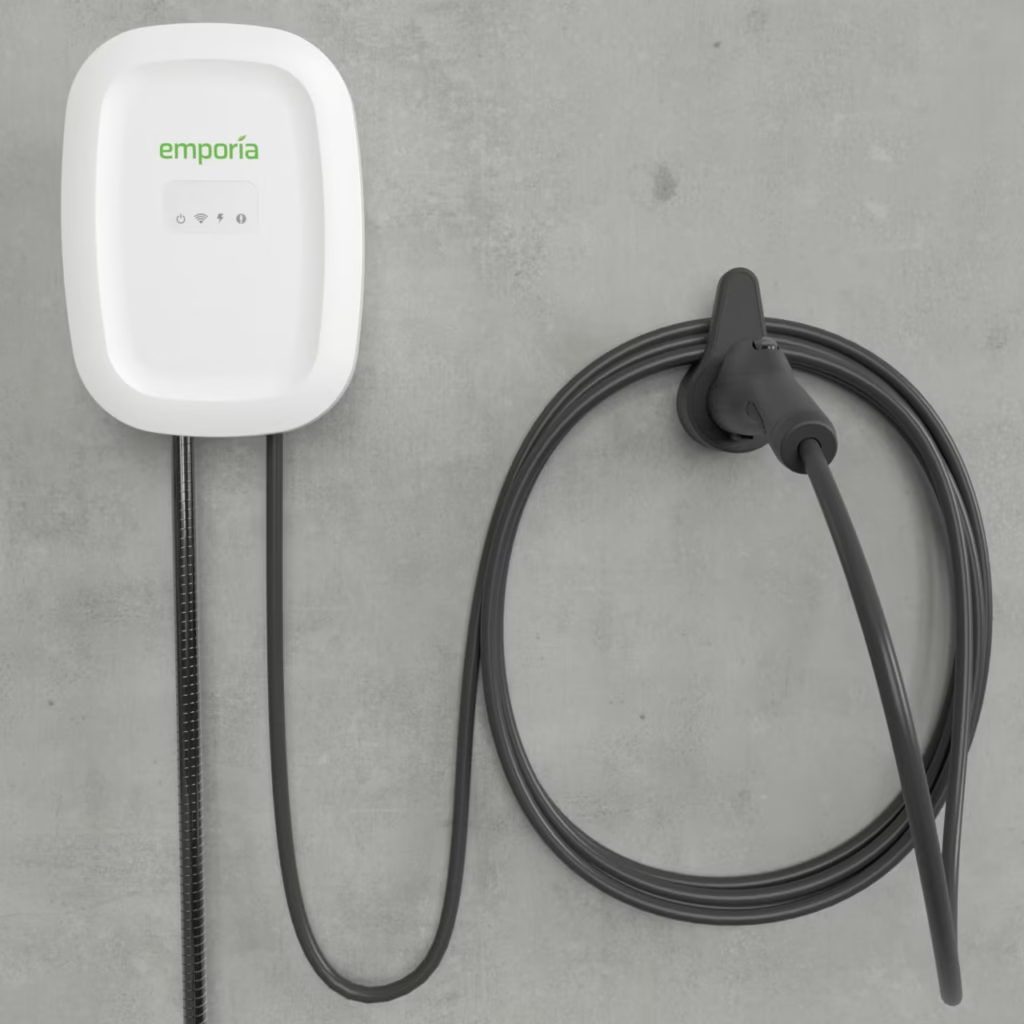
What stands out. For roughly $150 less than the premium tier, you still get a full 48 amps (11.5 kW), plug-in or hardwired installation, Wi-Fi scheduling so you can charge on cheap off-peak rates, UL and Energy Star certification, and a J1772 or NACS connector option. For a daily driver on a healthy electrical panel, it does everything the expensive chargers do for the part that matters most: putting energy in the car overnight, on schedule, cheaply.
Where it falls short. It carries the same reliability caveat as the Emporia Pro — higher observed early-failure rates than ChargePoint or Tesla. The app is functional but basic, with no whole-home energy monitoring. You choose the connector at purchase, with no conversion path later.
Who should look elsewhere. If you want the lowest possible long-term failure risk, or a charger you will not think about for a decade, the ChargePoint Home Flex is worth its premium. If you want zero dependence on an app or firmware at all, see the Grizzl-E below.
Best rugged charger: Grizzl-E Classic
Axis Score: 67/100 · ~$399
The Grizzl-E is the outlier on this list, and its score needs context. It is built like industrial equipment, not a smart-home gadget — and our scorecard, which rewards smart features, penalizes it for deliberately having none. If you actively do not want an app, mentally add roughly ten points; on the axes a no-frills buyer cares about, it is near the top.
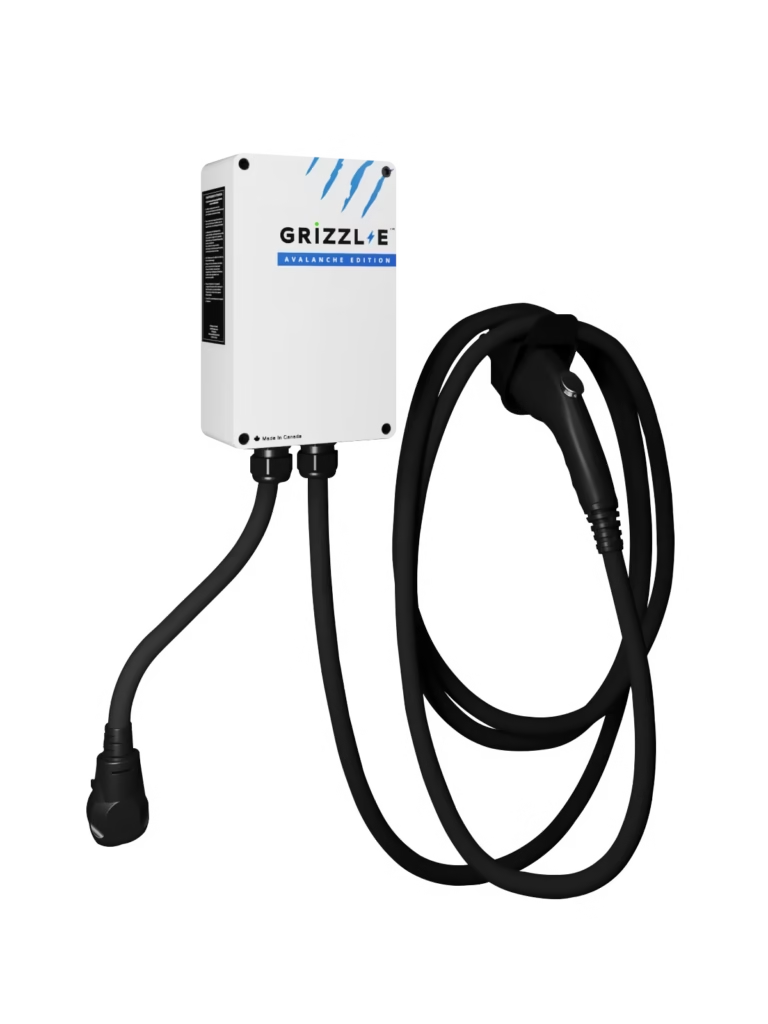
What stands out. Durability is the entire point. The Grizzl-E Classic is rated to operate from −22°F to 122°F, has a heavy-duty cable and enclosure, and is made in Canada for buyers who have to charge through real winters. It delivers 40 amps (9.6 kW), is UL listed, and — crucially — has no Wi-Fi, no app, and no firmware. That means almost nothing to break, no connectivity to drop, and no app update to change how your charger behaves. Many EV owners scheduling charging through their car instead consider this a feature, not a gap.
Where it falls short. No smart features means no charging schedule from the charger itself, no energy tracking, and no remote monitoring — you rely entirely on your vehicle’s app for those. At 40 amps it is also the slowest unit here, though still ample for overnight charging. A separate Grizzl-E Smart model exists if you want connectivity, and the Ultimate steps up to 48 amps.
Who should look elsewhere. Anyone who wants scheduling, energy data, or off-peak automation from the charger itself, or who charges multiple EVs and wants load sharing, should choose a smart unit.
The hidden cost most roundups ignore: your electrical panel
The charger is rarely the expensive part of home charging. The wiring is. A Level 2 install means a dedicated 240-volt circuit, and the cost depends almost entirely on your existing electrical service:
- A short run from a panel with spare capacity: professional installation often runs $300–$800.
- A long cable run, a detached garage, or a subpanel: higher, sometimes well over $1,500.
- A panel that is already full or has only 100-amp service: a service upgrade can add $3,000–$9,000.
This is why the cheapest charger and the cheapest installation are different questions, and why a charger with dynamic load management (the Emporia Pro) or a wide adjustable amperage range (the ChargePoint Home Flex) can be the genuinely cheaper choice — it may let you avoid a panel upgrade entirely. Before you buy anything, get an electrician to confirm your panel’s spare capacity and the distance from the panel to where you park. Those two facts decide more of your final cost than the brand on the box.
It is also worth knowing that electrical codes have tightened: many jurisdictions now require a GFCI breaker for plug-in EV-charger circuits, which affects both cost and whether a plug-in or hardwired install makes more sense. Your electrician will know the local rule.
How to choose the best home EV charger for you
Start with your car, not the charger. Look up your EV’s maximum AC charging rate. If it accepts 7.7 kW, a 48-amp charger will not charge it any faster than a 40-amp one — you would be paying for headroom you cannot use. Buying amperage your car cannot accept is the most common money-wasting mistake in home charging.
Then check your panel. A 40-amp charger needs a 50-amp breaker; a 48-amp charger needs a 60-amp breaker. If your panel is full or you have only 100-amp service, either plan for an upgrade or choose a charger with load management or adjustable amperage.
Decide plug-in versus hardwired. Plug-in (into a NEMA 14-50 outlet) is more flexible — you can take it with you when you move — and can sometimes use an existing dryer-style circuit. Hardwired is the more robust long-term choice, is required for the highest amperages, and is often required outdoors or where codes mandate a GFCI breaker.
Match the connector to your next car. If your current and likely future EVs all use J1772, a J1772 charger is fine. If you expect a NACS vehicle, buy a NACS unit or the Tesla Universal, which handles both.
Then, and only then, weigh features. Smart scheduling pays for itself if your utility has time-of-use rates — charging overnight can cut your per-mile electricity cost substantially. Energy monitoring, solar integration, and power sharing matter for some households and are irrelevant to others. Cable length (aim for 23–25 feet) and a weather rating of NEMA 4 or IP65 for outdoor installs are the unglamorous details that shape daily use.
Don’t forget the 30C tax credit — but check the deadline. The federal 30C tax credit covers 30% of the cost of a home charger and its installation, up to $1,000. According to the Internal Revenue Service, it applies to equipment placed in service through June 30, 2026 — the deadline was moved up from 2032 by 2025 legislation, so any guide still citing “through 2032” is out of date. The charger must be at your primary residence in an eligible low-income or non-urban census tract. With the window closing, anyone planning an install should not wait. State and utility rebates can often be stacked on top — many EV owners report $250–$500 utility rebates on these exact chargers.
How we evaluated these chargers
Axis Intelligence assessed every charger in this guide against the Axis Home Charger Scorecard — the five-category, 100-point rubric described above. To keep the scoring grounded, we cross-checked manufacturer specifications against retailer listings and certification databases (UL and Energy Star), tracked current street pricing across major sellers, and synthesized field-reliability patterns from professional EV-charger installers and from owner reports across long-term ownership threads. Charging-speed figures are stated as real-world ranges, not peak marketing numbers, and every figure is dated because pricing and availability in this category move quickly.
We do not accept payment from charger manufacturers for placement or ranking, and the scorecard’s weights are fixed before any charger is scored. The U.S. Department of Energy notes that more than 80% of EV charging happens at home, which is why we weight reliability and install flexibility as heavily as raw speed — a home charger is infrastructure you will depend on every night for a decade. This guide is reviewed and updated as pricing shifts and new models ship.
Frequently asked questions
What is the best home EV charger in 2026?
For most drivers, the ChargePoint Home Flex (around $549) is the best overall home EV charger in 2026 — it scored 89/100 on our scorecard for its adjustable 16–50 amp output, plug-in or hardwired installation, strong app, and low field-failure rate. Tesla and mixed-EV households are often better served by the Tesla Universal Wall Connector, and budget buyers by the Emporia Classic.
How much does a home EV charger cost?
The charger itself typically costs $399–$600 for a quality 40–48 amp Level 2 unit in 2026. Professional installation usually adds $300–$800, but a long wiring run or an electrical-panel upgrade can push the total significantly higher. The federal 30C tax credit can return 30% of the combined cost, up to $1,000.
Do I need a Level 2 charger, or is Level 1 enough?
Level 1 charging (a standard 120-volt outlet) adds only about 3–5 miles of range per hour. If you drive more than roughly 30–40 miles a day, you will struggle to keep up overnight. A Level 2 charger adds 25–44 miles of range per hour and fully charges almost any EV overnight, which is why it is the right choice for most households.
What amperage home charger should I buy?
Match it to your car and your panel. A 40-amp charger (9.6 kW) adds about 25–30 miles per hour and needs a 50-amp circuit; a 48-amp charger (11.5 kW) adds 32–44 miles per hour and needs a 60-amp circuit. There is no benefit to a 48-amp charger if your EV’s onboard charger accepts less, or if your panel cannot support the larger circuit.
Should I get a hardwired or plug-in EV charger?
Plug-in chargers (using a NEMA 14-50 outlet) are more flexible and portable, and can sometimes reuse an existing dryer circuit. Hardwired chargers are more robust for long-term use, are required for the highest amperages, and are often required for outdoor installs or where local code mandates a GFCI breaker.
Can a non-Tesla EV use a Tesla Wall Connector?
Yes. The Tesla Universal Wall Connector has a built-in J1772 adapter and charges any EV natively. The standard (non-Universal) Tesla Wall Connector has only a NACS connector, so a non-Tesla EV would need a NACS-to-J1772 adapter.
What is NACS, and does it affect which charger I should buy?
NACS (North American Charging Standard) is the connector Tesla popularized and most automakers have adopted; most EVs sold from 2025 onward use it, while older EVs use J1772. Several chargers here are sold in either a J1772 or a NACS version, and the Tesla Universal handles both. Buy the connector that matches the EV you expect to own.
Is there still a tax credit for home EV chargers?
Yes, but the window is closing. The federal 30C tax credit covers 30% of a home charger and installation, up to $1,000, for equipment placed in service through June 30, 2026. Your home must be a primary residence in an eligible census tract. After that date the credit ends unless Congress extends it.
Which home EV charger is best for cold climates?
The Grizzl-E Classic is built specifically for harsh conditions, rated to operate from −22°F to 122°F with a heavy-duty enclosure and cable. The ChargePoint Home Flex also has a strong cold-weather track record among owners, with a cable that stays flexible in deep cold.
Do home EV chargers need Wi-Fi to work?
No. Smart chargers use Wi-Fi for scheduling, monitoring, and updates, but they will still charge your car if the connection drops. Non-connected chargers like the Grizzl-E Classic have no Wi-Fi at all by design — you simply schedule charging through your vehicle instead.
How we researched this guide: this comparison draws on verified manufacturer specifications, current 2026 retail pricing, UL and Energy Star certification records, U.S. Department of Energy and IRS guidance, and field-reliability patterns reported by professional installers and EV owners. The Axis Home Charger Scorecard is an original Axis Intelligence framework. Prices are current street estimates and change frequently; verify before purchase, and check your utility for rebates. Last updated May 2026.
[simple-author-box]