

Best AI Avatar Generators 2026
Quick Answer: AI avatar generators are software platforms that use artificial intelligence to create digital human presenters capable of delivering scripted content through synthesized speech, facial animation, and body movement — eliminating the need for cameras, studios, or on-screen talent. In 2026, the market includes more than 30 commercially available platforms spanning video-based talking avatars, static portrait generators, and real-time interactive digital humans. This analysis evaluates 15 platforms across six dimensions: avatar realism, language support, customization depth, pricing accessibility, integration capabilities, and documented limitations.
What This Analysis Covers:
- 15 AI avatar generator platforms evaluated across video, static image, and interactive avatar categories
- Six evaluation criteria applied consistently: realism, multilingual support, customization, pricing model, integrations, and limitations
- Deployment models ranging from free browser-based tools to enterprise platforms with custom pricing
- Use cases spanning content creation, corporate training, marketing, e-learning, and personal branding
Key Finding: The AI avatar generator market in 2026 is bifurcating into two distinct segments — high-volume video production platforms (Synthesia, HeyGen, Colossyan) competing on realism and enterprise features, and a growing category of conversational AI agent platforms (D-ID, DeepBrain AI) that deploy avatars as autonomous interactive interfaces rather than passive video presenters. According to MarketsandMarkets, the AI avatar market is projected to grow from USD 0.80 billion in 2025 to USD 5.93 billion by 2032 at a 33.1% CAGR, indicating that both segments are expanding simultaneously rather than one displacing the other.
Table of Contents
How We Evaluated These AI Avatar Generator Solutions
Scope
This analysis covers AI avatar generators available as commercial SaaS platforms in February 2026. It includes platforms that generate video avatars from text scripts, tools that create static AI-generated portraits, and platforms offering real-time interactive avatar agents. Open-source avatar frameworks, game engine character creators (Unreal MetaHuman, Unity), and VTubing-specific rigging software are excluded from this evaluation.
Target Audience
This guide serves a broad audience: content creators producing social media and YouTube videos, marketing teams scaling video ad production, L&D professionals building training content, educators developing e-learning modules, and small business owners exploring video without production budgets. Technical depth and use-case examples are calibrated accordingly, with enterprise-specific considerations (compliance, SSO, SCORM) noted where relevant rather than assumed as default requirements.
Evaluation Framework
Each platform was assessed across six criteria:
- Avatar Realism — Quality of lip-sync, facial expressions, body movement, and overall visual fidelity
- Language and Voice Support — Number of supported languages, voice quality, accent coverage, and voice cloning capabilities
- Customization Depth — Ability to create custom avatars (digital twins), modify appearance, adjust gestures, and personalize output
- Pricing Accessibility — Availability of free tiers, entry-level pricing, pricing model transparency, and scalability of costs
- Integration Ecosystem — API availability, LMS compatibility (SCORM), third-party tool connections, and export format options
- Documented Limitations — Known constraints reported in vendor documentation, independent reviews, and user feedback on platforms such as G2 and Capterra
Data Sources
Evaluations draw from official vendor documentation and published feature specifications, independent platform reviews on G2 (2,000+ reviews for leading platforms) and Capterra, market sizing data from MarketsandMarkets, Grand View Research, and Precedence Research, and technical comparisons published by independent analysts. Pricing data reflects publicly listed rates as of February 2026 and may vary by billing cycle or promotional offers.
What This Analysis Does Not Cover
This evaluation does not assess avatar generators designed exclusively for gaming or metaverse environments, real-time motion capture software for live streaming (e.g., VTubing rigs), AI image generators used for general-purpose art creation (Midjourney, DALL-E), or avatar features embedded within broader video editing suites unless avatars are the platform’s primary function.
Independence Statement
This analysis was conducted independently. Axis Intelligence maintains no commercial relationship with any vendor mentioned. No compensation was received for inclusion or placement. All evaluations are based on publicly available information, vendor documentation, and independent technical assessments.
The State of AI Avatar Generators in 2026
Market Overview
The AI avatar market is experiencing significant expansion. According to MarketsandMarkets, the global AI avatar market is projected to reach USD 5.93 billion by 2032, growing at a compound annual growth rate of 33.1% from a base of USD 0.80 billion in 2025. Precedence Research offers a broader estimate, projecting the market could reach USD 118.55 billion by 2034 at a 31.95% CAGR, reflecting different methodological scopes in what constitutes the “AI avatar” category. Grand View Research reports the related digital avatar market was valued at USD 5.9 billion in 2023 and estimates a CAGR exceeding 30% through 2032.
Adoption is being driven by video marketing demand — according to industry data cited by multiple research firms including GMInsights, approximately 89% of businesses now use video as a marketing tool, and 95% of marketers consider video essential to their strategy. AI avatar generators address a fundamental bottleneck in video production: the cost and logistical complexity of filming human presenters, particularly for organizations producing content across multiple languages and regions.
The number of commercially available AI avatar platforms has grown from fewer than 10 established players in 2023 to more than 30 active platforms in 2026, with new entrants continuing to emerge. Major players include Synthesia (UK, founded 2017), HeyGen (US, founded 2020), D-ID (Israel), Colossyan (UK/Hungary), Elai.io (Estonia), and DeepBrain AI (South Korea), alongside newer entrants like Captions, Tavus, and Arcads.
Key Challenges Users Face
Selecting an AI avatar generator involves navigating several documented friction points. Avatar realism varies substantially across platforms — while market leaders have achieved near-photorealistic output in controlled settings, lip-sync accuracy, natural gesture generation, and emotional expressiveness remain inconsistent, particularly with complex scripts or less common languages. According to user reviews aggregated on G2 and Capterra, common complaints include robotic-sounding voiceovers, unnatural eye movement, and rendering delays that can extend from minutes to hours during peak usage.
Pricing transparency presents another challenge. Several platforms use credit-based models where different features consume credits at different rates, making it difficult to predict monthly costs accurately. HeyGen, for example, introduced “Premium Credits” in February 2026, separating standard video generation (unlimited on paid plans) from advanced features like Avatar IV rendering, which consumes additional credits. Other platforms cap video output by minutes per month, creating hard limits that may not align with production schedules.
Content moderation policies also affect workflows. Platforms like Synthesia implement manual review processes for generated videos, which users have reported can add 24 hours to production timelines. While these safeguards exist for legitimate safety reasons (preventing deepfake misuse), they represent an operational consideration that varies by platform.
What Is Changing in 2026
Several developments are reshaping the AI avatar landscape this year. First, the emergence of conversational AI agents represents a fundamental expansion of what avatar platforms offer. D-ID’s AI Agents 2.0, launched with a CES 2026 Innovation Award, deploys avatars as autonomous conversational entities that can be embedded on websites, mobile apps, and kiosks — a significant departure from the traditional script-to-video model. HeyGen’s LiveAvatar feature similarly enables real-time interactive avatar sessions, though it positions this as augmenting human-led interactions rather than replacing them.
Second, avatar realism has reached a new threshold. HeyGen’s Avatar IV model, introduced in 2026, incorporates micro-expressions and emotional intelligence that adapt facial expressions to the tone of the script. Colossyan’s NEO 2 video model similarly emphasizes expressive, natural avatar performance. These advances are narrowing — though not yet closing — the gap between AI-generated video and traditionally filmed content.
Third, voice cloning and multilingual capabilities continue to expand. Leading platforms now support between 70 and 175+ languages with varying degrees of accent coverage. Real-time video translation with lip-sync adjustment, pioneered by HeyGen, allows users to generate a video in one language and automatically produce localized versions — a capability that has significant implications for global content distribution. According to Synthesia’s product documentation, the platform now supports over 140 languages with 240+ avatar options.
According to MarketsandMarkets’ industry analysis, major players in the AI avatar market include Synthesia, HeyGen, D-ID, Akool, Veritone, NVIDIA, AWS, Meta, Vyond, and Soul Machines, with North America expected to hold the largest market share during the forecast period due to advanced technological infrastructure and early adoption of AI solutions.
Fourth, enterprise governance features are maturing. SOC 2 Type II compliance (achieved by both Synthesia and HeyGen), ISO 42001 certification (Synthesia), GDPR compliance, SSO/SAML integration, and role-based access controls are increasingly standard at enterprise tiers, reflecting the migration of AI avatar tools from experimental creative projects to production business infrastructure. Separately, technology infrastructure providers are investing in avatar tooling — NVIDIA launched production microservices for its Avatar Cloud Engine (ACE) in January 2024, enabling game and application developers to integrate generative AI models into digital avatars using tools like Omniverse Audio2Face for facial animation from audio inputs.
How AI Avatar Generator Solutions Are Organized
AI avatar generators in 2026 fall into distinct functional categories based on their primary output type and intended use case. Understanding these categories helps narrow the field before evaluating individual platforms.
Category 1: Script-to-Video Avatar Platforms
Script-to-video avatar platforms convert written text into produced videos featuring AI-generated human presenters. Users input a script, select or customize an avatar, and the platform renders a complete video with synchronized speech, facial animation, and body movement. These platforms represent the largest and most mature segment of the AI avatar market. Typically used by: Marketing teams, L&D professionals, corporate communications, educators, and content creators producing explainer videos, training modules, or social media content. Price range: Free tiers with limitations (watermarks, 1-minute caps) to $29–$89/month for individual and team plans, with enterprise pricing available on request.
Category 2: Photo-to-Avatar and Portrait Generators
Photo-to-avatar generators transform static photographs into stylized digital portraits or animated talking images. These tools focus on creating personalized profile pictures, social media avatars, or short animated clips from a single uploaded photo rather than producing full-length scripted videos. Typically used by: Individual users, social media creators, freelancers seeking professional headshots, and brands generating visual assets for campaigns. Price range: Free with limited outputs to $10–$30/month for premium styles and batch processing.
Category 3: Real-Time Interactive Avatar Agents
Real-time interactive avatar agents deploy AI-generated digital humans as conversational interfaces that respond dynamically to user input. Unlike script-to-video platforms, these agents operate autonomously, answer questions, and conduct conversations in real time without pre-written scripts. Typically used by: Customer service teams, retail and hospitality businesses, healthcare providers, and organizations deploying digital assistants on websites, kiosks, or mobile applications. Price range: $5.99–$299.99/month for tiered plans; enterprise deployments with custom pricing for high-volume or specialized integrations.
Category 4: Specialized and Hybrid Platforms
Several platforms combine avatar generation with broader video editing, ad creation, or motion capture capabilities. These tools may offer avatars as one feature within a larger creative suite rather than as the core product. This category also includes platforms focused on specific verticals such as e-commerce video ads or artistic avatar styles. Typically used by: E-commerce brands, creative professionals, and teams with established video workflows seeking avatar capabilities as an add-on. Price range: Varies widely by platform scope; from free tools to $50+/month for full-suite access.
AI Avatar Generator Comparison: Key Features at a Glance
| Solution | Primary Function | Target Users | Languages Supported | Pricing Model | Notable Limitation |
|---|---|---|---|---|---|
| Synthesia | Script-to-video with 240+ avatars | Enterprise L&D, corporate comms | 140+ languages | Subscription, from $18/mo (annual) | Video minute caps on non-enterprise plans; manual content review can add processing time |
| HeyGen | Script-to-video with Avatar IV realism | Creators, marketers, global teams | 175+ languages | Freemium, from $24/mo (annual) | Premium features consume credits at varying rates; recent pricing restructure (Jan 2026) |
| D-ID | Photo animation + AI Agents 2.0 | Customer service, interactive experiences | 30+ languages | Freemium, from $5.99/mo | Smaller avatar library than competitors; higher-tier plans are credit-based |
| Colossyan | Script-to-video with L&D focus | Training teams, educators | 70+ languages | Subscription, from $19/mo | NEO 2 model availability varies by plan tier; less suited for social/creative content |
| Elai.io | Script-to-video with interactivity | Corporate training, onboarding | 100+ languages | Subscription, from $29/user/mo | Avatar expressiveness reported as more limited; smaller user community |
| DeepBrain AI (AI Studios) | Script-to-video with photorealistic avatars | Enterprise comms, broadcasting | 80+ languages | Subscription, from $24/mo | Limited collaboration features; no native third-party integrations |
| Fotor | AI portrait and avatar generation | Social media users, freelancers | N/A (image-only) | Freemium, from $10.99/mo | Image-only output; no video avatar capability |
| Lensa | AI portrait styles from selfies | Individual users, social media | N/A (image-only) | Free app + in-app purchases | Privacy concerns around facial data; limited professional use cases |
| Captions | Browser-based video with avatars | Solo creators, social media | Multiple languages | Freemium | Newer platform with less established track record; feature set still expanding |
| Vidnoz | Free avatar video generation | Budget-conscious creators | 140+ languages | Freemium, 3 min/day free | Free tier heavily limited; output quality below premium competitors |
| Pictory | Text-to-video with avatar add-on | Marketers, content repurposers | Multiple languages | Subscription-based | Avatars are a secondary feature; primary focus is text/URL-to-video conversion |
| Tavus | Personalized video with digital twins | Sales teams, outreach | Multiple languages | Quote-based | Focused on 1:1 personalized video; not designed for broadcast content |
| Arcads | AI avatar ads from UGC-style content | E-commerce, DTC brands | Multiple languages | Subscription-based | Narrow use case (ad creation); limited versatility outside advertising |
| Runway | Creative AI with avatar capabilities | Creative professionals, filmmakers | Multiple languages | Subscription, from $15/mo | Avatar features are part of broader creative suite; less polished than dedicated platforms |
| VEED.io | Video editing with AI avatar features | Creators, marketers | Multiple languages | Freemium, from $18/mo | Avatar is an add-on to video editing; dedicated avatar platforms offer more depth |
Individual Platform Profiles
Synthesia
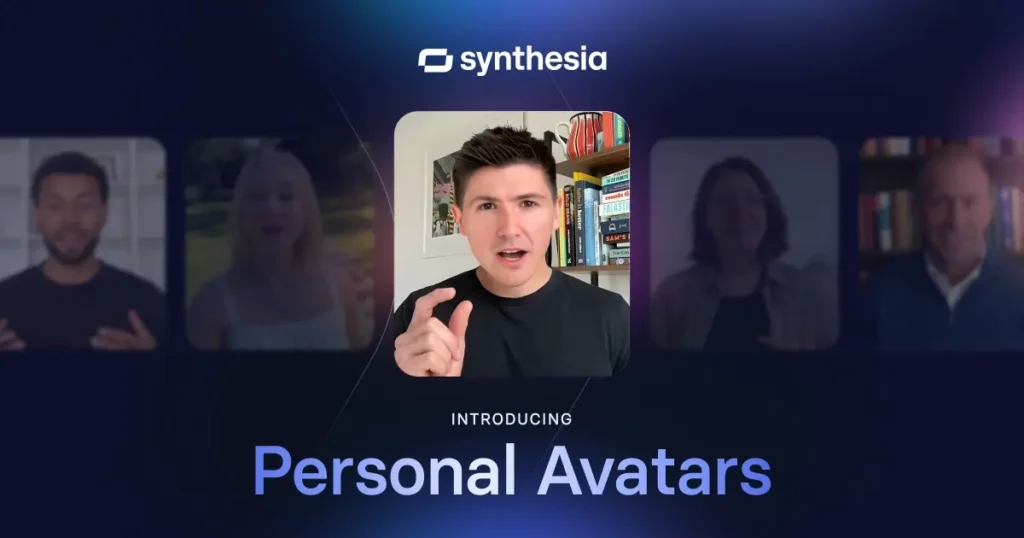
Overview: Synthesia is a UK-based AI video generation platform, founded in 2017, that converts text scripts into produced videos using AI-generated human presenters. The platform has established itself as one of the most widely adopted enterprise AI avatar solutions, reporting that over 90% of Fortune 100 companies have used the platform. Synthesia is rated 4.7/5 on G2 based on more than 2,000 reviews.
Core Capabilities:
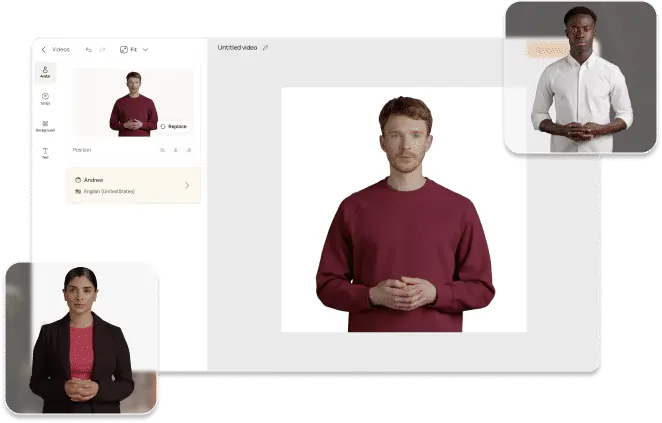
- Library of 240+ stock AI avatars with diverse appearances, ages, and presentation styles
- Expressive avatar technology that adapts tone, body movement, and facial expressions to script context
- Support for 140+ languages with text-to-speech synthesis and multilingual voice options
- Multi-avatar scenes enabling conversational video formats with multiple presenters
- Built-in screen recording, template library (55+ templates), and collaborative video editing workspace
Deployment: Cloud-based (browser), with enterprise API access for programmatic video generation.
Integration Ecosystem: Enterprise API, LMS integrations via SCORM export, PowerPoint/PDF import for slide-to-video conversion, and workspace collaboration features including user roles and team management.
Pricing Approach: Subscription-based. Starter plan at $29/month ($18/month billed annually) includes a fixed number of video minutes per month. Creator plan at $89/month adds translation proofreading and advanced L&D features. Enterprise plans with custom pricing include SSO, unlimited minutes, and dedicated support. Custom avatar creation is available at enterprise tier.
Documented Limitations:
- Non-enterprise plans have strict monthly video minute caps (e.g., 10 minutes/month on Starter)
- Content moderation involves manual review that users report can add up to 24 hours to production
- Custom avatar creation requires enterprise-tier subscription
- Avatar gesture and movement options, while improved, remain less flexible than some competitors for casual or social media content
Typical Users: Corporate L&D teams producing multilingual training content, enterprise communications departments, educational institutions, and organizations requiring SOC 2 Type II and ISO 42001 compliance for AI-generated video.
HeyGen

Overview: HeyGen is a US-based AI video creation platform, founded in 2020, that emphasizes avatar realism and high-volume video production. The company has reported reaching $95 million in annual recurring revenue and has been recognized as one of G2’s fastest-growing products.
Core Capabilities:
- Avatar IV model (2026) featuring micro-expressions, emotional intelligence, and advanced lip-sync
- 230+ stock avatars with the ability to create custom Digital Twin avatars from photos or video recordings
- Real-time video translation with lip-sync adjustment across 175+ languages and 340+ accents
- LiveAvatar feature for real-time interactive video sessions
- Voice cloning, voice speed/pitch modification, and AI script generation
Deployment: Cloud-based (browser), with a separate API subscription for programmatic access.
Integration Ecosystem: REST API (separate subscription from web platform), Zapier integration, and direct publishing options. API and web subscriptions operate independently.
Pricing Approach: Freemium model. Free plan includes 1-minute video credits with watermark. Creator plan at $29/month (~$24/month annual) provides unlimited 1080p video generation with voice cloning. Pro plan adds 4K output and expanded Premium Credits. Business plan at $149/month + $20/seat includes L&D features and SCORM export. Enterprise plans offer custom pricing with SSO/SAML and dedicated infrastructure. According to Tekpon’s pricing analysis, in January 2026, HeyGen replaced its Team plan with the Business plan structure. In February 2026, credits were rebranded from “Generative Credits” to “Premium Credits” with improved transparency.
Documented Limitations:
- Premium features (Avatar IV, lip-synced translation) consume Premium Credits at varying rates, making cost prediction difficult for heavy users
- Creator plan’s 200 monthly Premium Credits translate to approximately 10 minutes of Avatar IV video
- Pricing changes have been frequent; legacy plan holders face different terms than new subscribers
- API subscription is separate from web platform, adding cost for programmatic users
- User reviews on G2 and Capterra report inconsistent rendering times (from minutes to several hours during peak periods)
Typical Users: Content creators producing social media and marketing videos, global marketing teams leveraging real-time translation, sales teams using personalized video outreach, and enterprise organizations scaling video production across regions.
D-ID
Overview: D-ID is an Israel-based AI company that originally focused on facial de-identification technology and has evolved into a platform offering both photo-to-video animation and real-time conversational AI agents. The company’s AI Agents 2.0 received a CES 2026 Innovation Award.
Core Capabilities:
- Photo animation technology that transforms static images into talking avatars
- AI Agents 2.0 — autonomous conversational digital humans deployable on websites, mobile apps, and kiosks
- Real-time interactive capabilities with under 2-second response time and reported 90%+ accuracy
- Premium+ avatars for high-end use cases and Express avatars for rapid content creation
- Retrieval-Augmented Generation (RAG) integration for knowledge-based agent responses
Deployment: Cloud-based (browser), with API access for agent deployment and video generation.
Integration Ecosystem: REST API for embedding agents in websites and apps, enterprise features including SSO, RBAC, and audit logs, optional VPC deployment for regulated industries.
Pricing Approach: Tiered subscription model. Lite plan at $5.99/month for basic access. Pro plan at $49.99/month and Advanced plan at $299.99/month operate on credit-based models. Enterprise pricing is custom. D-ID’s entry-level pricing is among the lowest in the market, though mid-tier and upper-tier plans are priced above several competitors.
Documented Limitations:
- Avatar library is smaller than Synthesia or HeyGen
- Credit-based pricing at mid and upper tiers can be expensive for high-volume production
- Video avatar realism is generally considered behind dedicated video platforms like Synthesia and HeyGen
- Platform has pivoted substantially toward conversational AI agents, potentially reducing investment in traditional video avatar features
Typical Users: Organizations deploying interactive AI customer service agents, developers building conversational interfaces, marketers using photo animation for personalized campaigns, and businesses exploring real-time digital human interactions.
Colossyan
Overview: Colossyan is an AI video platform based in the UK and Hungary that focuses specifically on corporate training, learning and development, and enterprise communication content. The platform distinguishes itself through interactive video features including quizzes, branching scenarios, and SCORM-compliant exports.
Core Capabilities:
- NEO 2 video model (latest generation) for natural and expressive avatar performance
- Instant Avatar creation from a 20-second phone recording plus voice cloning
- Interactive video features: quizzes, branching scenarios, and clickable elements within videos
- Doc-to-Video conversion (PDF, PPT import with automatic scene generation)
- Translation into 70+ languages with localization capabilities
- Conversation Mode for multi-avatar dialogue scenes
Deployment: Cloud-based (browser), with API access available on higher-tier plans.
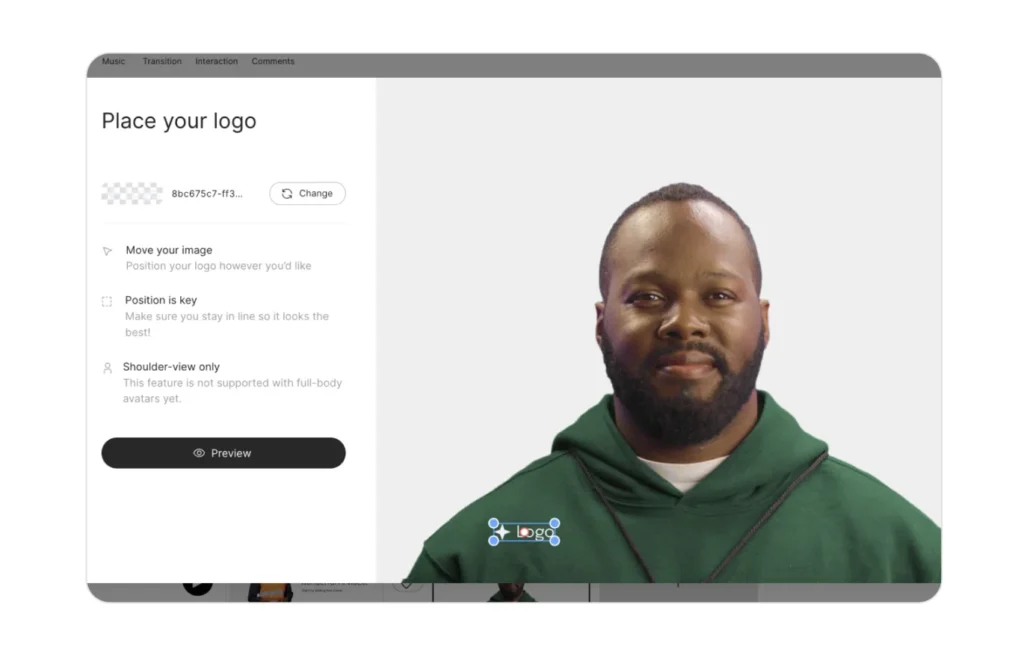
Integration Ecosystem: SCORM export for LMS compatibility, API for programmatic video generation, brand governance tools (fonts, colors, logos), and workspace collaboration features.
Pricing Approach: Subscription-based. According to Colossyan’s pricing page, the Starter plan begins at $19/month with 15 minutes of video per month on NEO 1 model. Pro plan at $70/month offers unlimited NEO 1 video generation. Business and Enterprise tiers add NEO 2 access, interactive features, brand controls, SSO, and dedicated support with custom pricing.
Documented Limitations:
- NEO 2 model access is restricted to higher-tier plans; lower tiers use NEO 1
- Platform is optimized for structured training content; less flexible for casual social media or creative content
- Avatar library and customization options are more limited compared to HeyGen or Synthesia for non-training use cases
- Some users report avatars can appear stiff in informal or conversational contexts
Typical Users: L&D professionals building compliance and onboarding training, HR teams producing multilingual employee communications, enterprise organizations requiring SCORM-compliant content delivery, and educational institutions developing interactive courseware.
Elai.io
Overview: Elai.io is an AI video creation platform that focuses on accessibility and ease of use for teams producing corporate training, onboarding, and internal communication videos. The platform supports custom avatar creation through short video recordings and offers voice cloning capabilities.
Core Capabilities:
- Library of 80+ avatars with options for custom avatar creation (digital twins) from video footage
- Voice cloning for personalized avatar narration
- Selfie avatar creation from mobile phone video recording
- Interactive elements including branching paths, clickable buttons, and hotspots
- Translation support for 100+ languages with 300+ standard voice options
- Photo-to-talking-avatar conversion from uploaded images
Deployment: Cloud-based (browser).
Integration Ecosystem: SCORM export for LMS integration, screen recording, workspace collaboration with team member management, and brand kit tools (colors, fonts, logos).
Pricing Approach: Subscription-based with per-user pricing. According to Elai.io’s pricing page, the Basic plan starts at $29/user/month, Advanced plan at $59/user/month, and custom Enterprise pricing is available. Minutes are allocated per plan and do not roll over on monthly billing. Annual plans provide all minutes upfront. Extra minutes available at $2/minute on paid plans.
Documented Limitations:
- Avatar expressiveness and lip-sync quality are documented as less advanced than Synthesia or HeyGen
- Per-user pricing model can become expensive for larger teams
- Monthly minute allocations do not carry over, creating pressure to use or lose
- Smaller user community and fewer third-party reviews compared to market leaders
Typical Users: Corporate training teams, HR departments producing onboarding content, marketing teams creating explainer videos, and small-to-medium organizations seeking a straightforward script-to-video workflow.
DeepBrain AI (AI Studios)

Overview: DeepBrain AI is a South Korea-based company offering AI Studios, a browser-based video platform that generates presenter-led videos using photorealistic AI avatars. The platform is known for producing avatars that resemble professional news anchors and broadcast presenters, with clients including Hyundai, Samsung, LG, and NEC.
Core Capabilities:
- Library of 100+ photorealistic human avatars modeled from real individuals
- 2,000+ avatar variations when combining different styles and configurations
- Support for 80+ languages with natural multilingual voice synthesis
- Template-based video creation for standardized content production
- AR/VR compatibility for immersive applications
Deployment: Cloud-based (browser), with API access available for enterprise integrations.
Integration Ecosystem: Proprietary API available; limited native third-party integrations compared to competitors. No native Zapier or LMS integration at standard tiers.
Pricing Approach: Subscription-based. Free 1-minute video creation available. Plans range from approximately $24/month to $600/month depending on video minutes and features. Credit-based and enterprise tier structures available for higher-volume needs.
Documented Limitations:
- No built-in collaboration features for team workflows
- Limited native integrations; no Zapier or standard LMS connectors at base tiers
- Avatar gesture and body movement appear less natural than some competitors, particularly for non-formal content
- Platform rebranded from DeepBrain.io to AI Studios, but some users report the product has not evolved as rapidly as competitors
Typical Users: Enterprise communications teams producing formal video content, broadcasting and media organizations, finance and corporate sectors requiring authoritative presenter-style videos, and organizations in Asia Pacific leveraging the platform’s strong regional presence.
Fotor
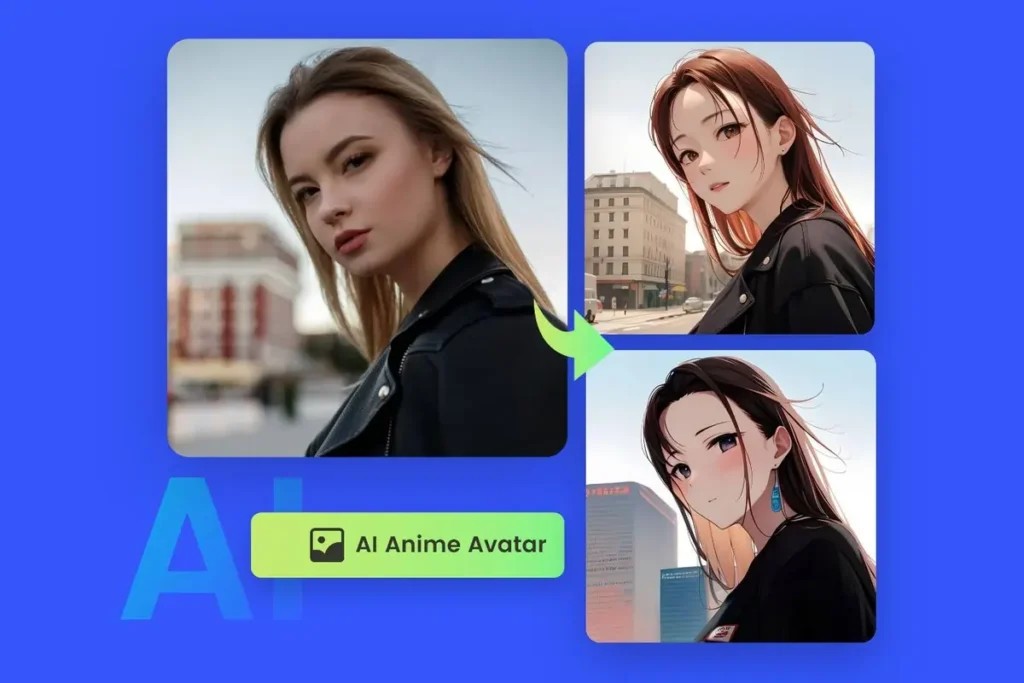
Overview: Fotor is a browser-based graphic design platform that includes an AI avatar generator as part of its creative toolkit. The platform converts selfies or text prompts into stylized digital portraits and profile pictures, focusing on static image output rather than video content.
Core Capabilities:
- AI avatar generation from uploaded selfies or text prompts
- 100+ creative avatar styles including artistic, professional, and stylized options
- Batch processing for generating multiple avatar variations from a single upload
- Integration with Fotor’s broader design suite for editing and compositing
- Fast generation times (reported at 10–12 seconds per avatar)
Deployment: Cloud-based (browser) and mobile app.
Integration Ecosystem: Part of Fotor’s broader design platform; primarily standalone with export to standard image formats (JPEG, PNG).
Pricing Approach: Freemium. Free tier with limited avatar generations. Paid plans starting at $10.99/month for expanded access to styles, higher resolution output, and batch processing.
Documented Limitations:
- Image-only output; no video avatar or talking avatar capability
- Quality is oriented toward stylized and artistic portraits rather than photorealistic output
- Limited customization beyond style selection
- Not suitable for professional business video or training content use cases
Typical Users: Social media users creating profile pictures and creative avatars, freelancers seeking quick professional headshot alternatives, and individuals experimenting with AI-generated portrait styles.
Lensa
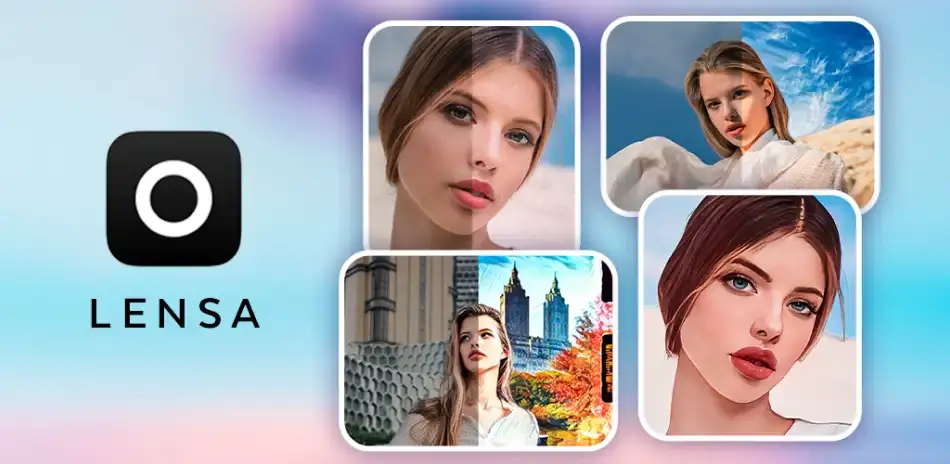
Overview: Lensa is a mobile application developed by Prisma Labs that uses AI to generate stylized avatar portraits from user-uploaded selfies. The app gained significant attention when it became the #1 downloaded app in 20+ countries during its viral adoption period, generating 50 avatar variations per upload batch across 200+ styles.
Core Capabilities:
- AI avatar generation from uploaded selfies using neural network style transfer
- 200+ avatar styles including fantasy, professional, anime, and artistic variations
- Batch generation of 50 avatars per upload
- Photo editing features including background removal, retouching, and filters
- Fast generation with results typically delivered within minutes
Deployment: Mobile app (iOS and Android).
Integration Ecosystem: Standalone mobile application with standard sharing options to social media and messaging platforms. No API or professional workflow integrations.
Pricing Approach: Free app download with in-app purchases for premium avatar generation packs, filters, and features.
Documented Limitations:
- Privacy concerns have been raised regarding facial data collection and usage
- Output is exclusively static images; no video or animated avatar capability
- Limited professional applicability beyond social media and personal use
- Quality and style consistency can vary across generations from the same source photo
- No customization of individual avatar features; output is determined by model interpretation
Typical Users: Individual consumers creating social media avatars, users participating in viral avatar trends, and casual users exploring AI-generated art from personal photos.
Captions (by Mirage)
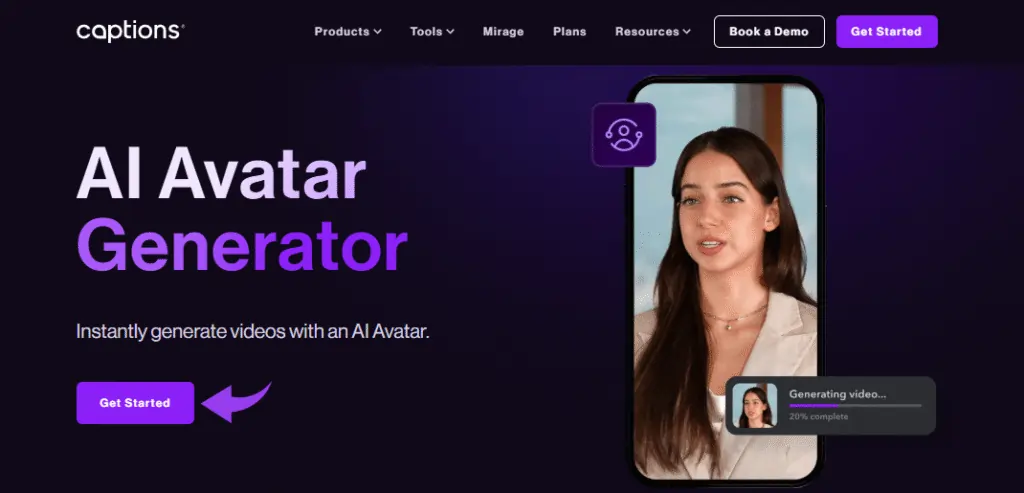
Overview: Captions is a mobile-first AI video creation platform developed by Mirage, designed primarily for social media creators and short-form content producers. Originally focused on automated captioning, the platform has expanded to include AI avatar generation, video dubbing, eye contact correction, and script-to-video capabilities. The app reports over 15 million users globally.
Core Capabilities:
- AI Creator feature that generates complete videos from text scripts using 3D avatars
- AI Twin creation for UGC-style content without on-camera recording
- Automated captioning in 100+ languages with customizable styling and animation
- AI dubbing and lip-sync translation across 28+ languages
- AI-powered eye contact correction, background noise removal, and smart video editing
- Direct publishing optimization for TikTok, Instagram Reels, and YouTube Shorts
Deployment: Mobile app (iOS primary, Android and desktop available with reported feature parity gaps) and browser-based editor.
Integration Ecosystem: Standalone application with direct export to social media platforms. No public API currently available. No enterprise integrations (LMS, CRM) documented.
Pricing Approach: Freemium model. Free plan includes basic editing and unlimited exports without watermark. Pro plan at approximately $9.99/month unlocks core AI features. Max ($24.99/month) and Scale ($69.99/month) plans operate on a credit system for AI-intensive features like avatar generation and extensive dubbing. According to reviews on Capterra, credit consumption for premium features can make costs unpredictable for heavy users.
Documented Limitations:
- Credit-based pricing on higher tiers creates cost unpredictability for intensive avatar and dubbing usage
- Platform was built iOS-first; Android and desktop versions reported as less stable with inconsistent feature parity
- Avatar output uses 3D-rendered characters rather than photorealistic human presenters
- Customer support has received mixed feedback in user reviews, with reports of slow response times
- No API access or enterprise workflow integrations currently available
Typical Users: Social media content creators producing short-form video for TikTok, Instagram, and YouTube Shorts, individual marketers creating quick video ads, and small businesses seeking mobile-friendly video production without professional editing skills.
Vidnoz
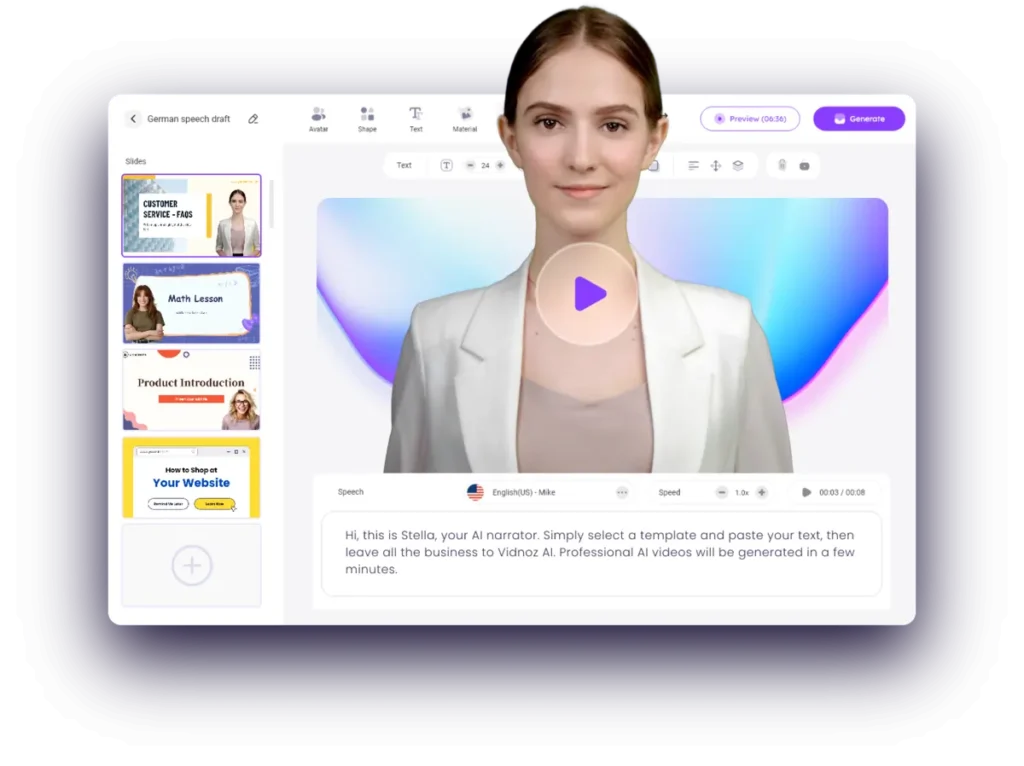
Overview: Vidnoz is a freemium AI avatar video generator that positions itself as an accessible entry point for users exploring avatar-based video creation without upfront cost. The platform offers full-body avatars and supports a wide range of languages, with a free tier that allows limited daily video generation.
Core Capabilities:
- Library of AI avatars including full-body avatar options
- Support for 140+ languages with text-to-speech synthesis
- Free tier providing up to 3 minutes of video generation per day
- Template-based video creation for common use cases
- Photo-to-talking-avatar conversion
Deployment: Cloud-based (browser).
Integration Ecosystem: Limited integrations documented. Standard video export in MP4 format.
Pricing Approach: Freemium model with a free tier capped at 3 minutes of video per day. Paid plans available for expanded minutes, higher resolution, and additional features.
Documented Limitations:
- Free tier is heavily restricted (3 minutes/day with quality limitations)
- Avatar realism and overall output quality are below premium competitors like Synthesia or HeyGen
- Limited customization options compared to dedicated enterprise platforms
- Smaller user base and fewer independent reviews available for verification
Typical Users: Budget-conscious creators testing AI avatar video for the first time, small businesses exploring video without financial commitment, and users who need occasional short avatar clips rather than high-volume production.
Pictory
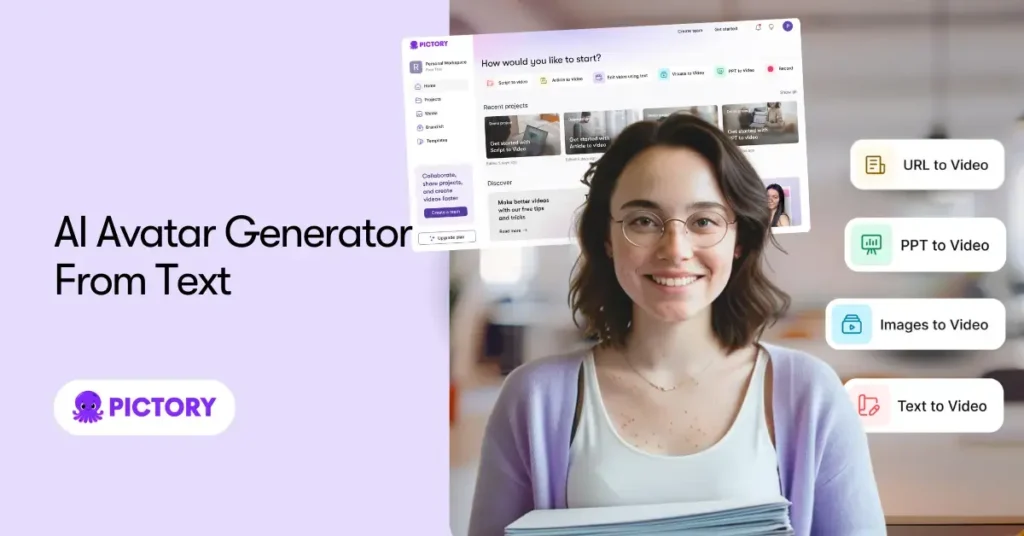
Overview: Pictory is an AI video creation platform that converts text content — including blog posts, articles, scripts, and URLs — into produced videos. Avatar capabilities are integrated as part of the broader text-to-video workflow rather than serving as the platform’s primary feature.
Core Capabilities:
- Text-to-video, URL-to-video, audio-to-video, and presentation-to-video conversion workflows
- AI avatar presenters integrated within video creation pipeline
- Automated scene generation, caption creation, and visual selection from scripts
- Brand kit tools for consistent styling across video output
- AI-powered script generation and editing
Deployment: Cloud-based (browser).
Integration Ecosystem: Standard video export formats. Blog and URL import for content repurposing workflows.
Pricing Approach: Subscription-based with tiered plans. Specific pricing varies by plan level and features accessed.
Documented Limitations:
- Avatar functionality is a secondary feature; the platform is primarily designed for content repurposing and text-to-video conversion
- Avatar realism and customization options are less developed than dedicated avatar platforms
- Not optimized for avatar-led training content or interactive video scenarios
- Users seeking avatar-first workflows may find the platform’s architecture less focused than competitors
Typical Users: Content marketers repurposing blog posts and articles into video format, teams producing explainer videos from existing written content, and social media managers creating video at scale from text assets.
Tavus
Overview: Tavus is a San Francisco-based generative AI video research company focused on creating high-fidelity digital twins for personalized video generation and real-time conversational video interactions. Backed by Sequoia Capital, Scale Venture Partners, and Y Combinator, Tavus has developed its proprietary Phoenix model family using Neural Radiance Fields (NeRFs) technology to create digital replicas from approximately two minutes of training video. The platform’s Conversational Video Interface (CVI) enables sub-second latency real-time interactions, as reported by Business Wire.
Core Capabilities:
- Digital twin creation from approximately 2 minutes of training video footage using proprietary Phoenix models
- Conversational Video Interface (CVI) for real-time face-to-face AI conversations with sub-second latency
- Multimodal perception: avatars can see (rolling vision), hear (ASR), and respond with emotional intelligence
- Personalized video generation at scale with variable insertion (name, company, product references)
- Support for 30+ languages with lip-synced multilingual output
- Developer-first API architecture with modular building blocks
Deployment: Cloud-based with developer API for embedding conversational replicas into websites, applications, and kiosks.
Integration Ecosystem: REST API with flexible integration into existing tech stacks, embeddable meeting rooms powered by Daily, customizable LLM, persona, and knowledge base configurations. Developer-oriented with documentation for programmatic deployment.
Pricing Approach: Tiered model. Free plan includes 5 stock replicas and 3 minutes of video credits. Starter plan at $39/month (pay-as-you-go) includes 3 personal replicas and up to 25 new replicas per month with 3 concurrent conversations. Enterprise plans offer custom pricing with unlimited replicas, custom concurrency, white-labeling, and premium support.
Documented Limitations:
- Primarily developer-oriented; less accessible for non-technical users without engineering support
- Focused on personalized 1:1 video and conversational interfaces rather than broadcast content production
- Learning curve for fully utilizing CVI, persona builder, and API capabilities
- Quality of digital replicas depends on training video quality; results vary based on input footage
- Not designed for high-volume template-based video production like Synthesia or HeyGen
Typical Users: Developer teams building conversational AI experiences into products, sales organizations creating personalized video outreach at scale, educational platforms deploying AI tutors and mentors (e.g., Delphi), and enterprise companies including Fortune 500 organizations using digital twins for customer engagement.
Arcads
Overview: Arcads is an AI video generation platform focused specifically on creating UGC-style (User Generated Content) video advertisements using AI avatars. The platform is designed for e-commerce brands and direct-to-consumer companies that need to produce large volumes of video ads featuring human-like presenters without hiring actors or filming.
Core Capabilities:
- UGC-style AI avatar video ads optimized for social media advertising platforms
- Product URL import for automated script and ad generation
- Multiple avatar styles designed to appear as authentic user testimonials
- A/B testing capability through rapid variant generation
- Direct optimization for Meta, TikTok, and Instagram ad formats
Deployment: Cloud-based (browser).
Integration Ecosystem: Designed for advertising workflow integration with social media ad platforms. Product URL and brief-based ad generation.
Pricing Approach: Subscription-based with tiered plans oriented toward ad production volume.
Documented Limitations:
- Narrow use case focused exclusively on advertising and UGC-style content
- Limited versatility outside ad creation; not suitable for training, education, or general video production
- Avatar styles are designed to simulate UGC authenticity, which may not suit formal or corporate content
- Newer platform with less established track record and fewer independent reviews
Typical Users: E-commerce brands producing high volumes of social media video ads, DTC companies testing multiple ad creatives rapidly, and performance marketing teams seeking to scale UGC-style video without creator partnerships.
Runway
Overview: Runway is a creative AI platform offering a broad suite of generative AI tools for video, image, and multimedia creation. Avatar capabilities are part of Runway’s broader creative toolkit rather than its primary focus, alongside features like text-to-video generation, video editing, image generation, and style transfer.
Core Capabilities:
- Gen-2 and Gen-3 text-to-video and image-to-video models
- AI-powered video editing including inpainting, motion tracking, and style transfer
- Avatar and character generation as part of the broader generative suite
- Training custom AI models on user-provided data
- Real-time creative collaboration features
Deployment: Cloud-based (browser) with desktop application.
Integration Ecosystem: API access for developers, plugin integrations with creative software. Export in standard video and image formats.
Pricing Approach: Subscription-based. Basic free tier with limited credits. Standard plan at approximately $15/month. Pro and Enterprise tiers with expanded generation credits and features.
Documented Limitations:
- Avatar features are part of a general creative AI suite; less polished and purpose-built than dedicated avatar platforms
- Not designed for script-to-video avatar production or corporate training use cases
- Generation credit system applies to all AI features, not just avatars
- Output consistency for avatars may vary compared to dedicated platforms with fine-tuned avatar models
Typical Users: Creative professionals and filmmakers exploring generative AI for visual storytelling, designers using AI for concept development and prototyping, and content creators seeking experimental and artistic AI video capabilities.
VEED.io
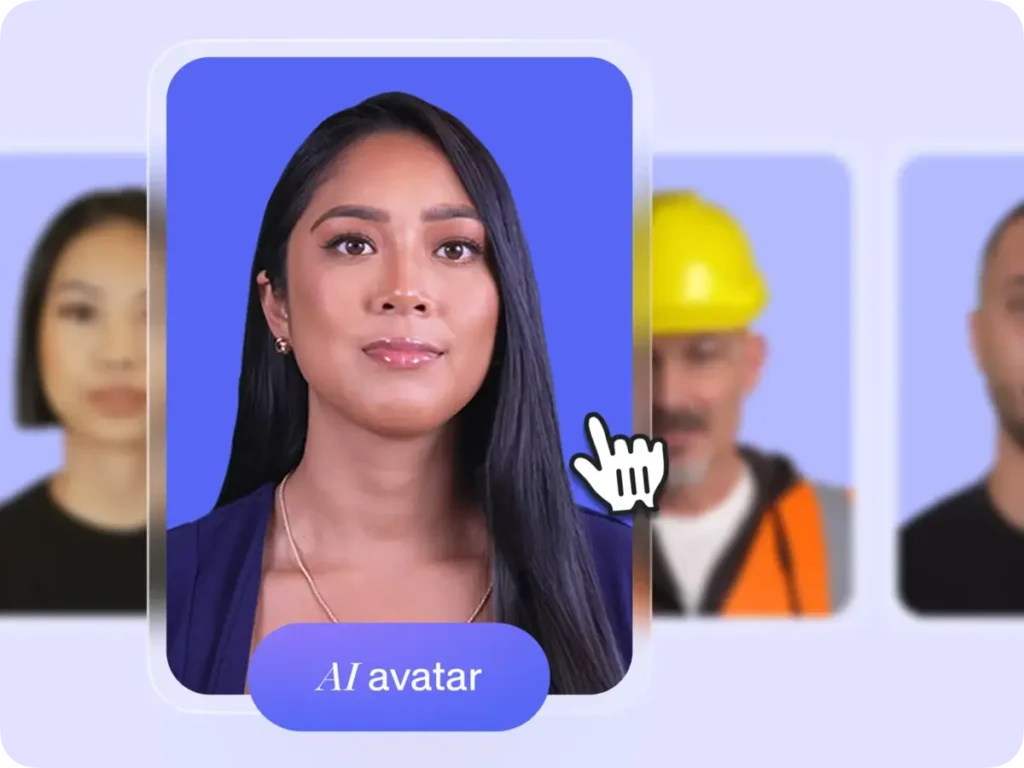
Overview: VEED.io is a browser-based video editing platform that includes AI avatar features as part of its broader video creation and editing toolkit. The platform combines traditional video editing capabilities with AI-powered features including avatars, voice cloning, automatic subtitles, and translation.
Core Capabilities:
- AI avatar generation integrated within video editing workflow
- Voice cloning for personalized avatar narration
- Automatic subtitle generation and translation in multiple languages
- Screen recording with avatar overlay capabilities
- Comprehensive video editing suite (trimming, effects, text overlays, transitions)
- Brand kit and template management
Deployment: Cloud-based (browser).
Integration Ecosystem: Standard video export formats, direct publishing to social media platforms, and integration with common video workflows.
Pricing Approach: Freemium. Free tier with basic editing and watermarked exports. Paid plans starting at approximately $18/month for expanded features including AI tools and avatar access.
Documented Limitations:
- Avatar features are an add-on to a video editing platform; dedicated avatar platforms offer substantially more depth in avatar realism, customization, and library breadth
- Voice cloning quality has improved but remains behind specialized avatar platforms
- Not purpose-built for avatar-driven content at scale
- Enterprise features (SSO, SCORM, team governance) are less developed than dedicated enterprise avatar platforms
Typical Users: Content creators and marketers who need both video editing and occasional avatar capabilities in a single platform, teams seeking an all-in-one video solution without separate avatar subscriptions, and individuals producing social media content with mixed editing and avatar needs.
Market Patterns and Key Observations
Common Capabilities Across Solutions
The majority of AI avatar generators evaluated in this analysis share a core set of capabilities that have become table stakes in 2026. Text-to-video conversion with AI-generated presenters is offered by all script-to-video platforms. Multilingual support has expanded to a minimum of 30 languages across most platforms, with market leaders (Synthesia, HeyGen) exceeding 140 languages. Voice cloning — the ability to replicate a user’s voice for avatar narration — is available on at least six platforms at various tier levels. Template-based video creation, brand customization tools, and cloud-based deployment are standard across the category.
Custom avatar creation (digital twins) has also become widespread, though implementation varies significantly. Platforms like HeyGen enable digital twin creation from a single photo, while Synthesia and Colossyan require video recordings, and Tavus uses approximately two minutes of footage processed through its proprietary NeRF-based Phoenix model. The quality differential between these approaches remains meaningful for professional use cases.
Shared Limitations and Trade-offs
Several friction points recur across the AI avatar landscape regardless of platform. Lip-sync accuracy, while substantially improved from 2023-2024 levels, still degrades noticeably with complex scripts, rapid speech patterns, or less common languages. No platform evaluated produces output that is consistently indistinguishable from filmed human presenters across all content types and languages.
Pricing model complexity is a systemic challenge. At least four platforms (HeyGen, D-ID, Captions, Runway) use credit-based systems where different features consume credits at different rates, making cost prediction difficult. Even subscription-based platforms often impose minute caps that create hard limits on production volume. According to user feedback on G2 and Capterra, pricing unpredictability is among the most frequently cited frustrations across the category.
Content moderation and safety controls, while necessary to prevent deepfake misuse, add processing time and can disrupt production workflows. Synthesia’s manual review process and HeyGen’s content policies both introduce potential delays that organizations should factor into content production timelines.
Rendering time variability persists as a user experience issue. While generation times are typically measured in minutes for short clips, peak usage periods, complex scripts, and high-resolution output can extend rendering to hours. No platform currently guarantees consistent rendering times across all usage conditions.
Pricing Trends
The AI avatar generator market in 2026 shows a clear pricing stratification. Entry-level access has become more affordable, with free tiers available from HeyGen, D-ID, Vidnoz, Captions, and Runway, though all impose significant limitations (watermarks, 1-minute caps, low resolution, or feature restrictions). Individual creator plans cluster in the $18–$30/month range, offering a functional but bounded production capability.
The meaningful cost jump occurs at the team and business tier, where prices range from $70/month (Colossyan Pro) to $149/month (HeyGen Business) before per-seat additions. Enterprise pricing is universally custom-quoted and typically includes SSO, compliance certifications, dedicated support, and expanded or unlimited generation capacity.
A notable trend is the divergence between “unlimited generation” models (HeyGen offers unlimited standard videos on paid plans) and minute-capped models (Synthesia, Colossyan, Elai.io allocate fixed minutes per billing period). This structural difference significantly affects total cost of ownership for high-volume producers and should be a primary consideration during platform evaluation.
Integration and Ecosystem Patterns
Integration maturity varies substantially across the market. Enterprise-oriented platforms (Synthesia, Colossyan, Elai.io) have invested in SCORM-compliant exports for LMS integration, recognizing that corporate training represents a significant market segment. API availability is now standard among major platforms, though API subscriptions often operate independently from web platform subscriptions (as with HeyGen), effectively doubling costs for programmatic users.
Zapier and workflow automation integrations remain limited to a few platforms (HeyGen, Synthesia at enterprise tier). Direct CRM or marketing automation integrations are notably absent across the category, representing a gap for sales and marketing teams seeking end-to-end automated video workflows.
Tavus stands apart with a developer-first API architecture specifically designed for embedding conversational video into existing products, reflecting a fundamentally different integration philosophy from the template-based web editors offered by most competitors.
Emerging Capabilities in 2026
Three capability trends are defining the 2026 generation of AI avatar platforms. First, conversational AI agents — interactive, autonomous digital humans that respond in real time rather than delivering pre-scripted content — represent the most significant functional expansion in the category. D-ID’s AI Agents 2.0 and Tavus’ CVI are leading this shift, with HeyGen’s LiveAvatar offering a hybrid approach.
Second, emotional intelligence in avatars is advancing rapidly. HeyGen’s Avatar IV and Colossyan’s NEO 2 both incorporate context-aware emotional expression, adjusting facial expressions, tone, and body language based on script sentiment. This moves avatar output from neutral delivery toward performance-like presentation, though the technology remains early-stage for nuanced emotional content.
Third, document-to-video automation is streamlining content creation workflows. Colossyan’s Doc-to-Video (PDF/PPT import) and Pictory’s URL-to-video capabilities enable organizations to convert existing written assets into avatar-presented videos with minimal manual intervention — a capability with significant implications for enterprise knowledge management and content repurposing.
What the Data Suggests
The AI avatar generator market is maturing along two distinct trajectories. The first — high-volume, script-to-video production — is consolidating around a small number of well-funded platforms (Synthesia, HeyGen, Colossyan) that compete on avatar realism, language breadth, and enterprise features. Barrier to entry in this segment is increasing as model quality and feature depth widen the gap between leaders and new entrants.
The second trajectory — conversational AI agents and real-time interactive avatars — is earlier in its development cycle and may ultimately represent a larger addressable market. According to MarketsandMarkets, interactive avatars are expected to experience the highest growth rate in the AI avatar market during the forecast period, driven by demand in customer service, education, and virtual assistance.
For users selecting a platform in 2026, the primary decision axis is no longer “which tool makes the best-looking avatar” but rather “what type of avatar-powered experience does my use case require” — scripted video production, interactive conversation, personalized outreach, or creative content generation. The platforms analyzed in this guide each occupy distinct positions along this spectrum, and the optimal choice depends more on use-case alignment than on any single feature comparison.
How to Choose the Right AI Avatar Generator
Selecting an AI avatar generator requires matching platform capabilities to specific workflow requirements, budget constraints, and content objectives. The following framework organizes key decision factors by user priority. No single platform is optimal for all use cases — the most effective choice depends on identifying which dimensions matter most for a given context.
Key Questions to Ask Before Choosing
Budget and Cost Structure:
- What is the monthly or annual budget allocated for avatar video production?
- Does the pricing model (subscription with minute caps vs. unlimited generation vs. credit-based) align with expected production volume?
- Are there hidden costs for premium features, API access, or custom avatar creation that could affect total cost of ownership?
- Does the team need multiple seats, and how does per-seat pricing scale?
Content Type and Use Case:
- Is the primary need scripted video production, real-time interactive avatars, personalized video outreach, or static portrait generation?
- Will content be used for corporate training (requiring SCORM export and LMS integration), marketing (requiring social media optimization), or customer-facing interactions (requiring real-time conversational capability)?
- How many videos or interactions are expected per month, and does the platform’s generation limits accommodate this volume?
- Is the content formal/corporate or casual/social, and does the platform’s avatar style match?
Language and Localization:
- How many languages are required for content production?
- Is real-time video translation with lip-sync needed, or is manual re-creation in each language acceptable?
- Are specific regional accents or dialects required beyond standard language support?
- Is voice cloning needed to maintain consistent presenter identity across languages?
Customization and Brand Identity:
- Is a custom digital twin (avatar of a specific person) required, or are stock avatars sufficient?
- What level of avatar customization is needed (appearance, gestures, backgrounds, wardrobe)?
- Are brand governance tools (logo placement, color schemes, font management, templates) necessary for organizational consistency?
- Does the platform support multi-avatar scenes for conversational or dialogue-based content?
Technical and Security Requirements:
- Is API access needed for programmatic video generation or embedding avatars into existing products?
- Are enterprise security requirements (SOC 2 Type II, ISO 42001, GDPR, SSO/SAML) mandatory?
- Is SCORM export needed for LMS delivery?
- What are the acceptable rendering time and reliability expectations for production deadlines?
Decision Matrix Template
| Factor | Weight (Your Priority) | Questions to Verify |
|---|---|---|
| Avatar realism and expressiveness | High / Medium / Low | Request sample videos in your content type; compare lip-sync quality across languages |
| Language and localization support | High / Medium / Low | Verify specific language availability; test accent quality for target markets |
| Pricing predictability | High / Medium / Low | Calculate estimated monthly cost based on actual expected usage across all feature tiers |
| Custom avatar (digital twin) capability | High / Medium / Low | Test digital twin creation process; evaluate quality from your specific input footage |
| Integration ecosystem (API, LMS, CRM) | High / Medium / Low | Confirm specific integration availability at your pricing tier; check if API is separately priced |
| Enterprise security and compliance | High / Medium / Low | Request compliance documentation; verify certifications are current and applicable |
| Interactive / conversational capability | High / Medium / Low | Test real-time interaction quality; evaluate latency and conversation naturalness |
| Content moderation turnaround time | High / Medium / Low | Ask about review process timelines; factor into production scheduling |
Frequently Asked Questions About AI Avatar Generators
What is an AI avatar generator and how does it work?
An AI avatar generator is a software platform that uses artificial intelligence to create digital human presenters capable of delivering scripted or interactive content through synthesized speech, facial animation, and body movement. These platforms combine multiple AI technologies — including text-to-speech synthesis, facial animation models, lip-sync algorithms, and in some cases generative adversarial networks or neural radiance fields — to produce video output from text input. Users typically enter a script, select or customize an avatar, and the platform renders a complete video. According to MarketsandMarkets, the AI avatar market is projected to grow from USD 0.80 billion in 2025 to USD 5.93 billion by 2032, reflecting increasing adoption across industries including education, entertainment, customer service, and corporate communication.
How much do AI avatar generators typically cost in 2026?
AI avatar generator pricing in 2026 spans a wide range depending on platform and tier. Free plans are available from several platforms (HeyGen, D-ID, Vidnoz, Captions) but impose significant limitations including watermarks, 1-minute video caps, and restricted features. Individual creator plans typically range from $18 to $30 per month, offering functional video generation with varying minute allowances or unlimited standard output. Team and business plans cost between $70 and $149 per month before per-seat additions. Enterprise plans are universally custom-quoted. A critical consideration is the pricing model itself: some platforms offer unlimited video generation on paid plans (HeyGen Creator at $29/month), while others cap output by minutes per month (Synthesia Starter at $18/month annual with fixed minutes, Colossyan Starter at $19/month with 15 minutes). Credit-based models (D-ID, Captions higher tiers) can create cost unpredictability for heavy users.
What are the main quality differences between AI avatar platforms?
Quality differences manifest across several dimensions. Avatar realism — the visual fidelity of facial expressions, lip-sync accuracy, and body movement — varies substantially. Platforms like HeyGen (Avatar IV model) and Synthesia (expressive avatars) have achieved near-photorealistic output for standard content, while budget-oriented platforms (Vidnoz, basic tiers of free tools) produce visibly artificial results. Voice quality and naturalness differ significantly across platforms and languages; performance tends to degrade for less common languages and complex terminology. Rendering consistency is another differentiator: some platforms maintain uniform quality across content types, while others produce variable results depending on script complexity, selected avatar, and rendering load. Independent reviews on G2 and Capterra provide user-reported quality comparisons across platforms.
Can AI avatars replace traditional video production?
AI avatar generators can replace traditional video production for specific content types but not universally. They are particularly effective for standardized, information-heavy content such as corporate training modules, product explainers, internal communications, and multilingual content localization — where the primary value is clear information delivery rather than creative storytelling. According to MarketsandMarkets, AI avatars can reduce production expenses by more than 80% for certain content types. However, AI avatars remain less suitable for content requiring authentic emotional performances, physical product demonstrations, complex staging, or situations where audience trust depends on verifiable human presence. Most organizations adopting AI avatars use them alongside traditional production rather than as a complete replacement.
What is the difference between script-to-video avatars and conversational AI agents?
Script-to-video avatar platforms (Synthesia, HeyGen, Colossyan) convert written text into pre-rendered videos featuring AI presenters — the user writes a script, and the platform produces a finished video file. Conversational AI agents (D-ID AI Agents 2.0, Tavus CVI) deploy avatars as real-time interactive interfaces that respond dynamically to user input without pre-written scripts. Conversational agents can see, hear, and respond in real time with sub-second latency, functioning as autonomous digital assistants for customer service, sales, education, and support. The choice between these categories depends on the use case: pre-produced content benefits from script-to-video, while live customer interaction and personalized engagement require conversational agents. Some platforms (HeyGen with LiveAvatar) are beginning to bridge both categories.
Are free AI avatar generators sufficient for professional use?
Free tiers offered by platforms like HeyGen, D-ID, Vidnoz, and Captions provide a useful testing environment but impose limitations that typically prevent professional deployment. Common restrictions include watermarked output, 1-minute maximum video length, reduced resolution (720p or below), limited avatar selection, and restricted access to premium features such as voice cloning, custom avatars, and advanced lip-sync. For occasional, low-stakes use cases — such as internal team messages, quick social media clips, or proof-of-concept demonstrations — free tiers may suffice. Professional content requiring brand consistency, multi-language support, high resolution, and reliable production timelines generally necessitates paid plans starting in the $18–$30/month range.
How long does it take to create a video with an AI avatar generator?
Video creation time with AI avatar generators depends on script length, avatar type, rendering quality, and platform load. For a standard 1–3 minute script using stock avatars at 1080p resolution, most platforms render the final video in 5–15 minutes under normal conditions. Custom avatar (digital twin) creation requires an initial setup process: Synthesia and Colossyan require video recordings and processing time, HeyGen can generate from a single photo, and Tavus requires approximately two minutes of training footage. Rendering times can extend to 30 minutes or more for longer videos, 4K resolution output, or when platforms experience high demand. User reviews on G2 report that rendering times during peak periods can occasionally stretch to several hours on some platforms. Content moderation review (applicable on platforms like Synthesia) can add additional processing time.
What security and compliance standards do AI avatar platforms support?
Enterprise-oriented AI avatar platforms have adopted mainstream security and compliance certifications. Synthesia holds SOC 2 Type II, GDPR, and ISO 42001 (AI management system) compliance. HeyGen has achieved SOC 2 Type II certification. Both platforms offer SSO/SAML integration, role-based access controls, and enterprise-tier data handling at their higher pricing levels. D-ID provides enterprise features including SSO, RBAC, audit logs, and optional VPC deployment for regulated industries. Ethical safeguards are also relevant: most major platforms require explicit consent from individuals whose likeness is used for custom avatar creation, and implement content moderation to prevent misuse for deepfake or misleading content. Organizations in regulated industries (healthcare, finance, government) should verify that specific compliance requirements are met at the pricing tier being evaluated, as security features are often restricted to enterprise plans.
What should content creators prioritize when choosing an AI avatar generator?
Content creators — including social media managers, YouTubers, and independent marketers — should prioritize four factors: avatar visual quality and style alignment with their content brand, pricing predictability relative to expected production volume, language support for their target audience, and ease of use without requiring technical expertise. For creators producing daily or weekly content, platforms offering unlimited video generation (HeyGen Creator plan) may provide better value than minute-capped alternatives. For creators focused on short-form social content, mobile-friendly platforms like Captions may be more practical than enterprise-oriented tools. Creators should test multiple free tiers before committing to paid plans, paying specific attention to how avatars perform with their particular content style and script types.
How are AI avatar generators addressing deepfake and ethical concerns?
AI avatar platforms have implemented several safeguards to address deepfake risks and ethical concerns around synthetic media. Consent verification is standard for custom avatar creation: Synthesia requires explicit human consent before creating a custom avatar from someone’s likeness, and platforms like HeyGen implement identity verification processes. Content moderation systems review generated videos for potentially harmful content — Synthesia’s manual review process, while adding production time, serves as a safety mechanism. Watermarking and provenance metadata allow viewers to identify AI-generated content. From a regulatory perspective, the EU AI Act and emerging legislation in other jurisdictions are beginning to impose disclosure requirements for synthetic media. The NIST AI Risk Management Framework provides guidelines that organizations can reference when evaluating the risk profile of AI avatar deployment in their specific context.
Key Takeaways
- The AI avatar market is projected to grow from USD 0.80 billion (2025) to USD 5.93 billion (2032) at a 33.1% CAGR, according to MarketsandMarkets, driven by demand for scalable video production, multilingual content, and cost-effective alternatives to traditional filming.
- The market is bifurcating into two distinct segments: script-to-video production platforms (Synthesia, HeyGen, Colossyan) focused on pre-rendered content at scale, and conversational AI agent platforms (D-ID AI Agents 2.0, Tavus CVI) deploying avatars as real-time interactive interfaces — with some platforms beginning to bridge both categories.
- Pricing model structure matters as much as price level: unlimited generation models, minute-capped subscriptions, and credit-based systems create fundamentally different cost dynamics, and organizations should calculate expected total cost of ownership based on realistic production volumes before committing.
- Avatar realism has reached a functional threshold for professional use in leading platforms (HeyGen Avatar IV, Synthesia expressive avatars, Colossyan NEO 2), though consistent quality across all languages, script types, and rendering conditions remains a work in progress across the industry.
- No single platform is optimal for all use cases: the primary selection criterion in 2026 is use-case alignment — scripted training content, social media creation, personalized sales outreach, and conversational customer service each point toward different platform categories and pricing structures.
This analysis was last updated February 2026. The AI avatar generator market evolves rapidly; readers should verify current pricing and features directly with vendors.