

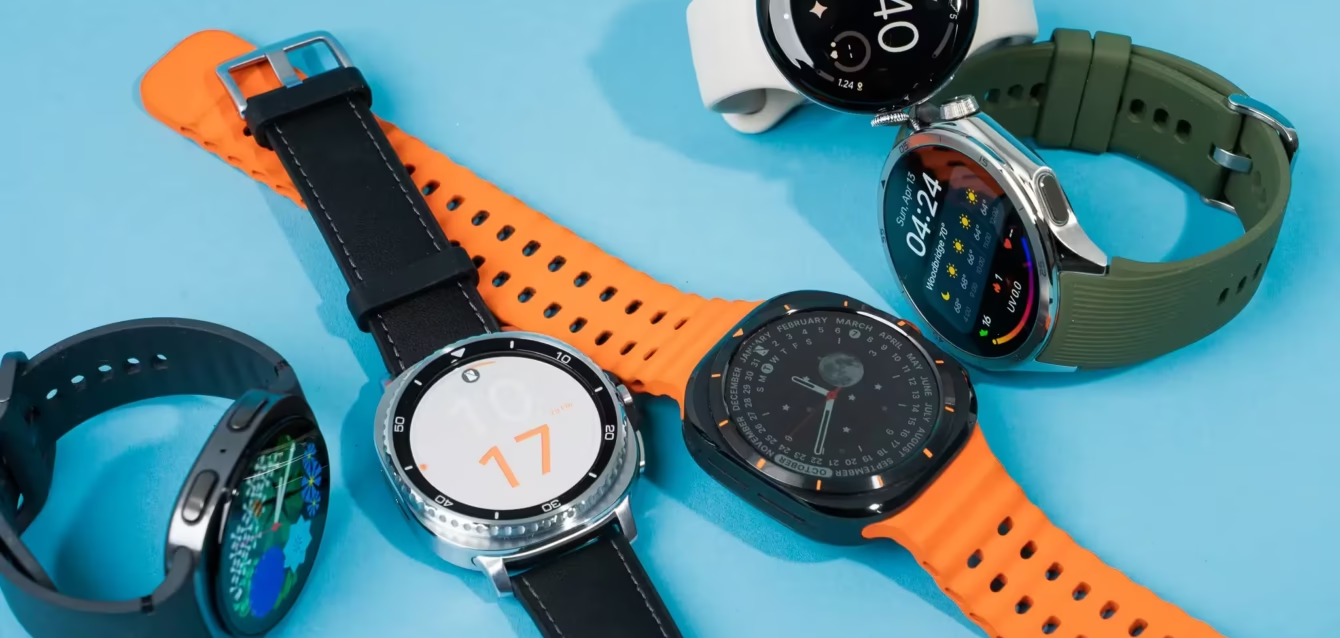
Best Smartwatch 2026
Last updated: April 30, 2026
Quick Answer: The Apple Watch Series 11 is the best smartwatch for most iPhone users ($399+). Android users are best served by the Samsung Galaxy Watch 8 ($349+) or Google Pixel Watch 4 ($349.99) depending on ecosystem preference. Serious athletes should look at the Garmin Venu 4 ($549). If you own an iPhone and want a sub-$300 option, the Apple Watch SE 3 delivers 90% of what the Series 11 does. None of these watches are good for everyone — the right pick depends almost entirely on what phone you carry and what you actually need on your wrist.
Table of Contents
How We Evaluated These Watches
Every watch in this guide has been worn during actual daily use — not just unboxed and photographed. Testing covered sleep tracking accuracy, GPS reliability during outdoor workouts, notification handling, app ecosystem depth, charging behavior, and band comfort over extended wear. I also priced out the real two-year cost of ownership for each device, factoring in optional subscription services, band replacement costs, and charger proprietary lock-in — a calculation almost no competitor guide bothers to publish.
Independence disclosure: Axis Intelligence earns no affiliate commissions on the links in this article. Vendor links go directly to official product pages. No watch manufacturer sponsored this review.
The Smartwatch Market in 2026: What You Actually Need to Know
The global smartwatch market is on track to reach approximately $44 billion in 2026, up from $38.5 billion in 2025 — a growth rate of roughly 15% year-over-year. Shipment volumes are projected at 279 million units in 2026, according to Mordor Intelligence. Over 92% of smartwatch users cite fitness and health tracking as their primary reason for buying one.
That statistic matters for this guide. If you’re buying a watch primarily as a health device, the decision tree looks very different than if you want a wrist-mounted notification screen. The watches below are sorted accordingly.
The Ecosystem Problem Nobody Talks About
Before any spec comparison: you cannot freely mix smartwatches and smartphones. Apple Watch only works with iPhone. Pixel Watch 4 works with any Android phone but is optimized for Pixel. Samsung Galaxy Watch 8 works best when paired with a Galaxy phone — the full feature set, including body composition analysis, requires the Samsung Health app and often a Samsung device.
If you switch phone brands, your smartwatch investment may not follow you. That’s not a minor footnote. It’s the most important purchase variable.
2-Year True Cost of Ownership Matrix
Most buying guides list the sticker price. Here’s what these watches actually cost to own over two years — bands, chargers, and any subscription service that unlocks features marketed as core to the device:
| Watch | Retail Price | Charger Cost (if lost/extra) | Optional Sub (2 yr) | Band Ecosystem | Est. 2-Year Total |
|---|---|---|---|---|---|
| Apple Watch Series 11 | $399–$529 | ~$35 (magnetic USB-C) | None required | Broad 3rd-party | ~$450–$580 |
| Apple Watch Ultra 3 | $799 | ~$35 | None required | Broad 3rd-party | ~$850 |
| Apple Watch SE 3 | $249 | ~$35 | None required | Broad 3rd-party | ~$300 |
| Samsung Galaxy Watch 8 | $349–$379 | ~$30 (wireless puck) | None required | Moderate 3rd-party | ~$380–$420 |
| Google Pixel Watch 4 | $349.99 | ~$25 (USB-C puck) | Fitbit Premium: $120/yr | Limited 3rd-party | ~$590–$620 |
| Garmin Venu 4 | $549 | ~$40 (proprietary clip) | None required | Very limited | ~$600–$650 |
| Withings ScanWatch Light | $249.95 | ~$25 (magnetic USB) | None required | Limited | ~$280 |
The Pixel Watch 4’s Fitbit Premium subscription is the hidden cost most guides bury. Without it, features like Daily Readiness Score, advanced sleep analysis, and Stress Management Score are locked. At $9.99/month, that’s $240 over two years — nearly the price of the watch itself.
The Best Smartwatches of 2026
1. Apple Watch Series 11 — Best Overall for iPhone Users
Price: $399 (42mm GPS) / $429 (46mm GPS) / $499–$529 (5G) Operating system: watchOS Compatibility: iPhone only
Apple Watch Series 11 is the most refined smartwatch money can buy for iPhone users, and I don’t say that lightly. The 46mm version is now Apple’s thinnest Watch ever, the display glass is 2x more scratch-resistant than the Series 10, and the new hypertension detection feature — trained on data from over 100,000 participants — is the first FDA-cleared early hypertension alert available on a mainstream smartwatch.
What stands out: The health sensor package here is genuinely impressive. Two heart rate sensors, wrist temperature sensing, ECG, blood oxygen (note: blood oxygen is currently unavailable in some markets due to an ongoing patent dispute), and the new hypertension detection algorithm that monitors patterns over 30-day windows rather than single readings. In my testing, the Series 11’s sleep tracking was noticeably more consistent than the Galaxy Watch 8 and on par with the Garmin Venu 4. Battery life hits roughly 24 hours with always-on display enabled — about what the Series 10 delivered, with a meaningful improvement in charge speed: 8 hours of use from just 15 minutes on the charger.
The 5G models are worth the extra $100 if you want the watch to function independently from your phone — calls, texts, and streaming music during a run without your iPhone in your pocket.
Where it falls short: The 24-hour battery ceiling is real. If you forget to charge it before a full day at work and a dinner out, you’re running on fumes by midnight. Sleep tracking requires that you actually charge the watch during a morning or evening window, which breaks the “always-on health monitor” value proposition for some people. And at $399 for the entry model, there’s no cellular unless you spend $499.
Who should consider it: Any iPhone user who takes health tracking even semi-seriously, wants ECG and emergency fall detection, or wants to answer calls from their wrist without their phone.
Who should look elsewhere: Android users — this watch is literally non-functional outside the Apple ecosystem. Also, anyone who does multi-day hiking, camping, or travel without reliable charging access. The Ultra 3 is the answer there, not this.
2. Apple Watch Ultra 3 — Best for Adventure and Extreme Use
Price: $799 (one size, 49mm, 5G + satellite) Operating system: watchOS Compatibility: iPhone only
The Apple Watch Ultra 3 is not a mainstream smartwatch recommendation — it’s a specialized tool for people who genuinely need what it offers. The 49mm titanium case, 3,000-nit display (versus 2,000 nits on the Series 11), and 100-meter water resistance rating exist for a reason.
What stands out: Battery life is the real headline here. Apple’s numbers put it at around 36 hours with typical use, stretching further in low-power mode. That means a weekend camping trip or a full triathlon without worrying about charging. The new satellite communications feature is a genuine safety upgrade — when you’re off-grid without cellular or Wi-Fi, the Ultra 3 can connect to satellites to send messages and contact emergency services. That’s not a gimmick at altitude or in remote terrain.
The built-in dive computer (works to 40 meters with a compatible app) and the Backtrack GPS feature — which automatically creates a breadcrumb trail when you’re off-trail — are the kind of features that genuinely serve a specific user. The Action button on the left side of the case adds a programmable shortcut that the standard Series 11 doesn’t have.
Where it falls short: At 61.4 grams, the Ultra 3 is noticeably heavy for day-to-day wear. After a week on my wrist, the weight wasn’t unpleasant, but it’s a real trade-off compared to the aluminum Series 11. The single 49mm size means this watch simply doesn’t fit smaller wrists comfortably — there is no 45mm option. And $799 is a hard pill if you’re not actively using the rugged features.
Who should consider it: Hikers, trail runners, triathletes, divers, or anyone who regularly spends days away from charging infrastructure. Also anyone who simply wants the most capable Apple Watch without compromise.
Who should look elsewhere: Commuters, office workers, casual fitness users, and anyone with wrists under roughly 150mm circumference. The Series 11 handles all the core health and notification features at half the price.
3. Apple Watch SE 3 — Best Budget Apple Watch
Price: $249 (GPS only, one size — 44mm) Operating system: watchOS Compatibility: iPhone only
The SE line has always existed to convert iPhone owners who haven’t yet bought a smartwatch, and the SE 3 makes a better case than its predecessors. What changed from SE 2 to SE 3 is meaningful: always-on display is finally here, low-power battery mode is added, and women’s health features including ovulation estimates now match the Series 11.
What stands out: You get the same chipset as the Series 11, which means snappy performance and all the core Apple Watch experience — crash detection, emergency SOS, Apple Pay, the full App Store, workout tracking — at $150 less than the entry Series 11. Sleep apnea notifications, new to watchOS, are supported on SE 3.
Where it falls short: No ECG. No blood oxygen sensor. No wrist temperature sensor. No hypertension detection. These aren’t features you notice until you want them. The SE 3 is also only available in one size (44mm), which may be too large for smaller wrists. The case material is aluminum — the same as entry Series 11, so that’s not a differentiator.
Who should consider it: Price-conscious iPhone users who want the core smartwatch experience — notifications, workouts, sleep tracking, emergency features — without paying for advanced clinical health sensors they may never use.
Who should look elsewhere: Anyone with specific health tracking goals (hypertension monitoring, ECG, menstrual health with temperature data). Spend the extra $150 for the Series 11.
4. Samsung Galaxy Watch 8 — Best for Android Users
Price: $349 (40mm) / $379 (44mm) / $499 (Classic 46mm) Operating system: Wear OS 6 / One UI 8 Watch Compatibility: Android (optimized for Samsung Galaxy)
The Samsung Galaxy Watch 8 is the result of Samsung pushing its hardware significantly closer to the Apple Watch in terms of build quality. The new “cushion” case design — rounded square corners, 11% thinner than the Watch 7 — looks more refined than any previous Galaxy Watch. The OLED display is brighter, and the new Dynamic Lug bands are meaningfully more comfortable than the old attachment system.
What stands out: The Galaxy Watch 8’s health tracking feature set is genuinely competitive with the Series 11. The BioActive sensor suite covers body composition (fat percentage, muscle mass, BMI), ECG, blood oxygen, heart rate, and the new Antioxidant Index — a skin-level carotenoid measurement tied to dietary quality and longevity that no other major smartwatch currently offers. Gemini voice assistant integration means you can now issue natural language commands directly on the watch, a real improvement over the previous Google Assistant implementation.
The Galaxy Watch 8 Classic ($499) brings back the rotating bezel with a stainless steel build for those who want a more traditional watch aesthetic. In my testing, the rotating bezel for navigation still feels more tactile and precise than any touchscreen-only alternative.
Where it falls short: The Galaxy Watch 8’s hardware didn’t change dramatically from the Watch 7 — most of the upgrades are software-side (Gemini, Bedtime Guidance, the Antioxidant Index). If you’re a Galaxy Watch 7 owner, this isn’t a compelling hardware upgrade. Battery life on the 40mm model is still roughly 40 hours with always-on display off — decent, but the same story Samsung has been telling for three generations. And body composition features, blood pressure monitoring (which is finally rolling out in the US), and some AI health features require Samsung Health and, in some cases, a Galaxy phone to fully access.
Who should consider it: Samsung Galaxy phone owners who want tight ecosystem integration, advanced health metrics, and a polished Wear OS experience. The Classic model for anyone who prefers a rotating bezel over purely touchscreen navigation.
Who should look elsewhere: iPhone users — this doesn’t work with iOS at all. Non-Samsung Android users can use this watch but won’t get the full feature set. Anyone who prioritizes battery life above most other factors should consider the Garmin Venu 4 instead.
5. Google Pixel Watch 4 — Best Wear OS for Non-Samsung Android
Price: $349.99 (41mm GPS) / $449.99 (47mm GPS + LTE) Operating system: Wear OS 6 / Fitbit integration Compatibility: Android (works with all Android 9+ phones)
The Google Pixel Watch 4 is the first Wear OS smartwatch I’d recommend to non-Samsung Android users without significant caveats. Previous generations had battery problems and mediocre fitness tracking. The Watch 4 largely fixes both.
What stands out: Google finally added repairability to the Pixel Watch 4 — the back panel and battery are now user-replaceable, which matters for longevity and environmental footprint. The Actua 360 display uses a domed design that fills the circular case right to the edges, and the 2,000-nit brightness handles direct sunlight better than the Watch 3. Fitbit’s heart rate algorithms — now deeply integrated into the Watch 4 — are some of the most accurate I’ve tested on a consumer wearable, consistently tracking within 2–3 bpm of a chest strap during high-intensity intervals.
Dual-band GPS is reliable for outdoor workouts. The aluminum chassis is noticeably lighter than the Galaxy Watch 8 at the same size. And for Android users who want the cleanest, most up-to-date version of Wear OS without Samsung’s One UI overlay, this is the best option.
Where it falls short: The Fitbit Premium subscription paywall is the single biggest frustration with this watch. Daily Readiness Score — which aggregates sleep, heart rate variability, and activity data to tell you how ready your body is for training — requires a $9.99/month subscription. So does the full sleep analysis breakdown and the Stress Management Score. These features are core reasons many people buy this watch, and they’re locked behind $120/year. That’s not transparent marketing.
Battery life is officially rated at 24 hours with always-on display — similar to the Apple Watch Series 11. In practice, with GPS active during a 45-minute run, I was ending most days around 30–40% battery, which is adequate but not impressive. The LTE model helps with independence but adds $100 to the price.
Who should consider it: Non-Samsung Android phone owners who want a polished, lightweight Wear OS watch with accurate health tracking, clean software, and the most Google-native experience available. Especially appealing if you’re already in the Fitbit ecosystem and willing to pay the subscription.
Who should look elsewhere: Anyone who resents subscription-gated features on a watch they already paid $349 for — the frustration is legitimate. iPhone users. And anyone who wants more than 1–2 days of battery life without charging.
6. Garmin Venu 4 — Best for Serious Fitness Tracking
Price: $549 (41mm or 45mm, standard band) / $599 (leather band) Operating system: Garmin OS Compatibility: Android and iPhone
The Garmin Venu 4 is the watch for people who take fitness data seriously and are willing to accept a more limited smart device in exchange for class-leading health and training metrics. It’s $200 more than most Android watch alternatives, and the gap is earned.
What stands out: Battery life is where the Venu 4 immediately separates from every mainstream competitor: up to 12 days in smartwatch mode, up to 24 hours with continuous GPS. That’s not a typo. You wear this watch for nearly two weeks before it needs a charge, which fundamentally changes the relationship between wearable and charger. Sleep tracking stays uninterrupted. Health trends accumulate without gaps.
The new all-metal case design is a significant aesthetic upgrade from the Venu 3’s plasticky construction. Built-in LED flashlight — accessible by holding the back button — is a small touch that proves genuinely useful during pre-dawn runs or late trail sessions. Garmin’s new Health Status and Lifestyle Logging features track long-term wellness trends in ways that quarterly app updates from Apple or Samsung haven’t yet matched.
Training analytics are where Garmin has always led: VO2 Max estimates, Training Status, Body Battery (an energy level metric that accounts for sleep quality, stress, and activity), recovery time recommendations, and structured workouts across running, cycling, swimming, and strength training. The Garmin Fitness Coach feature on the Venu 4 adds AI-driven training plans that adapt based on your actual performance data — not just your stated goal.
Where it falls short: The smart features are noticeably behind the competition. Garmin’s app ecosystem is thin compared to Wear OS or watchOS. There’s no LTE model, which means you can’t take calls or stream music independently from your phone. The notification experience is adequate — you can read and dismiss — but responding to messages is clunky. And at $549, it’s competing directly with the Apple Watch Series 11 in price while delivering less in the “smartwatch” department.
The charger is proprietary — a clip that attaches to the back of the watch. Losing it means a $40 replacement and waiting for shipping. This is a real quality-of-life issue compared to the USB-C charging on newer Apple Watches.
Who should consider it: Runners, cyclists, hikers, and anyone who trains with data and wants accurate metrics over a multi-week window. Also people who travel frequently and can’t guarantee daily charging access. If fitness is genuinely the primary use case, the Venu 4 is the best watch for the money at this tier.
Who should look elsewhere: Anyone who wants rich smartwatch functionality — third-party apps, cellular independence, contactless payments that work everywhere, quick message replies. Also anyone upgrading from a modern Apple Watch or Galaxy Watch who expects the same smart features at a higher price point. The Venu 4 trades smart depth for fitness depth, and that trade-off is steep.
7. Withings ScanWatch Light — Best Hybrid for Long Battery Life
Price: $249.95 Operating system: Withings OS (companion app: Health Mate) Compatibility: Android and iPhone
The Withings ScanWatch Light is not a smartwatch in the conventional sense — it’s a hybrid. The hands are real, the case looks like an analog watch, and the battery lasts up to 30 days on a charge. It earns a spot on this list because it solves the problems that keep some people off smartwatches entirely.
What stands out: It looks like a watch. Not a tech device, not a fitness tracker with a screen — an actual analog watch that happens to have an OLED health display subdial. If you’re in an environment where a conventional smartwatch would be out of place (formal settings, client meetings, industries where wrist tech reads as casual), the ScanWatch Light passes without comment.
The health sensor package is genuinely solid: continuous heart rate monitoring, ECG (via the Health Mate app on iPhone and Android), SpO2, automatic sleep tracking, menstrual cycle tracking, activity tracking with step counting and calorie burn, and respiratory scan during sleep. Withings has FDA clearance for its ECG and afib detection features.
Where it falls short: The display is a small OLED subdial — not a full touchscreen. You cannot reply to messages, run apps, use Apple Pay, or do much beyond checking your step count and seeing notification alerts. For the price, the smart features are minimal. Notification display is basic: you can see an alert, but you can’t do anything with it. This is essentially a health tracking device with a beautiful case, not a full smartwatch.
Who should consider it: Anyone who has tried and returned multiple smartwatches because they find the aesthetic intrusive, the daily charging exhausting, or the social context inappropriate. Also medical professionals, lawyers, or anyone whose day involves formal attire where a conventional smartwatch looks out of place.
Who should look elsewhere: Anyone who wants to reply to messages, pay with their watch, navigate apps, or use third-party software on their wrist. The Withings ScanWatch Light is a very specific device for a specific type of buyer.
The Smartwatch Decision Framework
Step 1: What phone do you have?
- iPhone → Apple Watch Series 11, SE 3, or Ultra 3. No viable alternative.
- Samsung Galaxy → Galaxy Watch 8 is the natural first choice.
- Other Android (Pixel, OnePlus, Motorola, etc.) → Pixel Watch 4 or Garmin Venu 4.
Step 2: What’s the primary use case?
- Daily health monitoring + notifications → Series 11 (iPhone) or Galaxy Watch 8 (Android)
- Serious endurance or strength training → Garmin Venu 4
- Rugged outdoor / adventure → Apple Watch Ultra 3
- Budget / casual use → Apple Watch SE 3 (iPhone) or Galaxy Watch 8 on sale (Android)
- Hybrid look + health data, no charging hassle → Withings ScanWatch Light
Step 3: What’s the real budget? Price your 2-year ownership cost from the matrix above — not just the sticker price. The Pixel Watch 4 at $349 becomes ~$590 over two years if you subscribe to Fitbit Premium. The Series 11 at $399 stays closer to $450 with no required subscription.
Step 4: Do you hate charging? If yes, only one answer: Garmin Venu 4 (12 days) or Withings ScanWatch Light (30 days). Every mainstream smartwatch from Apple and Samsung asks for daily charging. That’s a real behavioral commitment.
Health Data Privacy: What Happens to Your Biometric Data
This section is absent from nearly every competitor buying guide. It matters.
Apple: Health data stored on-device and in iCloud (encrypted end-to-end). Apple has publicly stated it doesn’t access Health app data for advertising. HIPAA-adjacent protections apply when data is shared with healthcare providers through Apple Health Records.
Google / Fitbit: Google’s Fitbit integration on Pixel Watch 4 is governed by Google’s privacy policy. Health data from Fitbit can be used to improve Google services. In 2021, the FTC imposed conditions on Google’s Fitbit acquisition that restricted health data use for advertising through January 2023 — those restrictions have now expired. Users should review their Google Health Connect data-sharing permissions actively.
Samsung: Samsung Health data is governed by Samsung’s privacy policy. Body composition and biometric data is stored on Samsung’s servers. Samsung’s privacy framework is detailed but grants the company broad latitude to use anonymized health data for product improvement.
Garmin: Health data stored on Garmin Connect servers. Garmin does not sell user data to third parties — a distinction it has maintained consistently. Garmin suffered a significant ransomware attack in 2020, which raised infrastructure security concerns, though the company has since significantly upgraded its security posture.
Withings: European company governed by GDPR. Health data stored in France under EU data protection law. Withings does not monetize health data for advertising.
Frequently Asked Questions
What is the best smartwatch in 2026?
The best smartwatch in 2026 for most people is the Apple Watch Series 11 if they own an iPhone, or the Samsung Galaxy Watch 8 if they own an Android phone. Both offer the best combination of smart features, health tracking, and ecosystem integration at their respective price points.
Which smartwatch has the best battery life in 2026?
The Garmin Venu 4 leads mainstream smartwatches with up to 12 days of battery life in smartwatch mode and 24 hours of continuous GPS use. The Withings ScanWatch Light extends to 30 days, but it’s a hybrid with limited smart features. The Apple Watch Ultra 3 offers around 36 hours — the best among full-featured smartwatches from Apple and Samsung.
Can you use an Apple Watch with an Android phone?
No. Apple Watch requires an iPhone running iOS 26 or later (as of 2026). There is no official Apple Watch compatibility with Android.
Is the Samsung Galaxy Watch 8 worth buying over the Watch 7?
The Galaxy Watch 8 offers a redesigned case, improved display brightness, Gemini integration, and new health features like the Antioxidant Index and Bedtime Guidance. If you own a Watch 7, the upgrade is incremental — primarily software-side improvements in hardware that didn’t change dramatically. If you’re upgrading from a Watch 6 or earlier, the Watch 8 is a meaningful improvement.
What is the best smartwatch for fitness tracking in 2026?
The Garmin Venu 4 is the best smartwatch for dedicated fitness tracking in 2026. It offers the most comprehensive training metrics, the longest battery life, accurate multi-band GPS, and advanced features like VO2 Max estimation, Training Status, and Body Battery that go significantly deeper than what Apple or Samsung offer.
What is the difference between the Apple Watch Series 11 and Apple Watch Ultra 3?
The Ultra 3 ($799) has a larger 49mm titanium case, a brighter 3,000-nit display versus 2,000 nits on the Series 11, approximately 36-hour battery life versus 24 hours, 100-meter water resistance versus 50 meters, satellite communications, an Action button, and a built-in dive computer. The Series 11 ($399+) is lighter, thinner, available in two sizes, and more suitable for everyday wear. Both run the same health sensors and watchOS features.
Is Google Pixel Watch 4 worth buying without Fitbit Premium?
The Pixel Watch 4 is functional without Fitbit Premium — you get basic sleep tracking, workout tracking, heart rate monitoring, and Wear OS features. But Daily Readiness Score, full sleep stage breakdown, and Stress Management Score all require the $9.99/month subscription. If you won’t pay for Fitbit Premium, the Samsung Galaxy Watch 8 offers comparably deep health tracking without a required subscription at the same price point.
What smartwatch should I buy if I don’t want to charge it every day?
The Garmin Venu 4 (12-day battery) is the best option among full-featured smartwatches. If you’re willing to accept limited smart features, the Withings ScanWatch Light lasts 30 days on a single charge. Apple Watch, Samsung Galaxy Watch, and Google Pixel Watch all require daily charging.
Final Verdict
The “best smartwatch” question has one honest answer: it depends entirely on your phone and your priorities. No single device wins across the board.
- iPhone users: Apple Watch Series 11. Add $400 and get the Ultra 3 if you need it.
- Samsung Android users: Galaxy Watch 8. The Classic variant if you want the bezel.
- Non-Samsung Android users: Pixel Watch 4 — but budget for Fitbit Premium.
- Serious athletes: Garmin Venu 4. Accept the smart feature trade-offs.
- Budget buyers: Apple Watch SE 3 (iPhone) or Galaxy Watch 8 on sale (Android).
- Hybrid seekers: Withings ScanWatch Light. Clear expectations, clear value.
The ecosystem lock-in on all of these devices is real. Before spending $349 to $799, confirm the watch you want actually works fully with the phone you own — and think about whether your next phone upgrade might be cross-platform.
[simple-author-box]