

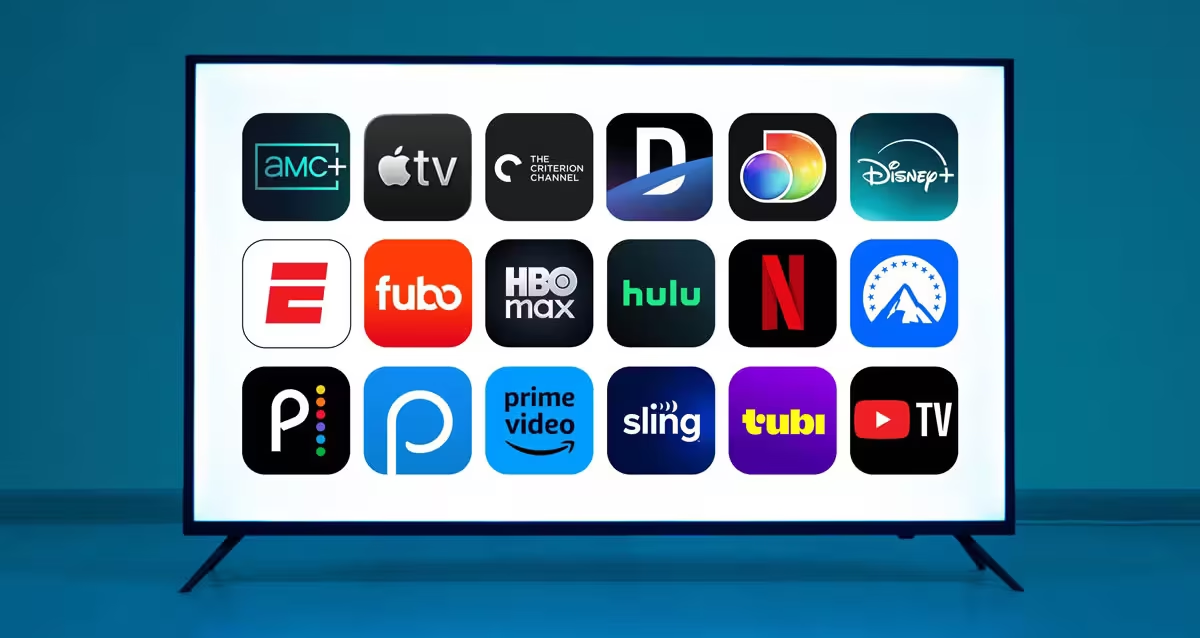
Best Streaming Service 2026
Updated April 28, 2026
Quick Answer
The best streaming service in 2026 depends entirely on what you watch. Netflix is the safest single subscription for sheer variety — 325 million subscribers don’t stick around by accident. Disney+ (now absorbing Hulu) is the pick for families and Marvel/Star Wars households. Apple TV+ is pound-for-pound the best value for prestige drama if you watch fewer than five hours a week of original content. HBO Max remains the premium drama champion for now, though its future is tied to a pending merger with Paramount+ that could reshape the landscape by late 2026 or early 2027. Sports fans need Peacock or Paramount+ before anything else. And for most households, the honest answer is: pick two services, rotate a third, and never subscribe to more than four simultaneously.
Table of Contents
The Streaming Math Nobody Wants to Do
Bruce Springsteen once sang about 57 channels and nothing on. Right now there are more streaming services than that, and the financial reality has quietly become absurd.
According to a 2025 consumer survey by Reviews.org, American households spent an average of $3,350 per year — $278.50 per month — on streaming and connected TV services, a 2% increase year-over-year. That’s not dramatically below a traditional cable bill. The streaming revolution sold us on cutting the cord to save money. For millions of households, that calculation has silently reversed.
The reason is fragmentation. Every studio eventually pulled its content back from Netflix and launched its own service. Now if you want Netflix, Disney+, HBO Max, Peacock, Apple TV+, Paramount+, and a live TV alternative, you’re looking at north of $100 per month before you’ve touched 4K upgrades or ad-free tiers. The dream of $10/month all-in died around 2022.
What’s actually changed in 2026:
Prices stabilized — mostly. After years of annual hikes, most services held pricing steady heading into this year. The exception: Paramount+ raised prices in January 2026 and eliminated free trials. Netflix crossed 325 million paid memberships in Q4 2025, reporting $45.2 billion in full-year revenue — its growth is no longer dependent on cheap subscriptions.
Disney absorbed Hulu. The standalone Hulu app is being folded into Disney+ to create one unified platform — Disney Animation, Pixar, Marvel, Star Wars, National Geographic, FX originals, and Hulu’s on-demand library under a single login.
The biggest news: HBO Max and Paramount+ are merging. In March 2026, Paramount CEO David Ellison confirmed to investors that following Paramount Skydance’s acquisition of Warner Bros. Discovery, the two services will combine into a single platform — one that would carry Yellowstone, Game of Thrones, The Sopranos, Star Trek, and the full Showtime library in one place. The Warner Bros. Discovery shareholders formally approved the $81 billion acquisition in late April 2026, though regulatory review is still pending. Best estimate for a combined service: late 2026 to early 2027.
Sports rights reshuffled dramatically. The NBA signed an 11-year, $76 billion rights deal split between Amazon Prime Video, NBCUniversal, and ESPN/ABC — ending the Turner Sports era. That means NBA on NBC is back, Peacock gets exclusive streaming games, and Amazon Prime Video becomes essential for basketball fans.
Bundle math got smarter. Carrier deals (Verizon, T-Mobile) and retailer bundles (Walmart+, Kroger Boost) now cover meaningful streaming costs if you know where to look. More on this in the bundle section below.
How I Evaluated These Services
I’ve subscribed to every major service covered here — not as a reviewer checking boxes, but as an actual viewer cycling through them the way most households do. My evaluation framework:
Content depth — not catalog size. A service with 40,000 titles where nothing is worth watching loses to one with 800 things I actually want to see. I looked at originals quality, third-party library strength, and the rate at which good new content arrives.
Price-to-value ratio — specific to viewing habits. A $7.99/month ad tier looks cheap until you factor in 6 minutes of ads per hour. A $24.99 premium tier looks expensive until you split it across four screens. I’ve run the math for different household sizes and viewing patterns throughout.
Technical experience — streaming quality, interface frustration, and device support. A 4K library means nothing if the app crashes on your TV.
Sports and live content — increasingly the deciding factor for most people considering canceling cable.
Practical flexibility — how painful is it to cancel and re-subscribe? Are annual plans worth locking into?
Prices throughout this article are verified as of April 2026 for US subscribers. Taxes are not included.
Netflix
Plans: With Ads — $7.99/mo | Standard — $17.99/mo | Premium (4K) — $24.99/mo
Extra member slots: $8.99/mo (with ads) or $6.99/mo (ad-free)
Best for: Households that want maximum variety without thinking too hard about it
Netflix is still the default answer when someone asks what streaming service to get. With 325 million subscribers globally — 81 million of them in the US alone — it has the scale to spend on content that smaller services simply can’t match.
What actually works: The originals pipeline remains the strongest in the industry, not because every show is great, but because the volume of genuinely good content arriving per month is unmatched. Stranger Things built a cultural footprint that HBO would kill for. Bridgerton, The Night Agent, and Wednesday proved Netflix can manufacture hits across demographics. The recent push into live events — boxing matches, NFL Christmas Day games, and WWE — is the most aggressive expansion of Netflix’s identity since it launched streaming.
The ad-supported tier at $7.99/month is the most significant development for budget-conscious subscribers. 94 million people now use it, which tells you the ad load is tolerable enough that most people accept it. My experience: roughly 4-5 minutes of ads per hour, with no ads during movies under 45 minutes. Annoying but liveable, especially at that price point.
What doesn’t work: The interface has gotten worse as the catalog has grown. The homepage algorithm is aggressive about surfacing Netflix originals at the expense of everything else in the library. You’ll find yourself scrolling past the same five promoted titles for three minutes before remembering you can use search. The “Browse” function is less intuitive than it was three years ago.
Password sharing is now genuinely enforced. If you share an account with someone outside your household, the extra member slot system applies — $6.99–$8.99/month per person added. The crackdown converted millions of password borrowers into paying subscribers, which is reflected in those subscriber numbers. It also means the era of a $24.99 Premium account split six ways is over.
The 4K situation: Premium at $24.99 gets you 4K, HDR, Dolby Atmos, and four simultaneous streams. For a household of four all-in on quality, it’s actually competitive math — $6.25/person/month for the best picture and audio Netflix offers.
Standout content right now: Adolescence (4-episode drama, remarkable), the live sports experiments, and whatever their top 10 weekly list surfaces — it’s a genuinely useful signal of what’s landing with audiences.
Who should skip Netflix: If you watch almost exclusively sports, sci-fi, or prestige HBO-style drama, you’ll find Netflix’s catalog broad but shallow in those specific lanes. And if you’re trying to keep streaming spend under $40/month total for a household, Netflix’s ad tier works, but it competes hard with services below.
Limitations: No live TV. Offline downloads only on Standard and Premium. The ad tier restricts some content.
Amazon Prime Video
Plans: Included with Prime ($14.99/mo or $139/yr) | Standalone with ads — $8.99/mo | Ad-free add-on — +$3/mo
Best for: People who already have Amazon Prime for shipping; NBA fans in 2025-2026
Amazon Prime Video occupies a strange position in most households: it’s the streaming service people forget they have, then rediscover twice a year when something good lands on it. That’s not entirely unfair — the catalog is enormous and inconsistent — but in 2026, there are two concrete reasons Prime Video has gotten more important.
The NBA deal changes everything. Starting with the 2025-2026 season, Amazon Prime Video holds exclusive streaming rights to a package of NBA games as part of the $76 billion, 11-year deal. If you follow basketball and don’t have Prime, that’s now a real access problem. This is the most significant sports rights development in streaming since NFL Sunday Ticket moved to YouTube TV.
Originals have gotten genuinely good. Reacher became one of the most-watched streaming action series in recent memory. Fallout hit the cultural mainstream in a way that few video game adaptations ever have. The Marvelous Mrs. Maisel finished its run as one of the best comedy dramas of the streaming era. The pipeline isn’t Netflix-volume, but the hit rate on originals has improved considerably since the early Amazon days of expensive, forgettable prestige misfires.
The practical math: If you’re already paying $139/year ($11.58/month) for Amazon Prime shipping and other benefits, Prime Video is effectively free. Adding the ad-free streaming upgrade is $3/month on top of that. As a pure streaming value play, it’s hard to beat. The problem is the interface — Amazon’s homepage is cluttered with rentals, add-on channel promotions (Starz, Paramount+, MGM+), and content you don’t have access to without paying extra. The line between “included” and “costs extra” is deliberately blurred.
Content worth noting: The Lord of the Rings: The Rings of Power continues (expensive and divisive, but technically impressive). Fallout Season 2 is in production. The Expanse library remains one of the best sci-fi back catalogs in streaming. For film, Amazon’s MGM acquisition means a deep library of older films, though nothing that competes with Disney’s franchise strength.
Who should skip (or deprioritize): If you don’t have a Prime membership for shipping, the standalone $8.99/month video-only plan makes the value proposition much less obvious. You’re paying nearly as much as Netflix’s ad tier for a weaker originals pipeline and a more annoying interface. The ad-free upgrade to $11.99/month standalone gets expensive fast.
Limitations: Interface actively works against you by mixing paid content with your subscription. Add-on channel model creates subscription fatigue within the subscription. Content quality is uneven across genres.
Disney+ (Now With Hulu Built In)
Plans: With Ads — $9.99/mo | Ad-Free — $18.99/mo | Disney+/Hulu Bundle with Ads — $12.99/mo | Bundle No Ads — $19.99/mo | Disney+/Hulu/ESPN Bundle with Ads — $20/mo | Bundle No Ads — $30/mo
Best for: Families with kids, Marvel/Star Wars fans, households that want the widest possible franchise content under one subscription
Disney+ has undergone the most significant structural change of any major streamer in 2026. The standalone Hulu app is being absorbed into Disney+, creating a single unified platform that carries Disney Animation, Pixar, Marvel, Star Wars, National Geographic, FX originals, and Hulu’s full on-demand catalog. On paper, it’s the most comprehensive entertainment library in streaming.
What this merger actually means for subscribers: The Hulu integration delivers real value if you watch adult dramas. FX’s output — The Bear, Shogun, What We Do in the Shadows — is some of the best television produced anywhere right now, and it’s all inside Disney+ if you’re on the bundle tier. Next-day access to ABC, NBC (via Hulu), and Fox programming is also included. For families who also wanted a general entertainment option beyond Disney’s branded content, the bundle is genuinely competitive.
The franchise engine: If you have children under 13, Disney+ is non-negotiable. The depth of the animated library — from classics to Pixar to Disney Channel — is unmatched. For Marvel fans: Daredevil: Born Again Season 2 is in production, X-Men ’97 Season 2 is confirmed, and Wonder Man is on the 2026 slate. On Star Wars: Maul: Shadow Lord is the flagship series this year, with Ahsoka Season 2 expected. The Mandalorian & Grogu hits theaters May 22, 2026, before eventually arriving on Disney+.
Password sharing crackdown: Disney is following Netflix’s playbook. As reported by the Associated Press, Disney+ is alerting US subscribers who share passwords outside their household and moving toward account-level enforcement. Expect fees for extra members to become standard before the end of 2026.
The ad tier reality: Disney+’s $9.99/month with-ads tier has gotten more aggressive on ad frequency. I’ve clocked closer to 5-6 minutes of ads per hour than the originally promised 4 minutes — not a dealbreaker, but worth factoring in. The $18.99 ad-free standalone is expensive for what’s essentially a franchise machine.
The bundle is where it gets interesting: $12.99/month for Disney+/Hulu with ads gets you the widest content spread in streaming for under $15. If you add ESPN Select and can live with ads, the $20/month three-way bundle is among the best pure-value propositions in the market — particularly for sports fans who want Premier League, college football, and NBA playoff coverage on ESPN alongside the entertainment content.
Who should skip Disney+ as their primary service: If you have no particular attachment to Marvel, Star Wars, or Pixar, and you watch mostly adult dramas, you’re paying a premium for things you don’t watch. The FX content is excellent but still a fraction of the total library.
Limitations: Discovery+ content is not included (separate subscription). The app has had stability issues during major premiere events. The Hulu integration is still completing its rollout.
HBO Max
Plans: With Ads — $10.99/mo | Ad-Free — $18.49/mo | Ultimate (4K, offline) — $22.99/mo
Best for: Prestige drama viewers who want the best television money can buy; subscribers who can tolerate a streaming service in flux
HBO Max has been through more identity crises than most streaming services — launched as HBO Max, rebranded to Max, then rebranded back to HBO Max in 2025. The name confusion is symptomatic of a deeper instability: the pending merger with Paramount+ means everything about this service could change again within 12 months.
That said, the content argument for HBO Max remains as strong as it’s ever been. HBO’s original programming is consistently the most-awarded, most-critically-acclaimed content in television. The Last of Us, Succession, The White Lotus, Euphoria, and the incoming Dune: Prophecy prequel series represent a level of production quality and creative ambition that no other streaming service reliably matches. If you care about prestige television in the way some people care about going to the cinema, HBO Max is the closest streaming equivalent.
The merger situation, explained plainly: In March 2026, Paramount CEO David Ellison confirmed the plan to merge Paramount+ and HBO Max after Paramount Skydance’s acquisition of Warner Bros. Discovery. Warner Bros. Discovery shareholders approved the $81 billion deal in late April 2026. A combined service would bring together over 200 million subscribers and content spanning Game of Thrones, Yellowstone, The Sopranos, Star Trek, Survivor, CBS programming, and the full Showtime library. Ellison has confirmed the HBO brand will survive as a sub-brand within the larger combined service.
What this means if you’re deciding whether to subscribe now: The service as it exists today — and its current pricing — will likely change before mid-2027. If you’re choosing between an annual and monthly plan, the monthly gives you flexibility to reassess when the merger details become clearer. The content isn’t going anywhere. But whether it costs $18.49 or $25 as part of a combined mega-service is genuinely unknown.
Content highlights right now: The Pitt (ER-style medical drama) has been a breakout hit. The White Lotus Season 3 delivered. TNT Sports (which transfers under the merger) covers March Madness, the NHL, and previously the NBA — though the NBA deal restructuring has shifted some of that. Warner Bros.’ film library remains a significant asset.
The 4K situation: The $22.99 Ultimate tier includes 4K streaming and offline downloads — the most competitive 4K tier pricing relative to content quality of any service on this list.
Who should skip HBO Max right now: If budget is tight and you’re already paying for Netflix or Apple TV+, the overlap on prestige drama is real enough to make a second subscription feel redundant. Wait for more merger clarity before locking into an annual plan.
Limitations: The app — previously Max — has had interface complaints since its redesign. Sports content is in transition given the NBA rights shift. Merger uncertainty is a legitimate planning concern for anyone thinking annually.
Paramount+
Plans: Essential with Ads — $8.99/mo ($89.99/yr) | Paramount+ with Showtime — $13.99/mo ($139.99/yr)
Best for: Sports fans who want Champions League, NFL, and CBS; Showtime drama lovers
Paramount+ eliminated free trials and raised prices in January 2026. That’s an aggressive move for a service that most people still treat as secondary. The counterargument: if you watch live sports, Paramount+ punches well above its price point.
The sports case: The Paramount+ with Showtime tier at $13.99/month includes the UEFA Champions League — the most prestigious club football competition in the world — as an exclusive streaming property. It also carries NFL on CBS (including Super Bowl alternate streams), the Masters (golf), and select NBA games. For a soccer fan, this subscription pays for itself the first week of knockout rounds.
The Showtime integration: The $13.99 tier delivers 40,000+ titles including the full Showtime library. Yellowjackets, Billions, and the Dexter universe live here, alongside Paramount’s own originals (Tulsa King, 1923, and the Star Trek multiverse — Discovery, Strange New Worlds, Picard). It’s a deeper library than the price suggests.
The merger factor: The plan to combine Paramount+ with HBO Max was confirmed directly by CEO David Ellison in a March 2026 investor call, with Paramount’s own consolidation of Paramount+, Pluto TV and BET+ expected to complete by mid-2026. The HBO Max integration follows. This makes the timing of a Paramount+ annual subscription particularly fraught — you may be paying for a service that transforms significantly before your year is up.
The Wicked: For Good window: Wicked: For Good began streaming on Peacock in March 2026. Universal films generally land on Peacock, not Paramount+.
Content specific to Paramount+: 1923 (Harrison Ford and Helen Mirren’s Yellowstone prequel) has been among streaming’s most-watched dramas. The Star Trek library — now including Strange New Worlds — has a devoted audience. The reality TV library (Survivor, Big Brother) is the deepest anywhere.
Who should skip Paramount+: If you don’t care about live sports, don’t watch Star Trek, and have no interest in the Showtime drama library, the value case gets thin fast. The film output has been inconsistent, and the interface has room for improvement.
Limitations: Prices just went up, free trials are gone, and merger uncertainty is significant. Wait for bundle deals — Paramount+ frequently shows up in carrier promotions and third-party bundles at reduced rates.
Apple TV+
Plans: $12.99/mo (no ad tier; 6 simultaneous devices)
Apple One bundle: $21.95/mo individual (includes Apple Music, Arcade, iCloud+)
With Peacock bundle: $14.99/mo for both
Best for: Quality-over-quantity viewers; people who can dedicate 2-3 hours per week to prestige originals
Apple TV+ is the streaming service that makes the strongest argument for curation over catalog. For $12.99/month — with no ads, no tiers, six simultaneous devices — you get a relatively small but deliberately excellent library of original content. That’s the whole pitch.
Why it works for the right viewer: Severance is as good as television gets. Slow Horses is the best spy thriller running in any medium right now. Silo built a genuinely devoted audience across two seasons. The Morning Show draws comparisons to The West Wing in its serial urgency. For a viewer who watches 3-4 hours of original drama per week and wants no ads, Apple TV+ may deliver the best hour-per-dollar value of any service in this roundup.
No legacy library is the real limitation: Unlike Netflix, HBO Max, or Amazon, Apple TV+ has almost no back catalog. If you finish the originals you care about, there’s little to browse while you wait for the next season to drop. It’s a service that rewards patience and selective viewing habits. Binge-watchers who power through seasons in a weekend will feel the gaps acutely.
New for 2026 — sports rights: Apple TV+ holds exclusive MLS Season Pass rights (Major League Soccer), and has expanded into Formula 1 coverage starting in 2026. If you follow either sport, this is a meaningful addition to what was previously a pure-originals play.
The six-device, no-password-sharing-enforcement policy is unusually generous right now. At $12.99, splitting the subscription with a family member or roommate in a different household is still practically feasible, though Apple’s terms technically require a shared household.
Standalone math: At $12.99/month, Apple TV+ costs less than Netflix’s Standard ad-free tier ($17.99) for a dramatically smaller but higher-quality library. The Apple TV+ and Peacock bundle at $14.99/month is one of the smartest deals in streaming right now — it pairs Apple’s prestige originals with Peacock’s Premier League, SNF, and NBC comfort content for $3 more than Apple alone.
The content pipeline concern: Apple’s release cadence is slower than competitors. When a big show like Severance is between seasons, there can be stretches where nothing on the service demands your attention. This is a real issue for anyone who needs streaming as a daily entertainment source rather than an occasional one.
Who should skip Apple TV+: Anyone who wants a broad entertainment service to browse casually every night. Apple TV+ is not that. It’s a service for people who watch one or two shows at a time with full attention.
Limitations: No ad-supported tier (there’s no cheaper entry point). Small library. Slower content release cadence than competitors.
Peacock
Plans: Peacock Select — $7.99/mo ($79.99/yr) | Premium with Ads — $10.99/mo ($109.99/yr) | Premium Plus (no ads) — $16.99/mo ($169.99/yr)
Student discount: $5.99/mo | Military discount: $3.99/mo
Free with: Walmart+, Instacart+, Xfinity Internet
Best for: Sports-first households; cord-cutters who miss NBC programming; budget-conscious viewers who want live content
Peacock has quietly become one of the most underrated streaming services for sports fans, and 2026 marks the return of the NBA to the NBC family, making it more important than ever. If you want to watch NBA games that air on NBC — including exclusive streaming-only games on Peacock — this subscription is no longer optional for basketball fans.
The sports portfolio: Peacock carries every NFL Sunday Night Football game (the most-watched broadcast in American television), the Premier League (most matches), Big Ten college football, the Olympics (NBCUniversal property), and now the NBA’s NBC package. For live sports variety, no standalone streaming service at this price point comes close.
The NBC/Bravo library: Next-day access to current seasons of Saturday Night Live, Chicago Fire, Chicago PD, The Real Housewives franchise, and Law & Order are Peacock’s most underappreciated features for cord-cutters. If you used to watch NBC network content live and have been missing it since dropping cable, Peacock solves that problem.
The Universal films pipeline: Recent theatrical releases — Wicked: For Good began streaming in March 2026, Five Nights at Freddy’s 2 landed in April — arrive on Peacock months after their theatrical debut. For new Universal films, this is the first stop.
The WWE situation: Most WWE live premium events have transitioned to Netflix and ESPN as of 2026. Peacock retains a deep classic wrestling archive, but live WWE is no longer a primary selling point.
Who gets it free: Walmart+ members get Peacock Premium included in their $12.95/month membership. Instacart+ subscribers get it included. If you have either for grocery delivery purposes, Peacock is already yours. The Xfinity StreamSaver bundle includes Peacock, Netflix (with ads), and Apple TV+ for significantly less than their combined retail prices — one of the most compelling bundle values in streaming right now if you’re an Xfinity customer.
Limitations: The ad experience on the Premium tier is heavier than Netflix or Hulu. The interface is functional but uninspired. Live sports are available on Premium (with ads) but the stream quality during high-demand events — big Premier League matches, live NFL — can stutter in ways the cable equivalent wouldn’t.
Live TV Streaming Services: The Cable Replacement Question
For many households, the real comparison isn’t Netflix vs. HBO Max — it’s live TV streaming vs. traditional cable. Here’s where those services stand in 2026.
YouTube TV
Price: ~$72.99/mo base | Sports add-on packages available separately
Best for: The most complete cable TV replacement at a reasonable price
YouTube TV remains the gold standard for live TV streaming. Access to 100+ channels including all major broadcast networks, ESPN, Fox Sports, MSNBC, CNN, Bravo, and regional sports networks (in select markets), with unlimited cloud DVR storage for up to nine months.
The major development: YouTube TV now offers genre-based a la carte packages in 2026, including a dedicated sports tier around $65/month that includes major broadcast networks, ESPN (and ESPN Unlimited), FS1, and NBC Sports. This is a meaningful option for sports-first households who don’t need general entertainment channels.
The practical case for YouTube TV: if you watch live news, sports, and network TV regularly, and you’re using YouTube TV instead of adding a separate live TV service on top of streaming subscriptions, the math often works out in your favor compared to splitting the same content across three separate streaming apps.
Limitations: Price has climbed steadily. No exclusive originals. Regional sports network availability is inconsistent depending on your market.
DirecTV Stream
Price: Varies by package; entry ~$64.99/mo
Best for: Sports households; recently became the top pick over Fubo for sports specifically
DirecTV recently replaced Fubo as the recommended sports streaming service in several major roundups following content and pricing changes. DirecTV Stream carries regional sports networks more consistently than most alternatives, including the DirecTV Stream MyEntertainment bundle which packages Disney+, Hulu, and HBO Max (with ads) plus 40 live TV channels for $35/month — one of the better bundle constructions available.
Limitations: Interface is dated. Less innovative than YouTube TV on the feature side.
Hulu + Live TV
Price: ~$82.99/mo
Best for: Households that want live TV plus the Disney/Hulu/ESPN bundle in one place
Hulu + Live TV includes Disney+, Hulu (on-demand), and ESPN Unlimited as part of the package. For families who were going to pay for the Disney bundle anyway, rolling it into a live TV subscription is an efficient consolidation. The live TV component covers 75+ channels.
Limitations: Most expensive of the live TV options. The content integration with Disney+ is seamless; the live TV interface is less polished.
Free Streaming Services: The Often-Overlooked Layer
Most streaming guides bury the free services at the bottom, but in 2026, they deserve more credit.
Pluto TV (free, ad-supported): Viacom’s free streaming service runs like a digital cable system — hundreds of “channels” that play content continuously, plus an on-demand library. It’s not destination television, but as background viewing, it’s a legitimate no-cost option. The recent consolidation of Paramount+, Pluto TV, and BET+ under Paramount’s unified stack makes Pluto TV more strategically relevant going forward.
Tubi (free, ad-supported): Fox’s AVOD service has a surprisingly deep library of older films and reality TV. For occasional movie watching when you don’t want to pay for a rental, Tubi is underrated.
Peacock Select ($7.99/mo): The new Peacock Select tier offers a limited library with current NBC and Bravo seasons at the cheapest Peacock entry point. Not the full Premium catalog, but useful for specific programming.
The Roku Channel / Amazon Freevee content: Available through the respective platforms, these include a rotating selection of older titles and some originals. Amazon shut down the standalone Freevee brand, but that content migrated under Prime Video’s “Watch for Free” label.
Bundle Math: Building a Smart Streaming Stack
The single most impactful thing you can do for your streaming budget is think in combinations rather than individual subscriptions. Here’s how to build a stack under $40/month that covers most viewing habits.
Stack 1: The Essentials ($28/month)
- Netflix with Ads: $7.99
- Disney+/Hulu Bundle with Ads: $12.99
- Peacock Select or Walmart+ (which includes Peacock): $7.99 (or $12.95 with Walmart+)
This covers: Netflix originals, Disney/Marvel/Star Wars/FX shows, next-day NBC programming, Premier League, and Sunday Night Football. That’s a lot of television for under $30.
Stack 2: The Sports-First ($35/month)
- Peacock Premium with Ads: $10.99
- Paramount+ with Showtime: $13.99
- Apple TV+/Peacock bundle (overlap, but pricing collapses this): Not ideal — better to route through the above
More realistically:
- Peacock Premium: $10.99 (NBA, Premier League, SNF)
- Paramount+: $8.99 (Champions League, NFL on CBS, CBS shows)
- Amazon Prime Video (for NBA streaming): $14.99/mo or $139/yr for full Prime
Total: ~$35-37/month for comprehensive live sports access plus two strong on-demand libraries.
Stack 3: The Prestige ($30/month)
- HBO Max Ad-Free: $18.49
- Apple TV+: $12.99
This gets you the two best prestige drama libraries in streaming for just over $30/month. No sports, limited family content, but the cream of scripted television is covered.
The Carrier Deals Worth Knowing
Verizon’s Netflix + HBO Max bundle with ads is going to $13/month effective May 6, 2026 (up from $10) — still meaningful savings versus retail. Disney bundle at $10/month through select Verizon plans saves $10/month versus standalone pricing.
Comcast Xfinity’s StreamSaver bundle offers Peacock, Netflix, Apple TV+, the Disney+/Hulu bundle, and HBO Max — all five services with ads — for $35/month to qualifying customers. If you’re an Xfinity subscriber, this is likely the best streaming value available in the US right now.
T-Mobile and Walmart also offer streaming as part of membership benefits. Check what’s attached to services you’re already paying for before subscribing to anything directly.
The Rotation Strategy: The Most Underused Money-Saving Tool
Most services have no long-term cancellation penalties. This means you can subscribe for one month, binge what you want, cancel, and return six months later for the next big release. Netflix makes this slightly harder with how it handles returning subscriber offers, but the strategy works across Paramount+, Peacock, Apple TV+, and HBO Max.
Practical example: Subscribe to Paramount+ in March for the Champions League knockout stage. Cancel in June. Return in September for the fall premiere slate. Total cost: 4 months × $8.99 = $35.96 instead of $107.88 for the full year.
Decision Framework: Which Service Is Actually Right for You
You have children under 10: Disney+ first. Everything else is secondary.
You watch sports above everything else: Peacock for Premier League/NBA/SNF → Paramount+ for Champions League/NFL on CBS → Amazon Prime if NBA is your sport. YouTube TV or DirecTV Stream if you want a full cable replacement.
You want the best TV without thinking about cost: HBO Max for prestige drama + Apple TV+ for a different flavor of prestige. Two subscriptions, ~$31/month, genuinely excellent content.
You’re a single subscriber on a tight budget: Netflix with ads at $7.99 is the most defensible single subscription in streaming. Rotate Paramount+ and Peacock seasonally around it.
You’re a family of four: Disney+/Hulu/ESPN bundle ($20/month with ads) covers the most household use cases per dollar of any single subscription. Add Netflix Standard split across accounts for adult viewing.
You care about film more than TV: Amazon Prime Video (MGM back catalog + Prime originals) + Apple TV+ (curated prestige films) + rotate rental/purchase for theatrical releases.
You want to replace cable entirely: YouTube TV or Hulu + Live TV, full stop. Budget $65-83/month for the live TV layer, then add one on-demand service (Netflix or Disney+) on top.
You’re watching to see where the dust settles on the HBO Max/Paramount+ merger: Subscribe to either service month-to-month, not annually. Don’t lock into a long-term commitment when pricing and bundling will likely change materially before mid-2027.
Frequently Asked Questions
What is the best streaming service in 2026?
Netflix is the best all-around streaming service for most people. With 325 million subscribers, the largest original content budget in streaming, and a functional $7.99/month ad-supported tier, it covers the widest range of viewing habits. For specific use cases — sports, prestige drama, family content — Peacock, HBO Max, or Disney+ may be more appropriate.
Is streaming cheaper than cable in 2026?
Not always. A survey found US households spent an average of $278.50/month on streaming and TV services in 2025 — comparable to premium cable packages. If you subscribe to more than 3-4 streaming services, the cost savings over cable largely disappear. Strategic subscription rotation is the main tool for keeping streaming affordable.
Is the HBO Max and Paramount+ merger happening?
Yes, it’s been confirmed — but it’s pending regulatory approval. Paramount CEO David Ellison confirmed the plan in March 2026 following the $81 billion Paramount Skydance/Warner Bros. Discovery deal. The combined service is expected no earlier than late 2026, with early 2027 being the more realistic window. Current subscribers to either service are not affected in the short term.
Which streaming service is best for sports in 2026?
No single service covers all sports. For basketball: Peacock (NBA on NBC games) + Amazon Prime (exclusive Amazon games). For soccer: Paramount+ (Champions League) + Apple TV+ (MLS). For NFL: Peacock (Sunday Night Football), Paramount+ (CBS games), Amazon (Thursday Night Football), and ESPN+ (Monday Night Football). Sports fans typically need two or three services for comprehensive coverage.
Is Apple TV+ worth it in 2026?
Yes, for the right viewer. At $12.99/month with no ads and no library depth, Apple TV+ is worth it if you watch one or two prestige shows at a time and value quality over quantity. It’s not for casual browsers or heavy daily viewers who need a large catalog.
What’s the cheapest streaming service in 2026?
Free options like Pluto TV and Tubi cost nothing beyond an internet connection. Among paid services, Hulu with ads ($7.99/month), Netflix with ads ($7.99/month), and Peacock Select ($7.99/month) are the lowest entry points. Amazon Prime Video standalone with ads is $8.99/month.
Is Disney+ still worth it without Hulu?
The Hulu integration makes the bundle the better value. At $12.99/month for Disney+/Hulu with ads, you’re getting two services’ worth of content for $5 more than Disney+ alone ($9.99). The standalone Disney+ subscription makes less sense now that the bundle is priced competitively.
Should I pay for ad-free streaming tiers?
It depends on your tolerance and the service. Netflix’s ad tier runs about 4-5 minutes of ads per hour at $7.99 versus $17.99 for ad-free — a $10/month premium. For heavy daily viewers, ad-free may be worth it. For lighter users or budget households, the ad tier is tolerable. Peacock’s ads are more intrusive than Netflix’s at equivalent tier levels.
What bundles save the most money on streaming in 2026?
The best bundles depend on your existing services. Xfinity StreamSaver (Peacock + Netflix + Apple TV+ for $18/month) is the best single-bundle value for Xfinity customers. Verizon’s Netflix + HBO Max bundle ($13/month starting May 2026) is the best for mobile customers. Disney+/Hulu/ESPN bundle ($20/month with ads) is the best standalone bundle for family/sports households.
Is Peacock free with Walmart+?
Yes. Walmart+ members ($12.95/month) receive Peacock Premium with ads included — the same $10.99/month tier — at no additional cost. This is one of the best passive streaming deals available.
Which streaming service is best for kids?
Disney+ is the clear answer. The depth of Disney Animation, Pixar, Marvel (at age-appropriate levels), and Disney Channel content is unmatched for children. Peacock’s NBC Kids content is a secondary option at lower cost.
Is it worth subscribing to multiple streaming services?
Two to three services is the practical sweet spot. Most viewers find they actively use two services and occasionally dip into a third. Beyond three, subscriber fatigue and under-utilization typically outpace the additional content value. The rotation strategy — subscribing, binging, and canceling seasonally — is more cost-effective than maintaining four or more active subscriptions.
Final Verdict: The Axis Intelligence Streaming Stack for 2026
There’s no universally correct answer here, which is what makes streaming comparisons frustrating to read and write. But if you held a gun to my head and made me build the optimal stack for three different household types, here’s where I’d land.
For a single viewer who wants the best content: HBO Max ($18.49/month, ad-free) + Apple TV+ ($12.99/month) = $31.48/month. You’ll watch fewer shows, but the quality ceiling is the highest in streaming. Add Peacock Select ($7.99/month) if sports matter.
For a family with diverse tastes: Disney+/Hulu/ESPN bundle with ads ($20/month) + Netflix with ads ($7.99/month) = $27.99/month. Covers children’s content, Marvel/Star Wars, FX dramas, broadcast TV, college sports, and the widest general entertainment library in streaming.
For sports as the primary driver: Peacock Premium ($10.99/month) + Paramount+ with Showtime ($13.99/month) + Amazon Prime ($14.99/month or $139/year) = ~$40/month. NBA, Premier League, Champions League, NFL on CBS, SNF, and Thursday Night Football covered. Everything else comes from those libraries.
The universal advice: Don’t lock into annual plans for HBO Max or Paramount+ right now. The merger will change both services materially. Rotate subscriptions seasonally around your one or two anchors. Check your Walmart+, Instacart+, or carrier benefits before paying retail for Peacock. And resist the temptation to subscribe to everything — the more you pile on, the less you watch any of it.
Methodology and Independence Disclosure
This comparison is based on active subscriptions maintained throughout Q1-Q2 2026. I personally subscribe to Netflix, Disney+ (bundle tier), HBO Max, Apple TV+, Peacock Premium, and Paramount+ with Showtime, and I rotate Amazon Prime and YouTube TV depending on sports season. Pricing was verified against each service’s official subscription page as of April 28, 2026.
Axis Intelligence has no affiliate relationships with any streaming service featured in this article. No streaming service has paid for placement, provided early access, or reviewed this content prior to publication. This article contains no affiliate links to streaming subscription pages.
[simple-author-box]