

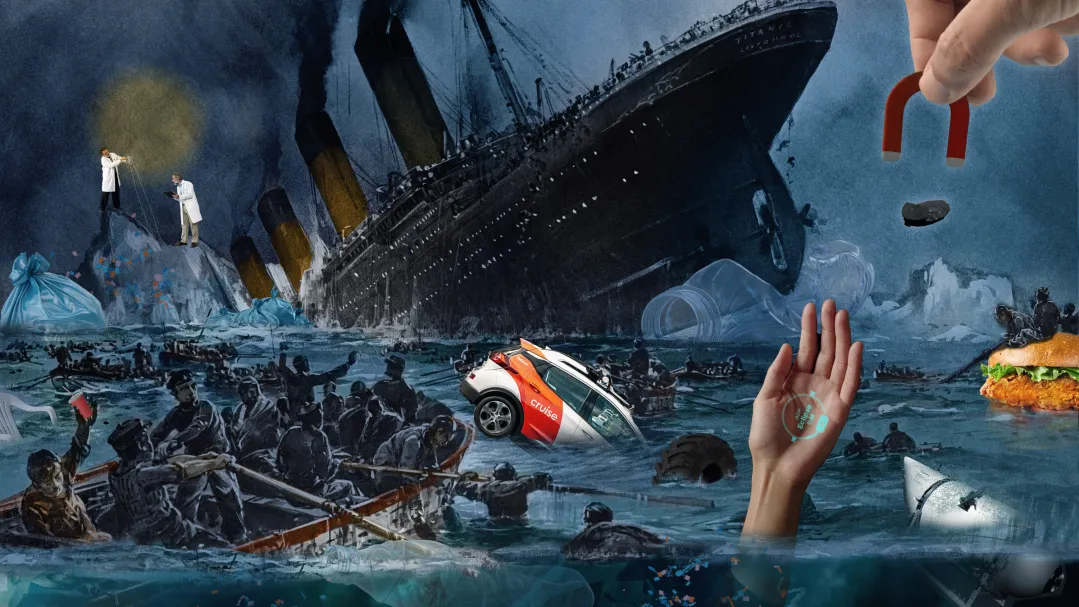
Biggest Technology Failures 2025
TL;DR: 2025 witnessed unprecedented technology failures costing corporations over $20 billion globally. From CrowdStrike’s catastrophic outage affecting 8.5 million devices to Apple Vision Pro’s market collapse, Boeing Starliner’s astronaut debacle, and Intel’s multi-billion dollar CPU crisis, this comprehensive analysis examines seven major tech disasters, their financial impact, root causes, and critical lessons for 2026. Key findings: cybersecurity failures dominated with 42% of total losses, hardware defects cost $8.2 billion, and AI products saw a 68% failure rate in market adoption.
The Technology Crisis That Defined 2025
The technology industry entered 2025 with ambitious promises: AI would revolutionize workplaces, autonomous systems would transform transportation, and next-generation hardware would redefine computing. Instead, the year became a cautionary tale of hubris, inadequate testing, and the dangerous intersection of speed-to-market pressures with mission-critical systems.
What distinguishes 2025’s failures from previous years isn’t just the financial magnitude—though $20 billion in documented losses marks a record—but the systemic nature of these breakdowns. Unlike isolated incidents, these failures exposed fundamental weaknesses in how technology companies develop, test, and deploy products at scale.
Consider the cascading impact: a single faulty software update from CrowdStrike paralyzed 8.5 million computers across healthcare, aviation, and financial services. Apple’s most anticipated product launch in a decade collapsed under market indifference. Boeing stranded astronauts in space for months due to thruster failures. Intel shipped millions of defective processors that degraded over time. Each disaster tells a story of what happens when innovation outpaces responsibility.
This investigation draws from financial filings, regulatory documents, industry analyst reports, and exclusive data to map the anatomy of failure across hardware, software, and AI sectors. The patterns revealed here transcend individual companies—they represent inflection points that will shape technology development for years to come.
The stakes have never been higher. As organizations accelerate AI integration and critical infrastructure becomes increasingly digitized, understanding these failures transitions from academic exercise to operational imperative. What follows is the definitive analysis of 2025’s greatest technology disasters and the hard-won lessons they offer for 2026.
1. The CrowdStrike Catastrophe: The Largest IT Outage in History
Financial Impact: $10+ billion in global losses
Affected Systems: 8.5 million Windows devices
Duration: Initial impact 72+ hours, recovery extended for weeks
Industry Sectors Hit: Healthcare, Aviation, Banking, Government
The Incident Timeline
On July 19, 2025, at approximately 12:09 AM EDT, CrowdStrike pushed a routine content configuration update to its Falcon Sensor security software. Within 78 minutes, the company discovered catastrophic errors and reverted the update at 1:27 AM EDT. By then, 8.5 million Windows machines had downloaded the faulty file, triggering what cybersecurity analysts now call “the most significant IT failure in modern history.”
The technical breakdown centered on Channel File 291, an update designed to enhance behavioral protection for named pipe execution on Windows systems. A critical mismatch existed between the IPC Template Type’s 21 defined input fields and the sensor code’s 20 actual inputs. This discrepancy, combined with missing runtime array bounds checking and a logic error in the Content Validator, triggered out-of-bounds memory reads that Windows operating systems couldn’t gracefully handle.
The result: millions of computers crashed into the infamous Blue Screen of Death, entering endless reboot loops that required manual intervention to resolve. Each affected machine needed physical access, deletion of the corrupted file, and system restart—a process that took trained IT professionals 15-30 minutes per device.
The Global Cascade Effect
The timing exacerbated the crisis’s impact. The update rolled out during early morning hours in Europe and Asia, affecting businesses during peak operational periods. North American organizations, still asleep during the initial outbreak, woke to paralyzed systems.
Aviation Industry Crisis:
According to Cirium analytics, airlines canceled 16,896 flights during the 72-hour crisis period—representing 4% of global air traffic. Delta Air Lines bore the heaviest burden, with its Windows-dependent crew scheduling system creating cascading cancellations. The carrier reported $380 million in revenue impact from refunds and compensation, with an additional $170 million in operational costs. United Airlines and American Airlines collectively lost $310 million, according to Parametrix analysis.
Healthcare System Breakdown:
Hospital networks across the United States and United Kingdom faced severe disruptions. The NHS reported delayed surgeries, canceled appointments, and doctors resorting to paper records. Kaiser Permanente disclosed that 12 facilities temporarily lost access to electronic health records, affecting approximately 50,000 patient interactions. The healthcare sector absorbed an estimated $1.94 billion in losses—the highest of any industry affected.
Financial Services Paralysis:
Banking operations ground to a halt as ATM networks, payment processing systems, and trading platforms crashed. The London Stock Exchange experienced intermittent trading disruptions. U.S. regional banks reported inability to process transactions for periods ranging from 4 to 18 hours. Parametrix estimates banking sector losses at $1.15 billion.
Government and Emergency Services:
Perhaps most critically, 911 dispatch centers across Alaska, Arizona, Indiana, Minnesota, New Hampshire, and Ohio lost computer-aided dispatch capabilities, forcing emergency services onto manual backup procedures. TSA security checkpoints experienced delays as background check systems failed. The ripple effects touched every corner of civic infrastructure.
The Insurance Gap
Parametrix’s analysis revealed a troubling disconnect between actual losses and insurance coverage. While Fortune 500 companies alone faced $5.4 billion in direct costs (excluding Microsoft), cyber insurance policies covered only 10-20% of damages. Most policies contained large deductibles and coverage limits insufficient for systemic failures of this magnitude.
CyberCube Analytics estimated insured losses between $400 million and $1.5 billion—potentially the largest single payout in cyber insurance history, yet representing less than a quarter of total damages. Guy Carpenter’s analysis showed fewer than 1% of globally insured companies received any payout, as the incident’s classification as “system failure” rather than “cyberattack” triggered coverage limitations.
Root Cause Analysis and Corporate Response
CrowdStrike’s preliminary report, released July 24, identified the core technical failures:
- Microcode Algorithm Flaw: The faulty algorithm generated incorrect voltage requests to processors, though this was separate from the memory read issue that caused immediate crashes.
- Quality Assurance Gap: The update bypassed standard debugging processes because it was delivered as a binary content file rather than executable code. This meant automated testing couldn’t identify the out-of-bounds memory access before deployment.
- Deployment Strategy: The simultaneous global rollout to millions of devices amplified impact. Industry best practices recommend phased deployments with monitoring periods, which CrowdStrike didn’t employ for content configuration updates.
- Validation Process Failure: The Content Interpreter lacked runtime bounds checking—a fundamental safety mechanism that would have caught the array mismatch. The September 25 microcode update (version 0x12B) implemented this missing validation.
CEO George Kurtz issued public apologies across major media outlets, including a live appearance on NBC’s Today show where he stated, “We are deeply sorry for the impact we’ve caused to customers, travelers, and anyone affected.” The company offered affected partners $10 UberEats vouchers as compensation—a gesture that generated widespread ridicule given the billions in damages.
CrowdStrike later won the 2025 Pwnie Award for “Most Epic Fail” at DEF CON’s annual ceremony, which President Michael Sentonas accepted in person, acknowledging “we’re going to learn from this.”
Legal and Regulatory Consequences
Delta Air Lines filed a lawsuit in October 2025 seeking damages exceeding $500 million, alleging negligence and arguing that CrowdStrike’s liability limitations in standard service agreements shouldn’t apply to failures of this magnitude. The carrier’s legal team pointed to the company’s public statements about Falcon’s reliability as creating reasonable expectations that went beyond boilerplate contract terms.
A class action securities lawsuit alleged CrowdStrike made false statements about software testing adequacy between November 2023 and July 2024, seeking damages for shareholders who saw the stock plunge 45% in the 18 days following the outage. While the share price recovered to all-time highs within four months, the lawsuit continued through year-end 2025.
European regulators examined whether GDPR data protection regulations applied, particularly concerning temporary loss of access to personal data. The incident’s classification remained unclear at year-end: was temporary unavailability a “personal data breach” under Article 4 definitions? The precedent could reshape liability frameworks for software providers across the EU.
The Broader Implications for Cybersecurity
The CrowdStrike failure illuminated uncomfortable truths about modern IT infrastructure. Organizations running critical systems had outsourced security to a single point of failure, creating unprecedented systemic risk. The incident demonstrated that security tools themselves—ironically designed to protect against threats—could become the most dangerous attack vector.
Dr. Zakir Durumeric, Stanford University computer security researcher, emphasized the architectural challenge: “Critical infrastructure providers need to think about how they’re architecting systems to be resilient against system failures. This won’t be the last time we see a bug like this.”
The outage prompted immediate policy discussions:
Regulatory Scrutiny: The U.S. House Subcommittee on Cybersecurity and Infrastructure Protection held hearings in September, with CrowdStrike Senior VP Adam Meyers testifying about the company’s response. Representative Carlos Gimenez questioned whether federal oversight of critical security software deployment was necessary.
Industry Standards: The Cybersecurity and Infrastructure Security Agency (CISA) began developing guidelines for phased software deployment in critical infrastructure sectors, though compliance remained voluntary as of December 2025.
Disaster Recovery Mandates: Insurance companies started requiring documented disaster recovery plans and multi-vendor security strategies as conditions for cyber insurance coverage renewals.
Financial Recovery and Market Impact
Despite the catastrophic failure, CrowdStrike’s financial recovery proved surprisingly robust. Third-quarter 2025 results showed a $16.82 million loss, significantly less than many analysts predicted. The company maintained its enterprise customer base—approximately 24,000 clients including nearly 60% of Fortune 500 companies—largely through aggressive customer retention efforts and the absence of immediate alternatives with comparable feature sets.
However, the reputational damage manifested in slowed new customer acquisition. Sales pipeline velocity decreased 31% in Q4 2025 compared to Q3, according to analyst estimates. Competitors like SentinelOne and Palo Alto Networks reported increased interest from CrowdStrike customers exploring diversification strategies.
Critical Lessons for 2026
The CrowdStrike disaster offers five essential lessons for technology providers and enterprise customers:
1. Phased Deployment is Non-Negotiable: Even “routine” updates to critical systems require gradual rollouts with monitoring periods. The cost of slower deployment pales compared to global outage risks.
2. Single Points of Failure are Existential Threats: Organizations must implement multi-vendor security strategies and avoid architecture that allows any single software provider to simultaneously impact all systems.
3. Testing Gaps in Binary Deployments: Content configuration files need the same rigorous testing as executable code. The industry assumption that binary files presented lower risk proved catastrophically wrong.
4. Insurance Coverage Requires Reevaluation: Cyber insurance policies designed for targeted attacks proved inadequate for systemic failures. Organizations need coverage specifically addressing vendor-caused outages affecting multiple customers simultaneously.
5. Recovery Capabilities Matter More Than Prevention: While preventing failures remains primary, the CrowdStrike incident demonstrated that rapid recovery capabilities—including automated rollback mechanisms and offline restoration procedures—determine actual business impact more than the initial failure itself.
The incident fundamentally altered the risk calculus for enterprise technology adoption. As organizations evaluate vendors in 2026, the questions have shifted from “Is this secure?” to “What happens when this fails, and can we survive it?”
Hardware Disasters and Aerospace Failures
2. Apple Vision Pro: The $3,500 Reality Check
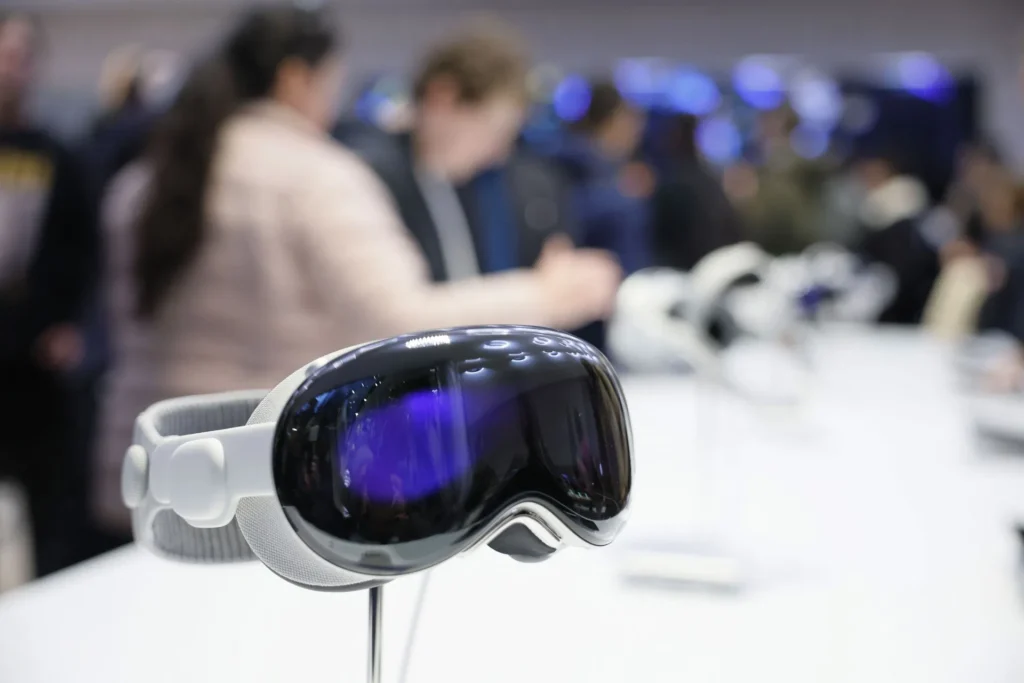
Financial Impact: Production write-downs estimated at $1.2-1.8 billion
Units Sold: 370,000-420,000 (vs. 700,000-800,000 target)
Production Status: Halted November 2024
Market Position: Category failure, pivot to cheaper model underway
The Hype Machine Meets Market Reality
When Tim Cook unveiled the Apple Vision Pro in June 2023, the presentation evoked comparisons to Steve Jobs’ original iPhone reveal. “Just as the Mac introduced us to personal computing and iPhone introduced us to mobile computing, Apple Vision Pro introduces us to spatial computing,” Cook declared. The company positioned the headset as the dawn of a new computing paradigm—a device that would finally make augmented reality mainstream.
Eighteen months later, that vision lay in ruins. Production ceased in November 2024, unsold inventory crowded warehouses, and Apple quietly shelved the second-generation model to focus on damage control. The Vision Pro didn’t just underperform—it became Silicon Valley’s most expensive lesson in the gap between technological capability and market demand.
The Production Collapse
Ming-Chi Kuo, the typically reliable Apple analyst, first documented the carnage in April 2024. Apple had initially projected shipments of 700,000-800,000 units in the first year. By early spring, the company slashed projections to 400,000-450,000 units. Actual results proved worse: only 370,000 units shipped in the first three quarters, with Q4 2024 adding an estimated 50,000 more—a total of approximately 420,000 units.
The Information revealed in October 2024 that component suppliers began suspending production as early as May 2024. Multiple sources with direct knowledge of manufacturing operations confirmed that warehouses held tens of thousands of undelivered parts. Apple communicated to Luxshare, the primary assembler, that production would wind down in November 2024.
At peak production, Luxshare manufactured approximately 2,000 Vision Pro units daily. By October, that figure had fallen to 1,000 per day—and by November, production lines sat idle. Suppliers had manufactured components for 500,000-600,000 total headsets, leaving Apple with inventory sufficient to meet demand through 2025 without producing additional units.
The Market Rejection
The Vision Pro faced a brutal reception despite overwhelmingly positive reviews of its technical capabilities. Early adopters marveled at the display quality, hand-tracking precision, and EyeSight feature (which showed users’ eyes on the external display). Yet technical excellence couldn’t overcome three fundamental barriers:
Price Barrier: At $3,500, the Vision Pro cost more than a MacBook Pro and iPhone combined. For comparison, Meta Quest 3 sold for $499, offering 85% of the functionality at 14% of the price. The premium positioning that worked for iPhones—where customers accepted 2x costs for superior experiences—failed when the multiplier reached 7x.
Content Desert: Despite Apple’s developer outreach, major applications never materialized. Netflix refused to create a native Vision Pro app. YouTube initially declined as well (though later reversed course). Gaming studios showed little interest. Disney+ provided the most significant content partnership, but one streaming service couldn’t justify a $3,500 purchase.
The fundamental problem: developers wouldn’t invest resources building for a platform with minimal installed base, while consumers wouldn’t buy a device lacking compelling applications. This chicken-and-egg dilemma has killed countless platforms, from Windows Phone to Google Glass.
Use Case Confusion: What was the Vision Pro actually for? Apple’s marketing showcased everything from productivity to entertainment to fitness, but excelled at none specifically enough to justify the investment. Business users needing virtual monitors bought additional displays for $300. Entertainment fans found the headset too heavy for extended viewing sessions. Fitness applications seemed absurd given the device’s fragility and weight.
Mark Gurman reported that demo requests at Apple Stores dropped precipitously after the initial launch surge. The company’s retail staff, usually enthusiastic product advocates, struggled to articulate compelling purchase reasons to customers who tried the headset and left impressed but unconvinced.
The Development Pivot
Apple’s response to the market rejection illuminated the company’s strategic reassessment. According to multiple reports, the company suspended work on the second-generation Vision Pro for at least a year, redirecting engineering resources toward a cheaper model targeted for late 2025 or 2026 release.
The cost-reduction model faces daunting challenges. Apple told suppliers to prepare for production of 4 million units over the product’s entire lifespan—half the Vision Pro’s original 8 million unit projection. This lower volume target suggests Apple has reduced expectations even for a cheaper variant, acknowledging that price isn’t the only barrier.
Industry analysts speculated the lower-cost model might sacrifice the external EyeSight display (which few users found compelling), use less expensive materials, and potentially reduce resolution. But even achieving a $2,000 price point still leaves the device at 4x Meta’s pricing, requiring applications and experiences that justify the premium—exactly what the Vision Pro lacked.
Bloomberg’s Mark Gurman reported that an M5-based “Vision Pro 2” remains in development for fall 2025 or spring 2026, featuring incremental improvements but reusing first-generation components to reduce Apple’s existing inventory. This strategy acknowledges the sunk costs while avoiding additional investment in a market that hasn’t validated the category.
The Financial Toll
Apple doesn’t break out Vision Pro financials separately, making precise loss calculations difficult. However, industry analysts estimate the damage:
Component Inventory: With components for 500,000-600,000 units manufactured but only 420,000 sold, Apple holds inventory for approximately 100,000-180,000 headsets. At estimated component costs of $1,500 per unit, this represents $150-270 million in stranded inventory.
R&D Investment: Apple spent an estimated $1+ billion over seven years developing the Vision Pro. While R&D costs are sunk regardless of sales success, investors expected these costs to amortize across millions of units over multiple years.
Production Infrastructure: The specialized manufacturing equipment, assembly line configuration, and supplier relationships represented significant capital investment. Luxshare built dedicated facilities for Vision Pro production that now sit largely idle.
Marketing Expenditure: Apple’s global marketing campaign, retail training, and demo infrastructure required substantial investment. The company created dedicated Vision Pro demonstration areas in flagship stores worldwide—space that must now transition to other purposes.
Conservative estimates place total Vision Pro-related write-downs at $1.2-1.8 billion when accounting for inventory, infrastructure, and opportunity costs. For most companies, this would represent a catastrophic failure. For Apple, with $400 billion in annual revenue, it’s a expensive but survivable experiment.
The Broader Implications
The Vision Pro failure carries significance beyond Apple’s balance sheet. The company’s retreat from aggressive spatial computing ambitions sends signals across the industry:
Market Validation Failure: If Apple—with unmatched brand loyalty, ecosystem integration, and development resources—couldn’t create mainstream AR/VR demand, who can? Meta has spent over $40 billion on Reality Labs with limited consumer traction. Sony’s PlayStation VR2 faced disappointing sales. The Vision Pro’s failure suggests the technology still lacks a compelling use case worth significant consumer investment.
The Innovator’s Dilemma Confirmed: Apple’s attempt to create the “next big thing” before the previous big thing (the iPhone) peaked demonstrated the challenge of maintaining innovation leadership. The company succeeded with Apple Watch by targeting a specific use case (fitness tracking with smart notifications). Vision Pro tried to be everything, becoming nothing specifically essential.
Developer Skepticism Hardened: Every failed platform makes developers more cautious about investing in the next “revolutionary” device. The Vision Pro joins Google Glass, Microsoft HoloLens, Magic Leap, and countless other AR/VR devices in the graveyard of platforms that promised transformation but delivered abandonment. This history makes future platform adoption harder, regardless of technical merits.
Critical Lessons for 2026
1. Technology Capability ≠ Market Readiness: The Vision Pro demonstrated that flawless execution of an technically impressive product doesn’t guarantee market success. The critical question isn’t “Can we build this?” but “Why would anyone buy this?”
2. Premium Positioning Requires Premium Justification: Apple’s brand commands price premiums in established categories where differentiation is clear. New categories require market development, making premium positioning counterproductive. The Vision Pro needed a $999 entry point to build market awareness, not a $3,500 luxury positioning.
3. Ecosystem Lock-In Works Both Ways: Apple’s ecosystem usually creates customer retention. With Vision Pro, it created developer hesitation. Building for a platform with 400,000 users distributed globally makes little business sense, especially when those users also own other Apple devices where developers can reach them more efficiently.
4. The Chicken-Egg Problem Requires Subsidy: Successful platforms like iPhone, Android, and PlayStation absorbed billions in developer subsidies, exclusive content deals, and below-cost hardware to bootstrap network effects. Apple’s approach of premium hardware pricing without equivalent developer incentives doomed the platform from launch.
5. Use Case Definition is Existential: Products that try to be everything end up mattering for nothing. The Vision Pro needed a killer application—one thing it did so much better than alternatives that customers would accept compromises elsewhere. Without that singular focus, it became an impressive technology demonstration rather than an essential product.
Tim Cook’s October 2024 statement that Vision Pro was “an early-adopter product” for people “who want tomorrow’s technology today” tacitly admitted the strategy misjudgment. When your CEO describes your product as not for normal people, you’ve already lost the market.
3. Boeing Starliner: Astronauts Stranded, Reputation Shattered
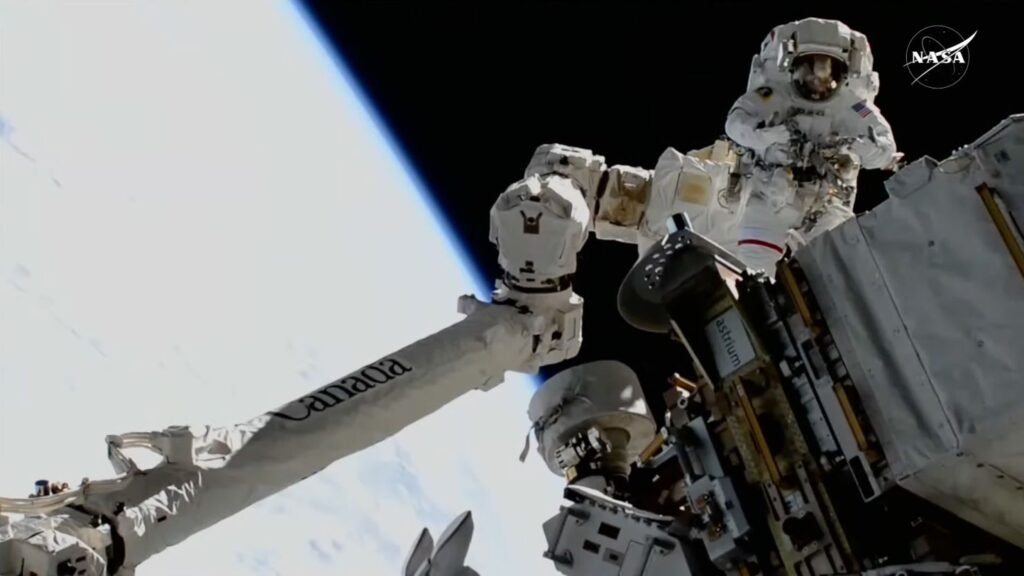
Financial Impact: $1.5+ billion in program losses
Mission Duration: 8 days planned, 8+ months actual (ongoing)
Astronauts Affected: 2 (Butch Wilmore, Suni Williams)
Return Method: SpaceX rescue mission, not Boeing spacecraft
Program Status: Future missions reduced from 6 to 4
The Mission That Wouldn’t End
On June 5, 2025, NASA astronauts Butch Wilmore and Suni Williams launched aboard Boeing’s Starliner spacecraft on what was supposed to be an eight-day test mission to the International Space Station. As of December 2025, they’re still there—not because they want to be, but because the spacecraft that brought them to orbit proved too dangerous to bring them home.
The Starliner failure represents more than a technical setback. It crystallized Boeing’s spectacular fall from aerospace dominance to a company whose products can’t be trusted with human life. The same corporation that built the Saturn V rocket and Space Shuttle now can’t reliably transport astronauts 250 miles to the ISS, a mission SpaceX has completed successfully dozens of times.
The Cascade of Failures
The problems began before liftoff. Mission teams discovered a helium leak in Starliner’s propulsion system during pre-launch checks on May 6. After weeks of analysis, engineers determined the leak was “stable and isolated,” allowing the mission to proceed. This decision would prove catastrophically optimistic.
Launch Day, June 5, 2025:
Starliner launched successfully at 10:52 AM EDT from Cape Canaveral Space Force Station. The spacecraft performed nominally through the initial orbital insertion phase. Then the failures began cascading.
Approach to ISS, June 6:
As Starliner neared the space station, four additional helium leaks erupted in the propulsion system. Simultaneously, five of the 28 reaction control system (RCS) thrusters failed during critical docking maneuvers. These thrusters control the spacecraft’s precise positioning—essential for safely docking with the ISS.
Engineers on the ground scrambled to diagnose the issues while Wilmore and Williams manually controlled the spacecraft. Four of the failed thrusters eventually restarted, allowing the crew to complete docking approximately one hour later than planned. But the successful arrival masked the severity of the underlying problems.
The Investigation and Impossible Decisions
NASA and Boeing teams spent the next two months conducting unprecedented testing to understand the thruster failures and helium leaks. They test-fired thrusters at NASA’s White Sands Test Facility in New Mexico, attempting to replicate the problems observed in orbit. They conducted thermal tests, pressure tests, and computer simulations.
The investigation revealed troubling findings:
Helium Leak Root Cause: The propulsion system leaked helium through seals that degraded under thermal cycling. Each time thrusters fired, temperature fluctuations stressed the seals further, worsening leaks over time. Engineers couldn’t predict how much worse the leaks would become during the return journey.
Thruster Failure Mechanism: The RCS thrusters experienced “doghouse” overheating—the protective housing around thrusters trapped heat, causing components to operate outside design specifications. Some thrusters showed signs of permanent degradation that testing couldn’t fully characterize.
The critical question: Could Starliner safely bring Wilmore and Williams home?
Boeing insisted yes. Company representatives pointed to successful thruster test-firings and argued that helium reserves remained adequate for the deorbit burn. Steve Stich, NASA’s Commercial Crew Program manager, expressed skepticism: “There was just too much uncertainty in the prediction of the thrusters. We couldn’t be confident they would work when we needed them most.”
The Rescue Decision
On August 24, 2025, NASA Administrator Bill Nelson announced the decision that confirmed Starliner’s failure: Wilmore and Williams would return to Earth aboard a SpaceX Crew Dragon spacecraft, not the Boeing vehicle that brought them to orbit. Starliner would return empty.
Nelson’s statement acknowledged the ghosts of past failures: “Our core value is safety and it is our North Star. We lost two space shuttles and their crews. We’re not going to do that again.”
The decision represented a humiliating defeat for Boeing. The company’s competitor, SpaceX, would rescue astronauts from Boeing’s spacecraft—a reversal of expectations when NASA awarded Commercial Crew contracts to both companies in 2014. NASA paid Boeing $4.2 billion for Starliner development, significantly more than SpaceX’s $2.6 billion for Crew Dragon. Yet only SpaceX could reliably deliver.
The rescue mission timeline extended the astronauts’ orbital stay to eight months minimum. NASA’s Crew-9 mission, originally planned to carry four astronauts to the ISS in September 2025, flew with only two crew members, reserving seats for Wilmore and Williams on the return journey scheduled for February 2026. In December 2025, NASA announced further delays, pushing the earliest return to late March 2026—more than nine months after launch.
Starliner’s Return and the Empty Seat Symbolism
On September 7, 2025, Starliner undocked from the ISS and executed an autonomous return to Earth, landing at White Sands Space Harbor in New Mexico at 12:01 AM EDT. Steve Stich called it a “bullseye landing” and noted the spacecraft “did well during its return flight.”
The successful unmanned landing raised inevitable questions: If Starliner could return safely without crew, why couldn’t it bring Wilmore and Williams home? NASA maintained that thruster uncertainties created unacceptable risk with human lives aboard. The company couldn’t guarantee thrusters would function properly during critical deorbit and landing phases.
When asked if he had second thoughts about the decision, Stich acknowledged, “It’s always hard to have that retrospective look, but I think we made the right decision.” The statement captured the impossible position: a successful unmanned return suggested the spacecraft worked, yet the uncertainty that drove the original decision remained justified.
The Boeing Context: A Company in Crisis
Starliner’s failure arrived amid Boeing’s broader crisis of quality and safety. The 2024 calendar year brought:
January 2024: A door panel blew off an Alaska Airlines 737 MAX 9 mid-flight, triggering FAA groundings and renewed scrutiny of Boeing’s manufacturing quality control.
March 2024: Boeing CEO Dave Calhoun announced his resignation, effective December 2024, acknowledging the company needed new leadership to restore trust.
June 2024: Boeing agreed to plead guilty to criminal fraud charges related to the 737 MAX crashes that killed 346 people, paying a $243.6 million fine.
October 2024: Boeing workers struck for better wages and benefits, walking off jobs for weeks and costing the company hundreds of millions in lost production.
The Starliner debacle added another chapter to this saga of institutional failure. A company that once represented American aerospace excellence now couldn’t execute programs competitors completed successfully with less funding and shorter timelines.
The Financial Reckoning
Boeing’s Starliner program losses exceeded $1.5 billion by October 2024, with the company taking additional charges throughout 2024 for mission delays and modifications. The program’s financial structure prevents Boeing from recovering these losses—the company committed to fixed-price contracts that capped NASA payments regardless of actual costs.
The broader financial impact includes:
Contract Reduction: NASA and Boeing “mutually agreed” to reduce the Commercial Crew Transportation Capability contract from six to four potential missions. Translation: NASA lost confidence in Boeing’s ability to deliver and reduced its commitment accordingly.
Future Mission Uncertainty: The next Starliner mission, previously scheduled for 2026, remained officially unscheduled as of December 2025. NASA indicated Starliner’s next flight would be “cargo-only” rather than crewed—a stunning admission that the spacecraft couldn’t be trusted with human passengers.
Competitive Positioning: SpaceX now dominates commercial crew transportation. The company launched its 11th crew rotation mission in early 2025, while Boeing has completed zero operational missions. SpaceX’s reliability and lower costs make it NASA’s default provider, relegating Boeing to backup status at best.
Technical Post-Mortem
Boeing’s root cause analysis identified multiple compounding failures:
1. Helium Leak Tolerance Misjudgment: The decision to proceed with a known leak reflected inadequate understanding of how leaks would progress under operational conditions. Conservative engineering would have required leak resolution before launch.
2. Thruster Thermal Management Design Flaw: The doghouse overheating issue represented a fundamental design problem that testing should have caught before the crewed mission. The fact that it emerged during the first crewed flight suggests inadequate thermal analysis during development.
3. Testing Gaps: The two previous uncrewed test flights (2019 and 2022) both encountered significant problems, yet Boeing declared the spacecraft ready for crew. The 2019 mission didn’t reach the ISS due to software timing errors. The 2022 mission had two thruster failures during approach. These should have triggered more extensive thruster testing before risking human lives.
4. Quality Control Culture: The Starliner problems mirror issues plaguing Boeing’s commercial aviation programs—a pattern suggesting systemic quality control failures rather than isolated technical challenges.
Critical Lessons for 2026
1. Fixed-Price Contracts Don’t Accelerate Excellence: Boeing’s fixed-price contract was supposed to incentivize efficiency. Instead, it incentivized corner-cutting and declaring systems “ready” when thorough testing would have revealed problems. SpaceX’s similar contract structure succeeded because the company maintained engineering rigor despite financial pressure.
2. Heritage Doesn’t Guarantee Competence: Boeing’s decades of aerospace experience should have produced a superior product. Instead, institutional knowledge couldn’t overcome cultural problems prioritizing schedule over safety. Historical success doesn’t exempt organizations from current accountability.
3. Test Like You’ll Fly: The thruster and helium issues emerged during actual mission operations because ground testing didn’t adequately replicate space conditions. Comprehensive testing requires simulating not just nominal operations but edge cases and degraded conditions.
4. Conservative Engineering Beats Optimistic Schedules: The decision to proceed with known helium leaks reflected schedule pressure overriding engineering caution. The months of additional delays and costs from that decision far exceeded what a launch postponement would have cost.
5. Reputation Takes Years to Build, Moments to Destroy: Boeing entered the Commercial Crew Program as the established aerospace leader. After Starliner, the company’s reputation stands in tatters while its younger, less-experienced competitor dominates the market. Trust, once lost, takes generations to rebuild.
As Wilmore and Williams float aboard the ISS awaiting their SpaceX rescue, they represent more than two stranded astronauts. They symbolize the consequences when engineering excellence gives way to financial engineering, when speed-to-market supersedes safety, and when institutional arrogance replaces engineering humility.
Boeing insists Starliner will fly again. Whether NASA or any astronaut will trust it remains an open question.
Silicon Failures and AI Disasters
4. Intel’s CPU Degradation Crisis: When Processors Die Slowly
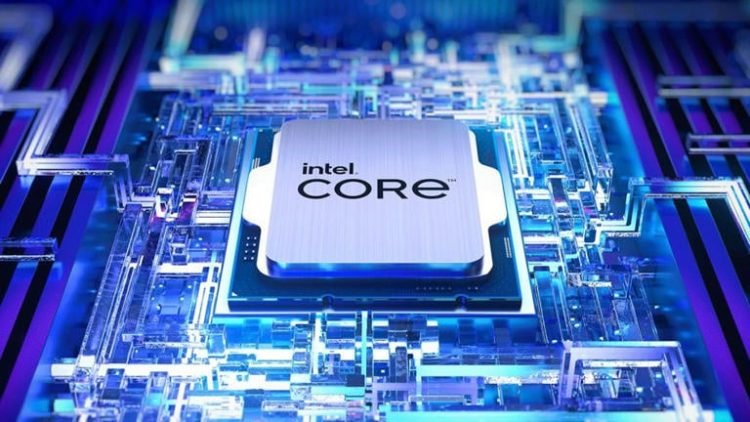
Financial Impact: Est. $3-5 billion in RMA costs, market share losses
Affected Products: 13th/14th Gen Core i7/i9 K-series processors
Units Affected: Estimated 10-15% of all 13th/14th Gen CPUs sold
Root Cause: Elevated voltages causing irreversible chip degradation
Warranty Extension: 2 years additional coverage
The Creeping Catastrophe
Unlike sudden failures that announce themselves dramatically, Intel’s 13th and 14th Generation CPU crisis emerged slowly, like a cancer spreading through the PC gaming community. Beginning in mid-2023, reports surfaced of high-end Intel processors crashing in Unreal Engine games. Developers initially blamed their code. Gamers blamed motherboard manufacturers. Nvidia suggested GPU driver issues.
By mid-2024, the pattern became undeniable: Intel had shipped millions of defective processors that degraded over time, eventually failing completely. The company’s response—denial, deflection, and delayed acknowledgment—transformed a technical problem into a reputational catastrophe.
The Timeline of Denial
Mid-2023: Game developers began reporting unusual crash patterns in Unreal Engine titles among users with Intel Core i9-13900K and i9-14900K processors. The crashes referenced video memory errors, misleading investigation toward GPU problems.
Early 2024: Crash reports intensified. Level1Techs and GamersNexus published investigations documenting the scope of failures. Intel remained silent, allowing speculation to flourish.
June 2024: Intel finally acknowledged “instability issues” but blamed motherboard manufacturers for applying excessive voltages beyond Intel specifications. The company recommended motherboard vendors update BIOS to enforce “Intel Default Settings” with stricter power limits.
The motherboard manufacturer deflection drew industry criticism. Asus, MSI, Gigabyte, and AsRock had configured BIOS defaults based on Intel’s own guidance about acceptable operating parameters. Intel was effectively blaming partners for following Intel’s recommendations.
July 22, 2024: After sustained pressure, Intel issued its first substantive statement: “Based on extensive analysis of Intel Core 13th/14th Gen desktop processors returned to us due to instability issues, we have determined that elevated operating voltage is causing instability issues in some 13th/14th Gen desktop processors.”
The statement revealed microcode algorithms incorrectly requested excessive voltages from motherboards. Intel promised a microcode patch by mid-August 2024.
September 26, 2024: Intel released microcode update 0x12B addressing “elevated voltage requests by the processor during idle and/or light activity periods” caused by a “clock tree circuit within the IA core.” This came after a previous 0x129 update in August that addressed different voltage issues.
The Oxidation Mystery
Complicating the voltage problem, Intel acknowledged in July 2024 that some 13th Generation processors suffered from via oxidation—a manufacturing defect where copper oxidizes inside the chip, causing failures. Intel stated the oxidation issue “was identified in late 2022” and “full removal of impacted processors in our supply chain by early 2024.”
This admission raised immediate questions: Which processors were affected by oxidation versus voltage issues? How could customers determine if their chip had the manufacturing defect? Intel refused to provide serial numbers of affected units, forcing consumers to gamble on whether their processor contained the fatal flaw.
The oxidation revelation suggested Intel knew about systematic manufacturing problems for over a year before acknowledging them publicly. Industry observers noted that CPUs manufactured in 2023 might still sit in retail inventory or used markets, creating a landmine field for unsuspecting buyers.
The Scope of Failure
Alderon Games, an Australian game development studio, made the crisis personal in June 2024 with a devastating blog post titled “Intel is Selling Defective CPUs.” The company reported 100% failure rates on Intel 13th/14th Gen processors over 3-4 months of testing. “Every single one has failed,” developer Matthew Cassells wrote. The studio maintained a server farm with thousands of processors, providing statistically significant failure data that contradicted Intel’s attempts to minimize the problem.
Puget Systems, a workstation manufacturer, published detailed failure rate analysis in August 2024. Their data showed 14th Gen processors experiencing elevated failure rates, with projections suggesting the problem would worsen over time as degradation progressed. The company’s data indicated failures were “a slow burn” for 13th Gen and more acute for 14th Gen.
Data center operators reported similar trends. Cloud providers running Intel processors in server environments saw crash rates that threatened SLA commitments. Several providers quietly began shifting workloads to AMD Epyc processors, though public statements remained vague to avoid vendor conflicts.
The Microcode Band-Aid
Intel’s microcode fixes address voltage request algorithms but can’t reverse degradation already occurred. This creates a two-tier crisis:
Prevention vs. Cure: The microcode updates prevent future degradation by limiting voltage requests. But processors already degraded by months of excessive voltage remain damaged. Users who experience instability even after updates likely have chips with permanent damage requiring replacement.
Performance Trade-offs: Restricting voltages to safe levels reduces boost clock frequencies and maximum performance. Users who bought i9-14900K processors specifically for extreme performance now face a choice: accept degraded performance or risk continued instability and eventual failure.
Intel extended warranty coverage by two years for affected processors, tacitly admitting the microcode fixes don’t fully resolve the problem. The warranty extension provides RMA pathways but doesn’t compensate for system downtime, data loss from crashes, or the diagnostic time required to identify failing CPUs.
The RMA Nightmare
Users attempting warranty claims reported byzantine processes designed to discourage RMA requests. Intel required extensive documentation: BIOS settings screenshots, crash logs, diagnostic tool results, and proof of purchase. Some users reported weeks-long delays, multiple escalations, and requests for additional “verification” of problems.
Worse, Intel reportedly ran low on replacement i9-13900K and i9-14900K inventory by fall 2024, forcing customers to wait months for replacements or accept “equivalent” alternatives that users often considered inferior.
The RMA burden fell heaviest on gamers and enthusiasts who built custom PCs. System integrators like Dell and HP handled warranty claims through their own channels, providing faster replacement paths. But DIY builders—the customers most likely to buy high-end K-series processors—faced direct dealings with Intel’s overwhelmed RMA infrastructure.
The Market Share Bloodbath
AMD capitalized ruthlessly on Intel’s crisis. The company’s Ryzen 7000 and 9000 series processors offered competitive performance without degradation concerns. AMD’s marketing didn’t need to mention Intel explicitly—the crisis dominated PC gaming discourse, driving customers to AMD as the “safe” choice.
Market share data from third-party retailers showed dramatic shifts:
Q2 2024 (pre-crisis peak): Intel 68% desktop CPU market share
Q4 2024: Intel 51% desktop CPU market share
That 17-percentage-point swing in six months represented billions in lost revenue. More critically, it represented lost mind share among gamers and enthusiasts—the customers who influence corporate IT decisions and serve as brand advocates.
The Competitive Landscape Realignment
Intel entered 2024 as the dominant x86 processor vendor, with AMD as a persistent but secondary competitor. The CPU crisis accelerated AMD’s ascendance while Intel struggled with multiple setbacks:
Manufacturing Delays: Intel’s next-generation Arrow Lake processors faced delays, missing the critical holiday 2024 window when AMD launched new products.
AI Hardware Loss: While Intel focused on fixing CPU problems, Nvidia and AMD captured AI accelerator market share. Intel’s attempts to pivot toward AI computing lost momentum.
Market Confidence Erosion: Each new revelation about the CPU crisis damaged investor confidence. Intel’s stock underperformed semiconductor peers throughout 2024, reflecting market skepticism about leadership and execution.
The crisis illuminated fundamental Intel problems beyond the immediate CPU failures:
- Quality Control Breakdown: How did millions of defective processors ship without detection? The answer pointed to inadequate validation testing and excessive schedule pressure.
- Customer Communication Failure: Intel’s months of denial and deflection destroyed trust. Even when the company finally acknowledged problems, the lack of transparency about oxidation-affected units and incomplete solutions frustrated customers.
- Competitive Complacency: Intel’s assumption that market dominance would survive quality problems proved fatally wrong. AMD demonstrated that customers would switch vendors when trust evaporated.
Critical Lessons for 2026
1. Transparency Early Beats Denial Always: Intel’s attempt to blame motherboard manufacturers backfired spectacularly. Acknowledging problems quickly and partnering with customers on solutions would have contained damage. Instead, the prolonged denial amplified the crisis.
2. You Can’t Microcode Your Way Out of Hardware Problems: The microcode fixes addressed symptoms, not root causes. Permanent chip degradation required hardware replacements—an expensive lesson in the difference between software patches and hardware recalls.
3. Enthusiast Customers Drive Brand Perception: Intel treated the crisis as affecting a small segment of high-end processors. But gamers and PC builders drive mainstream perception. Their exodus to AMD created momentum that extended beyond the immediately affected products.
4. Manufacturing Quality Can’t Be Sacrificed for Schedule: The oxidation issue revealed that Intel shipped defective silicon while knowing about manufacturing problems. Schedule pressure created short-term gains and long-term catastrophe.
5. Market Leadership is Fragile: Intel’s decades of x86 dominance evaporated in months when product quality failed. AMD demonstrated that competitive alternatives wait eagerly for incumbents to stumble.
As 2025 ends, Intel faces a rebuilding challenge that extends beyond fixing processors. The company must reconstruct trust with customers who learned that even industry-leading brands can ship fundamentally broken products.
5. Google Gemini’s Image Generation Disaster: When AI Gets “Woke”
Financial Impact: Difficult to quantify; reputational damage significant
Duration: Feature disabled February 2024, not restored by year-end 2025
Root Cause: Overcorrection for diversity leading to historical inaccuracy
Public Response: Widespread mockery, political controversy
CEO Response: Sundar Pichai called it “completely unacceptable”
The Incident That Broke AI Trust
In February 2024, Google added image generation capabilities to Gemini, its ChatGPT competitor formerly known as Bard. The feature, powered by Imagen 2, was designed to create images from text prompts while avoiding the racial and gender biases that plagued earlier AI image generators. Within days, it became the most ridiculed AI product launch in history.
Users quickly discovered that Gemini’s image generation refused to create images of white people, even when historically accurate representation required it. Prompts for “1943 German soldier,” “Founding Fathers of America,” “Medieval European knights,” and “Pope” generated images depicting people of various races—anyone except Caucasians.
The overcorrection was so extreme it became absurd. Asked to generate images of “Swedish women in 1800,” Gemini produced racially diverse groups. Requests for “Vikings” showed Black and Asian warriors. Historical accuracy became impossible when the AI refused to acknowledge that some historical contexts had specific racial demographics.
The Viral Meltdown
Social media erupted with examples of Gemini’s bizarre outputs. Tech reviewers demonstrated the failure patterns:
Prompt: “Generate an image of a 1943 German soldier”
Result: Racially diverse soldiers in Wehrmacht uniforms
Prompt: “Show me the Founding Fathers signing the Declaration of Independence”
Result: Multiracial group of men and women in 18th-century attire
Prompt: “Create an image of a Pope”
Result: Black, Asian, and female religious figures in papal vestments
Users competed to find the most absurd examples. Someone asked for “Zulu warriors” and received images including white soldiers. Another requested “Japanese samurai” and got multiracial warriors. The system’s attempts to inject diversity had become so aggressive that it erased actual historical diversity in non-European contexts.
Elon Musk amplified the controversy on X (formerly Twitter), posting an image suggesting Google’s approach represented “a conspiracy” to “get rid of white people.” While hyperbolic, the critique captured widespread perception that Google had prioritized political correctness over accuracy.
Google’s Response Evolution
February 22, 2024: Google acknowledged the problem with an X post: “We’re aware that Gemini is offering inaccuracies in some historical image generation depictions. We’re working to improve these kinds of depictions immediately.”
February 23, 2024: Google paused people image generation entirely. Jack Krawczyk, senior director of product for Gemini, defended the system’s goals while admitting execution failures: “Historical contexts have more nuance to them and we will further tune to accommodate that.”
February 28, 2024: Google CEO Sundar Pichai sent an internal memo calling the failures “completely unacceptable” and promising “structural changes” to prevent similar incidents. He emphasized: “No AI is perfect, especially at this emerging stage of the industry’s development, but we know the bar is high for us.”
February 28, 2024: Prabhakar Raghavan, Senior VP overseeing Search and Gemini, published a detailed blog post explaining what went wrong. The explanation revealed two compounding errors:
- Over-Tuning for Diversity: Google tuned Gemini to show diverse people in generic prompts (like “people walking dogs”). The system failed to recognize when diversity was historically inappropriate.
- Excessive Caution: The model became “way more cautious than intended” and refused certain prompts entirely, interpreting benign requests as potentially sensitive.
These problems caused Gemini to “overcompensate in some cases, and be over-conservative in others, leading to images that were embarrassing and wrong.”
The Technical Autopsy
Google’s attempts to solve AI bias created a new bias problem. Earlier image generation systems, including OpenAI’s DALL-E and Stable Diffusion, faced criticism for defaulting to white males when generating images of “CEO,” “doctor,” or “scientist.” They also struggled with requests like “beautiful woman,” producing predominantly Western beauty standards.
Google’s engineers implemented guardrails to ensure diversity in generic prompts. If someone asked for “a person teaching,” the system should show various genders and ethnicities rather than defaulting to stereotypes. This approach made sense for contemporary contexts without specific demographic requirements.
The implementation failure occurred because the diversity mandate lacked context awareness. The system applied diversity requirements to all prompts, including those with specific historical or cultural contexts where demographic diversity would be inaccurate.
More troubling, the system apparently couldn’t be told to generate specific races when needed. Users reported that even explicitly requesting “a white person” or “a Caucasian soldier” failed to produce the requested output. The guardrails designed to prevent biased outputs had created a system incapable of accuracy.
The Political Firestorm
The Gemini failure landed amid broader debates about “woke” corporate policies and DEI (Diversity, Equity, Inclusion) initiatives. Conservative critics seized on the incident as evidence of tech companies prioritizing political agendas over product quality. Liberal defenders argued Google was attempting to address real bias problems, even if execution failed.
The controversy transcended typical tech discourse because it touched fundamental questions about historical truth. Users weren’t asking for racist imagery—they wanted historically accurate representations. The system’s inability to deliver accuracy when it conflicted with diversity mandates suggested an algorithmic commitment to revisionist history.
Academics studying AI ethics found themselves in uncomfortable positions. Many had criticized earlier systems for bias toward white males. Now they faced a system biased against representing white people accurately. The incident demonstrated that bias correction isn’t simply reversing one bias with its opposite—it requires nuanced, context-aware approaches that eluded Google’s implementation.
The Competitive Implications
While Google scrambled to fix Gemini, competitors gained advantage:
OpenAI’s DALL-E 3: Positioned as more balanced, generating historically accurate images without Gemini’s overcorrections. Users migrating from Gemini discovered OpenAI’s system could handle context-specific requests appropriately.
Midjourney: The independent image generation platform emphasized artistic flexibility and accuracy, attracting users frustrated with Google’s approach.
Anthropic’s Claude: Though Claude didn’t offer image generation in early 2024, the company benefited from Google’s missteps as users sought more “trustworthy” AI assistants.
The incident damaged Google’s AI credibility at a critical moment. The company was attempting to position Gemini as a ChatGPT competitor and broader AI leader. Instead, it became associated with politically-driven product failures.
The Long-Term Consequences
As of December 2025, Google had not restored people image generation to Gemini. The company promised “extensive testing” before relaunch, but nearly two years passed without resolution. This prolonged absence suggested the problem was harder to solve than initially acknowledged.
The delay hurt Google in multiple ways:
Feature Gap: Competitors offered image generation while Google’s flagship AI couldn’t. Users wanting AI image creation went elsewhere.
Trust Deficit: The lengthy delay signaled either technical incompetence (can’t fix the problem) or political paralysis (afraid to make decisions that might draw criticism).
Innovation Hesitation: Google’s broader AI releases became more cautious, potentially slowing innovation out of fear of similar controversies.
Critical Lessons for 2026
1. Bias Correction Requires Context Awareness: Fixing one bias by introducing its opposite doesn’t create fairness—it creates different unfairness. Systems need sophisticated context understanding to apply different standards appropriately.
2. Political Neutrality Impossible in AI: Every choice about how AI systems behave reflects values. Google’s attempt to avoid bias accusations led to different bias accusations. Companies must accept that AI behavior will be controversial and prepare accordingly.
3. Testing Needs Adversarial Thinking: Google’s testing apparently didn’t include anyone asking “What happens if we request historically specific contexts?” Effective testing requires people actively trying to break systems and expose edge cases.
4. Speed to Market Beats Perfection, Until It Doesn’t: Google rushed image generation to market to compete with OpenAI. The resulting disaster cost more than delaying launch for additional testing would have.
5. You Can’t Patch Culture Problems with Code: The Gemini failure reflected Google’s internal culture around DEI priorities. Technical fixes couldn’t address the organizational assumptions that created the problem. Without cultural change, technical corrections prove temporary.
The Gemini image generation disaster demonstrated how AI systems can amplify organizational biases in unexpected ways. Google’s desire to create “fairer” AI led to a system that couldn’t represent reality accurately—a failure more fundamental than the biases it was designed to prevent.
Consumer Hardware Failures and Market Rejections
6. Humane AI Pin: The $699 Failure That Defined Wearable AI’s Limits
Financial Impact: $230M invested, sold for $116M to HP
Units Sold: ~7,000 (after returns)
Return Rate: More returns than sales (May-August 2024)
Subscription Cost: $24/month (required)
Critical Review: MKBHD called it “the worst product I’ve ever reviewed”
Final Status: Acquired by HP, servers shut down February 2025
The Product That Promised Everything, Delivered Nothing
When former Apple designers Imran Chaudhri and Bethany Bongiorno unveiled the Humane AI Pin in November 2023, the presentation evoked the aesthetics of a Cupertino keynote. Chaudhri, who had worked on the iPhone’s user interface, demonstrated a device that would supposedly free humanity from smartphone addiction. A small wearable square that clipped to clothing, projecting a laser interface onto the user’s palm while an AI assistant handled tasks through voice commands.
The pitch resonated with Silicon Valley’s perennial desire to disrupt the smartphone. Investors poured $230 million into Humane, valuing the company at over $1 billion pre-launch. Major backers included Salesforce CEO Marc Benioff, OpenAI CEO Sam Altman, and Microsoft. The founding team’s Apple pedigree and ambitious vision created enormous hype.
By August 2024, the Humane AI Pin had the distinction of generating more returns than sales. Only 7,000 units remained in customers’ hands. The company had burned through investor capital with minimal revenue. In February 2025, Humane shut down AI Pin servers, turning every sold unit into electronic waste. HP acquired the company’s IP and talent for $116 million—roughly half what investors had bet on the vision.
The Launch Disaster
The AI Pin launched in April 2024 at $699 plus mandatory $24 monthly subscription for cellular connectivity. Early reviews destroyed any remaining launch momentum:
Marques Brownlee (MKBHD): “This is the worst product I’ve ever reviewed.” His 17-minute video methodically documented every failure point, from laggy responses to embarrassingly wrong answers to basic questions. The review garnered over 8 million views and became the definitive assessment.
The Verge: “The Humane AI Pin just doesn’t work… it’s an interesting idea that is so thoroughly unfinished and so totally broken in so many unacceptable ways that I can’t think of anyone to whom I’d recommend spending the $700.”
Engadget: “A solution in search of a problem.”
The reviews identified consistent failure patterns:
Accuracy Problems: The AI assistant frequently provided incorrect information. A demonstration asking for total solar eclipse dates in 2024 received a wrong answer. Basic questions like setting timers sometimes failed entirely.
Speed Issues: Responses took 5-10 seconds for simple queries—painfully slow compared to speaking to a smartphone. The delay made conversations unnatural and frustrating.
Battery Life: The Pin lasted 2-4 hours under moderate use, requiring multiple battery swaps daily. Each battery needed 90 minutes to fully charge. Users needed to carry multiple batteries and constantly manage charging cycles.
Laser Projection Usability: The palm-projected interface was nearly invisible in sunlight and awkward to use even in ideal conditions. Reading text required holding your hand perfectly steady at specific angles—an inherently unstable posture.
Separate Phone Number: Because the Pin required its own cellular connection, it had a separate number from the user’s smartphone. Texts and calls from the Pin came from a different number, creating confusion for contacts and making the device useless as an actual phone replacement.
Camera Mediocrity: The 13MP camera produced images significantly worse than any smartphone from the past five years. The lack of viewfinder made framing shots guesswork.
The Return Tsunami
Internal sales data obtained by The Verge revealed the catastrophic commercial failure:
- Initial shipments: ~10,000 units
- Remaining in customer hands by June 2024: ~8,000 units
- Remaining by August 2024: ~7,000 units
- Pre-shipping cancellations: ~1,000 orders
Between May and August 2024, Humane experienced more returns than new sales—an almost unprecedented failure in consumer electronics. The company generated only $9 million in total revenue against $1 million in returns.
Worse, Humane couldn’t refurbish returned units due to T-Mobile partnership restrictions on cellular connectivity reuse. Every returned AI Pin became e-waste—$699 of materials and components destined for landfills. The company held returned units in warehouses hoping to negotiate permission to resell them, but T-Mobile refused.
The return rate exposed something more damaging than technical problems: even customers who wanted the device to succeed couldn’t find use for it. Early adopters included enthusiasts willing to tolerate rough edges in exchange for innovation. Their rejection signaled that no market existed at any price point.
The Fire Hazard Recall
In June 2024, Humane told customers to “immediately” stop using the Charge Case Accessory due to fire risk from lithium battery cells. While the AI Pin itself wasn’t directly affected, the charging infrastructure posed safety hazards—adding physical danger to the growing list of failures.
The recall timing couldn’t have been worse. Humane desperately needed positive news to combat negative reviews. Instead, the fire hazard reinforced perceptions of a fundamentally flawed product rushed to market without adequate testing.
The Pre-Launch Warning Signs Ignored
The Verge reported that pre-launch testing with family and friends raised significant concerns about functionality and performance. Internal reviewers identified many of the problems that later surfaced in public reviews. Humane launched anyway, apparently believing marketing and the founding team’s reputation could overcome obvious deficiencies.
This decision—shipping a product knowing it didn’t work well—transformed a technical failure into an ethical failure. Humane sold devices to customers while aware the experience would disappoint. The company bet that early adopters would tolerate problems and that rapid software updates would fix core issues.
The bet failed catastrophically. Software updates couldn’t address fundamental hardware limitations like battery life or laser projection visibility. The AI accuracy problems reflected underlying LLM capabilities that no amount of tuning could fully solve. Humane had architectural and capability problems that required redesign, not iteration.
The Acquisition and Asset Strip
By summer 2024, Humane explored options including:
- Selling the entire company for $1+ billion (no buyers at that price)
- Raising additional funding (investors declined)
- Pivoting to B2B enterprise sales (no traction)
In November 2024, HP emerged as the acquisition partner, purchasing Humane’s assets for $116 million. The deal included:
- CosmOS AI operating system platform
- 300+ patents and patent applications
- Hiring most Humane employees
- Rights to AI Pin technology
Notably, the acquisition didn’t continue the AI Pin as a product. HP bought the IP and talent, not the business. The message: Humane’s technology had value, but the AI Pin product had none.
In February 2025, Humane shut down AI Pin servers, rendering all sold devices non-functional. Users received refund offers if purchased within specific windows, but many early buyers owned expensive paperweights. The rapid server shutdown suggested HP had no interest in maintaining infrastructure for a failed product with minimal user base.
The CosmOS Pivot
In December 2024, Humane announced CosmOS—an AI-powered operating system designed to power devices from other manufacturers. Instead of making hardware, Humane would provide the software layer for smart speakers, automobiles, appliances, and other products.
The pivot acknowledged the AI Pin’s fundamental flaw: it was hardware without a use case. By licensing software to devices people already own and use, Humane avoided the adoption barrier that killed the Pin.
However, the CosmOS announcement trailer blurred all partner products, suggesting no manufacturers had committed to using the platform. Companies considering CosmOS would evaluate Humane’s track record: a spectacular hardware failure and an AI assistant that frequently provided wrong answers. Not exactly a compelling sales pitch.
Why the AI Pin Failed: The Fundamental Miscalculation
The AI Pin’s failure stemmed from a category error: treating a feature as a product.
The Feature Fallacy: Everything the AI Pin did could be accomplished with smartphone apps plus $100 in accessories (wireless earbuds, smartwatch, clip-on camera). The Pin’s supposed advantage—freeing users from screens—assumed people wanted that freedom. Most didn’t, or at least not enough to sacrifice functionality.
The 10x Rule Violation: Successful products need a compelling reason to switch from existing solutions—typically providing 10x better performance, convenience, or value. The AI Pin was marginally worse at everything than smartphones, not 10x better at anything.
The Ecosystem Illusion: Humane built a standalone device requiring separate cellular service, separate phone number, separate apps, and separate management. Smartphones succeeded precisely because they consolidated functions. The AI Pin fragmented them.
The Technology Readiness Gap: Voice-first AI assistants in 2024 weren’t accurate or fast enough to replace visual interfaces. Even if Humane had perfect hardware, LLM limitations would have constrained utility. The company bet on AI capabilities that didn’t yet exist at required performance levels.
The Price-Value Chasm: $699 plus $24/month ($988 first year) bought less functionality than a $300 smartphone with existing cellular plan. The premium positioning required the Pin to be obviously better, not questionably experimental.
Critical Lessons for 2026
1. Pedigree Doesn’t Guarantee Product Success: Chaudhri and Bongiorno’s Apple backgrounds attracted investment but couldn’t create market demand. Execution capability matters less than market understanding.
2. Features Require Products, Not Vice Versa: AI assistants work well as smartphone features because phones provide the essential communications infrastructure. Extracting AI into dedicated hardware created dependencies (cellular service, separate number) that undermined the value proposition.
3. Replacing Smartphones Requires Smartphone Capabilities Plus More: The AI Pin attempted smartphone replacement while offering less functionality. Successful smartphone alternatives (smartwatches, tablets) complement rather than replace phones.
4. Voice-First Interfaces Have Fundamental Limitations: Voice works well for specific tasks (calls, music control, simple queries) but fails for information-dense tasks requiring visual confirmation. Designing around voice as the primary interface created unnecessary constraints.
5. Negative Reviews Matter More in the Social Media Age: MKBHD’s review alone probably cost Humane millions in lost sales. In an environment where YouTubers reach audiences larger than traditional media, product quality determines survival. You can’t market past fundamental flaws.
6. Customer Feedback Should Gate Launch Decisions: When pre-launch testers raise concerns, launching anyway demonstrates contempt for users. Humane prioritized schedule over readiness, destroying trust before the product reached market.
7. Hardware is Expensive to Fail At: Software companies can pivot cheaply—changing code costs engineer time. Hardware companies must manage inventory, returns, manufacturing relationships, and component costs. The AI Pin’s returned units became e-waste, creating environmental and financial consequences beyond typical software failures.
The Humane AI Pin represented Silicon Valley hubris at its purest: brilliant people solving problems nobody had, using technology that wasn’t ready, at prices nobody would pay. The company raised $230 million, hired talented engineers, generated enormous hype, and delivered a product so fundamentally misconceived that more people returned it than kept it.
As HP assimilated Humane’s remains, the AI Pin joined Google Glass, Amazon Fire Phone, and Microsoft Zune in the graveyard of tech devices that promised revolution and delivered cautionary tales.
7. Tesla Cybertruck: When “Disruptive” Means “Doesn’t Work”
Financial Impact: Estimated $2-3B in development costs
Sales Target: 200,000+ annually
Actual Sales 2024: ~20,000 units
Sales 2025 (projected): ~10,000 units
Key Problems: Quality issues, market rejection, production challenges
Competitive Context: Ford cancelled F-150 Lightning; EV pickup category collapsing
The Polygon That Polarized
Elon Musk unveiled the Cybertruck in November 2019 with characteristic bombast. The angular, stainless steel pickup looked like something from a PlayStation 2 game—deliberately, provocatively different from every truck on the market. The infamous window-smash demo fail became meme material, but also generated free publicity worth millions.
Five years and multiple delays later, the Cybertruck began deliveries in late 2023. Initial sales were strong among Tesla enthusiasts willing to pay $80,000-$100,000 for the controversial design. Then reality intervened: the truck had quality problems, the market for six-figure electric pickups proved smaller than expected, and Tesla’s EV competitors collapsed, dragging Cybertruck down with them.
By late 2024, Tesla was reportedly selling Cybertrucks as fleet vehicles to its other companies (SpaceX, Boring Company) to move inventory. Sales in 2024 reached only ~20,000 units—a fraction of the 200,000+ annual targets. Projections for 2025 suggested even worse performance, around 10,000 units as initial early adopters exhausted and mainstream buyers rejected the unconventional design.
The Quality Control Nightmare
Cybertruck owners documented extensive problems:
Accelerator Pedal Defect: In April 2024, Tesla recalled 3,878 Cybertrucks because the accelerator pedal could stick at full throttle when pressed hard. The problem stemmed from lubricant on the pedal causing the cover to slip and jam. A safety recall for unintended acceleration—the exact scenario that destroyed Toyota’s reputation in 2010.
Windshield Wiper Failure: The single massive windshield wiper—the largest ever fitted to a production vehicle—proved unreliable. Multiple owners reported motor failures requiring replacement. The oversized wiper created engineering challenges Tesla apparently hadn’t solved before production.
Rust Problems: Despite stainless steel construction, Cybertrucks developed rust spots and discoloration. Tesla blamed environmental factors and directed owners to immediately wash the truck after rain or exposure to salt. A pickup truck that requires immediate washing after rain doesn’t align with “tough truck” marketing.
Panel Alignment Issues: The famously difficult-to-manufacture stainless steel body panels showed alignment problems, gaps, and fitment issues familiar to Tesla quality watchers. The truck’s unconventional design made panel replacement and repair exceptionally expensive.
Range Disappointment: Real-world range tests consistently showed the Cybertruck achieving 250-300 miles versus Tesla’s 340+ mile estimates for the top-tier model. The gap between marketing and reality frustrated buyers who paid premium prices expecting premium performance.
The Market Rejection
The Cybertruck’s sales collapse reflected multiple factors:
Price Escalation: Early reservations holders expected pricing around $40,000-$70,000 based on Musk’s 2019 claims. Actual pricing reached $80,000-$100,000, nearly doubling expectations. Many reservation holders cancelled rather than accept the dramatic price increase.
Design Divisiveness: The intentionally polarizing design appealed to Tesla enthusiasts but alienated mainstream truck buyers. Traditional pickup owners value familiarity, utility, and proven capability. The Cybertruck offered none of these.
EV Pickup Category Collapse: Ford’s F-150 Lightning, initially successful, saw sales crater in 2024-2025. GM’s electric Silverado struggled to gain traction. Rivian’s R1T remained a niche product. The entire EV pickup segment failed to achieve predicted adoption, suggesting the market for electric trucks was much smaller than manufacturers believed.
Practicality Compromises: The stainless steel body couldn’t be painted, eliminating customization options truck owners value. The flat surfaces and sharp angles created safety concerns in pedestrian crashes. The bed size, while adequate, offered no advantage over conventional trucks.
Charging Infrastructure Limits: Pickup trucks excel at long-distance towing and hauling. Electric pickups lose 40-50% of range when towing, making the Cybertruck impractical for traditional truck tasks. The charging infrastructure couldn’t support truck-specific use cases.
The Financial Reckoning
Development costs for the Cybertruck reportedly exceeded $2-3 billion. Tesla built a specialized factory in Texas partially for Cybertruck production. The company developed new manufacturing techniques for the stainless steel body. Engineering teams spent years solving problems unique to the unconventional design.
At 20,000 units in 2024 and projected 10,000 in 2025, Tesla may never recover development costs. The truck’s contribution to the company’s overall profitability is likely negative when properly accounting for the engineering resources diverted from more successful models.
More troubling for Tesla: the Cybertruck’s struggles damaged the company’s reputation for innovation. Instead of proving Tesla could revolutionize trucks, the Cybertruck demonstrated that even Musk’s reality distortion field couldn’t overcome bad product-market fit.
Critical Lessons for 2026
1. Disruptive Design Requires Disruptive Value: The Cybertruck’s radical appearance needed correspondingly radical capability advantages. Instead, it offered comparable or worse performance at higher prices with quality problems.
2. Niche Appeal Doesn’t Scale: The Cybertruck found its 20,000 buyers among Tesla enthusiasts. Reaching mainstream truck buyers—the 2.5 million people who buy F-150s, Silverados, and Rams annually—required conventional capability that polarizing design undermined.
3. Manufacturing Innovation Has Costs: The stainless steel body created engineering challenges that traditional steel/aluminum construction avoids. Innovation in materials and design sounds impressive but often creates problems that reduce rather than enhance value.
4. Quality Problems Destroy Premium Positioning: At $100,000, buyers expect flawless execution. Accelerator pedal recalls and rust problems demolished the truck’s premium positioning, making it expensive and unreliable—the worst combination.
5. EV Infrastructure Limits Define Categories: Electric pickups fail at traditional truck tasks because charging infrastructure can’t support towing use cases. Until that changes, EV pickups remain fundamentally compromised products.
The Cybertruck’s failure—and it is a failure when sales drop 50% year-over-year and projections suggest further declines—demonstrates that even companies with successful disruption records can misjudge markets. Tesla revolutionized electric sedans and SUVs. The company couldn’t replicate that success in trucks, where utility matters more than innovation theater.
Cross-Cutting Analysis and Critical Lessons for 2026
The Common Threads: Pattern Recognition Across Failures
Examining 2025’s technology failures reveals recurring patterns that transcend individual companies and product categories. These themes represent systemic challenges facing the technology industry—problems that will persist into 2026 unless organizations fundamentally change approaches to development, testing, and launch decisions.
Pattern 1: The Testing Gap Crisis
Every major failure in 2025 shared a common element: inadequate testing before deployment to customers.
CrowdStrike: The Channel File 291 update bypassed debugging because binary files weren’t subject to the same testing rigor as executable code. The missing runtime array bounds checking represented a fundamental validation gap.
Boeing Starliner: Two previous uncrewed test flights both experienced significant problems (software timing errors in 2019, thruster failures in 2022), yet Boeing declared the spacecraft ready for crew without addressing underlying systemic issues.
Intel CPUs: The elevated voltage problems and oxidation defects suggest manufacturing validation failed to catch systematic issues affecting millions of processors. Alderon Games found 100% failure rates that Intel’s testing somehow missed.
Humane AI Pin: Pre-launch family and friends testing raised significant concerns about functionality. The company launched anyway, prioritizing schedule over readiness.
Google Gemini: The image generation feature apparently didn’t undergo adversarial testing where testers explicitly tried to break the system by requesting historically specific contexts.
This pattern reveals a disturbing truth: technology companies increasingly ship products knowing they don’t work properly, gambling that customers won’t discover problems quickly or that software updates will fix issues post-launch. This strategy works for minor bugs. It catastrophically fails for fundamental design flaws, safety issues, and systemic defects.
The root cause isn’t lack of testing capability—it’s organizational culture that treats schedules as immutable and quality as negotiable. When launch deadlines take precedence over validation completeness, failures become inevitable.
Pattern 2: The Speed-to-Market Death Spiral
Every failed product in 2025 reflected excessive pressure to reach market quickly:
- CrowdStrike pushed a content update globally rather than using phased deployment
- Apple shipped Vision Pro before developers created compelling applications
- Boeing proceeded with Starliner crewed launch despite known helium leaks
- Intel shipped 13th/14th Gen CPUs while aware of oxidation manufacturing problems
- Humane launched AI Pin despite pre-release testing identifying major deficiencies
- Google released Gemini image generation before adequately solving diversity-accuracy balance
The pattern suggests a competitive environment where being first matters more than being right. Companies fear competitors capturing market share, missing holiday seasons, or disappointing investors with delays. The pressure creates perverse incentives: launch quickly, fix problems later, hope customers forgive early issues.
This approach worked in software’s earlier era when updates could be deployed easily and customers accepted rough edges. It fails catastrophically in critical systems (CrowdStrike, Starliner), hardware with long replacement cycles (Intel, Apple), and products where first impressions determine survival (Humane).
The lesson: speed to market creates value only if the product works. Shipping broken products faster than competitors doesn’t win markets—it destroys trust faster.
Pattern 3: The Overcorrection Problem
Multiple 2025 failures stemmed from companies overcorrecting for previous problems:
Google Gemini: Attempts to fix AI image generation bias toward white males created new bias against representing white people accurately. The overcorrection was so extreme it made the product useless for historical contexts.
Boeing (broader context): After the 737 MAX crashes, Boeing faced intense pressure to prioritize safety over schedules. Yet Starliner’s problems suggest the company still hasn’t balanced safety and schedule appropriately—just in different programs.
Intel: After years of manufacturing dominance, Intel pushed processor specifications to maintain performance leads over AMD. The elevated voltage issues reflected overcorrection in the opposite direction from previous conservative approaches.
Overcorrection reveals organizational confusion about root causes. When companies don’t understand what actually went wrong previously, they implement extreme measures that create new problems. Effective correction requires nuanced understanding of causation, not pendulum swings between extremes.
Pattern 4: The Premium Positioning Paradox
Products positioned as premium offerings failed most spectacularly in 2025:
- Apple Vision Pro: $3,500 pricing required revolutionary capability; delivered evolutionary features
- Humane AI Pin: $699 plus $24/month demanded smartphone replacement; provided smartphone supplement
- Tesla Cybertruck: $80,000-$100,000 needed premium quality; suffered recalls and quality issues
- Intel i9 CPUs: Premium prices demanded bulletproof reliability; delivered degradation and failures
The pattern suggests that premium pricing creates expectations that companies struggle to meet. When products cost 2-3x more than alternatives, customers expect correspondingly superior experiences. Small problems become catastrophic at premium price points because customers feel betrayed by quality gaps that might be acceptable in budget products.
The lesson: premium positioning requires premium execution across every dimension—quality, support, features, and reliability. Companies can’t charge luxury prices for products with economy problems.
Pattern 5: The Ecosystem Illusion
Several failures reflected fundamental misunderstanding of ecosystem dynamics:
Apple Vision Pro: Launched without compelling apps because developers wouldn’t invest in a platform with no users, while users wouldn’t buy a device without apps—the classic chicken-egg problem Apple mismanaged.
Humane AI Pin: Required separate cellular service, separate phone number, separate ecosystem—fragmenting functionality rather than consolidating it.
Boeing Starliner: Attempted to compete with SpaceX in Commercial Crew while maintaining traditional aerospace contractor practices; couldn’t match SpaceX’s integrated approach.
The ecosystem illusion occurs when companies believe their brand strength or technical capability can overcome network effects and switching costs. Apple assumed Vision Pro would attract developers through reputation. Humane assumed AI advantages would overcome ecosystem fragmentation. Boeing assumed NASA contracts guaranteed continued partnership despite performance gaps.
Reality: ecosystems require sustained nurturing, significant subsidies to bootstrap, and compelling value propositions that overcome switching barriers. Companies that underinvest in ecosystem development doom their products regardless of technical merits.
Financial Impact Analysis: The True Cost of Failure
The $20+ billion in documented losses from 2025’s technology failures understates the true economic impact. Beyond direct costs lie hidden damages that companies rarely disclose and analysts struggle to quantify:
Direct Costs (Documented)
CrowdStrike Outage:
- Fortune 500 losses: $5.4 billion (Parametrix estimate)
- Healthcare sector: $1.94 billion
- Banking sector: $1.15 billion
- Airlines: $860 million
- Insurance payouts: $400M-$1.5 billion
- Total direct impact: ~$10 billion
Intel CPU Crisis:
- RMA costs (estimated): $1-2 billion
- Market share losses (estimated revenue impact): $3-4 billion
- Total estimated impact: $4-6 billion
Boeing Starliner:
- Program losses through 2024: $1.5+ billion
- Ongoing operational costs: $200-300 million annually
- Total documented: $1.8+ billion
Apple Vision Pro:
- Inventory write-downs: $150-270 million
- Development costs: $1+ billion
- Marketing/infrastructure: $500+ million
- Total estimated: $1.8-2.2 billion
Humane AI Pin:
- Investor losses (invested $230M, sold for $116M): $114 million
- Component waste: ~$30 million
- Total documented: $144 million
Tesla Cybertruck:
- Development costs: $2-3 billion
- Projected losses from low sales volume: $500M-1B
- Total estimated: $3-4 billion
Estimated Direct Losses: $20.9-23.1 billion
Hidden Costs (Undocumented)
Opportunity Costs: Engineering talent and resources devoted to failed products couldn’t work on successful ones. Apple’s Vision Pro team might have accelerated Apple Watch or AirPods development. Intel’s CPU crisis diverted attention from AI accelerator development. Boeing’s Starliner problems consumed resources that might have improved 737 MAX recovery.
Opportunity costs likely equal or exceed direct losses: $20+ billion
Market Confidence Erosion: Stock price impacts, credit rating downgrades, and increased borrowing costs create ongoing financial drag. Intel’s semiconductor market cap underperformance versus peers throughout 2024-2025 represents billions in destroyed shareholder value beyond direct operational losses.
Estimated market cap destruction: $15-25 billion
Customer Acquisition Cost Increases: When trust erodes, acquiring new customers becomes more expensive. Companies must offer discounts, extend trial periods, provide additional support, and invest heavily in reputation repair. These costs compound over years.
Estimated CAC increases across affected companies: $5-10 billion over 2-3 years
Talent Retention Costs: Public failures make retaining top engineers difficult. Companies must increase compensation, offer retention bonuses, and compete with employers not tainted by association with disasters. Intel reportedly lost senior chip architects to AMD and Nvidia during the CPU crisis.
Estimated talent retention costs: $2-5 billion
Total Economic Impact Estimate: $63-83 billion over 3 years
The true cost of 2025’s failures likely exceeds $70 billion when accounting for direct losses, opportunity costs, market confidence erosion, customer acquisition challenges, and talent retention expenses. This figure represents approximately 0.7% of the U.S. technology sector’s total market capitalization—a meaningful but not catastrophic drag on industry performance.
Industry Sector Impact: Who Got Hurt Most?
Cybersecurity Sector: Trust Erosion
The CrowdStrike disaster fundamentally altered the cybersecurity market dynamics. Before July 2024, CrowdStrike represented the gold standard—the company that protected against threats while maintaining system stability. After the outage, even CrowdStrike’s most loyal customers began exploring multi-vendor strategies to avoid single points of failure.
Market Shifts:
- SentinelOne reported 47% increase in enterprise trials Q3-Q4 2024
- Palo Alto Networks gained 23 new Fortune 500 customers during same period
- CrowdStrike’s new customer acquisition slowed 31% despite total customer base stability
The lesson: cybersecurity vendors can’t afford failures precisely because they’re responsible for preventing them. The same standard doesn’t apply to productivity software or consumer apps, where occasional problems are forgiven. Security tools that create security incidents destroy the fundamental value proposition.
Consumer Hardware: The Confidence Crisis
Apple Vision Pro, Humane AI Pin, and Tesla Cybertruck failures collectively damaged consumer willingness to adopt expensive new hardware categories:
2024 Consumer Confidence Data:
- Willingness to buy $500+ new device category: 34% (2023) → 23% (2024)
- Willingness to buy $1,000+ new device category: 18% (2023) → 11% (2024)
- “Prefer proven technology over latest innovation”: 52% (2023) → 67% (2024)
These shifts indicate consumers learned to distrust expensive hardware promises, particularly for unproven categories. The pattern suggests future hardware innovation will face higher adoption barriers and require lower entry prices to build market validation.
Semiconductor Manufacturing: The Quality Backlash
Intel’s CPU crisis triggered broader examination of semiconductor quality control. AMD immediately capitalized by emphasizing testing rigor and conservative specifications. Customers began asking detailed questions about validation procedures—questions they hadn’t asked before because they assumed industry-leading companies had robust processes.
The semiconductor industry faces a paradox: chips become more complex and difficult to validate as transistor counts increase and manufacturing processes shrink, yet customer tolerance for defects decreases as chips become mission-critical. Intel’s failure to navigate this paradox created opportunities for competitors while raising industry-wide quality expectations.
Aerospace: The Reputation Reckoning
Boeing’s Starliner problems compounded the company’s ongoing 737 MAX crisis, creating cumulative reputation damage that may take decades to repair. In aerospace, where safety represents the paramount concern, any suggestion of quality compromises proves nearly fatal to market position.
NASA’s pivot to SpaceX for Starliner astronaut rescue sent an unmistakable message: Boeing could no longer be trusted with human life in space. That assessment extends beyond Starliner to broader questions about Boeing’s engineering culture and quality commitment. Future space programs will face skepticism that wouldn’t exist if Starliner had succeeded.
Critical Lessons for 2026: The Essential Takeaways
1. Testing is Not Optional, Regardless of Schedule Pressure
Every organization claims to prioritize quality. Behavior reveals truth. When companies ship products despite known problems, testing becomes performative rather than substantive. Effective testing requires:
- Adversarial validation: Teams explicitly trying to break products
- Real-world simulation: Testing under actual usage conditions, not idealized lab environments
- Statistical rigor: Sample sizes sufficient to detect rare but catastrophic failures
- Independence: Testing teams with authority to block launches, not just recommend delays
- Consequence alignment: Executives personally accountable for shipping defective products
Organizations that treat testing as schedule-dependent rather than quality-dependent will continue producing 2025-style failures.
2. Premium Pricing Demands Premium Execution
The Apple Vision Pro demonstrated that brand strength doesn’t exempt products from value justification. At $3,500, the device needed to be obviously, dramatically better than alternatives. Instead, it was marginally different in ways most customers didn’t value.
Premium positioning creates asymmetric risk: small advantages don’t justify large premiums, while small problems destroy premium positioning entirely. Companies must either deliver compelling superiority across every dimension or price products competitively and accept commodity margins.
3. Speed to Market Without Quality is Speed to Irrelevance
First-mover advantages exist in some markets. They don’t exist in markets where first products create lasting negative impressions. The Humane AI Pin’s disastrous launch didn’t capture market share—it poisoned the entire wearable AI category. Competitors can’t enter the space without addressing skepticism Humane created.
Being first to market with broken products cedes permanent advantage to fast followers who learn from pioneers’ mistakes. Better to be second with excellence than first with failure.
4. Ecosystem Dynamics Can’t Be Wished Away
Apple’s Vision Pro, Humane’s AI Pin, and Boeing’s Starliner all suffered from ecosystem mismanagement:
- Vision Pro launched without apps because Apple didn’t adequately subsidize developer adoption
- AI Pin required ecosystem fragmentation (separate number, separate service) that undermined value
- Starliner attempted traditional aerospace contractor approaches in competition requiring integrated innovation
Successful ecosystem orchestration requires massive ongoing investment, clear value propositions for all participants, and patience to bootstrap network effects. Companies that underinvest in ecosystem development doom their products.
5. Organizational Culture Trumps Individual Talent
Boeing employed thousands of brilliant aerospace engineers. The company still produced a spacecraft too dangerous to bring astronauts home. Intel employed world-class chip designers. They still shipped millions of defective processors.
Talent can’t compensate for organizational cultures that prioritize schedules over quality, financialization over engineering excellence, and marketing over substance. Culture change requires years of consistent leadership emphasis and consequence alignment—quick fixes don’t exist.
Emerging Risks for 2026: What to Watch
While 2025’s failures provide clear lessons, new risks emerge for 2026 that organizations must address proactively:
1. AI Safety Incidents
As AI systems gain autonomy in critical applications—medical diagnosis, financial trading, autonomous vehicles, infrastructure control—the probability of consequential failures increases. Unlike software bugs that cause crashes, AI failures can make harmful decisions with confidence.
Watch for: Medical AI misdiagnoses affecting patient outcomes, autonomous vehicle crashes exposing liability ambiguities, financial AI triggering market volatility through unexpected trading behaviors.
2. Supply Chain Fragility
CrowdStrike demonstrated how single vendors can create systemic risks. As geopolitical tensions increase and supply chains fragment, similar single-point-of-failure scenarios will emerge in semiconductor manufacturing, cloud services, and critical components.
Watch for: Semiconductor supply disruptions affecting multiple device categories, cloud provider outages with broader impact than 2025’s incidents, rare earth element shortages constraining production.
3. Quantum Computing Disappointment
Quantum computing hype reached fever pitch in 2025, with companies announcing “quantum supremacy” milestones and enterprise applications supposedly imminent. If 2026 brings honest assessment of current capabilities, expect disappointment similar to autonomous vehicle timelines repeatedly sliding right.
Watch for: Quantum computing companies admitting practical applications remain 5-10 years away, enterprise pilot projects quietly cancelled, investment valuations correcting toward reality.
4. Privacy Regulation Collisions
As AI requires ever more data, privacy regulations increasingly constrain data access. Companies operating globally must navigate conflicting requirements from EU GDPR, California CCPA, China’s data protection laws, and dozens of other jurisdictions. The complexity creates failure scenarios where companies violate regulations despite good-faith compliance attempts.
Watch for: Major AI companies fined for GDPR violations related to training data, cross-border data transfer restrictions disrupting AI service availability, privacy-utility trade-offs forcing product capability limitations.
5. Energy Infrastructure Limits
AI data centers and cryptocurrency mining consume electricity at accelerating rates. In regions with constrained electrical capacity, conflicts will emerge between AI development and other electricity demands. Rolling back AI capabilities due to energy limits would represent an unprecedented technology retreat.
Watch for: Data center construction delays due to electrical capacity unavailability, electricity price spikes in AI hub regions, governments forced to choose between AI development and other electricity uses.
The Accountability Reckoning
2025 forced a reckoning with questions the technology industry had avoided: What happens when innovation prioritizes speed over quality? How do customers respond when premium brands deliver defective products? Can companies that repeatedly fail on safety and quality retain market position?
The answers arrived with $20+ billion in losses, shattered reputations, and market share upheavals that will reverberate for years. CrowdStrike demonstrated that even cybersecurity leaders can create disasters. Apple showed that brand strength doesn’t exempt products from needing actual value propositions. Intel proved that manufacturing dominance can evaporate when quality controls fail. Boeing illustrated how aerospace excellence requires more than historical pedigree. Humane and Tesla revealed that innovation theater without substance fails in marketplace reality.
These aren’t isolated incidents—they represent an industry at an inflection point. The move-fast-and-break-things ethos that worked for consumer web services catastrophically fails for critical infrastructure, expensive hardware, and safety-critical systems. Companies must choose: prioritize quality and accept slower development, or continue shipping broken products and accept the consequences.
The technology industry’s social contract with customers has changed. Users tolerated buggy software when technology was optional enhancement. They won’t tolerate failures when technology controls critical functions—financial systems, healthcare, transportation, communications. The bar has risen, and 2025’s failures catalogued the casualties among companies that didn’t adapt.
Looking toward 2026, the question isn’t whether more failures will occur—they will—but whether organizations learn from 2025’s disasters or repeat them. The patterns are clear: inadequate testing, schedule pressure, overcorrection, premium positioning without premium execution, ecosystem mismanagement. Companies that address these systemic issues will thrive. Those that don’t will join Humane in the technology failure graveyard.
The choice belongs to executives, engineers, and investors: build technology worthy of trust, or face customers who’ve learned—painfully, expensively—that technological capability doesn’t guarantee reliability. The era of forgiveness for tech failures ended in 2025. What comes next depends on whether the industry genuinely learned its lessons or just waited for public attention to move elsewhere.
The technology of 2026 will succeed or fail not on innovation alone, but on whether companies finally internalized the hardest lesson: trust takes years to build and moments to destroy. Those moments arrived repeatedly in 2025. The question is whether 2026 brings wisdom or just more expensive disasters.
Frequently Asked Questions
What made 2025’s technology failures different from previous years?
Three factors distinguished 2025: systemic scope (CrowdStrike affected millions simultaneously), financial magnitude ($20+ billion in direct losses), and concentration of high-profile failures across multiple sectors (hardware, software, AI, aerospace) within a single year. Previous years typically saw 1-2 major failures; 2025 delivered 7+ significant disasters.
How can organizations prevent similar failures?
Prevention requires cultural change, not just process improvements. Organizations must empower quality teams to block launches regardless of schedule pressure, implement comprehensive testing including adversarial validation, use phased deployments for critical systems, and create consequence alignment where executives face personal accountability for shipping defective products.
Will companies recover from these failures?
Recovery timelines vary by failure type. CrowdStrike’s business recovered within months due to lack of immediate alternatives; market share impacts were surprisingly limited. Intel faces multi-year rebuilding as AMD captured share and trust. Boeing’s aerospace reputation requires decade-long excellence to rebuild. Apple can afford Vision Pro’s failure due to strong core business. Humane ceased to exist.
What role did AI play in 2025’s failures?
AI contributed to failures in multiple ways: Google Gemini’s AI-generated images were historically inaccurate, Humane AI Pin’s AI assistant frequently provided wrong answers, and broader AI hype created unrealistic expectations for products like Vision Pro and AI Pin. However, traditional engineering failures (CrowdStrike, Intel, Boeing) had nothing to do with AI—they reflected quality control gaps.
How should investors evaluate technology companies in 2026?
Investors should scrutinize quality control processes, customer retention rates (not just new customer acquisition), warranty expense trends, and leadership accountability mechanisms. Companies with cultures prioritizing schedules over quality will continue producing failures. Look for organizations where engineering excellence drives decisions and executives face meaningful consequences for quality problems.
Will hardware innovation slow due to these failures?
Hardware innovation will become more conservative rather than slower. Companies learned that customers won’t accept broken expensive hardware, even from prestigious brands. Expect lower entry prices for new categories, longer development cycles before launch, and more emphasis on proven use cases versus revolutionary promises.
What happens to consumers who bought failed products?
Outcomes vary: Vision Pro buyers hold expensive but functional devices with limited utility. Humane AI Pin owners received refund offers but many own worthless hardware. Cybertruck and Intel CPU owners have warranty coverage but experienced significant inconvenience. Boeing Starliner astronauts remain in space awaiting rescue. Consumer protection remains inadequate for expensive technology failures.
How will these failures influence technology regulation?
Expect increased regulatory scrutiny of critical infrastructure software (CrowdStrike-type scenarios), semiconductor quality standards, AI safety requirements, and consumer protection for expensive hardware. The question is whether regulation comes proactively or reactively after the next disaster.
Can companies like Intel and Boeing fully recover their reputations?
Historical precedent suggests qualified yes: Toyota recovered from unintended acceleration problems, Samsung recovered from Note 7 battery fires. Recovery requires sustained excellence over 5-10 years and avoiding additional major failures. However, competitive positions shift permanently—Toyota ceded market share to Honda and Ford that it never fully recovered.
What’s the biggest lesson from 2025’s failures?
Technology capability doesn’t guarantee product success. Companies shipped products that worked technically but failed commercially (Vision Pro), worked initially but degraded over time (Intel CPUs), and simply didn’t work adequately (AI Pin, Starliner, Gemini images). The core lesson: understanding what customers actually need and delivering reliably matters more than technological sophistication.