

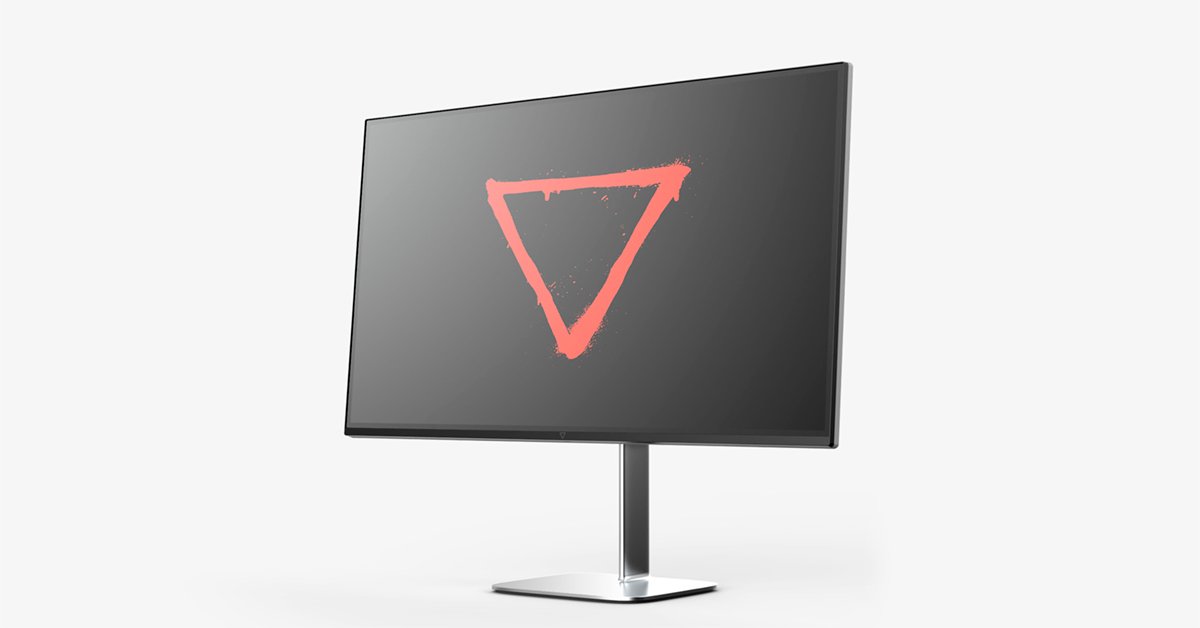
Eve Spectrum Firmware
Why Firmware Became Critical for Gaming Monitors
The evolution of gaming monitors has transcended simple hardware improvements. Modern high-performance displays are sophisticated systems where firmware plays an increasingly decisive role in unlocking capabilities, maintaining performance consistency, and enabling features that would have been impossible through hardware alone just a decade ago.
The Eve Spectrum, launched in 2021 as a crowdfunded 4K 144Hz gaming monitor, represents a particular case study in how firmware architecture influences display performance. Unlike traditional monitor manufacturers who treat firmware as a static component finalized at production, Eve positioned their display as a platform capable of continuous enhancement through software updates—a philosophy more commonly associated with smartphones or graphics cards than monitors.
This approach reflects a broader industry shift. As display panels incorporate advanced overdrive algorithms, adaptive sync technologies, backlight strobing systems, and complex color processing pipelines, the firmware layer has become the critical orchestrator of these subsystems. Understanding this architecture reveals why certain monitors can deliver measurably superior motion clarity, response times, or color accuracy despite using similar panel technology to competitors.
The technical decisions made in firmware design directly impact quantifiable metrics: pixel response times, input latency, motion blur reduction effectiveness, and color calibration accuracy. For the Eve Spectrum specifically, firmware has been the vehicle for implementing features like advanced strobe tuning parameters and extended OSD functionality that differentiate the product in a competitive segment.
Firmware Architecture in Modern Monitors
The Embedded Controller Ecosystem
At the core of every LCD monitor sits a timing controller (TCON) and a microcontroller unit (MCU) responsible for firmware execution. The TCON manages the fundamental task of converting input signals into the precise timing sequences required to drive individual pixels on the panel matrix. The MCU, meanwhile, runs the monitor’s operational firmware—handling everything from OSD navigation to complex feature implementations.
In the Eve Spectrum’s architecture, the firmware manages several distinct subsystems simultaneously. The input processing pipeline must handle multiple display standards (DisplayPort 1.4, HDMI 2.0), adaptive sync protocols (both AMD FreeSync and NVIDIA G-SYNC Compatible), and HDR metadata parsing. Each of these requires dedicated code paths within the firmware to ensure proper signal interpretation and response.
The overdrive system represents one of the most complex firmware-managed functions. Overdrive compensates for liquid crystal response time limitations by temporarily applying higher voltage than the target gray level requires, accelerating pixel transitions. The Spectrum’s firmware contains lookup tables mapping every possible pixel transition (from any starting gray level to any target gray level) to optimized overdrive values. These tables can be dynamically adjusted based on refresh rate, temperature, and user-selected overdrive modes.
Real-Time Processing Requirements
Firmware in gaming monitors operates under severe real-time constraints. At 144Hz, each frame lasts approximately 6.94 milliseconds. Within this window, the firmware must sample input signals, decode metadata, apply overdrive calculations, manage backlight strobing timing if enabled, and coordinate all subsystem communications. Any processing delay directly translates to measurable input lag.
The Eve Spectrum’s firmware architecture addresses these constraints through a combination of hardware acceleration and optimized code paths. Critical functions like overdrive lookup and backlight timing control execute in dedicated hardware blocks configured by firmware, rather than requiring software calculation each frame. This hybrid approach maintains low latency while preserving flexibility for feature updates.
Temperature compensation algorithms also run continuously in the background. LCD panel characteristics shift with temperature—response times slow as panels cool, while color accuracy can drift in either direction. The firmware monitors panel temperature via integrated sensors and applies compensatory adjustments to overdrive values and color matrices in real time, maintaining consistent performance across operating conditions.
Calibration Data Integration
Color accuracy depends on proper calibration data integration. Each Eve Spectrum unit undergoes factory calibration, generating a unique color correction matrix stored in non-volatile memory accessible to the firmware. This matrix defines precise RGB gain and offset values to achieve target color coordinates for the sRGB and DCI-P3 color spaces the monitor supports.
The firmware applies these corrections in the display pipeline, typically just before the final conversion to panel-native color space. This positioning allows the corrections to work with maximum precision, operating on high-bit-depth signal data before final quantization to the panel’s native bit depth. Updates to the calibration algorithms can refine how these matrices are applied without requiring physical recalibration of existing units.
Eve Spectrum OSD Design and Functionality
Interface Architecture
The On-Screen Display system in the Eve Spectrum serves as the primary user interface for accessing the monitor’s capabilities. Unlike many gaming monitors that implement OSD as a simple menu system, the Spectrum’s OSD reflects more sophisticated design decisions that balance accessibility with the exposure of advanced parameters.
The OSD firmware implements a hierarchical menu structure with several depth levels. Primary categories (Picture, Gaming, Color, System) branch into subcategories containing individual adjustable parameters. Navigation logic handles button input with debouncing, auto-repeat functionality, and contextual behavior—for example, certain parameters display real-time value previews while adjusting, requiring the firmware to render both the menu interface and temporary overlay graphics simultaneously.
Menu rendering itself demands careful optimization. The OSD must composite multiple graphic elements—backgrounds, text, icons, value indicators—then blend this composite over the active video signal without introducing visible artifacts or delay. The Spectrum’s firmware implements this through a dedicated OSD compositor that operates in a reserved portion of the display pipeline, ensuring menu overlays appear crisp even over high-motion gaming content.
Advanced Parameter Exposure
Where the Eve Spectrum’s OSD distinguishes itself is in the granularity of control it exposes to users. Beyond standard parameters like brightness and contrast, the OSD provides access to subsystem-level settings typically locked away in commercial monitors.
The overdrive controls exemplify this philosophy. Rather than offering only preset “slow/normal/fast” modes, the firmware exposes numeric overdrive gain values that users can incrementally adjust. This granularity allows fine-tuning for specific panel units or use cases, acknowledging that optimal overdrive settings may vary based on individual panel characteristics due to manufacturing variance.
Backlight strobing configuration similarly receives detailed exposure. Users can adjust strobe pulse width, phase alignment relative to pixel transitions, and brightness compensation—parameters that fundamentally alter how motion blur reduction performs but that most manufacturers lock to fixed values. This flexibility proved essential for the monitor’s collaboration with Blur Busters, where fine-tuning these values unlocked significantly improved motion clarity.
The color management section provides six-axis hue/saturation controls, gamma curve adjustment across multiple points, and separate gain/offset controls for RGB channels. These tools allow users to perform manual calibration adjustments or compensate for specific content requirements. The firmware validates user inputs to prevent configurations that could damage the panel or produce invalid signal levels.
Persistent Settings Management
Settings persistence represents a non-trivial firmware challenge. The monitor must reliably store user preferences across power cycles, potentially for years, while maintaining the flexibility to handle firmware updates that might add new parameters or restructure existing ones.
The Eve Spectrum’s firmware implements this through a versioned configuration system. Each parameter set includes metadata indicating firmware version compatibility. When firmware updates occur, migration code translates settings from previous versions to new formats, preserving user customizations while incorporating new defaults for newly-added features.
The storage itself uses error-correcting codes to protect against data corruption from electrical noise or memory cell degradation. Redundant copies of critical settings provide fault tolerance—if the primary copy becomes corrupted, the firmware can recover from backup copies stored in different memory locations.
Blur Busters Collaboration and Motion Clarity
The Motion Clarity Challenge
Motion blur in LCD displays stems from two distinct sources: pixel response time limitations and sample-and-hold behavior inherent to how LCD technology works. Even if pixels could transition instantaneously, the human visual system perceives blur when tracking moving objects across a display that holds each frame static until the next refresh.
Backlight strobing addresses the sample-and-hold component by briefly illuminating the backlight only during the optimal portion of each frame period, effectively transforming the sample-and-hold display into a closer approximation of a pulsed display like CRT. However, implementing effective strobing requires precise coordination between the backlight, pixel transitions, and refresh timing—all managed by firmware.
The Eve Spectrum’s implementation of backlight strobing became the subject of extensive collaboration with Blur Busters, a research organization specializing in display motion clarity measurement and optimization. This partnership resulted in firmware features specifically designed to enable deep optimization of motion clarity performance.
Strobe Tuning Parameters
Blur Busters’ testing methodology revealed that optimal strobe timing varies based on multiple factors: refresh rate, pixel response characteristics, and even content type. The firmware collaboration introduced parametric controls allowing precise adjustment of strobe behavior.
Strobe crosstalk represents a primary challenge—if the backlight illuminates while pixels are still transitioning from the previous frame to the current frame, visible artifacts appear as ghosting behind moving objects. The firmware’s strobe phase control allows shifting when within each frame period the strobe pulse occurs, enabling users to align the illumination window precisely with the moment when pixel transitions have completed but before the next transition begins.
Pulse width adjustment provides another dimension of tuning. Narrower pulses reduce motion blur more aggressively but also reduce perceived brightness and may increase eye strain for some users. Wider pulses maintain higher brightness at the cost of slightly increased motion blur. The firmware allows adjustment of pulse width in fine increments, letting users balance clarity against brightness according to preference.
The implementation includes safeguards to prevent configurations that could stress the backlight hardware. The firmware monitors total backlight on-time per second and limits combinations of high refresh rates with extended pulse widths that would exceed the backlight’s thermal limits. These protections run continuously, dynamically constraining user-accessible parameter ranges based on current operating conditions.
Measured Performance Impact
Blur Busters’ empirical testing quantified the impact of firmware-enabled tuning. Using high-speed camera pursuit photography and structured motion tests, measurements demonstrated that optimally tuned strobing on the Eve Spectrum could achieve motion clarity comparable to 500Hz+ sample-and-hold displays—a dramatic improvement over the base 144Hz sample-and-hold performance.
These improvements weren’t automatic; they required the detailed parametric control the firmware exposed. Default strobe settings on many monitors optimize for compatibility and fail-safety rather than maximum performance. The Eve Spectrum’s approach of exposing tuning parameters to knowledgeable users enabled performance extraction beyond typical implementation constraints.
The firmware also introduced strobe duty cycle reporting—displaying in real-time what percentage of each frame period the backlight actively illuminates. This feedback allows users to understand the tradeoffs they’re making between motion clarity and brightness, making informed optimization decisions based on quantitative data rather than subjective perception alone.
Calibration, Updates, and Tools
Firmware Update Mechanism
The Eve Spectrum implements firmware updates through a USB-based update utility that communicates with the monitor’s MCU while the display remains operational. This design choice avoids the risk of updates failing mid-process due to power interruption—the monitor can complete an update even if the connected computer loses power or crashes, as the MCU operates independently once the firmware image has been transferred.
The update process follows a secure boot architecture. New firmware images include cryptographic signatures that the bootloader verifies before permitting installation. This prevents unauthorized firmware modifications and protects against corrupted update files that could brick the device. If signature verification fails, the update aborts and the existing firmware remains intact.
Dual-bank firmware storage provides additional reliability. The MCU maintains two complete firmware copies in separate memory regions. Updates write to the inactive bank while the system continues running from the active bank. Only after successful verification and write completion does the firmware switch the active bank pointer. If the new firmware fails to boot, the system automatically reverts to the previous working version.
Update History and Evolution
Analyzing the Eve Spectrum’s firmware update history reveals the evolution of display capabilities through software. Early updates focused on compatibility improvements—enhancing adaptive sync behavior with various graphics cards, addressing EDID reporting issues that affected resolution or refresh rate detection, and refining input switching logic.
Subsequent updates introduced new features that significantly expanded the monitor’s capabilities. Firmware version 102, released several months post-launch, introduced the advanced strobe tuning parameters developed through the Blur Busters collaboration. Version 105 enhanced the OSD with additional color controls and revised the overdrive algorithm to reduce inverse ghosting artifacts at certain transitions.
These updates demonstrate how firmware can extend product lifecycle and value. Features that would traditionally require new hardware generations became available to existing units through updates. Users who purchased the monitor at launch gained access to motion clarity improvements and color management tools that didn’t exist in the original firmware release.
The update process itself improved through firmware revisions. Early versions required manual mode switching and careful timing of the update utility launch. Later firmware enhanced the update protocol’s robustness, improved progress reporting, and reduced the total update time from several minutes to under ninety seconds for typical updates.
Third-Party Tools and Calibration
While the Eve Spectrum’s native OSD provides extensive controls, third-party calibration tools integrate with the monitor through standardized protocols. DisplayCAL and similar software can query the monitor’s capabilities, read factory calibration data, and write custom calibration LUTs for applications requiring precise color accuracy.
The firmware exposes these capabilities through DDC/CI (Display Data Channel Command Interface), a standardized protocol for monitor communication over the video cable. Through DDC/CI, software can programmatically adjust parameters, read sensor data, and access extended capabilities beyond what physical buttons could practically support.
This openness to third-party integration sets the Spectrum apart from monitors that lock calibration features to proprietary software or disable programmatic access entirely. Professional colorists and content creators can integrate the monitor into existing calibration workflows without requiring Eve-specific tools or processes.
The firmware’s calibration data format follows industry standards, storing 3D LUT data and matrix coefficients in formats compatible with established color management frameworks. This ensures that calibrations performed with professional equipment can be properly applied and maintained across firmware updates.
Future Display Technology Trends
Adaptive Firmware Architectures
The industry trajectory points toward increasingly sophisticated firmware systems in display devices. Machine learning algorithms implemented in firmware could dynamically optimize overdrive based on content analysis, adjusting response characteristics in real-time based on scene complexity, motion vectors, and user viewing patterns detected through eye tracking integration.
Panel self-calibration represents another frontier. Future firmware could perform continuous micro-calibrations, measuring actual panel output through integrated sensors and adjusting color and brightness parameters to compensate for panel aging, backlight degradation, or environmental factors. This would maintain factory-fresh color accuracy for the display’s entire operational lifetime without user intervention.
The Eve Spectrum’s approach of treating monitors as updatable platforms anticipates this future. As firmware becomes more capable, the boundary between hardware generations blurs. Monitors might receive not just bug fixes but entirely new features—improved HDR tone mapping algorithms, support for emerging color spaces, or enhanced motion processing techniques developed years after initial release.
Connectivity and Cloud Integration
Future monitor firmware may incorporate network connectivity for automated updates, cloud-based calibration profile synchronization, and integration with gaming platforms for optimized display settings per-game. While this raises valid concerns about privacy and update reliability, it also enables capabilities impossible with isolated devices.
Imagine firmware that downloads game-specific display profiles created by developers or community experts, automatically switching to optimized settings when particular games launch. Or firmware that crowdsources overdrive optimization data from thousands of users to refine lookup tables based on aggregate real-world performance data. These scenarios require both network connectivity and sophisticated firmware architecture to implement securely and reliably.
The security implications demand careful consideration. Network-connected firmware creates potential attack surfaces that isolated devices avoid. Robust authentication, encrypted update channels, and secure boot architectures become essential rather than optional. The firmware update mechanisms pioneered in monitors like the Eve Spectrum provide a foundation for these requirements, but significant engineering investment remains necessary to achieve truly secure networked display systems.
Open Source and Community Development
An emerging question facing the industry concerns whether display firmware might trend toward open-source models, allowing community inspection, modification, and improvement of monitor software. The precedent exists in other hardware categories—routers, storage devices, and even some graphics cards support community firmware alternatives.
Open firmware for displays could enable enthusiast communities to develop optimizations, add features, or extend hardware lifetime beyond manufacturer support horizons. The technical challenges are substantial—display firmware interfaces directly with proprietary panel specifications and hardware that manufacturers guard closely. Nevertheless, standardization efforts around display interfaces and increasing regulatory pressure for device longevity could make community-developed firmware more viable.
The Eve Spectrum’s transparent approach to firmware capabilities and detailed documentation for advanced users gestures toward this possibility without fully embracing it. Finding the balance between proprietary protection and community empowerment will likely shape how display firmware evolves through the coming decade.
Higher Refresh Rates and Processing Demands
The push toward 240Hz, 360Hz, and even higher refresh rates places extreme demands on firmware processing capabilities. At 360Hz, each frame lasts less than 2.8 milliseconds—leaving minimal time for the firmware to perform necessary calculations while maintaining acceptably low latency.
Future firmware architectures may leverage dedicated AI accelerators or more powerful ARM cores to handle increasingly complex processing within these time constraints. Features like real-time content-adaptive overdrive adjustment, per-pixel backlight dimming coordination, or advanced artifact reduction all require substantial computational resources while maintaining strict real-time performance.
The firmware must also handle increasing data rates. DisplayPort 2.1 and HDMI 2.1 enable resolutions and refresh rate combinations that generate massive pixel data throughput. Firmware must parse, process, and route this data reliably while performing all other monitor functions. Efficient architecture and careful optimization become increasingly critical as these demands scale.
Technical Conclusion
The Eve Spectrum’s firmware represents a case study in how software has become inseparable from hardware performance in modern display technology. The monitor’s capabilities—from its motion clarity characteristics to its color accuracy and feature set—emerge as much from firmware design decisions as from the underlying panel and electronics.
Several technical insights emerge from examining the Spectrum’s firmware architecture. First, exposing granular controls to users, while increasing complexity, enables performance optimization impossible with locked-down implementations. The strobe tuning parameters demonstrate this clearly—they introduce learning curve but unlock measurable performance improvements for users willing to invest effort in optimization.
Second, treating firmware as a continuous development platform rather than a fixed component provides tangible value extension. The feature additions and performance improvements delivered through updates demonstrate that display capabilities need not remain static after manufacturing. This approach particularly benefits early adopters, who gain access to refinements developed through extended testing and user feedback.
Third, the firmware layer has become the appropriate location for implementing increasingly sophisticated display features. As capabilities like adaptive sync, HDR processing, and advanced motion blur reduction proliferate, firmware flexibility determines how well monitors can adapt to evolving standards and user requirements. Monitors with inflexible firmware architectures risk obsolescence as new techniques and standards emerge.
The technical decisions in the Eve Spectrum’s firmware—from its OSD architecture to its update mechanism to its exposure of advanced parameters—reflect a philosophy that prioritizes capability and longevity over simplicity. This comes with tradeoffs; the monitor assumes users willing to engage with technical controls and concepts. For that audience, however, the firmware’s sophistication directly enables the performance characteristics that justify the hardware.
Looking forward, the principles demonstrated in the Spectrum’s firmware design—updatability, parametric control exposure, third-party integration support, and transparent documentation—provide a template for how gaming monitors can evolve to meet increasing performance demands without requiring constant hardware replacement. Firmware has transitioned from a necessary implementation detail to a central determinant of display capability.
The convergence of display hardware and software will only intensify. Future monitors will increasingly depend on sophisticated firmware to unlock hardware potential, maintain performance through device lifetime, and adapt to emerging technologies and standards. The Eve Spectrum’s approach demonstrates both the potential and the complexity of this paradigm, offering a technically rigorous example of firmware-first display design in the gaming monitor segment.
Understanding these firmware architectures matters not just for the technically curious but for anyone evaluating display purchases in an era where software increasingly determines hardware performance. The questions to ask have shifted from purely hardware specifications to include firmware capabilities: How frequently does the manufacturer release updates? What level of control does the firmware expose? How robust is the update mechanism? These software considerations now carry weight equivalent to panel type, resolution, or refresh rate in determining a monitor’s long-term value and capability.
Frequently Asked Questions
Can firmware updates improve pixel response times?
Firmware cannot alter the physical liquid crystal response characteristics, but it can optimize the overdrive algorithms that compensate for these limitations. Updates may refine lookup tables to reduce inverse ghosting, adjust voltage curves for faster transitions, or implement temperature compensation that maintains consistent response times across operating conditions. The Eve Spectrum demonstrated this through firmware updates that measurably reduced overshoot artifacts while maintaining fast pixel transitions.
Is there risk of bricking the monitor during firmware updates?
The Eve Spectrum’s dual-bank firmware architecture specifically mitigates this risk. Updates write to an inactive memory bank while the system runs from the active bank. If an update fails or the new firmware won’t boot, the system automatically reverts to the previous working version. Additionally, the update process continues even if the connected computer loses power, as the monitor’s MCU operates independently once the firmware image transfers.
How does firmware affect input lag?
Firmware processing occurs within the display pipeline and directly impacts total system latency. Efficient code paths and hardware acceleration for critical functions like overdrive lookup minimize firmware-induced delay. Poorly optimized firmware can add milliseconds of latency through unnecessary processing or inefficient signal handling. The Eve Spectrum’s firmware maintains processing overhead under 1 millisecond through careful architectural design.
What is strobe crosstalk and how does firmware address it?
Strobe crosstalk occurs when the backlight illuminates while pixels transition between frames, creating visible ghosting artifacts. Firmware controls strobe phase—the precise timing within each frame period when the backlight pulses. By exposing phase adjustment parameters, the firmware allows users to align backlight illumination with the window when pixel transitions complete, minimizing crosstalk. This requires microsecond-precision timing coordination between the backlight controller and refresh timing.
Can I revert to older firmware versions?
Most monitors, including the Eve Spectrum, don’t officially support firmware downgrade due to potential compatibility issues with persistent settings or calibration data formats. However, the dual-bank architecture technically enables reverting to the immediately previous version if the new firmware fails to boot. Deliberate downgrade to older versions requires manufacturer tools typically unavailable to end users, as downgrade processes bypass normal verification steps.
Does factory calibration data survive firmware updates?
Calibration data resides in separate non-volatile memory from the firmware itself. Updates don’t overwrite this region, preserving factory calibration across firmware versions. However, firmware updates may modify how calibration data is applied—new color processing algorithms or revised gamma curves could subtly alter appearance even with identical calibration data. Well-designed updates include migration code to maintain color accuracy across firmware revisions.
Why do some monitors expose fewer OSD parameters than the Eve Spectrum?
Manufacturers typically limit exposed parameters to reduce support complexity and prevent users from configuring settings that could degrade image quality or stress hardware. The Eve Spectrum’s philosophy targets technically knowledgeable users willing to invest time in optimization. This approach assumes users understand tradeoffs—for example, that aggressive overdrive reduces response time but increases overshoot artifacts. Broader consumer monitors prioritize simplicity over granular control.
How often should gaming monitors receive firmware updates?
Update frequency varies by manufacturer and product lifecycle stage. Active development periods immediately post-launch often see monthly updates addressing compatibility issues and implementing planned features. Mature products may receive updates quarterly or annually, primarily for compatibility with new graphics card models or display standards. The Eve Spectrum’s update cadence reflected this pattern, with frequent early updates tapering to occasional refinements as the product matured.