

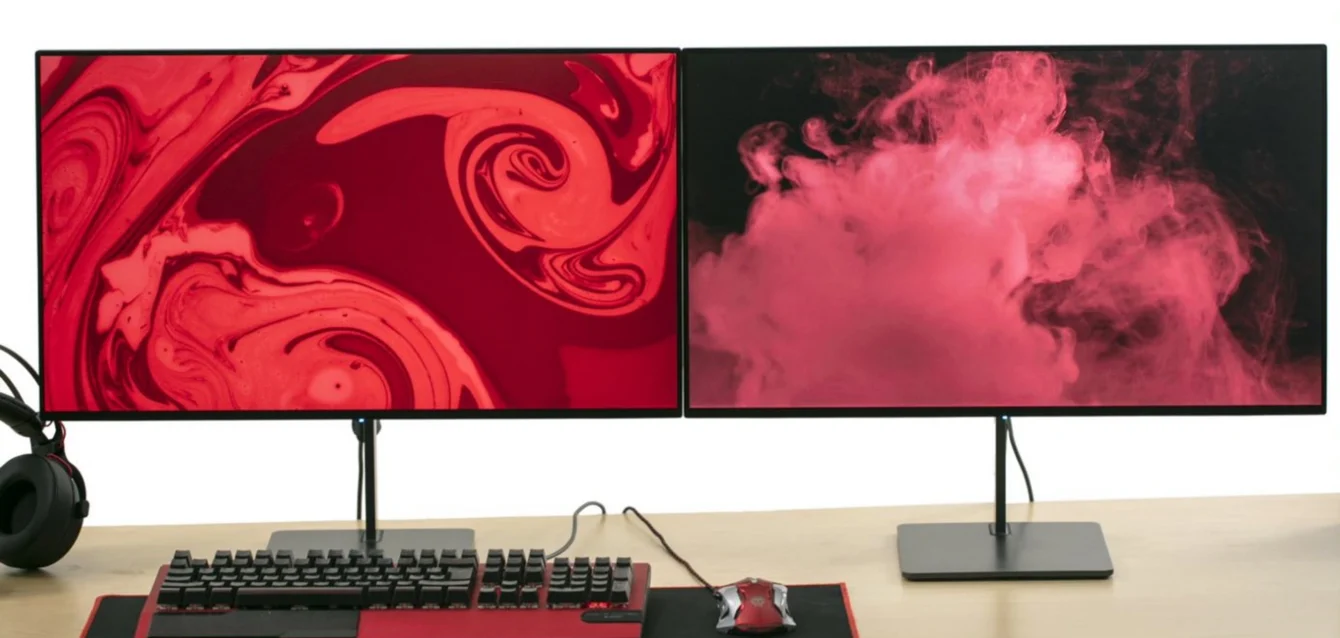
Eve Spectrum Gaming Monitor
The Eve Spectrum gaming monitor represents a distinctive departure from conventional hardware development cycles in the display industry. Emerging from a direct collaboration between Eve Devices and an active online community, this monitor challenged traditional manufacturer-driven product design by incorporating user feedback throughout its development process. The project attracted significant media attention from technology publications including The Guardian, Ars Technica, and The Verge, primarily due to its unconventional approach to hardware development and its positioning within the competitive gaming display market.
This analysis examines the technical specifications, development methodology, and market positioning of the Eve Spectrum, providing context for understanding why this particular hardware project generated notable industry discussion and media coverage during its development and launch phases.
Genesis of the Eve Spectrum Project
Community-Driven Hardware Development
The Eve Spectrum originated from Eve Devices’ “community-created” product development model, a methodology that diverged from standard industrial design processes. Rather than internal R&D teams determining product specifications based on market research alone, Eve opened the development process to direct community participation through online forums and structured feedback mechanisms.
This approach involved multiple phases of specification discussion, where community members debated technical parameters including panel technology, refresh rates, resolution options, and connectivity standards. The development timeline extended across several years, with iterative refinement of specifications based on collective input rather than predetermined roadmaps.
The community-driven model addressed a specific gap in the gaming monitor market: the disconnect between what gaming hardware enthusiasts specified as ideal technical characteristics and what manufacturers typically prioritized in mass-market products. Traditional display manufacturers often balanced cost optimization, manufacturing constraints, and broad market appeal, which sometimes resulted in compromises that enthusiast users found suboptimal.
Distinction from Traditional Manufacturing Models
Conventional gaming monitor development typically follows a manufacturer-centric process: internal teams identify market opportunities, engineering departments develop specifications within cost parameters, and marketing teams position the final product. Consumer input generally occurs post-launch through reviews and sales data, informing subsequent product iterations.
The Eve Spectrum inverted this sequence by soliciting technical requirements before finalizing engineering specifications. Community members engaged in detailed discussions about trade-offs between response times, color accuracy, HDR implementation, and manufacturing feasibility. This participatory approach created both opportunities and challenges: while it enabled specification optimization for enthusiast preferences, it also extended development timelines and introduced complexity in managing diverse stakeholder expectations.
The model proved particularly relevant for gaming displays because this product category serves users with highly specific technical requirements. Competitive gamers prioritize different characteristics than content creators or general productivity users, and the community-driven approach allowed Eve to target this specialized segment more precisely than broad-market manufacturers typically achieve.
Technical Specifications Overview
Display Panel Technology
The Eve Spectrum launched with multiple configurations targeting different use cases within the gaming and professional display markets. The primary variant featured a 27-inch IPS panel with 4K resolution (3840 × 2160 pixels) and a 144Hz refresh rate, a specification combination that was relatively uncommon in the gaming monitor market at the time of the Spectrum’s development.
Alternative configurations included a 1440p (2560 × 1440) variant with a 240Hz refresh rate, addressing the preferences of competitive esports players who prioritized frame rate performance over resolution. The availability of multiple SKUs reflected the community input process, which revealed divergent priorities between different gaming user segments.
Panel selection represented one of the most debated aspects of the development process. IPS technology offered superior color accuracy and viewing angles compared to TN panels, while OLED and VA alternatives presented different trade-off profiles regarding contrast ratios, response times, and potential burn-in concerns. The community ultimately favored IPS for its balanced characteristics, though this choice involved accepting slightly higher response times than TN alternatives.
Refresh Rate and Response Time Characteristics
The 144Hz refresh rate on the 4K variant positioned the Spectrum as a high-refresh display suitable for modern gaming graphics cards capable of driving 4K framerates above 60fps. This specification addressed the growing capability of high-end GPUs while remaining within the bandwidth limitations of HDMI 2.1 and DisplayPort 1.4 connectivity standards.
Response times, measured in gray-to-gray transitions, were specified at approximately 1-4ms depending on overdrive settings. While not matching the sub-1ms response times of premium TN esports panels, these figures represented competitive performance for an IPS display in the gaming category. The community discussions acknowledged this trade-off explicitly, prioritizing color reproduction and viewing angles over absolute minimum response times.
Adaptive sync technology implementation included both NVIDIA G-Sync Compatible certification and AMD FreeSync Premium support, ensuring broad compatibility with contemporary graphics cards. Variable refresh rate (VRR) support extended from approximately 48Hz to the panel’s maximum refresh rate, providing smooth frame pacing across a wide range of gaming scenarios.
Connectivity and Interface Options
The Spectrum’s connectivity suite reflected the community’s emphasis on future-proofing and broad device compatibility. The monitor included:
- 2× HDMI 2.1 ports supporting 4K at 120Hz for next-generation console gaming
- 1× DisplayPort 1.4 with DSC (Display Stream Compression) for 4K 144Hz PC gaming
- USB-C port with DisplayPort Alt Mode and 100W Power Delivery
- USB hub functionality for peripheral connectivity
The HDMI 2.1 implementation proved particularly significant for PlayStation 5 and Xbox Series X compatibility, enabling 4K 120Hz output from these consoles. This specification choice demonstrated the community’s attention to cross-platform gaming requirements beyond traditional PC-centric monitor designs.
The USB-C connectivity with Power Delivery addressed the growing use case of single-cable laptop docking, extending the monitor’s utility beyond dedicated gaming setups. This multi-use positioning distinguished the Spectrum from purely gaming-focused displays with minimal connectivity options.
HDR Implementation and Color Performance
The Eve Spectrum incorporated HDR support with VESA DisplayHDR 600 certification, indicating a peak brightness capability of approximately 600 nits in HDR mode. This certification level placed the monitor in the mid-tier HDR category—sufficient for noticeable HDR effects in compatible content, though below the DisplayHDR 1000 or 1400 standards of premium HDR displays.
Color gamut coverage specifications included:
- 100% sRGB coverage for standard content
- 98% DCI-P3 coverage for wide-gamut HDR content
- Factory calibration with Delta E < 2 for color accuracy
The inclusion of factory calibration addressed professional users and content creators who required accurate color reproduction without manual calibration. This specification reflected community input from users who valued the monitor for mixed-use scenarios beyond pure gaming applications.
Local dimming implementation utilized edge-lit LED backlighting rather than full-array local dimming (FALD), a cost-versus-performance decision that generated substantial community discussion. Edge-lit dimming provided more limited contrast control than FALD alternatives but enabled thinner panel construction and lower manufacturing costs. The community ultimately accepted this trade-off to maintain target pricing while preserving other priority specifications.
Gaming and Performance Positioning
Competitive Gaming Considerations
The Eve Spectrum’s specification profile positioned it within a specific segment of the gaming monitor market: users who valued image quality and resolution alongside high refresh rates, rather than prioritizing absolute minimum latency above all other factors. This positioning differentiated the Spectrum from dedicated esports monitors that typically emphasized maximum refresh rates (240Hz-360Hz) and minimum response times using TN panel technology.
For competitive first-person shooter gaming, the 144Hz refresh rate provided substantial improvement over 60Hz displays while remaining below the 240Hz-360Hz standards increasingly common in professional esports environments. Community discussions acknowledged this positioning as suitable for serious enthusiasts rather than professional tournament players, who might require the absolute minimum latency configurations.
The 4K resolution at 27 inches yielded approximately 163 pixels per inch, delivering sharp image quality for both gaming and productivity applications. However, this resolution presented graphics performance challenges: rendering modern AAA games at 4K 144fps required high-end GPU configurations, limiting the addressable market to users with premium graphics hardware.
Console Gaming Integration
The inclusion of HDMI 2.1 connectivity specifically addressed the PlayStation 5 and Xbox Series X generation of gaming consoles, which supported 4K output at up to 120Hz. This specification demonstrated the Spectrum’s positioning as a cross-platform gaming display rather than a PC-exclusive device.
Console gamers represented a growing segment of the high-refresh display market, as ninth-generation consoles introduced support for frame rates beyond the traditional 30fps and 60fps standards of previous console generations. The Spectrum’s ability to accept 4K 120Hz input from consoles via HDMI 2.1 addressed this emerging use case before many traditional monitor manufacturers had broadly adopted the standard.
Variable refresh rate support for consoles, enabled through HDMI 2.1’s VRR specification, provided adaptive frame pacing for console titles with unlocked frame rates. This functionality improved perceived smoothness in games that couldn’t maintain consistent frame rates, a common scenario in graphically demanding console titles.
PC Gaming and Multi-Use Scenarios
The Spectrum’s IPS panel technology and color accuracy specifications extended its utility beyond pure gaming into content creation, productivity, and media consumption. This multi-use positioning reflected community feedback indicating that many users required a single display capable of serving multiple roles rather than dedicated gaming-only hardware.
For PC gaming specifically, the DisplayPort 1.4 connection with DSC enabled the full 4K 144Hz capability with compatible graphics cards. The adaptive sync implementation worked with both NVIDIA and AMD GPUs, avoiding vendor lock-in and providing flexibility for users across different graphics platforms.
Input lag measurements, while not extensively documented in early reviews, appeared competitive with other gaming displays in the same category. The monitor’s game mode settings included options for response time overdrive and various picture presets optimized for different game genres, though these features were relatively standard across gaming monitors and did not represent distinctive innovations.
Media Coverage and Industry Attention
Technology Press Coverage Patterns
The Eve Spectrum received coverage from major technology publications including The Guardian, Ars Technica, The Verge, PC Gamer, and Tom’s Hardware. This media attention occurred across multiple phases: initial project announcement, community development updates, crowdfunding campaigns, and eventual product reviews.
Coverage patterns revealed particular media interest in the community-driven development model itself, with articles frequently contextualizing the Spectrum as an experiment in alternative hardware development methodologies. Publications emphasized the contrast between Eve’s participatory approach and traditional manufacturer processes, framing the project as potentially indicative of broader trends in consumer technology development.
The Guardian’s coverage, for example, positioned the Spectrum within discussions of consumer empowerment and corporate responsiveness, extending beyond pure hardware review into business model innovation. Ars Technica’s technical deep-dives focused on the specification trade-offs and engineering decisions that emerged from the community process, providing detailed analysis of how crowd-sourced requirements translated into actual product characteristics.
Crowdfunding and Pre-Order Campaigns
The Eve Spectrum’s go-to-market strategy involved crowdfunding and extended pre-order periods, which generated additional media coverage around funding milestones and delivery timelines. This approach differed from traditional retail distribution and created ongoing news hooks as the project progressed through development stages.
Media coverage of the crowdfunding aspects highlighted both the opportunities and risks of the community-driven model. While the approach enabled Eve to gauge market demand and secure development funding without traditional venture capital or manufacturer partnerships, it also introduced fulfillment challenges and extended timelines that generated critical coverage when delivery delays occurred.
Technology press coverage evolved as the project matured, shifting from optimistic coverage of the innovative development model to more critical analysis of execution challenges. This arc reflected broader patterns in coverage of crowdfunded hardware projects, where initial enthusiasm often gives way to scrutiny of delivery and manufacturing capabilities.
Reception Within Gaming Communities
Beyond traditional tech media, the Spectrum received substantial discussion within gaming-focused online communities, particularly on Reddit’s hardware and gaming monitor subreddits, and specialized forums like Blur Busters and overclock.net. These community discussions provided more technically granular analysis than mainstream tech press, with users comparing the Spectrum’s specifications against competing models across multiple parameters.
Enthusiast community reception proved mixed, with appreciation for the participatory development model tempered by concerns about Eve’s manufacturing capabilities and customer service reputation. Previous Eve products, particularly the Eve V 2-in-1 device, had experienced well-documented fulfillment challenges that created skepticism among potential Spectrum purchasers.
This community skepticism represented a distinctive aspect of the Spectrum’s market positioning: while the product’s specifications and development process attracted positive attention, the company’s execution track record generated caution among precisely the enthusiast community that the participatory model was designed to serve.
Lessons for the Display Technology Market
Viability of Community-Driven Hardware Development
The Eve Spectrum project demonstrated both the potential and limitations of community-driven hardware development in the display technology sector. On one hand, the participatory model successfully identified a specific market segment—users prioritizing 4K resolution, high refresh rates, and color accuracy in a single package—that mainstream manufacturers had not fully addressed at accessible price points.
The community input process effectively functioned as distributed market research, revealing demand for specification combinations that traditional product planning might have overlooked or deemed too niche. This approach proved particularly effective for products serving technically sophisticated users capable of articulating detailed requirements and understanding engineering trade-offs.
However, the model also revealed significant challenges. Extended development timelines resulting from iterative community feedback processes created delays that allowed traditional manufacturers to introduce competing products. The complexity of managing diverse stakeholder expectations sometimes paralyzed decision-making, as community members advocated for conflicting priorities that couldn’t be simultaneously optimized.
Manufacturing and fulfillment execution remained the critical bottleneck for community-driven hardware ventures. While community input could optimize product specifications, it provided limited assistance with supply chain management, quality control, and logistics—areas where traditional manufacturers possessed substantial institutional capabilities that startup ventures lacked.
Market Segment Identification and Targeting
The Spectrum’s specification profile identified a specific market segment: users seeking a premium gaming display that also served productivity and content creation roles, who valued image quality alongside performance, and who were willing to accept trade-offs in absolute minimum latency for improvements in color accuracy and resolution.
This segment existed between dedicated esports monitors (prioritizing maximum refresh rates and minimum response times using TN panels) and professional color-critical displays (prioritizing accuracy over gaming performance). Traditional manufacturers had largely addressed these segments separately, creating an opportunity for a product that balanced both sets of priorities.
The market response to the Spectrum suggested substantial demand for this middle-ground positioning, validating the community-identified specifications. Subsequent product releases from established manufacturers, including ASUS, LG, and Samsung, increasingly offered similar specification combinations, suggesting the Spectrum’s community-driven approach had correctly identified an underserved market need.
Implications for Product Development Methodologies
The Eve Spectrum project provided a case study in alternative hardware development methodologies that generated discussion within product management and industrial design communities. While few manufacturers adopted fully community-driven development processes, elements of the approach—particularly increased transparency in specification decisions and structured community feedback mechanisms—appeared in various forms across the industry.
Some traditional manufacturers began incorporating more extensive beta testing programs with enthusiast communities, creating forums for technical feedback before finalizing product specifications. These initiatives represented partial adoption of community input principles while maintaining conventional manufacturer control over final decisions and execution.
The project also highlighted the importance of execution capabilities beyond specification optimization. Community-driven products that failed to deliver on manufacturing quality, fulfillment timelines, or customer service ultimately undermined the benefits of participatory development. Success required both optimal specifications and reliable execution—a combination that proved challenging for startup hardware ventures without established manufacturing partnerships.
Pricing and Market Positioning Challenges
The Spectrum’s pricing strategy reflected the tension between community expectations for competitive pricing and the economic realities of low-volume manufacturing. Community discussions often centered on achieving premium specifications at mid-tier prices, an expectation difficult to fulfill without the manufacturing scale and supply chain efficiencies of established display manufacturers.
Initial pricing placed the Spectrum in the $700-900 range depending on configuration, positioning it competitively against similar specifications from major brands. However, maintaining this pricing required direct-to-consumer sales models and extended pre-order periods to manage working capital, introducing delivery timeline risks that traditional retail channels avoided.
The pricing challenge illustrated a fundamental constraint of community-driven hardware: while community input could optimize specifications for user preferences, it could not overcome the economies of scale and manufacturing efficiencies that established players leveraged to offer competitive pricing. Startup ventures necessarily operated with higher per-unit costs unless they achieved sufficient production volumes.
Technical Innovation and Industry Standards
Display Technology Trends Reflected
The Spectrum’s specifications reflected broader industry trends in gaming display technology during the late 2010s and early 2020s. The movement toward 4K high-refresh gaming displays paralleled improvements in GPU performance and the adoption of HDMI 2.1 and DisplayPort 1.4 standards enabling higher bandwidth video transmission.
The inclusion of HDR support aligned with the gaming industry’s adoption of high dynamic range rendering, though the DisplayHDR 600 certification reflected the current state of LCD backlight technology rather than pushing technical boundaries. True HDR performance requiring 1000+ nits peak brightness and extensive local dimming zones remained largely confined to premium OLED or mini-LED displays beyond most gaming monitor price points.
The IPS panel choice represented the maturation of IPS technology for gaming applications. While historically associated with slower response times than TN alternatives, manufacturing improvements had narrowed the performance gap sufficiently that many users considered the color accuracy and viewing angle advantages worthwhile for the modest latency trade-off.
Connectivity Standards Adoption
The Spectrum’s early adoption of HDMI 2.1 connectivity demonstrated the value of community input in identifying emerging standards. Traditional manufacturers often lagged in implementing new connectivity standards until widespread device adoption justified the engineering and certification costs. The community-driven approach enabled faster adoption of standards that enthusiast users recognized as strategically important for future compatibility.
USB-C with Power Delivery represented another forward-looking connectivity choice, anticipating the increasing use of laptops and mobile devices as gaming platforms. The ability to drive the display and charge a connected laptop through a single cable addressed use cases beyond traditional desktop gaming setups.
The comprehensive connectivity suite distinguished the Spectrum from more narrowly focused gaming monitors that prioritized gaming-specific features over multi-device compatibility. This design choice reflected community input from users who valued flexibility and future-proofing over minimal feature sets optimized for single-use cases.
Production and Fulfillment Considerations
Manufacturing Partnership Challenges
The Spectrum’s production involved partnerships with display panel manufacturers and assembly facilities, primarily in Asia. Eve, as a relatively small company without in-house manufacturing capabilities, necessarily relied on third-party manufacturing arrangements that introduced coordination and quality control challenges.
Manufacturing partnerships for low-volume hardware production typically involve higher per-unit costs and less favorable terms than the contracts available to high-volume manufacturers. This economic reality constrained Eve’s ability to achieve the pricing targets that community discussions often envisioned, requiring compromises between specification ambitions and market pricing.
Quality control represented another challenge area, as evidenced by community reports of panel quality variations and backlight uniformity issues in some units. While such issues occur across all monitor manufacturers, the heightened expectations created by the community development process and extended pre-order timelines may have amplified dissatisfaction when quality issues arose.
Delivery Timeline and Customer Communication
Fulfillment delays represented the most significant execution challenge for the Spectrum project, with delivery timelines extending substantially beyond initial estimates. These delays reflected common challenges in hardware manufacturing: supply chain disruptions, component availability issues, quality control holds, and logistics coordination complexity.
Customer communication during delays proved critically important for managing expectations and maintaining community trust. Transparency about challenges, even when disappointing, generally generated more positive community response than optimistic timelines that subsequently required revision. This communication aspect highlighted the importance of expectation management in community-driven projects where participants felt invested in the outcome.
The delivery timeline experience underscored a fundamental tension in community-driven hardware: while participatory development created strong engagement and interest, it also generated heightened expectations for execution that startup ventures often struggled to meet with the same reliability as established manufacturers.
Conclusion
The Eve Spectrum gaming monitor represents a significant case study in community-driven hardware development within the display technology sector. The project successfully identified and addressed an underserved market segment seeking high-resolution, high-refresh gaming displays with strong color accuracy and multi-use capability. This specification combination, derived from extensive community input, validated the potential of participatory development models to identify genuine market needs that traditional manufacturer processes might overlook.
The Spectrum’s technical specifications—particularly the 4K 144Hz configuration with IPS panel technology, HDMI 2.1 connectivity, and HDR support—reflected careful balancing of competing priorities that emerged from community discussion. While not revolutionary in any single dimension, the combination of characteristics addressed specific user requirements that existing market offerings did not fully satisfy.
Media coverage of the project extended beyond typical product reviews to examine the community-driven development model itself, positioning the Spectrum as potentially indicative of broader trends in consumer electronics development. Publications emphasized the contrast with traditional manufacturer-driven processes and explored implications for user empowerment and product-market fit optimization.
However, the project also revealed significant limitations of community-driven hardware development. Manufacturing execution, quality control, and fulfillment timeline reliability remained critical challenges that community input could not solve. These operational aspects ultimately determined customer satisfaction as much as specification optimization, highlighting the gap between community-driven product definition and successful mass production.
The Eve Spectrum’s influence on the broader gaming monitor market appears in the subsequent proliferation of similar specification combinations from established manufacturers. While these companies did not adopt community-driven development processes, the market validation provided by the Spectrum’s reception likely accelerated their introduction of comparable products.
For the display technology industry, the Spectrum project demonstrated that substantial communities of technically sophisticated users exist who can articulate detailed requirements and engage meaningfully with engineering trade-offs. Whether future hardware development increasingly incorporates such participatory elements, or whether the Spectrum remains a distinctive experiment, will depend largely on whether execution challenges can be addressed without sacrificing the benefits of community input.
The project ultimately illustrates that optimal product specifications, while necessary, prove insufficient without reliable execution capabilities. Success in hardware manufacturing requires both understanding user needs—where community input proved valuable—and delivering products reliably at scale, where traditional manufacturing expertise remains critical. The integration of these elements represents the ongoing challenge for alternative hardware development models.
Frequently Asked Questions
What makes the Eve Spectrum different from other gaming monitors?
The Eve Spectrum distinguishes itself primarily through its community-driven development process rather than through revolutionary technical specifications. Unlike traditional gaming monitors developed by manufacturer R&D teams, the Spectrum’s specifications emerged from direct community input over several years of online discussion and feedback. This participatory approach resulted in a specific combination of features—4K resolution with 144Hz refresh rate, IPS panel technology, HDMI 2.1 connectivity, and HDR 600 support—that addressed an underserved segment of users seeking both high performance and image quality in a single display.
What are the main specifications of the Eve Spectrum?
The Eve Spectrum’s primary configuration features a 27-inch IPS panel with 3840 × 2160 (4K) resolution and 144Hz refresh rate. Connectivity includes two HDMI 2.1 ports, one DisplayPort 1.4 port, and USB-C with 100W Power Delivery. The monitor supports both NVIDIA G-Sync Compatible and AMD FreeSync Premium adaptive sync technologies. Color performance includes 100% sRGB and 98% DCI-P3 coverage with factory calibration, while HDR capability is certified at DisplayHDR 600 with approximately 600 nits peak brightness. Response times are specified at 1-4ms gray-to-gray depending on overdrive settings.
Is the Eve Spectrum suitable for competitive gaming?
The Spectrum occupies a middle position in the competitive gaming spectrum. Its 144Hz refresh rate provides substantial improvement over 60Hz displays and remains suitable for serious enthusiasts, but falls below the 240Hz-360Hz standards increasingly common in professional esports environments. The IPS panel technology offers superior color accuracy and viewing angles compared to TN alternatives, though with slightly higher response times (1-4ms versus sub-1ms for premium TN panels). The monitor targets users who value image quality alongside performance rather than prioritizing absolute minimum latency above all other considerations.
Does the Eve Spectrum work with PlayStation 5 and Xbox Series X?
Yes, the Eve Spectrum includes HDMI 2.1 connectivity specifically designed for compatibility with ninth-generation gaming consoles. Both PlayStation 5 and Xbox Series X can output 4K resolution at 120Hz through the monitor’s HDMI 2.1 ports. The monitor also supports variable refresh rate (VRR) functionality for consoles, providing adaptive frame pacing for games with unlocked frame rates. This cross-platform capability distinguishes the Spectrum from purely PC-focused gaming monitors and reflects the community’s emphasis on versatile device compatibility.
What is the difference between the 4K 144Hz and 1440p 240Hz versions?
The Eve Spectrum launched with multiple configurations targeting different user priorities. The 4K 144Hz variant emphasizes resolution and image quality, delivering sharp visuals suitable for both gaming and productivity applications, though requiring high-end GPU hardware to achieve maximum frame rates in demanding games. The 1440p 240Hz configuration prioritizes refresh rate performance over resolution, addressing competitive esports players who value maximum frame rates and lower system requirements. The choice between configurations depends on whether users prioritize visual fidelity or competitive performance, reflecting the divergent preferences within the gaming community that emerged during the development process.
How does the community-driven development model work?
Eve’s community-driven model involved opening the product development process to direct participant input through online forums and structured feedback mechanisms. Community members engaged in detailed discussions about technical trade-offs including panel technology selection, refresh rates, resolution options, connectivity standards, and HDR implementation. The development timeline extended across several years with iterative specification refinement based on collective input. This approach differed from traditional manufacturer processes where internal R&D teams determine specifications based primarily on market research and cost optimization, though it also introduced challenges in managing diverse stakeholder expectations and extended development timelines.
What are the HDR capabilities of the Eve Spectrum?
The Spectrum implements HDR support with VESA DisplayHDR 600 certification, indicating peak brightness capability of approximately 600 nits in HDR mode. This certification level places the monitor in the mid-tier HDR category—sufficient for noticeable HDR effects in compatible content, though below the DisplayHDR 1000 or 1400 standards of premium displays. The monitor utilizes edge-lit LED backlighting rather than full-array local dimming (FALD), a design decision that provided more limited contrast control than FALD alternatives but enabled thinner construction and lower manufacturing costs. Color gamut support includes 98% DCI-P3 coverage for wide-gamut HDR content.
Can the Eve Spectrum be used for professional color-critical work?
The Spectrum’s specifications support professional applications requiring accurate color reproduction. Factory calibration delivers Delta E < 2 color accuracy, meeting standards for professional content creation. The IPS panel technology provides superior color reproduction and viewing angles compared to gaming-focused TN panels. Coverage of 100% sRGB and 98% DCI-P3 color spaces addresses both standard and wide-gamut workflows. However, professionals requiring absolute color accuracy for print production or specialized color-critical applications might still prefer dedicated professional displays with hardware calibration capabilities and more comprehensive color management features.
What connectivity options does the monitor include?
The Spectrum provides comprehensive connectivity addressing multiple use cases. Video inputs include two HDMI 2.1 ports supporting 4K at 120Hz, one DisplayPort 1.4 port with Display Stream Compression enabling 4K at 144Hz, and USB-C with DisplayPort Alt Mode and 100W Power Delivery for single-cable laptop connectivity. Additional features include USB hub functionality for peripheral connections. This connectivity suite enables simultaneous connection of gaming consoles, desktop PCs, and laptops without frequent cable switching, reflecting the community’s emphasis on versatile multi-device support.
Were there delivery or quality issues with the Eve Spectrum?
The Spectrum project experienced fulfillment delays that extended delivery timelines substantially beyond initial estimates, reflecting common challenges in hardware manufacturing including supply chain disruptions, component availability, and logistics coordination complexity. Some community reports documented panel quality variations and backlight uniformity issues in certain units, though such quality control variations occur across monitor manufacturers. The delivery timeline challenges proved particularly significant given the heightened expectations created by the community development process and extended pre-order periods. These execution challenges highlighted the gap between community-driven specification optimization and reliable mass production capabilities.
How does the Eve Spectrum compare to monitors from established brands?
The Spectrum’s specification combination—4K resolution, 144Hz refresh rate, IPS panel, HDMI 2.1, and HDR 600—was relatively uncommon in gaming monitors at competitive price points during its development period. Established manufacturers like ASUS, LG, and Samsung subsequently introduced similar specification combinations, suggesting the Spectrum correctly identified underserved market demand. The community-driven approach enabled faster adoption of emerging standards like HDMI 2.1 compared to traditional manufacturers who often waited for broader device adoption. However, established brands typically offered more reliable fulfillment timelines, comprehensive warranty support, and proven customer service infrastructure that startup ventures struggled to match.
What graphics card is needed to run games at 4K 144Hz?
Achieving 4K resolution at 144 frames per second in modern AAA games requires high-end GPU configurations. At the time of the Spectrum’s release, graphics cards like NVIDIA’s RTX 3080, RTX 3090, or newer RTX 40-series cards, and AMD’s RX 6800 XT or RX 7900 series represented the GPU class capable of approaching these frame rates in demanding titles. Less graphically intensive games, esports titles, or older games could achieve 4K 144fps with mid-range hardware. The high performance requirements limited the Spectrum’s addressable market to users willing to invest in premium graphics hardware, though the monitor’s adaptive sync support provided smooth frame pacing even when frame rates fell below the maximum refresh rate.