

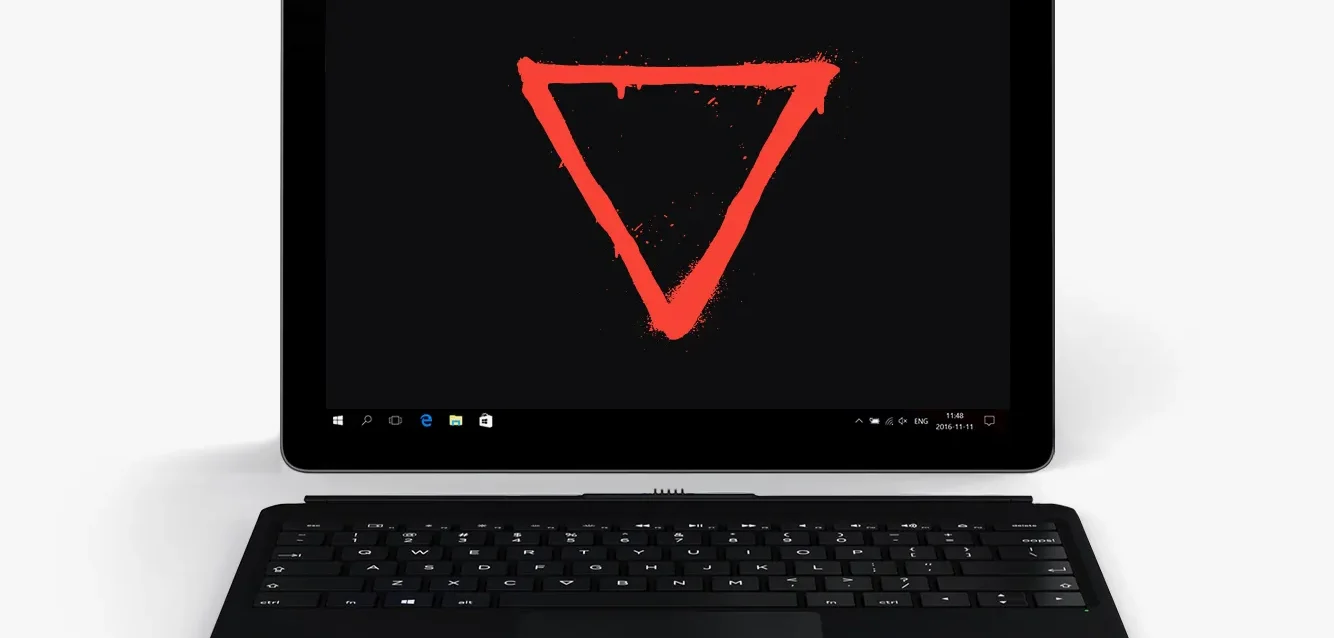
Eve V Laptop Specs
The Eve V represents a distinctive experiment in consumer electronics manufacturing: a premium 2-in-1 laptop developed through direct community participation. Launched in 2017 by the Finnish startup Eve Tech (formerly Eve-Tech), this device emerged from an unconventional design process where potential customers voted on specifications, features, and design elements before production began. This article examines the hardware specifications, market positioning, and manufacturing lessons derived from the Eve V project.
Introduction: The Project V Initiative
Project V began in late 2016 as an attempt to create what its developers called “the world’s first crowd-developed computer.” Unlike traditional crowdfunded products where backers support a predetermined design, Eve Tech invited community members to participate in fundamental design decisions. Over 1,000 community members contributed feedback across forums, surveys, and voting sessions that shaped component selection, form factor, and feature prioritization.
The resulting product, the Eve V, entered a competitive market segment dominated by Microsoft’s Surface Pro and similar convertible devices from established manufacturers. The device shipped to initial backers in mid-2017, positioned as a premium alternative built according to user preferences rather than manufacturer assumptions about consumer needs.
This community-centric approach generated significant media coverage and industry discussion about alternative product development methodologies. The Eve V’s specifications reflected choices made through democratic processes rather than traditional market research or focus group testing.
Concept & Market Position
Competitive Landscape
The 2-in-1 laptop category in 2017 featured several established players. Microsoft’s Surface Pro 4 and the newer Surface Pro (2017) set baseline expectations for detachable keyboard designs with integrated kickstands. Lenovo’s ThinkPad X1 Tablet, HP’s Elite x2, and Dell’s Latitude 7285 competed in the business-oriented segment. Consumer-focused alternatives included the Samsung Galaxy Book and Huawei MateBook.
The Eve V positioned itself against these devices through several differentiating factors. The community development process emphasized feature completeness that other manufacturers omitted due to cost considerations or design philosophy. This manifested in comprehensive port selection, bundled accessories that competitors sold separately, and component choices prioritizing performance over thermal constraints.
Pricing Strategy
Initial pricing placed the Eve V below comparable Surface Pro configurations while including accessories Microsoft sold separately. The base configuration with Intel Core i5 processor, 8GB RAM, and 128GB storage launched at $799, with keyboard cover and pen included. Equivalent Surface Pro configurations without accessories started at $999, with the Type Cover and Surface Pen adding another $230.
Higher-end configurations with Core i7 processors, 16GB RAM, and 512GB storage reached $1,399, maintaining a price advantage over directly comparable Surface Pro models. This pricing reflected the company’s direct-to-consumer model, eliminating traditional retail margins.
Target Demographics
The Eve V targeted technically proficient early adopters willing to support unconventional manufacturing approaches. Community participants during development skewed toward students, creative professionals, and technology enthusiasts who valued specification flexibility over brand recognition. The emphasis on community input attracted users frustrated by limitations in existing 2-in-1 devices.
Hardware Specifications
Processor Options
The Eve V launched with three processor configurations, all utilizing Intel’s seventh-generation Kaby Lake architecture:
Core m3-7Y30 – The entry-level configuration featured this dual-core processor with base clock of 1.0 GHz and turbo boost to 2.6 GHz. The 4.5W TDP enabled fanless operation at the cost of processing performance. This configuration targeted users prioritizing portability and silent operation over computational demands.
Core i5-7Y54 – The mid-tier option provided dual-core performance with 1.2 GHz base clock and 3.2 GHz turbo boost. Also operating at 4.5W TDP with fanless design, this processor delivered approximately 35% better performance than the m3 variant while maintaining silent operation.
Core i7-7Y75 – The high-end configuration utilized this dual-core processor with 1.3 GHz base clock and 3.6 GHz turbo boost. Maintaining the 4.5W TDP and fanless design, this variant offered the highest single-threaded performance available in the fanless form factor during 2017.
All processors included Intel HD Graphics 615, providing integrated graphics performance suitable for display output, video playback, and light gaming. The choice of Y-series processors reflected community prioritization of silent operation and extended battery life over maximum processing power.
Display Technology
The Eve V featured a 12.3-inch display with 2736 × 1824 resolution, matching the Surface Pro’s pixel density at 267 PPI. The IGZO (Indium Gallium Zinc Oxide) panel technology, manufactured by Sharp, offered several advantages over traditional IPS displays.
Color Accuracy – Factory calibration targeted 100% sRGB color gamut coverage with Delta E < 2 for professional color work. Independent testing confirmed actual coverage between 97-99% sRGB with Delta E values averaging 1.5, making the display suitable for photo editing and graphic design.
Brightness and Contrast – Maximum brightness reached 450 nits, exceeding the Surface Pro’s 400-nit specification. This higher brightness improved outdoor visibility and HDR content display. Contrast ratio measured approximately 1200:1, typical for premium IPS-class panels.
Touch and Pen Input – The display supported 10-point multitouch and active pen input with 1024 pressure levels. The N-trig digitizer technology, licensed from Microsoft’s acquisition, provided 0.7mm pen tip accuracy and sub-20ms latency for digital inking applications.
Aspect Ratio – The 3:2 aspect ratio provided 16% more vertical screen space than traditional 16:9 displays at equivalent diagonal measurements. This decision, determined through community voting, prioritized document viewing and web browsing over video consumption.
Memory and Storage
RAM configurations spanned from 8GB to 16GB of LPDDR3-1866 memory soldered directly to the motherboard. The community voted against upgradeable SO-DIMM slots to minimize device thickness and maximize battery capacity within the available chassis volume.
Storage options utilized M.2 2242 PCIe NVMe drives in 128GB, 256GB, and 512GB capacities. Unlike many competing devices with soldered storage, the Eve V implemented user-replaceable SSDs. This design decision directly resulted from community feedback prioritizing long-term upgradability.
The 2242 form factor represented a compromise between device thickness and storage expandability. While M.2 2280 drives offered higher capacities at lower cost-per-gigabyte, the longer form factor would have necessitated larger chassis dimensions that community feedback rejected.
Battery Capacity
The Eve V integrated a 48Wh battery, larger than the Surface Pro 2017’s 45Wh capacity despite similar chassis dimensions. This capacity increase resulted from eliminating internal fan components, allowing battery cells to occupy the recovered volume.
Real-world battery life varied significantly based on configuration and usage patterns. The Core m3 configuration demonstrated 10-12 hours of light productivity tasks (web browsing, document editing) with screen brightness at 50%. Core i5 variants achieved 8-10 hours under similar conditions, while Core i7 configurations typically delivered 7-9 hours.
Power-intensive workloads reduced battery life substantially. Video editing, 3D rendering, or sustained high-CPU utilization depleted batteries in 4-6 hours across all configurations. The fanless design imposed thermal throttling during sustained loads, limiting actual power consumption and extending battery life compared to actively cooled alternatives.
Connectivity and Ports
Port selection represented one of the Eve V’s most distinctive features, directly influenced by community prioritization of connectivity versatility.
USB Configuration – Two USB 3.1 Gen 2 Type-C ports with Thunderbolt 3 support provided 40 Gbps bandwidth each. One port delivered power delivery for charging while simultaneously supporting data transfer and display output. A single USB 3.0 Type-A port maintained compatibility with legacy peripherals without requiring dongles.
Display Outputs – Both Thunderbolt 3 ports supported DisplayPort Alternate Mode, enabling dual 4K external displays at 60Hz or a single 5K display. This capability exceeded most competing 2-in-1 devices limited to single external display support.
Audio – A 3.5mm combination headphone/microphone jack utilized Realtek ALC298 codec. Dual front-facing stereo speakers featured Dolby Audio Premium tuning for multimedia consumption.
Wireless – Intel Dual Band Wireless-AC 8265 provided 802.11ac Wi-Fi with 2×2 MIMO and Bluetooth 4.2 connectivity. Theoretical maximum wireless speeds reached 867 Mbps, though real-world performance typically delivered 400-500 Mbps with quality routers.
Expansion – A microSD card reader supporting UHS-I speeds (up to 104 MB/s) provided storage expansion without occupying USB ports. Community voting selected this feature despite associated cost and engineering complexity.
The comprehensive port selection contrasted sharply with contemporary trends toward port minimalism. The Surface Pro 2017 offered only a single USB 3.0 port, mini DisplayPort, and Surface Connect port, requiring adapters for many connectivity scenarios.
Design & Form Factor
Chassis Construction
The Eve V chassis utilized CNC-machined aluminum for the display assembly and magnesium alloy for the keyboard base. This material combination balanced structural rigidity, thermal properties, and weight distribution.
The display assembly measured 292.1mm × 201.4mm × 8.9mm, with weight varying from 820g (Core m3) to 850g (Core i7) depending on component configuration. When combined with the keyboard cover (approximately 350g), total system weight reached 1170-1200g, competitive with the Surface Pro’s similar total weight.
Build quality generally received positive assessments in independent reviews, with consistent panel gaps and solid construction. The aluminum display housing demonstrated minimal flex during handling, while the magnesium keyboard base provided adequate palm rest rigidity.
Kickstand Mechanism
The integrated kickstand featured a friction hinge design enabling continuous adjustment from approximately 15 to 150 degrees. This range exceeded the Surface Pro’s kickstand, particularly in the fully reclined positions useful for pen input in studio mode.
Kickstand rigidity proved adequate for stable positioning across the adjustment range, though some users reported slight wobble during aggressive typing on soft surfaces. The hinge mechanism utilized stainless steel components designed for 20,000 adjustment cycles before noticeable degradation.
The kickstand occupied approximately 35% of the rear panel surface area, incorporating ventilation slots that compensated for the lack of active cooling. These slots enabled passive airflow across the motherboard and SoC, essential for sustained performance in the fanless design.
Keyboard Cover
The included keyboard cover featured 1.3mm key travel, exceeding Microsoft’s Type Cover but below traditional laptop keyboards averaging 1.5-1.8mm. Key spacing matched desktop keyboard standards at 19mm pitch, avoiding the cramping common in compact keyboard designs.
Keyboard backlighting provided three brightness levels with even illumination across the key caps. The backlight automatically adjusted based on ambient light sensors or manual user control.
The precision trackpad measured 105mm × 75mm, utilizing a Microsoft Precision Touchpad driver for gesture support and smooth tracking. The trackpad surface employed glass coating for reduced friction and improved durability compared to plastic alternatives.
Keyboard attachment utilized a proprietary magnetic connector combining power and data transmission. The connection system supported multiple attachment angles: flat against the display bezel for typing or folded against the kickstand for compact tablet mode. Magnetic alignment guides ensured consistent attachment positioning.
Active Pen
The bundled Eve V Pen utilized N-trig technology with 1024 pressure sensitivity levels. Pen dimensions (142mm length, 9.5mm diameter, 16g weight) approximated traditional ballpoint pens for familiar ergonomics.
Pressure curve customization through driver software enabled artists to adjust pressure response matching their drawing style. Tilt detection supported up to 40 degrees of pen angle recognition for shading effects in compatible applications.
Battery life reached approximately 12 months of average use powered by a single AAAA battery. The pen featured a clip-on design and included an eraser button for digital erasing functions.
Latency measurements in optimal conditions registered 18-22ms between pen movement and on-screen cursor response, competitive with contemporary pen-enabled devices. Parallax (offset between pen tip and cursor position) measured less than 1mm across most screen regions.
Thermal Management
The fanless design necessitated passive thermal management strategies. The aluminum chassis functioned as a heat spreader, conducting thermal energy from the SoC to the device perimeter for dissipation.
Internal graphite thermal pads transferred heat from the processor die to the chassis. This thermal pathway enabled sustained boost clock speeds for approximately 20-30 seconds before thermal throttling engaged to maintain skin temperature below 45°C.
Community discussion during development addressed the fanless constraint extensively. Voting results favored silent operation over maximum sustained performance, accepting thermal throttling as an acceptable trade-off for eliminating fan noise.
Surface temperature under heavy load reached 38-42°C on the rear panel, concentrated near the kickstand hinge. The display front remained cooler at 32-36°C due to the air gap between the display and motherboard assembly. These temperatures remained within comfortable limits for lap use during typical productivity tasks.
Community Influence on Product Design
Development Process
The community development process spanned approximately five months from initial concept to final specification lock. Eve Tech structured participation through forums, surveys, and explicit voting rounds on specific design decisions.
Phase 1: Concept Validation – Initial discussions established product category (2-in-1 convertible), target price range, and primary use cases. Approximately 800 community members participated in early forums, establishing consensus for a Surface Pro competitor with enhanced features.
Phase 2: Component Selection – Community voting determined processor options, RAM configurations, storage types, and display specifications. Decisions required simple majority votes, with some features achieving super-majority support (>75%) indicating strong community preference.
Phase 3: Design Features – Port selection, kickstand angle range, keyboard specifications, and included accessories underwent separate voting rounds. This phase generated the most debate, particularly regarding port selection trade-offs against device thickness.
Phase 4: Refinement – Final voting addressed aesthetic elements (color options, logo placement, packaging design) and confirmed previous decisions before manufacturing commitment.
Notable Community Decisions
Several specifications directly resulted from community preferences that diverged from typical manufacturer choices:
Thunderbolt 3 Inclusion – Despite significant cost implications (approximately $8-12 per port in licensing fees and controller components), 87% of voting community members prioritized Thunderbolt 3 support. This decision enabled professional workflows requiring high-bandwidth external devices.
User-Replaceable Storage – Community voting (73% in favor) mandated replaceable M.2 storage despite engineering challenges. This decision required additional chassis thickness to accommodate drive access and mounting mechanisms that soldered storage would eliminate.
Bundled Accessories – Instead of higher base specs with sold-separately accessories, community preference (81% agreement) selected lower entry price with included keyboard and pen. This decision reflected user value perception prioritizing complete usability over maximum specifications.
Fingerprint Reader Omission – Community voting (62% against) excluded fingerprint authentication in favor of Windows Hello facial recognition through the front camera. This saved approximately $4-6 per unit while maintaining biometric login capability.
Limitations of Community Design
The community development process revealed inherent constraints in collective decision-making for hardware products:
Technical Expertise Variance – Not all community participants possessed equivalent hardware knowledge. Some voting outcomes reflected preference misinformation about technical trade-offs, particularly regarding thermal design and battery capacity relationships.
Vocal Minority Influence – Active forum participants (approximately 200 users) contributed disproportionately to discussions compared to silent voters. This created potential bias where verbose individuals influenced opinion beyond their numerical representation.
Delayed Decision-Making – The iterative voting process extended development timeline compared to traditional product design. Component availability windows nearly closed before final specification lock, risking parts obsolescence or price increases.
Compromise Specifications – Majority voting sometimes produced configurations that satisfied no one fully rather than optimizing for specific use cases. The fanless design particularly demonstrated this compromise, limiting performance for power users while providing only moderate battery gains for ultra-light users.
Lessons for Laptop Manufacturing
Direct Customer Input Viability
The Eve V demonstrated both potential and limitations of direct customer participation in product specification. Positive outcomes included feature prioritization aligned with actual user needs rather than assumed preferences. The comprehensive port selection and included accessories directly addressed common customer complaints about competing devices.
However, technical complexity limits effective democratic decision-making. Thermal design, component compatibility, and manufacturing feasibility require specialized expertise that community voting cannot replicate. The fanless design constraint exemplifies this limitation—community members voted for silent operation without fully understanding performance implications or alternative cooling solutions.
Optimal implementation likely combines customer input on feature priorities with manufacturer expertise on technical implementation. Customers effectively communicate needs (“I require multiple external displays”) while manufacturers determine optimal technical solutions (Thunderbald 3 versus dedicated video ports).
Manufacturing and Fulfillment Challenges
Eve Tech encountered significant fulfillment difficulties that provide cautionary lessons for hardware startups:
Supply Chain Complexity – Coordinating component procurement, assembly, quality control, and distribution exceeded initial project timeline estimates. First shipments arrived approximately three months later than originally projected, testing backer patience.
Quality Control – Early production units exhibited variable build quality, with some units showing screen uniformity issues, loose kickstand hinges, or charging irregularities. These problems necessitated replacement units and damaged brand reputation.
Support Infrastructure – The company underestimated warranty support requirements, leading to slow response times for defective units and inadequate replacement part availability. Customer service capacity scaled poorly with sales volume.
Financial Sustainability – Direct-to-consumer margins proved insufficient for long-term sustainability given warranty costs, product development investments, and operating expenses. Eve Tech faced financial difficulties within 18 months of product launch, ultimately affecting future product development.
Market Reception and Sales Performance
Public sales performance data remains limited, but available information suggests modest commercial success:
Initial Backing – The crowdfunding campaign and pre-orders generated approximately $3 million in committed purchases, indicating viable market interest for community-developed devices.
Production Volume – Estimated production volume reached 5,000-8,000 units across all configurations, orders of magnitude below major manufacturer production scales. Limited volume prevented economy-of-scale benefits in component pricing and manufacturing costs.
Review Reception – Technology media reviews generally praised specifications and included accessories while noting build quality inconsistencies and support concerns. Average review scores approximated 7.5-8 out of 10, indicating a competent but not exceptional product.
Customer Satisfaction – Community satisfaction among received units appeared high based on user forums, with most complaints centered on delivery delays rather than product quality. Users who prioritized the specific feature set the community selected reported satisfaction with the value proposition.
Implications for Product Development
Several broader lessons emerge from the Eve V project applicable to hardware product development:
Specification Comprehensiveness – Community input identified feature omissions in mainstream products that manufacturers assumed were unimportant. The strong preference for multiple port types and bundled accessories suggests manufacturers may underestimate these features’ value.
Niche Market Viability – Products targeting specific feature combinations poorly served by mainstream manufacturers can find audiences despite limited marketing budgets. The Eve V’s community development process itself generated media coverage exceeding traditional advertising reach.
Startup Hardware Risks – Manufacturing physical products requires capital, expertise, and infrastructure that software-focused startups may underestimate. Eve Tech’s subsequent difficulties illustrate risks inherent in hardware ventures beyond product design quality.
Customer Expectation Management – Direct customer involvement creates elevated expectations for product delivery, support quality, and company transparency. Any deviation from promised specifications or timelines generates disproportionate customer disappointment compared to traditional product launches.
Conclusion
The Eve V represents an instructive experiment in alternative hardware development methodologies. The device demonstrated that community-driven specification selection can produce competitive products addressing real user needs inadequately served by established manufacturers. Features like comprehensive port selection, bundled accessories, and user-replaceable storage directly resulted from customer priorities expressed through democratic processes.
Technical specifications placed the Eve V competitively within the 2-in-1 category during its 2017 release. The combination of seventh-generation Intel processors, high-resolution display, Thunderbolt 3 connectivity, and fanless operation compared favorably to the Surface Pro and similar devices. Pricing below comparable configurations from major manufacturers enhanced the value proposition.
However, the project also illustrated challenges inherent in community-driven product development and hardware startups more broadly. Manufacturing complexity, quality control consistency, support infrastructure requirements, and financial sustainability presented obstacles that product specification excellence alone could not overcome.
For the laptop manufacturing industry, the Eve V demonstrates both opportunity and limitation. Customer input identifies genuine needs and value priorities that market research may miss. Engaged communities generate marketing value and early adoption enthusiasm. Yet technical product development requires expertise beyond democratic decision-making, and hardware production demands resources and experience that enthusiasm cannot replace.
Frequently Asked Questions
Is the Eve V still available for purchase?
The Eve V is no longer in active production or available for direct purchase from Eve Tech. The company faced financial and operational challenges following the initial production run in 2017-2018. Secondary market availability exists through platforms like eBay or hardware enthusiast forums, where used units occasionally appear. Prospective buyers should exercise caution regarding warranty status and device condition when considering secondary market purchases. No official support or replacement parts remain available from the manufacturer.
How does the Eve V compare to the Microsoft Surface Pro?
The Eve V and Surface Pro share similar form factors and target use cases but differ in several key specifications. The Eve V includes bundled keyboard and pen accessories that Microsoft sells separately, reducing total cost of ownership. Port selection favors the Eve V with dual Thunderbolt 3 ports and USB Type-A compared to the Surface Pro’s single USB port and mini DisplayPort. Both devices utilize comparable Intel seventh-generation processors and similar display resolutions. The Surface Pro benefits from Microsoft’s established support infrastructure and broader accessory ecosystem, while the Eve V offers superior included value and connectivity options. Build quality and reliability generally favor the Surface Pro due to Microsoft’s manufacturing experience and quality control processes.
Can the storage be upgraded in the Eve V?
Yes, the Eve V features user-replaceable M.2 2242 NVMe storage. The bottom chassis panel can be removed after extracting visible screws, providing access to the storage slot. Users can replace the original drive with higher capacity M.2 2242 drives available from various manufacturers. This upgradability represents a deliberate design decision resulting from community feedback prioritizing long-term expandability. The 2242 form factor limits maximum available capacities compared to longer 2280 drives common in traditional laptops, but multiple manufacturers produce compatible drives in capacities up to 1TB. RAM remains soldered to the motherboard and cannot be upgraded after purchase.
What is the battery life expectancy?
Battery life varies significantly based on configuration and usage patterns. The Core m3 configuration achieves approximately 10-12 hours during light productivity tasks including web browsing and document editing with screen brightness set to 50%. Core i5 variants deliver 8-10 hours under comparable conditions, while Core i7 configurations typically provide 7-9 hours. Power-intensive applications such as video editing, 3D rendering, or sustained high-CPU workloads reduce battery life to 4-6 hours across all configurations. The fanless thermal design imposes performance throttling during sustained loads, which paradoxically extends battery life compared to actively cooled alternatives by limiting power consumption. Real-world usage combining various tasks typically yields 6-8 hours of mixed productivity work.
Does the Eve V support external graphics cards?
The dual Thunderbolt 3 ports theoretically support external GPU enclosures through the 40 Gbps bandwidth and PCIe connectivity. However, several limitations constrain practical eGPU usage. The Y-series processors, while capable, represent lower-performance chips that may bottleneck high-end graphics cards. The single-lane PCIe connection through Thunderbolt 3 on some units limits bandwidth compared to desktop PCIe x16 slots. Users have reported mixed success with eGPU implementations, with compatibility dependent on specific enclosure models, graphics cards, and driver configurations. Gaming performance improvements remain modest due to CPU limitations, though professional GPU-accelerated applications like video rendering may benefit more substantially. The device’s power delivery system and thermal constraints make eGPU usage a niche application rather than a primary use case.
What operating systems are compatible with the Eve V?
The Eve V ships with Windows 10 and supports Windows 11 following Microsoft’s release. All hardware components include Windows drivers with full functionality. Linux compatibility exists but requires manual driver configuration for optimal performance. The Intel HD Graphics 615, Wi-Fi adapter, and audio components generally function under mainstream Linux distributions including Ubuntu and Fedora. Touch and pen input require additional configuration and may not achieve Windows-level precision or palm rejection. The precision trackpad operates adequately under Linux with libinput drivers. Dual-boot configurations function normally given the standard x86 architecture. Some Linux users report improved thermal performance and battery life compared to Windows, though this varies by distribution and kernel version. macOS installation through Hackintosh methods remains theoretically possible but impractical given driver compatibility challenges and lack of community support for this specific hardware configuration.
How does the fanless design affect performance?
The fanless design eliminates operational noise but introduces performance constraints through thermal throttling. Under sustained workloads, the processor maintains boost clock speeds for approximately 20-30 seconds before thermal management reduces frequencies to maintain safe operating temperatures. Light productivity tasks rarely trigger throttling, allowing the processor to operate near maximum turbo frequencies. Sustained rendering, compilation, or computational tasks force clock speed reductions of 30-50% compared to peak boost specifications. The aluminum chassis functions as a passive heat spreader, conducting thermal energy to the device perimeter. Surface temperatures reach 38-42°C on the rear panel during heavy loads, remaining within comfortable limits for lap use. Users prioritizing sustained performance over silent operation may find actively cooled alternatives more suitable for their workflows, while those valuing quiet operation for office environments or noise-sensitive settings benefit from the fanless design despite performance compromises.