


Is Shein Safe in 2026
Quick Verdict: Shein is generally safe with significant caveats for casual online shopping. The platform is a legitimate business that processes millions of orders daily and uses standard SSL encryption for transactions. However, Shein carries a troubling track record on data privacy — including a massive 2018 breach affecting 39 million accounts, a €150 million French regulatory fine in 2025, and app permissions far more invasive than competitors like Zara or H&M.
Safety Rating: 5.5/10 Main Risk: Extensive data collection practices combined with a history of mishandling user data and misleading consumers about breaches. Our Advice: Shop through the website (not the app) using PayPal or a virtual credit card, and never store payment details on your account.
Last verified: February 2026
Shein Safety Scorecard
| Category | Rating | Details |
|---|---|---|
| Data Privacy | ❌ High Risk | 2018 breach exposed 39M accounts; €150M CNIL fine in Sept. 2025 for cookie violations; app requests camera, location, calendar, and microphone permissions |
| Payment Security | ✅ Strong | SSL/TLS encryption, PayPal integration, credit card support with PCI DSS alignment |
| Scam Risk | ⚠️ Moderate | Legitimate platform, but fake Shein sites proliferate; counterfeit products and misleading listings reported |
| Account Security | ⚠️ Moderate | 2FA available but not enabled by default; no confirmed large-scale breach since 2018 |
| Customer Support | ❌ Poor | No phone support; chatbot-driven system with widespread complaints on BBB (F rating) and Sitejabber (1.9/5) |
| Product Safety | ⚠️ Moderate | Some items flagged for elevated chemical levels; 2.5M product tests targeted in 2025 but transparency gaps remain |
| Legal Compliance | ⚠️ Mixed | Multiple ongoing lawsuits (IP theft, RICO allegations); CNIL fine; OECD non-compliance findings in France |
| Overall | 5.5/10 | Safe enough for occasional purchases with precautions, but well below industry standards on privacy and support |
What Is Shein?
Shein is a global fast-fashion e-commerce platform founded in China in 2008 and now headquartered in Singapore. The company generated approximately $38 billion in worldwide sales in 2024, making it the largest fast-fashion retailer globally with an estimated 18% market share — surpassing both H&M and Zara’s parent company Inditex.
The platform operates exclusively online, shipping directly from manufacturers (primarily in China) to consumers in over 150 countries. Shein’s business model revolves around ultra-fast production cycles — new designs can go from concept to listing in as few as 3 to 7 days — enabled by AI-driven trend analysis and a network of over 6,000 supplier factories. The company adds roughly 2,000 new items to its catalog daily.
With over 88 million active shoppers worldwide and approximately 235 million app downloads in 2025 alone (Backlinko), Shein is particularly popular among Gen Z consumers, with around 30% of US and UK Gen Z shoppers reporting purchases in the past 12 months. The average customer spends about $100 per year on the platform.
Is Shein Safe? The Full Analysis
Data Privacy: What Shein Collects About You
This is where Shein’s safety record looks most concerning. The platform collects a wide range of personal data — names, email addresses, payment details, browsing behavior, location data, and device information. This level of collection is standard for large e-commerce platforms. What sets Shein apart is the breadth of permissions its mobile app requests and the company’s documented history of mishandling that data.
The App Permissions Problem
The Shein mobile app requests access to your camera, storage, location, calendar, and microphone. While these permissions are technically optional and require user approval, this request set is significantly more expansive than what competitors typically need. Apps from retailers like Zara, H&M, or ASOS generally request far fewer device permissions for equivalent shopping functionality.
Security researchers have also noted that the Shein app contains shifting tracking libraries across different versions, making it difficult for users to maintain a consistent understanding of what data is being collected and shared. In 2023, a documented bug in the Shein Android app (version 7.9.2) caused it to periodically capture and transmit clipboard data to a remote server — a serious privacy concern since clipboards can contain passwords, bank details, or other sensitive information.
The 2018 Data Breach: 39 Million Accounts Exposed
In 2018, hackers infiltrated Shein’s systems and accessed personal information — including names, email addresses, hashed passwords, and credit card details — belonging to 39 million customers worldwide. The New York Attorney General’s investigation revealed several aggravating factors:
- Shein’s parent company Zoetop initially claimed only 6.42 million accounts were affected — the true number was six times higher
- The company publicly stated there was “no evidence” that credit card information was stolen, despite having been informed by its payment processor that card data was found for sale on a hacking forum
- Zoetop only contacted 6.4 million of the 39 million affected users, leaving 32.5 million account holders unaware their data had been compromised
- The company used weak password hashing algorithms and stored some credit card details in plain text log files
In 2022, New York Attorney General Letitia James fined Zoetop $1.9 million for mishandling the breach and misrepresenting its severity. As part of the settlement, Shein was required to implement a comprehensive information security program and submit annual third-party security assessments through 2027 (Foley & Lardner).
The €150 Million CNIL Fine (September 2025)
France’s data protection authority, the CNIL, imposed a €150 million fine on Shein’s Irish subsidiary in September 2025 — one of the largest cookie-related penalties ever issued in Europe. The investigation, which began in August 2023, found that Shein:
- Placed advertising cookies on users’ devices before they could accept or reject them
- Continued to install and read tracking cookies even after users clicked “Reject All”
- Provided incomplete information in its cookie banners about the purposes of tracking and the identity of third parties receiving data
The CNIL noted that approximately 12 million French residents visit shein.com each month, amplifying the scale of the violation. Shein stated it had since updated its systems to comply with the regulation but announced it would appeal the fine, calling it “totally disproportionate” (CNIL).
Additionally, in January 2025, Austrian privacy group noyb filed a complaint against Shein for unlawfully transferring European users’ data to China in violation of the GDPR.
How Shein Compares: Unlike Amazon or established EU retailers that have adapted their data practices over years of regulatory pressure, Shein’s privacy infrastructure appears to be catching up reactively rather than proactively. Competitors like ASOS and Zalando have clearer consent mechanisms and more transparent data-sharing policies.
Verdict: ❌ High Risk — Shein’s data privacy track record is the platform’s single biggest safety concern. The combination of a massive historical breach, aggressive app tracking, and repeated regulatory penalties makes this a category where Shein significantly underperforms its competitors.
Payment Security: Is Your Money Safe on Shein?
On the transaction side, Shein performs considerably better. The platform uses industry-standard SSL/TLS encryption to protect personal and payment data during transmission. Shein supports trusted payment methods including major credit cards (Visa, Mastercard, American Express), PayPal, Apple Pay, Google Pay, and Afterpay/Klarna for installment payments.
Security Measures in Place
Shein states that its data security practices are aligned with several recognized standards, including:
- PCI DSS (Payment Card Industry Data Security Standards) for handling card data
- NIST (National Institute of Standards and Technology) security frameworks
- ISO information security guidelines
The availability of PayPal as a payment method is particularly significant for buyer protection. PayPal transactions keep your financial details off Shein’s servers entirely, and PayPal’s buyer protection program offers recourse if items are not received or are significantly different from the description.
What to Watch For
While the payment infrastructure itself is secure, several practical issues can affect your financial experience:
- Dynamic pricing complaints: Multiple Trustpilot reviewers report that item prices appear to increase after being added to favorites or left in the cart — a common but frustrating e-commerce tactic
- Refund difficulties: BBB complaints frequently cite challenges in obtaining refunds, especially when items are marked as “delivered” but not received
- Wallet balance issues: Some users report difficulties using Shein wallet credits or points balances, with accounts occasionally flagged by “risk control” systems that block legitimate transactions
How Shein Compares: Shein’s payment security is broadly on par with other major e-commerce platforms. Amazon, ASOS, and H&M all offer similar encryption standards and payment method diversity. The key difference is in post-purchase dispute resolution, where Shein falls short.
Verdict: ✅ Strong — Payment processing itself is well-protected through standard encryption and trusted third-party payment options. The risks here are not in the transaction security but in what happens after you pay (refunds, disputes, and customer support).
Scam Risk: Common Shein Scams to Watch For
Shein itself is not a scam — it is a registered business that fulfills millions of orders globally. However, the platform’s massive popularity and ultra-low pricing model create fertile ground for several types of fraud, both on and around the platform.
1. Fake Shein Websites and Phishing Pages
The most dangerous scam risk is not on Shein itself but in the ecosystem around it. Fake websites mimicking Shein’s look and feel routinely appear, often promoted through social media ads, email blasts, or text messages offering “exclusive” discounts. These counterfeit sites harvest payment details and personal information. Always verify that the URL is shein.com (or your region’s official variant like us.shein.com or fr.shein.com) and that the connection shows “https://” before entering any data.
2. Counterfeit and Knockoff Products
Despite requiring suppliers to certify that their products are not counterfeit, Shein has faced multiple trademark infringement lawsuits from major brands. In March 2025, Coach filed a lawsuit alleging Shein was selling counterfeit Coach items. Oakley previously accused Shein of stealing its sunglasses designs — and after Shein agreed to remove them, the same products reportedly reappeared the following year. Ralph Lauren and Deckers (owner of UGG and HOKA) have pursued similar disputes (Norton).
For shoppers, this means that brand-name items on Shein should be treated with heavy skepticism. If you see a well-known brand at a fraction of its normal price, it is very likely not authentic.
3. “Too Good to Be True” Social Media Giveaways
Fake Shein giveaway promotions circulate regularly on Instagram, TikTok, Facebook, and via email. These typically promise free gift cards or massive discounts in exchange for personal information, survey completion, or clicking a link. Shein does run legitimate promotions through its official app and social accounts, but any promotion asking you to visit a third-party site or provide banking details is fraudulent.
4. Product Quality Misrepresentation
While not a “scam” in the traditional sense, many shoppers report receiving items that look significantly different from the product photos. Fabrics may be thinner, colors may differ, and sizing is frequently inconsistent — Shein’s sizing follows Chinese manufacturing standards, which often do not align with US or EU norms. TikTok and YouTube are full of “Shein haul” comparisons showing the gap between listed images and delivered products.
5. Delivery Scams and Missing Packages
A recurring complaint pattern across BBB, Trustpilot, and Sitejabber involves orders marked as “delivered” that never actually arrived. When customers dispute these, Shein’s logistics partners sometimes claim the package was “signed for” — at addresses that do not have reception areas or by people the recipient has never heard of. Obtaining refunds in these situations is notoriously difficult.
How Shein Compares: Scam risks around fake websites and phishing are common to all popular e-commerce platforms, including Amazon and Walmart. However, Shein’s counterfeit product problem is more pronounced than at established Western retailers that maintain stricter brand partnerships and supplier verification.
Verdict: ⚠️ Moderate — The platform itself is not a scam, but the surrounding ecosystem of fake sites, phishing, and on-platform quality misrepresentation creates real risk. Due diligence is essential.
Account Security: How Well Does Shein Protect You?
Shein offers two-factor authentication (2FA) for user accounts, adding an extra verification step during login. This is a positive security feature, though it is not enabled by default — users must actively opt in through their account settings.
2FA and Login Security
When enabled, Shein’s 2FA sends a verification code via email or SMS before granting account access. This significantly reduces the risk of unauthorized access even if login credentials are compromised. Shein also supports login through Apple ID, Google, and Facebook accounts, which means users can leverage whatever security measures those platforms offer (including hardware keys and authenticator apps).
Breach History and Current Posture
The 2018 data breach remains the most significant security incident in Shein’s history. Since then, no confirmed large-scale breaches have been publicly reported. As part of its 2022 settlement with the New York Attorney General, Shein was required to:
- Implement a comprehensive information security program
- Establish safeguards and controls for handling, storing, and processing personal information
- Submit annual third-party security assessments through 2027
Shein states that its security practices now align with standards from ISO, NIST, and PCI DSS. However, the company does not publish detailed information about its specific security infrastructure, which limits independent verification.
Password Practices
At the time of the 2018 breach, Shein was found to be using weak password hashing algorithms. The company has since upgraded its security practices, though specific details about current hashing methods are not publicly disclosed. Users should treat Shein like any online account and use a strong, unique password rather than reusing credentials from other services.
How Shein Compares: Major platforms like Amazon, eBay, and ASOS all offer 2FA. Amazon’s implementation is somewhat more robust, supporting authenticator apps and hardware security keys in addition to SMS. Shein’s 2FA, while functional, is limited to email and SMS verification.
Verdict: ⚠️ Moderate — 2FA availability is good, but the fact it is not default, combined with limited transparency about security infrastructure and the 2018 breach history, keeps this at a cautionary rating.
Customer Support: Can You Get Help When Things Go Wrong?
Customer support is consistently Shein’s weakest point, and the data from multiple review platforms paints a clear picture.
Available Support Channels
Shein does not offer phone-based customer support. All inquiries are handled through:
- An in-app chatbot (the primary support channel)
- A web-based live chat accessible through the Help Center
- Email-based ticket submission
The chatbot is AI-driven and handles most initial inquiries automatically. Users frequently report that the bot provides generic, scripted responses that do not address their specific issues. Escalation to a human agent is possible but often requires persistence and multiple attempts.
What Review Platforms Say
The numbers tell a stark story:
- Trustpilot (Global): 3.9/5 based on 348,000+ reviews — decent at first glance, but the US-specific Trustpilot page rates Shein at 1.7/5
- Sitejabber: 1.9/5 from nearly 5,000 reviews, with the majority citing customer service and delivery issues
- BBB (Better Business Bureau): F rating — Shein is not BBB accredited. The listing shows thousands of complaints over the past three years, with recurring themes around undelivered items, refund denials, and unresponsive support
- Reddit and Mumsnet: User discussions frequently describe the return process as frustrating, with free returns limited to the first item per order and a $7.99 fee for additional items
Common Complaint Patterns
Three recurring issues dominate across all platforms:
- Packages marked “delivered” but never received — Shein and its logistics partners often side with the carrier’s tracking data rather than the customer’s account of what actually happened
- Refund denials on legitimate returns — Multiple users report returns rejected for vague “hygiene” or “quality” reasons even when items were tried on briefly and returned in original packaging
- Wallet and account restrictions — Some users report their Shein wallet balances or point systems being frozen by “risk control” systems with contradictory explanations from different support representatives
How Shein Compares: Amazon’s customer support is widely regarded as industry-leading, with phone callback options, chat escalation, and a strong buyer protection philosophy. H&M and Zara both offer phone support and physical store returns. ASOS provides live chat with human agents. Shein’s chatbot-first, no-phone approach puts it significantly behind these competitors.
Verdict: ❌ Poor — The absence of phone support, over-reliance on automated chatbots, and widespread reports of refund difficulties make customer support Shein’s most operationally weak area. If something goes wrong with your order, expect an uphill battle.
Legal & Regulatory: Where Does Shein Stand?
Shein faces a complex and increasingly hostile regulatory landscape across multiple jurisdictions.
Corporate Structure and Jurisdiction
Shein was founded in China and is now headquartered in Singapore, with operational subsidiaries across the US, EU, and other markets. This multi-jurisdictional structure adds complexity when it comes to regulatory accountability and consumer protection enforcement. The company’s US operations are based in Los Angeles, California.
Key Regulatory Actions and Legal Disputes
| Date | Action | Details |
|---|---|---|
| 2018 | Data breach | 39M accounts compromised; company misrepresented scope |
| 2022 | NY AG fine | $1.9M penalty for mishandling breach disclosure |
| March 2025 | Coach lawsuit | Trademark infringement claim over counterfeit products |
| 2025 | Noyb GDPR complaint | Austrian privacy group alleges unlawful EU-to-China data transfers |
| Sept. 2025 | CNIL fine | €150M for cookie consent violations in France |
| Oct. 2025 | OECD investigation | French OECD agency finds non-compliance with responsible business conduct guidelines |
| 2025 | Internal overhaul | Business of Fashion reports Shein strengthening internal compliance controls amid mounting fines |
Intellectual Property Disputes
Beyond data privacy, Shein faces sustained legal pressure over alleged intellectual property theft. A 2023 federal lawsuit alleged that Shein’s AI-driven design algorithm systematically copies copyrighted designs from US designers, constituting racketeering activity under the RICO Act. Brands including Coach, Oakley, Ralph Lauren, and Deckers (UGG, HOKA) have pursued separate IP claims (Clark Hill).
US Tariff Impact (2025)
In 2025, the US closed the “de minimis” tariff exemption that had allowed Shein’s low-value packages to enter duty-free. New tariffs reaching up to 145% on some Chinese shipments, later reduced to around 30% for commercial packages, forced Shein to raise US prices — with increases averaging 10% overall, and some categories (health and beauty, home goods) seeing 30-50%+ increases. This ongoing trade policy shift directly affects the value proposition that made Shein popular with US shoppers.
Labor and Ethical Investigations
Investigative journalism has documented concerning conditions in parts of Shein’s supply chain, including reports of 17-hour shifts with pay as low as $20 per day and pay deductions for mistakes. A Channel 4 documentary exposed these conditions with undercover footage. Shein’s own 2023 sustainability report acknowledged finding cases of child labor and minimum wage violations among its suppliers. In France, a Change.org petition to ban Shein has surpassed 270,000 signatures.
In response, Shein has committed to spending an estimated $15 million on compliance initiatives in 2025, including expanding partnerships with 15 internationally recognized testing agencies (Bureau Veritas, Intertek, SGS, TÜV SÜD, among others) and targeting 2.5 million product safety and quality tests — a 25% increase over 2024 (Shein Group).
How Shein Compares: Established retailers like H&M and Zara’s parent Inditex also face periodic criticism over labor practices, but they have decades of regulatory adaptation and publish more comprehensive sustainability reports. Shein’s regulatory exposure is significantly higher and more recent, with active enforcement actions in multiple markets simultaneously.
Verdict: ⚠️ Mixed — Shein is legal and operates in compliance with basic commercial laws, but the volume and severity of ongoing regulatory actions, IP disputes, and labor concerns represent material risk that is not fully resolved by the company’s recent compliance investments.
Red Flags When Using Shein
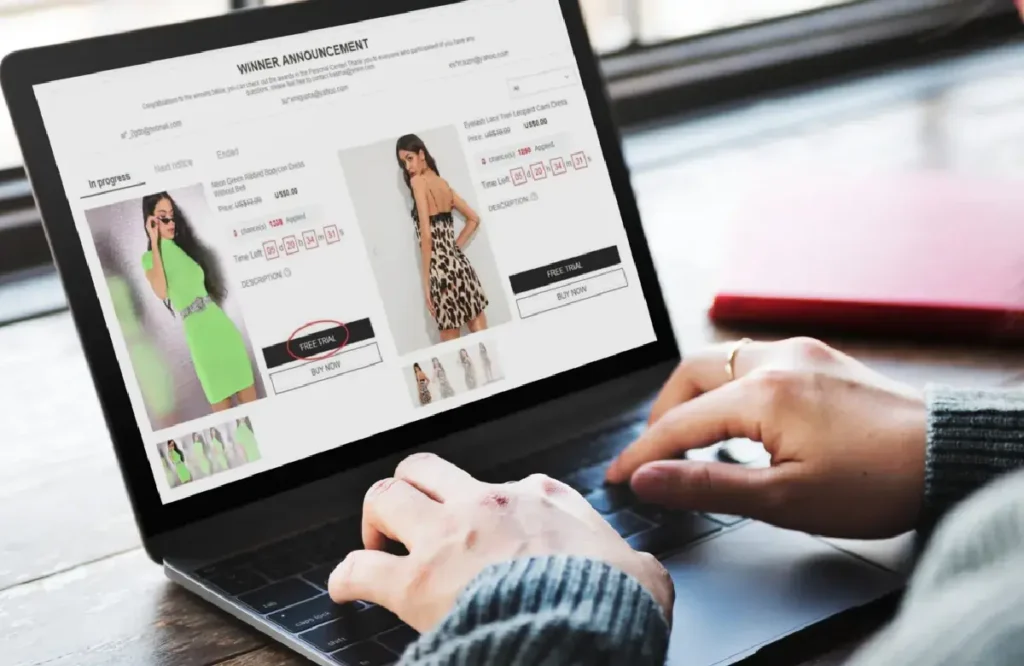
Watch out for these warning signs that can help you avoid problems:
1. URLs that are not exactly shein.com — Fake Shein websites are common. If an ad or email links to a domain that is anything other than the official shein.com (or your regional variant), do not enter any personal or payment information. Bookmark the real site and always navigate directly.
2. Emails or texts requesting personal data — Shein will never ask you to verify your identity by providing bank details, passwords, or social security numbers via email or text. Any such message is a phishing attempt, regardless of how legitimate it looks.
3. Brand-name products at deep discounts — If you see a Nike, Coach, or other major brand listed on Shein at a fraction of its retail price, it is almost certainly counterfeit. Shein’s core catalog is its own unbranded fast-fashion items.
4. Items with no or very few reviews — New listings on Shein have no quality verification from other buyers. Items with many reviews and customer-uploaded photos provide a much more realistic picture of what you will actually receive.
5. Aggressive app permissions requests — If the Shein app asks for access to your camera, contacts, calendar, or microphone for basic shopping, decline these permissions. You can browse and purchase without granting most of them. Better yet, shop through the mobile website rather than the app to limit data collection.
6. Flash sales creating artificial urgency — Countdown timers and “only X left” notifications are gamification tactics designed to pressure fast purchasing. Take time to read reviews and verify sizing before buying, regardless of what the countdown says.
7. Return policy fine print — The first item per order can usually be returned free, but additional returns incur a $7.99 shipping fee. Some categories (lingerie, jewelry, cosmetics, pet products) are non-returnable. Understand these terms before purchasing.
How to Use Shein Safely: 9 Essential Tips
If you decide to shop on Shein, these specific steps will significantly reduce your exposure to the platform’s known risks.
1. Shop through the website, not the app — The Shein mobile app requests extensive device permissions (camera, location, calendar, microphone, storage) and contains aggressive tracking frameworks that shift between versions. The mobile browser version of shein.com offers the same shopping functionality with far less data exposure. If you must use the app, go to your phone’s Settings > Apps > Shein > Permissions and disable everything except what is strictly necessary for checkout.
2. Use PayPal or a virtual credit card — PayPal keeps your financial details entirely off Shein’s servers and provides buyer protection if items are not delivered or are significantly misrepresented. Many banks also offer disposable virtual card numbers through their apps — generate a new one for each Shein order so that even if the number is compromised, your actual card remains safe. Never use a debit card directly, as chargeback protections are weaker than with credit cards.
3. Enable two-factor authentication immediately — Go to Me > Settings > Account Security > Two-Factor Authentication in the app or website. This adds a verification code step during login and is the single most effective measure to prevent unauthorized access to your account, especially given Shein’s breach history.
4. Create a dedicated email address for Shein — Use a separate email account exclusively for your Shein account. This way, if the platform experiences another data breach, your primary email — and any accounts linked to it — remain unaffected. Services like Gmail aliases (yourname+shein@gmail.com) or ProtonMail also work for this purpose.
5. Never store payment information on your account — After each purchase, go to your account settings and delete any saved credit card or payment details. This limits the data available to attackers if Shein’s systems are compromised again.
6. Read customer reviews obsessively before purchasing — Focus on reviews with customer-uploaded photos, not the stock images from Shein’s listings. Filter for 1-3 star reviews to understand the most common issues with each item. Skip products with fewer than 20 reviews entirely — there is not enough data to assess quality or sizing accuracy.
7. Order one size up and check the size chart — Shein’s sizing follows Chinese manufacturing standards, which run smaller than US and EU norms. Always consult the specific size chart for each item (they vary across products) and measure yourself rather than relying on your usual letter size. Many experienced Shein shoppers recommend ordering one size up as a baseline.
8. Wash all items before wearing — Consumer testing organizations have flagged elevated chemical levels in some Shein products, particularly accessories and items worn close to the skin. Washing all items before first wear is a basic precaution, and it is especially important for children’s clothing. Avoid purchasing baby products through the platform entirely.
9. Document everything for potential disputes — Screenshot your order confirmation, tracking updates, and the product listing at the time of purchase. If you need to dispute a delivery or request a refund, having timestamped evidence dramatically increases your chances of success — both with Shein’s support team and with PayPal or your credit card company if you need to escalate.
Safer Alternatives to Shein
If Shein’s safety concerns are a dealbreaker for you, these platforms offer similar affordability with stronger protections in key areas.
- H&M: Headquartered in Sweden with robust GDPR compliance, transparent sustainability reporting, physical stores for easy returns, and live customer support. Prices are slightly higher than Shein but quality and sizing consistency are significantly better. H&M also offers a loyalty program and frequent sales that bring prices close to Shein territory. — Read our Best Fast Fashion Alternatives 2026 guide
- ASOS: UK-based retailer with a strong track record on data privacy, free returns on most items, human-staffed live chat support, and a generous 45-day return window. ASOS carries over 850 brands alongside its own label, giving you variety without the quality concerns of ultra-fast fashion. — See our ASOS Safety Review
- Zara (Inditex): Spanish parent company with decades of regulatory compliance. Physical stores across the US and EU make returns painless. Zara’s production model is faster than traditional retail but slower and more quality-controlled than Shein’s. Privacy practices are well-established and aligned with EU standards. —
- ThredUp: If sustainability and avoiding fast fashion entirely matters to you, ThredUp is a secondhand marketplace with verified product listings, buyer protection, and transparent business practices. Prices can rival Shein on many items while avoiding the ethical and environmental concerns. — Read our ThredUp Review
- Temu: Another China-based ultra-low-price platform and Shein’s closest competitor. Temu shares many of the same concerns (data privacy, product quality, supply chain transparency) but offers a more aggressive buyer protection policy and has invested heavily in US-based customer support. Be aware that Temu faces its own regulatory scrutiny. — Read our Is Temu Safe? review
Frequently Asked Questions
Is Shein safe to use in 2026?
Yes, Shein is safe enough for casual purchases if you take precautions. The platform uses SSL encryption for transactions, supports secure payment methods like PayPal, and offers two-factor authentication. However, Shein’s data privacy practices remain problematic — the company was fined €150 million by France’s CNIL in September 2025 for cookie consent violations, and its app requests more device permissions than competitors. Shop through the website rather than the app, use PayPal instead of storing card details, and enable 2FA to minimize risk.
Is Shein legit or a scam?
Shein is a legitimate business, not a scam. The company was founded in 2008, generated approximately $38 billion in global sales in 2024, and serves over 150 countries with more than 88 million active shoppers. It is a registered company headquartered in Singapore with US operations in Los Angeles. However, “legitimate” does not mean “without problems” — Shein has documented issues with product quality, customer support, data privacy, and intellectual property disputes that shoppers should understand before purchasing.
Does Shein sell your data?
Shein’s privacy policy states that it does not directly sell customer data to third parties. However, the company acknowledges that some of its data-sharing practices — such as sharing information with advertising and marketing partners — could be classified as “selling” data under certain state privacy laws like the California Consumer Privacy Act (CCPA). The company collects extensive data including browsing behavior, location, and device information. The 2025 CNIL investigation confirmed that Shein placed tracking cookies on users’ devices without proper consent, sharing data with undisclosed third parties.
Has Shein ever been hacked?
Yes. In 2018, Shein suffered a major data breach that exposed the personal information of 39 million customers worldwide, including names, email addresses, hashed passwords, and credit card details. The New York Attorney General fined Shein’s parent company Zoetop $1.9 million in 2022 for misrepresenting the breach’s severity and failing to notify the majority of affected users. No confirmed large-scale breach has been reported since 2018, and Shein was required to implement a comprehensive security program with annual third-party audits through 2027 as part of the settlement.
Can you get scammed on Shein?
Not easily on the official platform, but risks exist. The most common scam-related issues are fake Shein websites that steal payment information, phishing emails disguised as Shein promotions, counterfeit brand-name products sold on the platform, and items that look significantly different from their listing photos. To protect yourself, always verify you are on the official shein.com domain, avoid clicking links in unsolicited emails or texts, be skeptical of brand-name items at deep discounts, and rely on customer-uploaded review photos rather than stock images.
Is Shein safe for kids and teens?
Shein is not recommended for children’s clothing without extra caution. Consumer testing organizations have flagged elevated chemical levels in some Shein products, particularly accessories and items worn close to the skin. Shein’s own 2023 sustainability report acknowledged finding cases of child labor in its supply chain. If purchasing children’s items, avoid baby products entirely, wash all items before use, stick to products with many positive reviews, and favor categories where Shein has implemented stricter testing protocols. Parents should also consider that the Shein app collects extensive user data, which raises additional concerns for minor users.
Should I give Shein my credit card information?
You can, but using PayPal or a virtual credit card is significantly safer. Shein uses industry-standard encryption for transactions, so your card data is protected during the payment process. However, given the platform’s 2018 data breach history, minimizing stored financial data is wise. PayPal keeps your card details off Shein’s servers entirely. If you use a credit card directly, delete the saved payment information from your account after each purchase, and use a credit card rather than a debit card for stronger chargeback protections.
Is Shein safe to use with a VPN?
Yes, using a VPN while shopping on Shein is a smart additional precaution, especially on public Wi-Fi networks. A VPN encrypts your internet connection, making it harder for anyone to intercept your data during browsing. It also limits how much location data Shein can collect about you. However, a VPN does not protect against risks that occur after your data reaches Shein’s servers, such as data breaches or internal data sharing. Think of it as one layer of protection, not a complete solution. — Check our Best VPNs 2026 guide
What happens if you get scammed on Shein?
If you receive a counterfeit item, an item that does not match its description, or no item at all, your first step should be filing a dispute through Shein’s customer service via the app (Me > Support > Customer Service). If Shein’s support does not resolve the issue — which is common based on user reports — escalate through your payment provider. PayPal’s buyer protection allows disputes within 180 days of purchase. Credit card chargebacks are also effective. You can additionally file complaints with the BBB, CFPB (Consumer Financial Protection Bureau), or your state attorney general’s office for documentation purposes.
Is Shein legal in the United States?
Yes, Shein operates legally in the United States with a distribution presence in Los Angeles, California, and a warehouse in Whitestown, Indiana. However, the company has faced legal challenges on multiple fronts: IP theft lawsuits from designers and major brands, the $1.9 million fine from the New York Attorney General over the 2018 breach, and ongoing scrutiny related to the closure of the “de minimis” tariff loophole in 2025, which eliminated duty-free treatment for low-value packages from China. Shein remains legal and operational, but its regulatory environment is tightening significantly.
Are Shein clothes safe to wear?
Most Shein clothes are physically safe to wear, but precautions are warranted. Consumer testing has occasionally found elevated levels of chemicals in certain Shein products, particularly lead in jewelry and accessories and phthalates in some synthetic garments. Shein states it partners with 15 internationally recognized testing agencies and targeted 2.5 million product safety tests in 2025. However, with over 600,000 products in the catalog at any given time, not every item receives the same level of scrutiny. Washing all items before wearing, avoiding items with no reviews, and being cautious with children’s clothing and accessories are reasonable precautions.
How do I delete my Shein account?
To delete your Shein account and the data associated with it, open the app and go to Me > Settings > Account Security > Delete Account. You can also submit a deletion request through Shein’s Privacy Center page on its website. Under the CCPA (for California residents) and GDPR (for EU residents), you have the legal right to request deletion of your personal data. Shein states that it will process these requests, though the timeline may vary. Before deleting, make sure any outstanding orders, returns, or wallet balances are resolved.
The Bottom Line: Is Shein Safe?
Shein is a legitimate e-commerce platform that is safe enough for occasional, low-stakes purchases — provided you take active precautions to protect your data and finances. It is not a scam, and millions of shoppers successfully receive their orders every day. But “legitimate” and “safe” are not the same thing, and Shein falls meaningfully below industry standards in several critical areas.
Use Shein if: You are looking for trendy, budget fashion for casual wear and are willing to accept inconsistent quality, longer shipping times, and limited customer support. You shop through the website (not the app), pay with PayPal or a virtual card, and do not store personal data on the platform.
Avoid Shein if: You prioritize data privacy, need reliable customer support, are shopping for children’s clothing or items worn close to the skin, require guaranteed product quality, or are uncomfortable supporting a company with documented labor concerns and active regulatory penalties.
Protect yourself by:
- Shopping via browser instead of the app to limit data collection
- Using PayPal or a virtual credit card for every transaction
- Enabling 2FA and never storing payment details on your account
Our Safety Rating: 5.5/10
The score reflects strong payment security and the platform’s undeniable legitimacy, weighed against serious deficiencies in data privacy (€150M CNIL fine, 39M-account breach history), customer support (BBB F rating, no phone support), and an escalating regulatory landscape that signals Shein has not yet earned the level of trust that its scale demands.