

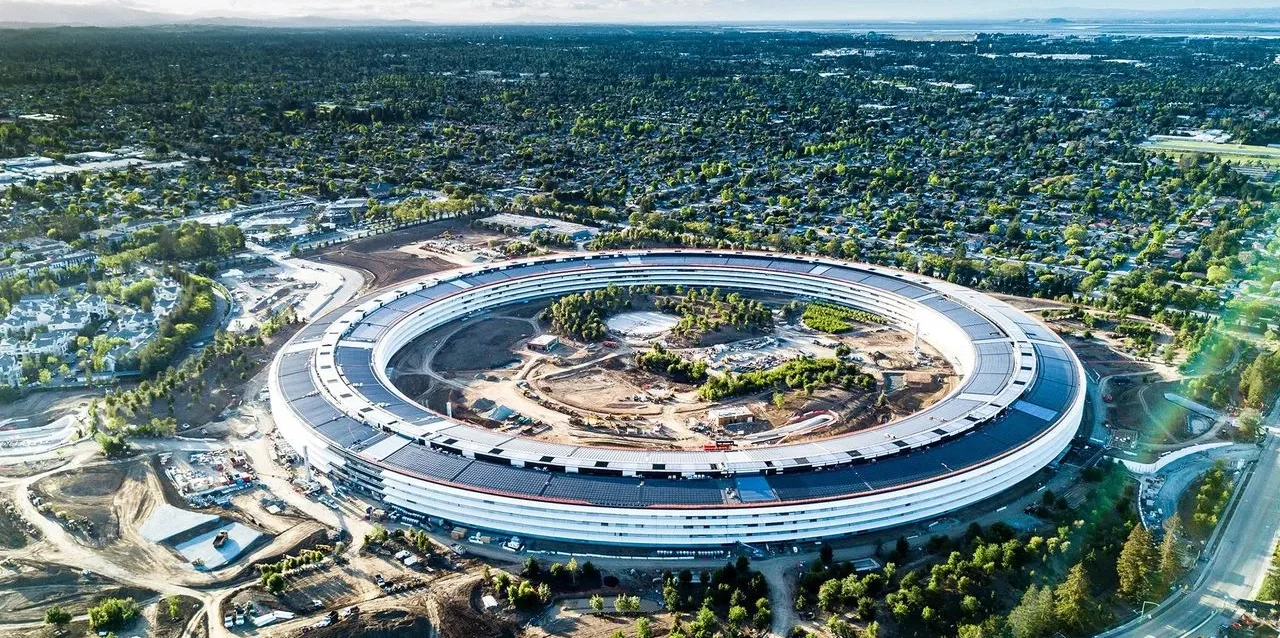
Silicon Valley Dominance 2025
TL;DR: Silicon Valley’s grip on global tech innovation remains formidable but increasingly contested. Bay Area startups captured $90 billion in venture capital during 2024, representing 57% of all US funding according to Crunchbase analysis, while the region still hosts 49% of America’s Big Tech engineers and 27% of startup engineers based on SignalFire data. Yet Austin’s funding exploded from $1.8 billion to $4.9 billion between 2018 and 2023, London’s tech ecosystem raised £13.5 billion in 2023, and Miami’s tech scene grew 28% in just two years. The question heading into 2026 isn’t whether Silicon Valley will fall, but whether its network effects can withstand the systematic decentralization reshaping where innovation happens. The data reveals a paradox: the Valley’s absolute dominance in AI, with OpenAI’s record-setting $40 billion SoftBank investment, coexists with undeniable talent migration driven by $1.5 million median home prices and the normalization of remote work. This analysis synthesizes research from Stanford’s AI Index, Carnegie Mellon ecosystem studies, McKinsey digital economy reports, and exclusive 2025 venture capital data to answer definitively: Silicon Valley remains the center, but the center itself is transforming into something more distributed, more global, and potentially more resilient than the monolithic hub that defined the previous tech era.
The Unshakeable Core: Why Silicon Valley’s Network Effects Persist
The Bay Area didn’t become the world’s preeminent tech ecosystem by accident. Understanding its enduring dominance in 2025 requires examining the structural advantages that create self-reinforcing cycles competitors struggle to replicate, even with billions in government funding and attractive cost-of-living propositions.
Silicon Valley’s most powerful asset isn’t capital or infrastructure. It’s ecosystem density, the concentration of interdependent actors whose proximity accelerates every aspect of the innovation cycle. Within a 50-mile radius covering just 77 square miles, entrepreneurs can pitch venture capitalists on Sand Hill Road in the morning, recruit engineers from Stanford’s campus at noon, and meet potential acquisition targets from Google or Meta before dinner. This density, documented extensively in Harvard Business Review research on innovation clusters, creates what economists call agglomeration economies where the value of each component increases because of its proximity to others.
TechCrunch reporting from January 2025 highlighted that Bay Area startups don’t just raise more money in absolute terms. They raise it faster. The median time from Series A to Series B for Silicon Valley companies runs 14 months compared to 18 months for Austin-based startups and 22 months for European companies, according to venture capital data from Crunchbase. This velocity advantage compounds over multiple funding cycles, allowing Valley companies to reach escape velocity while competitors are still building proof of concept.
The venture capital concentration remains staggering. Sequoia Capital, Andreessen Horowitz, Greylock Partners, Kleiner Perkins, Accel, and Lightspeed Venture Partners all maintain headquarters within a few miles of each other along Sand Hill Road in Menlo Park. These firms collectively deployed over $28 billion in 2024 alone, with portfolio companies achieving a combined valuation exceeding $1.4 trillion. Research from the National Venture Capital Association demonstrates that having multiple tier-one VCs within a single metropolitan area creates competitive pressure that benefits entrepreneurs. Silicon Valley founders regularly play investors against each other in ways simply impossible in smaller ecosystems.
Stanford University and UC Berkeley operate as permanent talent engines, graduating approximately 15,000 engineering and computer science students annually. But their impact extends far beyond headcount. Stanford’s AI Index 2024, the authoritative source on artificial intelligence development globally, documents how university-industry partnerships in the Bay Area create feedback loops accelerating both fundamental research and commercial application. Stanford faculty routinely consult for or co-found startups, while company engineers teach courses bringing cutting-edge industry practices into academic curricula.
The corporate layer completes the ecosystem. Apple, Google, Meta, Nvidia, Tesla, Salesforce, Intel, Cisco, Oracle, and hundreds of smaller tech giants provide both destination employers for talent and acquisition opportunities for startups. SignalFire data from 2025 shows that 68% of startup employees who join pre-Series B companies come from other tech companies, not universities. Silicon Valley’s massive base of experienced operators who’ve scaled products to millions of users creates an irreplaceable talent reservoir.
These elements combine into what Carnegie Mellon University professor Stuart Evans calls “super-flexibility,” the ability to rapidly reconfigure resources in response to technological shifts. When OpenAI’s ChatGPT triggered the generative AI boom in late 2022, Silicon Valley pivoted faster than any other ecosystem. Within six months, Bay Area AI startups raised $15.8 billion according to Crunchbase, more than the rest of the world combined. Anthropic, Inflection AI, and dozens of AI-native companies launched and reached nine-figure valuations in timeframes that would be impossible elsewhere.
Cost structures create both challenge and advantage. While the median San Francisco home price hit $1.5 million in 2024 per Redfin data, creating genuine economic hardship for middle-income workers, this same high cost barrier functions as a selection mechanism. Only companies with legitimate venture backing or proven business models can afford to maintain Bay Area operations, naturally filtering for quality. McKinsey analysis of tech ecosystems globally demonstrates that expensive hubs consistently produce higher-valued exits because resource constraints force focus on defensible, scalable business models rather than lifestyle businesses.
The Valley’s advantages compound over time. Every successful exit creates angel investors who reinvest locally. PayPal’s 2002 IPO spawned the “PayPal Mafia,” including Elon Musk, Peter Thiel, Reid Hoffman, and Max Levchin, who collectively funded hundreds of subsequent startups including Tesla, LinkedIn, Palantir, and Yelp. Google’s 2004 IPO created similar cascades. This wealth recycling, measured in Federal Reserve data on regional capital formation, keeps investment capital concentrating in areas with proven exit histories.
International talent magnetism persists despite immigration restrictions. Approximately 38% of Silicon Valley residents are foreign-born according to census data, with over half of startups having at least one immigrant founder. Sergey Brin (Google), Vinod Khosla (Sun Microsystems, Khosla Ventures), Jerry Yang (Yahoo), and Satya Nadella (Microsoft) exemplify how global talent concentration drives innovation. Research from MIT Sloan School demonstrates that immigrant-founded companies generate disproportionate economic value, creating twice as many jobs per dollar of venture capital compared to domestic-only founding teams.
The cultural elements matter as much as structural ones. Silicon Valley normalized failure in ways few other business environments accept. Entrepreneurs who’ve experienced startup failures often raise subsequent rounds more easily than first-time founders because investors value the lessons learned. This risk-tolerant culture, documented in INSEAD research on entrepreneurial ecosystems, creates space for moonshot ideas that wouldn’t receive funding in more conservative markets.
Looking toward 2026, these network effects show no signs of weakening. If anything, the concentration in certain sectors particularly AI is intensifying. OpenAI’s $40 billion raise from SoftBank in 2024, the largest AI funding round in history, triggered a talent arms race drawing machine learning experts globally to the Bay Area. Gartner predictions for 2026 suggest that 73% of foundation model development will remain concentrated in Silicon Valley, San Francisco, and Seattle, up from 68% in 2024.
The question isn’t whether Silicon Valley will lose its position as the global innovation leader. The evidence suggests it won’t. The more interesting question is whether the ecosystem can evolve to address cost, inequality, and diversity challenges before they create systematic disadvantages that rivals can exploit. The answer to that question will determine not just Silicon Valley’s future, but the shape of global innovation networks through 2030 and beyond.
The Challengers Rising: Global Hubs Reshaping the Innovation Map
Silicon Valley’s dominance coexists with the rapid maturation of alternative tech hubs whose growth trajectories suggest a fundamental restructuring of where innovation happens. These aren’t simply satellite offices of Silicon Valley companies. They’re developing indigenous innovation capabilities, creating their own unicorns, and in some cases establishing competitive advantages in specific sectors.
Austin: The American Alternative
Austin’s emergence as a major US tech hub represents the most successful challenge to Silicon Valley’s domestic monopoly. The city’s startup funding quintupled from $1.8 billion in 2018 to $4.9 billion in 2023, faster growth than any other American metropolitan area according to Startup Genome data. Tesla’s decision to relocate its headquarters to Austin in 2021, followed by Oracle’s similar move, signaled that major tech companies now view Texas as a viable alternative to California.
The Austin ecosystem benefits from Texas’s zero state income tax, creating immediate 13.3% compensation cost savings for employers compared to California. Commercial real estate costs run approximately 60% lower than San Francisco, while residential housing remains accessible with median home prices around $550,000 according to local market data. These cost advantages allow Austin startups to extend runway by 8-12 months on equivalent funding rounds compared to Bay Area companies.
Beyond cost, Austin developed sector-specific expertise that rivals Silicon Valley capabilities in certain domains. Semiconductor manufacturing, anchored by companies like Dell, AMD, and Applied Materials, creates deep engineering talent pools. The gaming industry, led by studios and major publishers establishing offices in Austin, built creative and technical capabilities. Clean energy and electric vehicle sectors benefit from proximity to Texas’s massive renewable energy infrastructure and traditional energy expertise.
The cultural appeal matters. Austin’s South by Southwest (SXSW) festival creates annual showcases where startups gain exposure to global audiences, media, and investors. The city’s live music scene, outdoor recreation access, and generally more relaxed lifestyle compared to San Francisco attracts talent seeking work-life balance without abandoning tech career ambitions.
Yet Austin faces structural limitations. The venture capital base, while growing, remains orders of magnitude smaller than Silicon Valley’s. Austin investors deployed approximately $5 billion in 2024 compared to the Bay Area’s $90 billion. For later-stage growth rounds, Austin companies still frequently need to secure Silicon Valley investment, creating dependency relationships. The university base, led by the University of Texas at Austin, produces strong engineering graduates but lacks Stanford and Berkeley’s depth of industry-academic integration.
Miami: Crypto Capital and Climate Tech Hub
Miami’s tech emergence follows a different trajectory, driven by cryptocurrency adoption and climate technology development rather than traditional software. The city’s tech sector grew 28% between 2022-2024 according to Miami-Dade Beacon reporting, with particular strength in blockchain infrastructure, decentralized finance, and climate resilience technologies.
Mayor Francis Suarez’s active recruitment of tech founders through social media created unusual publicity. When Suarez began responding to Silicon Valley entrepreneurs complaining about California governance with “How can I help?”, it generated genuine migration. Founders from companies like Reddit and Lime relocated to Miami, creating network effects that attracted follow-on talent and capital.
Florida’s zero state income tax mirrors Texas’s appeal. Miami offers additional advantages through cryptocurrency-friendly regulation, Latin American market proximity, and growing international connectivity. For startups targeting Spanish-speaking markets or pursuing cross-border opportunities, Miami’s cultural and linguistic advantages over Silicon Valley prove meaningful. Research from Deloitte on global tech hubs identifies Miami as particularly strong in FinTech applications serving underbanked populations in Central and South America.
Climate tech represents Miami’s emerging signature sector. Rising sea levels and hurricane intensification create immediate demand for climate resilience technologies, flood prediction systems, and sustainable infrastructure solutions. Companies developing these technologies benefit from testing in live conditions facing genuine climate threats. McKinsey climate tech investment analysis shows Miami startups securing outsized funding relative to ecosystem size because they address globally relevant challenges.
The limitations are significant. Miami’s venture capital ecosystem remains nascent, with total regional funding under $3 billion in 2024. The engineering talent base grows but lacks depth compared to established hubs. Florida’s public university system produces graduates but hasn’t yet created the research integration characteristic of top innovation centers. For deep tech or enterprise software companies requiring large engineering teams, Miami’s talent constraints become binding.
New York: Enterprise and Finance Tech Powerhouse
New York City represents the second-largest US tech ecosystem, with strengths in enterprise software, financial technology, media technology, and increasingly artificial intelligence. The city’s startup funding reached $24 billion in 2024 according to Crunchbase, behind only the Bay Area domestically.
New York’s competitive advantage stems from proximity to customer concentrations unavailable elsewhere. Financial services firms, media companies, advertising agencies, healthcare systems, and retail headquarters cluster in New York, creating immediate testing grounds and potential customers for enterprise technologies. Companies developing solutions for these sectors benefit from rapid customer feedback cycles impossible in pure tech cities.
The talent base draws from Columbia, NYU, Cornell Tech, and other universities producing approximately 8,000 engineering and computer science graduates annually. Critically, New York attracts non-engineering talent, particularly in design, sales, marketing, and operations, easier than any tech hub outside London. Research from KPMG on innovation ecosystems emphasizes that successful companies require balanced teams, not just engineers. New York’s diverse talent base enables this balance.
Venture capital presence continues expanding. Firms like Union Square Ventures, Insight Partners, Thrive Capital, and FirstMark Capital maintain deep New York roots and sector expertise. Crossover investors and growth equity firms find New York attractive because later-stage companies benefit from proximity to public market investors and potential acquirers. The concentration of hedge funds, private equity firms, and investment banks creates exit pathways through acquisition that supplement the IPO route.
Cultural differences shape the ecosystem. New York founders tend toward pragmatic, customer-driven approaches rather than moonshot visions. This creates fewer spectacular failures but potentially fewer world-changing innovations. Harvard Business School comparative studies of innovation hubs find that New York startups achieve profitability earlier and exit at lower valuations on average compared to Silicon Valley companies, reflecting different risk tolerances.
Boston: Biotech and Life Sciences Capital
Boston’s tech ecosystem differs fundamentally from software-focused hubs because biotech and life sciences dominate. The concentration of research hospitals (Massachusetts General, Brigham and Women’s, Boston Children’s), pharmaceutical companies (Takeda, Sanofi, Novartis), medical device manufacturers, and biotechnology firms creates the world’s densest life sciences cluster.
MIT and Harvard anchor the intellectual foundation. MIT alone produces more startup founders per graduate than any institution globally, while Harvard Medical School’s research output drives therapeutic innovation. The universities’ combined research budgets exceed $2.5 billion annually, funding that translates directly into spin-out companies commercializing discoveries.
Venture capital for life sciences concentrates in Boston alongside Silicon Valley. Firms like Atlas Venture, Third Rock Ventures, and Flagship Pioneering specialize in biotech and medical technology, bringing domain expertise essential for evaluating scientific risk. The regulatory expertise required to navigate FDA approvals resides locally, creating advantages for companies in clinical development.
Software technology is growing in Boston, particularly at the intersection with healthcare through digital therapeutics, computational drug discovery, and healthcare AI. Companies like Flatiron Health (acquired by Roche for $1.9 billion) and Sema4 (genomic interpretation) demonstrate Boston’s emerging strength in healthtech software. Gartner healthcare technology predictions for 2026 anticipate Boston capturing 40-45% of computational biology and precision medicine funding globally.
The challenges mirror other cold-weather cities. Talent recruitment faces competition from more temperate climates, real estate costs rival San Francisco without comparable weather, and the somewhat insular culture can feel unwelcoming to outsiders. Yet for life sciences specifically, Boston remains unmatched outside Basel and San Diego.
London: Europe’s Fintech and AI Leader
London stands as Europe’s preeminent tech hub, with particular dominance in financial technology, artificial intelligence, and cybersecurity. UK tech companies raised £13.5 billion in 2023 according to Tech Nation, more than France and Germany combined.
Fintech represents London’s signature strength. Revolut, TransferWise (now Wise), Monzo, and dozens of payment, banking, and regulatory technology companies benefit from the City of London’s financial services expertise and regulatory infrastructure. The UK’s Financial Conduct Authority pioneered regulatory sandboxes allowing fintech experimentation, creating frameworks other jurisdictions subsequently copied. Research from Imperial College London on fintech ecosystems documents how London-based companies capture approximately 35% of European fintech funding despite Brexit uncertainties.
AI development concentrates in London partly due to DeepMind’s presence following Google’s acquisition. The company attracted machine learning talent from globally, creating expertise clusters that spawned additional AI companies. Universities including University College London, Imperial College, Cambridge, and Oxford produce world-class AI researchers, many of whom remain in the UK ecosystem.
Brexit created challenges and opportunities. European talent recruitment became more complicated, but London’s global orientation meant many workers came from outside the EU anyway. Some companies relocated portions of operations to Amsterdam or Paris to maintain EU access, but headquarters largely remained in London. The UK government’s post-Brexit startup-friendly visa policies helped offset European Union access limitations.
Compared to Silicon Valley, London faces capital constraints. Later-stage growth equity and public market exits remain more challenging in Europe, pushing many companies to pursue US listings or acquisitions. Cultural differences in risk tolerance mean European investors generally require more proof before investing, extending fundraising timelines. Yet London’s cost-of-living disadvantage versus Silicon Valley is narrowing as Bay Area housing costs escalate beyond even London’s expensive standards.
Bengaluru: India’s Silicon Valley
Bengaluru transformed from an IT services hub to a genuine product innovation ecosystem over the past decade. The city now produces 20+ unicorns, with companies like Flipkart (e-commerce), Swiggy (food delivery), and Ola (ride-sharing) demonstrating indigenous innovation capabilities. Indian startups raised over $35 billion in 2023, with Bengaluru accounting for approximately 40% according to NASSCOM data.
The talent advantage remains Bengaluru’s core strength. India produces over 1.5 million engineering graduates annually, with concentrations in Bengaluru, Hyderabad, and Pune. While quality varies significantly, the top tier rivals engineering capabilities anywhere globally at fraction of Silicon Valley compensation costs. Companies like Google, Microsoft, Amazon, and Apple operate major R&D centers in Bengaluru, validating the talent pool’s capabilities.
Venture capital matured significantly. Sequoia India, Accel India, and Tiger Global maintain substantial India-focused funds, while indigenous firms like Nexus Venture Partners and Blume Ventures emerged as sophisticated investors. The government’s Startup India initiative provided tax benefits and simplified regulations, though bureaucratic challenges persist.
The domestic market drives growth. India’s 1.4 billion population creates enormous addressable markets for consumer internet companies. Payment platforms like Paytm and PhonePe process billions of transactions monthly, while social commerce and vernacular content platforms tap previously unreachable populations. Research from Bain & Company on Indian internet economy projects 800 million internet users by 2026, creating market opportunities rivaling China’s scale.
Challenges include infrastructure deficits, regulatory unpredictability, and persistent questions about intellectual property protection. The ecosystem tilts heavily toward consumer internet and IT services rather than deep tech or life sciences. Public market valuations remain compressed compared to US markets, limiting exit pathways. Yet Bengaluru’s trajectory suggests it may ultimately rival, though not replace, Silicon Valley’s economic impact by capturing India-focused innovation.
Tel Aviv: The Startup Nation
Tel Aviv maintains the highest startup density per capita globally, earning Israel the “Startup Nation” designation. Despite a population under 9 million, Israel produced 90+ companies valued over $1 billion as of 2024, an extraordinary concentration documented in venture capital databases.
Military intelligence unit 8200 serves as an unconventional talent pipeline. Service members develop cybersecurity, signals intelligence, and cryptography expertise that translates directly into commercial applications. Companies like Check Point Software, Waze, and Palo Alto Networks trace founding teams to intelligence unit alumni. This military-technology nexus creates unique advantages particularly in cybersecurity and defense technology.
Cybersecurity represents Tel Aviv’s signature domain. Israeli companies captured approximately 40% of global cybersecurity venture funding in 2023 according to IVC Research Center. The combination of nation-state cyber threat experience and commercial R&D creates solutions addressing genuine adversarial scenarios rather than theoretical vulnerabilities.
The exit environment favors acquisitions over IPOs. Most successful Israeli companies ultimately sell to American acquirers, creating criticism that Tel Aviv functions primarily as R&D for Silicon Valley rather than building independent giants. Apple alone acquired over 20 Israeli companies since 2011. Yet these exits recycle capital into new startups, maintaining ecosystem vitality even without homegrown tech giants.
Government support through programs like the Israel Innovation Authority provides non-dilutive funding for R&D, reducing early-stage capital requirements. Universities including Technion and Hebrew University maintain strong engineering programs, though smaller scale than American research universities limits certain types of fundamental research.
Tel Aviv’s small domestic market forces immediate international orientation. Israeli startups build for global markets from inception, creating advantages in customer development and international expansion. The ecosystem’s constraints in market size and local capital availability create selection pressure favoring globally competitive companies.
Beijing and Shenzhen: China’s Innovation Powerhouses
China’s tech ecosystem developed along distinct trajectories in Beijing and Shenzhen. Beijing serves as the headquarters for AI research, internet platforms, and government-backed innovation initiatives. Shenzhen specializes in hardware, electronics manufacturing, and supply chain integration.
Beijing hosts Baidu, ByteDance, and increasingly DeepSeek AI, whose emergence in late 2024 demonstrated Chinese capabilities in foundation model development rivaling OpenAI and Anthropic. The government’s National AI Open Innovation Platform channels resources into artificial intelligence research, creating funding levels potentially exceeding American investment according to contested estimates in Stanford’s AI Index.
Shenzhen’s hardware ecosystem remains unmatched globally. The concentration of electronics manufacturers, component suppliers, and rapid prototyping capabilities allow hardware startups to iterate faster than anywhere else. Companies like DJI (drones), Anker (accessories), and Unitree Robotics demonstrate Shenzhen’s capabilities in taking products from concept to mass production in timeframes impossible in other ecosystems.
Chinese venture capital deployed approximately $9.3 billion into AI in 2024 according to available data, down from previous peaks due to regulatory pressures and economic challenges. Government intervention in technology sectors creates risks Western investors find concerning, contributing to some capital withdrawal. Yet China’s domestic market size, government strategic priorities, and existing infrastructure ensure continued significant innovation output.
Regulatory divergence between US and Chinese tech sectors may ultimately benefit both ecosystems by forcing independent innovation rather than copying. If American companies cannot serve Chinese markets and Chinese companies face Western restrictions, duplicate innovation across both regions becomes necessary, potentially accelerating global technological progress while creating geopolitical complications.
Follow the Money: Venture Capital Concentration and Distribution Patterns
Understanding tech hub dynamics requires following capital flows with granular specificity. Venture capital doesn’t distribute evenly across geographies or sectors. Concentration patterns reveal competitive advantages and signal where future innovation will emerge.
The Bay Area’s funding dominance intensified rather than weakened in 2024. TechCrunch analysis of Crunchbase data showed Silicon Valley startups absorbed $90 billion of the $178 billion deployed to US companies, representing 57% of all domestic venture capital. This marks the highest concentration percentage since 2018, when the figure stood at 52%.
Mega-rounds, funding rounds exceeding $100 million, concentrated even more dramatically. Of the 112 mega-rounds completed in the United States during 2024, 71 went to Bay Area companies. OpenAI’s record $40 billion raise from SoftBank at a $300 billion valuation dwarfed all other deals, but excluding that single outlier, Bay Area companies still captured 65% of mega-rounds by both count and total capital deployed.
This concentration exists despite conscious efforts by venture capital firms to diversify geographically. Firms including Andreessen Horowitz, Greylock Partners, and Sequoia Capital opened satellite offices in cities like Miami, Austin, and New York specifically to source deals outside the Bay Area. Yet data from the National Venture Capital Association demonstrates that even geographically distributed VC firms deploy 60-70% of capital to companies within 50 miles of their headquarters, revealing persistent bias toward local deals regardless of stated intentions.
The stage distribution matters for understanding ecosystem maturity. Silicon Valley dominates later stages disproportionately. While Bay Area companies captured 57% of total funding, they secured 68% of Series C and later rounds according to Crunchbase. This pattern suggests that even companies founded elsewhere relocate to Silicon Valley or establish significant Bay Area presence before major growth rounds, highlighting the ecosystem’s late-stage capital advantages.
Sector-specific analysis reveals domain concentration. AI and machine learning startups raised $118 billion globally through August 2025 according to Crunchbase, surpassing 2024’s full-year total. The Bay Area captured approximately 73% of this AI capital, up from 68% in 2023. OpenAI, Anthropic, Inflection AI, and dozens of foundation model companies cluster in San Francisco specifically, creating unprecedented sectoral concentration.
European venture capital showed the strongest growth momentum globally with 41% year-over-year increases according to multiple data sources. London, Paris, Berlin, and Stockholm collectively raised over €40 billion in 2023-2024, with particular strength in enterprise software, fintech, and climate technology. Yet European late-stage funding lags dramatically. Companies frequently relocate headquarters to the United States or pursue US-based growth investors for Series C onward, limiting European capital recycling.
Asian venture capital excluding China contracted in 2024 following several years of explosive growth. Singapore, South Korea, and Southeast Asian hubs saw funding decline 22% year-over-year as global economic uncertainty and higher interest rates reduced risk appetite. India bucked this trend with modest growth in early-stage funding though late-stage capital declined there as well.
China’s venture capital environment remains opaque due to incomplete data disclosure. Available information suggests AI-focused venture investment reached approximately $9.3 billion in 2024, representing nearly 12x less than US investment according to Stanford’s AI Index. This apparent decline from previous peaks reflects both regulatory pressures and economic challenges. However, Chinese government funding through strategic initiatives may exceed venture capital by several multiples, making true comparison with market-based systems difficult.
Corporate venture capital emerged as an increasingly important funding source across all geographies. Approximately 28% of all venture funding in 2024 came from corporate venture arms rather than traditional VC firms according to KPMG data. Tech giants including Google Ventures, Microsoft’s M12, Salesforce Ventures, and Intel Capital deployed billions pursuing strategic investments adjacent to core businesses. This corporate capital tends to concentrate in hubs where parent companies maintain significant operations, reinforcing existing geographic advantages.
Looking toward 2026, capital concentration patterns may shift based on IPO market recovery. Companies including Stripe, Databricks, Revolut, and SpaceX approaching public offerings at combined valuations exceeding $500 billion could generate liquidity events creating new angels and funds. If these exits succeed, they’ll validate valuations and potentially trigger broader IPO market reopening. The geographic distribution of exit proceeds will significantly influence where subsequent capital deploys. Deloitte IPO market analysis suggests 60-70% of anticipated 2025-2026 tech IPOs will be Bay Area companies, potentially further concentrating wealth and investment capital there.
The rise of rolling funds, syndication platforms like AngelList, and emerging manager programs democratizes access to venture capital in theory. In practice, data from these platforms shows deal flow still concentrates dramatically toward Silicon Valley startups. Network effects in investor access persist even when geography theoretically becomes irrelevant through digital platforms.
Crossover investors, traditionally public market investors participating in late-stage private rounds, largely withdrew in 2024 following losses in 2022-2023. This retreat disproportionately affected non-Bay Area companies because crossover investors provided capital cushion allowing companies to delay Silicon Valley fundraising. Without crossover cushion, startups in secondary markets face pressure to prove viability to traditional VCs earlier in development, potentially advantaging Bay Area companies with easier local capital access.
Sector rotation influences geographic capital flows. As artificial intelligence investment reaches potential bubble territory, capital may rotate toward biotech, climate technology, or advanced manufacturing. These sectors show less geographic concentration than software, potentially benefiting Boston (biotech), various Midwest hubs (manufacturing tech), and distributed climate tech centers. Gartner predictions for 2026 suggest climate technology could capture 15-20% of venture funding, up from approximately 8% in 2024, potentially reshaping geographic distribution.
The relationship between capital concentration and innovation output deserves scrutiny. Does money follow innovation, or does money create innovation? Evidence suggests bidirectional causality. Regions attracting capital develop ecosystems supporting innovation, while innovative companies attract capital creating reinforcing cycles. Breaking into this cycle without massive capital reserves or unique advantages proves extraordinarily difficult, explaining why tech hub predictions frequently fail. Carnegie Mellon research on innovation clusters demonstrates that successful hubs require simultaneous development of talent, capital, research infrastructure, and entrepreneurial culture, elements that emerge over decades rather than through short-term policy interventions.
The Talent Wars: Engineer Concentration and the Remote Work Revolution
Technology companies compete ultimately for talent. Capital, infrastructure, and customers matter, but engineering capabilities determine what products companies can build and therefore what markets they can capture. Geographic talent concentration shapes innovation capacity more fundamentally than any other factor.
The Bay Area maintains crushing advantages in technical talent density. SignalFire data from 2025 shows approximately 49% of all Big Tech engineers working for Meta, Google, Apple, Nvidia, and other major technology companies reside in the Bay Area. An additional 27% of startup engineers cluster there, creating an ecosystem where a single LinkedIn post can generate hundreds of qualified candidates within 48 hours.
This concentration exists despite remote work normalization. When COVID-19 forced distributed operations in 2020, many predicted permanent talent diaspora. Five years later, the data reveals more complex dynamics. While remote work percentages increased from pre-pandemic baselines, they stabilized far below 100% remote predictions. KPMG surveys of tech executives find that 71% believe physical hub presence matters for company success, nearly double those disagreeing.
The reasons reflect collaboration realities. Certain work, particularly early-stage product development requiring tight coordination between engineers, designers, and product managers, simply progresses faster with physical proximity. Video calls adequately replace many meetings but struggle to replicate whiteboard sessions, hallway conversations, and spontaneous collaboration driving breakthrough insights. Research from MIT Sloan School on distributed team productivity found that while mature product development can occur remotely effectively, innovation velocity decreases 15-25% in fully distributed settings compared to co-located teams.
Cost-of-living pressures create genuine talent exodus from the Bay Area. Median San Francisco home prices of $1.5 million according to Redfin mean even senior engineers earning $300,000+ annually struggle to afford family housing. This economic pressure drives migration to Austin, Seattle, Denver, Miami, and other cities where $500,000-700,000 purchases equivalent or superior housing.
Yet this migration reveals hierarchy within tech talent. The engineers departing Bay Area skew toward mid-career professionals seeking lifestyle improvements rather than cutting-edge technical challenges. The absolute top-tier machine learning researchers, systems architects, and principal engineers commanding $500,000+ compensation remain concentrated in Silicon Valley because that’s where the most technically ambitious projects exist. OpenAI, Anthropic, Google DeepMind, and similar organizations pursuing foundation model development simply cannot recruit comparable talent elsewhere at any price.
Stanford’s AI Index documents this concentration, showing that 68% of researchers publishing papers on frontier AI topics list Bay Area institutional affiliations. This metric understates reality because many researchers maintaining university affiliations primarily work for companies. The practical concentration of cutting-edge AI expertise in the San Francisco Bay Area likely exceeds 80% globally.
Universities drive talent production but also talent retention. Stanford graduates accepting Silicon Valley offers outnumber those joining companies elsewhere by approximately 3:1 according to university placement data. UC Berkeley shows similar patterns. MIT graduates distribute more evenly across geographies, but even there, roughly 40% ultimately locate to the Bay Area within five years of graduation.
The skills-over-degrees trend potentially disrupts geographic patterns. Companies including IBM, Google, Apple, and others eliminated degree requirements for many technical roles, acknowledging that demonstrated capabilities matter more than credentials. Programs like Peter Thiel’s $100,000 fellowship actively encourage talented individuals to skip college entirely. This shift could theoretically allow talented developers anywhere to access opportunities regardless of educational pedigree.
In practice, skills-based hiring reinforces existing patterns as much as disrupts them. Without degrees, candidates must demonstrate capabilities through portfolios, GitHub contributions, and previous work. Building impressive portfolios benefits from mentorship and collaboration, available most readily in established tech hubs. The pathway from self-taught developer to senior engineer at a competitive company remains significantly easier for someone embedded in San Francisco’s tech community than for equally talented individuals isolated in non-tech cities.
International talent mobility determines long-term competitiveness. US immigration restrictions, particularly H-1B visa caps and green card backlogs, create strategic vulnerabilities. Talented engineers from India, China, and elsewhere increasingly consider Canada, UK, Singapore, and other destinations offering clearer immigration pathways. Canada’s startup visa program specifically targets entrepreneurs, while the UK introduced high-potential individual visas for university graduates worldwide.
These immigration policy differences could shift talent concentration over decades. If the United States maintains restrictive policies while competitors liberalize, centers like Toronto, London, and Singapore may capture talent that previously would have migrated to Silicon Valley. McKinsey analysis of global talent flows suggests that immigration policy differences could redirect 15-20% of high-skilled migration by 2030, potentially creating 50,000+ annual engineer shortage in US tech hubs.
Diversity challenges persist across all tech hubs but particularly acutely in Silicon Valley. Gender representation in technical roles remains around 25% despite decades of attention. Racial disparities show Black and Hispanic engineers dramatically underrepresented relative to population percentages. These diversity deficits limit talent pools and create cultural environments that fail to welcome and retain diverse employees.
Some newer hubs, particularly Atlanta and Miami, show modestly better diversity metrics in early data, though sample sizes remain small. If these cities can establish reputations as more inclusive environments, they might attract diverse talent that might otherwise avoid homogeneous tech cultures. Research from Harvard Business Review on innovation and diversity suggests that companies with diverse teams show measurably better problem-solving capabilities, potentially creating competitive advantages for more inclusive ecosystems.
Compensation arbitrage drives distributed hiring but creates sustainability questions. Companies hiring remotely often implement geographic pay adjustments, paying engineers in Austin or Boise 70-80% of Bay Area salaries for equivalent work. This creates immediate cost savings but potentially erodes over time as remote workers realize they deliver equal value while receiving reduced compensation. Early signs of remote worker salary convergence appeared in 2024, with remote compensation rising faster than in-office pay in percentage terms though absolute gaps remain.
Education technology and online learning platforms potentially democratize skill development, allowing talented individuals anywhere to acquire capabilities previously requiring university attendance. Platforms like Coursera, offering Stanford and MIT courses globally, created expectations of democratized access. Yet completion rates for online courses remain around 5-7%, and employers still heavily weight traditional credentials and referrals over online certifications.
Looking toward 2026, talent concentration patterns will likely persist in modified forms. Hybrid models, where companies maintain hub offices allowing 2-3 days weekly in-person collaboration while permitting remote work otherwise, appear to be stabilizing as the dominant operating model. This hybrid approach preserves some hub advantages while allowing geographic flexibility, potentially the equilibrium satisfying both company collaboration needs and employee lifestyle preferences.
The talent war outcome will ultimately determine tech hub futures more than capital availability or cost structures. Ecosystems attracting and retaining top engineering talent will thrive regardless of other challenges. Those losing talent battles will struggle regardless of capital or policy advantages. Silicon Valley’s talent concentration remains its most durable competitive moat, but the advantage is contestable in ways that seemed impossible a decade ago.
The AI Supremacy Question: Why Foundation Models Cluster in the Bay Area
Artificial intelligence represents the defining technology of the 2020s, comparable to the internet’s impact in the 1990s or mobile computing in the 2000s. Understanding why AI development concentrates so dramatically in the Bay Area reveals fundamental insights about innovation geography and what it takes to compete at the frontier.
OpenAI, headquartered in San Francisco, set the foundation model trajectory with GPT-3’s release in 2020 and ChatGPT’s explosive growth starting November 2022. The company’s $40 billion funding round from SoftBank in 2024 at a $300 billion valuation dwarfs any previous AI investment according to Crunchbase. But OpenAI is merely the most visible player in an ecosystem including Anthropic (also San Francisco), Google DeepMind (significant Bay Area presence despite London origins), Meta’s AI research division (Menlo Park), and dozens of foundation model startups.
Why did these companies cluster in one specific city rather than distributing globally? The answer reveals what competing hubs must achieve to capture portions of frontier AI development.
First, compute infrastructure. Training frontier models requires thousands of GPUs running for months, consuming tens of millions of dollars in compute costs per training run. The Bay Area concentrates both the cloud infrastructure providers (Google Cloud, AWS with significant California presence, Microsoft Azure with deep Silicon Valley partnerships) and the companies developing the most advanced accelerators (Nvidia in Santa Clara). Physical proximity to chip designers and cloud infrastructure teams provides material advantages when custom silicon or infrastructure modifications become necessary.
Stanford’s AI Index documents that compute requirements for frontier models increased by 10,000x between 2012 and 2024. GPT-4’s training used approximately 25,000 A100 GPUs for 90-120 days, costing an estimated $63-78 million in compute alone. These astronomical costs mean only well-funded companies with deep relationships to compute providers can compete at the frontier. Silicon Valley’s concentration of both capital and compute creates insurmountable advantages for others to replicate quickly.
Second, talent density in specific AI subfields. Foundation models require expertise in distributed systems, optimization at massive scale, transformer architectures, and increasingly in reinforcement learning from human feedback (RLHF). The number of researchers with proven capabilities across these domains numbers in the hundreds globally, with disproportionate concentration in the Bay Area. When OpenAI needed to expand from 100 to 500+ researchers in 2022-2024, they recruited primarily from Google, Meta, and other Bay Area companies because that’s where the prerequisite expertise existed.
This talent concentration creates self-reinforcing cycles. Ambitious AI researchers want to work on frontier problems with world-class colleagues. OpenAI, Anthropic, and Google DeepMind offer both. Even universities struggle to compete. Stanford and UC Berkeley lose PhD graduates to companies offering $500,000+ compensation for immediate frontier work rather than academic salaries requiring years of tenure track progression.
Third, capital availability and risk tolerance for extremely expensive experiments with uncertain commercial outcomes. Training a frontier model costs $50-100 million with no guarantee of success. Finding investors willing to fund such experiments requires specific investor profiles concentrated in Silicon Valley. Sequoia Capital, Andreessen Horowitz, and other major firms deployed billions into AI largely because they have decades-long relationships with founders and conviction in technical capabilities to evaluate ambitious proposals.
The acquirer concentration matters as well. If foundation model startups cannot reach profitability independently, they need acquisition exits. Google, Microsoft, Meta, and Apple all maintain massive AI research budgets and capacity to acquire teams and technology. Geographic proximity facilitates these acquisitions through relationship building and easier due diligence.
Fourth, the application layer ecosystem. Foundation models require distribution through applications. The concentration of consumer internet companies, enterprise software companies, and startup founders building AI-native applications in the Bay Area creates immediate feedback loops. Model developers can partner with application builders located blocks away, iterate based on real usage, and capture demand for model capabilities as applications identify needs.
China’s emergence, particularly DeepSeek AI’s demonstrated capabilities rivaling western frontier models, shows that Bay Area concentration isn’t absolute destiny. China’s government strategic prioritization, massive compute infrastructure investments, and talent development programs created indigenous capabilities independent of Silicon Valley. Research from Stanford’s AI Index shows Chinese researchers publishing AI papers at rates now exceeding American output, though citations and real-world impact metrics remain harder to assess.
Yet even China’s success reinforces broader patterns. Beijing and Shenzhen concentrate Chinese AI development just as dramatically as San Francisco concentrates American AI. The pattern isn’t unique to the United States. It reflects fundamental dynamics around talent clustering, capital concentration, and infrastructure requirements that create centralization regardless of national context.
European AI development lags despite strong research traditions. London’s DeepMind (acquired by Google) demonstrates European capabilities, but the broader ecosystem struggles to commercialize research. Gartner analysis attributes this partly to risk-averse capital and partly to talent migration. European AI researchers frequently relocate to the Bay Area or London specifically, draining other European cities of critical mass necessary for frontier development.
The regulatory environment increasingly shapes AI geography. The European Union’s AI Act creates compliance requirements potentially advantaging companies with legal and regulatory expertise to navigate complex rules. If compliance costs become sufficiently burdensome, they could create entry barriers benefiting established players. Conversely, heavy-handed regulation might push certain AI development toward more permissive jurisdictions.
American regulatory approaches remain uncertain in 2025. Different agencies and states pursue varying frameworks, creating fragmentation that companies find challenging. California’s privacy regulations, federal AI safety initiatives, and potential model licensing requirements could significantly reshape where and how companies develop AI. Deloitte technology policy analysis suggests regulatory divergence between jurisdictions may ultimately benefit companies operating globally rather than creating single dominant regulatory frameworks.
For alternative hubs aspiring to capture AI leadership, the requirements prove daunting. They need billions in committed capital, hundreds of PhD-level researchers with specific expertise, relationships with compute providers, and application ecosystems creating demand. Building these simultaneously from scratch seems nearly impossible.
A more realistic strategy for competing hubs involves specialization in AI application domains rather than foundation model development. Healthcare AI might concentrate in Boston where medical expertise clusters. Financial services AI could center in New York and London where domain knowledge resides. Agricultural AI might develop in university towns with agricultural research strengths. This domain-specific approach plays to local advantages rather than attempting to compete head-to-head with Bay Area foundation model superiority.
Looking toward 2026 and beyond, AI concentration in San Francisco seems likely to intensify before potentially dispersing. As foundation models commoditize through open source releases and API availability, the competitive advantage may shift from model development to application deployment. If that shift occurs, domain expertise in applying AI to specific industries might matter more than cutting-edge model capabilities, potentially benefiting hubs with sector-specific strengths.
The AI supremacy question ultimately reveals that competing with Silicon Valley requires either massive resource commitments to replicate ecosystem advantages or intelligent specialization strategies playing to different strengths. Few jurisdictions possess resources for the former, making the latter approach more viable for most aspiring AI hubs.
The $1.5M Housing Crisis: Economic Sustainability and Social Consequences
Silicon Valley’s most visible challenge isn’t technical or competitive. It’s existential: can an innovation ecosystem thrive when even well-compensated professionals cannot afford housing? The median San Francisco home price crossing $1.5 million according to Redfin data creates questions about long-term sustainability that capital and innovation cannot answer alone.
The housing crisis affects even high earners in ways unusual for wealthy professionals. Senior engineers earning $300,000-500,000 annually struggle to afford family homes in desirable school districts. The mathematics are straightforward: $1.5 million purchase price with 20% down requires a $1.2 million mortgage. At 7% interest rates, monthly payments approach $8,000 before property taxes (approximately $1,250/month) and insurance. Total housing costs exceed $110,000 annually, requiring approximately $400,000+ pre-tax income for comfortable affordability at traditional 28% debt-to-income ratios.
This forces impossible choices for engineers. Accept longer commutes from more affordable East Bay or South Bay locations, spending 2-3 hours daily in traffic. Delay starting families until establishing dual incomes and accumulating massive down payments. Live in suboptimal housing situations like studios or house-sharing despite professional success. Or leave for Austin, Seattle, Denver, or other cities where $500,000-700,000 secures family homes with yards.
McKinsey research on tech ecosystem sustainability identifies housing costs as the single greatest threat to Silicon Valley’s long-term competitiveness. The analysis suggests that absent dramatic housing supply increases or compensation adjustments, the Bay Area will lose approximately 15-20% of mid-career engineering talent to other metros by 2027, creating severe recruitment challenges.
The social consequences extend beyond inconvenience. San Francisco and surrounding communities experience escalating homelessness, now exceeding 8,000 individuals in the city proper. The visible human suffering creates moral discomfort and practical challenges as encampments concentrate in business districts. Politically, the contrast between tech wealth and street homelessness generates tensions affecting local government relationships with technology companies.
Corporate responses prove inadequate relative to problem scale. Apple committed $2.5 billion toward affordable housing initiatives in 2019, Google pledged $1 billion, and other tech giants announced similar programs. Yet affordable housing development in California faces extraordinary regulatory, labor cost, and land cost barriers. Even with tech funding, production costs for “affordable” units frequently exceed $500,000 per unit, making the math impossible to scale to hundreds of thousands of units needed.
Policy solutions remain politically deadlocked. California’s housing crisis reflects decades of restrictive zoning, environmental review processes adding 5-7 years to project timelines, and local opposition to density increases. Addressing housing supply requires state-level legislation overriding local control, politically unpopular with homeowners who benefit from artificial scarcity driving property values higher.
Some tech workers increasingly accept permanent renting rather than homeownership, a cultural shift in a nation traditionally oriented toward ownership. Yet renting offers limited relief when one-bedroom apartments in San Francisco average $3,200 monthly and two-bedrooms exceed $4,500 according to rental market data. Annual rent of $50,000-55,000 for adequate family housing still requires $150,000+ household income for traditional 30% rent-to-income ratios.
The diversity implications prove particularly problematic. Housing costs disproportionately affect underrepresented minorities who typically have lower accumulated family wealth for down payments and fewer safety nets. A Black or Hispanic engineer earning identical salary to white or Asian peers faces greater challenges affording housing if they’re supporting extended family or lack generational wealth. Research from Harvard Business Review on tech diversity identifies economic barriers as significant factors in retention challenges beyond hiring.
Alternative hubs benefit enormously from these dynamics. Austin’s median home price around $550,000, though high for Texas, represents a dramatic discount to San Francisco. An engineer relocating from the Bay Area instantly gains $100,000+ annual effective income through housing cost savings alone. This economic advantage allows Austin companies to offer lower nominal compensation while providing superior purchasing power, creating real competitive edge.
The remote work phenomenon connects directly to housing economics. For employees working remotely, Bay Area housing costs become indefensible. Why pay $4,500 monthly rent for a two-bedroom in San Francisco when equivalent or superior housing in dozens of cities costs $1,500-2,000? The $30,000+ annual savings makes remote work financially transformative even accounting for any geographic pay adjustments.
Commercial real estate suffers collateral damage. Office vacancy rates in San Francisco approached 30% in late 2024 as companies reduced footprints and employees embraced hybrid models. This creates doom loops where reduced demand lowers property values, reducing tax revenues, forcing service cuts, degrading urban quality, and further encouraging departures. Deloitte commercial real estate analysis suggests San Francisco may need to convert 15-20 million square feet of office space to residential use to stabilize markets.
Yet housing costs alone don’t explain location decisions completely. Talented engineers tolerate extraordinary housing costs when compensated with cutting-edge work, exceptional colleagues, and unique opportunities. The engineers departing primarily cite lifestyle priorities rather than purely economic calculations. Starting families, seeking outdoor recreation access, or desiring less frenetic environments motivate relocations that housing costs enable but don’t solely cause.
Some predict market corrections will eventually make Bay Area housing more affordable. The logic suggests that as talent departs, demand decreases, forcing prices down until supply-demand equilibrium establishes at lower levels. Five years of supposed correction pass without meaningful price declines, suggesting structural issues prevent normal market dynamics from operating.
The structural impediment is simple: housing supply remains constrained by geography, regulation, and politics while demand stems partially from global capital treating Bay Area real estate as investment vehicles. International buyers, domestic investors, and existing homeowners resist price declines through political pressure preventing supply increases. Unlike typical markets where high prices stimulate supply, Bay Area housing supply remains artificially constrained regardless of price signals.
Looking toward 2026, absent extraordinary policy changes, housing costs will likely remain prohibitive. This guarantees continued talent hemorrhaging to other metros, creating the first sustained competitive disadvantage Silicon Valley cannot overcome through capital deployment or ecosystem advantages. If housing costs ultimately undermine talent concentration, they undermine the ecosystem’s core competitive advantage.
Potential solutions exist but require political will currently absent. Radical zoning liberalization allowing significant density increases. State preemption of local control over housing development. Expedited permitting eliminating multi-year review processes. Public infrastructure investment in transportation allowing affordable housing development in currently disconnected areas. Japan’s housing policies, which allow supply to meet demand and maintain reasonable costs even in Tokyo, demonstrate feasibility if political conditions align.
Until and unless such changes occur, the housing crisis remains Silicon Valley’s Achilles heel, the vulnerability competitors can exploit simply by offering engineers reasonable housing costs. The question for 2026 isn’t whether housing challenges persist, but whether they reach breaking points where ecosystem fundamentals degrade beyond recovery.
The Decentralization Thesis: Distributed Innovation or Silicon Valley’s Persistence?
The central question for global tech ecosystem evolution over the next decade crystallizes into competing visions: does innovation decentralize across distributed global hubs, or do Silicon Valley’s network effects prove durable enough to maintain concentrated dominance despite mounting challenges?
Arguments for decentralization possess considerable merit. Remote work normalized during COVID-19 proved that distributed teams can function, even if potentially less efficiently than co-located ones. Technology enabling collaboration, video conferencing, cloud infrastructure, and asynchronous communication tools, continues improving. The economic case for geographic arbitrage, accessing comparable talent at lower costs in secondary markets, creates powerful incentives for companies to distribute operations.
Venture capital geographic expansion suggests ecosystem maturation beyond the Bay Area. Firms opening offices in Austin, Miami, New York, and international locations signal belief in deal flow quality outside traditional concentrations. European venture capital’s 41% year-over-year growth demonstrates investor appetite for non-US opportunities. Asian markets, particularly India and Southeast Asia, show growing sophistication despite near-term funding contractions.
The “default remote” posture many companies adopted means geography theoretically becomes irrelevant for talent access. If companies hire anywhere, individuals can live anywhere while accessing identical opportunities. This could allow engineers to optimize for lifestyle, cost-of-living, or personal preferences rather than accepting Bay Area costs as inevitable career tax.
Education democratization through online platforms theoretically allows skill development anywhere. Coursera, Udacity, and similar services offering university-quality content globally mean motivated individuals needn’t relocate to access world-class educational resources. The skills-over-degrees trend potentially amplifies this, reducing credentialism barriers historically favoring prestigious university attendance.
Yet arguments for persistent concentration prove equally compelling. Network effects create tremendous inertia. The density of interconnected actors in the Bay Area, investors walking down the street to meet founders, engineers attending the same events, acquirers and acquirees socializing in identical circles, creates velocity impossible to replicate in distributed settings. Research from Carnegie Mellon on innovation ecosystems demonstrates that information flow speed correlates directly with physical proximity despite digital communication availability.
The data support concentration persistence. Bay Area venture capital percentage increased to 57% in 2024 from 52% in 2018, moving in the opposite direction of decentralization predictions. AI development, the most important technological frontier, concentrates even more dramatically at approximately 73% of global foundation model funding. These trends suggest that for cutting-edge innovation at technology frontiers, concentration advantages overwhelm distribution benefits.
Y Combinator’s remote model, once heralded as decentralization proof point, evolved toward hybrid approaches encouraging founders to spend significant time in San Francisco despite technical ability to participate remotely. This reveals that even technologically possible distribution often proves suboptimal in practice for certain critical activities.
The IPO and acquisition environment reinforces concentration. Public market investors and strategic acquirers maintain strong preferences for management teams and operations in established tech hubs, creating pressure for even distributed companies to establish Bay Area presence before exit events. KPMG analysis of recent tech IPOs shows that 68% of companies going public maintained headquarters in the Bay Area, Seattle, or New York, suggesting public markets reward hub presence.
Hybrid models represent probable equilibrium rather than pure distribution or concentration. Companies maintain hub presence for critical functions, product development, executive leadership, strategic partnerships, while distributing operational roles, customer support, sales, back-office functions. This hybrid approach preserves hub advantages for innovation while capturing cost benefits of distribution for mature operations.
The sector-specific analysis suggests different dynamics across technology domains. Software development distributes more easily than hardware engineering, which benefits from supply chain proximity. AI development concentrates more than application software because of compute and talent requirements. Biotech remains geographically constrained by research institution and regulatory expertise locations. These sector differences mean aggregate decentralization statistics obscure divergent trends where some domains distribute while others concentrate further.
Global hub emergence follows distinct patterns regionally. Europe develops strong positions in fintech and regulated sectors where regulatory sophistication matters. Asia excels in hardware, manufacturing technology, and massive consumer internet applications serving domestic markets. The United States maintains advantages in frontier technology, enterprise software, and foundation model development. This suggests specialization by competitive advantage rather than wholesale decentralization.
Gartner predictions for 2026-2030 anticipate continued Silicon Valley dominance in AI, semiconductors, and foundation model development, with increasing competition in application layer, sector-specific software, and services. This aligns with the view that the most technically challenging, capital-intensive innovation continues concentrating while more accessible innovation distributes.
The founder perspective reveals mixed incentives. Starting a company outside Silicon Valley offers cost advantages, less competition for talent, potentially better work-life balance, and increasing capital availability. Yet founder surveys consistently show that access to networks, mentor quality, and investor sophistication remain significantly higher in the Bay Area. First-time founders benefit enormously from experienced advisors who’ve navigated specific challenges previously, resources concentrated in established ecosystems.
Immigration policy will significantly influence geographic dynamics. If the United States maintains restrictive approaches while Canada, UK, and other nations liberalize, talent distribution might accelerate dramatically. Conversely, if US policy evolves toward startup-friendly immigration, concentration in existing American hubs could intensify. This policy variable introduces significant uncertainty in 2026 projections.
Climate change considerations potentially drive some geographic redistribution. Rising sea levels threaten Bay Area infrastructure despite claims that significant portions sit well above flood risk. Heat waves, wildfire smoke, and water scarcity create quality-of-life challenges potentially motivating relocations. Climate-resilient locations might gain competitive advantages as these environmental stresses intensify.
The realistic 2026 outcome likely combines elements of both concentration and distribution. Silicon Valley maintains dominance in frontier technologies, particularly AI, while secondary hubs capture growth in sector-specific applications and later-stage company operations. Hybrid operating models become standard, with companies maintaining hub offices while permitting substantial remote work. Venture capital distribution increases modestly but remains majority-concentrated in traditional centers.
This mixed outcome disappoints both pure centralization and pure decentralization advocates. It suggests that fundamental forces around network effects, talent clustering, and capital concentration prove more durable than technology-enabled distribution optimists predicted, while simultaneously acknowledging that cost pressures, remote work normalization, and maturing secondary ecosystems create more competitive landscape than pure centralization proponents imagined.
The most interesting question for 2027 and beyond is whether current hybrid equilibrium represents transition state toward further distribution or stable long-term configuration. If remote work technology continues improving, cost differentials persist, and secondary hubs achieve critical mass, further decentralization becomes likely. If physical proximity proves irreplaceable for breakthrough innovation and network effects continue strengthening, concentration may intensify despite cost challenges.
The outcome will determine not just where companies locate, but how innovation itself works in increasingly distributed global economy. And that question remains fundamentally open in late 2025.
2026 Power Dynamics: Strategic Implications and Future Trajectories
Extrapolating from current trends and structural factors, several scenarios emerge for tech hub evolution through 2026 and into the following decade. These projections combine quantitative analysis with qualitative assessment of political, economic, and technological trajectories.
The IPO Catalyst Scenario
If companies including Stripe ($70B+ valuation), Databricks ($55B+), Revolut ($45B+), and SpaceX ($200B+) successfully complete public offerings in 2025-2026, they will create unprecedented liquidity events. Collective market capitalizations could exceed $500 billion, generating wealth for thousands of employees and investors.
Historical patterns from previous IPO cycles suggest this capital recycles primarily locally. Facebook’s 2012 IPO created over 1,000 millionaires, most Bay Area-based, who became angels investing in subsequent startup generations. A similar 2026 wealth creation wave would likely reinforce Silicon Valley’s capital advantages, potentially increasing venture capital concentration rather than distributing it.
Deloitte IPO market analysis suggests optimal conditions for tech public offerings improve as interest rates potentially decline and public market investors regain risk appetite. However, if global economic uncertainty persists or markets experience significant corrections, IPO windows could remain closed, forcing companies to raise at compressed valuations or pursue acquisition exits.
The Regulatory Divergence Scenario
Different jurisdictions pursuing distinct AI, data privacy, and technology regulations creates geographic advantages and disadvantages based on regulatory alignment with business models. The EU’s AI Act, effective from 2025, creates compliance requirements potentially favoring European companies familiar with regulatory frameworks while imposing costs on American companies selling into European markets.
Conversely, if the United States adopts more permissive approaches, American companies might innovate faster in controversial domains like facial recognition, predictive analytics, and autonomous systems, gaining first-mover advantages. China’s more centralized regulatory environment allows rapid deployment of technologies Western democracies restrict, creating sector-specific Chinese leads particularly in surveillance and public safety applications.
This regulatory fragmentation potentially creates specialized hubs by regulation-type. Privacy-conscious applications might develop in Europe. Permissive-regulation applications in Asia or certain US jurisdictions. The result could be geographic specialization by regulatory philosophy rather than technical capability.
The Climate Migration Scenario
Accelerating climate change impacts force physical relocations as certain regions become less habitable or desirable. California’s wildfire seasons, water scarcity, and heat extremes worsen according to climate models. Florida faces hurricane intensification and sea level rise. Traditionally temperate regions experience instability.
If climate effects reach thresholds making current tech hubs genuinely undesirable, talent might migrate toward climate-resilient regions. Canada, Pacific Northwest, and Great Lakes regions potentially benefit. This scenario remains speculative for 2026 but could accelerate dramatically in 2027-2030 timeframe if current trajectories continue.
The Chinese AI Independence Scenario
DeepSeek AI’s emergence demonstrated Chinese capabilities developing foundation models competitive with western leaders. If China achieves genuine AI independence, creating ecosystems supporting cutting-edge development without western technology access, it fragments global AI development into parallel tracks.
This scenario creates both competition and potential acceleration. Duplicate innovation across Chinese and western ecosystems might waste resources or might stimulate faster progress as each side races to maintain parity. Stanford’s AI Index researchers debate whether current Chinese capabilities represent catching up or potential leap-frogging in certain domains.
Geopolitical tensions potentially force choosing between markets. If companies must operate separately in Chinese versus western markets due to technology transfer restrictions, export controls, or political requirements, it creates incentives for Chinese and western ecosystem independence rather than global integration.
The Boston Biotech Breakout Scenario
If mRNA technology success from COVID-19 vaccines catalyzes broader biotech innovation wave, Boston’s life sciences concentration positions it for potential dominance in computational biology, precision medicine, and therapeutic development. The intersection of AI and biology creates opportunities for ecosystems combining both capabilities.
Boston possesses research hospitals, pharmaceutical companies, biotech firms, and universities in proximity unmatched globally. If the next major technology wave centers on biology rather than pure software, Boston could emerge as the primary hub for this domain, capturing venture capital and talent currently flowing toward software-centric hubs.
Gartner life sciences predictions suggest 2026-2028 could see breakthrough therapies for previously intractable diseases emerging from computational drug discovery. If these predictions materialize, biotech funding might rival AI investment, shifting geographic capital flows.
The Distributed Unicorn Scenario
If several companies founded and scaled entirely outside traditional hubs achieve major exits, it validates alternative ecosystem viability and attracts follow-on capital to secondary markets. Austin, Miami, or international hubs producing $10B+ valuations would demonstrate that Silicon Valley presence isn’t mandatory for maximum outcomes.
Early signals suggest possibility. Austin-based companies including Tesla and Oracle achieved massive valuations. Miami’s crypto ecosystem generated significant wealth despite recent market challenges. If these patterns accelerate, creating multiple high-profile successes per year in secondary hubs, narrative shifts from “can it work?” to “it clearly works.”
Venture capital follows success. Proof points of distributed unicorns would attract more capital to those ecosystems, creating virtuous cycles. The question is whether current pace of secondary market success accelerates or whether it represents ceiling absent dramatic ecosystem improvements.
Strategic Implications for Stakeholders
For Founders: Location decisions should reflect specific company needs rather than following conventional wisdom. AI and deep tech startups likely still require Bay Area presence for talent and capital access. Enterprise software companies might thrive in New York near customer concentrations. Climate tech could develop in distributed hubs near testing environments. The increasing viability of hybrid approaches means companies can maintain distributed teams while establishing physical presence in optimal locations for specific functions.
For Investors: Geographic diversification becomes increasingly important as secondary hubs mature. Early investment in emerging ecosystems creates asymmetric opportunity if those hubs achieve critical mass. However, due diligence requirements increase in less developed ecosystems lacking standardized practices and reference networks. Investors must balance portfolio diversification against capability to properly evaluate opportunities outside their primary geographies.
For Universities: Academic institutions driving ecosystem development requires more than research excellence. Commercialization support, entrepreneurial culture cultivation, and industry partnership development prove equally important. Universities in secondary cities could accelerate ecosystem development through startup incubators, technology transfer offices, and programs encouraging faculty entrepreneurship. MIT and Stanford’s models provide templates but require adaptation to local contexts.
For Policymakers: Wholesale replication of Silicon Valley proves impossible, but supporting indigenous strengths shows promise. Regions should identify competitive advantages, sector expertise, talent concentrations, or market access, and build ecosystems around those strengths rather than pursuing generic tech hub strategies. Regulatory environments matter enormously. Predictable, business-friendly policies attract investment while excessive bureaucracy drives companies elsewhere regardless of other advantages.
The 2030 Vision
Extending trends to decade timeframes becomes increasingly speculative but offers directional guidance. By 2030, the likely scenario features Silicon Valley maintaining frontier technology leadership, particularly in AI, semiconductors, and emerging fields like quantum computing. Secondary American hubs including Austin, Miami, New York, and Boston capture significant venture capital and company formation in specific domains aligned with local strengths.
Globally, London retains European leadership despite Brexit challenges. Asian hubs, particularly Bengaluru, Singapore, and potentially Beijing/Shenzhen depending on political factors, serve massive regional markets with indigenous innovation capabilities. Climate considerations begin materially affecting location decisions as environmental stresses exceed thresholds.
The overall pattern suggests partial decentralization, with innovation distributing more than current state but far less than pure decentralization advocates predict. This creates more competitive landscape with multiple viable paths to startup success, while preserving significant advantages for companies accessing top-tier hub resources.
The wildcard remains artificial intelligence trajectory. If AI development follows current paths toward increasingly large foundation models requiring massive compute and capital, concentration intensifies. If AI commoditizes through open source models and edge deployment, distribution accelerates. This single variable potentially matters more than all other factors combined for determining innovation geography through 2030.
The 2026 landscape represents transition point rather than end state. Current trends continue unfolding, secondary hubs mature further, and Silicon Valley either addresses cost/diversity challenges or watches talent hemorrhaging accelerate. The decade ahead determines whether we inhabit a fundamentally multipolar innovation world or whether network effects prove sufficiently powerful to maintain concentrated dominance despite mounting structural challenges.
The Persistent Center in an Evolving Constellation
Silicon Valley’s dominance in 2025 reflects the compounding effects of 75 years of ecosystem development, from semiconductor origins through internet revolution to current AI era. The $90 billion in venture capital flowing to Bay Area startups during 2024, representing 57% of US total according to TechCrunch analysis, demonstrates quantitatively what qualitative observation confirms: despite mounting challenges and viable alternatives, the region remains the global innovation epicenter.
Yet this dominance coexists with undeniable decentralization. Austin’s funding quintupling since 2018, London’s £13.5 billion ecosystem, Bengaluru’s 20+ unicorns, and Miami’s rapid emergence signal fundamental shifts in where innovation can successfully occur. The question heading into 2026 isn’t binary, Silicon Valley versus alternatives, but rather understanding the evolving division of labor across global tech ecosystems.
The data synthesis across Stanford research, Carnegie Mellon ecosystem studies, McKinsey and Deloitte economic analyses, venture capital databases, and on-the-ground observation reveals several robust conclusions.
First, frontier technologies particularly AI will continue concentrating in Silicon Valley through 2026 and likely beyond. The compute infrastructure, specialized talent pools, massive capital availability, and acquirer proximity create advantages competitors cannot quickly replicate. The 73% of foundation model funding flowing to the Bay Area isn’t coincidental. It reflects structural requirements around who can afford $50-100 million training runs and who can recruit from the limited global pool of frontier AI expertise.
Second, application layer innovation distributes based on domain expertise rather than pure technical capacity. Healthcare AI development benefits from Boston’s research hospitals and pharmaceutical expertise. Financial services AI leverages New York and London’s financial sector knowledge. Consumer internet applications serving regional markets develop locally in India, Southeast Asia, and Latin America. This specialization pattern suggests sustainable competitive advantages for hubs developing deep sector knowledge rather than pursuing generalized tech leadership.
Third, cost pressures create genuine competitive threats to Silicon Valley that ecosystem advantages cannot fully overcome. When housing costs force even highly compensated engineers into impossible choices, talent migration becomes inevitable. The $1.5 million median home price represents an existential challenge unless addressed through dramatic housing policy reforms currently absent. Austin, Miami, and other alternatives benefit enormously simply by offering engineers reasonable housing costs, creating structural competitiveness independent of ecosystem maturity.
Fourth, hybrid operating models represent probable equilibrium rather than pure concentration or distribution. Companies maintain hub presence for innovation activities while distributing operational functions to lower-cost regions. This captures ecosystem benefits for critical work while optimizing costs for mature operations. The pattern suggests geography remains important but becomes more strategically nuanced than simple headquarters decisions.
Fifth, regulatory divergence creates specialization opportunities as different jurisdictions pursue distinct approaches to AI safety, data privacy, and content moderation. European companies may develop regulatory expertise advantages in highly regulated domains while American companies innovate faster in permissive environments. Chinese ecosystems develop capabilities independent of western technology access. This fragmentation could prove inefficient through duplicate efforts or might accelerate progress through competitive pressure.
The strategic implications for 2026 and beyond emphasize adaptability over adherence to conventional wisdom. Founders should select locations based on specific company needs rather than following geographic fashions. AI companies likely still require Bay Area presence. Enterprise software might thrive in New York. Biotech needs Boston or San Diego. Climate tech could develop anywhere with testing environments and relevant expertise.
Investors should geographically diversify portfolios as secondary hubs mature, while recognizing that frontier technology investment still concentrates in traditional centers. Universities must integrate with industry and foster commercialization culture beyond pure research metrics. Policymakers should support indigenous strengths rather than attempting wholesale Silicon Valley replication.
The most important insight may be recognizing that innovation geography evolves continuously rather than reaching static equilibrium. The patterns we observe in 2025 represent snapshot of ongoing transformation driven by technology enabling distribution, economic forces creating cost pressures, climate considerations affecting livability, and geopolitical fragmentation reshaping global integration.
Silicon Valley in 2026 will remain the center, but the center itself transforms into something more distributed, more specialized, and potentially more resilient than the monolithic hub of previous eras. The ecosystem that emerges combines concentrated frontier development with specialized application innovation globally, hybrid operating models, and sector-specific domain centers.
This evolution creates opportunities for both Silicon Valley and aspiring alternatives. The Bay Area must address cost, diversity, and sustainability challenges to maintain talent concentration. Secondary hubs can capture growth in specific domains without requiring comprehensive ecosystem replication. Global innovation networks can benefit from specialized contributions rather than presuming single optimal location.
The decade ahead will reveal whether network effects prove sufficiently powerful to maintain concentrated dominance despite mounting challenges, or whether distribution accelerates as technology, economics, and climate reshape where innovation thrives. The answer will determine not just where companies locate, but how innovation itself functions in an increasingly connected yet simultaneously fragmenting global economy.
For now, Silicon Valley remains the sun around which global tech ecosystems orbit. But the solar system expands, and the orbits grow more complex with each passing year.
Frequently Asked Questions: Silicon Valley and Global Tech Hubs in 2025-2026
Is Silicon Valley still the center of tech innovation in 2025?
Yes, decisively so based on quantitative metrics. Bay Area startups captured $90 billion of the $178 billion in US venture capital deployed during 2024, representing 57% of all domestic funding according to TechCrunch analysis of Crunchbase data. This concentration actually increased from 52% in 2018, moving opposite to predictions of decentralization. Silicon Valley hosts 49% of Big Tech engineers and 27% of startup engineers based on SignalFire research, creating unmatched talent density. AI development, the most critical frontier technology, concentrates at approximately 73% of global foundation model funding in the Bay Area. While secondary hubs grow rapidly in absolute terms, Silicon Valley’s relative dominance in cutting-edge innovation persists and in some measures strengthens.
Which city will replace Silicon Valley as the tech capital?
No single city will “replace” Silicon Valley in foreseeable timeframes based on current trajectories. The more relevant question addresses which cities capture specific technology domains. Austin shows strongest growth momentum in the United States with funding increasing from $1.8 billion to $4.9 billion between 2018-2023, positioning it as the primary American alternative. London dominates European tech with £13.5 billion raised in 2023, particularly strong in fintech. Bengaluru leads Indian tech ecosystem with over 20 unicorns and 40% of India’s startup funding. Beijing and Shenzhen concentrate Chinese innovation, with DeepSeek AI demonstrating indigenous AI capabilities. Rather than replacement, the pattern suggests specialization where hubs develop sector-specific strengths. Research from McKinsey on global innovation networks indicates that distributed, specialized hubs serving different roles represents more likely future than single hub replacement.
Why are tech companies leaving Silicon Valley?
Companies relocate for cost structures rather than abandoning Silicon Valley entirely. Tesla and Oracle moving headquarters to Texas sought lower operating costs, favorable tax treatment, and more affordable employee housing. Real estate costs in Bay Area force startups to pay $80-120 per square foot annually for office space versus $35-50 in Austin. Employee compensation requirements increase because of $1.5 million median San Francisco home prices according to Redfin data. However, most “relocating” companies maintain substantial Bay Area presence for R&D and engineering while moving headquarters and some operations to lower-cost regions. This represents hybrid models optimizing cost structures rather than complete departures. Remote work normalization allows distributed operations while preserving hub presence for critical functions, creating geographic optimization impossible in previous eras.
How much venture capital does Silicon Valley attract compared to other tech hubs?
Silicon Valley’s venture capital concentration remains extraordinary. The Bay Area captured $90 billion in 2024, compared to New York’s $24 billion, Austin’s $5 billion, and Miami’s approximately $3 billion according to Crunchbase data. Globally, London led Europe with £13.5 billion, Bengaluru attracted approximately $14 billion of India’s $35 billion total, and Beijing/Shenzhen concentrations proved difficult to quantify due to incomplete data but likely ranged $15-25 billion. OpenAI’s single $40 billion raise from SoftBank exceeded the entire annual venture funding of most countries. Mega-rounds exceeding $100 million showed even higher concentration, with 71 of 112 US mega-rounds going to Bay Area companies. This capital concentration creates self-reinforcing cycles where portfolio companies attract follow-on funding more easily, talented employees join well-funded companies, and ecosystem advantages compound over time.
What percentage of AI startups are based in Silicon Valley?
Approximately 73% of foundation model funding concentrates in the Bay Area based on 2024-2025 Crunchbase data, though exact percentages vary by measurement methodology. OpenAI, Anthropic, Google DeepMind (significant Bay Area presence), Inflection AI, and dozens of frontier AI companies cluster in San Francisco specifically. Stanford’s AI Index shows that 68% of researchers publishing on frontier AI topics list Bay Area institutional affiliations. However, AI application companies show broader distribution. Healthcare AI concentrates partially in Boston, financial services AI in New York and London, autonomous vehicle AI in Detroit and Pittsburgh. The pattern suggests that foundation model development, requiring massive compute and specialized talent, concentrates heavily while AI applications distribute based on domain expertise locations. China’s emergence through companies like DeepSeek demonstrates that AI leadership isn’t absolute monopoly, but western AI development shows striking geographic concentration.
Is Austin becoming the new Silicon Valley?
Austin represents the strongest challenger to Silicon Valley among American cities but faces significant gaps preventing true equivalence. Venture capital availability remains order-of-magnitude lower at approximately $5 billion annually versus Bay Area’s $90 billion. The engineering talent base, while growing rapidly, numbers in tens of thousands versus hundreds of thousands in the Bay Area. University research infrastructure through University of Texas at Austin provides strong foundation but lacks Stanford and Berkeley’s depth of industry integration. Austin excels in specific sectors including semiconductors, clean energy, and gaming where Texas developed indigenous expertise. The cost advantages prove substantial, with median home prices around $550,000 versus $1.5 million in San Francisco, creating immediate appeal for cost-conscious companies and talent. Research from Startup Genome suggests Austin could achieve “second-tier” global hub status comparable to Boston or Seattle but requires another decade of sustained ecosystem development to compete directly with Silicon Valley’s comprehensive advantages.
Why is London considered a major fintech hub?
London’s fintech dominance stems from combining financial services expertise, regulatory sophistication, technical talent, and international market access. The City of London concentrates global financial institutions whose operations create immediate fintech demand. UK’s Financial Conduct Authority pioneered regulatory sandboxes allowing controlled fintech experimentation, frameworks subsequently copied globally. Universities including Imperial College London, University College London, and Cambridge produce world-class engineering graduates while City finance attracts business talent. Post-Brexit, London maintained international orientation with many fintech employees coming from outside Europe. Companies like Revolut, Wise (formerly TransferWise), Monzo, and dozens of payment platforms demonstrate indigenous innovation. According to Tech Nation, UK fintech captured £13.5 billion in 2023, approximately 35% of European fintech funding. Gartner predictions suggest London retains fintech leadership through 2026 despite Brexit challenges, partly because financial services regulatory expertise proves difficult to replicate in other European cities.
How does Bengaluru compare to Silicon Valley in terms of innovation?
Bengaluru transformed from IT services outsourcing center to genuine product innovation hub over the past decade. The city now produces 20+ unicorns including Flipkart (e-commerce), Swiggy (food delivery), and Ola (ride-sharing) according to NASSCOM data. India’s startup ecosystem raised $35 billion in 2023 with Bengaluru capturing approximately 40%. The talent pool proves enormous, with India producing 1.5 million engineering graduates annually and concentrations in Bengaluru creating large absolute numbers of skilled developers. Cost advantages remain significant with senior engineers earning $40,000-80,000 versus $200,000-400,000 in Silicon Valley, though this gap narrows for top-tier talent. Bengaluru’s primary advantages lie in domestic market size with 1.4 billion population creating massive addressable markets, particularly for consumer internet and mobile-first applications. Limitations include later-stage capital availability, with companies frequently requiring US investment for growth rounds, and infrastructure challenges in transportation and public services. The ecosystem tilts toward consumer internet rather than deep tech or enterprise software where Silicon Valley dominates. Overall, Bengaluru represents complementary strength serving Indian and Southeast Asian markets rather than direct Silicon Valley replacement.
What makes Tel Aviv a “startup nation” despite its small population?
Israel’s 9 million population produced 90+ billion-dollar companies, creating the highest startup density per capita globally according to venture capital databases. This extraordinary concentration stems from several structural factors. Military intelligence Unit 8200 provides technical training in cybersecurity and signals intelligence that translates directly to commercial applications. Check Point Software, Waze, and Palo Alto Networks trace founding teams to intelligence unit alumni. Israeli companies captured 40% of global cybersecurity venture funding in 2023 based on IVC Research Center data. Government support through Israel Innovation Authority provides non-dilutive R&D funding reducing capital requirements for early-stage companies. Universities including Technion and Hebrew University maintain strong engineering programs integrated with industry. The small domestic market forces immediate international orientation, creating companies built for global markets from inception. Most successful Israeli companies exit through acquisition rather than IPO, with Apple alone acquiring 20+ Israeli companies since 2011. This creates capital recycling through experienced entrepreneurs starting subsequent ventures. Cultural factors including comfort with risk and informal communication styles contribute to entrepreneurial environment. Limitations include that many companies ultimately relocate headquarters to the United States for growth-stage operations, raising questions whether Tel Aviv builds enduring giants or primarily R&D for American acquirers.
Will remote work kill Silicon Valley’s dominance?
Remote work normalization created the most credible challenge to Silicon Valley’s geographic advantages but five years of evidence suggests adaptation rather than displacement. Companies adopted hybrid models preserving hub offices while permitting substantial remote work, capturing some distribution benefits while maintaining physical collaboration for critical activities. Data from KPMG surveys shows 71% of tech executives believe physical hub presence matters for success, nearly double those disagreeing. MIT Sloan School research on distributed team productivity found that innovation velocity decreases 15-25% in fully distributed settings for early-stage product development, though mature product development functions effectively remotely. Silicon Valley’s talent concentration persists with 49% of Big Tech engineers remaining in the Bay Area according to SignalFire despite remote work availability. The engineers departing skew toward mid-career professionals seeking lifestyle improvements rather than cutting-edge technical challenges. Top-tier machine learning researchers and principal engineers remain concentrated because the most technically ambitious projects cluster there. Remote work enables geographic flexibility for certain roles while frontier innovation requiring tight coordination benefits from proximity. The likely equilibrium features distributed operations for mature functions while innovation concentrates in physical hubs, partial decentralization rather than complete displacement.
How expensive is it really to run a startup in Silicon Valley compared to Austin or Miami?
Cost differentials prove substantial across all expense categories. Office space in San Francisco runs $80-120 per square foot annually versus $35-50 in Austin and $40-55 in Miami. A 10,000 square foot office costs $800,000-1,200,000 annually in San Francisco versus $350,000-500,000 in Austin, $150,000+ annual savings. Engineering compensation for equivalent talent requires 20-30% premiums in Bay Area due to cost-of-living differentials. A senior engineer earning $180,000 in Austin might require $225,000-250,000 in San Francisco for comparable purchasing power. California’s 13.3% top marginal state income tax versus zero in Texas and Florida creates immediate compensation cost differences. Housing costs force higher salaries to maintain affordability. These differentials mean identical venture funding extends runway approximately 8-12 months longer in Austin or Miami versus San Francisco based on McKinsey startup cost analysis. However, this cost advantage must offset against reduced access to venture capital for follow-on rounds, smaller local talent pools requiring remote hiring or relocations, and potentially longer sales cycles selling to enterprise customers who concentrate in established hubs. For well-funded companies prioritizing growth speed over capital efficiency, Silicon Valley’s ecosystem advantages justify extra costs. For capital-constrained startups extending runway, secondary market savings prove meaningful. The optimal location depends on specific company priorities, stage, and capital access.
What is the future of global tech hubs beyond 2026?
The most probable scenario features partial decentralization with Silicon Valley maintaining frontier technology leadership while secondary hubs capture specific domains aligned with local strengths. AI, semiconductors, and foundation model development likely concentrate further in the Bay Area through 2030 given compute infrastructure requirements, capital intensity, and talent clustering documented in Stanford’s AI Index. Enterprise software and SaaS distributes more broadly with companies forming in New York, London, and other hubs near customer concentrations. Biotech remains concentrated in Boston, San Diego, and Basel where research infrastructure clusters. Climate technology potentially distributes based on testing environment needs rather than traditional hub advantages. Austin establishes itself as second-tier American hub alongside Seattle and Boston, capturing companies seeking cost advantages while maintaining access to US markets. London retains European leadership in fintech and AI despite Brexit uncertainties. Asian hubs, particularly Bengaluru and potentially Beijing/Shenzhen depending on geopolitical factors, serve massive domestic markets. The wildcard remains AI trajectory – commoditization through open source accelerates distribution while continued frontier model development intensifies concentration. Climate change impacts potentially force physical relocations if current regions become genuinely undesirable, though this remains speculative for 2026 timeframe. Overall pattern suggests multipolar world with specialized hubs rather than single dominant center, though Silicon Valley’s comprehensive advantages across domains prove difficult to fully replicate anywhere else.
What are the biggest challenges facing Silicon Valley’s continued dominance?
Housing costs represent the most immediate existential threat. $1.5 million median San Francisco home prices according to Redfin create genuine economic hardship even for highly compensated engineers, forcing choices between accepting inadequate housing, extreme commutes, or relocation. McKinsey research identifies housing as single greatest competitiveness risk, projecting 15-20% mid-career talent loss by 2027 absent dramatic policy changes. Diversity challenges persist with tech employment remaining approximately 75% male and underrepresented minorities dramatically below population percentages. This limits talent pools and creates cultural environments unwelcoming to diverse employees. Infrastructure decay shows in San Francisco’s public transit, street conditions, and visible homelessness exceeding 8,000 individuals creating quality-of-life concerns. Political dysfunction prevents addressing housing supply through zoning reform or streamlined permitting due to homeowner opposition to density. Climate challenges including wildfire seasons, drought, and air quality create livability questions. Economic inequality between tech wealth and service workers generates political tensions affecting business environment. Competition from secondary hubs offering comparable opportunities at dramatically lower costs diverts talent and capital. Regulatory uncertainty around AI, data privacy, and content moderation creates planning challenges. These challenges compound over time – if talented engineers depart due to housing costs, it erodes the talent density that constitutes Silicon Valley’s core competitive advantage. Success addressing these challenges determines whether current dominance persists through 2030 and beyond or whether erosion accelerates.
How do global economic conditions affect tech hub competition?
Economic conditions significantly influence capital availability, risk tolerance, and geographic patterns. High interest rate environments, like 2022-2024, reduce venture capital deployment as institutional investors shift to safer returns. This contraction affects all hubs but disproportionately impacts secondary markets with less established capital bases. Silicon Valley’s deep capital pools provide resilience during downturns that newer ecosystems lack. Conversely, low interest rate environments with cheap capital enable experimentation and geographic distribution as investors seek returns in riskier assets. Global recession fears reduce consumer spending affecting consumer internet companies while potentially stimulating enterprise software helping businesses reduce costs. Currency fluctuations matter for international hubs – strong dollar makes US markets attractive for exits but increases capital requirements for startups operating globally. European companies benefit from euro weakness making their costs lower relative to dollar-denominated revenues. Chinese economic challenges in 2024-2025 contributed to venture capital contraction in Asian markets, though government strategic funding partially offset market dynamics. Inflation affects differently across geographies based on local cost structures. According to Deloitte economic analysis, macroeconomic stability favors established hubs with proven track records while uncertainty drives capital toward safer bets, typically Silicon Valley companies. However, if economic conditions create genuine Silicon Valley cost sustainability crisis, it might accelerate secondary market emergence through forced distribution. The relationship proves complex with both centralizing and decentralizing forces operating simultaneously depending on specific economic circumstances.
Which tech hub has the best return on investment for startups?
Return on investment depends heavily on specific startup characteristics, stage, and sector making universal recommendations impossible. For AI and frontier technology companies, Silicon Valley’s compute access, specialized talent density, and foundation model ecosystem likely justify extra costs through faster development and larger exit valuations. Enterprise software targeting Fortune 500 customers benefits from New York or San Francisco proximity to major corporate headquarters enabling rapid sales cycles. Biotech and life sciences companies require Boston, San Diego, or Basel’s research infrastructure and regulatory expertise regardless of cost premiums. Consumer internet serving US markets could optimize costs in Austin or Miami while accessing adequate capital and talent. Companies prioritizing international expansion might prefer London or Singapore for global market access. Early-stage companies with limited capital benefit most from lower-cost hubs extending runway, while well-funded late-stage companies prioritize ecosystem depth over costs. Research from Harvard Business School on startup outcomes shows that Bay Area companies achieve higher valuations on average but Austin and other secondary markets show faster profitability due to leaner operations. The “best” location reflects trade-offs between growth speed, capital efficiency, talent access, and exit valuation optimization. Increasingly, hybrid approaches maintaining presence in multiple locations allow companies to capture benefits of different hubs for specific functions rather than choosing single optimal location.
How important are universities in creating successful tech hubs?
Universities provide critical but insufficient components for tech ecosystems. Stanford and MIT demonstrate how research universities drive innovation through technology transfer, talent production, and culture formation. Stanford alumni founded Google, Cisco, Sun Microsystems, and thousands of other companies, while MIT’s entrepreneurial output produces more startups per graduate than any institution globally. Universities contribute through multiple mechanisms: producing engineering talent with technical capabilities, conducting fundamental research commercialized through spin-outs, providing physical space for incubators and accelerators, offering consulting expertise for startups, and creating cultural legitimacy around entrepreneurship. However, universities alone don’t create ecosystems. Many cities host excellent research universities without generating significant startup activity because they lack venture capital, experienced operators, or entrepreneurial culture. The combination matters more than any single element. Regions aspiring to build tech hubs need universities but also require patient capital, successful exits creating wealth recycling through angel investors, and policies encouraging commercialization rather than pure academic focus. According to Carnegie Mellon research on innovation ecosystems, university-industry partnership quality matters more than research budget size. Stanford’s deep industry integration through consulting relationships, adjunct faculty from companies, and shared facilities creates advantages exceeding purely academic metrics. Universities can accelerate ecosystem development but require 10-20 year timeframes and complementary investments in capital, talent attraction, and cultural development.
What role does government policy play in tech hub development?
Government policy significantly influences tech ecosystem development through taxation, regulation, immigration, research funding, and infrastructure investment. Texas’s zero state income tax creates immediate 13.3% cost advantage over California, contributing to Austin’s growth. Singapore’s startup-friendly visa policies attract international talent while maintaining business-friendly regulations. Israel’s government-funded R&D programs through Israel Innovation Authority reduce startup capital requirements. China’s strategic direction of resources into AI and quantum computing through National programs demonstrates how government priorities shape technology development. Conversely, restrictive policies impede growth – California’s housing regulations limiting density and lengthening approval timelines exacerbate Silicon Valley’s affordability crisis according to McKinsey analysis. US immigration restrictions create talent shortages while Canada benefits from more liberal policies. Regulation matters enormously for specific sectors. UK’s fintech sandbox pioneered by Financial Conduct Authority created regulatory environment enabling London’s fintech dominance. EU’s AI Act creates compliance requirements potentially advantaging European companies familiar with frameworks or disadvantaging them through innovation constraints depending on implementation. Research funding through NSF, DARPA, and NIH drives fundamental discoveries commercialized through startups. However, government attempts to create tech hubs through direct intervention frequently fail. Top-down initiatives designating areas as innovation zones prove less effective than bottom-up organic development unless accompanied by comprehensive policy changes addressing taxation, regulation, immigration, and research funding simultaneously. Successful hubs emerge from sustained policy commitment over decades rather than short-term initiatives.
Can climate change impact the geography of tech innovation?
Climate change increasingly influences location decisions as environmental stresses exceed livability thresholds and insurance/infrastructure costs escalate. California faces intensifying wildfire seasons, multi-year droughts, and heat waves affecting quality of life. Florida’s hurricane risk and sea level rise create physical threats to coastal infrastructure. According to climate projections, these trends worsen through 2030 and beyond. Direct business impacts include insurance cost increases, employee recruitment challenges as climate concerns affect relocation decisions, and physical risks to facilities. Miami specifically faces questions about long-term viability given sea level rise projections, though near-term risks remain manageable. Indirect effects matter more – if talented employees increasingly factor climate resilience into location decisions, climate-vulnerable hubs face recruiting disadvantages. Climate-resilient regions including Pacific Northwest, Great Lakes, and certain inland areas might benefit from talent seeking safer environments. However, climate migration operates on decade timescales rather than immediate impacts. While 2026 location decisions might modestly reflect climate considerations, major shifts likely require 2027-2030 and beyond as direct experience of climate impacts shapes preferences. Climate technology development creates opportunities for hubs addressing resilience challenges. Miami’s position facing climate threats could paradoxically advantage climate tech startups testing solutions in live conditions. Research from Gartner suggests climate considerations might influence 10-15% of tech workers’ location decisions by 2026, growing to 25-30% by 2030. This represents material factor rather than dominant force in near-term but potentially transformative for long-term innovation geography.
What percentage of venture capital goes to women and minority founders?
Venture capital deployment shows persistent demographic disparities despite attention and announced commitments. According to data from multiple sources including Crunchbase and National Venture Capital Association, companies with all-female founding teams captured approximately 2-3% of total venture funding in 2023-2024, essentially unchanged from prior years despite numerous initiatives. Companies with at least one female founder achieve roughly 20% of funding. Black and Hispanic founders receive approximately 1-2% of venture capital combined despite comprising significantly higher percentages of US population. These disparities reflect multiple factors including investor networks skewing toward demographics matching existing patterns, unconscious bias in evaluation processes, and structural barriers in access to capital formation opportunities. Women and minority founders face difficulties accessing warm introductions to investors, secure lower valuations at equivalent traction levels, and encounter different questioning in pitches focused on risk mitigation rather than growth potential according to research from Harvard Business Review. Some progress appears in specific sectors – consumer products and healthcare show modestly better diversity metrics than enterprise software or deep tech. Certain funds specifically targeting diverse founders emerged including Backstage Capital and Harlem Capital, though these remain small relative to overall venture ecosystem. Geographic patterns show some variation with Austin and Miami showing marginally better diversity metrics than Silicon Valley in early data, though sample sizes remain limited. If secondary hubs establish more inclusive cultures, they might capture diverse talent avoiding homogeneous environments, creating competitive advantages through broader perspective diversity. Addressing these disparities requires structural changes in investor networks, fund manager diversity, and conscious efforts to counteract bias rather than assuming market mechanisms alone will correct historical patterns.
How does Silicon Valley compare to other hubs in terms of startup failure rates?
Startup failure rates prove difficult to measure precisely due to definitions around what constitutes “failure” and incomplete data on private companies. Available research suggests that approximately 75-90% of venture-backed startups fail to return capital to investors, with rates varying somewhat across geographies and sectors. Silicon Valley companies show slightly higher failure rates than secondary markets in some metrics but dramatically higher success rates among survivors. This pattern reflects risk tolerance differences – Silicon Valley investors fund more moonshot ideas with binary outcomes while other markets skew toward safer, incrementally innovative businesses. The companies that succeed in Silicon Valley achieve higher valuations on average, justifying acceptance of higher failure rates. Research from Harvard Business School comparing outcomes shows Bay Area startups reaching $1B+ valuations at roughly 2-3x the rate of equivalent companies elsewhere, though failing completely at modestly higher rates as well. This creates superior risk-adjusted returns despite higher individual failure probability because outlier successes compensate for losses. Cultural attitudes toward failure differ significantly. Silicon Valley normalizes failure as learning experience with entrepreneurs frequently raising subsequent rounds after previous failures. Other markets show less tolerance, with failed founders facing skepticism in future fundraising. This cultural difference enables experimentation and risk-taking impossible in environments where failure carries career-ending stigma. Failure rate comparisons also reflect sector mix – deep tech and frontier technology show higher failure rates than SaaS or consumer apps regardless of geography. Silicon Valley’s concentration in high-risk categories elevates aggregate failure rates compared to markets focusing on safer ventures. The relevant metric isn’t failure rate but risk-adjusted returns accounting for both failures and outsized successes, where Silicon Valley’s portfolio approach proves superior to more conservative alternatives.