

SpaceX Starlink Direct to Cell 2026
TL;DR: Starlink Direct-to-Cell transforms ordinary smartphones into satellite phones without additional hardware. With 650+ satellites deployed covering 8 million users across 11 countries, the service currently offers text messaging at 10 Mbps per beam. T-Mobile charges $10/month, included free in premium plans. Voice and data arrive late 2025-2026, with 15,000 V3 satellites planned offering 700 Gbps per satellite and capacity for 1 billion users at 10 Mbps. SpaceX holds 90% of the satellite internet market with $11.8 billion revenue in 2025, outpacing competitors AST SpaceMobile (5 satellites), Globalstar (24 satellites), and Lynk (8 satellites).
When Space Meets Your Pocket
January 8, 2024 marked a watershed moment in telecommunications history. SpaceX sent and received the first text messages through Starlink Direct-to-Cell just six days after launching the initial satellites equipped with this technology. This technical achievement permanently eliminates the concept of mobile “dead zones” and transforms every 4G smartphone into a satellite phone without requiring specialized hardware, dedicated apps, or even software updates.
Over 50% of the world’s land surface remains uncovered by traditional terrestrial services. In the United States alone, more than 500,000 square miles (roughly twice the size of Texas) lack coverage from any wireless company’s cell towers. Starlink Direct-to-Cell solves this by placing cell towers in space, orbiting a few hundred kilometers above Earth’s surface and flying at tens of thousands of kilometers per hour.
As of November 2025, the service is commercially operational in the United States, New Zealand, Chile, and Ukraine, with testing underway in 7 additional countries. More than 8 million people already rely on Starlink to connect their LTE phones in areas without terrestrial service. This rapid expansion is redrawing the global map of mobile connectivity and directly threatening traditional telecom operator business models.
Revolutionary Technical Architecture
eNodeB Satellites: Cell Towers in Orbit
Unlike traditional satellite phone services like Iridium or Globalstar that required bulky specialized terminals, Starlink Direct-to-Cell is built on a fundamental innovation—each satellite carries an eNodeB (evolved Node B) modem, the core element of terrestrial LTE networks that connects mobile devices to the network.
First-generation Direct-to-Cell satellites (V2 Mini) orbit between 525 km and 535 km altitude in low Earth orbit (LEO). At this altitude, they complete one revolution around Earth approximately every 90 minutes, traveling at over 27,000 km/h relative to users on the ground. Each V2 Mini satellite has three downlink antennas and one uplink antenna, each capable of generating eight beams with two polarizations, totaling 48 downlink beams and 16 uplink beams per satellite.
The advanced phased array antennas represent the most sophisticated technology ever deployed on commercial satellites. These antennas dynamically adjust beam direction and size, compensating for extreme Doppler shift effects (up to ±47 kHz at 1.9 GHz carrier frequency) and managing the constantly changing geometry as satellites race across the sky. Custom silicon chips and complex software algorithms optimize beam placement in real-time, a challenge that required significant engineering breakthroughs.
Spectrum Strategy and Network Integration
Starlink Direct-to-Cell operates in the 1.6 to 2.7 GHz range, utilizing LTE spectrum provided by partner mobile network operators. In the United States, T-Mobile provides exclusive access to the PCS G Block spectrum. This approach allows Starlink to integrate as a standard roaming partner with operators, appearing to users’ phones exactly like any terrestrial cell tower.
The Federal Communications Commission (FCC) authorized Starlink to operate with a power flux density (PFD) of -110.6 dBW/m²/MHz in March 2025, representing a 9.4 dB improvement over previous limits. This higher power authorization significantly enhances signal strength, improving data rates, coverage reliability, and the ability to penetrate foliage and building materials. The signal must overcome path loss of approximately 160-170 dB at 340 km altitude, far exceeding the typical 100-120 dB path loss between terrestrial cell towers and phones.
Inter-Satellite Laser Links: The Space Backbone
Each Direct-to-Cell satellite connects to the broader Starlink constellation through inter-satellite laser links (ISLs) operating at speeds exceeding 100 Gbps. These optical communication systems transmit data between satellites at rates up to 100 times faster than traditional radio frequency communications, with enhanced security and no need for ground stations.
When a phone connects to a Direct-to-Cell satellite, the data travels through the space-based mesh network via laser links to eventually reach a Starlink gateway station, which then connects to the terrestrial internet and the partner operator’s core network. This architecture reduces latency compared to traditional geostationary satellite systems and enables truly global coverage independent of local ground infrastructure.
Current Performance: The Gen 1 Constellation
Deployment Status and Coverage
As of November 2025, SpaceX has launched 650+ Direct-to-Cell satellites, completing the first orbital shell. The constellation provides coverage across most continental landmasses between 58°N and 58°S latitude, excluding polar regions. Elon Musk confirmed on December 5, 2024 that “the first Starlink satellite direct-to-cell phone constellation is now complete,” enabling unmodified cellphones to have internet connectivity in remote areas.
Coverage density varies significantly by latitude. Dallas, Texas typically sees 2 to 5 Direct-to-Cell satellites in line of sight at any given time, averaging 3 satellites. Redmond, Washington experiences 6 to 10 satellites in view, averaging 7 satellites. This difference reflects the orbital geometry of the LEO constellation, which naturally provides denser coverage at higher latitudes.
Satellite pass time with a minimum elevation angle of 30 degrees for smartphones averages 3 minutes 20 seconds, resulting in a minimum handoff rate of 18 satellites per hour in continuous service areas. The system autonomously manages these rapid handoffs without user intervention or connection drops, a sophisticated technical achievement given the high relative velocities involved.
Bandwidth and Speed Capabilities
First-generation Direct-to-Cell satellites provide approximately 7 Mbps aggregate throughput per beam, shared among all users within that beam’s coverage area. Each beam typically covers a cell inside the -3 to -5 dB contour on the ground. With current spectrum allocations (1.4 MHz or 5 MHz bandwidth channels), the system achieves theoretical peak speeds of up to 18.3 Mbps downlink (Space-to-Earth) and 7.2 Mbps uplink (Earth-to-Space) using LTE (4G) technology.
Elon Musk acknowledged this limitation, stating bandwidth per beam is “only ~10 Mb, but future constellations will be much more capable.” This bandwidth is sufficient for text messaging (virtually no bandwidth requirement), compressed Voice over IP calls (typically 85 kbps), and basic data services, but cannot support high-definition video streaming or other bandwidth-intensive applications at scale.
Real-world testing in the Rocky Mountains of Colorado showed successful text message transmission and reception in areas with zero terrestrial coverage, with message delivery times ranging from a few seconds to occasionally 30-60 seconds depending on satellite geometry and network load. The system automatically displays “T-Mobile SpaceX” or “T-Sat+Starlink” as the carrier name when connected via satellite.
Service Capabilities: What Works Today
Text Messaging: Fully operational commercially since mid-2025. Users can send and receive SMS messages, including to emergency 911 services in authorized regions. The service worked successfully during Hurricane Helene, Hurricane Milton, and the Los Angeles wildfires when the FCC granted SpaceX special temporary authority to enable emergency texting in disaster zones.
Emergency Alerts: Wireless Emergency Alerts (WEA) can be transmitted to all wireless subscribers within satellite coverage, providing critical public safety messaging during natural disasters and emergencies even when terrestrial networks are destroyed.
Location Sharing: Real-world use cases include a woman in New Zealand who encountered a car crash in a cellular dead zone and successfully texted her partner the accident location through Starlink Direct-to-Cell, with first responders arriving within minutes.
Select Satellite-Optimized Apps: As of October 2025, T-Mobile offers limited app functionality including communication apps (WhatsApp, messaging), navigation apps (Google Maps with iOS availability anticipated October 2025, AllTrails with iOS availability anticipated November 2025), and basic web browsing. Data speeds are limited and many apps may not function or operate differently than on traditional cellular networks.
Voice and Data: Not yet commercially available. SpaceX successfully conducted video calls on X (formerly Twitter) and WhatsApp during testing, and demonstrated CAT-1 IoT device connectivity. Commercial voice and data rollout is planned for late 2025 to 2026, pending additional satellite deployments and FCC regulatory approval for the required radio emissions.
Global Partnership Network
Current Operator Partnerships
Starlink has established partnerships with 11 mobile network operators globally, representing approximately 261 million potential subscribers:
North America:
- T-Mobile (United States) – 1.8 million Direct-to-Cell users
- Rogers (Canada)
Asia-Pacific:
- KDDI (Japan)
- Optus (Australia)
- Telstra (Australia)
- One NZ (New Zealand)
Europe:
- Salt (Switzerland)
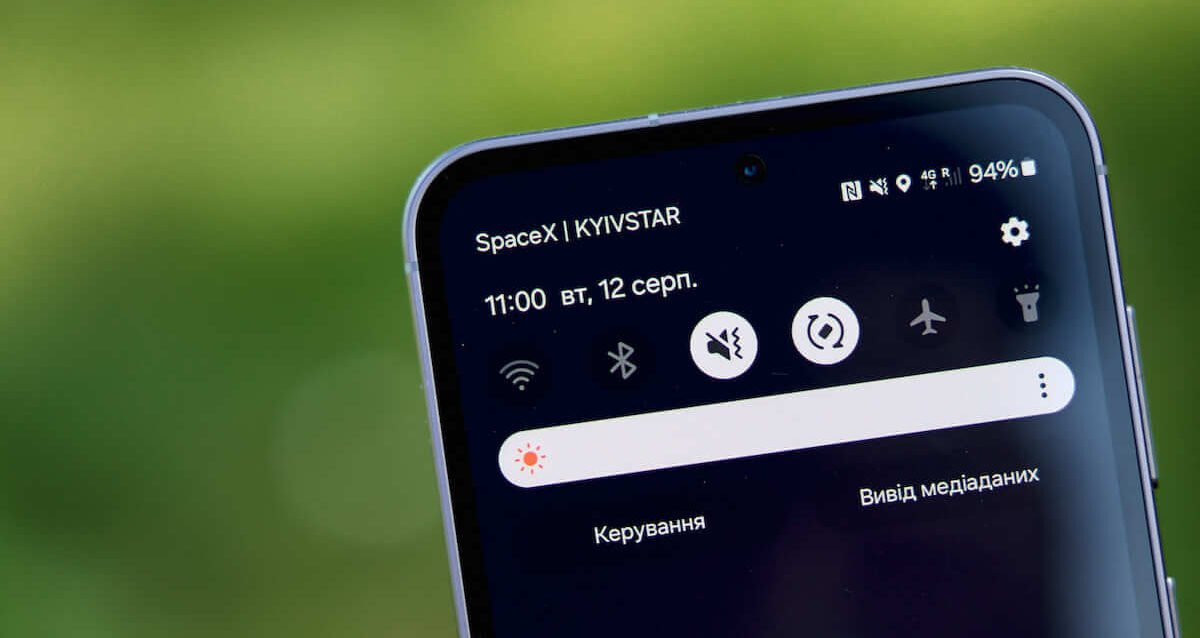
- Kyivstar (Ukraine) – Launched November 2025 as first European deployment
- Virgin Media O2 (United Kingdom) – Scheduled early 2026
Latin America:
- Entel (Chile) – Launched November 2025, first Latin American deployment
- Entel (Peru)
Africa & Middle East:
- Additional partnerships announced for 2026
Cellular providers using Direct-to-Cell have access to reciprocal global roaming, allowing their users to access the service when traveling to partner countries. This creates a global satellite roaming network that mirrors terrestrial international roaming arrangements.
The Veon Mega-Deal: 150 Million Users
In November 2025, SpaceX secured its largest Direct-to-Cell deal with telecoms group Veon, granting access to over 150 million potential customers across emerging markets. The agreement covers Veon’s operators in Kazakhstan (Beeline), Ukraine (Kyivstar), Pakistan, Bangladesh, and Uzbekistan. Kyivstar launched service in Q4 2025, with Beeline following in 2026.
Veon CEO Kaan Terzioglu characterized this as “the biggest partnership in terms of addressable customer base in the world.” The partnership remains non-exclusive, with Veon also in discussions with Amazon’s Project Kuiper, AST SpaceMobile, and Eutelsat OneWeb, reflecting the competitive intensity in the direct-to-cell market.
Pricing Strategy: The $10 Revolution
T-Mobile Pricing Structure
After initial announcements of $15-$20 monthly pricing during Super Bowl 2025, T-Mobile cut the commercial price to $10/month for all customers, regardless of carrier, following “broader-than-expected interest from competitors’ customers.” CEO Mike Sievert stated on April 25, 2025 that “this gen one pricing will be good for at least a year.”
Premium Plans (Free Inclusion):
- Go5G Next plan
- Experience Beyond plan
- Included through end of 2025 for beta participants
Standard T-Mobile Customers: $10/month add-on
Other Carrier Customers (AT&T, Verizon): $10/month via downloadable eSIM
Beta Period: Service remained free during beta testing from February to July 2025, allowing SpaceX and T-Mobile to gather performance data and optimize the network before commercial launch.
Competitive Pricing Analysis
The $10/month price point represents a strategic move to capture market share before competitors launch services. For context, traditional satellite phone services charge $30-$100+/month with expensive specialized hardware ($500-$2,500). Starlink’s Direct-to-Cell eliminates hardware costs entirely and prices competitively with terrestrial premium features like WiFi calling or international roaming add-ons.
AST SpaceMobile’s stock jumped 20% when Starlink’s pricing was announced, as the market viewed the ~$15/month structure (before the cut to $10) as validation of higher-than-expected average revenue per user (ARPU) assumptions. Even a modest $1 ARPU per month could generate $1+ billion annually if AST connects 100 million customers through premium plans.
Value Proposition Analysis
For users who travel to remote areas (hikers, boaters, rural residents, travelers), $10/month provides peace of mind and emergency connectivity without carrying additional satellite devices like Garmin inReach ($15-$65/month + $400 hardware), Bullitt Motorola Defy Satellite Link, or satellite phones. The ability to use existing smartphones without behavior changes or app switching creates significantly lower friction than competing solutions.
For operators, the service primarily functions as a customer retention and acquisition tool rather than a major revenue generator. The value lies in reducing churn, attracting subscribers from competitors, and differentiating service offerings in saturated markets where 5G network quality differences have become minimal.
The Competitive Landscape
AST SpaceMobile: The Giant Satellite Challenger
AST SpaceMobile takes a fundamentally different technical approach—building massive satellites with enormous phased-array antennas (approximately 700 m² antenna area per BlueBird satellite) designed specifically for 4G/5G direct-to-cell connectivity. The company launched its BlueWalker 3 prototype with a 64 m² antenna in 2023, successfully connecting to AT&T phones. In September 2024, AST deployed five BlueBird satellites, with commercial service expected in 2025-2026.
Each AST satellite has approximately 100 times the bandwidth capacity of a Starlink Direct-to-Cell satellite, with capabilities of roughly 20 Mbps downlink and 5-10 Mbps uplink per satellite. However, AST’s deployment pace significantly lags Starlink—AST has just 5 operational satellites versus Starlink’s 650+. The company needs 20 satellites for half coverage and 40+ for full coverage, with launch contracts for 45-60 BlueBird satellites through 2026 at $19-21 million average cost per satellite.
AST has signed partnerships with more than 35 mobile network operators globally, including AT&T and Verizon in the United States, Vodafone Group, Vodafone Idea, Rakuten, Orange, Telefónica, and Telstra worldwide. This broader operator partnership base contrasts with Starlink’s more selective approach, positioning AST as a wholesale provider to the mobile industry.
Analysts give AST a “quality advantage over other players” in the direct-to-cell vertical due to its purpose-built satellite design, but acknowledge Starlink’s massive first-mover advantage in deployment pace. AST claims a “five to 10 year advantage” due to its technology and spectrum strategy, but must execute deployment rapidly to maintain relevance.
Globalstar and Apple: The Emergency-Only Approach
Globalstar’s partnership with Apple, launched with iPhone 14 in late 2022, pioneered mainstream satellite messaging with “Emergency SOS via satellite.” The service provides off-grid 911 messaging in 17 countries across North America, Europe, Asia, and Australasia. However, Globalstar operates only 24 satellites in higher orbit, limiting coverage and bandwidth compared to LEO mega-constellations.
Apple’s walled-garden approach restricts the service to iPhone users exclusively (iPhone 14, 15, and newer), limiting broader market adoption. Globalstar’s chief product officer argues that higher-orbit satellites cover larger areas, providing advantages in emergency reach, but acknowledges competitors are “catching up fast.” The service remains emergency-focused rather than offering full communication capabilities.
Lynk Global: The Dark Horse
Lynk Global operates a “cell tower in space” service with 8 satellites in orbit as of 2025. The company has successfully tested satellite-to-phone connectivity including text messages and voice calls without specialized devices. However, the limited satellite count restricts coverage to sporadic availability rather than continuous service. Lynk must significantly scale deployment to compete with Starlink’s 650+ satellite constellation and AST’s higher-capacity spacecraft.
Amazon Project Kuiper: The Sleeping Giant
Amazon launched its first operational Project Kuiper satellite in April 2025, initiating deployment of a planned 3,236-satellite constellation by 2029. On July 15, 2025, SpaceX (ironically) launched the first of three missions for Amazon’s constellation, deploying 24 Project Kuiper satellites in the KF-01 (Kuiper Falcon 1) mission.
While primarily focused on broadband internet service competing with Starlink’s core business, Project Kuiper’s infrastructure could support direct-to-cell capabilities in the future. Amazon’s deep pockets ($1.7+ trillion market cap) and experience operating global logistics networks could enable rapid scaling if the company prioritizes direct-to-cell as a strategic initiative. However, as of November 2025, Amazon has not announced direct-to-cell plans or partnerships.
OneWeb: The Also-Ran
OneWeb, owned by a consortium including the UK government and Bharti Global, operates a LEO satellite constellation for broadband internet. The company emerged from bankruptcy in 2020 and has deployed 600+ satellites. However, OneWeb has focused on fixed broadband with dedicated equipment rather than direct-to-cell services, allowing Starlink and AST to capture the direct-to-mobile market. As the competitive landscape intensifies, OneWeb risks permanent irrelevance in the direct-to-cell sector without rapid strategic pivoting.
The Next-Generation Revolution: V3 Satellites
15,000 Satellite Mega-Constellation
On September 16, 2025, SpaceX submitted FCC filing SAT-LOA-20250916-00282 requesting authorization for up to 15,000 additional LEO satellites dedicated to enhancing Direct-to-Cell service. This filing builds on prior approvals for approximately 29,988 broadband-focused satellites, bringing the total planned V3 fleet to approximately 44,988 satellites. Of this total, 15,000 dedicated Direct-to-Cell satellites represent approximately 34% of the constellation, with hybrid payloads enabling 20-30% of broadband V3 satellites to include Direct-to-Cell modems for opportunistic cellular offload.
The authorization leverages spectrum acquired from EchoStar in a $17 billion deal announced in 2025, enabling hybrid satellite-terrestrial networks for ubiquitous mobile connectivity. SpaceX also plans to begin testing Direct-to-Cell on this newly acquired wireless spectrum in 2026, potentially doubling available bandwidth.
Revolutionary Capacity: 700 Gbps Per Satellite
V3 (Gen3) satellites, deployable via SpaceX’s Starship launch vehicle, feature massive capacity upgrades compared to current V2 Mini satellites:
- Downlink: 1 Tbps (1,000 Gbps) per satellite
- Uplink: 160 Gbps per satellite
- Combined RF/Laser Backhaul: Approximately 4 Tbps
- Direct-to-Cell Capacity: 700+ Gbps per satellite (>100x improvement over V2 at ~7 Gbps)
These specifications enable peak bitrates targeting 4G LTE-equivalent performance (up to 100 Mbps peak, 2-10 Mbps sustained) with global capacity scaling to petabits via constellation density. The system will support data rates competitive with terrestrial cellular networks, eliminating the historical performance gap that plagued satellite communications.
Capacity Projections: 1 Billion Users at 10 Mbps
With 15,000 dedicated Direct-to-Cell satellites operating at 700 Gbps each, the constellation will provide:
- Total DTC Throughput: 10.5 Petabits per second (Pbps)
- User Capacity: Over 1 billion users at 10 Mbps average
- Alternative Scenario: 100+ million users at 100 Mbps for bandwidth-intensive applications
Advanced beamforming technology enables spatial reuse with signal-to-interference ratios (SIR) exceeding 20 dB, boosting effective capacity by 50% through spectrum efficiency. V3’s 10x bandwidth versus V2 Mini addresses Shannon limit bottlenecks in dense deployments, enabling service quality approaching terrestrial 4G/5G performance.
Starship Deployment: The Cost Revolution
V3 satellites will be deployed using SpaceX’s Starship launch vehicle, dramatically reducing launch costs compared to Falcon 9. Starship’s projected payload capacity of 100-150 tons to LEO enables launching 50-100+ satellites per mission versus Falcon 9’s 20-24 satellite capacity. With Starship targeting launch costs of $10-20 million per mission (versus Falcon 9’s $30 million), the cost per kilogram to orbit drops below $50, compared to Falcon 9’s $100 and competitors’ $1,000+.
This cost structure enables SpaceX to deploy the 15,000-satellite constellation in approximately 150-200 Starship launches over 3-5 years, far exceeding any competitor’s deployment capability. The capital efficiency creates an insurmountable first-mover advantage, with competitors unable to match SpaceX’s vertical integration of satellite manufacturing, launch services, and network operations.
Technical Challenges and Solutions
The Doppler Shift Problem
Satellites traveling at 27,000+ km/h relative to ground users create extreme Doppler shift effects—frequency shifts of up to ±47 kHz at typical LTE frequencies around 1.9 GHz. Standard LTE protocols assume stationary or slow-moving base stations and cannot accommodate such massive frequency variations without modifications.
SpaceX developed custom silicon chips and complex software algorithms to compensate for Doppler shift in real-time, predicting satellite trajectories and adjusting transmission frequencies dynamically. The phone’s receiver must be able to lock onto signals that are shifting frequency by tens of kilohertz per second, requiring sophisticated signal processing that operates within the constraints of standard LTE chipsets.
The Power Budget Challenge
The inverse square law governing radio propagation creates a fundamental challenge—signal power decreases proportionally to the square of distance. At 525 km altitude (versus terrestrial towers at 0-50 meters), path loss exceeds 160-170 dB compared to 100-120 dB for terrestrial links. This 50-60 dB additional loss requires either dramatically higher transmission power from satellites or extremely sensitive receivers.
Starlink’s solution combines higher satellite transmission power (authorized by FCC at -110.6 dBW/m²/MHz), advanced phased array antennas focusing energy into narrow beams, and sophisticated receiver algorithms maximizing sensitivity. The system operates at the edge of what’s physically possible with current LTE phone receiver technology, which was never designed to connect with satellites hundreds of kilometers away.
The Latency and Handoff Challenge
LEO satellites pass overhead quickly—maximum pass time of 3 minutes 20 seconds means phones must handoff to new satellites approximately every 3-4 minutes. Standard LTE handoff procedures take 50-200 milliseconds and assume handoffs between adjacent stationary towers. Direct-to-Cell must manage handoffs to satellites moving at extreme velocities while maintaining active connections without drops.
The system uses predictive handoff algorithms, preparing the next satellite connection before the current satellite moves out of range. Multiple satellites often cover the same area simultaneously, enabling make-before-break handoffs that maintain continuous connectivity. This requires precise ephemeris data (satellite position information) distributed across the constellation and synchronized with sub-second accuracy.
The Beam Size and User Density Challenge
Each satellite beam covers a relatively large geographic area—tens to hundreds of square kilometers depending on elevation angle and beam configuration. All users within a beam share the 7-10 Mbps available bandwidth (Gen 1) or 700+ Gbps (Gen 3). In densely populated areas or popular remote destinations (national parks, beaches), user density could exceed available capacity, degrading service quality.
SpaceX addresses this through dynamic beam shaping and placement, directing multiple beams to high-demand areas and reducing coverage in unpopulated regions. The Gen 3 constellation’s massive capacity increase (100x per satellite) combined with spatial reuse through beamforming enables thousands of simultaneous users per satellite without significant congestion. However, early Gen 1 deployments may experience performance limitations during peak usage periods in popular areas.
Real-World Use Cases and Impact
Emergency Response and Disaster Relief
During Hurricanes Helene and Milton in 2024-2025, SpaceX received special FCC authority to enable Starlink Direct-to-Cell service in impacted regions in partnership with T-Mobile. This enabled subscribers in disaster zones to send text messages and receive Wireless Emergency Alerts even when terrestrial infrastructure was destroyed. Emergency responders coordinated rescue operations using satellite connectivity when all other communications failed.
The Los Angeles wildfires similarly demonstrated Direct-to-Cell’s critical role in public safety, with residents in evacuated areas maintaining communication with emergency services and family members via satellite when power outages and infrastructure damage eliminated terrestrial coverage.
Maritime and Aviation Connectivity
Starlink Direct-to-Cell extends coverage up to 12 nautical miles offshore, providing connectivity to boats and ships in coastal waters. This eliminates the need for expensive maritime satellite phones or radio equipment for recreational boaters, fishermen, and small commercial vessels operating near coastlines. The service works on standard smartphones without additional equipment or expensive maritime connectivity plans.
Future aviation applications could enable passengers to use personal smartphones during flights without WiFi surcharges, though aircraft-specific certification requirements and higher-altitude signal propagation challenges must be addressed before commercial aviation deployment.
Rural and Remote Area Connectivity
Approximately 2.7 billion people globally lack reliable mobile connectivity despite owning smartphones. Starlink Direct-to-Cell addresses this market by providing basic connectivity in areas where terrestrial tower deployment is economically infeasible. Farmers, ranchers, miners, loggers, and other workers in remote industries gain the ability to maintain contact with families, report emergencies, and coordinate business operations without expensive satellite phones.
Remote tourism destinations (national parks, wilderness areas, offshore islands) become more accessible when visitors can maintain basic communication with standard devices. This could reduce search-and-rescue costs by enabling earlier emergency reporting and more precise location information from distressed hikers, climbers, and outdoor enthusiasts.
International Roaming Transformation
Traditional international roaming charges range from $5-15 per day or $0.50-$3 per minute for voice calls in many countries. Starlink Direct-to-Cell’s reciprocal roaming agreements enable seamless connectivity across 11+ partner countries without additional charges beyond the base $10/month subscription. This could fundamentally disrupt international roaming economics, forcing traditional carriers to reduce roaming fees or risk customer defection.
Business travelers, international tourists, and people with family connections across borders benefit from eliminating bill shock and enabling consistent connectivity regardless of location. The service works automatically—phones simply connect to Starlink when terrestrial service is unavailable, appearing as “T-Mobile SpaceX” or similar carrier names.
IoT and M2M Connectivity
Starlink announced plans for IoT (Internet of Things) device connectivity starting in 2025-2026, with successful testing of CAT-1, CAT-1 Bis, and CAT-4 modems compatible with off-the-shelf 3GPP compliant release 10 or newer hardware. This enables ubiquitous global connectivity for:
- Agricultural sensors (soil moisture, weather stations, livestock tracking)
- Transportation and logistics (container tracking, fleet management, asset monitoring)
- Maritime applications (fishing fleet management, buoy networks, offshore equipment)
- Utilities and infrastructure (remote meter reading, pipeline monitoring, grid sensors)
- Environmental monitoring (wildlife tracking, seismic sensors, air quality)
The business case for IoT connectivity is particularly compelling because devices typically transmit small data packets infrequently, efficiently using available satellite bandwidth. Monthly service costs of $5-15 per device compare favorably with terrestrial IoT connectivity in remote areas, where installation of cellular infrastructure solely for IoT applications is economically unjustifiable.
Market Impact and Economic Implications
The $25.67 Billion Satellite Internet Market
The global satellite internet market was valued at $8.09 billion in 2025 and is projected to grow at a 17.9% CAGR, reaching $25.67 billion by 2030-2032 depending on analysis methodology. Starlink currently captures approximately 90% of this market with 7.1+ million global subscribers as of September 2025 and estimated 2024 revenues exceeding $3.2 billion.
For 2025, Starlink generated $11.8 billion in total revenue (75% of SpaceX’s total revenue), with 75% gross margins, operating a 7,600-satellite constellation. This represents dramatic growth from $2+ billion in 2023, reflecting rapid subscriber acquisition and international expansion. Direct-to-Cell represents an additional revenue stream on top of the core broadband business, with potential to add $1-5 billion annually as deployment scales globally.
Competitive Market Dynamics
Starlink’s first-mover advantage and technological edge position it to capture 60% of the satellite internet market by 2030, even accounting for competition from Amazon Kuiper, OneWeb, and regional players in China (Guowang constellation with 13,000+ planned satellites) and other nations. The company’s vertical integration—controlling satellite manufacturing, launch services, ground infrastructure, and customer service—creates defensibility that pure satellite operators cannot match.
AST SpaceMobile, valued at $14.6 billion market cap despite less than $5 million in trailing 12-month revenue as of August 2025, represents investor speculation on future direct-to-cell potential. The company’s Q2 2025 revenue of $1.16 million (missing analyst forecasts) and deepening losses of $99.4 million (up 37% year-over-year) highlight execution risks. However, ASTS shares have surged 93% year-to-date through October 2025, reflecting market belief in the technology’s transformative potential.
Impact on Traditional Carriers
Direct-to-cell satellite services fundamentally challenge traditional mobile network operators’ business models by eliminating coverage as a competitive differentiator. If all carriers offer satellite backup connectivity (either through Starlink, AST, or competing providers), network quality becomes the primary differentiation factor in urban/suburban markets while remote coverage reaches parity.
T-Mobile CEO Mike Sievert stated on April 25, 2025: “I think T-Mobile is in a spot right now where it’s more differentiated versus the competitors than it ever has been in our history. With the strength of our 5G network, all the things we’re doing with T-Satellite, the membership benefits that we’re able to convey to people and the day-to-day superior experience that only T-Mobile provides.”
This suggests carriers view satellite connectivity primarily as a retention and acquisition tool rather than a major profit center. Analysts from Analysys Mason note: “From a mobile operator point of view, you might think that the direct revenue opportunity is not great. But if you can get new subscribers and have better retention in your customer base, maybe it’s worth launching even a limited service for building customer retention. That’s a huge value for the mobile operators.”
Regulatory and Geopolitical Implications
Starlink’s satellite internet infrastructure has emerged as a strategic asset with geopolitical significance. The company’s role providing connectivity during Ukraine’s resistance to Russian invasion demonstrated how commercial satellite systems can influence military conflicts and geopolitical outcomes. Multiple governments now view Starlink as “both a soft power tool for the U.S. and a potential source of space traffic concerns.”
Regulatory headwinds in countries like China and India (though India recently cleared most licensing requirements in June 2025) reflect concerns about foreign control of critical communications infrastructure. Brazil, Iran, and other nations have considered restrictions or demanded local data centers and government access to encryption keys. These regulatory challenges could limit Starlink’s addressable market to Western-aligned nations and democracies, capping potential subscriber numbers below global population estimates.
Space traffic management concerns grow as mega-constellations proliferate. Starlink operates over 8,000 satellites as of November 2025 (including both Direct-to-Cell and broadband satellites), comprising the majority of active satellites in Earth orbit. Concerns about space debris, collision risks, and light pollution from massive satellite constellations have sparked calls for stronger international regulation, potentially limiting future constellation expansion.
The 2026 Roadmap and Beyond
Commercial Launch Timeline
Q4 2025 – Q1 2026: Commercial voice and data services launch in United States (T-Mobile), New Zealand (One NZ), Chile (Entel), and Ukraine (Kyivstar), pending FCC and equivalent international regulatory approvals. This will transform Direct-to-Cell from an emergency/messaging service into a full mobile connectivity solution.
Q1-Q2 2026: European expansion through Virgin Media O2 in United Kingdom, Salt in Switzerland, and additional operators. Asia-Pacific growth through KDDI (Japan), Optus and Telstra (Australia), with potential India launch if regulatory approvals materialize.
Mid-2026: IoT and M2M commercial services launch, enabling business applications for agriculture, transportation, maritime, utilities, and industrial sectors. This creates a parallel revenue stream targeting enterprises rather than consumers.
Late 2026-2027: Testing of Direct-to-Cell services on EchoStar spectrum acquired in $17 billion deal, potentially doubling available bandwidth and improving performance in high-demand areas.
V3 Constellation Deployment
2026-2027: Initial Starship launches deploying first V3 Direct-to-Cell satellites with 700 Gbps capacity. Deployment pace depends on Starship launch cadence, targeting 50-100 launches annually as the vehicle matures.
2027-2028: Gradual transition from Gen 1 (V2 Mini) to Gen 3 satellites, with older satellites deorbited as replacements deploy. The 5-year typical lifespan of LEO satellites means continuous replenishment maintains and improves constellation capabilities.
2028-2030: Completion of 15,000-satellite Direct-to-Cell constellation providing global coverage with 4G/5G-equivalent performance to billions of users worldwide. At this scale, satellite mobile connectivity becomes indistinguishable from terrestrial service for most applications.
Potential 5G Evolution
While current Direct-to-Cell systems operate on 4G LTE protocols, SpaceX and partners are exploring 5G NTN (Non-Terrestrial Network) integration. 5G’s flexible numerology and enhanced beamforming capabilities could enable better accommodation of satellite-specific challenges like Doppler shift and long propagation delays.
However, Starlink president Gwynne Shotwell stated at an industry conference in September 2025 that Starlink has “little or no chance” to extend service to voice for at least two years, despite initial expectations of 2025 commercial launch. She explained the delay stems from development challenges with crucial chipsets required for voice codecs and network integration. The company expects to start initial tests of new direct-to-device spectrum later in 2026.
This suggests realistic commercial 5G Direct-to-Cell deployment may not occur until 2027-2028 at earliest, allowing 4G LTE systems to dominate the market through mid-decade. AST SpaceMobile’s purpose-built satellites may have advantages in 5G deployment if they can overcome their current satellite count limitations.
Global Expansion Strategy
SpaceX is targeting 10-15 new country launches annually, with focus on high-value markets (Western Europe, developed Asia-Pacific nations) and strategic emerging markets (Africa, Latin America, South Asia). Each country requires partnership with local mobile operators, regulatory spectrum approvals, and sometimes government permissions related to satellite communications.
The strategy prioritizes countries where partners control meaningful spectrum licenses and have substantial subscriber bases (10+ million customers). This explains partnerships with major operators like Verizon (not yet deployed), Vodafone (multiple countries), and national champions like KDDI and Telstra rather than smaller regional carriers.
Africa and rural Asia represent enormous untapped markets—billions of potential users in areas with minimal terrestrial infrastructure. However, lower average revenue per user (ARPU) in these regions ($2-5/month typical mobile ARPU versus $30-50 in developed markets) may require different pricing strategies or government subsidy programs to achieve profitability.
Challenges and Limitations
Terminal Hardware Requirements
While Direct-to-Cell works with unmodified phones, not all devices currently function optimally. Compatible devices as of November 2025 include:
- Apple iPhone 14 and later (including Plus, Pro, Pro Max models)
- Google Pixel 9 series (including Pro, Pro Fold, Pro XL)
- Motorola 2024 and later (including razr, razr+, edge, and g series)
- Samsung latest flagships
Older phone models are technically capable but require optimization work with manufacturers. Many mid-range and budget smartphones from 2023 and earlier may struggle to maintain reliable satellite connections due to receiver sensitivity limitations and older LTE modem designs not optimized for extreme path loss conditions.
SpaceX and T-Mobile note they’re “working with phone manufacturers to optimize” devices for satellite connectivity, suggesting software/firmware updates may expand compatibility. However, fundamental hardware limitations (antenna design, receiver sensitivity) mean some older devices may never achieve reliable performance.
Performance Limitations and Congestion
Gen 1 constellation bandwidth constraints (7-10 Mbps per beam shared among all users) create potential congestion scenarios. A single satellite beam covering 50-100 square kilometers with 100 simultaneous users provides only 70-100 Kbps per user—sufficient for text messaging but inadequate for voice calls or data services.
Popular remote destinations (national parks during peak season, beaches, sporting events in rural areas) could experience degraded service when user density exceeds capacity. The system may implement priority schemes (emergency calls first, then voice, then data) or temporarily block new connections during congestion events.
Gen 3 satellites with 700 Gbps capacity resolve most congestion concerns, enabling thousands of simultaneous high-bandwidth users per satellite. However, deployment timeline uncertainty (2026-2030) means capacity limitations persist for several years. Users should expect text messaging to work reliably, but voice and data performance may vary significantly based on location and user density until Gen 3 deployment completes.
Regulatory and Spectrum Challenges
The FCC denied SpaceX’s March 2024 request for additional Mobile Satellite Service (MSS) spectrum in the 1.6/2.4 GHz bands and 2020-2025 MHz Earth-to-space band, citing interference concerns with terrestrial operations. This limits available bandwidth and may constrain service quality improvements until alternative spectrum becomes available.
International regulatory approvals vary dramatically by country. Some nations require local data centers, government encryption backdoors, or ownership stakes for domestic entities. Others prohibit satellite telecommunications entirely or restrict them to government-approved applications. These barriers could limit Direct-to-Cell to perhaps 50-70 countries rather than true global coverage of 190+ nations.
Spectrum coordination with terrestrial operators remains complex. Each satellite effectively “borrows” spectrum from terrestrial carriers, requiring careful power control to avoid interfering with ground-based towers. The FCC and equivalent international regulators must balance enabling satellite innovation against protecting existing terrestrial infrastructure investments worth hundreds of billions of dollars globally.
Environmental and Space Sustainability Concerns
Starlink’s rapid constellation expansion to 8,000+ satellites (with plans for 44,988 total) raises legitimate concerns about space sustainability. The satellites orbit below 600 km altitude where atmospheric drag naturally deorbits failed satellites within 5 years, and SpaceX proactively deorbits satellites at elevated risk of failure, minimizing non-maneuverable objects.
However, the sheer scale creates collision risks. Each satellite must autonomously avoid thousands of potential collisions monthly, relying on precise ephemeris tracking and rapid maneuver capabilities. A single catastrophic collision could generate thousands of debris fragments, triggering a Kessler syndrome cascade that makes LEO unusable for decades.
Astronomical observations suffer from satellite light pollution—the large solar panels and reflective surfaces create bright streaks across telescope images. SpaceX has implemented mitigation measures (darker coatings, orientation changes) but fundamental physics limits effectiveness. Major astronomical surveys report 10-30% of observations impacted by satellite trails, with impacts worsening as constellations expand.
These environmental concerns could trigger regulatory restrictions limiting constellation sizes or requiring more stringent debris mitigation measures, potentially constraining SpaceX’s growth plans and increasing operational costs.
Strategic Recommendations for Stakeholders
For Mobile Network Operators
Immediate Actions: Evaluate partnerships with Starlink, AST SpaceMobile, or competing providers to avoid competitive disadvantage. Operators without satellite backup risk customer defection to rivals offering ubiquitous coverage. The $10/month price point suggests satellite connectivity will become table-stakes rather than premium differentiator.
Strategic Positioning: Frame satellite as complementary to terrestrial networks rather than replacement—highlighting superior performance and capacity in urban/suburban areas while offering satellite for edge coverage. Bundle satellite with premium plans to drive tier upgrades rather than treating as separate add-on.
Spectrum Strategy: Consider reciprocal arrangements where operators provide spectrum access to satellite providers in exchange for wholesale capacity. This enables participation in satellite economics without massive capex investments in space infrastructure.
For Enterprise and Government Customers
IoT Deployments: Pilot satellite-connected IoT devices for remote asset monitoring, agricultural sensors, and utility infrastructure. The business case strengthens as monthly costs decline from $15 to $5-10 per device through volume commitments and wholesale arrangements.
Business Continuity: Implement satellite backup for critical locations (remote offices, disaster recovery sites, mobile command centers) to maintain connectivity during infrastructure failures. The $10/month per line cost trivializes compared to business interruption costs during disasters.
Fleet Management: Evaluate satellite connectivity for vehicles, vessels, and aircraft operating in remote areas. Integration with existing fleet management platforms enables real-time tracking and communication without dedicated satellite hardware.
For Investors and Analysts
SpaceX Valuation: Starlink’s $11.8 billion revenue in 2025 with 75% gross margins supports SpaceX valuations of $300-400 billion (25-30x revenue multiple typical for high-growth infrastructure companies). Direct-to-Cell represents 5-15% upside to these estimates as service scales globally through 2026-2030.
AST SpaceMobile Risk/Reward: Current $14.6 billion market cap prices in successful deployment of 60+ satellites and partnerships with 35+ operators. Execution risks remain high—the company has launched only 5 operational satellites versus Starlink’s 650+, burns $100+ million quarterly, and faces competition from a competitor with 100x more satellites deployed. However, 100x superior per-satellite capacity and broader operator partnerships provide differentiation if AST executes deployment.
Traditional Satellite Operators: HughesNet, Viasat, Intelsat, and geostationary satellite operators face structural obsolescence as LEO constellations offer superior latency and performance. These companies trade at enterprise values of $2-10 billion despite decades of infrastructure investment, reflecting market expectations of disruption. Position sizes should reflect declining relevance rather than historical market share.
For Policymakers and Regulators
Spectrum Allocation: Develop frameworks for efficient satellite-terrestrial spectrum sharing that enables innovation without harming existing infrastructure. Consider dedicated MSS bands for satellite direct-to-cell to avoid perpetual coordination challenges with terrestrial operators.
Space Sustainability: Implement enforceable standards for collision avoidance, debris mitigation, and end-of-life disposal before mega-constellations reach unmanageable scale. Current voluntary guidelines lack teeth—mandatory requirements with penalties ensure responsible behavior.
Competition Policy: Monitor for anticompetitive behavior as SpaceX’s vertical integration (satellite manufacturing, launch services, ground infrastructure, end-user service) creates advantages potentially insurmountable by competitors. Consider structural separation requirements if market concentration threatens competition.
Universal Service: Leverage satellite connectivity for rural broadband and connectivity mandates rather than subsidizing uneconomic terrestrial infrastructure buildouts. Direct-to-Cell provides coverage at fraction of fiber deployment costs in remote areas.
Frequently Asked Questions
Do I need a special phone or app to use Starlink Direct-to-Cell?
No. The service works with standard LTE smartphones without any hardware modifications, special apps, or firmware updates. Your phone automatically connects to Starlink satellites when terrestrial cellular service is unavailable, displaying “T-Mobile SpaceX” or similar as the carrier name. However, newer phones (iPhone 14+, recent Samsung/Motorola flagships, Google Pixel 9) currently have the best compatibility. Older devices may require manufacturer optimization for reliable performance.
What services are available now versus coming in 2026?
As of November 2025, text messaging (SMS) is commercially available, including emergency 911 texting and Wireless Emergency Alerts. Select satellite-optimized apps work with limited functionality (messaging, navigation, basic browsing). Voice calls and full data services will launch late 2025 to 2026 pending regulatory approvals and additional satellite deployments. IoT device connectivity is also planned for 2026.
How fast is Starlink Direct-to-Cell compared to regular cellular service?
Current Gen 1 satellites provide approximately 7-10 Mbps per beam shared among all users in the coverage area. This is sufficient for text messaging and compressed voice calls but significantly slower than terrestrial 4G/5G (typically 10-100+ Mbps per user). Gen 3 satellites deploying 2026-2030 will offer 700 Gbps per satellite, enabling 4G-equivalent performance (10-100 Mbps per user) competitive with terrestrial networks.
How much does the service cost?
T-Mobile charges $10/month for all customers, regardless of whether you’re a T-Mobile subscriber or use AT&T, Verizon, or another carrier (via eSIM). The service is included free with T-Mobile’s Go5G Next and Experience Beyond premium plans through 2025. International pricing varies by country and operator, typically ranging $10-15/month based on announced partnerships.
Which countries have Starlink Direct-to-Cell service?
As of November 2025, commercial service is available in the United States (T-Mobile), New Zealand (One NZ), Chile (Entel), and Ukraine (Kyivstar). Testing is underway in Canada (Rogers), Australia (Optus, Telstra), Japan (KDDI), Switzerland (Salt), and Peru (Entel). UK service through Virgin Media O2 is scheduled for early 2026. Additional countries in Europe, Asia, Africa, and Latin America are planned through 2026-2027.
Will Starlink Direct-to-Cell work on airplanes and cruise ships?
The service works on boats and ships up to 12 nautical miles offshore with current authorization. Aviation applications face additional regulatory hurdles and technical challenges (higher altitude signal propagation, FAA/EASA certification requirements). SpaceX has not announced commercial aviation deployment timelines, though technically feasibility exists once regulatory approvals are obtained.
How does Starlink compare to Apple’s Emergency SOS via satellite?
Apple’s service (powered by Globalstar) is emergency-only, restricted to iPhone 14+ devices, and limited to 911 messaging in 17 countries. Starlink Direct-to-Cell offers broader functionality (text, voice, data) on any compatible LTE smartphone from any manufacturer, with commercial pricing ($10/month versus free for Apple’s service). Apple’s service covers more of the world currently due to higher-orbit satellites, but Starlink’s rapid deployment is closing this gap.
What happens if too many people try to use the satellite at once?
Gen 1 satellites have limited capacity (7-10 Mbps per beam shared among users), so high user density could cause congestion. The system will likely prioritize emergency calls first, then voice, then data services. Text messaging should work reliably even during congestion due to minimal bandwidth requirements. Gen 3 satellites with 100x more capacity will largely eliminate congestion concerns, but deployment takes several years (2026-2030).
Can I use Starlink Direct-to-Cell as my primary phone service?
No. The service is designed as backup connectivity for areas without terrestrial cellular coverage, not as primary service replacement. Current bandwidth limitations (7-10 Mbps per beam shared among users) cannot support the data consumption patterns of typical smartphone users (streaming video, social media, etc.). Gen 3 satellites will improve capabilities significantly but still target supplemental/emergency use rather than replacing terrestrial towers in populated areas.
Is Starlink Direct-to-Cell safe? Are there health concerns from satellite radiation?
The service uses the same LTE radio frequencies (1.6-2.7 GHz) as terrestrial cell towers, which have decades of safety research showing no health risks at normal exposure levels. Satellites operate at higher altitudes (525+ km versus terrestrial towers at ground level), so signal strength at ground level is actually much lower than standing next to a cell tower. The FCC authorization limits power flux density to -110.6 dBW/m²/MHz, well below levels that could cause biological effects.
Conclusion: The Inevitable Future of Universal Connectivity
Starlink Direct-to-Cell represents more than incremental improvement in mobile coverage—it fundamentally redefines what “mobile network” means. By treating satellites as cell towers in space and integrating them seamlessly with terrestrial infrastructure, SpaceX has created a hybrid terrestrial-satellite network that eliminates the historical tradeoff between ubiquitous coverage and high performance.
The numbers tell a compelling story: 650+ satellites deployed covering 8 million users across 11 countries in less than two years from first launch demonstrates execution velocity that competitors cannot match. AST SpaceMobile’s 5 satellites, Globalstar’s 24 satellites, and Lynk’s 8 satellites collectively represent less than 10% of Starlink’s deployed capacity. While AST’s satellites have 100x more individual capacity, deployment pace matters more than per-satellite performance in a race to capture market share and operator partnerships.
The $10/month price point—less than a typical streaming service subscription—makes satellite backup connectivity a mass-market product rather than niche premium feature. For context, this equals approximately 0.5% of typical American household mobile spending ($150-200/month for family plans). At this price, objections evaporate and the service becomes table-stakes for competitive mobile operators.
Gen 3 satellites deploying 2026-2030 will deliver the final piece—performance competitive with terrestrial 4G/5G at 10-100 Mbps per user. At that point, users won’t distinguish between terrestrial and satellite connectivity beyond seeing different carrier names. The 15,000-satellite constellation provides enough capacity to serve 1 billion users at 10 Mbps average, approaching meaningful percentages of global smartphone users (approximately 6.8 billion devices globally).
The implications extend beyond telecommunications into geopolitics, economics, and society. A global communications infrastructure controlled by a single company (SpaceX) and concentrated in one country (United States) raises sovereignty concerns for nations worldwide. China’s Guowang constellation (13,000+ planned satellites) and other national space internet programs reflect strategic responses to perceived American dominance.
For investors, Starlink’s position as the dominant provider of both satellite internet and direct-to-cell services justifies SpaceX valuations of $300-400 billion, making it one of the world’s most valuable private companies. The 75% gross margins and $11.8 billion annual revenue provide cash generation funding SpaceX’s broader ambitions—Mars colonization, Starship development, and space exploration.
For users, the transformation is simpler: dead zones cease to exist. Whether hiking in national parks, sailing coastal waters, driving through rural areas, or traveling internationally, your phone will work. Text, voice, and eventually data services will function anywhere you can see the sky, eliminating the anxiety of being unreachable in emergencies and the inconvenience of spotty coverage in remote areas.
The future Elon Musk described—where “you never have to worry about losing coverage”—arrives incrementally through 2026-2030 as constellations scale and technology matures. By decade’s end, the question won’t be “which carrier has the best coverage?” but rather “which carrier offers the best price and features?” when all provide ubiquitous global connectivity through hybrid terrestrial-satellite networks.
Starlink Direct-to-Cell isn’t just a new product—it’s the foundation of how humans will communicate in the coming decades, on Earth and eventually beyond.