

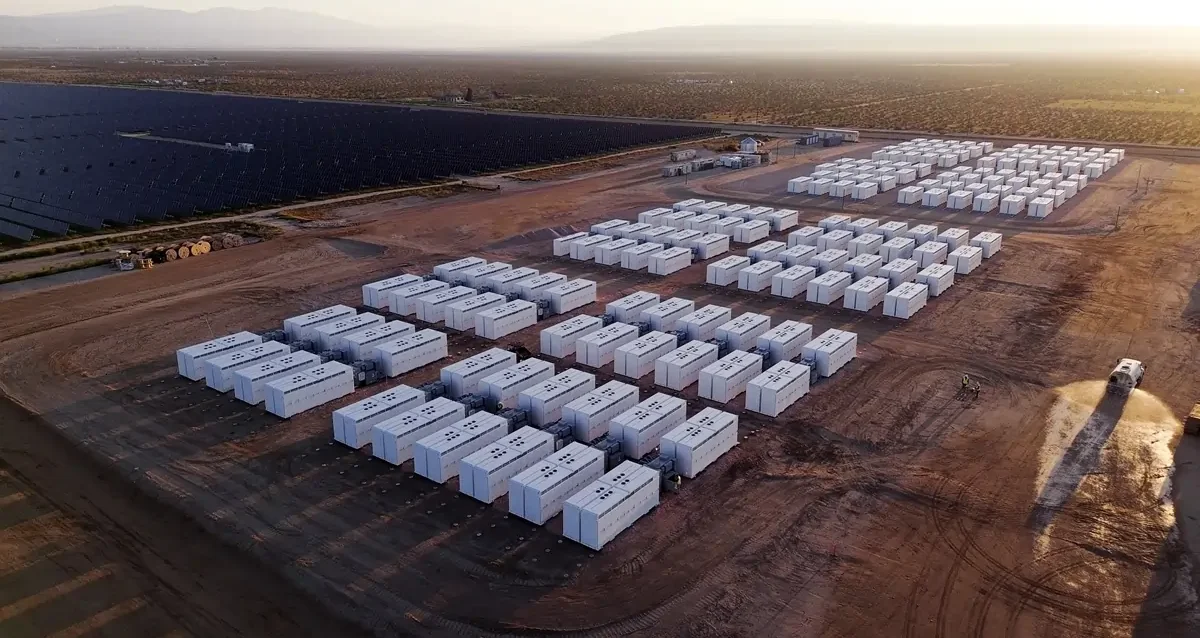
Tesla China Battery Project Renewable Energy
TL;DR: Critical Data Points
Tesla China battery project renewable energy represents the largest grid-scale battery storage initiative in China, backed by a 4 billion yuan ($557 million) investment with China Kangfu International Leasing and Shanghai municipal authorities. The Shanghai Megafactory achieved production of 1,000 Megapacks within six months of February 2025 launch, with annual capacity reaching 10,000 units (40 GWh). China’s battery energy storage capacity surged 110% to exceed 100 GW in H1 2025, with the nation targeting 180 GW by 2027 and accounting for 40% of global deployments.
Tesla battery projects globally now span California’s Lathrop facility, Nevada, Texas, Australia’s Victorian Big Battery, UK installations, and the new Shanghai grid-scale station, demonstrating Megapack deployment across diverse regulatory environments. Tesla Megapack price typically reaches approximately $1 million per unit in U.S. markets, though pricing varies by project scale and region, with battery pack costs for stationary storage hitting record lows of $70/kWh in 2025.
Tesla’s energy storage division deployed 10.4 GWh in Q1 2025 alone, representing 156% year-over-year growth, with energy revenues hitting $10.1 billion in 2024 at 26% gross margins. The Shanghai facilities generate 11 million kWh annually from rooftop solar installations, reducing carbon emissions by 4,600 tons while targeting 100% renewable manufacturing energy by 2026.
Tesla china battery project renewable energy cost economics improve as lithium-ion battery prices decline dramatically, with stationary storage achieving lowest per-kWh pricing among all battery applications for first time. Tesla china battery project renewable energy stock implications show analysts estimating energy business could account for 14% of Tesla’s valuation, with CEO Elon Musk projecting energy storage could eventually outsize the automotive business.
The tesla china battery project renewable energy 2024 milestone saw Shanghai Megafactory commence operations February 11, 2025, after just nine months construction, while China bought tesla energy storage systems through the $557M grid-scale project agreement representing strategic alignment between American technology and Chinese renewable energy infrastructure goals. CATL maintains 38.1% global battery market share while Tesla competes directly with Chinese giants BYD (16.9% share) and CATL in the $93.9 billion Chinese energy storage market projected to grow at 18.9% CAGR through 2032.
In June 2025, Tesla executives gathered with Shanghai government officials to announce what would become China’s largest grid-scale battery energy storage project. The $557 million agreement wasn’t merely another manufacturing deal in the world’s largest EV market; it signaled Tesla’s fundamental transformation from automotive manufacturer to comprehensive energy infrastructure company, positioning the American firm at the epicenter of China’s $35 billion national energy storage expansion plan.
The tesla china battery project renewable energy initiative addresses critical questions circulating in industry discussions, from Reddit communities analyzing Tesla’s strategic pivot to institutional investors evaluating the company’s energy division growth trajectory. Common queries about tesla china battery project renewable energy cost economics, tesla stock implications, and competitive positioning versus domestic manufacturers reflect widespread interest in understanding how this project reshapes both Tesla’s business model and China’s energy infrastructure.
The timing proves strategic. China surpassed 100 GW of installed battery storage capacity for the first time in H1 2025, representing 110% year-over-year growth, according to the China Energy Storage Alliance (CNESA). This explosive growth trajectory positions China to control approximately 40% of global battery storage deployments by decade’s end, creating unprecedented opportunities for companies capable of delivering utility-scale solutions at the intersection of manufacturing excellence and renewable energy integration.
Tesla’s Shanghai operations now encompass three interconnected facilities: the original Gigafactory producing 950,000+ electric vehicles annually, the Megafactory manufacturing 10,000 Megapack units yearly (40 GWh capacity), and the forthcoming grid-scale storage station that will eclipse all existing Chinese installations. This vertical integration creates competitive advantages that traditional battery manufacturers struggle to replicate, particularly as global energy storage requirements accelerate toward the International Energy Agency’s (IEA) projection of 1,200 GW needed by 2030 to achieve Net-Zero 2050 alignment.
The Strategic Architecture Behind Tesla’s Chinese Energy Gambit
Manufacturing Velocity Meets Market Necessity
Tesla’s Shanghai Megafactory commenced production on February 11, 2025, breaking ground just nine months earlier in May 2024. This construction timeline stands in stark contrast to the 14-month build period for Tesla’s Lathrop, California facility, demonstrating China’s unmatched infrastructure development capabilities. The factory spans 200,000 square meters in Shanghai’s Lingang Special Area with total investment reaching 1.45 billion yuan ($200 million), positioning it as Tesla’s first energy storage manufacturing facility outside the United States.
Production milestones validate the facility’s operational efficiency. By late July 2025, the Shanghai Megafactory produced its 1,000th Megapack unit destined for European markets, achieving this benchmark in under six months. The factory operates with annual capacity of 10,000 Megapack units, each storing approximately 3.9 MWh of electricity—equivalent to powering 3,600 homes for one hour or matching the battery capacity of 62 Tesla Model 3 rear-wheel-drive vehicles.
Current global deployment statistics underscore the facility’s strategic importance. Tesla deployed 10.4 GWh of energy storage in Q1 2025 alone, representing 156% growth compared to Q1 2024, building upon the record 31.4 GWh deployed throughout 2024 which doubled the previous year’s total. These deployment figures positioned Tesla’s energy division as one of the company’s strongest financial performers, generating $10.1 billion in revenue during 2024 with industry-leading 26% gross margins.
China’s Energy Storage Imperative: Policy Meets Practice
China’s renewable energy expansion creates structural demand for massive storage capacity. The nation added 212 GW of solar photovoltaic capacity by end of June 2025, having already exceeded its 1.2 TW combined wind and solar target for 2030 within 2024. This renewable capacity growth generates intermittency challenges that only large-scale battery storage can address, particularly as China pursues carbon peaking by 2030 and carbon neutrality by 2060.
Beijing’s policy framework drives systematic storage deployment. In May 2024, authorities set targets to add nearly 5 GW of battery-powered electricity supply by end of 2025, bringing total capacity to 40 GW. Recent data from the National Energy Administration (NEA) reveals installed capacity reached 94.91 GW (222 million kWh) by mid-2025, representing 29% growth from year-end 2024. The government subsequently announced ambitious targets of 180 GW by 2027, supported by a $35 billion national investment plan aimed at nearly doubling capacity within two years.
Provincial mandates accelerate deployment velocity. More than 20 provinces published individual plans for new-type energy storage systems (NTESS) since 2019, collectively targeting over 60 GW capacity and surpassing the NEA’s original 30 GW goal for 2025. These provincial initiatives typically require renewable energy developers to install storage systems covering 10-30% of their projects’ capacity, creating automatic demand for utility-scale batteries as solar and wind installations proliferate.
Market dynamics favor established players with manufacturing scale. Grid-side projects accounted for 91% of new power capacity (49.19 GW) and 92% of energy capacity (128.37 GWh) in July 2025 alone, according to CNESA registration data. This concentration on utility-scale deployments aligns perfectly with Tesla’s Megapack positioning, which targets exactly these grid-stabilization applications rather than distributed commercial installations.
Competitive Landscape: Tesla Versus Chinese Battery Giants
Tesla enters a fiercely competitive Chinese market dominated by domestic manufacturers with established supply chains and government relationships. Contemporary Amperex Technology Co. Limited (CATL) commands 38.1% of the global EV battery market through October 2025, installing 355.2 GWh and serving both Chinese brands (Zeekr, AITO, Li Auto, Xiaomi) and international automakers (Tesla, BMW, Mercedes-Benz, Volkswagen). BYD holds 16.9% global share with 157.9 GWh installed, leveraging vertical integration advantages across its battery and vehicle production.
Chinese manufacturers collectively control 69% of global EV battery market share, with the top six Chinese suppliers (CATL, BYD, CALB, Gotion High-tech, Eve Energy, Svolt) shaping global supply chains, technology standards, and pricing power. This dominance extends specifically into energy storage systems, where CATL and BYD compete directly with Tesla’s Megapack offerings through their own utility-scale products.
Despite this competitive intensity, Tesla maintains distinct advantages. The company’s global brand reputation and track record with existing Megapack deployments in California, Texas, Nevada, Australia, and the United Kingdom provide credibility that domestic competitors struggle to match in international markets. Tesla’s Shanghai Megafactory already exports to Europe and Australia, with the first batch shipping to Australia in March 2025, demonstrating the facility’s role as a regional manufacturing hub rather than solely serving Chinese domestic demand.
Pricing dynamics create additional competitive considerations. Each Megapack retails for approximately $1 million in U.S. markets, though Chinese pricing remains undisclosed. The cost of lithium-ion batteries hit record lows of $115/kWh in 2024, with BloombergNEF data showing stationary storage battery pack prices fell to $70/kWh in 2025—a 45% decrease from 2024 representing the steepest decline among all lithium-ion battery use cases and making stationary storage the cheapest category for the first time.
Technical Innovation Driving Grid-Scale Transformation
Megapack Pricing Economics and Market Implications
Understanding tesla Megapack price dynamics proves critical for evaluating project economics and competitive positioning. Each Megapack unit retails for approximately $1 million in U.S. markets according to Tesla’s website, though pricing varies significantly based on project scale, site conditions, grid connection requirements, and regional competitive dynamics. Chinese market pricing remains undisclosed, though costs likely differ substantially from U.S. levels due to local manufacturing eliminating international shipping, component sourcing from regional suppliers, lower labor costs, and intense competition with domestic battery manufacturers CATL and BYD.
Tesla battery projects economics have improved dramatically as battery pack costs declined to record lows. BloombergNEF data shows stationary storage battery pack prices fell to $70/kWh in 2025, representing 45% decrease from 2024 and making stationary storage the cheapest battery application category for the first time. This pricing evolution fundamentally alters tesla china battery project renewable energy cost calculations, improving project returns while expanding addressable markets for utility-scale deployments.
The tesla china battery project renewable energy stock implications extend beyond immediate revenue generation toward long-term strategic positioning. Analysts estimate Tesla’s energy business could account for 14% of total company valuation, with the division’s 26% gross margins exceeding automotive segment performance during periods of EV margin compression. Investment communities tracking tesla stock increasingly focus on energy storage deployment rates as key performance indicator, recognizing this segment’s potential to eventually outsize the automotive business as CEO Elon Musk projected.
Market dynamics around China bought tesla energy storage systems through the $557M agreement demonstrate strategic alignment transcending typical commercial transactions. The deal represents Chinese government recognition of Tesla’s technology leadership while providing the American company crucial market access in the world’s fastest-growing energy storage market. This mutual dependency creates buffers against bilateral trade tensions, as both parties benefit from continued cooperation on renewable energy infrastructure regardless of broader U.S.-China political frictions.
Discussions on Reddit and industry forums frequently debate whether tesla ordered to refund Full Self-Driving package controversies in the automotive division might affect energy business operations. However, energy storage represents entirely separate business segment with distinct customers (utilities, grid operators, commercial facilities) operating under different regulatory frameworks than consumer automotive products. The Megapack division’s institutional customer base and long-term infrastructure project cycles insulate it from consumer-facing regulatory challenges affecting vehicle sales.
The tesla china battery project renewable energy 2024 timeline saw critical milestones including Megafactory groundbreaking (May 2024), production commencement (February 2025), first 1,000 units produced (July 2025), and grid-scale storage agreement announcement (June 2025). This compressed timeline from construction start to operational deployment demonstrates Tesla’s execution capabilities while establishing Shanghai as strategic manufacturing hub serving Asia-Pacific markets and European exports.
Pricing transparency remains limited compared to automotive products, as tesla Megapack price negotiations typically involve custom project specifications, multi-year service agreements, performance guarantees, and software licensing for Autobidder platform access. Published $1 million U.S. pricing represents baseline equipment cost, with total project expenses including site preparation, grid interconnection, permitting, installation labor, and ongoing maintenance contracts that can double or triple upfront hardware costs depending on project complexity.
Chinese competitors including CATL and BYD offer comparable utility-scale battery systems at potentially lower costs due to domestic supply chain advantages, government support, and aggressive market share pursuit strategies. However, Tesla differentiates through proven international deployment experience, superior software integration enabling autonomous energy trading, comprehensive warranties extending 20 years, and over-the-air update capabilities continuously improving system performance without site visits. These service differentiators justify premium pricing for customers prioritizing total cost of ownership over initial capital expenditure.
Tesla’s Megapack represents the culmination of years of battery engineering evolution, designed specifically for utility-scale applications where reliability, power output, and minimal maintenance determine commercial viability. Each unit stores over 3.9 MWh of energy while delivering up to 1 MW of power for four hours, sufficient to power approximately 3,600 households during peak demand periods.
The system architecture prioritizes operational efficiency through several key design choices. Each battery module pairs with its own inverter, improving conversion efficiency while increasing safety through distributed power management. This modular approach enables faster fault isolation compared to centralized inverter architectures, minimizing downtime during maintenance or component failures. Tesla ships Megapacks fully assembled and ready for operation, streamlining installation processes that traditionally consumed weeks of on-site integration work.
Software capabilities differentiate Megapacks from competing solutions. Over-the-air updates continuously improve system performance, optimize charging algorithms, and enhance grid services functionality without requiring physical site visits. Tesla’s Autobidder AI platform enables autonomous energy trading, allowing Megapack installations to participate in wholesale electricity markets by automatically bidding stored energy during high-price periods and recharging during low-cost intervals, creating revenue streams that improve project economics.
System longevity proves critical for utility-scale deployments where upfront capital costs must amortize over decades. Tesla provides warranties of up to 20 years with minimal maintenance requirements, contrasting favorably with peaker plants and other traditional grid infrastructure requiring regular servicing, fuel deliveries, and eventual replacement. This extended operational lifespan improves total cost of ownership calculations that determine utility procurement decisions.
Renewable Energy Integration: Solving Intermittency at Scale
China’s renewable energy expansion creates grid stability challenges that battery storage directly addresses. Wind and solar generation exhibit inherent variability based on weather conditions and time of day, creating mismatches between electricity production and consumption patterns. Grid operators traditionally managed this variability through dispatchable fossil fuel plants that could ramp output up or down on demand, but this approach contradicts decarbonization objectives.
Large-scale battery storage provides an alternative solution by shifting renewable energy across time. During periods of high renewable generation and low demand—such as midday solar production peaks—battery systems absorb excess electricity that would otherwise be curtailed. These same systems discharge stored energy during evening demand peaks when solar production diminishes, effectively time-shifting clean energy to match consumption patterns without fossil fuel backup.
Tesla’s Shanghai grid-scale project will function as what the company described on Chinese social media platform Weibo as a “smart regulator” for urban electricity, capable of flexibly adjusting grid resources to solve urban power supply pressure and ensure safe, stable, and efficient electricity delivery. This regulatory function becomes increasingly valuable as Shanghai and other Chinese cities pursue aggressive renewable energy targets that require sophisticated balancing mechanisms.
The facility’s co-location with Tesla’s Shanghai Megafactory creates operational synergies. The storage station will provide industrial-scale backup power to local energy providers, effectively functioning as a giant battery bank that charges during periods of low demand and discharges when the grid experiences strain. This positioning near major industrial and residential load centers minimizes transmission losses while providing rapid response capabilities essential for grid stability.
Integration with Shanghai’s broader smart grid initiatives positions the project within the city’s comprehensive power system modernization efforts. Shanghai implements distributed energy systems including a planned 6-megawatt rooftop solar array and 8 MWh of on-site Megapack storage, creating layered storage capacity that operates at multiple scales from facility-level backup to city-wide grid balancing.
Manufacturing Process Innovation and Sustainability Integration
Tesla’s Shanghai facilities demonstrate advanced manufacturing processes designed for both efficiency and environmental performance. The original Gigafactory achieved 100% waste diversion from disposal in 2024, establishing new benchmarks for automotive manufacturing sustainability. The adjacent Megafactory implements similar principles specifically adapted for battery production.
On-site renewable energy generation reduces operational carbon footprint while demonstrating the products’ intended application. The Gigafactory’s rooftop currently features extensive photovoltaic panel installations generating 11 million kWh of electricity annually, reducing carbon emissions by 4,600 tons per year according to Tesla China VP Grace Tao. The neighboring Megafactory is installing additional solar panels expected to generate 6 million kWh annually, cutting emissions by another 2,500 tons.
These renewable energy systems create self-referential demonstrations of energy storage value. Excess solar generation during midday charges Megapack units that subsequently power evening manufacturing shifts, creating closed-loop energy systems that minimize grid dependence. This operational model validates the same time-shifting capabilities that utilities purchase when deploying Megapacks for grid stabilization.
Water conservation measures address manufacturing’s environmental impact. Advanced water recycling systems capture and purify industrial water, reducing consumption by up to 70% compared to conventional battery manufacturing. Waste heat recovery systems repurpose thermal energy from production processes, while comprehensive material recycling protocols ensure scrap materials re-enter supply chains rather than becoming waste streams.
Tesla’s stated objective of achieving 100% renewable manufacturing energy across all global facilities by 2026 creates pressure to expand Shanghai’s clean energy integration. Current renewable energy usage at the Shanghai facilities approaches 60-70% through combined on-site solar generation and renewable energy purchase agreements, with continuous expansion planned toward complete renewable coverage supporting the company’s broader carbon neutrality commitments.
Economic Impact and Financial Architecture
Project Investment Structure and Stakeholder Alignment
The $557 million Shanghai Megapack project employs innovative financing mechanisms that distribute risk while aligning stakeholder incentives. The three-party collaboration between Tesla, China Kangfu International Leasing Co., and Shanghai municipal government creates a public-private partnership structure increasingly common in major infrastructure deployments.
Leasing arrangements reduce upfront capital requirements for utilities and municipalities while providing predictable cash flows for equipment providers. This financial engineering encourages adoption of advanced storage solutions by converting large capital expenditures into operational expenses, improving project economics for resource-constrained utilities. The collaboration with China Kangfu Leasing suggests these financing models could become standard practice for future grid-scale storage deployments throughout China.
Municipal government involvement provides regulatory support and long-term procurement commitments essential for project viability. Shanghai authorities view battery storage as critical for meeting rising energy demands during peak hours while improving backup capacity, creating structural demand that justifies significant infrastructure investment. Local government participation also streamlines permitting processes and ensures grid connection priorities that can otherwise delay storage projects.
Revenue Streams and Market Participation
Grid-scale battery storage generates revenue through multiple mechanisms that improve project economics beyond simple capacity payments. Frequency regulation services provide continuous grid balancing by automatically adjusting charge/discharge rates in response to grid frequency fluctuations, earning premium payments for this essential system service. Capacity payments compensate storage systems for maintaining available power reserves that grid operators can call upon during emergency conditions or unexpected outages.
Energy arbitrage exploits wholesale electricity price differentials by charging batteries during low-price periods and discharging during high-price intervals. Tesla’s Autobidder platform automates these trading decisions, continuously analyzing market conditions to optimize charge/discharge schedules that maximize revenue while fulfilling grid service obligations. This autonomous trading capability creates passive income streams that weren’t feasible with manually-operated storage systems.
Renewable energy integration payments reward storage systems that enable higher renewable energy penetration by absorbing otherwise-curtailed solar and wind generation. Chinese grid operators increasingly value this firming capacity as renewable installations proliferate, creating additional revenue opportunities for strategically-located storage assets. The ability to shift renewable energy across time effectively transforms intermittent resources into dispatchable capacity that commands premium pricing.
Employment Creation and Industrial Ecosystem Development
The Shanghai Megafactory creates thousands of high-skilled jobs across engineering, manufacturing, quality control, and logistics functions. These positions require advanced technical competencies in battery chemistry, power electronics, software engineering, and automated manufacturing systems, contributing to China’s workforce development in strategic technology sectors.
Broader ecosystem effects multiply direct employment impacts. Component suppliers, installation contractors, maintenance providers, and grid integration specialists form support networks around major battery deployments. The Shanghai storage project will likely catalyze development of an energy storage industrial cluster in the Lingang Special Area, as local officials anticipate that “within the next three to five years, an industrial cluster centered around energy storage will rapidly emerge” following Tesla’s benchmark project.
Research and development capabilities expand as manufacturing facilities attract engineering talent and investment. Proximity to component suppliers and customers enables rapid prototyping and iterative improvement cycles that accelerate innovation. Tesla’s establishment of its first energy storage manufacturing facility outside the United States positions China as a critical node in the company’s global R&D network for battery technology advancement.
Tesla’s Shanghai Megapack Revolution
Global Market Dynamics and Strategic Positioning
China’s Dominance in Battery Energy Storage Markets
China’s energy storage market size surpassed $93.9 billion in 2024 and is projected to grow at an 18.9% compound annual growth rate (CAGR) from 2023 to 2032, according to market intelligence from China Guide. This explosive growth trajectory positions China as the world’s fastest-growing energy storage market, overtaking Europe and the United States in both deployment velocity and total installed capacity.
The scale of China’s buildout defies conventional market projections. In H1 2025 alone, China’s installed battery storage capacity surpassed 100 GW for the first time, representing 110% year-over-year growth according to CNESA data. This single-semester addition exceeds the total battery storage capacity many developed nations have accumulated over decades, demonstrating the unprecedented pace of China’s energy infrastructure transformation.
Deployment patterns reveal shifting priorities from pumped hydro storage toward battery-based systems. At the end of China’s 13th Five-Year Plan (2016-2020), pumped hydro accounted for 89.3% of total cumulative storage capacity while batteries comprised just 8.2%. By end of H1 2025, concluding the 14th Five-Year Plan (2021-2025), battery storage had risen to 59.9% of total capacity while pumped hydro declined to 37.4%, marking a fundamental rebalancing toward flexible, fast-responding battery systems better suited for renewable energy integration.
Regional concentration patterns highlight strategic deployment areas. Inner Mongolia and Xinjiang each exceeded 10 GW of installed capacity, while Shandong, Jiangsu, and Ningxia each surpassed 5 GW. In July 2025 alone, 1,556 new energy storage projects filed for registration totaling 53.8 GW/139.6 GWh in cumulative capacity, reflecting 164% year-over-year increase. This concentration in renewable-rich provinces demonstrates storage deployment following solar and wind installations that require balancing capacity.
Global Energy Storage Growth Trajectories
Worldwide battery storage capacity is expanding at rates that consistently exceed analyst projections. Global capacity for battery energy storage systems rose 42 GW in 2023, nearly doubling the total increase observed in the previous year, according to International Energy Agency (IEA) analysis. This acceleration continued through 2024 and into 2025, with estimates showing 75% increase in deployed megawatt-hours year-over-year.
BloombergNEF forecasts 137 GW / 442 GWh of annual deployments by 2030, representing compound annual growth rate of 21% from 2024 levels. China alone is projected to account for approximately 40% of this growth, driven by co-located storage mandates alongside solar and wind installations. The remaining growth distributes across North America, Europe, and emerging markets in Southeast Asia, Middle East, and Latin America.
Regional policy frameworks drive divergent deployment patterns. The United States’ Inflation Reduction Act (IRA) includes investment tax credits for stand-alone storage that significantly improve project economics, spurring domestic manufacturing and deployment. Europe’s aggressive renewable energy targets combined with aging grid infrastructure create urgent demand for storage capacity, with Germany, Spain, and United Kingdom leading installations. India’s draft National Electricity Plan sets ambitious targets of 51-84 GW installed battery storage by 2031-32, creating another massive market opportunity.
The IEA emphasizes that global storage needs must reach 1,200 GW by 2030 to align with Net-Zero 2050 scenarios, requiring 15-fold increase from current levels. This target incorporates substantial battery storage expansion alongside continued pumped hydro development, recognizing that batteries excel at short-duration applications (minutes to hours) while pumped hydro provides longer-duration seasonal storage.
Market intelligence from Rho Motion’s global BESS database shows total operational grid-scale battery storage capacity reached 189 GW/457 GWh globally after 28% year-over-year increase in installations through 2024. China’s stated goal of reaching 180 GW by 2027 would mean the country alone possesses capacity nearly equivalent to today’s entire global installed base, underscoring the magnitude of its energy storage ambitions.
Tesla’s Energy Division Transformation
Tesla’s energy storage business is experiencing growth rates that exceed even the company’s rapid electric vehicle expansion. In Q1 2025, Tesla deployed 10.4 GWh of energy storage, marking 156% growth compared to Q1 2024. This quarterly performance built upon the record 31.4 GWh deployed throughout 2024, which doubled the previous year’s total.
Financial performance validates energy storage as a strategic growth driver. Energy storage revenues hit $10.1 billion in 2024 with 26% gross margins, making this division one of Tesla’s strongest performers during a period when automotive margins faced pressure. During Tesla’s Q1 2025 earnings call, CEO Elon Musk characterized the energy business as “doing very well,” projecting long-term growth that would be “significant” and eventually deploy “terawatts of capacity per year.”
Musk’s earlier predictions about energy storage potentially outsizing the automotive business are materializing faster than many analysts anticipated. In 2024, he stated the energy storage business would “increase significantly faster than the car business,” a projection supported by deployment data and revenue growth rates. Analysts now estimate Tesla’s energy business could account for 14% of the company’s total valuation, surpassing segments like solar or automotive accessories.
Geographic expansion accelerates growth trajectories. Tesla has deployed Megapacks in California’s Lathrop facility, Nevada, Texas, and now Shanghai, creating a global manufacturing and deployment footprint. The Shanghai facility’s exports to Europe and Australia demonstrate the factory’s role as a regional hub serving Asia-Pacific markets while supplementing installations in other regions during capacity constraints.
Project pipeline visibility supports optimistic growth projections. Tesla’s energy products are now deployed in over 65 countries and regions worldwide, enhancing power generation and transmission efficiency while enabling grids to operate more efficiently. This installed base creates recurring revenue opportunities through performance guarantees, maintenance contracts, and software upgrades delivered via over-the-air updates.
Renewable Energy Integration and Sustainability Impacts
Carbon Emission Reduction Quantification
Tesla’s Shanghai renewable energy initiatives generate measurable environmental benefits that extend beyond manufacturing operations. The Gigafactory’s rooftop solar installation produces 11 million kWh annually, reducing carbon emissions by 4,600 tons per year according to Tesla China VP Grace Tao. The adjacent Megafactory’s solar panels are expected to add 6 million kWh of annual generation, cutting emissions by another 2,500 tons.
These direct manufacturing emission reductions represent just the first layer of environmental impact. Megapack deployments enable grid operators to reduce fossil fuel peaker plant operations, which typically burn natural gas or diesel to meet short-duration demand spikes. Each Megapack unit displacing peaker plant capacity prevents hundreds of tons of CO₂ emissions annually, with lifecycle benefits multiplying across the thousands of units Tesla deploys globally.
Renewable energy integration effects create additional emission reductions by preventing curtailment of solar and wind generation. When grid operators lack storage capacity, they must curtail renewable production during high-generation, low-demand periods to maintain grid stability. Battery storage eliminates this waste by absorbing excess clean energy for later discharge, effectively increasing renewable energy utilization rates without building additional generation capacity.
China’s decarbonization timeline creates urgency for storage deployment. The nation targets carbon peaking by 2030 and carbon neutrality by 2060, requiring massive reductions in fossil fuel consumption across electricity generation, transportation, and industrial processes. Battery storage supports these goals by reducing coal-fired generation reliance and decreasing peak emissions, aligning with national climate commitments validated through international agreements.
Solar and Wind Energy Firming Capabilities
China’s renewable energy capacity has reached unprecedented levels that stress grid stability without adequate storage. The nation achieved its 1.2 TW combined wind and solar target for 2030 six years early, and installed over 212 GW of solar PV capacity by end of June 2025 alone. This renewable generation creates operational challenges during high-production periods when supply exceeds demand, requiring either curtailment or storage solutions.
Battery storage transforms intermittent renewable energy into dispatchable capacity through several mechanisms. Renewable capacity firming ensures consistent output from variable sources by automatically discharging stored energy when renewable generation drops below committed levels, enabling utilities to treat renewable-plus-storage as equivalent to baseload generation. This firming service commands premium pricing in electricity markets while enabling higher renewable energy penetration.
Frequency regulation provides rapid response to grid fluctuations caused by renewable variability. Solar generation can swing dramatically when clouds pass over installations, while wind output changes with weather fronts. Battery storage responds within milliseconds to these fluctuations, automatically adjusting charge/discharge rates to maintain grid frequency stability that conventional generators struggle to match.
Voltage support services maintain power quality across transmission networks experiencing variable renewable injection. Battery inverters can provide reactive power support that stabilizes voltage levels, preventing the power quality issues that historically limited renewable energy penetration. This capability proves particularly valuable in provinces like Inner Mongolia and Xinjiang where massive renewable installations stress local grid infrastructure.
Black start capabilities enable grid restoration following blackout events without requiring external power sources. Battery storage systems can energize small portions of the grid to restart conventional generators that require auxiliary power for startup sequences, reducing system restoration times following major outages. This emergency backup function provides additional value streams that improve storage project economics while enhancing grid resilience.
Lifecycle Environmental Performance
Battery manufacturing carries environmental costs that require comprehensive lifecycle analysis to accurately assess net sustainability benefits. Lithium extraction, processing, and cell production consume significant energy and water resources while generating industrial waste streams that require proper management. Tesla addresses these challenges through multiple initiatives spanning raw material sourcing, manufacturing processes, and end-of-life recycling.
Material sourcing transparency and ethical supply chains receive increasing scrutiny from environmental advocates and regulators. Tesla works with suppliers to verify responsible mining practices while investing in alternative battery chemistries that reduce dependence on problematic materials. The company’s shift toward lithium iron phosphate (LFP) batteries for many applications eliminates cobalt requirements, addressing concerns about mining conditions in Democratic Republic of Congo that dominates global cobalt production.
In-house recycling capabilities close material loops while reducing virgin resource requirements. Tesla’s facilities now recycle up to 92% of battery materials including lithium, cobalt, nickel, and aluminum directly into new battery cells. Partnership with recycling pioneer Redwood Materials captures post-consumer battery waste at scale, creating circular material flows that decrease mining dependence. These recycling initiatives cut projected new lithium mining needs by 28% for vehicles produced after 2024.
Water stewardship measures address manufacturing’s environmental footprint. Advanced water recycling systems at Shanghai facilities reduce consumption by up to 70% compared to conventional battery production, while water-neutral operational targets drive continuous improvement. Waste heat recovery systems capture thermal energy from production processes for beneficial reuse, minimizing overall energy intensity of manufacturing operations.
Tesla’s renewable manufacturing energy target of 100% by 2026 across all global facilities creates accountability for clean production. Current renewable energy usage at Shanghai facilities approaches 60-70% through combined on-site generation and purchase agreements, with continuous expansion planned toward complete renewable coverage. Achieving this goal would make Tesla’s battery production among the cleanest globally, establishing competitive advantages in markets where lifecycle emissions increasingly influence procurement decisions.
Competitive Analysis and Market Positioning
CATL’s Market Dominance and Strategic Response
Contemporary Amperex Technology Co. Limited (CATL) represents Tesla’s most formidable competitor in Chinese energy storage markets, leveraging manufacturing scale and government relationships that few foreign firms can match. CATL commands 38.1% of global EV battery market through October 2025, maintaining the only market share exceeding 30% while serving both domestic Chinese brands and international automakers including Tesla itself.
CATL’s energy storage ambitions extend beyond EV batteries into direct competition with Tesla’s Megapack offerings. The company announced its second generation of sodium-ion batteries in 2025 alongside launching a dedicated sodium-ion battery brand, potentially creating lower-cost alternatives for stationary storage applications where energy density matters less than in vehicle applications. CATL’s technological leadership in lithium iron phosphate (LFP) batteries has been crucial to industry-wide cost reductions that enable economic storage deployments.
Recent technological breakthroughs position CATL for continued market leadership. The company’s latest battery technology offers 320-mile range with just 5 minutes of charging for automotive applications, demonstrating innovation capabilities that translate into stationary storage performance improvements. CATL also reportedly supplies battery cells and packs used in Tesla’s Megapack systems according to Reuters sourcing, creating complex interdependencies where competitors also maintain supplier-customer relationships.
Market share data reveals CATL’s strength but also potential vulnerabilities. While commanding 38.1% global market share, CATL’s domestic Chinese share dropped from 46.38% in H1 2024 to 43.05% in H1 2025 according to China EV Home analysis, suggesting emerging competition from BYD and other manufacturers. This erosion creates opportunities for alternative suppliers including Tesla to capture marginal market growth.
BYD’s Vertical Integration Advantages
BYD presents a different competitive challenge through comprehensive vertical integration spanning battery production, vehicle manufacturing, and energy storage systems. The company holds 16.9% global EV battery market share while maintaining 34.1% of China’s New Energy Vehicle (NEV) market for 2024, creating synergies between automotive and stationary storage businesses that pure-play battery manufacturers cannot replicate.
BYD’s vertical integration enables aggressive pricing strategies that pressure competitors. The company manufactures its own battery cells, vehicle platforms, and power electronics, capturing margins across the value chain while controlling quality and supply reliability. This integration proved particularly valuable during recent periods of battery material price volatility when companies dependent on external suppliers faced margin compression.
International expansion accelerates BYD’s competitive threat beyond Chinese markets. The company sold more than 130,000 vehicles outside China in November 2025 alone, representing nearly 400% year-over-year growth. BYD is building battery plants in Hungary and Brazil to circumvent protectionist tariffs while establishing local manufacturing presence in key markets, mirroring Tesla’s own globalization strategy.
Energy storage specific initiatives demonstrate BYD’s comprehensive market approach. The company invests in sodium-ion battery production for both EVs and battery storage applications, potentially creating cost advantages for utility-scale deployments where sodium-ion’s lower energy density proves less disadvantageous than in space-constrained vehicles. BYD’s expertise in LFP battery technology positions the firm well for stationary storage markets increasingly favoring this chemistry over higher-cost nickel-based alternatives.
Korean and Japanese Battery Manufacturers
South Korean battery manufacturers face mounting pressure as Chinese competitors expand manufacturing scale and reduce costs. LG Energy Solution, SK On, and Samsung SDI collectively held 16.8% cumulative market share in January-August 2025, down 3.8 percentage points compared to the same period in 2024. This erosion reflects Chinese manufacturers’ advantages in domestic market access, government support, and supply chain integration.
LG Energy Solution maintained third-place globally with 86.5 GWh installed and 9.3% market share through October 2025, though this represented decline from 11.1% the previous year. The company’s challenges include slower Tesla sales for models using LG batteries and Tesla’s strategic shift toward LFP batteries and multiple suppliers, cutting LG’s Tesla-related battery usage by 14.5% year-over-year according to SNE Research analysis.
Geographic strategies differentiate Korean manufacturers from Chinese competitors. While Chinese firms navigate uncertain U.S. policy environments, Korean battery makers operate around 8 (LG Energy Solution), 2 (Samsung SDI), and 6 (SK On) factories in North America respectively, securing positions in markets where domestic content requirements and tariff structures favor local production. These Korean firms are converting existing production lines to LFP capacity to serve rapidly growing U.S. energy storage markets while maintaining compliance with Inflation Reduction Act provisions.
Japanese manufacturers face similar pressures with declining global market shares. Panasonic ranked seventh globally with 35.9 GWh and 3.8% market share, focusing on reducing Tesla dependence while expanding North American presence. The company accelerates supply chain restructuring to comply with tightening U.S. tariffs on Chinese batteries and raw materials, working to lower Chinese material dependency while expanding local material procurement and securing alternative sources to increase battery production stability.
Tesla’s Competitive Differentiation Strategies
Tesla maintains distinct competitive advantages despite facing larger competitors with established Chinese market positions. Brand reputation and proven track record with existing Megapack deployments provide credibility that domestic competitors struggle to match internationally. Installations in California, Australia, United Kingdom, and now China demonstrate operating experience across diverse regulatory environments, grid architectures, and climate conditions.
Software and artificial intelligence capabilities create defensible moats around Tesla’s hardware offerings. The Autobidder platform enables autonomous energy trading that maximizes revenue from wholesale electricity markets, creating value that competitors’ storage systems cannot easily replicate. Over-the-air updates continuously improve system performance without requiring site visits, reducing total cost of ownership while extending useful life beyond competitors’ offerings.
Vertical integration across energy generation, storage, and consumption creates ecosystem advantages. Tesla’s solar products, Powerwall residential storage, Megapack utility storage, and electric vehicles form an integrated sustainable energy platform that individual competitors cannot match. This integration enables customer acquisition across multiple touchpoints while creating cross-selling opportunities that pure-play battery manufacturers lack.
Global manufacturing footprint provides supply chain resilience and regional market access. The Shanghai Megafactory serves Asia-Pacific markets while reducing dependence on U.S. production capacity that faces political risks. European and North American customers receive shipments from geographically distributed facilities, minimizing transportation costs and tariff exposure while ensuring supply continuity during regional disruptions.
Financial strength enables patient market development approaches that cash-constrained competitors struggle to match. Tesla’s market capitalization and access to capital markets allow the company to invest in long-term technology development, manufacturing capacity expansion, and new market entry costs that generate returns over decades rather than quarters. This financial advantage proves particularly valuable in capital-intensive energy storage markets where upfront investment requirements deter smaller entrants.
Tesla’s Shanghai Megapack Revolution
Policy Frameworks and Regulatory Landscape
China’s 14th and 15th Five-Year Plans
China’s energy storage expansion operates within comprehensive government planning frameworks that set deployment targets, technology priorities, and investment incentives. The 14th Five-Year Plan (2021-2025) established foundational policy architecture for new-type energy storage systems (NTESS), creating the regulatory certainty necessary for private sector investment in grid-scale battery deployments.
National targets under the 14th FYP aimed for 30 GW of new energy storage capacity by 2025, representing more than three-fold increase from installed capacity as of 2022 according to IEA documentation. Actual deployment exceeded these targets substantially, with installed capacity reaching 73.76 GW/168 GWh by end of 2024 and surpassing 100 GW by mid-2025, demonstrating market momentum beyond initial government projections.
Cost reduction objectives drove technology development priorities. The “New Energy Storage Development Implementation Plan (2021-2025)” issued in March 2022 by the National Development and Reform Commission (NDRC) and National Energy Administration (NEA) aimed to reduce energy storage costs by over 30% by 2025. Once achieved, pricing could reach RMB 0.8 to 1.0 ($0.12 to 0.15) per watt-hour, making energy storage systems commercially viable without subsidies and enabling market-driven growth.
The transition to the 15th Five-Year Plan (2026-2030) establishes even more ambitious deployment goals. China announced targets of 180 GW installed battery storage capacity by 2027, supported by approximately $35 billion in national investment aimed at nearly doubling capacity within two years. These targets position China to possess battery storage capacity nearly equivalent to today’s entire global installed base, underscoring the nation’s commitment to energy storage as critical infrastructure.
Provincial Implementation and Mandates
Provincial authorities implement national energy storage policies through specific capacity requirements and project approval processes. More than 20 provinces published individual NTESS deployment plans since 2019, collectively targeting over 60 GW capacity according to APCO Worldwide analysis. This provincial enthusiasm exceeded the NEA’s original 30 GW national target, demonstrating local government recognition of storage’s strategic importance.
Co-location mandates create automatic demand for storage alongside renewable energy projects. Provincial requirements typically mandate renewable energy developers install storage systems covering 10-30% of their project capacity, ensuring energy storage deployment scales proportionally with wind and solar additions. These mandates transform storage from optional enhancement to regulatory requirement, fundamentally altering market dynamics and investment priorities.
Regional variations reflect local energy system characteristics and renewable energy potential. Inner Mongolia and Xinjiang, both renewable-rich provinces with substantial wind and solar resources, each exceeded 10 GW of installed storage capacity by mid-2025. Coastal manufacturing provinces like Jiangsu and Shandong prioritize storage to support industrial power demands and grid stability, each surpassing 5 GW installed capacity through different deployment patterns emphasizing commercial and industrial applications.
Grid connection priorities accelerate project development timelines. Local authorities streamline permitting for storage projects aligned with provincial energy plans, reducing bureaucratic barriers that historically delayed infrastructure development. Priority grid connections ensure storage facilities can begin operations quickly after construction completion, improving project economics through earlier revenue generation.
Made in China 2025 and Industrial Policy Integration
The “Made in China 2025” initiative positions energy storage as a strategic technology sector deserving government support and investment incentives. This industrial policy framework emphasizes sustainable energy advancement, focusing on battery storage and renewable technology breakthroughs to enhance China’s global competitiveness in clean energy industries.
Domestic content requirements favor Chinese manufacturers while creating challenges for foreign competitors. Policy frameworks increasingly require storage projects to source significant percentages of components from domestic suppliers, supporting Chinese battery manufacturers, power electronics firms, and integration contractors. These provisions create market access barriers for foreign firms that cannot demonstrate sufficient local supply chain integration.
Research and development funding priorities direct public investment toward battery technology advancement. Government-backed venture capital funds target renewable energy and energy storage technologies, with China’s state planner announcing creation of a national guidance fund around $138 billion in March 2025. These capital infusions accelerate technology development while supporting manufacturing scale-up for next-generation battery chemistries including solid-state and sodium-ion systems.
International cooperation frameworks enable technology transfer and joint development initiatives while protecting strategic advantages. China maintains careful balance between welcoming foreign investment that brings advanced technology and maintaining domestic industry leadership. Tesla’s Shanghai operations exemplify this approach, bringing manufacturing expertise and brand credibility while operating within Chinese regulatory frameworks and partnering with domestic entities.
U.S.-China Energy Technology Dynamics
Tesla’s expansion in China occurs against backdrop of complex bilateral trade relationships and technology competition. President Trump’s previous tariff impositions on Chinese goods created tensions that affected automotive and energy sectors, though subsequent negotiations periodically eased restrictions. The current political environment requires Tesla to carefully navigate commitments in both countries while managing supply chain exposure to potential policy shifts.
Technology transfer concerns influence U.S. policy toward Chinese energy storage cooperation. American officials worry that U.S. companies operating in China may face pressure to share proprietary technology, potentially undermining long-term competitive advantages. Tesla’s establishment of advanced manufacturing facilities in China creates tension between accessing crucial markets and protecting intellectual property that enables the company’s global leadership.
Investment flows demonstrate mutual economic interdependence despite political frictions. China represents Tesla’s largest market outside the United States, with Shanghai Gigafactory accounting for over half of the company’s global vehicle production capacity. Conversely, China relies on foreign investment and technology partnerships to achieve renewable energy and decarbonization objectives, creating aligned interests that transcend bilateral political tensions.
Climate cooperation provides framework for continued engagement despite broader geopolitical competition. Both nations committed to Paris Agreement targets requiring massive renewable energy deployment and emissions reductions, creating shared interests in energy storage technology advancement. Projects like Tesla’s Shanghai battery facility demonstrate that climate action can bridge political divides when both parties recognize mutual benefits.
Future Outlook and 2026-2030 Projections
Technology Evolution and Next-Generation Systems
Battery chemistry advancement will determine competitive dynamics and economic viability of future storage deployments. Solid-state batteries moved closer to commercial reality in 2024 with new large prototypes and manufacturing investments from Samsung SDI, Toyota, NIO, Honda, and Chinese battery alliance including CATL, BYD, SAIC and Geely according to IEA analysis. Despite progress, technology readiness level (TRL) remains at large pilot stage, though Toyota and BYD plan first mass production by 2027-2028.
Sodium-ion batteries present alternative chemistry with potentially lower costs and reduced resource constraints. CATL announced its second generation of sodium-ion batteries in 2025 alongside dedicated brand launch, while BYD invests in sodium-ion production for EVs and battery storage. In March 2025, HiNa launched new sodium-ion battery offering improved energy density and faster charging, heralding promising year for this technology according to IEA documentation. However, sodium-ion batteries require either increased energy density or more favorable operating conditions to compete with LFP batteries on price per kWh basis.
Lithium iron phosphate (LFP) technology continues rapid advancement while maintaining cost advantages. Chinese manufacturers achieved near-monopoly in LFP production, with CATL and BYD launching ultra-fast-charging LFP batteries boosting capabilities to 10C/12C charging rates in early 2025. This technical progress combined with falling lithium prices positions LFP as dominant chemistry for stationary storage applications where energy density matters less than in space-constrained vehicles.
Battery pack pricing trends create expanding economic opportunities for storage deployment. According to BloombergNEF, battery pack prices for stationary storage fell to $70/kWh in 2025, representing 45% decrease from 2024 and making stationary storage the cheapest category for first time. These dramatic cost reductions improve project economics while expanding addressable markets for grid-scale storage applications.
Grid Modernization and Smart Infrastructure Integration
China’s power system transformation requires comprehensive grid infrastructure upgrades beyond battery storage additions alone. The nation plans massive investments in transmission and distribution networks to accommodate growing renewable energy penetration, with smart grid technologies enabling sophisticated power flow management across increasingly complex electrical systems.
Distributed energy resource (DER) integration creates new operational paradigms for grid operators. Battery storage, rooftop solar, electric vehicles, and demand response programs form virtual power plants that can provide grid services traditionally supplied by centralized generation. This distributed architecture improves resilience while creating revenue opportunities for aggregators capable of coordinating thousands of small assets into unified grid resources.
Vehicle-to-grid (V2G) capabilities transform electric vehicles into mobile storage assets. As EV penetration increases, bi-directional charging enables vehicles to discharge power back to the grid during peak demand periods, effectively multiplying available storage capacity without building dedicated stationary batteries. China’s massive EV fleet provides enormous potential V2G capacity that could dwarf stationary storage installations if regulatory and technical barriers are resolved.
Artificial intelligence and machine learning optimize grid operations at scales impossible for human operators. Algorithms predict renewable generation patterns, forecast demand fluctuations, optimize battery charge/discharge schedules, and identify equipment failures before they cause outages. Tesla’s Autobidder platform exemplifies this AI-driven approach, autonomously trading energy to maximize revenue while fulfilling grid service obligations across distributed storage portfolios.
Geopolitical Implications and Energy Security
Energy storage deployment affects national security considerations beyond traditional energy independence metrics. Countries with advanced battery manufacturing capabilities and adequate storage capacity gain strategic advantages in renewable energy transitions while reducing dependence on imported fossil fuels. China’s dominant position in battery supply chains creates both opportunities and vulnerabilities as global energy systems electrify.
Supply chain concentration risks motivate diversification efforts by governments concerned about over-reliance on single countries or regions. China controls approximately 69% of global EV battery market through its six leading battery suppliers, creating concerns in United States and Europe about strategic dependency. These concerns drive domestic manufacturing incentives including U.S. Inflation Reduction Act provisions requiring North American content and European battery gigafactory investments.
Critical mineral access becomes increasingly important as battery demand expands. Lithium, cobalt, nickel, and graphite resources concentrate in specific countries, creating potential supply vulnerabilities and price volatility. China’s control over mineral refining capacity exceeds its control of raw material extraction, with Chinese companies dominating global processing of battery materials even when ores originate elsewhere. This refining dominance creates strategic leverage independent of mining location.
Technology leadership determines long-term competitive positioning in global energy markets. Countries and companies developing next-generation battery chemistries, manufacturing processes, and integration systems will capture disproportionate value in expanding energy storage markets. China’s investments in battery technology research, manufacturing scale, and deployment experience position the nation as formidable competitor in clean energy technology exports that may eclipse its current manufacturing dominance.
Case Studies and Real-World Implementations
Successful International Megapack Deployments
Tesla’s operational Megapack installations demonstrate capabilities under diverse operating conditions and regulatory environments, providing validation for prospective customers evaluating technology choices. These reference projects span multiple continents and grid architectures, showcasing versatility and performance across varying use cases.
The Victorian Big Battery in Moorabool, Australia represents one of Tesla’s flagship deployments, providing grid-scale storage that stabilizes Victoria’s electricity system experiencing high renewable energy penetration. This installation demonstrated Megapack capabilities during extreme weather events when conventional generation failed, preventing potential blackouts through rapid discharge of stored energy. The project’s success catalyzed additional Australian storage deployments and established performance benchmarks for utility-scale batteries.
California’s Lathrop facility showcases Megapack manufacturing and deployment integration within single region. The factory produces units subsequently installed throughout California’s electrical grid, supporting the state’s aggressive renewable energy targets while demonstrating local manufacturing benefits. Multiple California installations provide grid services including frequency regulation, voltage support, and capacity reserves that reduce reliance on natural gas peaker plants.
Texas deployments address unique grid challenges in deregulated electricity market with limited interstate connections. Megapack installations participate in ERCOT’s wholesale energy markets, generating revenue through energy arbitrage while providing emergency capacity during extreme weather events like Winter Storm Uri that stressed the state’s isolated grid. These Texas projects validate Megapack economics in merchant storage applications where revenue depends entirely on market prices rather than capacity contracts.
European installations demonstrate international scalability and regulatory compliance across multiple jurisdictions. Tesla has shipped Megapacks from Shanghai to European markets beginning March 2025, establishing supply chains that serve regional demand while avoiding long-distance shipping from U.S. factories. These deployments position Tesla to capture growing European storage markets driven by renewable energy mandates and aging grid infrastructure requiring modernization.
Shanghai Grid Integration Pilot Programs
Shanghai’s approach to grid-scale storage integration provides template for other Chinese cities pursuing similar modernization efforts. The municipality implements distributed energy systems combining utility-scale installations like Tesla’s forthcoming project with smaller commercial and residential deployments, creating layered storage capacity operating at multiple scales.
Pilot programs test innovative grid services and market mechanisms before widespread implementation. These initiatives explore ancillary services including synthetic inertia provision, sub-second frequency response, and reactive power support that conventional generators traditionally supplied. Successful pilots establish technical standards and compensation mechanisms that guide future storage procurement across China’s electricity markets.
Integration with renewable energy zones demonstrates storage value in managing variable generation from concentrated wind and solar installations. Shanghai’s proximity to offshore wind resources and surrounding provinces’ solar farms creates variable renewable energy flows requiring sophisticated balancing mechanisms. Battery storage absorbs excess generation during high-production periods while discharging during demand peaks, improving renewable utilization rates without curtailment.
Collaboration with grid operators develops operational expertise managing large-scale battery deployments. Shanghai Electric Power Company and Tesla engineers jointly optimize charge/discharge algorithms, refine forecasting models, and troubleshoot integration challenges that arise during pilot operations. This collaborative approach accelerates learning curves while building institutional knowledge necessary for managing increasingly storage-dependent electrical systems.
Commercial and Industrial Deployment Patterns
Commercial and industrial (C&I) storage deployments complement utility-scale installations while serving distinct market segments. In July 2025 alone, China registered 1,088 new C&I user-side projects, with 821 disclosing scale totaling 2.96 GW/6.36 GWh representing 110% year-over-year increase. These smaller-scale deployments address specific facility needs while aggregating into substantial total capacity.
Manufacturing facilities install storage to reduce demand charges and provide backup power during grid outages. Peak demand charges constitute significant portion of industrial electricity costs, incentivizing on-site storage that can discharge during expensive peak periods while charging during off-peak hours. Backup power capabilities ensure production continuity during grid disturbances that would otherwise halt manufacturing operations and damage sensitive equipment.
Data centers represent particularly attractive C&I storage customers due to high power demands and stringent reliability requirements. These facilities traditionally rely on diesel generators for backup power, but increasingly integrate battery storage providing instant response to power quality issues while meeting environmental commitments. The boom in AI computing and associated data center construction drives storage demand growth as operators seek sustainable backup power solutions.
Retail and commercial buildings deploy storage to reduce electricity costs while providing resilience during grid emergencies. Shopping centers, office complexes, and hotels install batteries paired with rooftop solar to minimize grid dependence and reduce carbon footprints. These installations create visible demonstrations of renewable energy integration while generating favorable economics through utility cost reductions and potential demand response revenue.
Redefining Energy Infrastructure Leadership
Tesla’s $557 million Shanghai Megapack project represents far more than geographical expansion into China’s energy storage markets. The initiative marks Tesla’s transformation from electric vehicle manufacturer to comprehensive energy infrastructure company capable of operating at the intersection of manufacturing excellence, renewable energy integration, and grid-scale storage deployment.
The strategic timing proves optimal. China’s battery energy storage capacity surpassed 100 GW in H1 2025 with 110% year-over-year growth, creating momentum toward 180 GW targets by 2027 that will require enormous manufacturing capacity and deployment expertise. Tesla’s Shanghai Megafactory producing 10,000 units annually (40 GWh) positions the company to capture substantial market share in the world’s fastest-growing energy storage market while serving Asia-Pacific regions through a strategically located manufacturing hub.
Competitive dynamics favor companies combining manufacturing scale, technology leadership, and operational experience across diverse grid environments. While Chinese giants CATL (38.1% global battery market share) and BYD (16.9%) dominate domestic markets through established supply chains and government relationships, Tesla differentiates through proven international deployments, superior software integration via Autobidder platform, and vertical integration across energy generation, storage, and consumption creating comprehensive sustainable energy ecosystems.
The environmental implications extend beyond direct carbon emission reductions from renewable manufacturing energy toward systemic grid decarbonization enabling higher renewable energy penetration. Shanghai facilities’ solar installations cut manufacturing emissions by 7,100 tons annually, while deployed Megapacks prevent hundreds of additional tons of CO₂ by displacing fossil fuel peaker plants and preventing renewable energy curtailment. These combined effects accelerate China’s progress toward carbon peaking by 2030 and neutrality by 2060 while demonstrating commercially viable pathways for global energy system transformation.
Looking toward 2026 and beyond, Tesla’s Shanghai operations position the company at the epicenter of converging trends reshaping global energy infrastructure. Battery costs falling to record $70/kWh for stationary storage improve project economics while expanding addressable markets. Grid modernization requirements create structural demand for flexible storage assets capable of managing increasingly complex power flows. Renewable energy mandates across major economies generate automatic storage deployment alongside solar and wind installations. AI-driven grid optimization enables sophisticated power management at scales impossible for human operators.
The project’s success will be measured not merely in Megapacks produced or gigawatt-hours deployed, but in Tesla’s ability to establish itself as the definitive energy infrastructure partner for utilities, governments, and grid operators worldwide pursuing decarbonization goals. The Shanghai facilities provide manufacturing capacity, operational expertise, and market credibility necessary to compete for projects across Asia-Pacific while demonstrating the company’s commitment to markets beyond its U.S. home base.
For stakeholders across automotive, energy, and technology sectors, Tesla’s Chinese battery operations offer valuable insights into building resilient, sustainable supply chains for the electric future. The company’s navigation of complex bilateral trade relationships, competitive pressure from well-capitalized domestic manufacturers, and technical challenges of grid-scale storage integration provides lessons applicable far beyond Shanghai. Whether Tesla successfully establishes energy storage leadership equivalent to its electric vehicle dominance will largely depend on execution of exactly these types of strategic initiatives at the intersection of manufacturing, policy, and market development.
As global energy storage requirements accelerate toward 1,200 GW needed by 2030 for Net-Zero alignment, the companies and countries that master utility-scale battery manufacturing, deployment, and integration will shape energy system architecture for decades to come. Tesla’s Shanghai Megapack project positions the company to influence this transformation while demonstrating that American technology firms can successfully compete in China’s strategic industries when offering genuine value propositions aligned with national development priorities.
The next several years will reveal whether this $557 million investment catalyzes Tesla’s emergence as comprehensive energy infrastructure leader or represents one project among many in an increasingly commoditized battery storage market. Early indicators suggest the former, with explosive deployment growth, strong margins, and expanding global footprint validating the strategic pivot toward energy infrastructure that complements rather than competes with the automotive business. For investors, policymakers, and industry observers, Tesla’s Shanghai operations provide real-time visibility into energy system transformation that will define 21st century sustainable development trajectories.
Frequently Asked Questions
What is the tesla china battery project renewable energy cost?
The tesla china battery project renewable energy cost involves $557 million (4 billion yuan) investment for the grid-scale storage station, while the Shanghai Megafactory required $200 million (1.45 billion yuan) for construction. Individual Megapack pricing reaches approximately $1 million per unit in U.S. markets, though Chinese pricing remains undisclosed and likely differs due to local manufacturing, reduced shipping costs, and competitive pressure from CATL and BYD. Total project costs include equipment, site preparation, grid interconnection, installation, and long-term service contracts that can double or triple hardware expenses depending on project complexity and performance requirements.
How does the tesla china battery project renewable energy affect tesla stock?
The tesla china battery project renewable energy positively impacts tesla stock by demonstrating energy division growth potential that could account for 14% of total company valuation according to analyst estimates. Energy storage revenues reached $10.1 billion in 2024 with 26% gross margins, exceeding automotive segment performance during periods of EV margin compression. Q1 2025 deployment of 10.4 GWh represented 156% year-over-year growth, validating CEO Elon Musk’s projection that energy storage could eventually outsize the automotive business. The Shanghai project specifically provides strategic market access in China’s rapidly expanding $93.9 billion energy storage market projected to grow at 18.9% CAGR through 2032.
What happened with the tesla china battery project renewable energy in 2024?
The tesla china battery project renewable energy 2024 timeline included critical milestones establishing Tesla’s manufacturing and deployment capabilities in China. The Shanghai Megafactory broke ground in May 2024 after securing construction permits and land acquisition agreements. Construction progressed rapidly through summer and fall 2024, with facility completion achieved by year-end. Production commenced February 11, 2025, after just nine months construction, demonstrating exceptional execution velocity compared to the 14-month timeline for Tesla’s California Lathrop facility. By July 2025, the factory produced its 1,000th Megapack unit, while the $557 million grid-scale storage station agreement was announced in June 2025.
How do tesla battery projects compare globally?
Tesla battery projects span multiple continents and grid architectures, demonstrating Megapack versatility across diverse operating conditions. The Victorian Big Battery in Moorabool, Australia provides grid stabilization during extreme weather events. California’s Lathrop facility serves the state’s aggressive renewable energy targets. Texas deployments participate in ERCOT’s wholesale energy markets. Nevada installations support grid reliability in the western U.S. The Shanghai project marks Tesla’s first major Asian deployment while establishing manufacturing hub serving Asia-Pacific markets and European exports. Each installation provides reference case demonstrating capabilities under different regulatory environments, climate conditions, and market structures.
What is the relationship between China bought tesla and the battery project?
China bought tesla energy storage systems through the $557 million grid-scale project agreement representing strategic alignment between American technology and Chinese renewable energy infrastructure goals rather than acquisition or ownership change. The deal involves collaboration between Tesla, China Kangfu International Leasing Co., and Shanghai municipal government to deploy Megapack batteries for grid stabilization services. This represents procurement agreement where Chinese entities purchase Tesla’s energy storage products and services, not ownership stake in Tesla itself. The arrangement demonstrates Chinese government recognition of Tesla’s technology leadership while providing crucial market access in the world’s fastest-growing energy storage market.
Does the Full Self-Driving controversy affect the battery project?
The tesla ordered to refund Full Self-Driving package regulatory challenges in the automotive division operate independently from energy storage operations targeting entirely different customer segments. Megapack deployments serve utilities, grid operators, and commercial facilities under infrastructure regulatory frameworks separate from consumer automotive product regulations. The energy division’s institutional customer base and long-term project cycles insulate it from consumer-facing regulatory issues affecting vehicle sales. Energy storage revenues grew 156% year-over-year in Q1 2025 while maintaining 26% gross margins, demonstrating business segment independence from automotive division challenges.
What is Tesla’s Shanghai battery project?
Tesla’s Shanghai battery project encompasses two interconnected facilities in the Lingang Special Area. The Megafactory, which began production in February 2025, manufactures Megapack utility-scale battery storage systems with annual capacity of 10,000 units (40 GWh). The companion grid-scale storage station, announced in June 2025 through a $557 million agreement with China Kangfu International Leasing and Shanghai government, will deploy Megapacks to provide grid stabilization services and become China’s largest battery energy storage installation when completed.
How does the project integrate renewable energy?
The Shanghai facilities integrate renewable energy through multiple mechanisms. Rooftop solar installations generate 11 million kWh annually at the Gigafactory and an additional 6 million kWh at the Megafactory, directly powering manufacturing operations while reducing carbon emissions by 7,100 tons combined. The manufactured Megapacks enable grid-wide renewable integration by storing excess solar and wind generation during high-production periods and discharging during demand peaks, effectively time-shifting clean energy to match consumption patterns without requiring fossil fuel backup.
What is the production capacity of Shanghai Megafactory?
The Shanghai Megafactory maintains annual production capacity of 10,000 Megapack units, equivalent to approximately 40 GWh of energy storage capacity. Each Megapack stores over 3.9 MWh of electricity while delivering up to 1 MW of power for four hours. The facility achieved production of its 1,000th unit within six months of launch, demonstrating manufacturing efficiency that positions Shanghai as a critical regional hub serving Asia-Pacific markets while exporting to Europe and other global regions.
How does Tesla compete with CATL and BYD in China?
Tesla competes through distinct advantages including global brand reputation, proven deployment track record across multiple countries, advanced software capabilities enabling autonomous energy trading via Autobidder platform, and vertical integration across energy generation (solar), storage (Megapack/Powerwall), and consumption (electric vehicles). While CATL commands 38.1% global battery market share and BYD holds 16.9%, Tesla differentiates through comprehensive energy ecosystems, superior software integration, and operational experience managing diverse grid environments that domestic competitors struggle to replicate internationally.
What are the environmental benefits of the project?
Environmental benefits span direct manufacturing emissions reductions through renewable energy usage, avoided fossil fuel combustion by displacing peaker plants, increased renewable energy utilization by preventing curtailment, and lifecycle material recycling reducing virgin resource extraction. Shanghai facilities’ solar installations cut carbon emissions by 7,100 tons annually in manufacturing alone. Each deployed Megapack prevents hundreds of additional tons of CO₂ annually by enabling renewable energy integration and reducing grid reliance on fossil fuel generation during peak demand periods.
When will the grid-scale storage station be operational?
Tesla and project partners have not announced specific completion timeline for the grid-scale storage station beyond stating it will become China’s largest when operational. Based on Tesla’s track record with the Megafactory (nine months from groundbreaking to production launch) and typical utility-scale storage construction timelines, the facility could potentially begin operations in late 2026 or 2027, though this timeline depends on regulatory approvals, grid connection processes, and equipment availability.
What is China’s target for energy storage capacity?
China’s official target under the 15th Five-Year Plan aims for 180 GW of installed battery energy storage capacity by 2027, supported by approximately $35 billion in national investment. This represents more than doubling from the 73.76 GW/168 GWh installed by end of 2024. Longer-term projections suggest continued expansion beyond 2027 as renewable energy penetration increases and grid modernization efforts accelerate, with some analysts forecasting China could account for 40% of global storage deployments through 2030.
How much does a Megapack cost?
Each Megapack retails for approximately $1 million in United States markets according to Tesla’s website, though pricing varies based on project scale, site conditions, grid connection requirements, and regional market dynamics. Chinese market pricing has not been publicly disclosed, though costs likely differ from U.S. pricing due to local manufacturing, component sourcing, labor costs, and competitive dynamics with domestic battery manufacturers. Battery pack pricing trends show dramatic reductions to $70/kWh for stationary storage in 2025, suggesting continued cost declines may improve Megapack economics over time.
What role does Tesla’s Autobidder platform play?
Autobidder functions as artificial intelligence-powered energy trading platform that autonomously manages Megapack charge/discharge schedules to maximize revenue while fulfilling grid service obligations. The system continuously analyzes wholesale electricity prices, renewable generation forecasts, demand predictions, and grid service requirements to optimize when batteries charge (during low-price periods) and discharge (during high-price intervals). This autonomous trading capability creates revenue streams from energy arbitrage, frequency regulation, capacity payments, and renewable integration services that improve project economics without requiring manual intervention.
How does this project align with China’s carbon neutrality goals?
The project directly supports China’s carbon peaking by 2030 and carbon neutrality by 2060 targets through multiple pathways. Battery storage enables higher renewable energy penetration by addressing intermittency challenges that otherwise require fossil fuel backup generation. Reduced reliance on coal-fired generation and eliminated peaker plant operations decrease peak emissions while improving grid efficiency. Manufacturing using renewable energy creates lower-carbon battery production that improves lifecycle emissions profiles. The combined effect accelerates China’s energy system decarbonization while demonstrating commercially viable pathways other nations can replicate.
What are the key risks facing the project?
Primary risks include U.S.-China trade tensions potentially affecting Tesla’s ability to operate facilities in both countries simultaneously, technology competition from well-capitalized Chinese competitors with strong government relationships, battery material price volatility impacting manufacturing costs and project economics, regulatory changes affecting storage compensation mechanisms or foreign company operations, and grid integration challenges as storage deployments scale beyond current experience levels. Additionally, next-generation battery technologies could disrupt lithium-ion dominance if solid-state or alternative chemistries achieve commercial viability ahead of expectations.
How does Shanghai’s project compare to global storage installations?
Shanghai’s planned grid-scale storage station will become China’s largest when completed, though total capacity has not been disclosed. For context, global grid-scale battery storage capacity reached 189 GW/457 GWh through 2024 according to Rho Motion data, with China accounting for approximately 40% of this total. Major international installations include California’s Lathrop facility, Nevada projects, Texas deployments, Australia’s Victorian Big Battery, and various European installations. Shanghai’s project significance extends beyond absolute capacity to its role demonstrating foreign companies’ ability to participate in China’s strategic energy infrastructure development.
What impact will this have on Tesla’s stock valuation?
Analysts estimate Tesla’s energy business could account for 14% of the company’s total valuation, surpassing segments like solar or automotive accessories. The energy division’s explosive growth (156% year-over-year in Q1 2025), strong margins (26% gross margin on $10.1 billion 2024 revenue), and expanding addressable markets as global storage needs approach 1,200 GW by 2030 support increasing investor focus on this segment. CEO Elon Musk’s projections about energy storage potentially outsizing the automotive business are materializing faster than many anticipated, suggesting energy could become primary long-term value driver as EV markets mature and competition intensifies.