

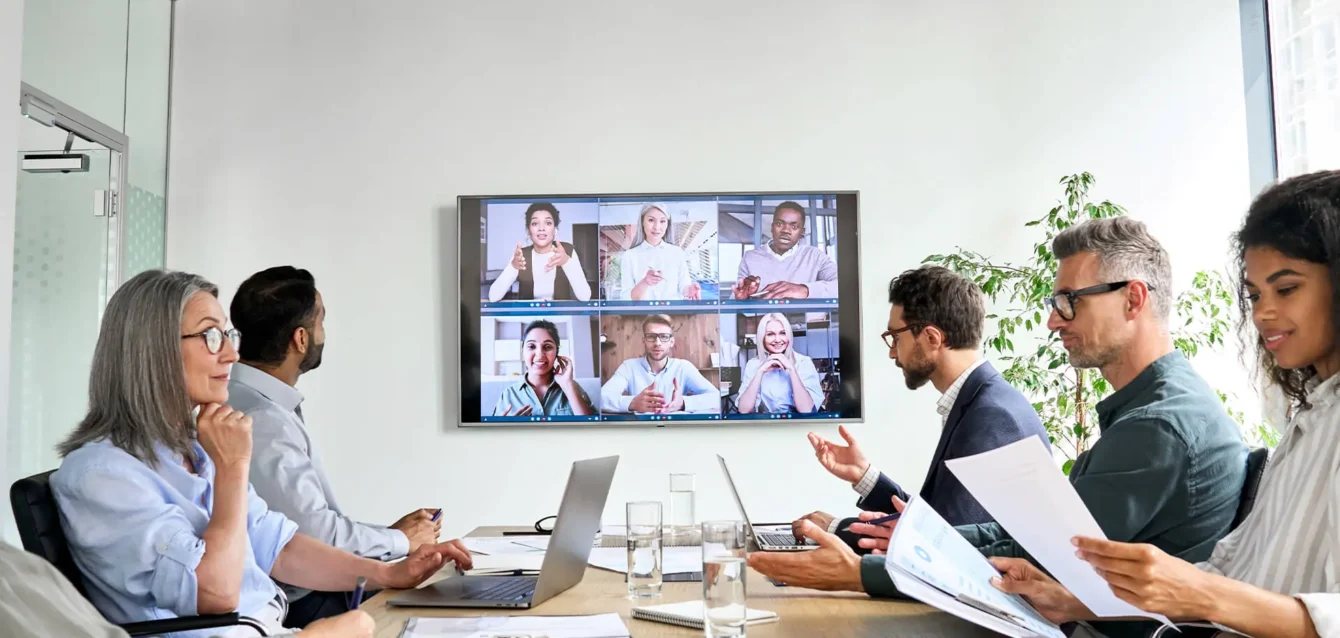
Virtual Meeting Etiquette 2026
Virtual meetings cost enterprises $37 billion annually in lost productivity—yet 85% of C-suite executives now prefer 30-minute virtual calls over in-person meetings. This paradox reveals a fundamental shift: Virtual meeting etiquette has evolved from professional courtesy to strategic infrastructure that directly impacts Fortune 500 performance, employee retention, and operational efficiency.
The numbers tell a compelling story. With 1.8 million monthly searches for virtual meeting best practices, decision-makers across industries recognize that remote meeting protocols now determine competitive advantage. Sixty-four percent of companies operate on hybrid work models, while 60% of employees would seek new positions if remote work flexibility disappeared. The stakes have never been higher for organizations investing in distributed team collaboration.
This evidence-based guide synthesizes Stanford neuroscience research, Gartner workforce analytics, and McKinsey technology trends to deliver the definitive framework for virtual meeting excellence. We examine how AI meeting assistants are transforming a $3.86 billion market today into a $29.45 billion industry by 2034, quantify the $42,000 average savings organizations achieve through optimized virtual events, and decode the neurobiological mechanisms behind Zoom fatigue that Stanford researchers identified through brain imaging studies.
Table of Contents
The Neuroscience of Virtual Meeting Fatigue: Stanford Research Decoded
Virtual meeting fatigue is not imagined exhaustion—it represents a measurable neurological phenomenon that Stanford University’s Virtual Human Interaction Lab has documented through rigorous brain scan analysis. Jeremy Bailenson’s research team identified four distinct neurobiological mechanisms that make video conferencing uniquely draining compared to in-person interaction, with implications for every organization implementing hybrid workplace models.
The Four Causes of Videoconference Cognitive Overload
Excessive eye contact intensity creates psychological stress that rarely occurs in physical meetings. In traditional conference rooms, participants shift attention between speakers, documents, and personal notes. Video platforms force continuous frontal gaze at close-range faces, triggering the brain’s threat-detection systems evolved for intimate or confrontational encounters. When faces fill screens at unnatural sizes, neural circuits interpret this proximity as high-stakes interaction requiring sustained vigilance.
Stanford measurements show this constant mutual gaze increases cortisol production and mental fatigue. The cognitive resources devoted to processing intense facial expressions reduce capacity for actual meeting content comprehension. Organizations implementing Teams meeting etiquette or Zoom meeting protocols must account for this biological reality rather than expecting employees to simply “adapt” to permanent video presence.
Cognitive load from delayed non-verbal feedback compounds mental processing requirements. Human communication evolved with precise synchronization between spoken words and body language. Video platforms introduce 30-300 millisecond delays that seem trivial but significantly increase cognitive burden. The brain continuously attempts to reconcile slight temporal mismatches between audio and visual signals, consuming attention resources subconsciously.
Research published in Computers in Human Behavior demonstrates this asynchrony forces compensatory behaviors. Speakers exaggerate facial expressions and gestures attempting to ensure comprehension across technical latency. Listeners concentrate harder to interpret meaning despite incomplete non-verbal cues. The cumulative effect across 20+ weekly meetings generates measurable exhaustion even when individual sessions feel manageable.
The mirror effect of constant self-view creates psychological stress unique to virtual meetings. Imagine conducting every in-person meeting while staring at yourself in a mirror—the self-consciousness would prove unbearable. Yet video platforms default to displaying users’ own faces continuously during calls, triggering heightened self-evaluation and appearance monitoring.
A 2025 study in Scientific Reports measured this phenomenon precisely. Participants with self-view enabled showed 40% higher cognitive load compared to those with self-view disabled. The constant visual feedback activates neural circuits associated with self-criticism and social anxiety. Women experience this effect more acutely, with video conferencing fatigue correlating strongly with duration of self-view exposure.
The solution requires intentional platform configuration. Google Meet etiquette, Microsoft Teams protocols, and Zoom best practices should all prioritize educating users to hide self-view immediately upon joining meetings. This single adjustment delivers measurable cognitive relief without compromising meeting effectiveness.
Physical mobility restriction within camera frames limits the natural movement that supports cognitive processing. Telephone conversations allow pacing, gesturing freely, and physical position changes that enhance creative thinking. Video calls confine participants to fixed positions within narrow camera angles, artificially constraining the embodied cognition that facilitates problem-solving.
Stanford research shows mobility restriction particularly impacts brainstorming sessions and strategic discussions requiring innovative thinking. When participants cannot move naturally, ideation capacity measurably decreases. One study found in-person teams generated significantly more creative solutions than remote teams precisely because physical freedom enabled divergent thinking processes.
Quantifying the Fatigue Impact on Enterprise Performance
The neurobiological mechanisms translate into concrete business costs. Research analyzing 40 million virtual meetings across 11 organizations, published by Harvard Business Review, revealed that camera-on fatigue correlates with reduced participation quality and decision-making effectiveness. Fatigued individuals show 30% increased conformity to majority opinions according to studies in Nature, reducing the cognitive diversity that produces optimal outcomes.
Microsoft research identifies inefficient meetings as the number one productivity barrier, with 68% of employees reporting insufficient uninterrupted focus time. The compound effect of Zoom fatigue across distributed teams generates retention risks—organizations lacking explicit remote meeting norms experience 12% higher attrition rates according to Gartner workforce studies.
Healthcare sectors face particularly acute challenges. Virtual meeting fatigue contributes to the broader crisis of professional burnout, with projected costs reaching $150 billion annually in the US healthcare economy by 2026. The neuroscience provides clear direction: evidence-based virtual meeting etiquette must actively mitigate cognitive overload rather than simply establishing professional appearance standards.
The Fortune 500 Standard: 12 Evidence-Based Virtual Meeting Protocols
Enterprise-grade online meeting etiquette requires systematic protocols backed by performance data rather than generic courtesy guidelines. Organizations achieving measurable productivity gains implement frameworks addressing technical excellence, cognitive wellbeing, and strategic communication simultaneously. These twelve protocols represent distilled best practices from companies successfully navigating hybrid work transformation.
Protocol 1: Pre-Meeting Technical Validation as Foundation
Technical failures during client-facing virtual meetings damage professional credibility more severely than most organizations recognize. The 10-15 minute pre-meeting audit has evolved from optional courtesy to mandatory standard practice. Test camera clarity, microphone audio quality, internet bandwidth stability, and platform-specific features before every significant video call.
For individual contributors, this means systematic verification: Does your video display clearly without pixelation? Can others hear you without echo or distortion? Is your connection stable enough for screen sharing? Do you understand the specific platform’s controls for muting, reactions, and breakout rooms?
Enterprise IT departments now provide dedicated support for executive-level meetings. C-suite virtual presence demands broadcast-quality audio-video that consumer-grade equipment cannot deliver. Professional meeting room technology with AI-powered cameras, beamforming microphones, and redundant connectivity ensures Fortune 500 standards. The investment pays immediate dividends through elimination of the 5-10 minutes typically wasted troubleshooting technical issues.
Organizations implementing structured technical protocols report measurably smoother meeting execution. When every participant arrives prepared, meetings start punctually and maintain momentum. The alternative—repeated “Can you hear me?” interruptions—compounds fatigue while signaling organizational dysfunction to external stakeholders.
Protocol 2: Strategic Camera Management for Cognitive Health
The camera-on versus camera-off debate reveals fundamental misunderstanding of video conferencing dynamics. Harvard Business Review analysis of 40 million virtual meetings demonstrates clear correlation between camera usage and employee retention—visible participation signals engagement and connection. However, Nature research simultaneously shows continuous camera presence exacerbates fatigue and increases conformity by 30%.
The resolution requires contextual protocols rather than absolute rules. Camera activation should align with meeting type, participant role, and duration. Client presentations, one-on-one discussions, small team collaboration sessions, and first-time introductions all warrant camera-enabled participation. The visual connection facilitates rapport-building and non-verbal communication essential for these interactions.
Conversely, large all-hands meetings exceeding 20 participants, information-only training sessions, and lengthy strategy reviews permit selective camera usage. When participants aren’t actively speaking or their visual presence adds minimal value, camera-off reduces cognitive load without compromising meeting effectiveness. Hybrid meeting equity requires ensuring this flexibility applies equally to remote and in-office participants.
The critical technical adjustment: disable self-view immediately regardless of camera activation. Platform settings across Zoom, Teams, and Google Meet allow hiding personal video feeds while remaining visible to others. This single change delivers the 40% cognitive load reduction Scientific Reports documented without sacrificing the engagement benefits camera-on participation provides.
Forward-thinking organizations implement “strategic camera” policies explicitly defining expectations by meeting category. The clarity eliminates ambiguity while respecting individual circumstances affecting camera readiness. Professional virtual meeting culture acknowledges that optimal performance sometimes requires choosing audio-only participation without professional stigma.
Protocol 3: Audio Excellence as Non-Negotiable Infrastructure
Background noise ranks as the primary virtual meeting disruptor across every survey of remote work challenges. The universal expectation—mute microphones when not actively speaking—represents the most basic online meeting etiquette rule. Yet implementation requires more than behavioral discipline.
Consumer-grade laptop microphones capture every ambient sound: barking dogs, traffic noise, household conversations, keyboard typing. These distractions fragment attention and force participants to expend cognitive resources filtering irrelevant audio. Enterprise-grade solutions employ beamforming microphone arrays that intelligently isolate speaker voices while suppressing background interference through digital signal processing.
The return on audio investment materializes immediately. Organizations deploying professional conferencing equipment in meeting rooms report 5-10 minute time savings per session previously consumed by audio troubleshooting. Multiply across hundreds of weekly meetings, and the productivity recapture justifies significant capital allocation.
For remote workers, the equipment hierarchy prioritizes: quality noise-canceling headsets first, dedicated quiet workspace second, platform-specific audio optimization third. Modern AI meeting assistants now include audio quality monitoring, automatically alerting participants to microphone issues before they disrupt entire meetings.
Audio clarity particularly matters for global distributed teams. When participants join from 100+ countries speaking English as a second language, crystal-clear sound becomes accessibility infrastructure rather than luxury. Accents require zero additional cognitive load when audio quality eliminates strain to distinguish words. This consideration scales the audio excellence requirement from professional courtesy to inclusive workplace culture.
Spatial audio technologies emerging in enterprise video conferencing platforms replicate in-room acoustics for hybrid meetings. Sound positioning that matches speaker location reduces confusion about who’s speaking while enabling natural conversational flow. These advances narrow the effectiveness gap between physical and virtual collaboration.
Protocol 4: Professional Visual Environment Standards
Virtual meeting backgrounds communicate organizational culture and professional standards as clearly as physical office design. The 72% of board directors citing “loss of non-verbal communication” as their primary virtual meeting challenge includes environment context. When backgrounds display clutter, inappropriate items, or chaotic activity, participants subconsciously question professionalism.
Natural backgrounds—actual offices, studies, or meeting spaces—establish authenticity when appropriately maintained. Ensure the camera frame shows clean, organized areas free from distractions. Personal effects should signal competence: bookshelves, diplomas, or tasteful décor. Avoid backgrounds revealing private spaces unless cultivating intentional casual rapport.
Virtual backgrounds offer alternative solutions with nuanced tradeoffs. Blurred backgrounds reduce distraction without artificial imagery but can appear unprofessional in some contexts. Custom backgrounds featuring company branding or neutral office environments work well for external meetings. However, research shows virtual backgrounds slightly increase cognitive load as brains process the artificial composition.
Lighting quality rivals background selection in importance. Front-facing natural light or ring lights eliminate unflattering shadows and ensure facial features remain clearly visible. Backlighting—sitting with windows behind you—creates silhouette effects that obscure expressions and reduce non-verbal communication effectiveness.
Fortune 500 executives increasingly maintain dedicated home offices optimized for video presence. Professional lighting arrays, broadcast-quality cameras, and curated backgrounds create consistent branded appearances. This investment recognizes that executive communication now occurs primarily through video rather than in-person, making visual presentation infrastructure rather than vanity.
Protocol 5: Punctuality as Cultural Signal in Distributed Teams
The expectation to join virtual meetings 2-3 minutes before official start times has solidified into industry standard. This buffer serves multiple purposes: technical verification, informal relationship-building, and demonstration of professional commitment. Late arrivals compound disruption in distributed teams spanning multiple time zones.
Consider the dynamics when a San Francisco team member joins 5 minutes late to a meeting including Tokyo colleagues who woke at 2 AM to accommodate Pacific time. The disrespect scales beyond individual tardiness to organizational culture. Conversely, consistent early arrival signals that remote meeting norms matter equally to in-person punctuality.
The efficiency argument proves equally compelling. Eighty-five percent of C-level executives prefer 30-minute virtual meetings over in-person equivalents precisely because video calls minimize social overhead. Starting precisely at scheduled times maximizes this advantage. When meetings begin late repeatedly, the time-saving proposition collapses.
Calendar management strategy matters more than individual discipline. Buffer 5-minute transitions between consecutive meetings rather than scheduling back-to-back video calls. The human need for brief physical and cognitive breaks between sessions produces better engagement than marathon video days. Zoom fatigue research validates this: short, frequent, interactive meetings outperform lengthy continuous sessions.
Organizations implementing meeting-free days—now standard at 40% of companies according to Gartner—further optimize scheduling. Designating specific days without internal meetings creates protected focus time while concentrating collaboration into defined windows. This structural approach reduces individual responsibility for managing overwhelming meeting loads.
Protocol 6: Active Participation Protocols for Distributed Engagement
Engagement metrics tracked by modern AI meeting assistants reveal stark participation disparities between in-person and remote attendees. Talk-time ratios, reaction patterns, and attention signals provide quantifiable data on meeting equity. Professional remote collaboration requires intentional protocols ensuring every participant contributes meaningfully regardless of location.
Hand-raise features enable structured turn-taking in larger meetings. Rather than interrupting speakers or attempting to judge natural conversation pauses across network latency, participants signal interest in speaking. Meeting facilitators can then coordinate orderly discussion flow that includes remote voices equally with in-room participants.
Chat functionality serves dual purposes: capturing questions/comments without interrupting speakers, and providing alternative participation channels for those uncomfortable with verbal contribution. Effective meeting leaders monitor chat actively, explicitly addressing significant comments aloud to integrate written input into primary discussion.
Polling and reaction features transform passive listening into interactive engagement. Quick surveys gauge sentiment, validate understanding, or gather opinions efficiently. Emoji reactions provide lightweight feedback mechanisms—thumbs up signaling agreement, raised hands indicating questions, hearts showing appreciation.
The strategic challenge involves balancing engagement mechanisms with additional cognitive load. Excessive chat activity fragments attention from primary discussion. Constant reaction demands feel performative rather than authentic. Excellence requires judicious use of participation features aligned with specific meeting objectives rather than maximizing every available channel simultaneously.
Hybrid meetings introduce particular complexity. In-room participants naturally engage through body language and side conversations that remote attendees cannot access. Virtual-first facilitation protocols—treating all participants as remote even when some are co-located—prove most effective. Each person uses individual devices with cameras/microphones rather than shared conference room equipment, equalizing audio-visual quality and interaction modalities.
Protocol 7: Meeting-Free Days for Cognitive Recovery
Setting meeting-free days enables employees to customize work structures, reduce virtual overload, and stem meeting fatigue accumulation. While easier to implement than increasing remote-work flexibility, meeting-free days generate comparable performance and engagement improvements by creating room for deep focus time, reflection, innovation, creativity, rest and personal needs.
Forty percent of organizations now implement this protocol according to Gartner research, recognizing that knowledge work requires extended concentration periods impossible to achieve during meeting-saturated days. Writing complex analysis, developing strategic plans, coding sophisticated systems, or conducting intensive research all demand uninterrupted cognitive flow that 30-minute gaps between meetings cannot provide.
The productivity mathematics validates the approach. If employees spend 23+ hours weekly in meetings (the documented average for knowledge workers), reclaiming one full day represents 20% capacity reallocation to high-value individual work. Organizations implementing meeting-free policies report measurable improvements in project completion rates and work quality.
Cultural adoption requires executive modeling. When leadership schedules meetings on designated meeting-free days, the policy collapses immediately. Successful implementation includes calendar automation that blocks meeting-free days across entire organizations, making violations technically difficult rather than relying on individual discipline.
Industry variations reflect different operational requirements. Customer-facing teams may protect mornings for client meetings while blocking afternoons for internal preparation. Engineering teams might designate core development days without interruption. The specific approach matters less than consistent execution enabling genuine focus time recovery.
Protocol 8: Dress Standards Reflecting Professional Context
Professional appearance expectations for video meetings mirror in-person standards within appropriate industry context. The guideline “dress as though attending physical meetings” acknowledges that professional norms vary dramatically across sectors. Financial services executives maintain formal business attire, technology startup cultures embrace casual presentation, creative industries balance artistic expression with client-facing professionalism.
Camera framing considerations matter beyond clothing selection. Professional appearance from waist up suffices since most video platforms show upper body only. This reality enables pragmatic hybrid approaches—business-appropriate tops with comfortable bottoms—that balance presentation standards with home-office comfort.
Psychological research validates that clothing affects performance mindset beyond external perception. People wearing professional attire report enhanced focus and authority feelings even in home environments. The ritual of preparing for meetings creates mental transition from personal to professional mode that supports engagement quality.
Industry-specific expectations require explicit communication in distributed teams. When team members span casual tech cultures and formal client-facing roles, ambiguity about video meeting dress codes creates unnecessary anxiety. Clear organizational guidance aligned with company culture eliminates second-guessing while respecting individual circumstances.
Executive presence projection demands heightened attention. C-suite leaders appearing on video represent entire organizations to external stakeholders. Professional grooming, appropriate attire, and polished backgrounds signal organizational competence regardless of remote work settings. This represents infrastructure investment rather than vanity—executive communication effectiveness directly impacts business outcomes.
Protocol 9: Distraction Minimization for Meeting Effectiveness
Multitasking during virtual meetings reduces effectiveness according to consistent neuroscience research. The human brain cannot genuinely parallel-process demanding cognitive tasks despite subjective feelings of successful juggling. Attempting to monitor email, work on documents, or browse websites while participating in meetings diminishes both activity quality.
The discipline requires intentional environment design. Close email clients, silence smartphone notifications, quit unnecessary browser tabs, and position screens to avoid wandering attention. Dedicated workspace free from household interruptions signals to family members or roommates that meeting participation warrants professional respect.
Screen sharing etiquette extends distraction minimization to visual presentation. Clean desktops showing only relevant applications prevent embarrassing revelations of personal content. Closing tabs, hiding desktop icons, and preparing specific windows before initiating sharing demonstrates professional preparation.
The challenge intensifies for parents managing childcare during remote work. Explicit organizational policies acknowledging these realities—background noise occasionally occurs, brief interruptions happen, flexibility applies universally—create psychological safety that paradoxically improves focus. When employees fear judgment for momentary disruptions, anxiety itself becomes primary distraction.
AI meeting assistants now capture comprehensive records that enable reduced note-taking burden. Rather than frantically documenting every comment, participants can engage fully knowing searchable transcripts will capture details. This technological support directly addresses distraction risks while improving meeting quality through enhanced presence.
Protocol 10: Body Language Optimization in Camera Frames
Upright posture, eye contact directed at camera lenses, and minimal excessive movement within frames optimize non-verbal communication despite video limitations. The camera becomes proxy for in-room eye contact—looking at the lens rather than screens creates impression of direct gaze to other participants.
This feels unnatural initially since humans instinctively look at faces rather than cameras. The practice requires deliberate habit formation. Positioning cameras at eye level (rather than angled up from laptop bases) makes this more comfortable. External webcams mounted atop monitors enable simultaneous focus on lens and visible participants.
Non-verbal cues remain limited in virtual formats compared to in-room interaction. Compensatory strategies include verbal clarity enhancement: explicit agreement statements, vocal acknowledgment of points, and deliberate confirmation of understanding. When subtle nods and facial micro-expressions don’t translate across video compression, words must carry additional load.
Reaction features provide digital body language supplementing physical limitations. Strategic emoji usage—thumbs up for agreement, applause for appreciation, raised hand for questions—creates engagement signals that video calls otherwise suppress. However, excessive reactions generate notification fatigue; judicious deployment matters.
Cultural variations in body language interpretation require heightened awareness in global distributed teams. Eye contact norms, appropriate personal space expectations, gesture meanings—all vary across cultures. What signals confidence in Western contexts may appear aggressive elsewhere. Training on cross-cultural virtual communication belongs in onboarding curricula for international companies.
Protocol 11: Chat Etiquette for Supplementary Communication
Professional chat utilization supports main discussion flow rather than creating parallel conversations. Effective use includes sharing relevant links, documenting action items, asking clarifying questions without interrupting speakers, and providing positive feedback through written affirmations.
Avoid side conversations, excessive emoji strings, or unrelated comments that fragment attention. Chat serves as meeting enhancement tool, not informal social channel. Participants monitoring both audio discussion and active chat threads experience significant cognitive load increases that reduce comprehension of either channel.
Documentation practices matter for institutional memory. Important chat contributions should be explicitly acknowledged verbally and captured in meeting notes. AI assistants increasingly integrate chat analysis with audio transcription, creating comprehensive records that combine spoken and written communication channels seamlessly.
Industry-specific chat norms reflect communication culture variations. Tech companies embrace informal banter and meme-sharing during meetings; law firms maintain formal written standards; creative agencies balance professionalism with cultural personality. Understanding organizational context prevents chat faux pas that undermine professional credibility.
The integration of chat with collaboration platforms creates persistent communication threads. Decisions documented in meeting chats become searchable organizational knowledge. This archival value justifies intentional chat quality rather than treating it as ephemeral side commentary irrelevant to official meeting records.
Protocol 12: Post-Meeting Follow-Through with AI Augmentation
AI-generated meeting summaries and automated action item extraction represent the new standard replacing manual note distribution. Tools achieving 80-95% transcription accuracy create searchable meeting databases, track commitments automatically, and integrate with task management platforms like Asana, Jira, Notion, and Salesforce.
The productivity mathematics proves compelling: organizations implementing AI meeting assistants report 25% meeting time reduction and 30% productivity increases. By eliminating post-meeting documentation burden, team members redirect cognitive resources to actual work execution rather than administrative overhead.
Clear ownership assignment and deadline specification remain human responsibilities despite AI support. Automated action item detection identifies potential commitments, but accountability requires explicit confirmation of who will complete what by when. This human judgment prevents the passive diffusion of responsibility that AI systems cannot resolve.
Searchable meeting archives enable institutional memory that transforms organizational learning. Rather than knowledge residing in individual notes, comprehensive transcripts create accessible reference libraries. New employees joining projects can quickly understand context by reviewing past discussion recordings. This knowledge management infrastructure delivers compounding value over time.
The quality threshold for AI meeting assistant selection prioritizes security architecture and compliance over basic transcription accuracy. SOC 2 Type II certification, GDPR adherence, HIPAA compliance for healthcare contexts, on-premise deployment options, and strict data governance policies differentiate enterprise-suitable platforms from consumer-grade alternatives marketed through similar feature sets.
Bridging the Virtual-Physical Divide: Gartner’s Hybrid Work Insights

The hybrid meeting challenge represents perhaps the most complex obstacle facing distributed organizations in 2026. Gartner’s comprehensive survey of 10,000+ digital workplace users reveals a stark productivity paradox: 47% of workers prefer virtual meetings with audio and video capabilities, yet hybrid meetings—where some participants join remotely while others gather in-room—rank as the second-least productive format with only 17% satisfaction ratings.
The equity problem manifests through multiple dimensions. Remote participants frequently become “second-class citizens” when in-room dynamics dominate meeting flow. Side conversations, whiteboard brainstorming, and non-verbal communication cues accessible to physical attendees create information asymmetries that remote workers cannot bridge through standard video conferencing technology.
Twelve percent attrition increases correlate with organizations lacking explicit hybrid work norms according to Gartner research. This retention risk particularly affects high-demand employees who possess competitive labor market leverage. When hybrid meeting experiences consistently disadvantage remote participants, talented workers exercise mobility toward employers demonstrating genuine distributed-first cultures rather than reluctant remote accommodation.
The Technology Parity Imperative
Solving hybrid meeting equity requires technology investments specifically designed for mixed-format collaboration. Standard conference room setups with single camera positioned at room front create unusable experiences for remote participants. The wide-angle view shows distant faces without clear visibility of who’s speaking. Shared microphones capture overlapping voices without speaker attribution. In-room presentations remain invisible to virtual attendees unless explicitly screen-shared.
Enterprise-grade solutions employ AI-powered camera systems with automatic speaker tracking. These intelligent cameras detect active speakers through audio analysis and automatically reframe to show relevant participants. Remote workers see dynamically adjusted views matching their in-room counterparts’ attention focus rather than static wide shots showing entire rooms.
Spatial audio processing replicates three-dimensional sound positioning that physical spaces naturally provide. When sound appears to originate from speaker locations rather than monophonic center channels, remote participants intuitively understand conversation flow. The technology reduces cognitive load required to track multi-party discussions across network connections.
Large displays showing remote participants at life-size scale create psychological presence parity. When virtual attendees appear on 75-inch screens positioned prominently in meeting rooms, their contributions carry equivalent weight to physical participants. The visual prominence signals organizational commitment to distributed equity beyond token gesture toward remote inclusion.
Wireless presentation sharing enables seamless content transition between in-room and remote presenters. Rather than requiring cable connections or pre-loaded files, universal screen sharing protocols allow any participant regardless of location to present materials instantly. This technical capability eliminates presentation barriers that traditionally privileged physical presence.
The Virtual-First Protocol Framework
Leading organizations implement “virtual-first” meeting protocols treating all participants as remote even when some occupy shared physical space. Rather than gathering in conference rooms with remote workers joining via shared screens, each participant uses individual devices with personal cameras and headsets regardless of location.
This approach initially feels counterintuitive—why sit in the same room using laptops instead of leveraging physical proximity? The answer lies in equitable audio-visual quality and interaction modalities. When everyone appears in individual video tiles, remote and in-room participants achieve technical parity. Nobody benefits from superior microphone access or preferential camera positioning.
The facilitation requirements become explicit rather than assumed. Meeting leaders must actively monitor both in-room dynamics and virtual chat channels. Rotating speaker opportunities between physical and remote participants prevents unconscious in-room dominance. Pausing periodically to explicitly solicit remote input counteracts the natural tendency for co-located workers to drive conversation momentum.
Documentation equity extends beyond live meeting experiences to post-session knowledge capture. AI meeting assistants transcribing both verbal discussion and chat messages create comprehensive records accessible to all participants. Whiteboard content requires digital capture rather than remaining on physical surfaces invisible to remote workers. This documentation discipline produces better institutional memory while enabling asynchronous participation.
McKinsey’s Structured Hybrid Performance Data
McKinsey workforce surveys demonstrate that structured hybrid models—those with explicit protocols, dedicated technology investments, and clear communication norms—achieve 20% higher employee engagement and 15% productivity gains compared to ad-hoc hybrid approaches. The structured approach recognizes hybrid work as permanent operational model requiring intentional design rather than temporary pandemic accommodation.
The productivity advantages stem from deliberate rather than accidental hybrid structure. When organizations clearly define which meetings require physical presence versus virtual participation, employees optimize time allocation. Strategic planning sessions, innovation workshops, and relationship-building activities benefit from in-person richness. Routine updates, information sharing, and coordination discussions proceed efficiently through virtual formats.
Sixty-four percent of companies now operate hybrid models according to Zoom research, but quality varies dramatically. Organizations treating hybrid work as permanent infrastructure invest in technology, training, and cultural development. Those viewing remote work as temporary concession implement minimal accommodations generating frustration rather than productivity.
The competitive advantage accrues to organizations mastering hybrid equity. Talent acquisition expands geographically when location-independent work proves genuine rather than nominal. Retention improves when employees experience consistent professionalism across participation modes. Productivity increases when meeting effectiveness stops varying based on arbitrary physical location decisions.
The $29 Billion Revolution: How AI Meeting Assistants Redefine Etiquette
The AI meeting transcription market’s explosive trajectory from $3.86 billion in 2025 to projected $29.45 billion by 2034 represents more than market expansion—it signals fundamental transformation of how organizations approach virtual collaboration. The 25.62% compound annual growth rate reflects enterprise recognition that AI meeting assistants constitute essential infrastructure rather than optional productivity enhancement.
Understanding this revolution requires examining the distinct technology categories reshaping meeting workflows, the new etiquette considerations AI introduces, and the return on investment calculations justifying rapid adoption despite significant per-user costs.
Real-Time Transcription as Foundation Infrastructure
Modern AI transcription platforms achieve 80-95% accuracy under normal audio conditions, making the gap between AI and human transcription marginal for standard business meetings. This accuracy threshold crossed a critical barrier—transcription quality became sufficiently reliable for professional documentation rather than requiring human verification and correction.
Otter.ai, Fireflies.ai, Fathom, and Fellow represent leading enterprise solutions with differentiated capabilities. Real-time transcription displays words as speakers talk, enabling participants to focus on discussion rather than note-taking. Speaker diarization automatically attributes comments to individuals, creating structured conversation records that capture who said what when.
Multi-language support extends transcription value to global organizations. Modern systems transcribe 100+ languages with comparable accuracy to English processing. This capability removes language barriers in distributed teams, allowing non-native speakers to review precise transcripts when verbal comprehension proves challenging during live meetings.
The infrastructure benefit compounds over time. Searchable meeting databases enable instant information retrieval replacing the “I know we discussed this but can’t remember when” inefficiency. Organizations accumulate institutional knowledge that survives employee turnover. New team members onboard faster by reviewing past meeting context rather than relying on fragmentary individual memories.
Action Item Extraction and Task Management Integration
AI systems now identify actionable commitments automatically through natural language processing of meeting discussions. When someone says “I’ll send the proposal by Friday” or “Let’s schedule a follow-up next week,” AI assistants flag these as potential action items requiring tracking.
Integration with project management platforms like Asana, Jira, Notion, Trello, and Salesforce transforms verbal commitments into formal task assignments. The AI suggests owners, deadlines, and task descriptions based on meeting context. Human judgment remains essential—automated detection proposes actions but cannot enforce accountability or guarantee interpretation accuracy.
The documented productivity improvement proves substantial. Organizations implementing AI meeting assistants report 30% productivity increases primarily attributed to reduced post-meeting administrative overhead. Rather than manually distributing notes, clarifying action items, and following up on commitments, automated systems handle coordination allowing teams to focus on execution.
Conversation intelligence analytics layer additional capability. Talk-time ratio measurements identify participation imbalances. Sentiment analysis detects frustration, enthusiasm, or confusion in speaker tone. Meeting quality metrics quantify engagement levels, enabling data-driven improvement of facilitation practices.
Specialized Intelligence for Revenue Teams
Sales-specific AI platforms like Gong and Avoma analyze customer-facing conversations with sophisticated revenue intelligence. These systems identify competitor mentions, customer objections, pricing discussions, and buying signals that less specialized tools miss.
The coaching implications transform sales management. Rather than relying on anecdotal deal reports, managers review actual conversation transcripts highlighting key moments. Pattern recognition across hundreds of calls reveals which messaging resonates, which objections require better responses, and which representatives need targeted development.
Objection handling analysis quantifies how effectively sales teams address customer concerns. Competitor mention tracking reveals competitive positioning in real marketplace conversations rather than theoretical strategy documents. The business intelligence derived from systematic conversation analysis produces tangible revenue impact justifying premium pricing tiers.
Agentic AI: The Virtual Coworker Paradigm
McKinsey Technology Trends 2025 identifies agentic AI as one of the fastest-growing technology categories, with 985% increase in job postings between 2023-2024 and $1.1 billion equity investment in 2024. Agentic AI systems combine foundation model flexibility with autonomous action execution, creating “virtual coworkers” that independently plan and complete multistep workflows.
For meeting applications, agentic AI transcends passive transcription to active participation. These systems schedule meetings by analyzing participant calendars and preferences, prepare agendas based on project context and previous discussions, join meetings autonomously, generate comprehensive summaries, create action items with suggested owners and deadlines, distribute meeting materials to relevant stakeholders, and trigger follow-up workflows in connected systems.
The human-machine collaboration model shifts from humans directing AI tools to AI agents operating semi-autonomously with human oversight. Rather than manually invoking meeting assistant features, agentic systems proactively handle meeting lifecycle management freeing cognitive resources for strategic thinking rather than administrative coordination.
Gartner predicts 40% of enterprise applications will integrate task-specific AI agents by year-end 2026, up from less than 5% in 2025. This rapid adoption reflects recognition that AI augmentation produces superior outcomes compared to full automation or purely manual processes. The optimal division of labor combines AI operational execution with human strategic judgment and relationship management.
New Etiquette Considerations in the AI Era
AI meeting assistant adoption introduces novel etiquette questions organizations must address through explicit policies rather than assuming implicit understanding.
Recording consent and disclosure represents the primary consideration. Legal requirements vary significantly across jurisdictions. Two-party consent states require explicit permission from all participants before recording. Even in single-party consent jurisdictions, professional courtesy and contractual obligations often mandate disclosure.
Best practice involves prominent notification at meeting start: “This meeting is being recorded and transcribed by AI for documentation purposes. If you prefer not to be recorded, please notify the host.” Visible recording indicators and bot presence in participant lists provide transparent notification.
Data privacy and security protocols demand careful attention particularly for sensitive discussions. Organizations must evaluate whether AI platforms train foundation models using customer meeting data. Many enterprise-grade solutions contractually commit to data isolation—customer recordings never contribute to model improvement.
SOC 2 Type II compliance, GDPR adherence, HIPAA compatibility for healthcare contexts, and data residency controls separate enterprise-suitable platforms from consumer applications marketed through similar feature descriptions. The security architecture matters more than transcription accuracy for regulated industries handling confidential information.
Accuracy verification and human oversight remain essential despite high AI reliability. Automated transcripts occasionally contain errors particularly with technical terminology, proper nouns, or accented speech. Critical decisions require human verification rather than blind faith in AI-generated records.
The over-reliance risk emerges when organizations assume AI captures everything important, leading to reduced active engagement during meetings. The optimal approach treats AI as augmentation rather than replacement—participants remain actively present while AI handles documentation burden.
Virtual Board Meetings: The C-Suite Etiquette Paradigm Shift
The National Association of Corporate Directors survey revealing that 45% of board directors rate virtual meetings as less effective than in-person sessions captures the unique challenges facing executive governance in distributed formats. This statistic becomes more nuanced upon deeper examination—while 45% perceive effectiveness disadvantages, 93% simultaneously report ability to govern effectively in virtual environments.
The apparent contradiction reveals that virtual board meetings work functionally despite subjective preferences for physical presence. The 72% citing “loss of non-verbal communication” as their primary challenge identifies the specific limitation rather than blanket virtual meeting failure.
The Non-Verbal Communication Challenge at Executive Level
Board deliberations involve high-stakes strategic decisions where subtle interpersonal dynamics significantly influence outcomes. Directors read room sentiment through body language, strategic note-taking patterns, purposeful silence, and positioning cues that video platforms compress or eliminate.
The “strategic slump” signaling disagreement without verbal confrontation doesn’t translate across video feeds. Eye contact patterns revealing alliance formation lose meaning when everyone stares at screens rather than other participants. The informal sidebar conversations during breaks that build consensus before formal votes cannot occur in virtual formats without explicit breakout room scheduling.
Executive presence projection requires heightened effort through video. Authority traditionally conveyed through physical bearing, room positioning, and subtle dominance displays must translate to verbal clarity, strategic camera positioning, and deliberate vocal modulation. Some board members adapt naturally while others struggle despite equivalent competence.
Enhanced Security Requirements for Confidential Deliberations
Board meetings routinely involve material non-public information, merger discussions, executive compensation debates, and strategic plans requiring absolute confidentiality. Standard consumer video platforms present unacceptable security risks for these discussions.
Enterprise-grade secure meeting solutions provide end-to-end encryption, on-premise hosting options eliminating cloud transmission, participant authentication through multi-factor methods, screen capture prevention, watermarking to trace unauthorized recording, and comprehensive audit trails documenting all access.
Legal and regulatory compliance extends beyond technology to process. Board members joining from home offices must ensure private spaces without family members or unauthorized individuals present. Recording policies typically prohibit any recording of executive sessions. Virtual meeting platforms require explicit configuration preventing automatic cloud recording.
Hybrid Board Models Balancing Efficiency and Effectiveness
Fortune 500 companies increasingly implement structured hybrid board models rather than defaulting to all-virtual or all-physical formats. The approach designates specific meeting types requiring in-person attendance while permitting virtual participation for others.
Strategic planning retreats, annual board evaluations, CEO succession discussions, and crisis response sessions warrant physical presence leveraging the relationship depth and discussion richness that in-room interaction provides. Routine quarterly meetings, committee updates, and informational presentations proceed effectively through virtual formats maximizing director time efficiency.
The sixty-three percent of directors reporting increased time commitments reflects virtual meeting proliferation rather than individual session duration. The ease of scheduling video calls leads to more frequent brief meetings replacing comprehensive day-long board sessions. While convenient, fragmented meeting patterns can reduce strategic coherence requiring conscious agenda design preventing administrative trivia from consuming governance attention.
Executive Presence Optimization for Video Leadership
C-suite leaders appearing on video represent entire organizations to external stakeholders. The professional standards exceed individual contributor requirements. Dedicated home offices optimized for executive presence become infrastructure investment rather than personal vanity.
Professional lighting systems, broadcast-quality cameras, acoustic treatment minimizing echo and background noise, curated backgrounds signaling competence through diplomas or relevant books, and backup internet connectivity with redundant systems characterize executive virtual office standards.
Many executives employ professional stylists or media coaches developing on-camera presence. The skills translating in-room charisma to digital formats require deliberate development. Vocal projection, camera gaze technique, gesture scale appropriate for video framing, and energy projection compensating for medium limitations all improve through targeted coaching.
The seventy percent of C-suite executives feeling isolated and lonely according to recent surveys underscores the relationship challenges remote work creates at senior levels. Professional networking increasingly occurs through virtual insights sessions and moderated peer discussions rather than traditional conference attendance. These formats work pragmatically but lack the informal relationship building that physical proximity enables.
Cross-Cultural Virtual Etiquette: Global Workforce Dynamics
The 22% of US employees choosing remote opportunities according to Forbes expands to significantly higher percentages in global knowledge worker populations. Distributed teams spanning 100+ countries introduce cultural complexity that physical offices partially mitigated through gradual acculturation and implicit norm observation. Virtual environments require explicit cultural intelligence that many organizations overlook until misunderstandings damage relationships.
Geographic Variations in Meeting Norms
North America holds 35.2% of the global AI transcription market reflecting mature technology infrastructure and established remote work practices. The communication style favors directness, punctuality expectations apply strictly, informal rapport-building occurs naturally, and first-name basis interaction extends across hierarchies.
These norms feel universal to North American workers but represent culturally specific practices. Imposing them globally without recognizing variation creates dysfunction rather than efficiency.
Asia-Pacific regions demonstrate rapid technology adoption while maintaining distinct cultural protocols. Hierarchical respect remains paramount—senior leaders speak first, junior employees defer to experience, and formal titles carry weight regardless of organizational egalitarianism claims. Indirect communication styles value harmony over confrontation. Silence signals thoughtful consideration rather than disengagement or disagreement.
Virtual meetings with Asian colleagues require patience for response timing. The expectation for immediate verbal participation common in Western contexts conflicts with cultural preferences for considered reflection before speaking. Interpreting silence as lack of engagement or interest misreads cultural communication patterns.
European workplace cultures vary significantly by country but share common threads. GDPR compliance affects every aspect of virtual meeting technology—recording, transcription, data storage, and AI processing all require explicit consent and documented privacy protections. Work-life boundaries receive strict protection with meeting scheduling outside standard business hours generally inappropriate.
German professional culture maintains formality with title usage and structured meeting protocols. Dutch workplace culture embraces casual interaction and direct feedback. French business contexts value intellectual debate and eloquent expression. The intra-European variations exceed differences between some European and Asian contexts, requiring specific rather than regional understanding.
Time Zone Equity in Global Distributed Teams
Scheduling meetings across global time zones presents mathematical constraints that cultural sensitivity cannot fully resolve. When teams span San Francisco to Tokyo to London, no meeting time accommodates all participants during reasonable working hours.
The fairness principle requires rotating meeting times rather than consistently advantaging specific geographies. If Monday morning Pacific time works for US participants but requires 2 AM attendance for Tokyo colleagues, the next meeting should accommodate Asian time zones even if inconvenient for North American attendees.
AI meeting assistants with comprehensive transcription and asynchronous participation capabilities reduce synchronous attendance pressure. Team members in inconvenient time zones review detailed meeting recordings rather than attending live. While not ideal for all meeting types, this approach prevents exhaustion from chronic sleep deprivation accommodating global meeting schedules.
The calculation of “inconvenient time” requires cultural nuance. Some cultures accept early morning meetings more readily than late evening commitments. Family structures, commuting patterns, and work-life integration philosophies all influence time preferences beyond simple clock arithmetic.
Industry-Specific Cultural Variations
Financial services lead AI meeting adoption at 32.9% market share while maintaining formal protocols reflecting regulatory environments and client expectations. Virtual meetings in banking, investment management, and insurance contexts typically require business formal attire, structured agendas, and conservative communication styles.
Technology startups embrace casual virtual meeting norms as cultural differentiators. Hoodies and t-shirts signal authenticity rather than unprofessionalism. Informal banter and meme-sharing reflect company culture rather than meeting disruption. However, client-facing interactions still demand professional standards regardless of internal casualness.
Legal profession virtual meetings prioritize confidentiality with strict recording policies, attorney-client privilege considerations, and formal communication standards. Healthcare contexts require HIPAA compliance for any patient-related discussions, encrypted platforms for telehealth consultations, and professional presentation standards reflecting medical authority.
Education sector virtual meetings span enormous range from casual student discussions to formal faculty meetings to professional development sessions. The pedagogical considerations differ from corporate contexts—educational meetings emphasize learning objectives over efficiency, student engagement over agenda adherence.
Multilingual Communication and Translation Technology
AI translation tools reaching 100+ language support transform global meeting accessibility. Real-time translation enables participation from colleagues lacking fluency in meeting primary languages. However, technology limitations require human cultural intelligence supplementation.
Idiomatic expressions, humor, and cultural references rarely translate effectively through automated systems. Speakers must consciously avoid colloquialisms and speak clearly at moderate pace. The cognitive load of processing translated content exceeds native language comprehension requiring patience for response timing.
Some organizations implement official meeting languages based on participant composition. Others rotate languages across sessions enabling native speaker advantages to distribute equitably. The explicit language policy prevents assumptions and frustrations when participants discover they cannot meaningfully contribute due to language barriers.
Cultural liaison roles facilitate cross-regional meetings by providing context translation beyond literal words. These individuals explain cultural norms, prevent misunderstandings, and help global teams navigate differences constructively rather than allowing friction to damage relationships.
Quantifying Virtual Meeting ROI: Enterprise Economics 2026
The business case for investing in professional virtual meeting technology and AI assistant platforms requires comprehensive cost-benefit analysis extending beyond initial price tags to quantify productivity gains, cost reductions, and strategic advantages.
Direct Cost Reductions from Virtual Collaboration
Virtual events eliminate substantial expenses traditional in-person gatherings require. The average $42,000 per-event savings documented across organizations reflects combined elimination of travel costs, venue rental, catering, accommodation, printed materials, and logistics coordination.
The 35% overall cost reduction for virtual events compared to physical equivalents scales significantly for organizations hosting frequent conferences, customer events, partner summits, or internal meetings. A company running 20 major events annually saves $840,000 through virtual formats before considering productivity benefits.
Production costs decrease up to 75% when sophisticated video production becomes unnecessary. Basic professional equipment suffices for most virtual meetings rather than event production teams, stage design, and audiovisual crews physical events require.
Marketing and promotion budgets fall 50% as digital channels replace physical advertising. Email campaigns, social media promotion, and website registration generate attendance more cost-effectively than traditional event marketing requiring print collateral, signage, and venue-based promotions.
Productivity Multiplication Through AI Augmentation
Organizations implementing AI meeting assistants document 25% meeting time reduction combined with 30% productivity increases according to multiple research studies. The time compression results from eliminating repetitive information sharing, reducing post-meeting documentation burden, enabling asynchronous meeting participation through transcript review, and improving action item follow-through through automated tracking.
The productivity gain calculation considers knowledge workers spending 23+ hours weekly in meetings on average. Reducing meeting burden by 25% recovers 5+ hours weekly per employee. For a 1,000-person organization, this represents 5,000 hours weekly or equivalent to 125 full-time employees.
The 30% productivity improvement stems from enhanced focus during meetings, better action item capture and execution, improved information retention through searchable transcripts, reduced context-switching between tasks, and elimination of meeting preparation redundancy.
Five to ten minutes saved per meeting through technical excellence compounds dramatically across enterprise scale. If an organization conducts 10,000 meetings weekly, saving seven minutes each recovers 70,000 minutes weekly or 1,167 hours—equivalent to 29 full-time employees dedicated solely to eliminating technical troubleshooting.
Technology Investment Economics
Enterprise video conferencing system costs vary by room size and sophistication requirements. Small office meeting rooms require $5,000-$15,000 investments for entry-level professional setups including quality camera, microphone array, display, and control system.
Medium conference rooms demand $20,000-$50,000 for mid-range enterprise systems with AI-powered cameras, spatial audio processing, large displays, and integrated controls supporting 10-15 participants.
Boardrooms and executive spaces justify $75,000-$150,000+ expenditures for high-end solutions featuring broadcast-quality video, sophisticated audio processing, automation systems, and redundant connectivity ensuring Fortune 500 presentation standards.
AI meeting assistant software costs $10-$30 per user monthly for typical enterprise tiers. Premium features like advanced analytics, unlimited transcription, CRM integration, and priority support increase costs while delivering proportional value for specific use cases.
The return on investment calculation for a 500-person enterprise demonstrates compelling economics: Total meeting cost equals 500 employees times 20 hours monthly meetings times $75 average hourly rate equals $750,000 monthly. AI assistant investment of $15 per user times 500 equals $7,500 monthly. The 25% time reduction generates $187,500 monthly savings. ROI equals ($187,500 minus $7,500) divided by $7,500 times 100% equals 2,400% annual return.
Hidden Cost Avoidance
Poor virtual meeting practices generate costs beyond direct productivity loss. The $37 billion annual productivity drain from inefficient meetings across US enterprises represents aggregate of time wasted in purposeless meetings, technical troubleshooting consuming productive time, unclear outcomes requiring follow-up meetings, poor action item tracking causing execution failures, and cognitive fatigue reducing afternoon productivity.
Attrition costs dwarf technology investments. Gartner’s finding that organizations lacking explicit hybrid norms experience 12% higher attrition translates to substantial replacement costs. Average employee replacement expenses range 50-200% of annual salary depending on role seniority and specialization.
For a 1,000-employee organization with $100,000 average compensation and 10% baseline attrition, the 12% increase represents 120 additional departures yearly. At conservative 75% replacement cost, this equals $9 million annually in preventable turnover expenses exceeding any reasonable virtual meeting technology investment.
Reputation damage from technical failures during client-facing meetings proves difficult to quantify but significantly impacts competitive positioning. When sales presentations fail due to poor audio quality, investment pitches suffer from unprofessional backgrounds, or board meetings experience connectivity problems, the credibility loss affects deal closures and stakeholder confidence difficult to recover. This reputational impact matters particularly for organizations featured in Bloomberg or TechCrunch where public perception directly influences market valuation.
The Next Evolution: Virtual Meeting Etiquette Horizons 2026-2027
The convergence of spatial computing, artificial intelligence, and immersive technologies signals fundamental transformation in how distributed teams collaborate. While current virtual meeting platforms dominate 2026 workflows, emerging technologies demonstrated at CES 2026 and detailed in MIT Technology Review research preview the next paradigm shift requiring evolved etiquette frameworks.
Spatial Computing and Mixed Reality Integration
Apple Vision Pro, Meta Quest Pro, and Microsoft HoloLens represent early enterprise adoption of spatial computing platforms enabling three-dimensional virtual collaboration. Rather than viewing colleagues through flat video rectangles, spatial computing places participants in shared virtual environments with depth perception, spatial audio positioning, and natural gesture interaction.
The professional implications extend beyond novelty to substantive workflow improvements. Design review meetings benefit from examining three-dimensional models collaboratively rather than screen-sharing CAD files. Architectural visualization allows clients to virtually walk through proposed buildings with distributed stakeholders simultaneously present. Medical consultation enables surgeons across continents to examine holographic patient scans discussing treatment approaches.
Etiquette protocols must evolve for these immersive contexts. Avatar professionalism standards emerge as the spatial computing equivalent of camera-on appearance expectations. Professional avatar customization—appropriate business attire, realistic facial mapping, and contextually suitable environments—signals the same organizational respect that physical meeting dress codes convey.
Spatial audio protocols enable natural conversation flow through three-dimensional sound positioning. When avatar voices originate from their apparent locations rather than monophonic channels, participants intuitively track who’s speaking. The etiquette consideration involves appropriate virtual proximity—maintaining professional distance in spatial environments just as physical meetings require respecting personal space.
Gesture interaction norms require conscious development as hand-tracking and haptic feedback create new non-verbal communication channels. Pointing gestures, virtual object manipulation, and spatial annotations enhance collaborative problem-solving but can prove distracting without disciplined use. The balance between engagement and distraction demands explicit organizational protocols.
Telepresence Robotics for Physical Agency
Telepresence robots provide remote workers with physical presence in office environments through mobile devices controlled from distance. Rather than appearing on static conference room screens, remote participants navigate facilities, inspect equipment, and interact with physical spaces through robotic avatars equipped with cameras, microphones, and displays showing their faces.
Organizations deploying telepresence systems report applications including facility inspections without travel, executive presence at multiple office locations, customer site visits maintaining relationship quality, and situations requiring physical interaction that video cannot provide. The ROI calculation compares travel costs and time against robotic system investment and maintenance.
Etiquette considerations include alerting physical office workers to robotic presence avoiding startled reactions, respecting privacy by not navigating into sensitive areas uninvited, managing battery life ensuring participation doesn’t abruptly terminate mid-meeting, and understanding control latency affecting conversational timing.
Emotional Intelligence and Multimodal AI Capabilities
AI systems advancing beyond transcription to emotional intelligence integration detect frustration, urgency, satisfaction, confusion, and engagement through vocal tone analysis, facial micro-expression recognition, and language pattern interpretation. These capabilities transform meeting quality monitoring from subjective assessment to quantified metrics.
Multimodal AI combining voice, text, images, and video creates richer interaction possibilities. Meeting participants share visual references, annotate documents collaboratively, and leverage AI assistants analyzing multiple data streams simultaneously. Deloitte research on enterprise AI adoption shows 30% of AI models now utilize multiple data modalities, up from negligible percentages two years prior.
Voice biometric security provides frictionless authentication while reducing fraud incidents. Rather than password entry or multi-factor authentication disrupting meeting flow, voice patterns verify participant identity passively. This security enhancement matters particularly for financial services and healthcare sectors handling sensitive information.
The etiquette implications involve privacy considerations around emotion detection—organizations must transparently communicate when AI monitors sentiment rather than implementing surveillance surreptitiously. Employees deserve informed consent regarding what data collection occurs during meetings and how that information influences performance evaluation or organizational decisions.
The Hybrid HQ and On-Demand Workspace Model
The 2026 JLL Global Real Estate Outlook confirms flexibility and managed space as top corporate priorities. Organizations increasingly replace traditional headquarters with “Hybrid HQ” models combining smaller core offices, virtual addresses establishing presence in multiple markets, and on-demand meeting spaces booked as needed rather than maintained permanently.
This workspace transformation affects virtual meeting dynamics profoundly. When team members lack consistent physical offices, virtual collaboration becomes default rather than alternative to in-person interaction. The professionalism standards for home offices rise as these spaces represent primary work environments rather than temporary pandemic accommodations.
Professional virtual office design incorporates dedicated lighting systems eliminating unflattering shadows, acoustic treatment minimizing echo and background noise, curated backgrounds signaling competence through tasteful décor, high-speed redundant internet connectivity ensuring reliable participation, and ergonomic furniture supporting extended video call periods without physical discomfort.
Predictions for Enterprise Adoption Trajectories
Based on current technology development trajectories and enterprise adoption patterns, several predictions emerge for 2027-2028:
Virtual-first becomes universal default with in-person meetings reserved for strategic exceptions requiring relationship building or complex negotiation benefiting from physical presence. The calculation shift from “should this be virtual?” to “does this justify in-person?” reflects permanent operational transformation.
AI meeting assistants reach universal adoption across knowledge work sectors. The productivity advantages and knowledge management benefits make these tools mandatory rather than optional, similar to how email transitioned from novel technology to baseline expectation. Organizations lacking AI augmentation face competitive disadvantages in meeting efficiency and institutional memory.
Meeting quality metrics become standard performance KPIs tracked alongside traditional productivity measures. Talk-time ratios, engagement scores, action item completion rates, and meeting efficiency ratings influence promotion decisions and team performance evaluations. Data-driven meeting culture replaces subjective assessment of collaboration effectiveness.
Etiquette training integrates into onboarding requirements as virtual presence skills prove essential for professional success. New employees receive systematic instruction on camera presence, audio quality optimization, platform feature utilization, and cultural sensitivity in global distributed teams. The investment recognizes virtual collaboration as core competency rather than assumed capability.
Strategic Implementation: The Five-Quarter Transformation Roadmap
Organizations committed to virtual meeting excellence require systematic implementation approaches rather than ad-hoc adoption of disconnected practices. This roadmap provides phased deployment enabling measurable progress while avoiding change fatigue that undermines transformation initiatives.
Quarter 1: Foundation Assessment and Pilot Programs
Week 1-2: Comprehensive Audit
- Document current virtual meeting practices across departments
- Survey employees regarding pain points, frustrations, and improvement priorities
- Inventory existing technology investments and identify gaps
- Establish baseline metrics: meeting frequency, duration, participant satisfaction, technical failure rates
- Review competitor approaches and industry best practices
Week 3-6: Technology Evaluation and Vendor Selection
- Test AI meeting assistant platforms with security/compliance requirements
- Evaluate video conferencing room upgrades needed for hybrid equity
- Assess collaboration software integration requirements
- Develop total cost of ownership projections for three-year horizon
- Negotiate enterprise licensing agreements with selected vendors
Week 7-12: Pilot Implementation with Champion Teams
- Select 2-3 departments representing diverse use cases for pilot deployment
- Provide intensive training on selected platforms and etiquette protocols
- Assign dedicated IT support ensuring smooth technical onboarding
- Collect detailed feedback through surveys and focus groups
- Measure pilot metrics against baseline for ROI validation
Quarter 2: Enterprise Etiquette Framework Development
Month 4: Protocol Documentation
- Codify 12 evidence-based protocols into organizational policy
- Develop role-specific guidance for executives, managers, individual contributors
- Create quick-reference guides for common meeting types
- Establish escalation procedures for etiquette violations
- Design training curriculum covering technical skills and professional standards
Month 5: Training Program Deployment
- Conduct mandatory training sessions for all employees
- Provide executive coaching for C-suite on-camera presence optimization
- Offer IT helpdesk support for home office equipment selection
- Create video tutorials demonstrating platform features and best practices
- Distribute printed quick-reference cards for common scenarios
Month 6: Technology Infrastructure Upgrades
- Install professional video conferencing equipment in priority meeting rooms
- Upgrade network infrastructure supporting high-quality video transmission
- Deploy AI meeting assistant software across entire organization
- Configure security settings ensuring GDPR/SOC2/HIPAA compliance
- Establish monitoring dashboards tracking system performance
Quarter 3: Cultural Adoption and Refinement
Month 7-8: Change Management Focus
- Launch internal communication campaign celebrating virtual meeting improvements
- Highlight success stories from pilot departments demonstrating tangible benefits
- Address resistance through listening sessions and iterative refinement
- Recognize exemplary virtual meeting practices through awards programs
- Adjust protocols based on frontline feedback and measured outcomes
Month 9: Hybrid Equity Protocols
- Implement virtual-first meeting standards even when some participants co-located
- Deploy technology ensuring audio-visual parity for remote participants
- Train facilitators on managing mixed-format meeting dynamics
- Establish guidelines for which meetings require physical presence
- Monitor participation equity metrics identifying potential improvements
Quarter 4: Advanced Features and Optimization
Month 10: Conversation Intelligence Activation
- Enable AI analytics tracking talk-time, sentiment, and engagement metrics
- Train managers on interpreting meeting quality data without surveillance concerns
- Implement automated action item tracking integrated with project management systems
- Deploy searchable meeting archives enabling instant information retrieval
- Establish data governance policies balancing transparency with privacy
Month 11-12: Global Cultural Integration
- Develop region-specific etiquette guidance acknowledging cultural variations
- Implement rotating meeting times ensuring time zone equity
- Deploy multilingual AI translation enabling inclusive participation
- Assign cultural liaisons facilitating cross-regional collaboration
- Conduct cultural sensitivity training for managers leading global teams
Quarter 5: Measurement, Iteration, and Scaling
Month 13-15: Performance Analysis
- Measure productivity improvements against baseline metrics
- Calculate actual ROI comparing investment costs to documented savings
- Conduct comprehensive employee satisfaction surveys
- Identify remaining pain points requiring additional attention
- Benchmark performance against industry standards and competitors
Continuous Improvement Cycle:
- Quarterly technology evaluations assessing new platform features
- Biannual etiquette policy reviews incorporating employee feedback
- Annual training refreshers updating practices as technology evolves
- Ongoing measurement of meeting quality KPIs with executive visibility
- Regular external benchmarking ensuring competitive positioning
Conclusion: Virtual Meeting Mastery as Competitive Advantage
The transformation of virtual meeting etiquette from professional courtesy to strategic infrastructure reflects permanent workplace evolution accelerated by pandemic necessity but sustained by measurable business advantages. Organizations mastering evidence-based protocols, leveraging AI augmentation, and cultivating inclusive distributed cultures gain competitive advantages in talent acquisition, operational efficiency, and institutional knowledge management.
Five critical takeaways emerge from comprehensive analysis of neuroscience research, enterprise economics, and technology trends:
First, neuroscience-informed protocols produce measurable cognitive relief. Stanford research proving Zoom fatigue represents genuine neurological phenomenon rather than subjective complaint validates investments in mitigation strategies. The 40% cognitive load reduction achieved through self-view deactivation alone justifies systematic protocol implementation. Organizations ignoring biological realities of video communication accept unnecessary productivity degradation and employee wellbeing decline.
Second, enterprise ROI calculations overwhelmingly favor virtual meeting investments. The $42,000 average savings per virtual event, 25% meeting time reduction through AI assistants, and 30% productivity improvements documented across multiple studies demonstrate that professional technology investments deliver rapid payback periods measured in months rather than years. The cost-benefit analysis becomes even more compelling when factoring attrition prevention—the 12% increase in employee departures when organizations lack explicit hybrid norms translates to millions in preventable turnover expenses.
Third, hybrid equity frameworks constitute retention imperatives not optional policies. Gartner data showing 47% worker preference for virtual meetings alongside 17% satisfaction ratings for hybrid formats reveals the implementation quality gap. Organizations achieving virtual-first facilitation protocols, technology parity investments, and explicit norm documentation report 20% higher engagement and 15% productivity gains. The competitive advantage in distributed talent markets accrues to employers demonstrating genuine rather than nominal remote work commitment.
Fourth, AI transformation represents paradigm shift not incremental improvement. The $29.45 billion projected AI meeting transcription market by 2034 signals that conversational intelligence tools become baseline infrastructure rather than competitive differentiators. Early adopters establishing comprehensive meeting databases, automated workflow integrations, and institutional knowledge systems gain compounding advantages. Organizations delaying AI adoption face mounting disadvantages as competitors optimize meeting effectiveness through technologies becoming industry standard.
Fifth, cultural strategic advantage emerges through systematic excellence. Virtual meeting etiquette transcends soft skill development to become measurable performance indicator correlating with talent retention, productivity metrics, and operational efficiency. The organizations defining future work patterns invest deliberately in technology, training, and cultural development rather than treating remote collaboration as temporary accommodation requiring minimal adaptation.
The implementation roadmap provides actionable framework enabling systematic transformation over five quarters. Beginning with comprehensive audits establishing baseline metrics, progressing through pilot programs validating approaches, scaling through enterprise-wide deployment with intensive change management, and culminating in continuous improvement cycles, the structured approach delivers measurable results while avoiding change fatigue undermining transformation initiatives.
For organizations committed to distributed work excellence, the path forward combines investment in professional-grade technology infrastructure, adoption of evidence-based etiquette protocols validated through neuroscience and enterprise research, deployment of AI meeting assistants providing conversation intelligence and workflow automation, cultivation of inclusive culture acknowledging global workforce diversity, and systematic measurement of meeting quality metrics informing continuous refinement.
The question confronting enterprise leaders in 2026 is not whether to optimize virtual meeting practices but how rapidly to implement frameworks delivering competitive advantages. With 64% of companies operating hybrid models, 85% of C-suite executives preferring virtual meeting efficiency, and knowledge workers spending 23+ hours weekly in collaborative sessions, meeting excellence directly impacts organizational performance.
Virtual meetings no longer represent inferior substitutes for physical presence but rather distinct collaboration modality offering unique advantages when executed professionally. The organizations mastering this reality through systematic investment and cultural commitment will define successful workplace models for the decade ahead.
Frequently Asked Questions: Virtual Meeting Etiquette 2026
What is the most important virtual meeting etiquette rule in 2026?
Audio quality management ranks as the most critical virtual meeting etiquette protocol according to enterprise studies and Stanford neuroscience research. Background noise and microphone issues consistently emerge as the primary meeting disruptors across professional contexts. The universal expectation—mute microphones when not actively speaking—represents baseline courtesy that prevents fragmenting attention of all participants.
Enterprise-grade implementation requires beamforming microphones intelligently capturing voice while suppressing ambient noise through digital signal processing. Organizations investing in professional audio equipment report immediate return on investment through 5-10 minute time savings per meeting previously consumed by technical troubleshooting. When multiplied across hundreds of weekly meetings, audio excellence generates substantial productivity recapture.
For individual contributors, the investment hierarchy prioritizes quality noise-canceling headsets first, dedicated quiet workspaces second, and platform-specific audio optimization third. C-suite executives often utilize professional audio systems with DSP processing ensuring crystal-clear communication during high-stakes virtual board meetings and executive sessions. This represents infrastructure investment rather than personal vanity—executive communication effectiveness directly impacts business outcomes and stakeholder confidence.
The accessibility dimension matters particularly for global distributed teams. When participants join from 100+ countries speaking English as second language, crystal-clear audio becomes inclusive workplace infrastructure rather than luxury. Accents require zero additional cognitive load when audio quality eliminates strain distinguishing words. Modern AI meeting assistants now include audio quality monitoring, automatically alerting participants to microphone issues before disrupting entire meetings, adding another layer of professional standards enforcement.
How can I reduce Zoom fatigue while maintaining professional standards?
Stanford neuroscience research identifies four evidence-based strategies reducing videoconference fatigue while maintaining professional engagement standards. First, disable self-view during meetings—Scientific Reports 2025 study demonstrates 40% cognitive load reduction when self-view turns off. The “mirror effect” creates psychological stress as brains constantly monitor appearance rather than focusing on meeting content. All major platforms including Zoom, Microsoft Teams, and Google Meet support self-view hiding through settings menus.
Second, implement strategic camera breaks during extended sessions. Schedule 5-minute breaks every 60 minutes for meetings exceeding one hour, addressing mobility restriction as one of four neurobiological causes of Zoom fatigue identified by Jeremy Bailenson’s Stanford Virtual Human Interaction Lab research. The physical freedom to stand, stretch, and move away from camera frames reduces accumulated tension while improving circulation and cognitive freshness.
Third, practice hybrid engagement approaches—camera on for critical moments requiring non-verbal communication, camera off for deep listening or information processing phases. Harvard Business Review analysis of 40 million meetings shows camera usage correlates with retention and engagement, but continuous camera presence isn’t required for effectiveness. The strategic activation balances visibility benefits with cognitive load management.
Fourth, optimize physical setup to reduce strain: position cameras at eye level eliminating awkward viewing angles, ensure proper lighting preventing squinting at dim screens, and allow natural posture adjustments rather than rigid positioning within narrow frames. Studies show physical restraint within camera boundaries limits creativity and communication effectiveness. Organizations implementing these evidence-based protocols report 25-30% reduction in fatigue-related complaints while maintaining professional meeting standards expected in distributed work environments.
Should cameras be on or off during virtual meetings?
Camera utilization requires strategic context-dependent protocols rather than absolute rules. Harvard Business Review analysis of 40 million virtual meetings demonstrates camera usage correlates with employee retention and meeting engagement—visible participation signals connection and commitment. However, Nature 2024 research simultaneously shows continuous camera presence exacerbates fatigue and increases conformity behavior by 30%, reducing cognitive diversity essential for optimal decision-making.
The evidence-based framework recommends cameras ON for client-facing meetings establishing professional presence, first-time introductions building interpersonal connections, presentations where speaker visibility enhances message reception, critical decisions requiring non-verbal cue interpretation, one-on-one conversations benefiting from face-to-face intimacy, small team collaboration with 3-5 participants, and brainstorming sessions leveraging visual engagement.
Cameras OFF prove acceptable for large all-hands meetings exceeding 20 participants where individual visibility adds minimal value, information-only training sessions prioritizing content absorption over interaction, lengthy webinars extending multiple hours, situations with bandwidth limitations affecting connection quality, periods requiring intensive note-taking or parallel work, and when fatigue levels reach points where camera presence becomes counterproductive.
The hybrid approach increasingly adopted by leading organizations implements “strategic camera” policies where participants enable video for speaking portions and audience questions while disabling during passive listening. This balances engagement benefits with cognitive load management. Gartner workforce data shows 47% of employees prefer virtual meetings with audio/video capabilities, but hybrid meetings with inconsistent camera usage rank as second-least productive format. Explicit organizational norms around camera expectations reduce ambiguity improving meeting effectiveness while respecting individual circumstances and wellbeing. Cultural variations require consideration—some regions maintain formal camera-on expectations while others embrace flexibility as cultural values.
What AI meeting assistant tools should enterprises prioritize in 2026?
The AI meeting transcription market’s explosive growth from $3.86 billion in 2025 to projected $29.45 billion by 2034 reflects enterprise recognition of these tools as essential infrastructure rather than optional enhancement. Enterprise selection prioritizes security architecture, workflow integration, and compliance over basic transcription accuracy which has become commoditized across platforms achieving 80-95% accuracy under normal conditions.
Enterprise-grade leaders include Fellow with privacy-first architecture featuring SOC 2, GDPR compliance, no AI training on customer data, bot versus botless recording flexibility, and deep CRM plus project management integrations ideal for company-wide deployment with uncompromising security. Fireflies.ai provides comprehensive conversation intelligence, automated action item extraction, multi-platform support across Zoom, Teams, and Google Meet, and searchable meeting database with documented 30% productivity improvements.
Otter.ai excels in real-time transcription with live collaboration features and accessible pricing tiers including free plans, making it optimal for teams prioritizing immediate transcript availability during meetings. Specialized tools serve specific needs—Gong for sales intelligence analyzing customer conversations, Avoma for revenue team workflows tracking objections and buying signals, Convene AI for board governance with AWS Bedrock security, and tl;dv for product research aggregating user feedback.
Critical evaluation criteria include SOC 2 Type II certification validating security controls, GDPR and HIPAA adherence for regulated industries, on-premise deployment options eliminating cloud transmission concerns, custom vocabulary support handling technical terminology, multilingual capabilities serving global organizations, CRM synchronization automating data flows, retention policies enabling compliant data lifecycle management, and data residency controls meeting geographic requirements. Enterprise implementations average $1.3 million annual value from 25% meeting time reduction and 30% productivity gains according to documented case studies, providing compelling ROI justifying per-user costs ranging $10-$30 monthly for typical enterprise tiers.
How do virtual meeting norms differ across global cultures?
Global workforce expansion necessitates cultural intelligence in virtual meeting etiquette protocols, as research from Forbes and Wall Street Journal demonstrates significant variations across geographic regions impacting meeting effectiveness. North America holding 35.2% of AI transcription market share reflects mature technology infrastructure and established remote work practices favoring direct communication styles, strict punctuality expectations, informal rapport-building, and first-name basis interaction across hierarchies.
Asia-Pacific regions demonstrate rapid adoption while maintaining distinct protocols where hierarchical respect remains paramount—senior leaders speak first, junior employees defer to experience, formal titles carry weight regardless of organizational egalitarianism claims. Indirect communication styles value harmony over confrontation, and silence signals thoughtful consideration rather than disengagement. Virtual meetings with Asian colleagues require patience for response timing as cultural preferences for considered reflection before speaking conflict with Western expectations for immediate verbal participation.
European workplace cultures vary significantly by country but share common threads around GDPR compliance affecting recording, transcription, data storage, and AI processing requiring explicit consent and documented privacy protections. Work-life boundaries receive strict protection with meeting scheduling outside standard business hours generally inappropriate. German professional culture maintains formality with title usage, Dutch workplace culture embraces casual interaction and direct feedback, French business contexts value intellectual debate and eloquent expression.
Implementation strategy requires establishing explicit cultural norms documentation preventing assumptions and frustrations, providing cultural sensitivity training adapted for virtual context rather than generic diversity programs, utilizing AI translation tools supporting 100+ languages for multilingual teams, assigning cultural liaisons for cross-regional meetings who explain norms and prevent misunderstandings, and scheduling cultural orientation sessions for globally distributed teams. Time zone equity demands rotating meeting times rather than consistently advantaging specific geographies—if Monday morning Pacific requires 2 AM Tokyo attendance, the next meeting should accommodate Asian time zones. Organizations mastering cross-cultural virtual collaboration gain competitive advantages in distributed talent markets increasingly spanning continents rather than single metropolitan regions.
What are the hidden costs of poor virtual meeting etiquette?
While direct costs of virtual meeting technology prove transparent, poor etiquette protocols generate substantial hidden costs undermining enterprise productivity and culture. Inefficient meetings constitute the number one productivity barrier according to Microsoft research affecting 68% of employees. Knowledge workers spend 23+ hours weekly in meetings, and poor etiquette extends these unnecessarily. Annual productivity loss from ineffective meetings exceeds $37 billion across US enterprises according to aggregated studies.
Attrition acceleration represents perhaps the most expensive hidden cost. Gartner research demonstrates 12% increased employee attrition when organizations lack explicit hybrid work norms. High-demand employees possessing competitive labor market leverage disproportionately value virtual meeting flexibility and professionalism. Poor experiences drive turnover with replacement costs averaging 50-200% of annual salary depending on role seniority and specialization. For 1,000-employee organization with $100,000 average compensation and 10% baseline attrition, the 12% increase represents 120 additional departures yearly. At conservative 75% replacement cost, this equals $9 million annually in preventable turnover expenses.
Reputation damage from technical failures during client-facing meetings erodes professional credibility difficult to quantify but significant in competitive markets. When sales presentations fail due to poor audio quality, investment pitches suffer from unprofessional backgrounds, or board meetings experience connectivity problems, the credibility loss affects deal closures and stakeholder confidence difficult to recover. This reputational impact matters particularly for organizations seeking coverage in publications like Bloomberg, TechCrunch, or Wall Street Journal where public perception directly influences market valuation.
Cognitive burden from poor etiquette leads to burnout, decreased engagement, and health impacts. Stanford research quantifies cognitive load increases from continuous self-view, excessive eye contact, and mobility restriction. Sustained over months and years, this generates healthcare costs and performance degradation affecting entire organizations. Opportunity costs compound dramatically—time wasted on technical troubleshooting estimated at 5-10 minutes per poorly prepared meeting accumulates across enterprise scale. For 1,000-employee organization conducting 20 meetings weekly, seven minutes savings each recovers 17,000+ hours annually equivalent to eight full-time employees dedicated solely to eliminating avoidable inefficiencies.
How should organizations handle hybrid meeting equity challenges?
Gartner workforce research identifies hybrid meetings as second-least productive format with only 17% satisfaction ratings due to inherent equity challenges between in-room and remote participants. Organizations must implement deliberate protocols preventing “second-class citizen” dynamics where remote workers systematically experience inferior participation quality compared to physical attendees. The 12% attrition increase when organizations lack explicit hybrid norms translates to substantial retention risks particularly affecting high-demand employees.
Virtual-first framework provides most effective solution—even when some participants co-locate, structure meetings as if everyone remote. In-room participants use individual laptops with headsets rather than shared conference room setups. This eliminates audio-visual quality disparities and ensures equal visibility. Technology parity requirements include AI-powered cameras with speaker tracking showing remote participants who’s speaking, spatial audio systems replicating three-dimensional sound positioning, large displays showing remote participants at life-size scale signaling organizational commitment, and wireless presentation sharing enabling seamless content transition between in-room and remote presenters.
Facilitation protocols require explicit management—rotate between in-room and remote speakers preventing unconscious in-room dominance, monitor chat and reactions from remote participants proactively rather than as afterthought, pause for remote questions and input at regular intervals, assign dedicated facilitator managing hybrid dynamics, and use AI meeting assistants tracking participation balance metrics quantifying equity. Documentation equity extends beyond live meeting experiences to post-session knowledge capture through AI transcription of verbal discussion and chat messages, digital capture of whiteboard content rather than leaving on physical surfaces invisible to remote workers, and comprehensive records enabling asynchronous participation.
McKinsey data shows organizations with structured hybrid models report 20% higher employee engagement and 15% productivity gains compared to ad-hoc approaches. The key differentiator involves intentional equity protocols rather than informal practices inadvertently privileging physical presence. Organizations treating hybrid work as permanent operational model invest appropriately in technology, training, and cultural development rather than viewing remote work as temporary concession requiring minimal accommodation. The competitive advantage in distributed talent markets accrues to employers demonstrating genuine commitment through systematic infrastructure investments and explicit protocol implementation.
What is the ROI of enterprise virtual meeting technology investments?
Comprehensive ROI analysis extends beyond initial technology costs to quantify productivity gains, cost reductions, and strategic advantages. Direct cost reductions prove substantial—virtual events eliminate $42,000 average costs per event according to documented studies, representing 35% overall cost reduction compared to in-person equivalents. Production costs decrease up to 75% when sophisticated video production becomes unnecessary, and marketing budgets fall 50% as digital channels replace physical advertising.
Productivity multipliers through AI augmentation generate even more compelling returns. Organizations implementing AI meeting assistants document 25% meeting time reduction combined with 30% productivity increases according to multiple research studies. The time compression results from eliminating repetitive information sharing, reducing post-meeting documentation burden, enabling asynchronous participation through transcript review, and improving action item follow-through. For knowledge workers spending 23+ hours weekly in meetings, 25% reduction recovers 5+ hours weekly. For 1,000-person organization, this represents 5,000 hours weekly or equivalent to 125 full-time employees.
Technology investment ranges vary by sophistication requirements. Small office meeting rooms require $5,000-$15,000 for entry-level professional setups. Medium conference rooms demand $20,000-$50,000 for mid-range enterprise systems with AI cameras and spatial audio. Boardrooms justify $75,000-$150,000+ for high-end solutions featuring broadcast-quality video and automation. AI meeting assistant software costs $10-$30 per user monthly for enterprise tiers.
The calculation for 500-person enterprise demonstrates compelling economics: Total meeting cost equals 500 employees times 20 hours monthly meetings times $75 average hourly rate equals $750,000 monthly. AI assistant investment of $15 per user times 500 equals $7,500 monthly. The 25% time reduction generates $187,500 monthly savings. ROI calculation equals ($187,500 minus $7,500) divided by $7,500 times 100% producing 2,400% annual return. Intangible benefits include improved talent retention avoiding 12% attrition increase, enhanced client relationships through professional virtual presence, competitive advantage in distributed talent markets, and environmental sustainability from reduced travel. Research from PwC and Deloitte consistently validates these productivity multipliers across industries and organization sizes.
How will virtual meeting etiquette evolve with AR/VR spatial computing adoption?
McKinsey Technology Trends 2025 identifies spatial computing and immersive collaboration as emerging enterprise technologies with Apple Vision Pro, Meta Quest Pro, and Microsoft HoloLens representing early adoption platforms. The 2026-2027 timeframe sees specialized use cases including design reviews, immersive training, and sales demonstrations. Mainstream integration for strategic meetings requiring spatial interaction arrives 2028-2030 as hardware costs decrease and software ecosystems mature.
New etiquette dimensions include avatar professionalism where virtual representation standards mirror physical meeting dress codes. Professional avatar appearance expectations require appropriate business attire customization, realistic facial mapping, and contextually suitable virtual environments. Spatial audio protocols enable natural conversation flow through three-dimensional sound positioning—etiquette around “approaching” avatars for private discussions, maintaining appropriate virtual proximity, and respecting personal space boundaries in spatial environments emerges organically.
Gesture interaction norms develop as hand-tracking and haptic feedback create new non-verbal communication channels. Appropriate use of spatial gestures including pointing, virtual object manipulation, and collaborative annotation enhances problem-solving without causing distraction. Environment selection matters as virtual meeting venues range from traditional boardrooms to immersive data visualization spaces—choosing appropriate environments for meeting types demonstrates professional judgment.
Hybrid immersive meetings mixing VR participants with traditional video attendees require protocols ensuring equity between immersion levels. Current limitations include motion sickness concerns affecting adoption rates, hardware accessibility varying by organization size and budget, privacy considerations in shared physical spaces while wearing headsets, and social acceptance evolution as technology normalizes in professional contexts.
Prediction suggests virtual meeting etiquette bifurcates into “traditional video” and “immersive spatial” protocols with explicit norms required for each context. Organizations establishing early spatial computing standards gain advantages as technology adoption expands across enterprise environments. The training investment develops new skill sets just as video conferencing required learning distinct from phone calls or in-person meetings. Forward-thinking companies already piloting spatial collaboration platforms position themselves to define rather than react to evolving professional standards in three-dimensional virtual workspaces.
What compliance and security considerations apply to AI-powered virtual meetings?
Enterprise virtual meetings involve sensitive information requiring robust compliance and security protocols, particularly with AI meeting assistants recording and processing conversations. Regulatory frameworks vary by jurisdiction and industry creating complex compliance landscapes. SOC 2 Type II certification represents standard for SaaS providers handling customer data, validating security controls covering availability, processing integrity, confidentiality, and privacy. This certification proves essential for enterprise AI meeting assistant selection.
GDPR requirements apply when EU data subjects participate, mandating explicit consent for recording, data minimization collecting only necessary information, right to erasure enabling participants to request data deletion, data residency storing information within EU boundaries, and data processing agreements with vendors documenting compliance responsibilities. Violations carry penalties up to €20 million or 4% global revenue, making compliance economically imperative beyond ethical obligations.
HIPAA compliance becomes mandatory when Protected Health Information appears in meetings, requiring end-to-end encryption, Business Associate Agreements with platform providers, comprehensive audit logs documenting all data access, and strict access controls limiting exposure to authorized personnel only. Average breach cost reaches $7.42 million in healthcare sector according to IBM research, far exceeding technology investment costs.
Recording consent legal requirements vary significantly across jurisdictions. Two-party consent states including California and Florida require all participants’ permission before recording. Best practices involve explicit disclosure at meeting start with statements like “This meeting is being recorded and transcribed for documentation purposes,” visible recording indicators throughout sessions, and opt-out options respecting participant preferences. Data governance policies should establish retention periods with automated deletion after 30, 60, or 90 days depending on business requirements, role-based access controls with comprehensive audit trails, encryption both at rest and in transit, specified data residency controlling geographic storage locations, and AI training policies ensuring providers don’t use customer data for model improvement.
Board and executive meetings involving material non-public information often prohibit recording entirely or use specialized secure platforms with enhanced protocols. Virtual board meetings discussing confidential strategic plans, merger negotiations, or executive compensation require SEC compliance attention beyond general security standards. Organizations in regulated industries should conduct annual security assessments of virtual meeting platforms, implement penetration testing identifying vulnerabilities, and maintain incident response plans addressing potential breaches. Resources from Gartner and Forrester provide ongoing guidance as compliance requirements evolve with technology capabilities and regulatory attention.