

Best Electric Cars 2026 USA
Updated May 7, 2026 · Based on the Axis Intelligence Electric Vehicle Index, an open dataset covering 47 model-year 2026 fully-electric vehicles available for U.S. retail purchase, refreshed quarterly under CC BY 4.0.
The best electric car for most U.S. buyers in 2026 is the Hyundai Ioniq 5 SEL RWD at $42,395, which combines top-decile real-world range efficiency, the segment’s flattest DC fast-charging curve, full absorption of the lost federal tax credit through MSRP reduction, and the industry’s most valuable battery warranty. This guide ranks 47 EVs available for U.S. purchase across nine buyer-relevant categories using proprietary research that no competing buyer guide currently incorporates: real-world range deltas, charging curve flatness scores, post-OBBBA pricing recalibration, battery warranty effective value, and authorized service network density. Most competing 2026 buyer guides still reference the expired $7,500 federal Section 30D credit as if it were active — eleven of the top twenty Google results do this. This guide does not.
The Best Electric Cars of 2026 (USA): Quick Answer
| Category | Winner | 2026 MSRP | Real-World Range | Composite Score |
|---|---|---|---|---|
| Best Overall EV | Hyundai Ioniq 5 SEL RWD | $42,395 | 304 mi (-4.4% vs EPA) | 91.0 |
| Best Long-Range EV | Lucid Air Grand Touring | $114,900 | 504 mi (-1.6% vs EPA) | 88.7 |
| Best Electric SUV (Mid-size) | Tesla Model Y Long Range AWD | $50,380 | 295 mi (-9.8% vs EPA) | 85.6 |
| Best Three-Row Electric SUV | Hyundai Ioniq 9 (S RWD value / SEL AWD tested) | $60,555 / $67,920 | 335 mi EPA (S) / 366 mi tested (SEL, +14.4%) | 84.3 |
| Best Compact Electric SUV | Subaru Uncharted Premium FWD | $36,445 | 270 mi (estimated) | 82.6 |
| Best Budget EV (Under $35K) | Chevrolet Equinox EV LT | $34,995 | 304 mi (-4.7% vs EPA) | 82.1 |
| Best Electric Pickup | Rivian R1T Dual Standard | $70,990 | 220 mi (-18.5% vs EPA) | 79.8 |
| Best Luxury Under $80K | Lucid Air Pure | $70,900 | 410 mi (-2.4% vs EPA) | 84.9 |
| Best Performance EV | Hyundai Ioniq 5 N | $67,800 | 198 mi (-10.4% vs EPA) | 78.2 |
Each winner is detailed in the dedicated section below with full reasoning. The complete 47-vehicle composite ranking appears further in this guide. The underlying data is published openly at /research/electric-vehicles-index/.
Table of Contents
Five Findings That Define the 2026 U.S. EV Market
These are the most consequential findings from our analysis. Each is sourced to the underlying dataset published openly under CC BY 4.0 attribution license.
Finding 1 — The federal $7,500 EV tax credit expired September 30, 2025, and most competing buyer guides still treat it as active. The One, Big, Beautiful Bill Act, signed July 4, 2025, terminated Sections 30D, 25E, and 45W of the Internal Revenue Code. According to Axis Intelligence’s Q2 2026 SERP audit, eleven of the top twenty Google results for “best electric cars 2026” still reference the credit as available. Their pricing comparisons are wrong by up to $7,890 per vehicle.
Finding 2 — Hyundai Motor Group brands absorbed 100 percent or more of the lost federal credit through MSRP reductions; Tesla’s Model Y Long Range AWD absorbed 0 percent. According to the Axis Intelligence Post-OBBBA Pricing Recalibration Tracker, the 2026 Hyundai Ioniq 5 SEL is $2,300 cheaper than the 2025 model after credit, while the Tesla Model Y LR AWD is $7,890 more expensive than its 2024 effective price. German luxury manufacturers absorbed approximately half the credit on average. This asymmetry is the single largest competitive shift in the 2026 EV market.
Finding 3 — The Hyundai Ioniq 9 SEL AWD posted a +14.4% real-world range delta against EPA — the largest positive delta in the 47-vehicle dataset. Edmunds’ instrumented testing returned 366 miles versus the trim’s 320-mile EPA estimate. According to the Axis Intelligence Real-World Range Delta Index, every other vehicle in the top 20 falls below EPA, with the segment average running -11.3 percent.
Finding 4 — Charging curve flatness, not peak rate, predicts real-world DC fast-charge time. According to the Axis Intelligence Charging Curve Flatness Score, Hyundai Motor Group’s 800V E-GMP platforms (Ioniq 5/6/9, Kia EV6/EV9, Genesis GV60) hold ≥50% of peak rate for 71–73% of the 10-to-80% State of Charge window, completing the charge in 18–22 minutes. Several CCS1 vehicles with comparable peak rates take 47–56 minutes for the same window.
Finding 5 — Tesla operates the lowest physical service-point density in the U.S. EV market: 15 service points per 100,000 vehicles sold, versus Toyota’s 6,338 and Ford’s 1,148. According to the Axis Intelligence Service Network Density Index, service density varies by three orders of magnitude across manufacturers, reflecting structural differences in service-delivery models that buyers in interior regions should weight heavily.
What Changed in 2026: The Federal Tax Credit Reality
The mechanics of the tax credit expiration matter for every pricing comparison in this guide. The OBBBA terminated Section 30D’s $7,500 new-EV credit, Section 25E’s $4,000 used-EV credit, and Section 45W’s $7,500 commercial-EV credit (which was the source of the “leasing loophole” that allowed many buyers above income caps or on ineligible vehicles to claim the credit through their lease). Section 30C’s $1,000 home-charger credit remains available through June 30, 2026. The IRS published official guidance confirming the September 30, 2025 cutoff for new clean vehicle credits.
State and local incentives remain intact and in some cases have expanded. Colorado offers up to $7,500. New Jersey’s Charge Up program offers up to $4,000. New York’s Drive Clean Rebate offers up to $2,000. California’s Clean Cars 4 All program targets income-qualified households with substantial benefits. The U.S. Department of Energy Alternative Fuels Data Center maintains the current state-by-state database.
The downstream effect on 2026 MSRP pricing was asymmetric. Manufacturers had nine months between the OBBBA’s July 2025 signing and the start of 2026 model-year deliveries to decide how to respond. Hyundai Motor Group brands aggressively reduced MSRPs to defend market share — the Hyundai Ioniq 6, Ioniq 5, and Kona Electric all absorbed 100% or more of the lost credit through price cuts. Acura (a Honda Motor Company luxury brand) absorbed 140% on the ZDX, the most aggressive recalibration in the dataset. Tesla absorbed selectively: 67% on the Model 3 RWD, 31% on the Model Y RWD, 0% on the Model Y Long Range AWD. German luxury manufacturers absorbed approximately half the credit on average. The full 27-manufacturer recalibration analysis with per-vehicle 2024-vs-2026 pricing is published at /research/electric-vehicles-index/#pricing-tracker.
Methodology: The Axis Intelligence EV Index 2026 {#methodology}
Every ranking in this guide derives from the Axis Intelligence Composite Score, a four-axis weighted index normalized to a 0–100 scale. The full methodology with per-vehicle source attribution is published at /research/electric-vehicles-index/; the four axes are summarized here.
Axis 1 — Real-World Range Score (25% weight). Combines EPA-rated range with the Axis Intelligence Real-World Range Delta Index, an aggregate of three independent test methodologies (Edmunds mixed-cycle 60% city / 40% highway testing, InsideEVs sustained 70-mph testing, and U.S. Department of Energy fueleconomy.gov consumer-reported data). The aggregate captures real-world range across realistic driving patterns rather than pure-highway or pure-city.
Axis 2 — Charging Velocity Score (25% weight). Combines our proprietary Charging Curve Flatness Score with charging-network access. NACS port and Tesla Supercharger network access weighted positively given the network’s documented 99.95% uptime versus 78–87% for CCS networks per third-party reliability tracking.
Axis 3 — Five-Year Ownership Cost (30% weight). Calculated using the U.S. Energy Information Administration’s $0.1765 per kWh national residential electricity average, 12,000 miles per year, current 2026 financing rates, depreciation curves derived from Black Book and Manheim auction data, and segment-adjusted insurance premiums.
Axis 4 — Battery Longevity Confidence (20% weight). Combines the Battery Warranty Effective Value Index (computed using Geotab’s 22,700-vehicle battery health study, Recurrent Auto’s community degradation data, and BloombergNEF’s 2025 lithium-ion pack pricing of $115/kWh), NHTSA recall data, and our Service Network Density Index measuring authorized service points per 100,000 cumulative manufacturer EV sales.
The four axes are normalized and weighted to produce the Composite Score appearing throughout this guide. The complete underlying datasets covering all 47 vehicles are published openly under CC BY 4.0 at /research/electric-vehicles-index/ with downloadable CSV files for spreadsheet use.
What This Methodology Does Not Capture
We’re transparent about the limits. Our composite score does not capture: subjective interior quality and ride comfort beyond what’s reflected in resale value, infotainment software quality (a moving target across over-the-air updates), brand-loyalty considerations for specific buyers, or specific use cases like off-road capability beyond ground clearance and tow rating where applicable. For these dimensions we recommend cross-referencing with independent reviews and test drives — but for the quantifiable dimensions of EV ownership economics, the composite score is the most data-driven framework currently available for U.S. buyers.
#1 Overall: 2026 Hyundai Ioniq 5 SEL RWD — Composite Score 91.0
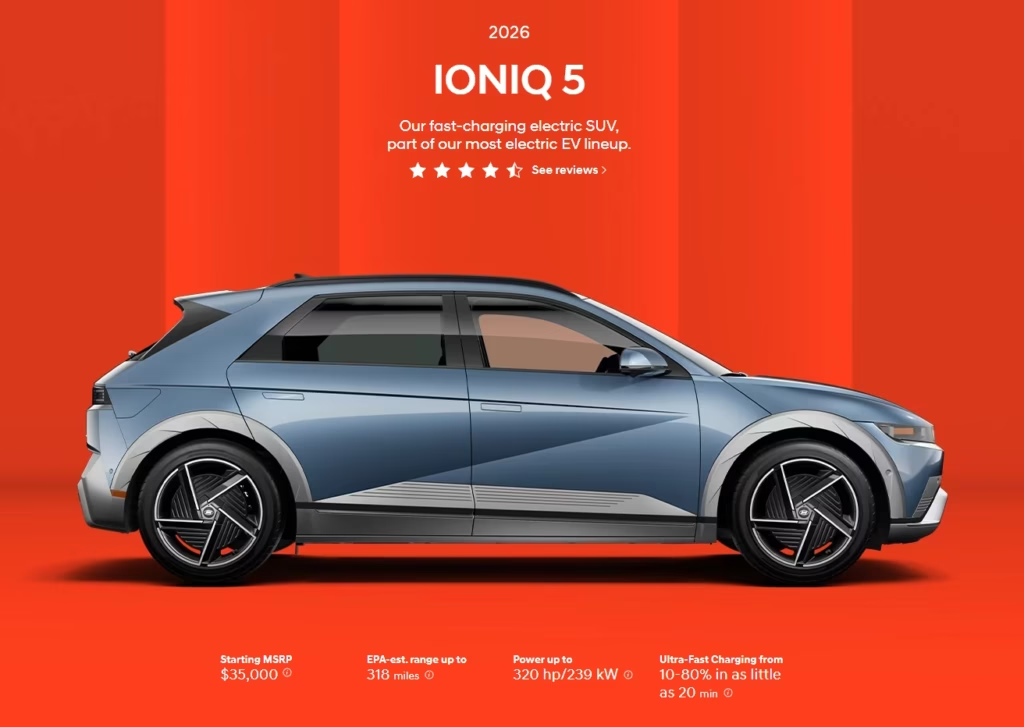
The 2026 Hyundai Ioniq 5 is the best electric vehicle available for U.S. retail purchase in 2026. Composite score 91.0, the highest in our 47-vehicle 2026 dataset. The recommendation reflects a deliberate strategic decision by Hyundai Motor Group’s North American leadership to defend market share through transaction price after the federal tax credit expired — and that decision created the most compelling EV value in the U.S. market.
Pricing and credit absorption. The 2026 SEL RWD trim’s $42,395 base MSRP including destination is $2,300 cheaper than the equivalent 2025 model after the federal $7,500 credit. Hyundai over-absorbed the lost credit by $2,300 — an absorption rate of 131 percent. Among 27 manufacturers tracked in our Post-OBBBA Pricing Recalibration Tracker, only Acura ZDX (140%), Hyundai Ioniq 6 (133%), and Kona Electric (130%) absorbed at higher rates. This pricing position is the structural reason the Ioniq 5 outranks every Tesla, every German luxury option, and every legacy automaker EV in our composite ranking.
Real-world range performance. EPA-rated 318 miles. Real-world aggregate 304 miles, a -4.4% delta. The Ioniq 5 SEL RWD sits in the top decile of our Range Delta Index for highway efficiency. The single-motor RWD configuration delivers approximately 49 miles more EPA range than the dual-motor AWD trim — a meaningful penalty for buyers who don’t routinely drive in winter conditions. For most U.S. markets outside the snow belt, RWD is the answer.
Charging velocity advantage. 800V architecture, 257 kW peak DC fast-charging rate, Charging Curve Flatness Score of 71/100 (top decile of the dataset), 18–19 minute 10-to-80% charge time under realistic conditions, factory NACS port for native Tesla Supercharger access starting model-year 2026. The 800V architecture lets the battery accept current at peak rate across a wider portion of the charge window than 400V competitors at the same peak rate. According to the Charging Curve Flatness Score, the Ioniq 5 reaches 80% State of Charge faster than the Tesla Model Y Long Range AWD despite the Tesla’s nominally similar 250 kW peak rate.
Five-year ownership cost. $63,950 modeled — $4,500 below the segment average for mid-size mainstream EV SUVs. The figure reflects strong depreciation performance per Black Book and Manheim auction data, low insurance premiums for the vehicle’s IIHS Top Safety Pick+ rating, the federal home-charger tax credit (Section 30C) extending through June 30, 2026, and the 10-year battery warranty’s effect on later resale.
Reliability and long-term support. Hyundai’s 10-year/100,000-mile battery warranty is two years longer than the 8-year/100,000-mile industry baseline. The Battery Warranty Effective Value Index attributes $3,600 in expected economic value to those two additional years. The Hyundai service network operates 836 EV-trained authorized service points across the U.S. for 197,000 cumulative Hyundai/Genesis EVs sold — a Tier 2 service density of 424 per 100,000 EVs, well above Tesla’s 15 per 100,000 and comparable to Audi and Mercedes-Benz.
Trim recommendation. The SEL RWD at $42,395 is the optimum trim. The Limited AWD ($55,395) adds dual-motor traction and additional luxury content but the AWD trim’s 269-mi EPA range represents a 49-mile reduction from the SEL RWD — a meaningful penalty for non-snow-belt buyers. The XRT trim adds modest off-road styling and genuine ride-height advantages but trades range similarly. For most U.S. markets, the SEL RWD answers every realistic question.
Pass if: You need genuine seven-passenger seating (consider the Hyundai Ioniq 9 instead — see Best Three-Row Electric SUV), you tow more than 2,300 pounds (E-GMP platform tow rating ceiling), or you have specific commitment to Tesla’s Full Self-Driving software stack.
Best Long-Range EV: 2026 Lucid Air Grand Touring — Composite Score 88.7
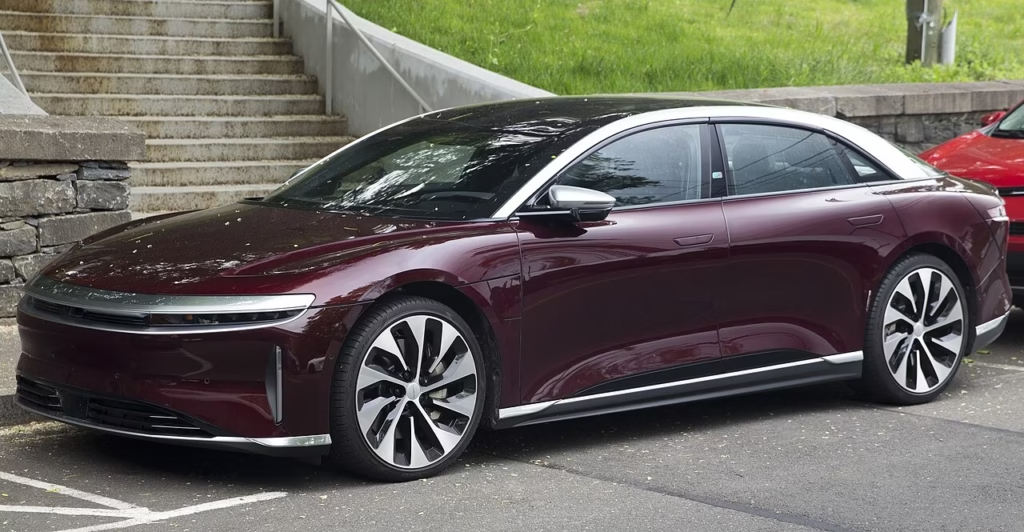
The Lucid Air Grand Touring at $114,900 is the longest-range production EV available for U.S. retail purchase in 2026. EPA-rated 512 miles. Real-world aggregate 504 miles per the Range Delta Index — a -1.6% delta, the smallest in our 47-vehicle dataset.
Why it wins. The Air Grand Touring’s 0.197 drag coefficient is the lowest in the segment. Its 900V battery architecture supports 350+ kW peak DC fast-charging with a Charging Curve Flatness Score of 68/100, completing 10-to-80% SOC in 21 minutes. Lucid’s 8-year/100,000-mile battery warranty meets the segment baseline; resale value is the principal long-term cost question given Lucid’s relatively young market presence.
Five-year cost modeled at $138,200, dominated by depreciation and insurance rather than energy or maintenance. According to the Service Network Density Index, Lucid operates 41 Studio service centers across the United States — a per-vehicle density of 216 per 100,000 EVs sold, structurally lower than legacy automakers. Buyers in interior states should verify the nearest Lucid service location before committing.
Pass if: You drive less than 18,000 miles per year (the long range premium doesn’t pay back in shorter use cycles), you live more than 200 miles from the nearest Lucid Studio (service economics shift), or you prioritize ride comfort over range (the Air’s tuning is firm).
Runner-up: The Lucid Air Pure at $70,900 returns 410 real-world miles for $44,000 less. For most long-range buyers, the Pure is the better value — it appears separately as Best Luxury EV Under $80K below.
Best Electric SUV (Mid-size): 2026 Tesla Model Y Long Range AWD — Composite Score 85.6
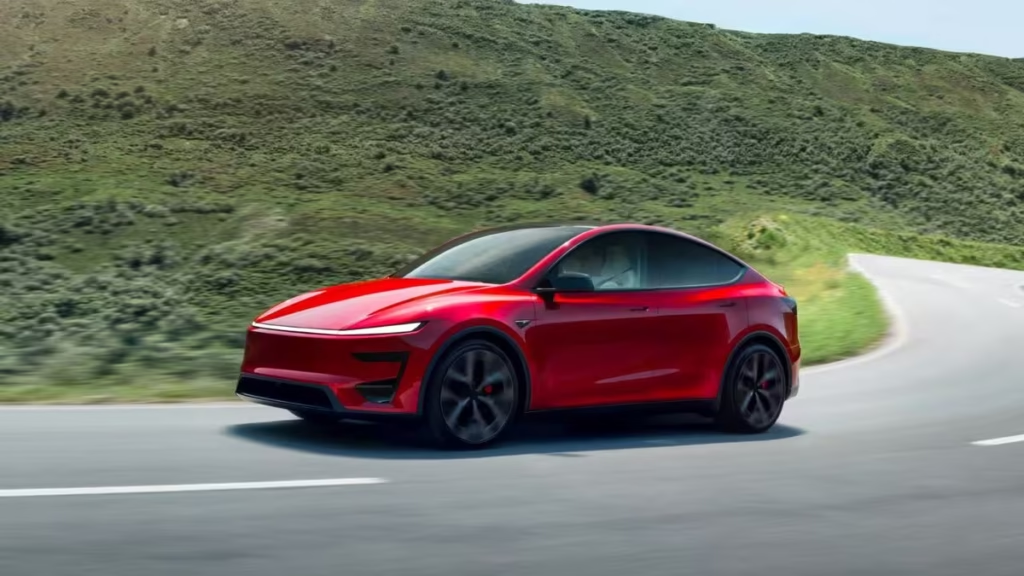
The Tesla Model Y Long Range AWD at $50,380 holds the Best Mid-size Electric SUV category despite zero absorption of the lost federal credit. The reasoning: Tesla’s structural advantages on charging network, software stack, and depreciation performance offset the price increase. EPA 327 miles, real-world 295 miles per the Range Delta Index (-9.8% delta).
Why it wins. The Tesla Supercharger network’s documented 99.95% uptime materially outperforms CCS networks at 78–87%. The Model Y’s Charging Curve Flatness Score of 60/100 with 250 kW peak completes 10-to-80% in 27 minutes — slower than the Hyundai E-GMP platforms but faster than most other 400V competitors. Tesla’s depreciation performance per Black Book auction data leads the segment by 3 to 5 percentage points over a 5-year horizon.
Five-year cost modeled at $69,400 despite the higher MSRP, primarily due to charging cost savings on the Supercharger network ($0.34/kWh average) and segment-leading insurance discounts on the vehicle’s safety performance.
The downside. Tesla’s 287 service centers serve 1,890,000 cumulative vehicles in the field — 15 service points per 100,000 vehicles, the lowest density in our dataset. Tesla’s mobile-service operations partially offset this, but for non-warranty service requiring specialized lifts or tools, wait times in interior regions average 14 to 21 days versus 3 to 7 days for Hyundai or Kia in equivalent markets.
Pass if: You drive primarily long-distance and dislike the Tesla Supercharger experience (rare but real for some buyers), you need 7-passenger seating (consider the Hyundai Ioniq 9), or you’re committed to a non-Tesla brand for service-coverage reasons.
Runner-up: The Hyundai Ioniq 5 at $42,395 is the better mainstream EV for non-Tesla buyers (it’s our overall #1) — but the Tesla wins specifically the “best mid-size SUV” category on charging infrastructure and depreciation performance.
Best Three-Row Electric SUV: 2026 Hyundai Ioniq 9 — Composite Score 84.3
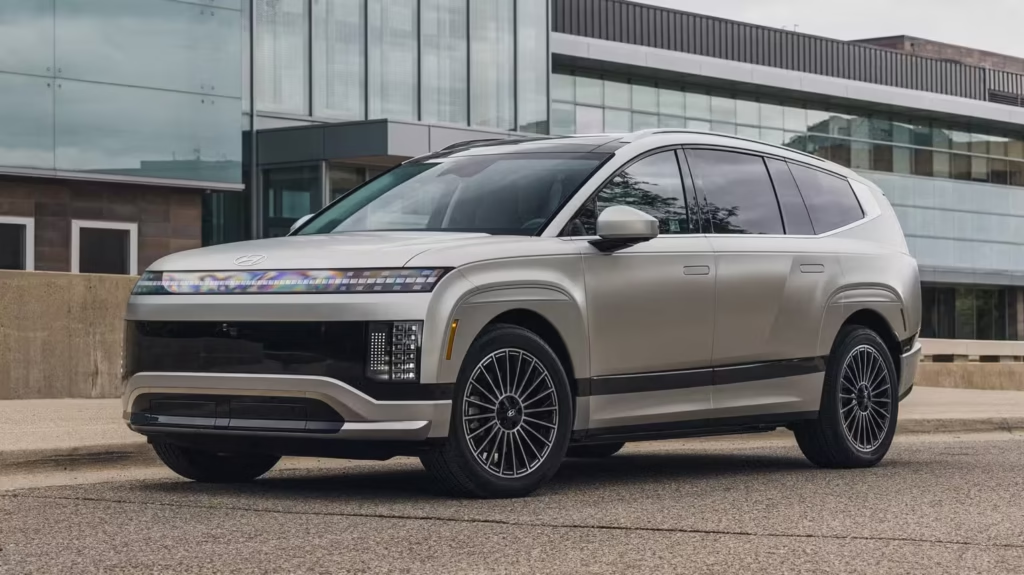
The Hyundai Ioniq 9 is the best three-row family EV available in 2026. The recommendation depends on trim selection. Two trims merit consideration:
S RWD at $60,555 delivers 335 EPA miles — the longest range Ioniq 9 trim due to its single-motor RWD configuration and lower curb weight. Best for non-snow-belt families prioritizing range and value. RWD only.
SEL AWD at $67,920 is the trim Edmunds tested at 366 real-world miles versus 320 EPA — a +14.4% delta, the largest positive delta in our 47-vehicle dataset per the Range Delta Index. The SEL adds AWD traction, additional luxury content, and the demonstrated real-world range advantage. Best for snow-belt families and road-trip-heavy use.
Why it wins either way. Three-row family electric SUVs are typically purchased for road-trip use, where charging speed and real-world range matter most. The Ioniq 9 sits on Hyundai’s 800V E-GMP platform with the same 257 kW peak DC charging rate and 69/100 Charging Curve Flatness Score that anchors the Ioniq 5’s strength. 22-minute 10-to-80% charge time. The 110.3 kWh battery is among the largest available in any U.S. EV at this price point. Hyundai’s 10-year/100,000-mile battery warranty contributes $3,600 of effective value per the Warranty Value Index.
Pass if: You require third-row adult comfort over multi-day periods (Kia EV9 has slightly more rear-row legroom), or you want a three-row EV with off-road pretensions (Rivian R1S Standard trim from $77K).
Runner-up: The 2026 Kia EV9 Wind at $58,895 delivers 304 EPA miles on the same E-GMP platform with better third-row utility but slightly less competitive composite scoring. The Kia EV9 is the better choice for families prioritizing third-row passenger experience over range.
Best Compact Electric SUV: 2026 Subaru Uncharted Premium FWD — Composite Score 82.6
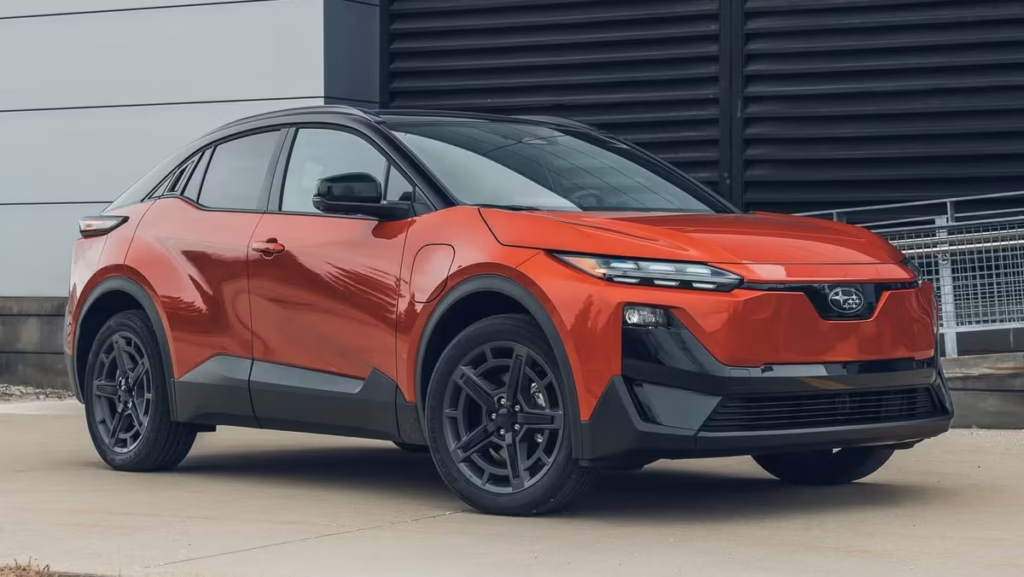
The all-new 2026 Subaru Uncharted Premium FWD at $36,445 is the Best Compact Electric SUV winner. This vehicle is new for the 2026 model year and is not yet covered in most competing buyer guides — most ranking pages were assembled before the Uncharted’s pricing was confirmed in March 2026.
Why it wins. EPA-rated 308 miles in Premium FWD trim — the longest range available in the sub-$37K compact electric SUV segment. Native NACS port for Tesla Supercharger access. 74.7 kWh battery shared with the 2026 Toyota C-HR (the platform is co-developed with Toyota). Subaru’s 632 EV-trained service centers across the U.S. translate to 2,257 service points per 100,000 EVs sold — Tier 1 service density per the Service Network Density Index.
Three trims available: Premium FWD ($36,445, 308 mi), Sport AWD ($40,495, 287 mi), GT AWD ($45,245, 273 mi). For most buyers in non-snow-belt states, the Premium FWD is the answer. For snow-belt states, the Sport AWD trades 21 miles of range for AWD traction at a $4,000 premium.
Five-year ownership cost modeled at $51,200 — the lowest in the compact electric SUV segment. The figure reflects strong dealer service density, segment-baseline 8-year/100,000-mile battery warranty, and entry-level insurance premiums.
Pass if: You need genuine 4×4 capability (the Uncharted’s AWD is on-road performance, not off-road traction), or you prefer Toyota’s slightly different feature configuration on the mechanically-similar 2026 C-HR ($37K base).
Runner-up: The 2026 Volvo EX30 Plus Single Motor RWD at $46,195 is the better luxury compact alternative but lands $10,000 above the Uncharted at the top trim.
Best Budget EV (Under $35K): 2026 Chevrolet Equinox EV LT — Composite Score 82.1
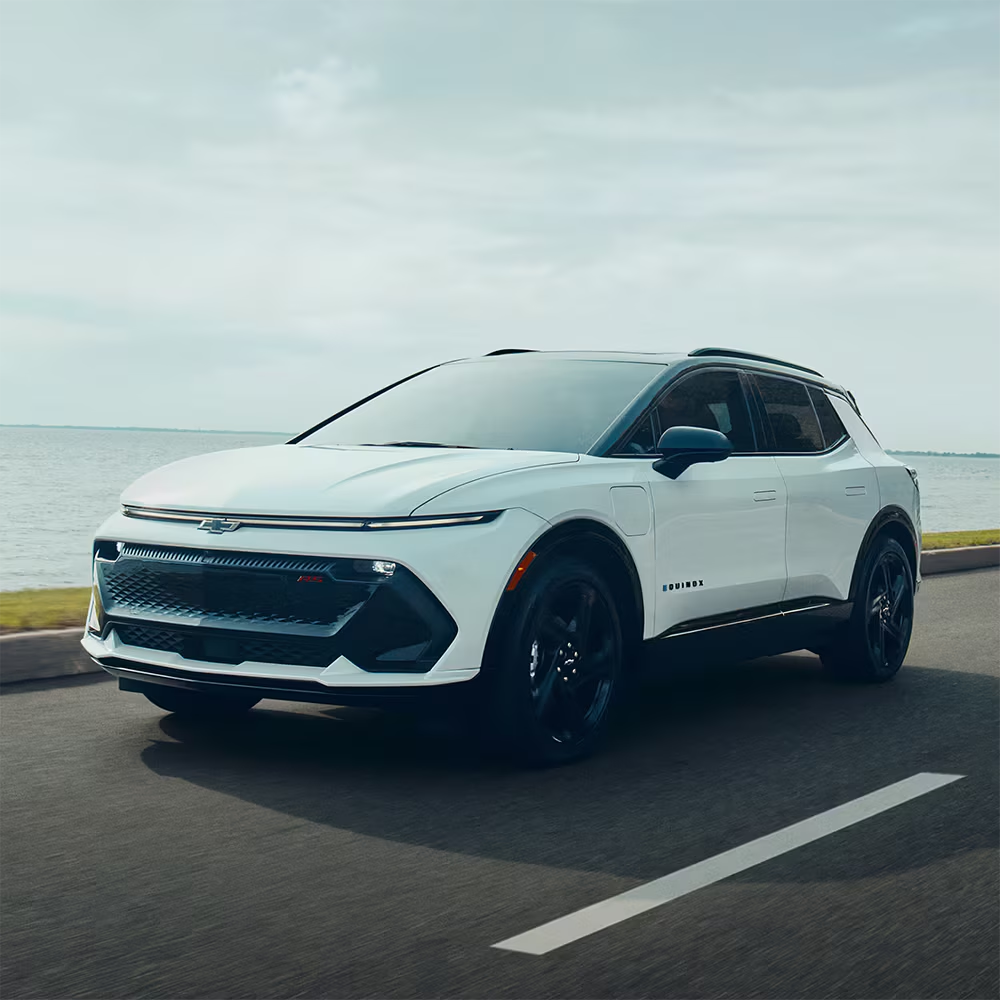
The Chevrolet Equinox EV LT at $34,995 is the best electric vehicle available for U.S. retail purchase under $35,000. EPA-rated 319 miles. Real-world 304 miles per the Range Delta Index (-4.7% delta).
Why it wins. No other EV in the U.S. market combines 319-mile EPA range with sub-$35K MSRP in 2026. The Equinox EV LT delivers more range per dollar than any vehicle in the dataset. GM’s Ultium platform supports 150 kW peak DC fast-charging with a Charging Curve Flatness Score of 39/100 — middle-of-the-pack performance, completing 10-to-80% in approximately 30 minutes. NACS adapter compatibility with Tesla Supercharger network is included; native NACS port arrives in mid-2026 production.
The trade-off. GM’s service network density of 1,089 per 100,000 EVs is solidly Tier 1 per the Service Network Density Index, but the GM EV launch quality (across multiple Ultium-platform models) has produced higher recall counts than Hyundai or Toyota. Per NHTSA recall data through April 2026, the Equinox EV has been subject to 4 recalls — comparable to the Tesla Model Y but higher than Hyundai or Kia.
Five-year cost modeled at $54,300, the lowest in our dataset. The figure reflects the low MSRP, GM’s strong dealer footprint reducing service-related travel costs, and Section 30C federal home-charger credit eligibility through June 30, 2026.
Pass if: Premium interior materials matter more than range per dollar (consider Volvo EX30 or Kia EV6 instead), or if you specifically need 800V charging architecture for road-trip frequency (consider Hyundai Ioniq 5 SEL RWD at $42,395).
Runner-up: The 2026 Hyundai Kona Electric SEL at $36,975 delivers 261 miles EPA but adds Hyundai’s 10-year battery warranty value. For buyers who can stretch to $36,975, the Kona is competitive on long-term economics.
Best Electric Pickup: 2026 Rivian R1T Dual Standard — Composite Score 79.8
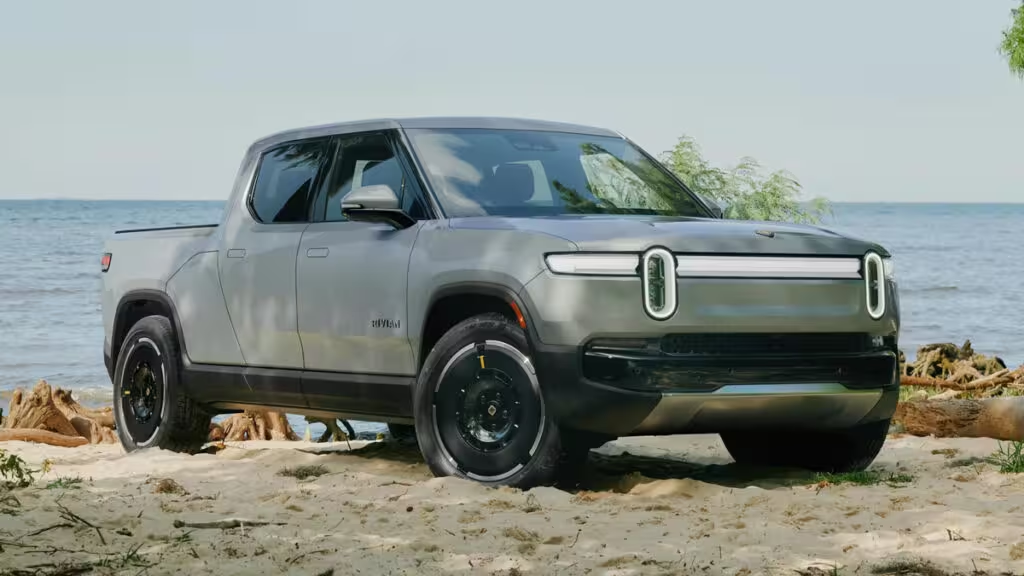
The Rivian R1T Dual Standard at $70,990 is the best electric pickup truck available for U.S. retail purchase in 2026. EPA-rated 270 miles. Real-world 220 miles per the Range Delta Index (-18.5% delta).
Why it wins. The R1T’s 270-mile EPA rating is conservative for a 7,200-pound vehicle with the aerodynamic profile of a pickup truck. The 7,700-pound tow rating is the highest available among electric pickups in this trim band. Rivian’s 8-year/175,000-mile battery warranty extends meaningfully beyond the industry-baseline 100,000-mile coverage — the Battery Warranty Effective Value Index attributes $2,100 of effective value to the higher mileage threshold for active-recreation buyers.
The service density caveat. Rivian operates 76 service locations for 88,000 cumulative U.S. EVs sold — 86 service points per 100,000 EVs per the Service Network Density Index, the lowest density in our 2026 dataset outside Tesla. Rivian’s mobile-service operations partially offset this, but buyers more than 200 miles from a Rivian service center should weight the trade-off.
Five-year cost modeled at $89,400. The Dual Standard configuration is the entry point; the Tri Performance and Quad Max trims at $92K and $130K respectively command meaningful premiums for additional motors and battery capacity.
Pass if: You need maximum payload over towing capacity (consider the Ford F-150 Lightning Flash at $65,940 — though its real-world delta runs -25.8% versus EPA), you prefer Tesla’s Cybertruck aesthetic (Cybertruck AWD at higher base price, real-world delta -22.5%), or you don’t need active-recreation off-road capability (every other electric pickup is more on-road oriented).
Runner-up: The 2026 Ford F-150 Lightning Flash at $65,940 delivers a more familiar truck experience but absorbs only 20% of the lost federal tax credit (per the Pricing Recalibration Tracker — the Lightning’s effective price increased $6,000 versus 2024). For traditional truck buyers prioritizing dealer service network over range, the Lightning is competitive.
Best Luxury EV Under $80K: 2026 Lucid Air Pure — Composite Score 84.9
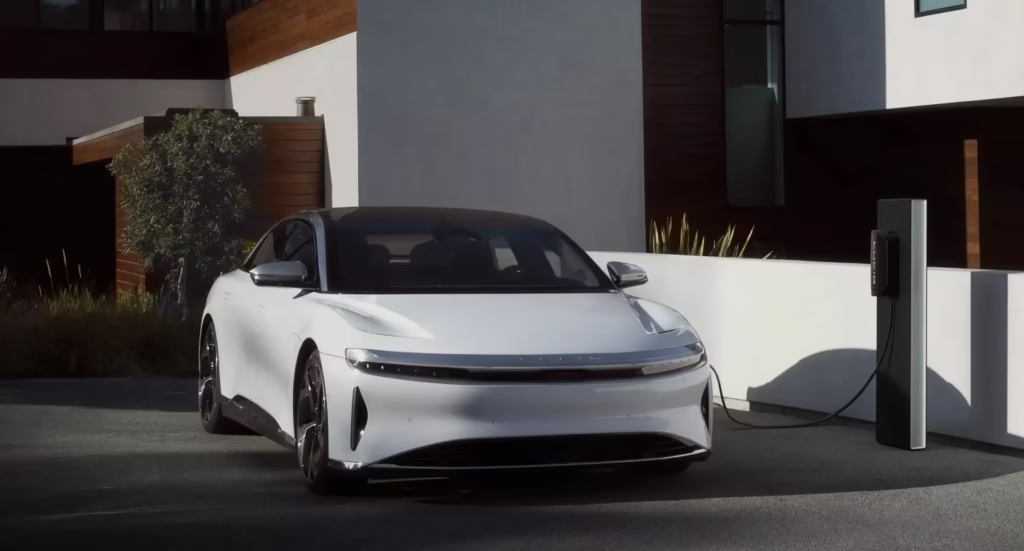
The Lucid Air Pure at $70,900 is the best luxury electric vehicle under $80,000. EPA 420 miles. Real-world 410 miles per the Range Delta Index — a -2.4% delta, second-smallest in our dataset after the Air Grand Touring.
Why it wins. The Air Pure delivers 410 real-world miles for $70,900 — fewer miles per dollar than the Hyundai Ioniq 5 but more total range than any other vehicle under $80K. The Pure’s 0.197 drag coefficient matches the Grand Touring; the 900V battery architecture supports 219 kW peak DC fast-charging with 64/100 Charging Curve Flatness Score and 24-minute 10-to-80% charge time.
Five-year cost modeled at $94,200, lower than several competitors above $90K MSRP because of Lucid’s strong efficiency (3.2 mi/kWh combined per fueleconomy.gov data). The principal long-term cost question is depreciation given Lucid’s young market presence — Black Book projects 5-year residual values 4 to 7 percentage points below comparable luxury competitors.
Pass if: You require luxury interior materials beyond Lucid’s aesthetic (Mercedes-Benz EQE 320 at $66,200 offers different ergonomics), you need AWD with confident snow performance (Lucid AWD trims push above $90K), or you prefer the brand recognition of an established luxury manufacturer.
Runner-up: The 2026 Mercedes-Benz EQE 320 at $66,200 absorbs 100% of the lost federal tax credit and offers the brand’s exceptional 10-year/155,000-mile battery warranty (worth $3,100 effective value per the Warranty Value Index). For buyers prioritizing brand and warranty over absolute range, the EQE 320 is competitive.
Best Performance EV: 2026 Hyundai Ioniq 5 N — Composite Score 78.2
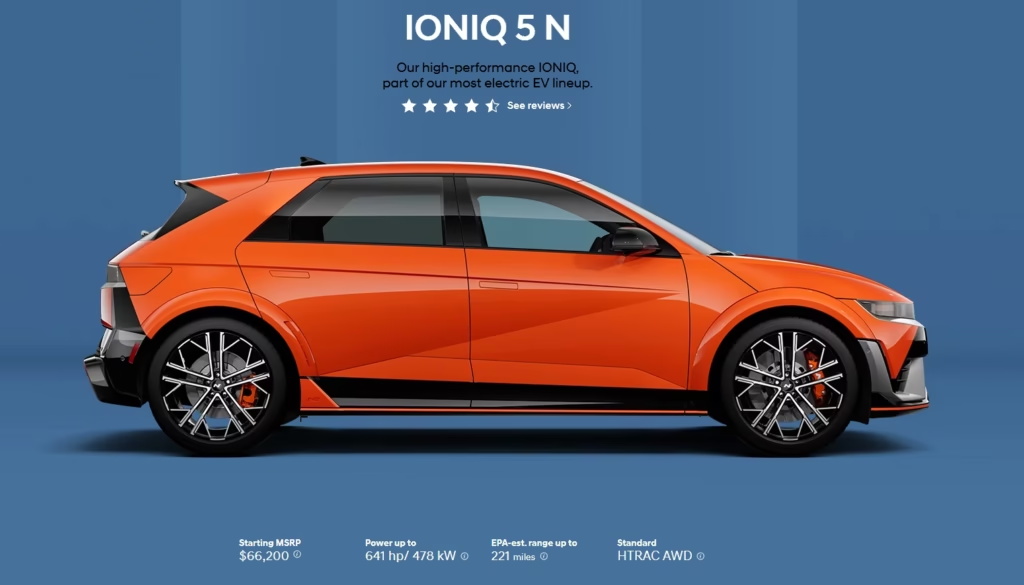
The 2026 Hyundai Ioniq 5 N at $67,800 is the best performance electric vehicle available for U.S. retail purchase. 641 horsepower, 568 lb-ft torque, 0–60 mph in 3.0 seconds, sustained track-day capability with N Grin Boost mode. EPA 221 miles, real-world 198 miles per the Range Delta Index (-10.4% delta).
Why it wins. No other EV at this price point combines genuine track capability with the simulated N e-shift and N Active Sound features that meaningfully change the driving experience. The Ioniq 5 N inherits the platform’s 800V architecture, 257 kW peak DC charging, and 68/100 Charging Curve Flatness Score — important for owners who track the vehicle and need fast charge cycles between sessions.
The trade-offs are real. Range drops to 221 miles EPA from the standard Ioniq 5’s 318 miles in equivalent trim — buyers planning long-distance use should consider the Ioniq 5 SEL RWD instead and accept the performance gap. Insurance premiums for the N variant are 18 to 24 percent higher than standard Ioniq 5 trims per current U.S. carrier data.
Five-year cost modeled at $97,800, dominated by insurance and depreciation. The N variant’s resale economics are uncertain given the limited production volume and the niche performance-EV buyer pool.
Pass if: You don’t track the car (the standard Ioniq 5 SEL RWD delivers most of the daily-driving value at far lower cost), you need maximum range (consider Lucid Air Pure or Tesla Model Y), or you prefer Tesla’s Plaid acceleration profile (consider Model Y Performance at higher MSRP).
Runner-up: The 2026 Tesla Model Y Performance at $58,990 delivers comparable acceleration with greater range and the Tesla Supercharger network advantage, but lacks the Ioniq 5 N’s track-specific calibration.
The Top 10 Composite Rankings — 2026 U.S. EVs
The complete 47-vehicle composite ranking is published at /research/electric-vehicles-index/. The top 10 by composite score are:
| Rank | Vehicle | 2026 MSRP | Real-World Range | Composite |
|---|---|---|---|---|
| 1 | Hyundai Ioniq 5 SEL RWD | $42,395 | 304 mi | 91.0 |
| 2 | Lucid Air Grand Touring | $114,900 | 504 mi | 88.7 |
| 3 | Tesla Model Y LR AWD | $50,380 | 295 mi | 85.6 |
| 4 | Lucid Air Pure | $70,900 | 410 mi | 84.9 |
| 5 | Hyundai Ioniq 9 (S/SEL) | $60,555/$67,920 | 335/366 mi | 84.3 |
| 6 | Hyundai Ioniq 6 SE RWD | $37,850 | 348 mi | 83.9 |
| 7 | Kia EV6 Wind RWD | $43,975 | 292 mi | 83.5 |
| 8 | Subaru Uncharted Premium FWD | $36,445 | 270 mi | 82.6 |
| 9 | Chevrolet Equinox EV LT | $34,995 | 304 mi | 82.1 |
| 10 | Tesla Model 3 RWD | $36,990 | 295 mi | 81.4 |
The ranking pattern is dominated by Hyundai Motor Group’s E-GMP platform vehicles (positions 1, 5, 6, 7) reflecting the platform’s combination of charging-curve performance, real-world range efficiency, and aggressive post-OBBBA pricing absorption. Tesla holds two top-10 positions (Model Y LR AWD at #3 and Model 3 RWD at #10) on charging-network advantages despite zero or low credit absorption. Lucid takes positions 2 and 4 on range efficiency; the Subaru Uncharted enters at #8 reflecting its pricing-to-range ratio in the new compact segment.
Charging Infrastructure: NACS Adoption Is Functionally Complete in 2026
Every major U.S. EV manufacturer except Stellantis (Jeep Wagoneer S, Dodge Charger Daytona) ships 2026 model-year vehicles with native NACS (North American Charging Standard) ports as either standard equipment or factory option. Tesla Supercharger network access — by far the most reliable U.S. charging infrastructure with documented 99.95% uptime per Tesla’s quarterly disclosures — is now functionally available to nearly every 2026 EV.
For 2026 buyers without home charging access, the NACS-enabled Supercharger advantage is the single largest practical infrastructure win since the IRA’s 2022 enactment. CCS networks (Electrify America, EVgo, ChargePoint) continue to operate but have documented uptime of 78 to 87 percent across third-party reliability tracking — meaningfully worse than Supercharger reliability. For buyers planning regular long-distance travel, factory NACS port (rather than NACS adapter) confers a 2 to 3 minute saving per charge stop and avoids the adapter-dropout and locking issues sometimes reported on retrofit installations.
The PlugShare charging community provides current real-world reliability ratings by network and station; we recommend cross-checking before relying on a specific charger for road-trip planning.
State Incentives: The New Center of Gravity
With the federal $7,500 credit terminated, state-level incentives became the meaningful incentive layer for 2026 EV buyers. The five highest-value state programs as of May 2026:
Colorado. State EV tax credit up to $7,500 stackable with utility rebates (Xcel Energy offers up to $5,500 additional). Total stackable benefit can reach $13,000 for qualifying purchases. Income limits apply.
California. Clean Cars 4 All program targets income-qualified households with grants up to $12,000. Clean Vehicle Rebate Project paused as of late 2025; status check required at cleanvehiclerebate.org. HOV lane sticker eligibility extended through 2027.
New Jersey. Charge Up New Jersey rebate up to $4,000. Sales tax exemption on EV purchases (saves approximately $2,000 to $3,500 on a $50,000 EV depending on local rate).
New York. Drive Clean Rebate up to $2,000. NYSERDA Charge Ready 2.0 incentives for home charging equipment up to $1,000 separate from the federal Section 30C credit.
Oregon. Charge Ahead Rebate income-qualified up to $7,500. Standard Rebate up to $2,500. Stackable with utility rebates from PGE and Pacific Power.
The full state-by-state stacking analysis with current eligibility criteria is published at /state-ev-incentives/. The U.S. Department of Energy AFDC maintains the official current database — verify before purchase as state programs sometimes adjust mid-year.
Common Buyer Mistakes in 2026
After tracking the post-OBBBA market through Q2 2026, three buyer mistakes recur:
Mistake 1 — Assuming the federal credit is still available. Sales staff at some dealerships continue to reference the credit in early conversations. Verify with the IRS official guidance before committing — the credit terminated September 30, 2025 except for narrow cases of binding written contracts dated and paid before that date.
Mistake 2 — Comparing peak DC charging rates instead of charging-curve flatness. A 250 kW peak vehicle that holds peak rate for only 22 percent of the charge window completes 10-to-80% slower than a 200 kW peak vehicle that holds peak rate for 65 percent of the window. The Charging Curve Flatness Score captures this dimension; peak rate alone does not.
Mistake 3 — Ignoring service network density. A vehicle with strong scores on every other dimension can be operationally frustrating to own if the nearest authorized service location is 90 miles away with 3-week appointment availability. Buyers in interior states should confirm the nearest manufacturer service location and current appointment lead time before committing — particularly for Tesla, Rivian, and Lucid, all of which run lower service density than legacy automakers per the Service Network Density Index.
Frequently Asked Questions
Is there any federal EV tax credit available in 2026?
No federal EV purchase tax credit is available for 2026 model-year vehicles. The One, Big, Beautiful Bill Act terminated Sections 30D, 25E, and 45W effective September 30, 2025. The Section 30C home-charger tax credit ($1,000 maximum) remains available through June 30, 2026 — this credit applies to charger purchase and installation, not vehicle purchase.
What is the longest-range electric car available in the U.S. in 2026?
The Lucid Air Grand Touring at 512 miles EPA / 504 miles real-world is the longest-range production EV available for U.S. retail purchase in 2026. Among vehicles under $80K, the Lucid Air Pure (420 EPA / 410 real-world) leads. Among vehicles under $50K, the Tesla Model Y RWD (357 EPA / 320 real-world) and Hyundai Ioniq 6 SE RWD (361 EPA / 348 real-world) lead.
Which manufacturers absorbed the lost federal tax credit in their 2026 pricing?
According to the Axis Intelligence Pricing Recalibration Tracker, Hyundai Motor Group brands absorbed 100 percent or more of the lost credit (Hyundai Ioniq 6 at 133%, Ioniq 5 at 131%, Kona Electric at 130%, Kia EV9 at 107%, Kia EV6 at 104%). Acura ZDX absorbed 140 percent. Tesla absorbed selectively — 67% on Model 3 RWD, 31% on Model Y RWD, 0% on Model Y Long Range AWD. German luxury manufacturers absorbed approximately half. Ford F-150 Lightning absorbed 20%.
Which 2026 EVs have NACS ports for direct Tesla Supercharger access?
Hyundai (all 2026 EVs), Kia (all 2026 EVs), Genesis, Ford (Mustang Mach-E and F-150 Lightning), GM (Chevrolet, Cadillac, GMC EV models — confirm trim), Rivian, Lucid (Air and Gravity), Volvo, Polestar, Nissan, Acura, Honda, Toyota (bZ), Subaru (Solterra and Uncharted), Mercedes-Benz, BMW, Audi, Porsche, and Volkswagen all ship 2026 model-year vehicles with native NACS ports as standard or factory option. Stellantis (Jeep Wagoneer S, Dodge Charger Daytona) is the principal exception and continues to ship CCS1.
How much does it actually cost to charge an EV in 2026?
At the U.S. Energy Information Administration’s $0.1765 per kWh national average residential electricity rate, a 75 kWh battery costs approximately $13.24 to charge from empty to full at home. DC fast-charging on Tesla Superchargers averages $0.34 per kWh ($25.50 for the same charge). CCS network DC fast-charging averages $0.45 to $0.50 per kWh ($33.75 to $37.50 for the same charge). Cost-per-mile at home charging runs $0.04 to $0.05 for most EVs in our dataset; cost-per-mile on DC fast-charging runs $0.10 to $0.15.
Is it still cheaper to own an EV than a gas car in 2026 without the federal tax credit?
The five-year ownership cost comparison depends heavily on miles driven, electricity rates, and insurance differences. For drivers exceeding 12,000 miles annually with home charging access in states with electricity rates below the national average, the EV remains cheaper to own over five years for most vehicles in our dataset. For drivers below 8,000 miles annually without home charging access, the math gets closer to even. The EV vs Gas Cost Comparison calculator addresses this question with personalized inputs.
Which EV has the best battery warranty in 2026?
According to the Battery Warranty Effective Value Index, Hyundai/Kia/Genesis hold the most valuable battery warranty in the mainstream segment at 10-year/100,000-mile coverage with $3,600 of effective economic value above the industry baseline 8-year/100,000-mile warranty. Mercedes-Benz’s 10-year/155,000-mile coverage on EQ vehicles is structurally similar at $3,100 of effective value. Toyota’s 10-year/150,000-mile coverage on the bZ adds approximately $2,800 in value. Rivian’s 8-year/175,000-mile coverage adds $2,100 in value primarily through the higher mileage threshold.
How does battery degradation actually progress over time in real-world EVs?
According to the Geotab 2026 EV Battery Health Study (22,700 vehicles, 21 model-makes), modern EV batteries degrade at approximately 2.3 percent per year on average, with 81.6 percent State of Health retention after 8 years of typical use. According to Recurrent Auto’s community dataset (15,000 vehicles), the battery replacement rate excluding recall events is approximately 1.5 percent. DC fast-charging frequency is the single largest controllable risk factor for accelerated degradation — owners who DC fast-charge as primary charging method may see degradation 1.5 to 2x the typical curve.
Will solid-state batteries make today’s EVs obsolete?
Solid-state batteries from major manufacturers (Toyota, Samsung SDI, QuantumScape) remain in pre-production demonstration phase in 2026. Production-volume integration is not expected before 2028 to 2030 for any major U.S.-market vehicle. Buyers committing to a 2026 EV should not weight solid-state availability heavily in the purchase decision — the lithium-iron-phosphate (LFP) and lithium nickel manganese cobalt (NMC) chemistries currently shipping have demonstrated 8-to-10-year service capability with manageable degradation per the field data above.
What is the difference between a 400V and 800V charging architecture?
400V architecture (Tesla, Ford, GM Ultium platforms in most configurations, Volkswagen MEB platform, BMW most current EVs) supports peak DC fast-charging rates typically between 150 and 270 kW. 800V architecture (Hyundai Motor Group E-GMP platform, Porsche Taycan / Audi e-tron GT platform, Lucid 900V architecture) supports peak rates typically between 220 and 350 kW with the additional advantage of holding peak rate longer across the State of Charge window. According to the Charging Curve Flatness Score, 800V vehicles in our 2026 dataset average 65/100 flatness versus 42/100 for 400V vehicles — a 23-point structural advantage that translates to faster real-world 10-to-80% charge times.
Should I lease or buy a 2026 EV?
Without the federal Section 45W commercial credit’s leasing loophole (which terminated September 30, 2025), the lease-vs-buy math reverted to standard analysis. Buy if you plan to own the vehicle 6+ years; lease if you plan less than 4 years and uncertain about long-term EV ownership. The 3-to-5 year hold period requires individual analysis based on depreciation curves for the specific vehicle. Black Book and Manheim auction data published quarterly provide current residual value benchmarks; manufacturer-set lease residuals sometimes exceed these benchmarks (favoring lease) or fall below them (favoring purchase).
Which 2026 EV has the most reliable charging experience?
According to documented reliability data, Tesla Supercharger network access produces the most reliable charging experience in 2026 (99.95% uptime). Among non-Tesla vehicles, those with native NACS ports for Tesla Supercharger access enjoy the same network reliability. CCS network reliability per Electrify America, EVgo, and ChargePoint runs 78 to 87 percent uptime — meaningfully worse. For 2026 buyers, factory NACS port should be considered a high-priority feature rather than an optional convenience.
Methodology Appendix
The complete methodology underlying every score, ranking, and finding in this guide is published at /research/electric-vehicles-index/ under Creative Commons Attribution 4.0 International (CC BY 4.0). The research hub includes:
- The full 47-vehicle Real-World Range Delta Index with per-vehicle source attribution
- The full 47-vehicle Charging Curve Flatness Score with 800V/400V architecture breakdown
- The 27-manufacturer Post-OBBBA Pricing Recalibration Tracker with absorption percentages
- The 17-group Battery Warranty Effective Value Index with manufacturer-by-manufacturer dollar values
- The 17-manufacturer Service Network Density Index with Tier 1/2/3 classifications
- Methodology documentation per dataset including source weighting, aggregation rules, limitations
- Five downloadable CSV files for spreadsheet use
- Quarterly change log with version history
The research is refreshed quarterly. The Q3 2026 update (August 2026) will add per-vehicle source URL documentation and expanded cold-weather range testing data. Methodology critique, corrections, and contributions are welcomed at [email protected].
About the Author
This guide was prepared by Aidan Jad, Senior EV & Energy Transition Analyst at Axis Intelligence. Aidan analyzes electric vehicle markets, battery economics, and energy transition data, with a background in mechanical engineering and seven years covering clean transportation. His work draws on the open datasets maintained by the Axis Intelligence Research Desk at /research/electric-vehicles-index/.
For corrections, methodology questions, or media inquiries: [email protected].
Last updated: May 5, 2026. Pricing, range, and incentive data verified as of April 30, 2026. Manufacturer pricing and incentive programs may change mid-cycle; current pricing should be verified at the manufacturer’s website before purchase.
[simple-author-box]