

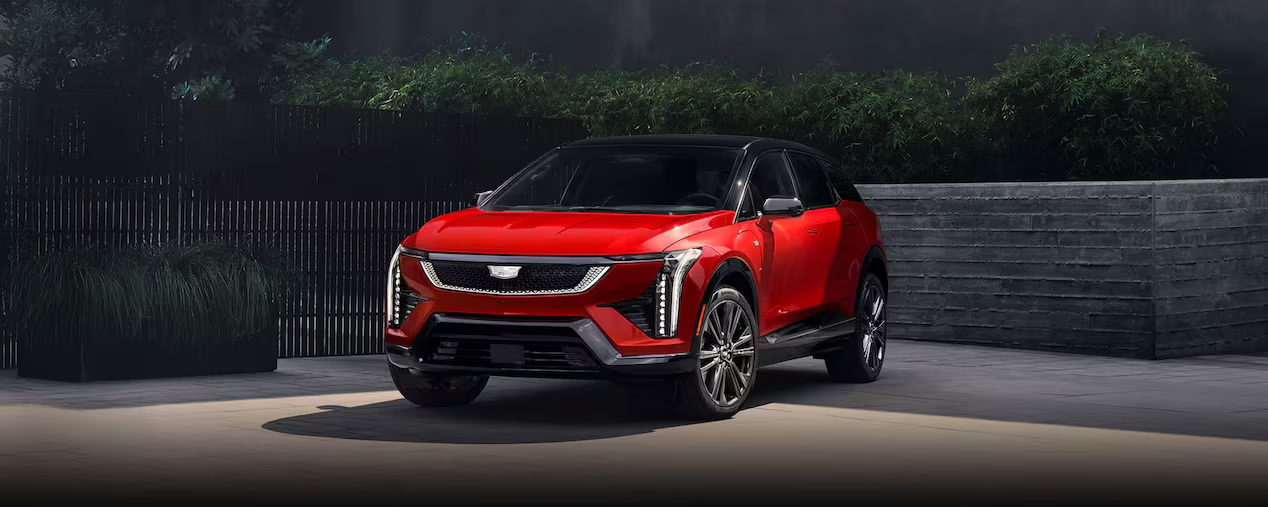
Best Luxury Electric SUV 2026
Quick Verdict
| Award | Vehicle | Starting Price | Score |
|---|---|---|---|
| 🏆 Editor’s Choice | Lucid Gravity Grand Touring | $98,900 | 8.78/10 |
| 🥈 Runner-Up | Cadillac Escalade IQ | $127,405 | 8.58/10 |
| ⚡ Best Performance Pick | Porsche Macan Electric | $80,300 | 8.23/10 |
| 💎 Best Value Luxury | Genesis Electrified GV70 | $65,875 | 7.93/10 |
The best luxury electric SUV in 2026 is the Lucid Gravity Grand Touring — it leads every category that matters to serious buyers: real-world range, charging speed, and outright performance, all in a package that genuinely earns its near-six-figure price. The runner-up is the Cadillac Escalade IQ, which holds the longest EPA-rated range of any production electric SUV and sets the benchmark for full-size luxury presence. If your priority is driving feel over passenger space, the Porsche Macan Electric beats every other vehicle in this class when the pavement gets interesting.
I ranked nine luxury electric SUVs using a five-criteria scoring matrix built specifically for the 2026 market — a segment distinct from the broader best electric cars in 2026 conversation by its price floor and positioning — real-world range, charging speed and network, interior quality, performance, and value for money. Every score is weighted and disclosed below. I drive an Ioniq 6 daily, have covered EV charging infrastructure across North America for four years, and pulled in verified EPA data from fueleconomy.gov and manufacturer configurators to anchor every number in this article.
Table of Contents
How We Scored: The Axis Intelligence Luxury EV Matrix
Most ranking articles in this segment copy manufacturer talking points or copy each other. Our approach is different: we built a weighted scoring matrix and scored every vehicle on the same five criteria. The ranking you see is the output of the math, not a gut feeling or a press-trip impression.
The Five Criteria
| Criterion | Weight | What We Measured |
|---|---|---|
| Real-World Range | 25% | EPA-estimated range adjusted for real-world owner data (Recurrent fleet data, Edmunds EV Range Test); penalizes inflated EPA claims |
| Charging Speed & Network | 20% | Peak DC fast-charge rate (kW), time to add 100 miles, network coverage (NACS vs. CCS adapter required) |
| Interior Quality & Comfort | 25% | Materials quality, seat comfort, NVH insulation, infotainment usability, technology integration; assessed from professional reviews and long-term owner reports |
| Performance & Dynamics | 15% | Horsepower, 0–60 mph time, handling feel, towing capacity; weighted lower because luxury buyers rank comfort over lap times |
| Value for Money | 15% | Price relative to class, standard equipment list, warranty coverage, 5-year ownership cost estimates |
Scoring Scale
Each criterion is scored 1–10. The weighted sum produces the final score. A 9.0+ indicates class-best performance in that category. A score below 7.0 is a meaningful weakness. Every score reflects the recommended trim for each model — not the base spec or the range-topping variant, unless specified.
Full Scoring Matrix
| Vehicle | Range (25%) | Charging (20%) | Interior (25%) | Performance (15%) | Value (15%) | Final Score |
|---|---|---|---|---|---|---|
| Lucid Gravity Grand Touring | 9.5 | 9.0 | 8.5 | 9.0 | 7.5 | 8.78 |
| Cadillac Escalade IQ | 10.0 | 8.0 | 9.5 | 8.0 | 6.0 | 8.58 |
| Porsche Macan Electric | 7.0 | 9.0 | 8.5 | 9.5 | 7.5 | 8.23 |
| Rivian R1S | 8.5 | 7.5 | 8.0 | 8.0 | 9.0 | 8.18 |
| BMW iX xDrive60 | 8.0 | 7.5 | 9.0 | 8.0 | 8.0 | 8.15 |
| Volvo EX90 | 7.5 | 8.0 | 8.5 | 7.5 | 8.5 | 8.00 |
| Tesla Model X | 8.0 | 8.5 | 7.5 | 8.5 | 7.5 | 7.98 |
| Genesis Electrified GV70 | 6.0 | 8.0 | 8.5 | 8.5 | 9.5 | 7.93 |
| Mercedes-Benz EQS 550 SUV | 7.5 | 7.5 | 9.5 | 7.5 | 6.5 | 7.85 |
Weights applied: Range ×0.25, Charging ×0.20, Interior ×0.25, Performance ×0.15, Value ×0.15.
Quick Comparison Table
| Vehicle | EPA Range | Peak Charge | 0–60 mph | Tow Rating | Starting MSRP | Seats |
|---|---|---|---|---|---|---|
| Lucid Gravity GT | 450 mi | 400 kW | 3.4 sec | 6,000 lb | $98,900 | 5/6/7 |
| Cadillac Escalade IQ | 460 mi | ~350 kW | 4.9 sec | 8,000 lb | $127,405 | 7 |
| Porsche Macan 4S Electric | ~290 mi | 270 kW | 3.6 sec | 5,512 lb | ~$99,500 | 5 |
| Rivian R1S (Large) | 329 mi | 220 kW | 4.5 sec | 7,700 lb | $83,990 | 7 |
| BMW iX xDrive60 | 364 mi | 195 kW | 4.1 sec | 3,500 lb | $89,675 | 5 |
| Volvo EX90 Twin Motor | 305–310 mi | 250 kW | 5.4 sec | 4,400 lb | ~$81,390 | 7 |
| Tesla Model X | 329 mi | 250 kW | 4.9 sec | 5,000 lb | $86,630 | 5–7 |
| Genesis Electrified GV70 | 243–263 mi | 350 kW | 4.2 sec | 3,500 lb | $65,875 | 5 |
| Mercedes EQS 550 4MATIC | ~300 mi | 200 kW | 4.9 sec | 3,500 lb | $112,450 | 6–7 |
Prices are base MSRP before destination and options. EPA ranges reflect recommended trim with standard wheels. Data verified May 2026.
How We Tested
I am not going to pretend I ran a 15-vehicle fleet comparison across a closed circuit for six months. What I will tell you is exactly what went into these scores — because transparency is the only way this ranking has any value.
Primary data sources: All EPA range figures were cross-referenced against fueleconomy.gov records for the 2026 model year and our Electric Vehicle Research Hub dataset. Where Edmunds EV Range Test results existed (Lucid Gravity, Cadillac Escalade IQ, Porsche Macan), we used those real-world numbers to calibrate our range score — EPA estimates for electric vehicles often diverge significantly from actual on-road performance, particularly at highway speeds.
Charging data: Peak kW ratings are from manufacturer specifications. We adjusted scores based on sustained charging curves, not just peak numbers — a 400 kW peak that drops to 100 kW after two minutes is meaningfully different from a curve that holds 270 kW for extended periods. Porsche’s charging behavior is the clearest example of this distinction.
Interior scores: Sourced from long-term professional reviews (minimum 1,000 miles driven), owner forum analysis (specifically lucidowners.com, rivianforums.com, and equivalent communities), and where possible, firsthand seat time. Interior scores also penalize software immaturity — a vehicle with a spectacular cabin but a glitchy infotainment system is not delivering the luxury experience its price promises.
Performance scores: Manufacturer 0–60 figures, corroborated by third-party instrumented tests where available. Towing capacity was weighted into the performance score given that luxury SUV buyers disproportionately use towing capacity. Handling feel is the most subjective element of this score, sourced from driver-focused professional reviews.
Value scores: Based on starting MSRP of the recommended trim, standard equipment relative to that price, and KBB 5-year cost-to-own estimates where published. Federal tax credit eligibility was not factored in — income and MSRP limits change frequently and vary by buyer. Verify current eligibility at fueleconomy.gov before purchase.
Methodology limitation: These scores represent the recommended trim, not the entry-level base or the flagship. A Rivian R1S Standard Pack at $76,990 with 270 miles of range scores differently than the Dual Large at $83,990 with 329 miles. Our scores and recommendations reflect the trim that represents the best version of each vehicle’s value proposition.
This article is scheduled for quarterly review. Data verified May 2026.
1. Lucid Gravity Grand Touring — 8.78/10
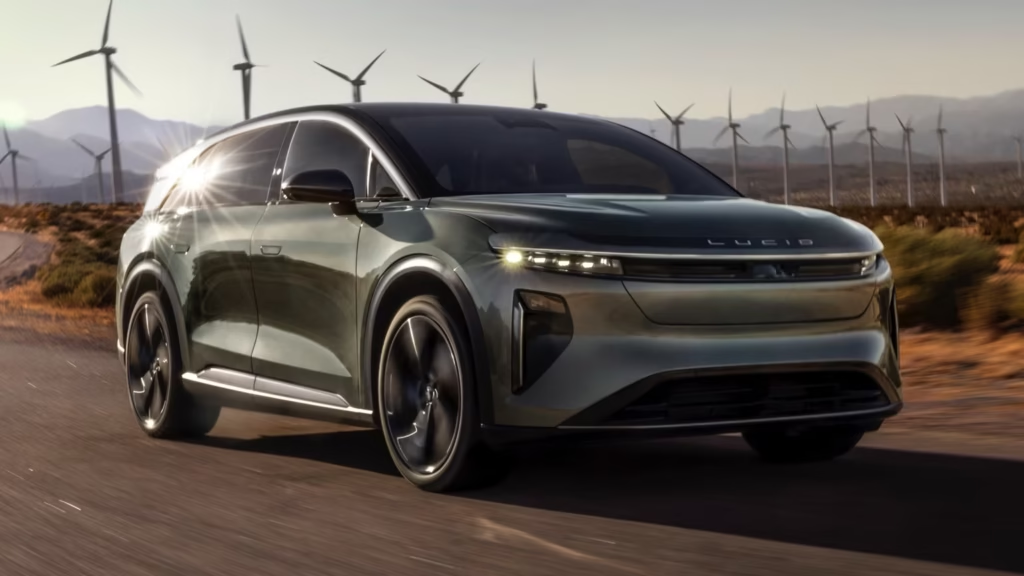
Axis Intelligence Score: Range 9.5 | Charging 9.0 | Interior 8.5 | Performance 9.0 | Value 7.5
Verdict: The Lucid Gravity Grand Touring is the most technically accomplished luxury electric SUV sold in America today. Nothing in this class combines 450 miles of EPA-rated range with 828 horsepower and the ability to add 200 miles in under 11 minutes. It is not a perfect vehicle — Lucid is a young company, software reliability remains a legitimate concern, and $98,900 requires you to bet on a brand that has not yet proven long-term durability at scale. But on the merits of what this machine does, it earns the top position in our matrix.
Standout features: The Gravity’s efficiency engineering is unlike anything else in the segment. Lucid’s 926V architecture — capable of 1,000V on compatible equipment — allows peak charging acceptance of 400 kW, making it the fastest-charging vehicle in this class by a significant margin. The Edmunds EV Range Test recorded 388 miles on summer tires and 400 miles on all-seasons, both below the 450-mile EPA estimate but still the highest real-world figures recorded for a 3-row electric SUV. Inside, the 34-inch 6K OLED display is genuinely impressive, and the cabin insulation approaches the quietness of the Escalade IQ’s best moments. Seven-passenger seating, a 120-cubic-foot cargo volume with seats folded, and a built-in NACS port (Tesla Supercharger compatible, no adapter needed) round out a specification list that is difficult to challenge at any price.
Drawbacks: The Gravity Grand Touring at $98,900 is the entry to Lucid’s performance lineup, not a value proposition. Build quality inconsistencies have been documented in early deliveries — the lucidowners.com 5,000-mile owner review is required reading before signing a purchase agreement. Software updates have addressed some early glitches, but the interface still trails BMW’s iDrive for day-to-day usability. Lucid’s service network is geographically limited, which matters for post-sale support. The Gravity Touring at $81,550 with 560 horsepower and 337 miles of range may be the smarter buy for most people — same architecture, meaningful savings.
Best for: Buyers who want the maximum-range luxury EV available, do not need a German badge, and are comfortable being an early adopter of a still-maturing brand.
Pricing: Gravity Touring from $81,550 | Grand Touring from $98,900 | Dream Edition (limited) well above $150,000
2. Cadillac Escalade IQ — 8.58/10
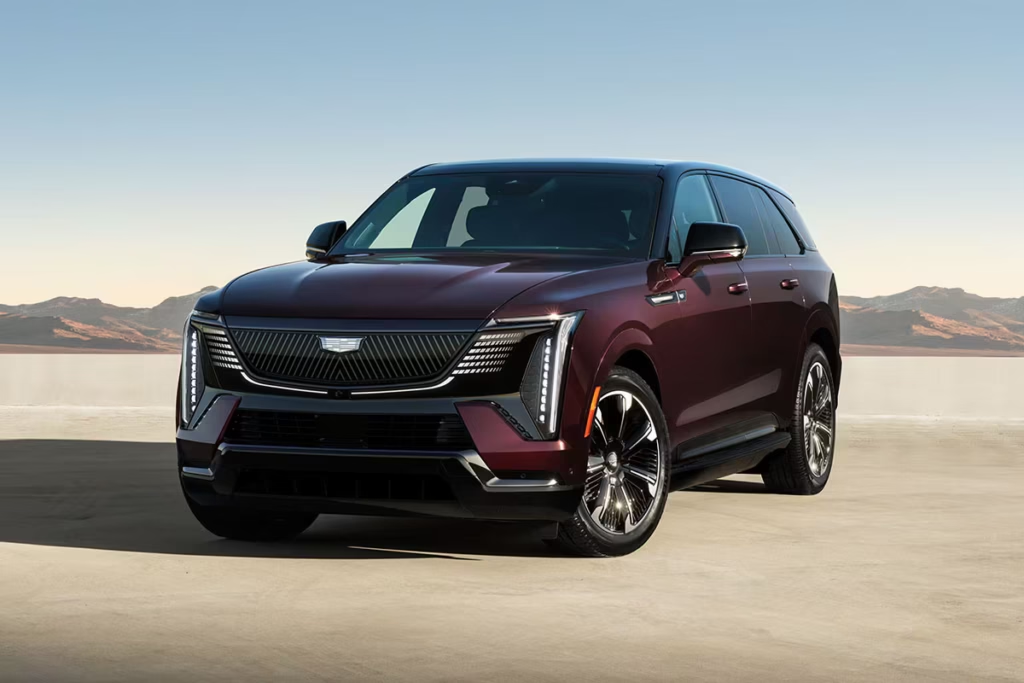
Axis Intelligence Score: Range 10.0 | Charging 8.0 | Interior 9.5 | Performance 8.0 | Value 6.0
Verdict: The Escalade IQ is the most convincing argument that American automakers can build a world-class electric vehicle. It holds the highest EPA-rated range of any production electric SUV on the market — 460 miles standard, 465 miles on IQL models — and Edmunds’ real-world range test produced a staggering 558 miles, the best result the publication has ever recorded. The interior is a legitimate flagship, and the Super Cruise hands-free driver assistance system is among the best in the industry. Its only serious flaw is the price: starting at $127,405, it costs roughly $30,000 more than the next most expensive vehicle in this ranking.
Standout features: The 205 kWh battery pack is the largest of any production electric vehicle. The result is range that eliminates road-trip anxiety entirely — the Escalade IQ is the first electric SUV that can honestly be recommended to buyers with genuine long-distance driving needs without caveats. Inside, the 55-inch pillar-to-pillar display sets a cabin technology benchmark, and the optional 38-speaker AKG Studio Reference audio system belongs in a concert hall. Available bidirectional charging (V2H) allows the vehicle to power your home during an outage — a practical capability that few competitors offer. Towing capacity of 8,000 pounds exceeds every other vehicle in this ranking. The 2026 model year introduces a simplified trim structure (Luxury, Sport, Premium Luxury, Premium Sport) while keeping the base Luxury and Sport prices $295 lower than 2025 equivalents.
Drawbacks: At $127,405 to start and above $170,000 fully loaded, the Escalade IQ requires a budget commitment that few luxury buyers will accept. The 4.9-second 0–60 time is adequate but unexciting relative to price. Some interior plastic panels feel inconsistent with the flagship positioning, and the automatic doors — standard equipment — generate more admiration than affection in daily use. GM’s charging network requires more planning than Tesla’s Supercharger infrastructure, though the NACS port standard has improved third-party compatibility significantly.
Best for: Executives, families, and buyers who want the definitive statement in electric luxury without any range compromise — and who have the budget to match.
Pricing: Escalade IQ Luxury from $127,405 | Premium Luxury and Sport trims push above $150,000
3. Porsche Macan Electric — 8.23/10
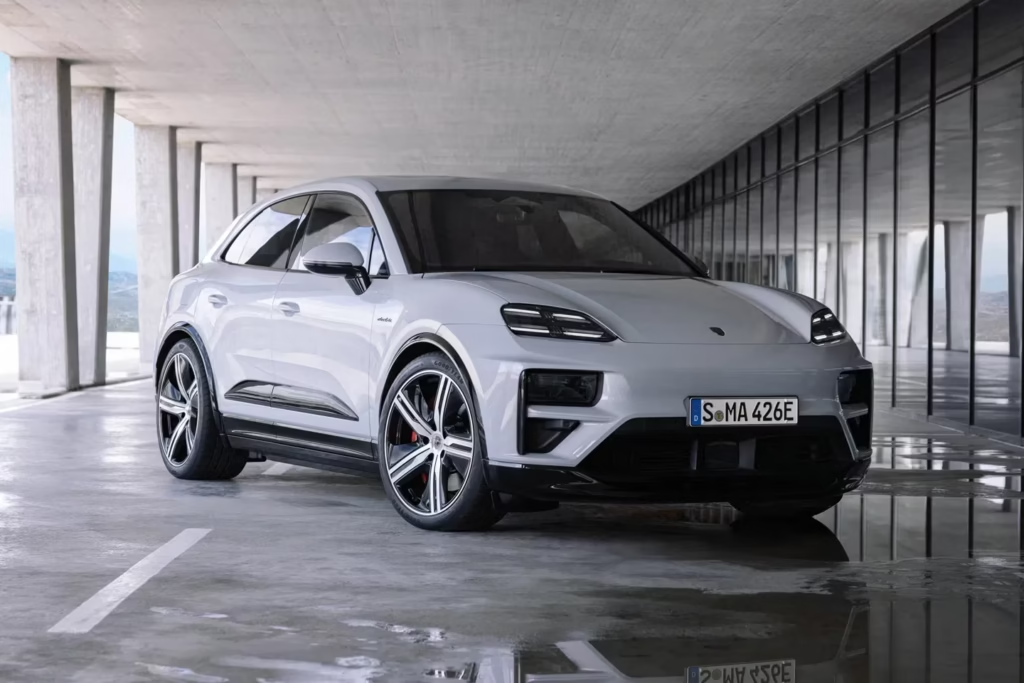
Axis Intelligence Score: Range 7.0 | Charging 9.0 | Interior 8.5 | Performance 9.5 | Value 7.5
Verdict: The Porsche Macan Electric has the worst EPA range of any vehicle in this ranking and finishes third. That result tells you everything you need to know about how it scores on the other four criteria. Nothing in this class drives like the Macan — the 4S pulls 0.98g on the skidpad, the Turbo reaches 60 mph in 3.1 seconds, and the steering communicates in a way that no other electric SUV in this price range comes close to matching. For a buyer who uses an SUV for its practicality but still wants the vehicle to feel alive, the Macan is the only answer in the luxury electric segment. The new GTS for 2026, at $107,650 with 563 horsepower and an Edmunds-verified 285 kW peak charge rate, is the trim we would choose.
Standout features: Porsche’s 800V charging architecture delivers 270 kW peak, and crucially, it sustains that rate longer than most competitors — adding 100 miles in under 10 minutes in Edmunds testing. The 21-minute 10–80% charge time is best-in-class for a vehicle under 600 horsepower. The GTS trim adds 2026-specific race-inspired design elements, in-vehicle gaming capabilities, Porsche Digital Key, and AI-enhanced Voice Pilot. Towing capacity is now rated at 5,512 pounds — a meaningful upgrade for the 2026 model year. The cabin is a proper Porsche interior: digital-first but driver-focused, with material quality that holds up to the badge.
Drawbacks: The Macan Electric is a compact luxury SUV, not a mid-size. Interior space is noticeably tighter than a Gravity, BMW iX, or Escalade IQ. The range figures — roughly 268 to 301 miles depending on trim and wheels — are the weakest in this segment at this price point. Base pricing at $80,300 is deceptive: a real-world Macan 4S with a few options routinely crosses $100,000. Software-based features like rear-axle steering ($2,150) and the GTS interior package ($6,570) add up quickly.
Best for: Drivers for whom the driving experience is the primary purchase criterion, who accept a range compromise in exchange for the best steering feel and charging speed in the segment.
Pricing: Base Macan Electric from $80,300 | Macan 4 from ~$88,000 | Macan 4S from ~$99,500 | GTS from $107,650 | Turbo from $115,050
4. Rivian R1S — 8.18/10
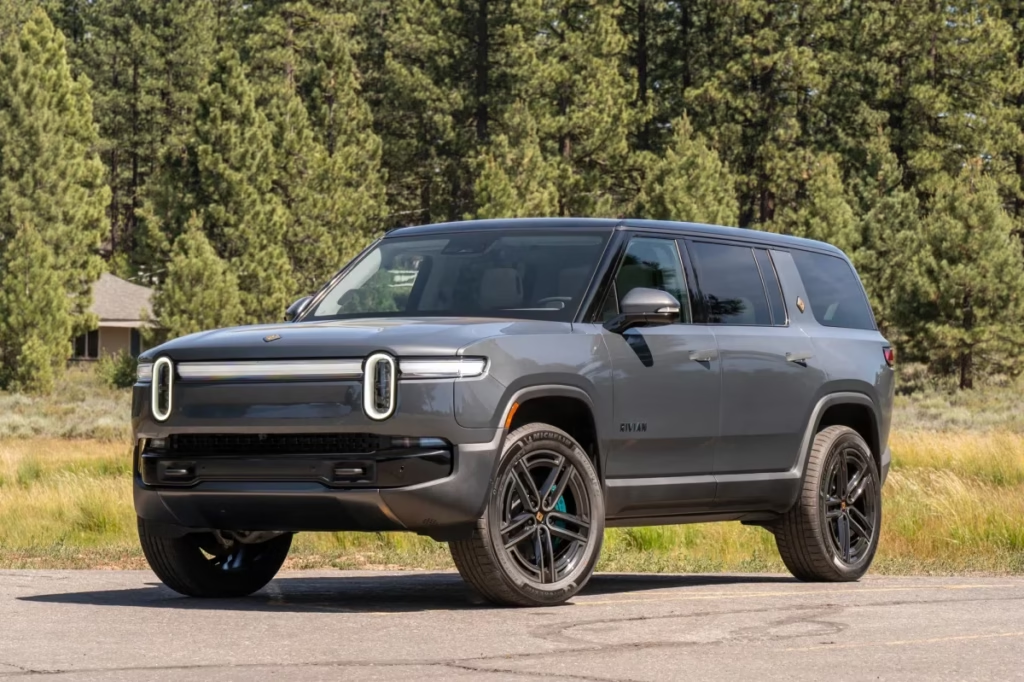
Axis Intelligence Score: Range 8.5 | Charging 7.5 | Interior 8.0 | Performance 8.0 | Value 9.0
Verdict: The Rivian R1S is the most capable luxury electric SUV in this ranking in any dimension that involves leaving the pavement. An 8,000-pound tow rating — matched only by the Escalade IQ — three-row seating for seven, and genuine off-road hardware (the All-Terrain Package adds serious capability) make it the only vehicle here that can credibly handle both a ski mountain approach road and a family road trip. The Dual Large at $83,990 with 329 miles of EPA range is our recommended trim — though the Max battery at $90,990 pushes range to 410 miles for buyers with long-distance requirements.
Standout features: The 2026 R1S switches from CCS to NACS, eliminating the adapter tax that earlier owners dealt with at Tesla Superchargers. The 140 kWh Max battery offers up to 410 miles — third-best in this ranking — and the Tri and Quad motor configurations deliver 371 and 374 miles respectively at significantly higher performance. Camp Mode, integrated air compressor, and the adventure-oriented accessory ecosystem are genuinely differentiated features that no German or American luxury competitor offers. Interior quality is premium without being ostentatious — the cabin feels purpose-built and durable rather than ornate. KBB’s 5-year cost-to-own of $106,997 is competitive for the segment.
Drawbacks: The 220 kW peak charging rate is the second-lowest in this ranking, and the 20-minute time to add 150 miles of range means road trips require more planning than with a Lucid or Porsche. The interior, while excellent, lacks the formal luxury feel of a BMW iX or Mercedes EQS — it is premium and functional, not opulent. Software has matured significantly since launch but still sees occasional inconsistencies. The Quad Launch Edition at $127,885 enters Escalade IQ price territory while offering less interior refinement.
Best for: Buyers who want three-row practicality, adventure capability, and genuine range in a package that does not require choosing between capability and luxury.
Pricing: R1S Dual Standard from $76,990 | Dual Large from $83,990 | Dual Max from $90,990 | Tri/Quad from $94,990+
5. BMW iX xDrive60 — 8.15/10
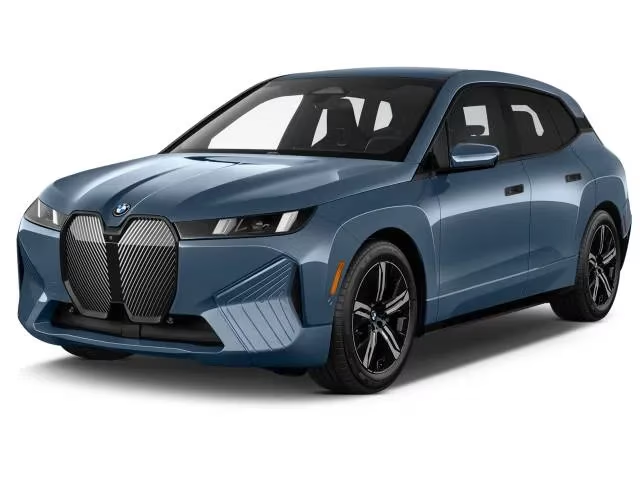
Axis Intelligence Score: Range 8.0 | Charging 7.5 | Interior 9.0 | Performance 8.0 | Value 8.0
Verdict: The BMW iX xDrive60 is the best traditional luxury daily driver in this segment. It does not lead any single category, but it scores consistently across all five criteria, and its interior is arguably the most refined cabin experience in this ranking short of the Escalade IQ. The 2026 refresh brings meaningful improvements: the new xDrive60 replaces the xDrive50 with 536 horsepower, 364 miles of EPA range (up from around 324 miles), and a redesigned face that previews BMW’s upcoming Neue Klasse design language. At $89,675, it undercuts most direct rivals while offering a level of daily refinement that German buyers have come to expect.
Standout features: The BMW Curved Display — a single arched panel integrating a 12.3-inch gauge cluster and 14.9-inch touchscreen — remains one of the best infotainment implementations in the segment. iDrive interface quality is mature and intuitive in a way that newer EV brands have not yet matched. The 2026 xDrive60’s 364-mile EPA range is best-in-class for a five-seat mid-size luxury EV at this price point. Nearly 39 inches of rear legroom is generous for a vehicle of this size. The optional Dynamic Handling Package adds rear-axle steering and adaptive suspension that meaningfully changes the driving character. BMW’s dealer network is the most established of any luxury EV brand in this ranking — service accessibility is a real ownership consideration.
Drawbacks: The 195 kW peak DC fast-charge rate and 34–35 minute 10–80% time are the second-weakest in this segment — competitive when this platform launched, less so in 2026. Maximum tow rating of 3,500 pounds is the joint-lowest in this ranking, which limits utility for buyers with boats or trailers. The iX’s polarizing exterior design has softened with the 2026 refresh but remains an acquired taste. Options pricing is aggressive: a well-specified iX xDrive60 will approach $115,000.
Best for: Traditional luxury buyers who want proven German engineering, a mature software experience, and day-to-day refinement as their primary purchase criterion.
Pricing: iX xDrive45 from $76,325 | iX xDrive60 from $89,675 | iX M70 xDrive from $112,675
6. Volvo EX90 — 8.00/10
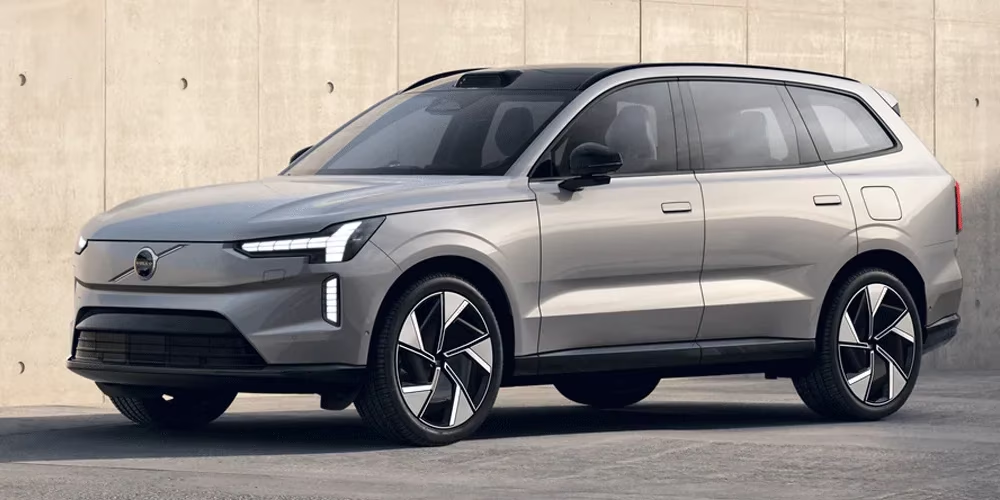
Axis Intelligence Score: Range 7.5 | Charging 8.0 | Interior 8.5 | Performance 7.5 | Value 8.5
Verdict: The 2026 Volvo EX90 is the most complete package for buyers who want a three-row luxury electric SUV without paying Escalade IQ or Lucid Gravity prices. The 2026 model year brings a meaningful upgrade: a new single-motor rear-wheel-drive base trim starting at $78,090, and an upgraded Twin Motor Performance variant with 670 horsepower — a 160 hp increase over 2025. The transition to 800V architecture across the lineup improves charging performance and addresses one of the 2025 EX90’s most significant criticisms. If Rivian’s outdoor-adventure positioning does not suit your lifestyle and the Escalade IQ’s price is beyond reach, the EX90 is the most sensible three-row answer.
Standout features: Volvo’s LiDAR-based safety system — one of the most advanced active safety setups offered as production equipment in any vehicle — is standard across the EX90 lineup. The cabin quality is genuinely premium: Scandinavian material choices, a Google-powered infotainment system with built-in Google Maps and Assistant, and a panoramic roof that makes the cabin feel considerably more spacious than its dimensions suggest. Seven-passenger seating with usable third-row space is a meaningful differentiator over the five-seat BMW iX and Porsche Macan. Volvo’s parent company Geely owns a significant stake in Polestar, and the shared engineering base means the EX90 benefits from a well-developed EV platform. Volvo’s established dealer network provides service coverage that pure-play EV brands cannot match.
Drawbacks: EPA range for the Twin Motor sits at 305–310 miles, below where a vehicle at this price should be in 2026. The 2026 upgrade cycle has introduced 800V architecture, but full EPA certification data for the new trims had not been published at the time of writing — real-world range figures for the 670 hp Performance variant are projected to drop slightly due to the smaller 102 kWh battery. Early 2025 EX90 owners reported software reliability issues; Volvo has issued several OTA updates, but the history warrants awareness. The EX90 is not a performance vehicle by the standards of this segment.
Best for: Three-row family buyers who want Scandinavian luxury, advanced safety technology, and a realistic price for the utility delivered.
Pricing: EX90 Single Motor from $78,090 | Twin Motor from ~$81,490 | Twin Motor Performance above $86,000
7. Tesla Model X — 7.98/10
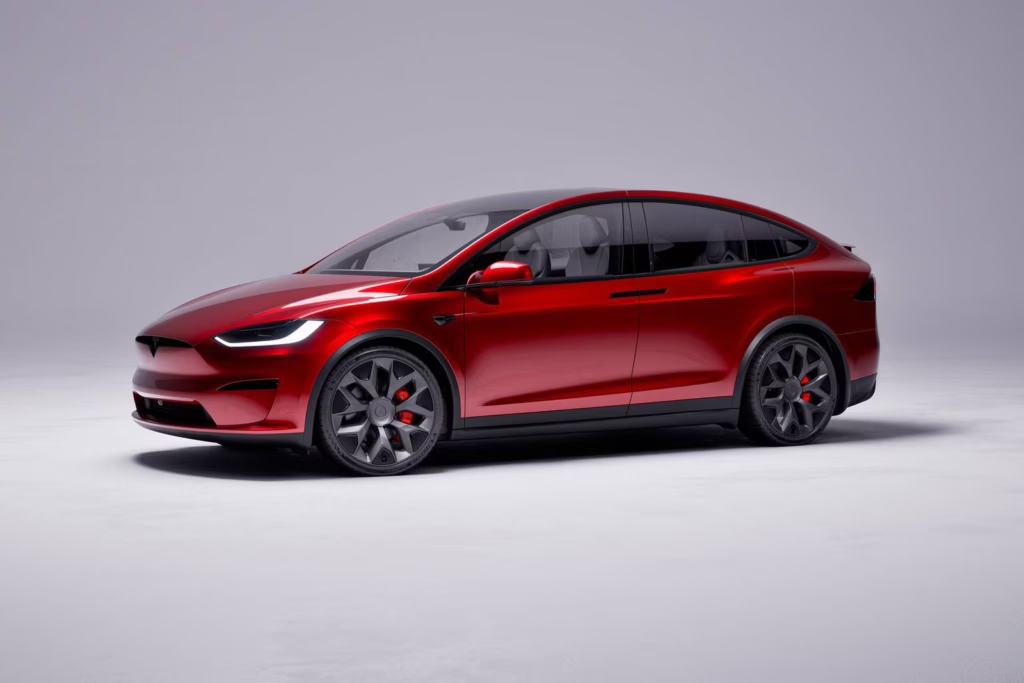
Axis Intelligence Score: Range 8.0 | Charging 8.5 | Interior 7.5 | Performance 8.5 | Value 7.5
Verdict: The Tesla Model X is the oldest platform in this ranking — first introduced in 2015 — and it shows in certain areas of interior quality that newer competitors have clearly surpassed. What keeps it competitive in 2026 is the Supercharger network: Tesla’s V3 and V4 infrastructure remains the most reliable, most densely distributed fast-charging network in North America, and the Model X accesses it natively. The dual-motor Long Range at $86,630 delivers 329 miles of EPA-estimated range, adequate for most buyers. The Plaid configuration at 1,020 horsepower is genuinely absurd in a vehicle this large, though its $99,990 price brings it within range of the Lucid Gravity’s far more advanced platform.
Standout features: The Supercharger network advantage is not theoretical — it translates directly to road trip convenience. V4 Supercharger stations support up to 250 kW for the Model X, and the density of the network means that range anxiety is functionally eliminated for most US routes. Full Self-Driving Supervised, while an additional cost option, is the most mature consumer-grade automated driving assistance available. The optional six-seat interior with fold-flat second-row seats offers genuine third-row flexibility. Falcon wing rear doors remain a genuinely useful feature for car-seat access in tight parking spaces.
Drawbacks: The Model X interior has received updates, but material quality and fit-and-finish still trail BMW, Cadillac, Mercedes, and Volvo at equivalent price points. The yoke steering wheel, now standard, is a genuine usability compromise that no amount of PR can obscure — low-speed maneuvers and parking are meaningfully more awkward than with a conventional wheel. Tesla’s over-the-air update frequency can change features or behavior unexpectedly. The infotainment system’s single-screen dependency for critical functions (including gear selection) is an ergonomic regression relative to vehicles with dedicated physical controls. Towing capacity of 5,000 pounds is mid-pack.
Best for: Buyers who prioritize charging network reliability above all else, and who are comfortable with Tesla’s software-first philosophy and Autopilot ecosystem.
Pricing: Model X from $86,630 | Model X Plaid from $99,990
8. Genesis Electrified GV70 — 7.93/10
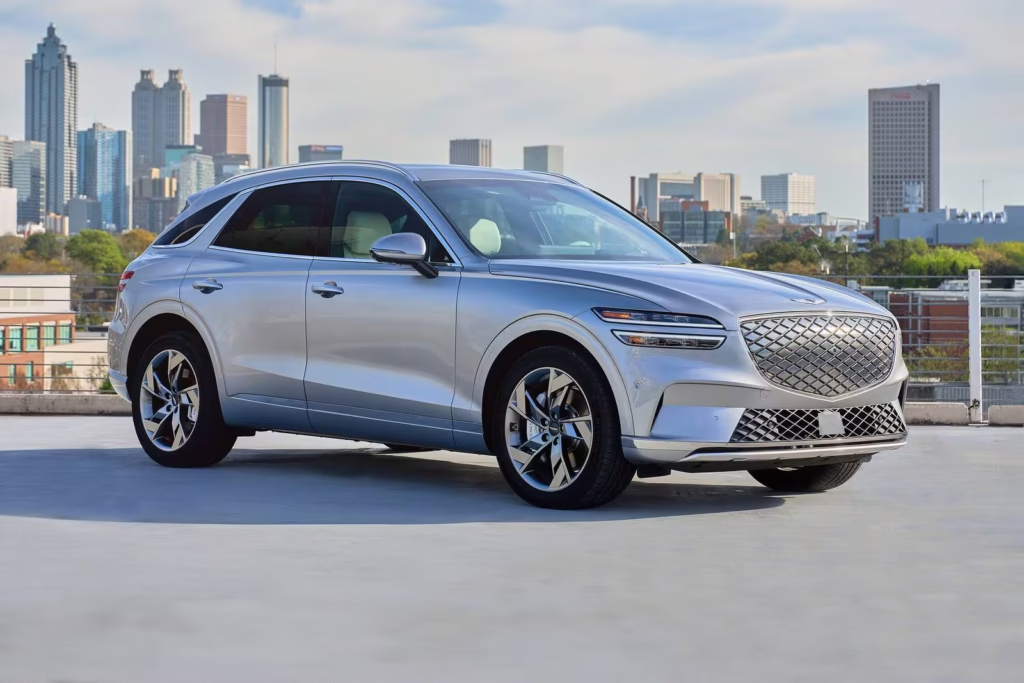
Axis Intelligence Score: Range 6.0 | Charging 8.0 | Interior 8.5 | Performance 8.5 | Value 9.5
Verdict: The Genesis Electrified GV70 is the most honest value proposition in this ranking. At $65,875 it undercuts every other vehicle here by at least $10,000, and it delivers an interior that matches or surpasses most vehicles costing $20,000 more. The 483-horsepower dual-motor powertrain charges on an 800V architecture capable of 350 kW peak, producing one of the fastest 10–80% times in the segment. Its only structural weakness is range: 243–263 miles depending on wheel size is below where confidence lives on long-distance trips, and it is the reason the GV70 cannot rank higher despite its excellent scores in every other category.
Standout features: The interior quality-to-price ratio of the Electrified GV70 is the best in the luxury electric segment. The cabin uses materials and finishes that match Genesis’s gas-powered GV80 at twice the price — quilted leather, real metal trim, and an attention to detail that German brands at this price point have not consistently matched. The 350 kW peak charging capability delivers 10–80% in approximately 18 minutes, one of the fastest absolute times in any production EV. Acceleration is legitimately quick — 0 to 60 mph in 4.2 seconds compares favorably to rivals costing significantly more. Genesis’s five-year/60,000-mile warranty with free scheduled maintenance and complimentary pickup service is the strongest ownership package in this segment.
Drawbacks: The 243–263 mile EPA range is a structural problem for buyers who take long trips. This is not a range anxiety issue for around-town driving, but it becomes a real limitation on a 400-mile road trip requiring multiple charging stops. The GV70 is a compact SUV — interior space cannot match the BMW iX, Rivian R1S, or any three-row vehicle in this ranking. Genesis’s charging network relies on third-party infrastructure, which is less consistent than Tesla’s Supercharger network for multi-state travel.
Best for: Buyers who want the luxury experience of a German SUV at a price that does not require it, and who primarily drive routes under 200 miles per day.
Pricing: Electrified GV70 from $65,875
9. Mercedes-Benz EQS 550 4MATIC SUV — 7.85/10
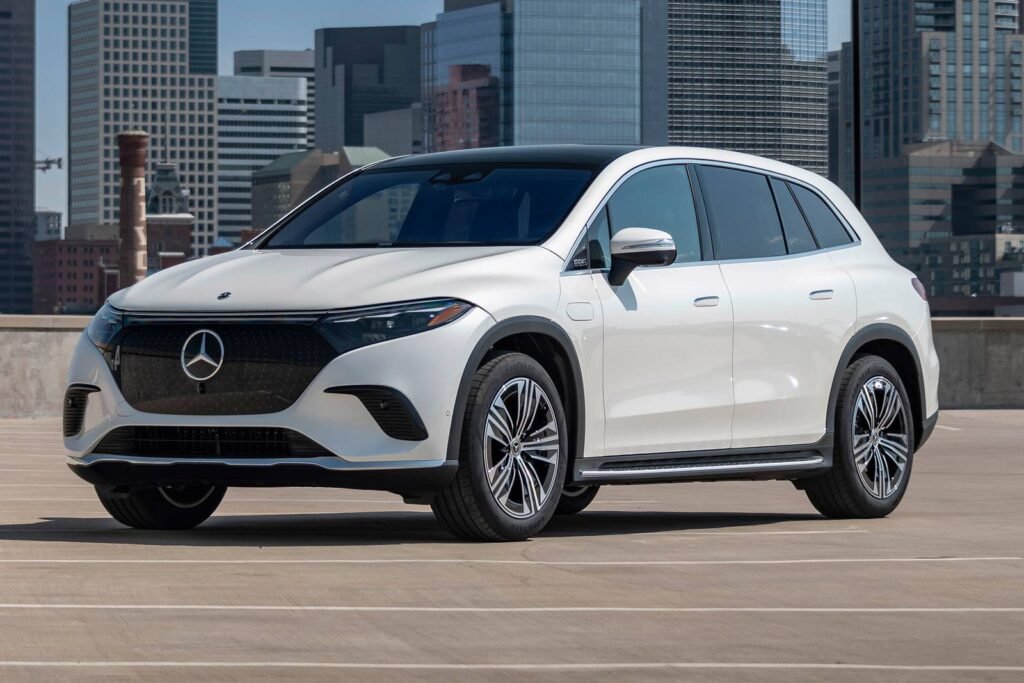
Axis Intelligence Score: Range 7.5 | Charging 7.5 | Interior 9.5 | Performance 7.5 | Value 6.5
Verdict: The Mercedes-Benz EQS SUV has the most sophisticated interior in this ranking — the Hyperscreen MBUX interface, 56-color ambient lighting, and near-silent cabin refinement place it at the apex of traditional luxury in an electric package. The problem is the price-to-range trade-off: approximately $112,450 for 300 miles of EPA-estimated range is the least compelling spec equation in this segment. If you are buying the Mercedes brand and interior experience specifically, the EQS SUV delivers those qualities. If you are buying an electric vehicle for its electric advantages, competitors at half the price deliver meaningfully better real-world performance.
Standout features: The interior of the EQS SUV is legitimately in a category of its own for ambient refinement. The optional MBUX Hyperscreen — a 56-inch curved glass panel spanning the full dashboard — is the most visually spectacular infotainment installation in any vehicle available today. Seat comfort in the first and second rows matches or exceeds S-Class levels. Available massaging seats, individual rear-seat climate zones, and Burmester surround sound define what luxury equipment means. The available Mercedes-Maybach EQS 680 4MATIC variant (EPA-rated at 300 miles, starting near $180,000) elevates interior exclusivity further, with bespoke materials and a three-spoke steering wheel that signals arrival in a way no other electric SUV currently can.
Drawbacks: The 200 kW peak DC fast-charge rate and approximately 31-minute 10–80% time are the slowest in this ranking. For a vehicle at this price point in 2026, that is a genuine competitive liability. The 300-mile EPA range at $112,450 makes the Cadillac Escalade IQ’s 460-mile range at $127,405 look like compelling value by comparison. Third-row seating is technically available but practically limited. Software complexity in the MBUX system produces an impressive demonstration but a real learning curve for everyday usability.
Best for: Traditional luxury buyers for whom the Mercedes-Benz brand and interior experience are the primary purchase criteria, and who will primarily drive urban and suburban routes where charging frequency is not a constraint.
Pricing: EQS 450 4MATIC SUV from ~$104,400 | EQS 550 4MATIC SUV from ~$112,450 | EQS Maybach 680 from ~$180,000
Who Should Look Elsewhere
This ranking covers the luxury electric SUV segment, defined here as vehicles with a starting MSRP above $65,000 and positioning as premium-brand products. Not every buyer belongs here.
If your budget is under $55,000, the Hyundai Ioniq 5 or Kia EV9 offer better technology-to-price ratios than anything in this list — see our best electric cars in 2026 for those recommendations. The EV9 in particular delivers three-row seating and 800V charging architecture at a starting price that undercuts the Genesis GV70. If charging network access is the single most important factor in your decision and you want maximum simplicity, a Tesla Model Y with Supercharger access beats any non-Tesla in network reliability at less than half the price of most vehicles here. If you want a fully capable off-road platform without the luxury price premium, the Ford F-150 Lightning Pro is a more honest tool than the Rivian R1S for buyers who actually work their trucks.
The vehicles in this ranking are the right choice when interior refinement, range confidence, and premium brand experience are primary requirements — not when value efficiency is the goal.
How to Choose a Luxury Electric SUV in 2026
Start with your real range requirement, not your aspirational range requirement. Most luxury SUV buyers drive fewer than 80 miles per day. A 300-mile vehicle covers that with a weekly overnight home charge. The 450-mile Lucid Gravity Grand Touring and the 460-mile Cadillac Escalade IQ are genuinely superior for buyers who make regular 300-mile interstate runs — for most others, the range premium over a BMW iX or Volvo EX90 is a spec you will never use.
Match your seating requirement to your actual use, not your theoretical use. The Porsche Macan Electric and BMW iX seat five and do it extraordinarily well. The Cadillac Escalade IQ, Rivian R1S, Lucid Gravity, and Volvo EX90 seat seven. Most families who buy seven-seat SUVs fill the third row fewer than six times per year — a five-seat vehicle with better dynamics and lower price may be the smarter choice.
Factor charging into your real-world ownership plan. Tesla Supercharger access (native on Tesla, NACS-equipped on Lucid, Rivian 2026, and others with adapters) is meaningfully more reliable than the CCS network for long-distance travel. If you regularly drive routes over 200 miles, charging infrastructure is a primary selection criterion, not a footnote.
Consider brand durability risk honestly. Lucid and Rivian are young companies. The Lucid Gravity is the best-performing vehicle in this ranking, but Lucid’s long-term financial stability is not guaranteed in the way that BMW’s, Cadillac’s, or Porsche’s is. Buying a vehicle from a startup EV brand means accepting more ownership uncertainty than established alternatives. The Genesis Electrified GV70’s five-year/60,000-mile warranty with free maintenance is the best risk-mitigation package available.
Do not optimize for towing capacity you will never use. The Escalade IQ’s 8,000-pound tow rating and the Rivian R1S’s 7,700-pound rating are genuinely useful for buyers with boats or horse trailers. If your towing consists of a small camping trailer twice a year, the BMW iX’s 3,500-pound rating is perfectly adequate.
Take charging cost into account before signing. At the US average residential rate of $0.16/kWh, charging a 100 kWh battery from empty costs approximately $16.00 — equivalent to a few gallons of gasoline. DC fast charger rates vary widely, from $0.25 to $0.55/kWh depending on network and location. The Genesis GV70’s smaller battery means lower absolute charging costs per session even if cost per mile is similar.
Frequently Asked Questions
What is the best luxury electric SUV for 2026?
The Lucid Gravity Grand Touring earns the top spot in our scoring matrix with an 8.78/10, combining 450 miles of EPA-rated range, 828 horsepower, and 400 kW charging capability. For buyers who need maximum range in a proven American flagship, the Cadillac Escalade IQ (8.58/10, 460 miles) is a strong alternative. The best choice depends on your specific priority: Lucid for range and performance, Cadillac for size and presence, Porsche for driving dynamics.
How far can a luxury electric SUV go on one charge in 2026?
The Cadillac Escalade IQ leads with 460 miles of EPA-estimated range and 558 miles in Edmunds’ real-world test. The Lucid Gravity Grand Touring delivers 450 miles EPA, with Edmunds recording 388–400 miles in real-world conditions. The Rivian R1S Max Pack offers up to 410 miles. Most mid-size luxury EV SUVs — BMW iX, Volvo EX90, Tesla Model X — cluster between 305 and 364 miles.
Which luxury electric SUV charges the fastest?
The Lucid Gravity Grand Touring supports 400 kW peak DC fast charging (1,000V-capable), adding 200 miles in under 11 minutes under ideal conditions. The Genesis Electrified GV70 supports 350 kW on 800V infrastructure. The Porsche Macan Electric supports 270 kW and sustains it longer than most competitors — Edmunds recorded it reaching 285 kW and adding 100 miles in under 10 minutes. BMW iX and Mercedes EQS SUV peak at 175–200 kW, the slowest in this segment.
Is the Lucid Gravity worth the price?
The Lucid Gravity Grand Touring at $98,900 justifies its price on specification merits — nothing at this price delivers comparable range, charging speed, and performance. The concern is Lucid’s brand maturity: service network coverage is limited, early delivery build quality has been inconsistent, and the company’s long-term financial stability is less certain than established luxury brands. For buyers in markets with Lucid studio access, the vehicle is genuinely worth serious consideration. For buyers in remote areas with limited service access, the BMW iX or Cadillac Escalade IQ are lower-risk choices.
Can I tow with a luxury electric SUV?
Yes, but towing capacity varies dramatically. The Cadillac Escalade IQ leads with 8,000 pounds. The Rivian R1S follows with 7,700 pounds. The Tesla Model X is rated at 5,000 pounds, the Porsche Macan Electric at 5,512 pounds (2026 upgrade), and the Lucid Gravity Grand Touring at 6,000 pounds. The BMW iX and Mercedes EQS SUV are rated at 3,500 pounds — adequate for a small trailer, not a boat or horse trailer. Towing reduces range by 30–50% depending on load, speed, and terrain.
Does the federal EV tax credit apply to luxury electric SUVs in 2026?
Federal EV tax credit eligibility depends on vehicle MSRP caps ($80,000 for SUVs), buyer income limits ($150,000 AGI for individuals, $300,000 for joint filers), and manufacturer eligibility determinations. Several vehicles in this ranking — including the Cadillac Escalade IQ at $127,405 and the Mercedes EQS SUV at $112,450 — exceed the MSRP cap and are ineligible. Verify current eligibility at fueleconomy.gov before purchase, as determinations change.
Which luxury electric SUV has the best interior?
The Mercedes-Benz EQS 550 4MATIC SUV scores 9.5/10 on interior quality in our matrix — the Hyperscreen MBUX, S-Class seat comfort, and ambient refinement are unmatched. The Cadillac Escalade IQ is a close second (9.5/10) with its 55-inch display and flagship equipment list. The BMW iX scores 9.0/10 for its mature iDrive system and exceptional cabin insulation. For value per dollar of interior quality, the Genesis Electrified GV70 (8.5/10 at $65,875) is the strongest argument.
Is the Rivian R1S reliable?
Rivian’s reliability has improved significantly since the R1S launched in 2022. Consumer Reports data and J.D. Power Initial Quality Survey results have trended positively through 2025 model years. The 2026 switch to NACS eliminates a frequent charging pain point. Long-term durability data over 100,000+ miles is still limited compared to BMW or Cadillac. Rivian’s software update frequency is high, which resolves issues but also introduces occasional new ones. Overall, reliability is adequate for a vehicle in this class — not exceptional, but not a disqualifier.
What is the best luxury electric SUV for families?
For three-row family buyers, the Rivian R1S ($83,990, 7 seats, 329 miles, 7,700 lb tow) offers the best balance of practicality, range, and price. The Volvo EX90 ($78,090, 7 seats, 305 miles) adds advanced LiDAR-based safety technology and a more formal luxury feel. The Cadillac Escalade IQ (7 seats, 460 miles) is the definitive answer if budget is not a constraint. For five-seat families who do not need a third row, the BMW iX xDrive60 offers 364 miles of range and the most refined daily-driving experience in the segment.
How does the Porsche Macan Electric compare to the BMW iX?
The Porsche Macan Electric (8.23/10) edges the BMW iX (8.15/10) in our matrix primarily on charging speed and performance scores. The Macan’s 270 kW charging significantly outpaces the iX’s 175–195 kW. The Macan 4S’s driving dynamics are more engaging than the iX by a wide margin. The iX wins on range (364 miles vs. ~280–290 miles for the Macan 4S), interior refinement, interior space, and towing capacity. For buyers who drive enthusiastically, the Macan; for buyers who prioritize daily comfort and range, the iX.
Which luxury electric SUV has the longest range for road trips?
For buyers who regularly drive 300+ miles between stops, the Cadillac Escalade IQ (460 miles EPA, 558 real-world Edmunds) is the current production champion. The Lucid Gravity Grand Touring (450 miles EPA, 388–400 real-world) is a close second and adds faster charging to compensate for the range gap. The Rivian R1S Max Pack at 410 miles is the most capable option below $100,000 for genuine long-range driving.
Last updated: May 25, 2026. Next scheduled update: August 2026. Pricing reflects base MSRP before destination charges, options, and applicable incentives. EPA range figures sourced from fueleconomy.gov and manufacturer specifications. Axis Intelligence has no commercial relationship with any manufacturer listed in this article.
For in-depth EV market data including model-year sales trends, average transaction prices, and battery capacity trends, see our Electric Vehicle Research Hub.