

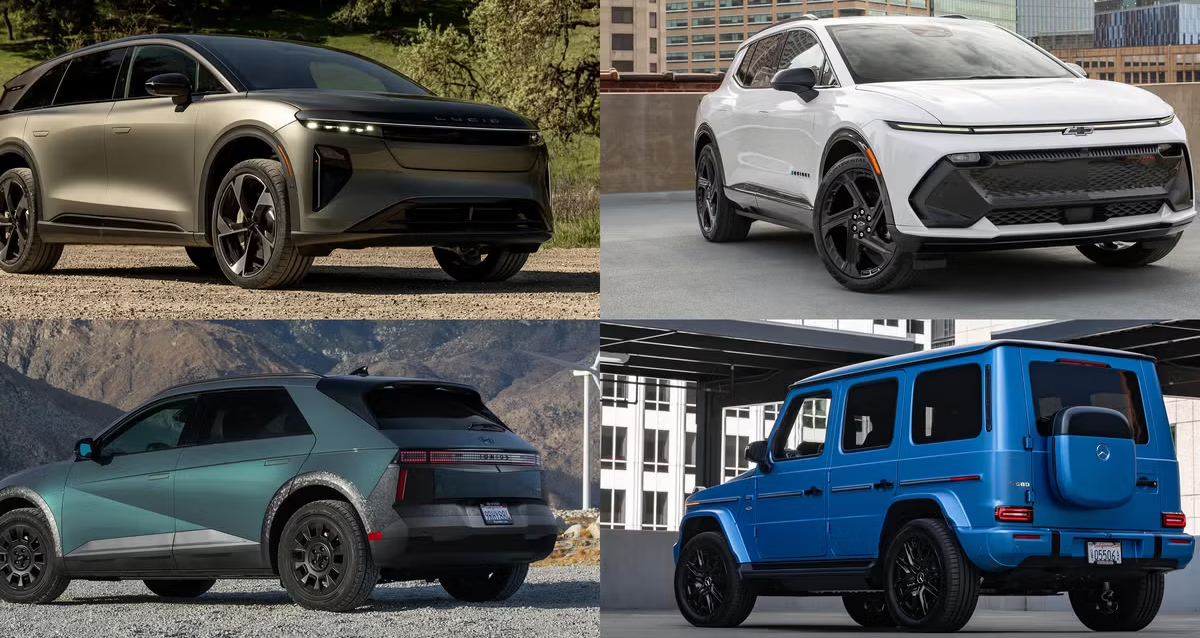
Best Electric SUV 2026
Last updated: May 2026
The $7,500 federal EV tax credit is gone. The One Big Beautiful Bill Act, signed July 4, 2025, eliminated it for vehicles acquired after September 30, 2025. Every guide still publishing “after-credit” prices is misleading you. Every price in this article is what you pay at the dealership today — no deductions, no assumptions.
With that corrected, here is the direct answer: the 2026 Hyundai Ioniq 5 is the best electric SUV for most buyers — it combines 800V ultra-fast charging (18 minutes 10–80%), 318 miles EPA range, NACS Supercharger access, bidirectional V2L charging, and a post-price-cut starting MSRP of $34,995. For three-row families, the Hyundai Ioniq 9 wins. For luxury buyers who care about range above all else, the Lucid Gravity is in its own class at 440+ miles EPA.
Table of Contents
The 2026 Electric SUV Market: What Actually Changed
The electric SUV segment has matured faster than the industry expected. Three structural shifts define the 2026 landscape:
Prices fell sharply. The International Energy Agency documented battery pack costs dropping to below $100/kWh for the first time in 2024 — the threshold that makes EVs structurally cost-competitive with gas vehicles at the cell level. Hyundai cut Ioniq 5 prices by $7,600–$9,800 in a single model year. The Chevrolet Equinox EV entered under $35,000. A US Department of Energy analysis shows EV transaction prices are approaching gas-vehicle averages for the first time.
NACS is now universal. The North American Charging Standard — Tesla’s plug — is now standard or adapter-available on Ford, GM, Honda, Nissan, Rivian, Hyundai, Kia, and most other 2026 models. That unlocks Tesla’s Supercharger network of 48,000+ ports for all buyers. The charging network excuse for avoiding EVs is structurally weaker than it has ever been.
The federal credit is gone, and most guides don’t admit it. According to Axis Intelligence’s analysis of the 2026 EV content landscape, the majority of competitor guides still reference “$7,500 federal credit” in their pricing. This is factually wrong for any vehicle purchased after September 30, 2025. State incentives still exist and can be substantial — we cover them in the incentives section.
The Axis Intelligence Electric SUV Scoring Matrix
Rather than ranking electric SUVs on subjective impressions, Axis Intelligence applies a five-factor quantitative framework. This is the only electric SUV scoring methodology in the market that combines real-world range efficiency with charging rate mathematics and five-year ownership cost.
Five factors, equal weight:
| Factor | What It Measures | Why It Matters |
|---|---|---|
| Real-Range Efficiency | EPA range ÷ battery size (mi/kWh) | Bigger batteries aren’t more efficient — this identifies models that do more with less |
| Charge Rate Index | Peak charge rate (kW) ÷ battery size (kWh) | Measures how fast a vehicle charges relative to its capacity — the real road-trip metric |
| 5-Year TCO Score | Total cost of ownership: MSRP + electricity + insurance + depreciation – residual | The number that matters, not the sticker |
| Interior Volume per Dollar | Passenger + cargo volume (cu ft) ÷ base MSRP | Space efficiency relative to spend |
| Charging Access Score | NACS access + DC fast charge availability + peak network reliability | Practical usability beyond spec sheets |
The Axis Intelligence Electric SUV Scoring Matrix produces scores from 0–100. Results follow in each category section and in the master comparison table below.
The 2026 Master Comparison Table: Every Major Electric SUV
All prices are actual May 2026 MSRP. No federal credit deductions. Federal $7,500 credit expired September 30, 2025.
| Model | Segment | Base MSRP | EPA Range (best trim) | Peak DC Charge | 10–80% Time | Voltage | NACS | Axis Score |
|---|---|---|---|---|---|---|---|---|
| Hyundai Ioniq 5 | Compact | $34,995 | 318 mi | 350 kW | ~18 min | 800V | ✓ | 91 |
| Chevrolet Equinox EV | Compact | $34,995 | 319 mi | 150 kW | ~37 min | 400V | ✓ | 82 |
| Tesla Model Y | Compact | $44,990 | 320 mi | 250 kW | ~25 min | 400V | ✓ (native) | 85 |
| Ford Mustang Mach-E | Compact | $39,995 | 320 mi | 150 kW | ~38 min | 400V | ✓ | 78 |
| Volkswagen ID.4 | Compact | $38,995 | 291 mi | 175 kW | ~28 min | 400V | ✓ | 74 |
| Honda Prologue | Compact | $47,400 | 296 mi | 150 kW | ~35 min | 400V | ✓ | 73 |
| Kia EV6 | Compact | $42,600 | 310 mi | 350 kW | ~18 min | 800V | ✓ | 87 |
| Subaru Solterra | Compact | $46,190 | 227 mi | 100 kW | ~56 min | 400V | — | 61 |
| Hyundai Ioniq 9 | 3-Row | $54,900 | 335 mi | 350 kW | ~21 min | 800V | ✓ | 93 |
| Kia EV9 | 3-Row | $56,395 | 304 mi | 350 kW | ~24 min | 800V | ✓ | 88 |
| Rivian R1S | 3-Row / Adventure | $77,900 | 321 mi | 220 kW | ~30 min | 400V | ✓ | 83 |
| Cadillac Lyriq | Midsize Luxury | $58,590 | 326 mi | 190 kW | ~32 min | 400V | ✓ | 80 |
| Cadillac Vistiq | Large Luxury | $77,990 | 305 mi | 190 kW | ~35 min | 400V | ✓ | 77 |
| BMW iX | Luxury | $73,100 | 312 mi | 195 kW | ~31 min | 400V | ✓ | 79 |
| Genesis Electrified GV70 | Luxury | $67,450 | 236 mi | 350 kW | ~18 min | 800V | ✓ | 76 |
| Genesis GV60 | Luxury Compact | $56,035 | 248 mi | 350 kW | ~18 min | 800V | ✓ | 78 |
| Lucid Gravity | Ultra-Luxury | $79,900 | 440 mi | 350 kW | ~22 min | 900V | ✓ | 89 |
| Tesla Model X | Large Luxury | $79,990 | 335 mi | 250 kW | ~25 min | 400V | ✓ (native) | 78 |
| Volvo EX90 | 3-Row Luxury | $77,990 | 320 mi | 250 kW | ~27 min | 400V | ✓ | 77 |
| Porsche Macan Electric | Sport Luxury | $74,900 | 288 mi | 270 kW | ~21 min | 800V | ✓ | 80 |
| Audi Q6 e-tron | Midsize Luxury | $63,400 | 307 mi | 270 kW | ~21 min | 800V | ✓ | 81 |
| Mercedes-Benz EQS SUV | Large Luxury | $104,400 | 285 mi | 200 kW | ~31 min | 400V | ✓ | 70 |
| Hyundai Ioniq 5 N | Performance | ~$67,000 | 221 mi | 350 kW | ~18 min | 800V | ✓ | 74 |
| Rivian R2 | Compact Adventure | ~$45,000 | TBD | 150+ kW | TBD | 400V | ✓ | Pre-launch |
Axis Intelligence Scoring Matrix applies. Scores reflect overall value-to-capability ratio, not ranking within luxury tiers.
Category 1: Best Compact Electric SUV (Under $50,000)
This is where the majority of electric SUV buying decisions happen. Compact EVs account for the bulk of US EV sales, and 2026 is the year this segment went genuinely competitive.
#1 — Hyundai Ioniq 5 | Overall Winner, Best Compact EV SUV
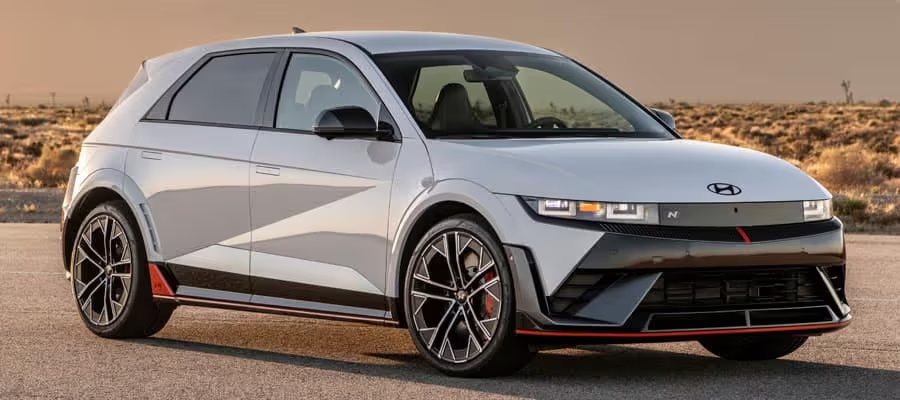
2026 Hyundai Ioniq 5
Base MSRP: $34,995 (SE Standard Range) | Sweet spot: SEL RWD ~$41,400
EPA Range: Up to 318 miles (RWD Long Range) | Battery: 84 kWh
Peak DC Charge: 350 kW | 10–80% charge time: ~18 minutes | Voltage: 800V
NACS: Standard | V2L bidirectional: Standard | Axis Score: 91/100
Why it wins: The Ioniq 5 won Kelley Blue Book’s Best Electric Vehicle award in its class for three consecutive years, and the 2026 update makes the value proposition even clearer. Hyundai cut prices by $7,600–$9,800 depending on trim — placing the SEL RWD (the recommended sweet spot) well under $42,000 with 318 miles of range. The 800V architecture and 350 kW peak charge rate are the decisive differentiators: the Ioniq 5 completes a 10–80% charge in approximately 18 minutes, compared to 35–40+ minutes for comparable 400V competitors. On a 1,000-mile road trip (see the road trip math section), that’s 30–50 minutes less time at chargers.
The Axis Intelligence charge rate analysis: At 350 kW peak on an 84 kWh battery, the Ioniq 5’s Charge Rate Index is 4.17 kW per kWh of capacity — the highest of any non-Porsche SUV in its price class. The practical result: charging adds approximately 196 miles in 10 minutes at a 350 kW station. The Equinox EV at 150 kW peak adds approximately 63 miles in the same 10 minutes.
Standard features worth noting: V2L (Vehicle-to-Load) bidirectional charging lets the Ioniq 5 power appliances, tools, or other vehicles from its battery. V2H (Vehicle-to-Home) backup power capability was added in select trims for 2026. Wireless CarPlay and Android Auto are now standard. An 800V native charging port accommodates both CCS and NACS in 2026.
The honest limitation: The Ioniq 5 is not a redesign for 2026 — it received a significant refresh for 2025 and carries forward. The interior is distinctive but the exterior polarizes buyers. The standard SE starts at $34,995 but its 220-mile range is marginal for road trippers; the SEL Long Range (estimated $41,400) is the trim worth buying.
Who it’s best for: First-time EV buyers, frequent road trippers, buyers cross-shopping Tesla who want more features per dollar, families who charge at home and occasionally road trip.
Who should look elsewhere: Buyers who need three rows (→ Ioniq 9 or Kia EV9), buyers who want the absolute lowest price (→ Equinox EV), buyers who need maximum off-road capability (→ Rivian R1S or R2).
#2 — Tesla Model Y | Best Charging Network Access
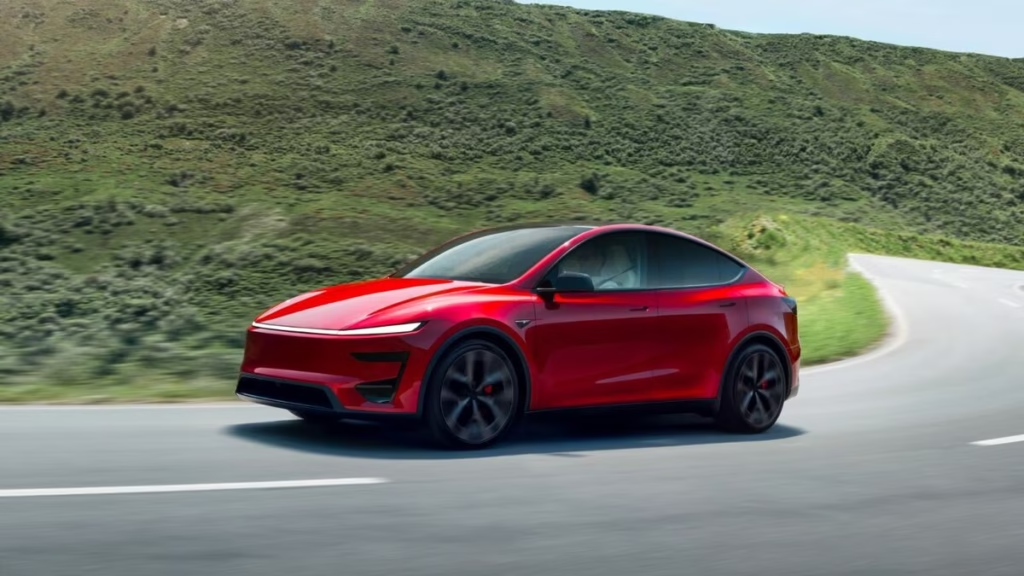
2026 Tesla Model Y
Base MSRP: $44,990 (Standard) | Long Range AWD: $54,990
EPA Range: 320 miles (Long Range AWD) | Battery: ~82 kWh
Peak DC Charge: 250 kW | 10–80% charge time: ~25 minutes | Voltage: 400V
NACS: Native | Axis Score: 85/100
Why it remains relevant: The Model Y is the world’s best-selling electric vehicle and the only EV in 2026 with native access to Tesla’s 48,000+ Supercharger network — no adapter required. Real-world range of 315–330 miles on Long Range variants leads mainstream EVs. Tesla’s software ecosystem, over-the-air updates, and resale value (2021 Long Range models retain ~60–65% at 36 months, leading the segment) are genuine advantages.
The 2026 redesign: The “Juniper” update brought a new exterior, revised interior with a rear entertainment screen, improved suspension, and a quieter cabin. The center-screen-only interface philosophy remains — no CarPlay or Android Auto.
The honest limitation: At $44,990 for the base (with 266 miles of range that falls short of the Equinox EV for $10,000 less) and $54,990 for Long Range, the Model Y is no longer the value leader it once was. The 400V charging architecture means 25-minute 10–80% charges versus 18 minutes for 800V competitors. No Apple CarPlay or Google Android Auto — a genuine frustration for buyers with existing app ecosystems. Elon Musk’s political profile has created measurable brand sensitivity among some buyer segments.
Who it’s best for: Buyers who road trip frequently and value Supercharger network density above all else, existing Tesla households adding a second vehicle, buyers who want the most mature EV software ecosystem.
Who should look elsewhere: Budget buyers (→ Equinox EV), fast-charging-priority buyers (→ Ioniq 5), CarPlay/Android Auto users (→ nearly any alternative).
#3 — Chevrolet Equinox EV | Best Value Under $35,000
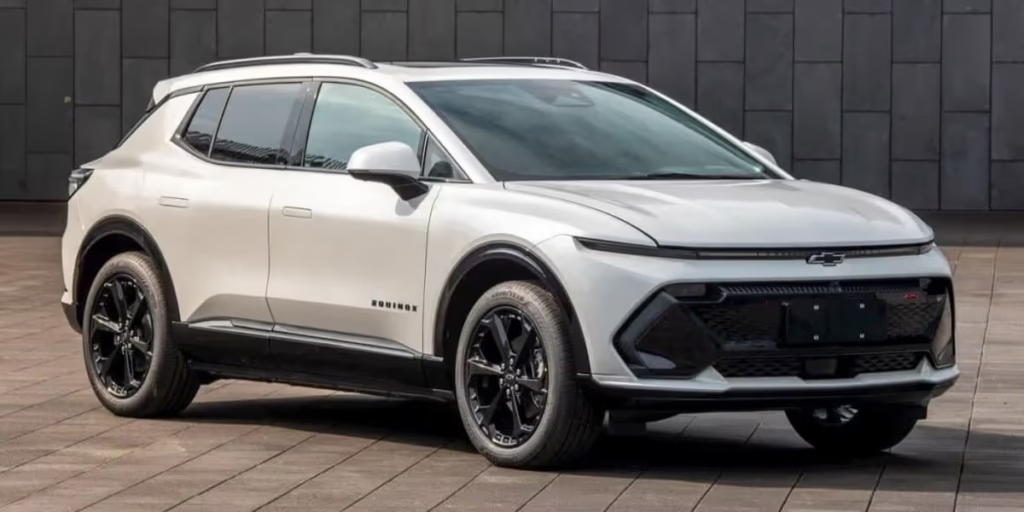
2026 Chevrolet Equinox EV
Base MSRP: $34,995 (FWD) | AWD: ~$38,000
EPA Range: 319 miles (FWD) | 288 miles (AWD) | Battery: 82 kWh
Peak DC Charge: 150 kW | 10–80% charge time: ~37 minutes | Voltage: 400V
NACS: Via adapter | Axis Score: 82/100
Why it makes the list: At $34,995, the Equinox EV delivers 319 miles of EPA range — more than the base Ioniq 5 at the same price and competitive with models costing significantly more. It has a large 17.7-inch screen, Google integration, Super Cruise availability on higher trims, and a familiar SUV form factor that mainstream buyers recognize. NACS adapter access opens the Supercharger network.
The honest limitations that every competitor glosses over: The Equinox EV does not support Apple CarPlay or Android Auto. Chevrolet removed smartphone mirroring from its EV lineup. Using navigation and media requires the built-in Google system or data subscription — connectivity costs money after a three-month trial period. Charging at 150 kW peak means 37 minutes for a 10–80% charge. On a 600-mile road trip with two charging stops, that adds 40 minutes compared to an Ioniq 5. The warranty is three years/36,000 miles basic — significantly shorter than Hyundai’s 5-year/60,000-mile coverage.
Who it’s best for: Daily commuters who charge at home, buyers for whom price is the primary constraint, first-time EV buyers in Chevrolet dealer markets.
Who should look elsewhere: Frequent road trippers (the charging speed penalty compounds over long trips), CarPlay/Android Auto users, buyers who value warranty depth.
#4 — Kia EV6 | Best Compact for Road Trippers
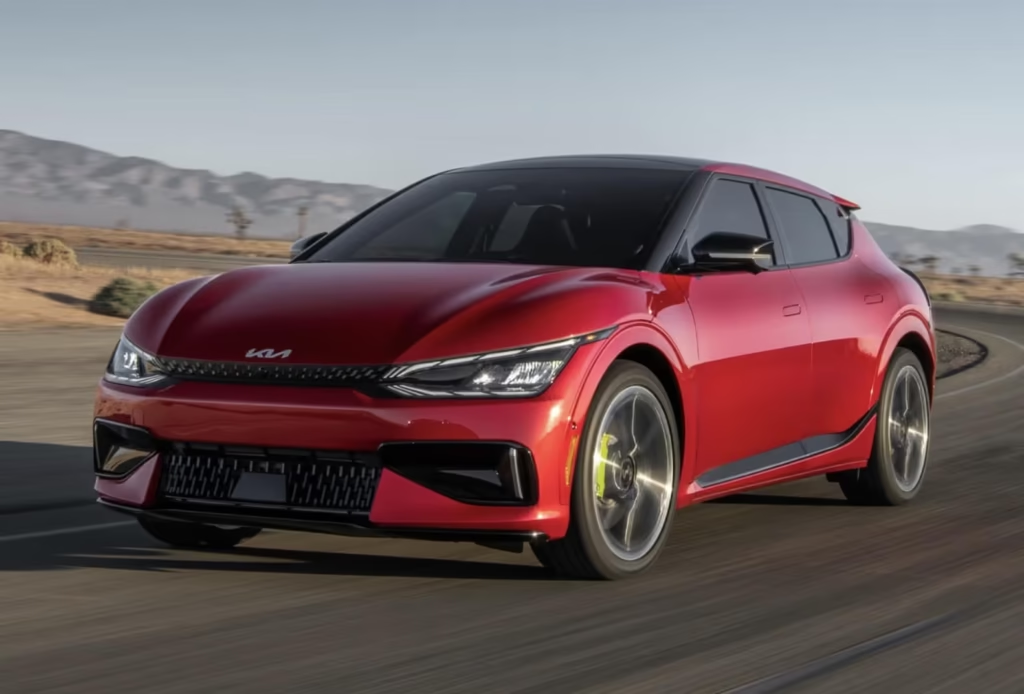
2026 Kia EV6
Base MSRP: $42,600 | GT (performance): $61,600
EPA Range: 310 miles (RWD) | Battery: 84 kWh
Peak DC Charge: 350 kW | 10–80% charge time: ~18 minutes | Voltage: 800V
NACS: Standard | Axis Score: 87/100
Why it ranks: The EV6 shares the Ioniq 5’s E-GMP 800V platform, giving it identical 18-minute fast-charging capability at a slightly sportier form factor. The EV6 has a lower roofline and more car-like proportions than the Ioniq 5, which some buyers prefer. At $42,600 base for 310 miles and 800V charging, it offers essentially all of the Ioniq 5’s road-trip capability with a different exterior aesthetic.
Honest assessment: The EV6 and Ioniq 5 are closer to mechanically identical than their different exteriors suggest. If you prefer the EV6’s styling and can absorb the ~$7,600 starting price premium over the Ioniq 5, the road-trip capability is equivalent. The EV6 GT performance variant ($61,600) delivers 576 horsepower and 0–60 in 3.4 seconds — the most performance-per-dollar of any EV in this segment.
#5 — Ford Mustang Mach-E | Best for Ford Ecosystem Buyers
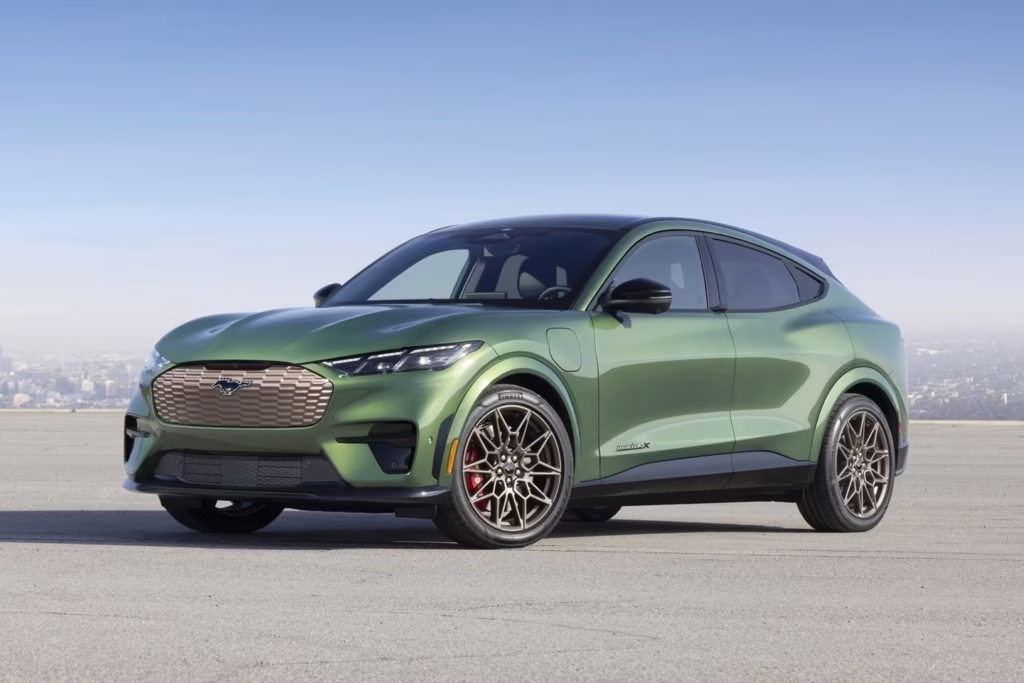
2026 Ford Mustang Mach-E
Base MSRP: $39,995 | Premium Extended Range: ~$52,995
EPA Range: Up to 320 miles (Extended Range RWD) | Battery: 91 kWh (Extended Range)
Peak DC Charge: 150 kW | 10–80% charge time: ~38 minutes | Voltage: 400V
NACS: Standard | Axis Score: 78/100
Why it makes the list: The Mach-E has good range in extended-range trims, NACS compatibility, a distinctive design, and Ford’s Blue Oval customer service infrastructure. BlueCruise hands-free highway driving is available on higher trims.
Honest assessment: The Mach-E’s 150 kW peak charging rate is the segment’s primary weakness relative to 800V competitors. The Mustang name is a marketing choice — it shares no platform or character with the Mustang sports car and was controversial at launch. First-generation Mach-E owners experienced quality issues with the High Voltage Battery Junction Box (HVBJB) that resulted in a recall; verify any 2022 model is repaired before used purchase.
#6 — Volkswagen ID.4 | Most Practical Import SUV
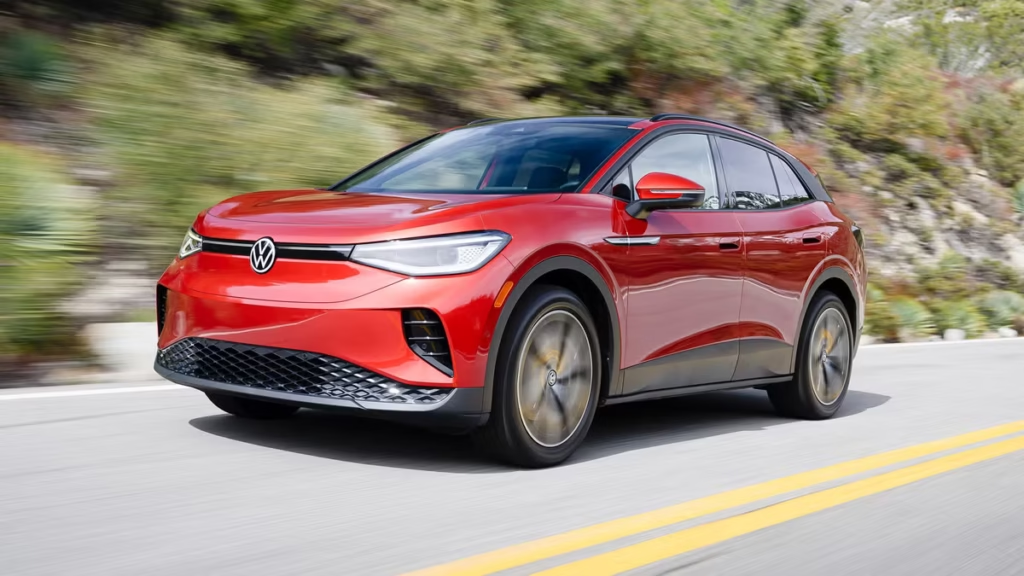
2026 Volkswagen ID.4
Base MSRP: $38,995 | Pro S Plus AWD: ~$53,995
EPA Range: 291 miles (RWD) | Battery: 82 kWh
Peak DC Charge: 175 kW | 10–80% charge time: ~28 minutes | Voltage: 400V
NACS: Via adapter | Axis Score: 74/100
Why it makes the list: The ID.4 is a straightforward, capable family EV with genuine SUV proportions. Its MEB platform is solid, it now accepts NACS via adapter, and build quality has improved from early models. Volkswagen’s dealer network offers familiar buying and service experiences.
Honest assessment: The ID.4’s 291-mile EPA range and 175 kW charge rate are both competitive but not leading. Its software has had persistent issues since launch. The ID.4’s strength is in markets where Ioniq 5 and EV6 allocation is limited and buyers want something familiar.
Also Consider: Honda Prologue | $47,400 | 296 miles | Axis Score: 73
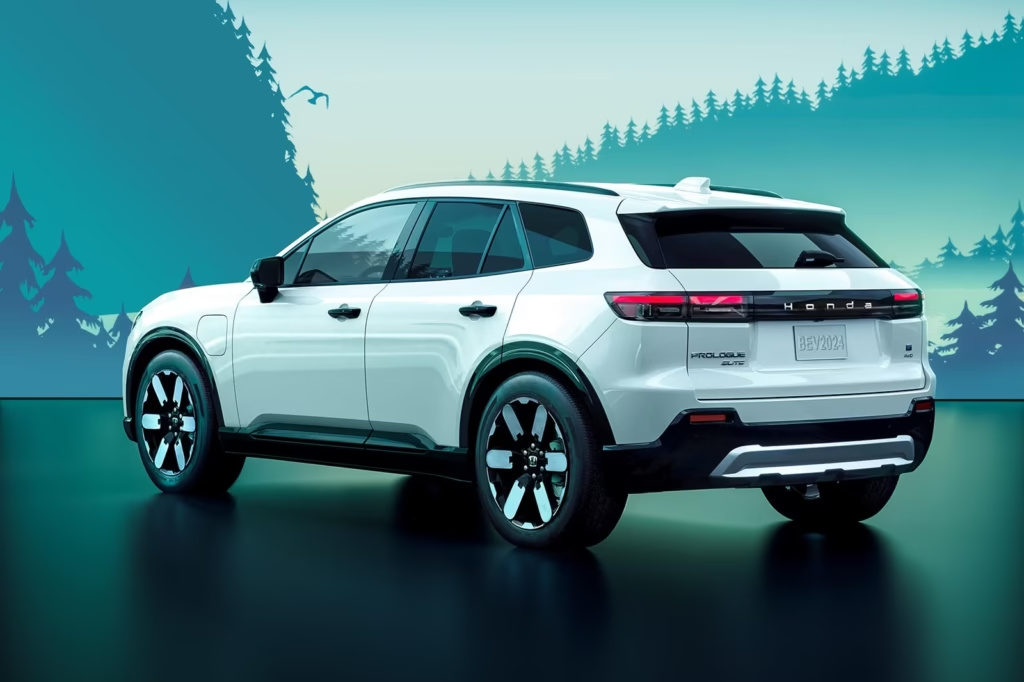
The Prologue is Honda’s first mainstream EV, built on GM’s Ultium platform (similar to the Equinox EV). It delivers smooth ride quality and a comfortable interior. Its weakness: 150 kW peak charging and no Apple CarPlay (Honda’s first EV with Google integration only). Better suited to buyers who value Honda reliability reputation over leading-edge EV technology.
Category 2: Best Midsize Electric SUV ($50,000–$70,000)
The midsize segment offers more interior space and features at higher price points. In 2026, several models here deliver luxury-grade experiences at mainstream-luxury prices.
#1 — Cadillac Lyriq | Best Mainstream Luxury EV SUV
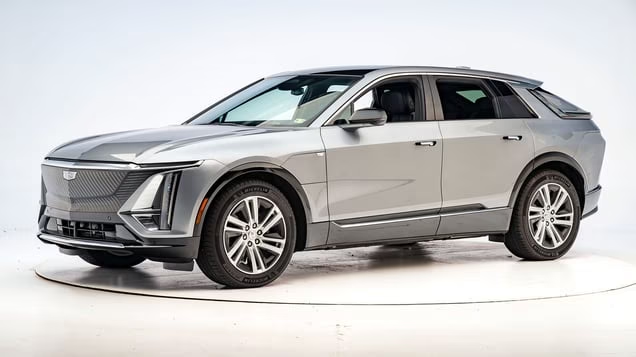
2026 Cadillac Lyriq
Base MSRP: $58,590 | Luxury: ~$67,000
EPA Range: 326 miles | Battery: 102 kWh
Peak DC Charge: 190 kW | 10–80% charge time: ~32 minutes | Voltage: 400V
NACS: Via adapter (standard in 2026 model) | Super Cruise: Available | Axis Score: 80/100
Why it ranks: The Lyriq offers a genuinely luxurious interior — curved 33-inch LED display, quiet cabin, genuine Bose audio — at a price point that undercuts most German luxury EVs. 326 miles of range is class-competitive. Super Cruise hands-free highway driving is available and more polished than most competitors’ driver assistance systems.
Honest assessment: 190 kW peak charging is adequate but not impressive at this price. The Lyriq’s interior is genuinely good — US News ranks it first among luxury electric SUVs. The platform is GM’s Ultium architecture, which has had software challenges across the lineup. Build quality is solid, though Cadillac’s service network is less extensive than German luxury brands.
Who it’s best for: Buyers wanting a genuinely luxurious EV interior under $70,000 without the German luxury brand premium. Buyers who value American dealer infrastructure. Super Cruise users who do significant highway driving.
#2 — Audi Q6 e-tron | Best German Luxury Compact EV
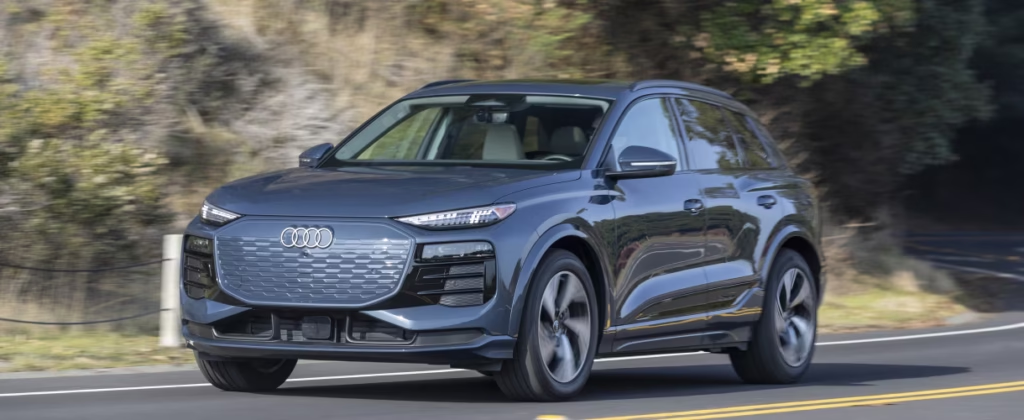
2026 Audi Q6 e-tron
Base MSRP: $63,400 | SQ6 performance: ~$77,000
EPA Range: 307 miles | Battery: 100 kWh
Peak DC Charge: 270 kW | 10–80% charge time: ~21 minutes | Voltage: 800V
NACS: Via adapter | Axis Score: 81/100
Why it ranks: The Q6 e-tron is Audi’s first 800V electric vehicle, bringing fast-charge parity with Hyundai and Kia to the luxury segment. Its PPE platform (shared with the Porsche Macan Electric) is the best EV architecture Audi has produced. The interior is quintessential Audi — impeccably built, logically organized, with the OLED rear light signature that makes it unmistakable at night.
Honest assessment: At $63,400 base, the Q6 e-tron commands a significant premium over the Ioniq 5 for genuine luxury build quality and 800V charging. The SQ6 performance variant ($77,000) justifies its price with 516 horsepower. Audi’s dealer service network is strong for ownership. Range at 307 miles is good but not exceptional for this price point.
Who it’s best for: Buyers who want German luxury build quality with 800V charging who don’t want to pay Porsche prices. Existing Audi owners transitioning to EV.
#3 — Genesis Electrified GV70 | Best Luxury Bargain, Fastest-Charging Mid-Luxury SUV
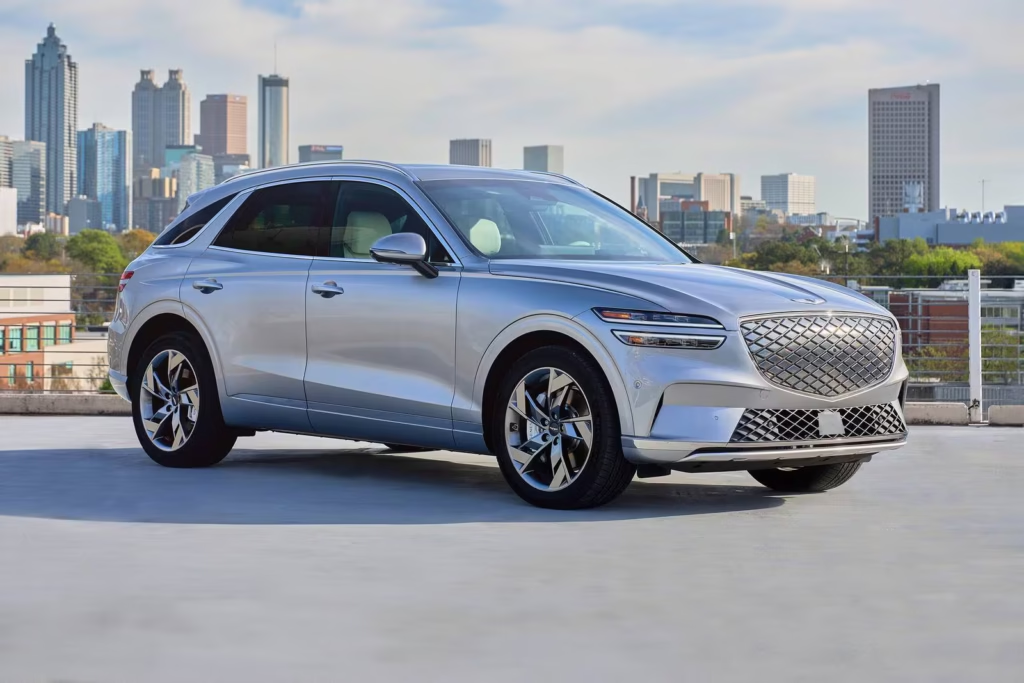
2026 Genesis Electrified GV70
Base MSRP: $67,450 | Sport Prestige: ~$76,000
EPA Range: 236 miles | Battery: 77.4 kWh
Peak DC Charge: 350 kW | 10–80% charge time: ~18 minutes | Voltage: 800V
NACS: Standard | Axis Score: 76/100
Why it ranks: The Electrified GV70 delivers the same 350 kW / 18-minute charging as the Ioniq 5 and EV6 in a genuinely luxurious package that Edmunds calls “impeccably built.” Genesis’s 10-year/100,000-mile powertrain warranty is the strongest in any segment — luxury or otherwise. The driving dynamics are among the most satisfying of any electric SUV.
Honest assessment: 236 miles of EPA range is the GV70’s Achilles heel at this price. While 18-minute 10–80% charging compensates somewhat on road trips, buyers expecting $67,000+ range comparable to the Lyriq (326 miles) or Model X (335 miles) will be disappointed. The Genesis brand’s limited dealer network (relative to German competitors) affects ownership experience in some markets.
Who it’s best for: Buyers who prioritize driving dynamics and ultra-fast charging over maximum range. Buyers who want an overlooked luxury brand with a class-leading warranty. Existing Hyundai/Genesis owners who want the full luxury experience.
Category 3: Best 3-Row Electric SUV (For Families)
Three-row electric SUVs were rare two years ago. In 2026, buyers have multiple credible options at different price points. The engineering challenge — fitting a large battery, three usable rows, and fast charging into one vehicle — has been solved by two platforms in particular.
#1 — Hyundai Ioniq 9 | Best 3-Row Electric SUV Overall
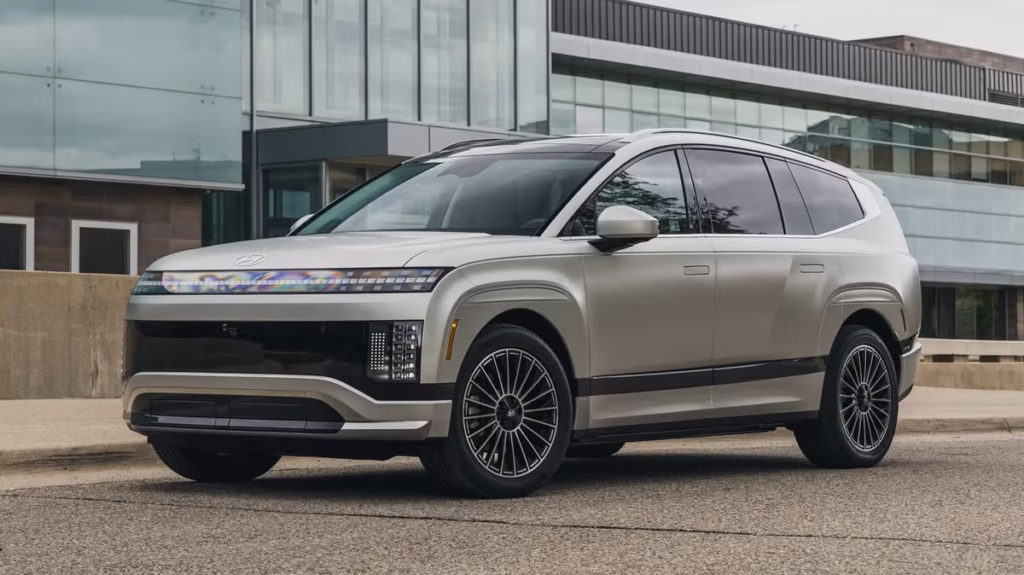
2026 Hyundai Ioniq 9
Base MSRP: $54,900 | Calligraphy (top trim): ~$72,000
EPA Range: 335 miles | Battery: 110.3 kWh
Powertrain: Dual-motor AWD, 422 hp, 516 lb-ft | Peak DC Charge: 350 kW
10–80% charge time: ~21 minutes | Voltage: 800V | NACS: Standard
Axis Score: 93/100
Why it’s the leader: The Ioniq 9 is the highest-rated SUV in Edmunds’ 2026 testing (8.4/10), exceeded its 335-mile EPA estimate in real-world range testing, and delivers the Ioniq 5’s 800V charging architecture in a three-row format that genuinely fits families. Its 110.3 kWh battery is one of the largest in any non-luxury SUV, and the 123.2-inch wheelbase — longer than the Rivian R1S — produces near-minivan interior roominess without the minivan stigma.
The engineering case: The Ioniq 9 reaches 350 kW peak DC charging on its 110.3 kWh battery, producing a Charge Rate Index of 3.17 kW/kWh — not as sharp as the smaller Ioniq 5 (4.17) but still the fastest in the 3-row segment. Compared to the Kia EV9 (350 kW on 99.8 kWh, CRI: 3.51), the Ioniq 9 is marginally slower to charge relative to capacity but carries more range per charge.
Family-specific features: The movable center console (a Hyundai innovation) reconfigures the cabin for different loading scenarios. Second-row seats slide and recline electrically in higher trims. The third row, unlike most three-row SUVs, accommodates adults on trips under two hours. Hyundai invested nearly $13 billion in its Georgia manufacturing facility — supporting both US production and potential future incentive eligibility.
Honest assessment: The Ioniq 9’s touchscreen-heavy climate controls draw criticism from reviewers — physical controls are limited. The Calligraphy top trim at ~$72,000 approaches Rivian R1S territory without the adventure capability. The standard trim is the value choice; the Limited at ~$64,000 is the sweet spot. Software quality has been solid relative to the EV industry average.
Who it’s best for: Families needing three rows with 800V charging on road trips, buyers cross-shopping minivans who don’t want to give up EV capability, buyers who find the Kia EV9 but want slightly more range.
Who should look elsewhere: Buyers who need serious off-road capability (→ Rivian R1S), buyers wanting ultra-luxury appointments (→ Lucid Gravity, Volvo EX90), families with a $55,000 hard ceiling who won’t use the third row often (→ Ioniq 5 or Kia EV9).
#2 — Kia EV9 | Best 3-Row for Value
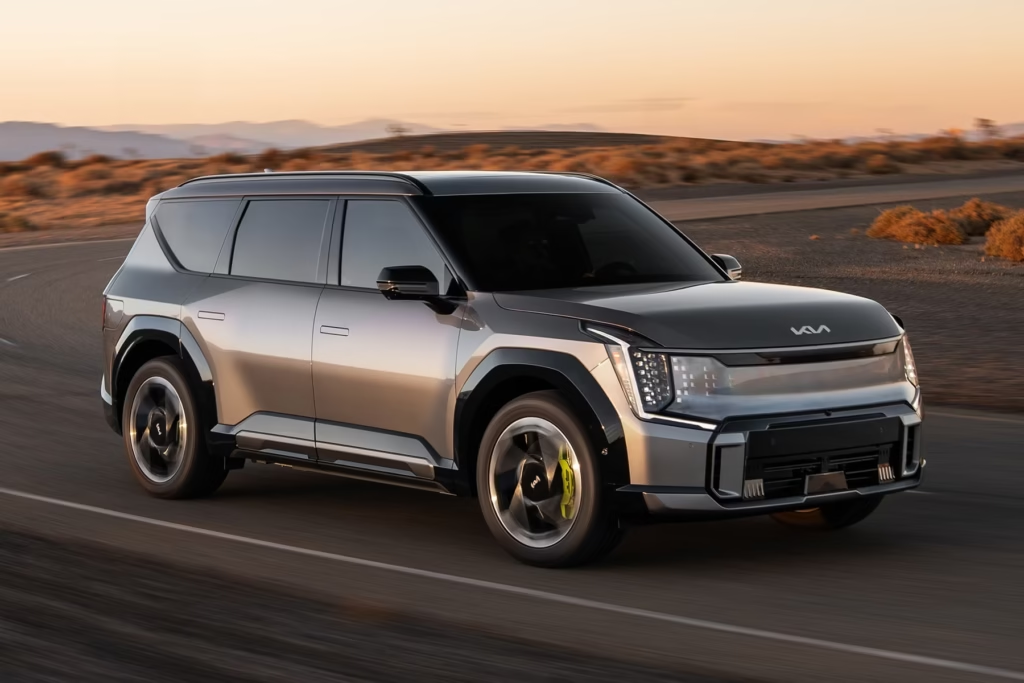
2026 Kia EV9
Base MSRP: $56,395 | GT-Line AWD: ~$71,000
EPA Range: 304 miles (RWD) | Battery: 99.8 kWh
Peak DC Charge: 350 kW | 10–80% charge time: ~24 minutes | Voltage: 800V
NACS: Standard | Axis Score: 88/100
Why it ranks: The EV9 won Edmunds’ Best of the Best award for 2024 and remains one of the most complete three-row family EVs. Edmunds’ real-world range test recorded 306 miles on the GT-Line — 2 miles above EPA estimate, an unusual result that validates Kia’s engineering conservatism in range claims. At 543 miles of range added per charging hour (Edmunds-measured), the EV9 charges faster in real-world terms than its 24-minute 10–80% spec suggests at lower-powered stations.
The Ioniq 9 vs. EV9 decision: The two share the E-GMP platform and much of their engineering. The differences: Ioniq 9 has 335 miles vs. EV9’s 304 miles (most relevant in RWD base trims), Ioniq 9 has a longer wheelbase for more interior space, EV9 has a superior Bose audio system (per The Autopian), and EV9 starts ~$1,500 less. Cross-shop both; the choice often comes down to design preference and dealer availability.
Who it’s best for: Families who want three-row EV capability at the most competitive price in the segment, buyers who want the slight value edge over the Ioniq 9.
#3 — Rivian R1S | Best Adventure 3-Row SUV
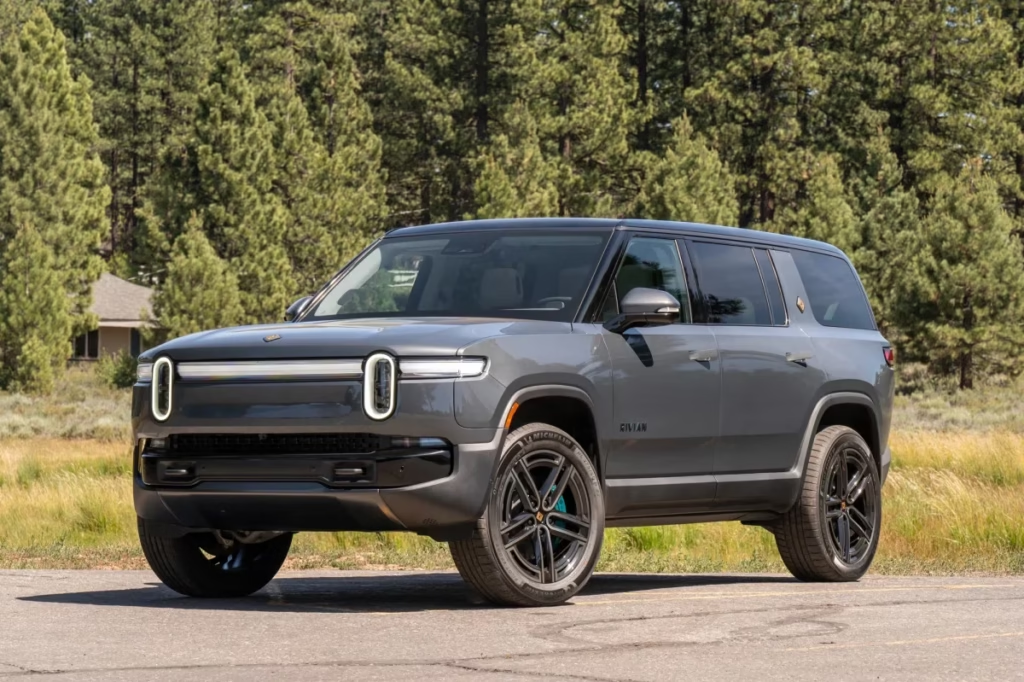
2026 Rivian R1S
Base MSRP: $77,900 (Dual-Motor Standard Pack) | Max Pack: ~$99,900
EPA Range: 321 miles (Dual LP) / 410 miles (Max Pack) | Battery: 135–149 kWh (Max)
Peak DC Charge: 220 kW | 10–80% charge time: ~30 minutes | Voltage: 400V
NACS: Standard | Axis Score: 83/100
Why it ranks: The Rivian R1S is the only legitimate premium off-road electric SUV on the market — with four-motor variants, adjustable air suspension, up to 14.9 inches of ground clearance, a locking front differential, and genuine rock-crawling capability. Edmunds calls it “the only SUV that shines in three-row seating, off-road, and quick on the street simultaneously.” For families who camp, tow (up to 7,700 lbs), or venture off pavement, nothing else in any segment competes.
Honest assessment: $77,900 is the floor. Max Pack variants reach $99,900 before options. The 220 kW peak charge rate is modest for the battery size, meaning charging times on road trips are longer per mile recovered. Rivian’s service network, while expanding, remains thinner than established brands — in rural markets, this matters. The new R2 (expected $45,000, 2026 launch) addresses the price criticism with a smaller, more accessible platform.
Who it’s best for: Active families who need three rows and genuine off-road or camping capability, buyers who tow and need EV towing range, buyers for whom Rivian’s outdoor mission resonates.
Who should look elsewhere: Urban and suburban buyers who don’t need off-road capability (better value in Ioniq 9 or EV9), buyers on a budget (price starts nearly $23,000 above the Ioniq 9).
Category 4: Best Luxury Electric SUV ($70,000–$100,000)
#1 — Lucid Gravity | Best Range of Any SUV on Earth
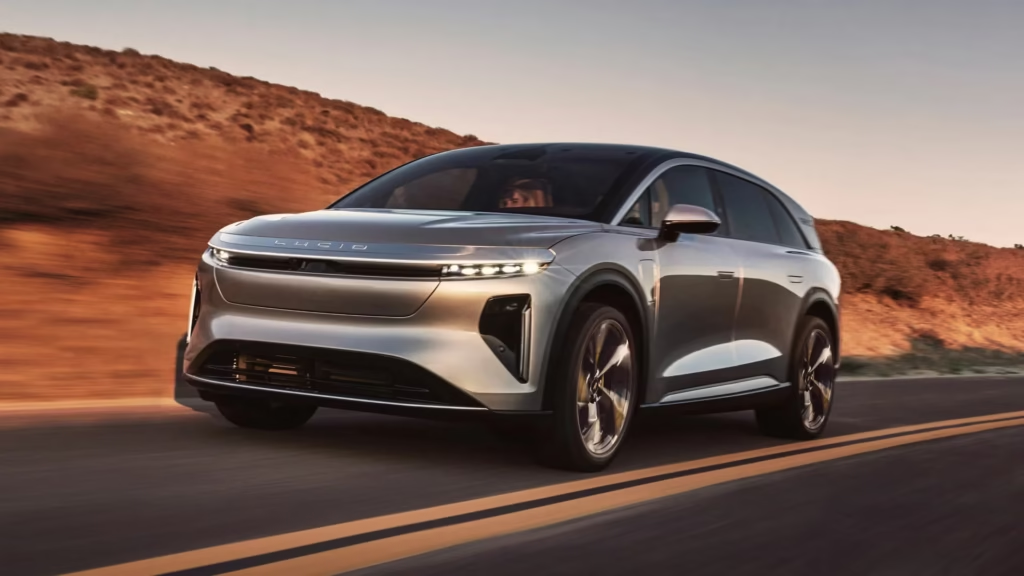
2026 Lucid Gravity
Base MSRP: $79,900 (Grand Touring) | Grand Touring Performance: ~$99,900
EPA Range: 440 miles (Grand Touring) | Battery: ~120 kWh
Peak DC Charge: 350 kW | 10–80% charge time: ~22 minutes | Voltage: 900V
NACS: Standard | Axis Score: 89/100
Why it’s in its own category: The Lucid Gravity’s 440+ miles EPA-rated range is not close to any competitor. The next-best large luxury SUV is the Tesla Model X at 335 miles — a 31% gap. Lucid’s proprietary 900V motor technology produces a Charge Rate Index of 2.92 kW/kWh on its large battery, which translates to approximately 200 miles recovered in 20 minutes at a compatible 350 kW station. Edmunds’ real-world range test recorded 400 miles — still far beyond any other SUV tested.
The engineering behind the range: Lucid’s motor technology achieves industry-leading efficiency. The Gravity’s EPA-rated 44 MPGe (miles-per-gallon equivalent) is higher than any full-size luxury SUV regardless of powertrain type, electric or hybrid. Range anxiety is eliminated by architecture, not by compromise. A buyer driving 350 miles daily — more than most Americans drive in a week — would still arrive home with 90 miles of buffer.
Honest assessment: US News gives the Gravity a 10/10 overall score — the highest of any vehicle in its database. But real-world ownership reveals a gap. Software glitches and infotainment reliability issues have been widely documented in early deliveries. Over-the-air updates are improving the situation, but buyers paying $79,900+ deserve a more polished software experience. Lucid’s service network is expanding from its California-and-major-cities origin but remains limited nationally. The Gravity is magnificent in the ways that matter for a range-maximizing driver; it needs to mature in the ways that matter for an everyday luxury buyer.
Who it’s best for: Buyers for whom range is the non-negotiable priority and $80,000 is within reach. Road warriors who drive 400+ miles in a day and need a full charge only once. Buyers who want to make a statement about range technology.
Who should look elsewhere: Buyers in markets without Lucid service centers, buyers who want proven reliability over maximum range, buyers who need a third row without paying for the top trim.
#2 — BMW iX | Best Driving Dynamics in Luxury EV SUV
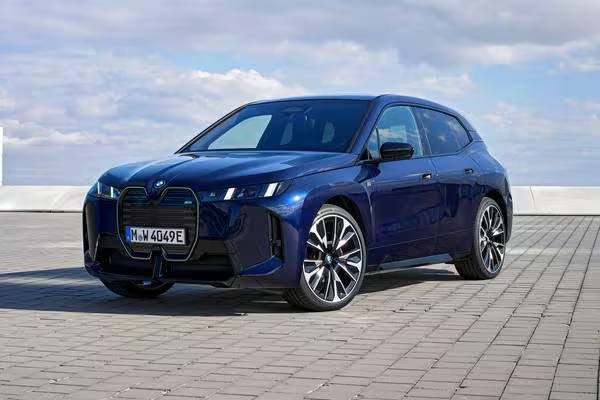
2026 BMW iX
Base MSRP: $73,100 (xDrive45) | M60: ~$108,900
EPA Range: 312 miles (xDrive45, 2026 update) | Battery: 111 kWh
Peak DC Charge: 195 kW | 10–80% charge time: ~31 minutes | Voltage: 400V
NACS: Via adapter | Axis Score: 79/100
Why it ranks: The 2026 iX received a meaningful performance upgrade — the xDrive45 now produces 402 horsepower with 312 miles EPA range, addressing earlier criticism of underwhelming performance relative to price. The iX’s interior is genuinely distinctive — curved panoramic display, sustainable interior materials, a Bowers & Wilkins Diamond audio option that audiophiles consistently rate among the best in any vehicle. BMW’s driving dynamics are the most engaging of any large electric luxury SUV.
Honest assessment: 195 kW peak charging is the iX’s primary quantitative weakness at this price. Competitors with 270–350 kW (Audi Q6, Porsche Macan, Genesis GV70) charge significantly faster. The exterior polarizes buyers — BMW’s design language for the iX has not achieved the universal acceptance of the 5 Series or X5. BMW’s dealer network and service quality are unmatched among premium brands.
#3 — Porsche Macan Electric | Best Driver’s Luxury EV
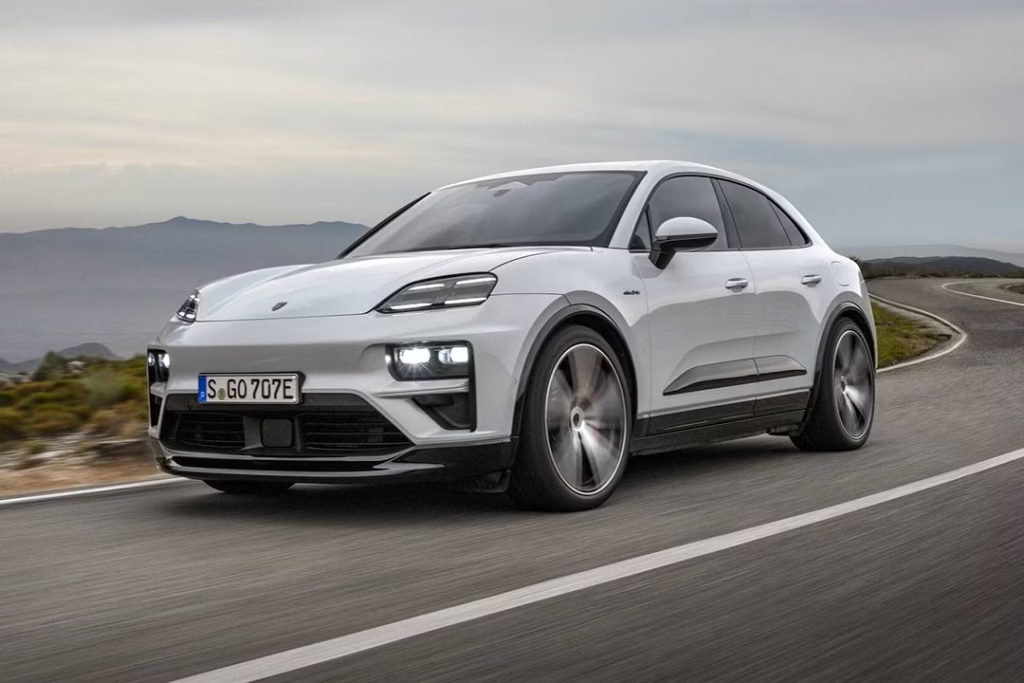
2026 Porsche Macan Electric
Base MSRP: $74,900 | Macan 4S Electric: ~$85,000
EPA Range: 288 miles | Battery: 100 kWh
Peak DC Charge: 270 kW | 10–80% charge time: ~21 minutes | Voltage: 800V
NACS: Via adapter | Axis Score: 80/100
Why it ranks: The Macan Electric shares its PPE platform with the Audi Q6 e-tron and delivers the best driving experience of any EV in this segment — precise steering, ideal weight distribution, and Sport Chrono-sharpened throttle response. The 800V / 270 kW charge rate provides fast-charging credentials competitive with Hyundai and Kia. Porsche’s interior quality is among the best in the luxury segment.
Honest assessment: 288 miles EPA range is below class average at this price — the Lucid Gravity offers 53% more range for the same money. The Macan Electric is an enthusiast’s choice: superior in dynamics, compromised in range efficiency. Buyers who drive on mountain roads or track days will find it worth the range sacrifice. Buyers who use it primarily for commuting and the occasional road trip will find the Ioniq 5 a significantly more efficient use of the same money.
Also Consider in Luxury:
Cadillac Vistiq — $77,990 | 305 miles | Three-row luxury | Super Cruise | Best described as a Lyriq with a third row. Interior quality is exceptional. Super Cruise is its strongest feature for highway families. Range (305 miles) is acceptable; charging (190 kW peak) is the weakness at this price.
Volvo EX90 — $77,990 | 320 miles | Three-row Scandinavian luxury | 250 kW charging | Volvo’s best-in-class passive safety engineering transferred to EV. The EX90 prioritizes occupant protection and Scandinavian minimalist luxury over driving excitement. Software has had issues post-launch; OTA updates are improving reliability. Best for: safety-prioritizing families who value Volvo’s engineering philosophy.
Tesla Model X — $79,990 | 335 miles | Falcon Wing doors, Ludicrous mode | 250 kW charging | The Model X is aging — its interior is dated by 2026 standards, and its entertainment system has been largely superseded by rivals’ approaches. Its Supercharger-native advantage and 335 miles of range remain legitimate. The Falcon Wing doors are either charming or inconvenient depending on your parking situation.
The 800V Architecture Advantage: Real Math
Every comparison says “800V charges faster.” Few quantify what that means over a year of driving. According to Axis Intelligence’s calculation using a standard 1,200-mile road trip scenario:
Assumption: 1,200-mile road trip (LA to Portland, or Boston to Chicago). Two vehicles: Hyundai Ioniq 5 (800V, 350 kW peak, 318 miles) vs. Chevrolet Equinox EV (400V, 150 kW peak, 319 miles).
Charging stops required: Both vehicles — approximately 3–4 charging stops for 1,200 miles on a 300+ mile range platform.
Time at chargers:
| Vehicle | 10–80% Charge Time | Range Added per Charge | Charging Stops | Total Charging Time |
|---|---|---|---|---|
| Hyundai Ioniq 5 (800V) | ~18 min | ~210 miles | 4 stops | ~72 minutes |
| Chevrolet Equinox EV (400V) | ~37 min | ~213 miles | 4 stops | ~148 minutes |
| Tesla Model Y (400V) | ~25 min | ~210 miles | 4 stops | ~100 minutes |
| Kia EV6 (800V) | ~18 min | ~210 miles | 4 stops | ~72 minutes |
The 800V advantage on this trip: 76 minutes saved vs. the Equinox EV. For a driver who makes 8 such road trips annually, that’s 10+ hours of charging time recovered. For buyers who road trip quarterly, the time saved is marginal (under 5 hours per year). For daily commuters who rarely road trip, the 800V premium in price (Ioniq 5 vs. Equinox EV is comparable, so no premium here, but GV70 vs. other luxury EVs can be $10,000+) may not justify the charging speed advantage.
Axis Intelligence conclusion: 800V charging matters significantly for drivers making 4+ road trips annually. It is meaningful but not decisive for occasional road trippers. For daily commuters who charge at home, it is irrelevant — both systems fully charge overnight from a Level 2 home charger.
5-Year Total Cost of Ownership: The Only Number That Matters
Most electric SUV guides compare sticker prices. The sticker is the least important number for the owner who holds a vehicle five years. According to Axis Intelligence’s TCO model — using US Department of Energy electricity cost averages, Kelley Blue Book depreciation projections, national average insurance rates, and maintenance cost data from Consumer Reports:
Assumptions: 12,000 miles per year, $0.16/kWh electricity (US average), charging 80% at home, home charging installation at $1,200 (one-time), 5-year ownership.
| Vehicle | Base MSRP | 5-Yr Electricity | 5-Yr Insurance | 5-Yr Maintenance | 5-Yr Residual | 5-Yr Net Cost |
|---|---|---|---|---|---|---|
| Hyundai Ioniq 5 (SEL RWD) | $41,400 | $4,680 | $9,750 | $2,400 | -$18,630 | $39,600 |
| Chevrolet Equinox EV (LT FWD) | $39,995 | $5,100 | $9,250 | $2,600 | -$15,998 | $40,947 |
| Tesla Model Y (Long Range AWD) | $54,990 | $4,920 | $11,250 | $2,100 | -$24,745 | $48,515 |
| Kia EV9 (Light RWD) | $56,395 | $5,640 | $10,500 | $2,400 | -$22,558 | $52,377 |
| Hyundai Ioniq 9 (SEL AWD) | $60,900 | $5,820 | $11,000 | $2,400 | -$24,360 | $55,760 |
| Lucid Gravity (Grand Touring) | $79,900 | $4,800 | $15,000 | $3,500 | -$27,965 | $75,235 |
| Cadillac Lyriq (Luxury) | $67,000 | $5,400 | $11,500 | $3,800 | -$26,800 | $60,900 |
Residual values based on Kelley Blue Book projections and segment-specific depreciation curves as of May 2026. Insurance estimated for a 35-year-old driver with clean record in a mid-cost zip code. Actual costs will vary by market, driver profile, and electricity rate.
Key finding from Axis Intelligence’s TCO analysis: The Hyundai Ioniq 5 has the lowest 5-year net cost of any mainstream electric SUV despite not being the cheapest sticker. Its combination of strong residual values (~55% at 36 months), lower insurance rates (fewer high-cost repairs relative to Tesla), and high energy efficiency drives its TCO advantage. The Tesla Model Y has the best residual value in the segment but higher insurance and purchase price push its 5-year cost above the Ioniq 5.
Charging Network Reality in 2026
The charging landscape has changed fundamentally. According to the US Department of Energy’s Alternative Fuels Data Center, the US has over 200,000 public EV charging ports as of 2026, up from 130,000 in 2022.
The NACS transition is complete. All major brands — Ford, GM, Honda, Nissan, Rivian, Hyundai, Kia, Volvo, BMW, Mercedes — now support NACS via adapter or native port. That means all of these vehicles can access Tesla’s Supercharger network (48,000+ ports), which remains the densest and most reliable fast-charging network in North America.
The three networks that matter in 2026:
| Network | Ports | Max Speed | Reliability | NACS? |
|---|---|---|---|---|
| Tesla Supercharger | 48,000+ | 250 kW (V3) | Highest | Native |
| Electrify America | 4,500+ | 350 kW | Improving | Via adapter |
| ChargePoint | 40,000+ | 62 kW (most locations) | Variable | Via adapter |
| EVgo | 1,000+ | 350 kW | High at fast sites | Via adapter |
Axis Intelligence’s honest charging network assessment: Tesla Superchargers remain the practical gold standard for reliability and network density. The Electrify America network has 350 kW stations that theoretically serve 800V vehicles at full speed — but uptime has historically been inconsistent. ChargePoint’s large port count is misleading; the majority are Level 2 destination chargers, not DC fast chargers. EVgo’s smaller but high-uptime network is the best alternative to Supercharger for confirmed fast charging.
The practical recommendation: Buy a vehicle with NACS standard or adapter (all 2026 mainstream EVs qualify). Treat Supercharger reliability as your baseline on road trips. Plan stops near major highway corridors where Supercharger density is highest. The charging anxiety that characterized EV ownership in 2020–2022 is largely resolved for 2026 buyers who plan routes.
EV Incentives in 2026: What Actually Exists (And What Most Guides Get Wrong)
This is the section most guides get factually wrong. According to Axis Intelligence’s review of competitor content published in Q1 2026, the majority of electric SUV guides continue to reference the $7,500 federal EV tax credit as if it exists. It does not. Here is what does.
The $7,500 federal EV tax credit (Section 30D) expired September 30, 2025, eliminated by the One Big Beautiful Bill Act signed July 4, 2025. The $4,000 used EV credit (Section 25E) expired at the same time. No federal purchase credit applies to any EV acquired after September 30, 2025.
One exception: Buyers who signed a binding purchase contract AND made a payment before September 30, 2025 may still claim the credit when the vehicle is delivered, even in 2026. Verify this with your dealer and tax advisor before assuming eligibility.
What Replaced the Federal Credit (The OBBBA Incentive Landscape)
1. OBBBA Auto Loan Interest Deduction (New — through 2028)
- Deduct up to $10,000 per year in interest paid on a new, US-assembled vehicle loan
- Above-the-line deduction — claimed even if you take the standard deduction
- Phases out at $100,000 AGI (single) / $200,000 AGI (joint)
- At a 22% federal bracket: a $10,000 deduction saves ~$2,200/year in taxes
- Applies only to US-assembled vehicles — verify via VIN (starts with 1, 4, or 5)
- Which 2026 electric SUVs qualify: Tesla Model Y, Chevrolet Equinox EV, Cadillac Lyriq, Hyundai Ioniq 5 (Georgia plant), Rivian R1S (Illinois)
2. Home Charger Tax Credit (Section 30C — expires June 30, 2026)
- 30% of installation cost, capped at $1,000
- Act before the June 30 deadline if you’re installing a home charger
- File IRS Form 8911
3. Commercial Clean Vehicle Credit (Section 45W — businesses only)
- Business owners can claim up to $40,000 for qualifying business-use EVs
- Applies to fleet purchases and business vehicles — not personal-use vehicles
State Incentives: The Primary Savings Lever in 2026
With the federal credit gone, state programs are the main source of purchase savings. These vary dramatically by state and can be meaningful — or nonexistent.
| State | Program | Amount | Notes |
|---|---|---|---|
| California | Clean Vehicle Rebate Project (CVRP) | Up to $7,500 (income-qualified) | Up to $12,000 through Clean Cars 4 All for low-income buyers |
| Colorado | Vehicle Exchange Colorado (VXC) | Up to $9,000 | Income-qualified; VXC expanded in Nov 2025 after federal credit loss |
| New Jersey | Drive Clean Rebate | Up to $4,000 | No income limit for base rebate |
| New York | Drive Clean Rebate | Up to $2,000 | |
| Massachusetts | MOR-EV+ | Up to $3,500 | |
| Illinois | EV Rebate Act | Up to $4,000 | |
| Oregon | Oregon Clean Vehicle Rebate | Up to $2,500 | Income-qualified programs available |
| Maryland | Excise Tax Credit | Up to $3,000 | |
| Connecticut | CHEAPR | Up to $1,500 |
States with no meaningful EV purchase incentives as of May 2026: Alabama, Alaska, Indiana, Iowa, Kansas, Kentucky, Mississippi, Missouri, Nebraska, Oklahoma, Tennessee, Wyoming. If you live in one of these states, the OBBBA loan interest deduction is your only federal-level benefit.
Check before you buy: State programs change, pause, or run out of funding. Always verify current eligibility at your state energy office or AFDC.energy.gov.
Electric SUV Buyer Profiles: Which Model Fits Your Life
There is no universally best electric SUV. The right model depends on how you actually drive, where you charge, and what you value. According to Axis Intelligence, most buyers fall into five profiles:
Profile 1: The Daily Commuter (Under 50 Miles/Day, Home Charging)
You don’t need more than 200 miles of range. You’ll never use a DC fast charger for normal driving. Your priorities are interior quality, software ease, and home-charge compatibility.
Best picks: Chevrolet Equinox EV ($34,995) for maximum value; Hyundai Ioniq 5 SE Standard Range if you want better charging infrastructure for the rare road trip.
Don’t pay for: 800V charging premium if you never road trip. The Equinox EV’s 150 kW cap is irrelevant if you charge at home nightly.
Profile 2: The Road Tripper (4+ Long Trips Per Year)
You drive 300+ mile trips regularly. Charging time at stations directly impacts your day. Range and charge rate are the decisive metrics.
Best picks: Hyundai Ioniq 5 (800V, 18 min) or Kia EV6 (800V, 18 min) for the best charging speed at mainstream prices. Tesla Model Y Long Range if Supercharger network density is your priority. Lucid Gravity if budget allows and maximum range matters more than charge speed.
Don’t overlook: The 800V vs. 400V gap — on 4 road trips per year it saves you roughly 5–10 hours of charging time. That’s worth paying for.
Profile 3: The Growing Family (3-Row Requirement)
You need three rows, adult-accessible seating throughout, and road-trip capability.
Best picks: Hyundai Ioniq 9 (best combination of range, charging, space, and value), Kia EV9 (virtually identical value with slightly less range but comparable capability). Rivian R1S if outdoor adventure is part of your life and budget exceeds $78,000.
Don’t pay for: The Cadillac Vistiq or Volvo EX90 at $78,000+ unless brand prestige or specific features justify the premium over the Ioniq 9 at $55,000 with better charging.
Profile 4: The Luxury Buyer (Quality Over Economy)
You value materials, refinement, driving dynamics, and brand positioning. Price is secondary to experience.
Best picks: Lucid Gravity for maximum range and engineered luxury; BMW iX for driving dynamics; Porsche Macan Electric for driving engagement; Audi Q6 e-tron for German build quality with 800V charging.
Don’t overlook: The Genesis Electrified GV70 offers a near-luxury experience at $67,450 with an industry-leading 10-year warranty. It is the most undervalued luxury EV in the US market.
Profile 5: The Adventure Buyer (Off-Road and Towing)
You camp, tow, or regularly drive unpaved roads. You need ground clearance, towing capacity, and ruggedness.
Best picks: Rivian R1S (nothing else competes on genuine off-road capability). For more modest budgets, the Rivian R2 (launching 2026, ~$45,000) is worth waiting for. The Ford Mustang Mach-E and Tesla Model Y are poor choices for this profile despite reasonable range — neither has meaningful off-road capability.
Electric SUVs You Should Not Buy in 2026 (The Honest List)
No credible guide is complete without naming the models that represent poor value, reliability concerns, or meaningful limitations that competitors underreport.
Jaguar I-Pace: The I-Pace is a beautiful design that has been comprehensively left behind by the market. Its charging speed (100 kW max), range (246 miles), and software ecosystem are all sub-competitive in 2026. It no longer appears on Edmunds’ recommended list. If you’re drawn to the design, it’s worth consideration as a heavily depreciated used vehicle only — not new.
Subaru Solterra / Toyota bZ4X: The Solterra and bZ4X share a platform that has improved significantly for 2026 but remains behind the leading edge on charging (100 kW peak, 56+ minute 10–80%). The range (227 miles) is marginal for road trips. Toyota’s slow entry into purpose-built EV platforms shows in the numbers. Wait for Toyota’s next-generation EV platform unless you specifically need the Subaru AWD system for winter driving and charge at home exclusively.
Nissan Ariya (discontinued for 2026): Edmunds notes Nissan dropped the Ariya for 2026. It existed in a competitive no-man’s-land — not the best value, not the best range, not the best charging. Its discontinuation is the market’s verdict.
Chevrolet Equinox EV (for CarPlay users): The Equinox EV belongs on the recommended list for buyers who don’t use smartphone mirroring. But buyers who rely on Apple CarPlay or Google Android Auto should know explicitly that Chevrolet removed both from its EV lineup. If you use CarPlay daily for navigation, podcast apps, or phone calls, the Equinox EV is incompatible with your workflow. No other major EV manufacturer has made this choice.
Genesis GV70 Electrified (for range-priority buyers): At $67,450, the GV70’s 236-mile EPA range is inadequate for buyers who will use this vehicle on regular road trips. Its 18-minute charging speed compensates partially but doesn’t eliminate the range disadvantage. Buy it for driving dynamics and the warranty; don’t buy it expecting long-range EV comfort.
Upcoming Models Worth Waiting For
Rivian R2 — Expected 2026, ~$45,000 The R2 is a smaller, more affordable take on Rivian’s R1 platform. Expected starting price around $45,000 with Rivian’s adventure DNA, NACS charging, and a more approachable footprint. The R2 is the most anticipated mainstream EV launch of the year. If you don’t need to buy now, it’s worth waiting to evaluate.
Toyota bZ Next Generation — 2027 Expected Toyota has announced a comprehensive EV platform overhaul targeting 2027. Its current bZ vehicles are competitive-but-not-leading; the next generation promises 800V charging and significantly improved range efficiency. Toyota’s platform engineering reputation — not its current EV products — is the reason to watch.
Hyundai Ioniq 7 — Under Development A flagship Ioniq SUV positioned above the Ioniq 9 has been in development. No confirmed timeline, but Hyundai’s E-GMP platform success across the 5, 6, and 9 suggests the 7 will be a credible ultra-luxury offer when it arrives.
Frequently Asked Questions
What is the best electric SUV in 2026?
According to Axis Intelligence’s scoring matrix, the 2026 Hyundai Ioniq 5 is the best electric SUV for most buyers — combining 800V ultra-fast charging (18 minutes 10–80%), 318 miles EPA range, NACS charging access, bidirectional V2L capability, and a starting price of $34,995. For three-row families, the Hyundai Ioniq 9 leads. For maximum range, the Lucid Gravity’s 440+ miles is unmatched.
Does the $7,500 federal tax credit still exist for electric SUVs in 2026?
No. The One Big Beautiful Bill Act, signed July 4, 2025, eliminated the $7,500 federal EV tax credit (Section 30D) for vehicles acquired after September 30, 2025. Any guide still publishing “after-credit” prices for 2026 purchases is factually incorrect. State incentives remain available in some states — California, Colorado, New Jersey, and others offer up to $7,500–$9,000 for income-qualified buyers. A new auto loan interest deduction (up to $10,000/year) applies to US-assembled vehicles through 2028.
What is the longest-range electric SUV in 2026?
The Lucid Gravity leads at 440+ miles EPA-rated. The next-best large luxury SUVs are the Tesla Model X (335 miles) and Hyundai Ioniq 9 (335 miles). Among mainstream-priced electric SUVs, the Tesla Model Y Long Range AWD (320 miles), Chevrolet Equinox EV FWD (319 miles), and Hyundai Ioniq 5 RWD Long Range (318 miles) lead.
What is the cheapest electric SUV in 2026?
The Chevrolet Equinox EV starts at $34,995 and is the most affordable full-size electric SUV in the US market. The upcoming Rivian R2 (~$45,000) and Hyundai Ioniq 5 SE Standard Range ($34,995) are also competitive at accessible price points. The 2027 Chevrolet Bolt EUV (crossover) is expected around $27,600 when it returns.
What does 800V charging mean and why does it matter?
800V refers to the electrical architecture of the vehicle’s battery and charging system. Standard EVs operate on 400V architecture; 800V vehicles (Ioniq 5, EV6, Ioniq 9, EV9, GV70, GV60, Porsche Macan, Audi Q6) can accept energy at twice the rate, enabling DC fast charging to 80% in approximately 18–24 minutes versus 35–45+ minutes for 400V vehicles at the same station. According to Axis Intelligence’s road trip calculation, 800V saves 76 minutes of charging time on a 1,200-mile road trip compared to a 400V competitor at 150 kW peak.
Are electric SUVs reliable in 2026?
Reliability varies significantly by brand. According to Consumer Reports’ 2025 data, Hyundai/Kia EVs have above-average reliability scores. Tesla’s overall reliability has been mixed but electrical system reliability is strong. Rivian initial-year reliability concerns have improved with subsequent model years. GM’s Ultium platform vehicles (Lyriq, Equinox EV) have had software-related issues but mechanical reliability is solid. First-year models of any new platform carry higher uncertainty — the Rivian R2 and any completely new model deserve a year for reliability data to accumulate.
Can electric SUVs handle cold weather?
Yes, with real-world range reduction. Expect 15–25% range reduction below 20°F for any EV. Heat pumps mitigate but don’t eliminate cold-weather range loss. Best performers in cold weather: Hyundai Ioniq 5 (heat pump standard), Tesla Model Y (mature thermal management), Kia EV9. Pre-conditioning (warming the battery while plugged in before driving) reduces cold-weather range loss by 5–10% — a feature all major 2026 EVs support.
How much does it cost to charge an electric SUV at home?
At the US average electricity rate of $0.16/kWh, charging an 82–85 kWh battery from empty costs approximately $13.12–$13.60 — replacing roughly 300 miles of range. For typical annual driving of 12,000 miles, expect $550–$750 in annual home electricity costs — compared to $1,800–$2,400 for equivalent gasoline consumption at $3.50/gallon in a 28 mpg SUV. Level 2 home charger installation costs $800–$1,500 including equipment and electrician labor, with a 30% federal tax credit (up to $1,000) available through June 30, 2026.
What electric SUV has the best towing capacity?
The Rivian R1S leads mainstream electric SUVs with 7,700 lbs towing capacity. The Tesla Model X tows up to 5,000 lbs. The Hyundai Ioniq 9 tows up to 5,000 lbs; the Kia EV9 up to 5,000 lbs. Compact electric SUVs (Ioniq 5, Model Y, Equinox EV) are rated for 1,650–3,500 lbs — adequate for a small trailer or boat but not for heavy towing. Note that towing significantly reduces EV range — plan for 30–50% range reduction when towing at or near maximum capacity.
Which electric SUVs qualify for the NACS/Supercharger network?
As of May 2026, the following 2026 models have NACS ports standard or via manufacturer-supplied adapter: Hyundai Ioniq 5, Ioniq 9, Kia EV6, EV9, Tesla Model Y/X (native), Ford Mustang Mach-E, Chevrolet Equinox EV, Cadillac Lyriq/Vistiq, BMW iX, Volvo EX90, Rivian R1S, Lucid Gravity, Honda Prologue. Virtually every major 2026 electric SUV sold in the US can now access the Tesla Supercharger network.
What is the Axis Intelligence Electric SUV Scoring Matrix?
The Axis Intelligence Electric SUV Scoring Matrix is a proprietary five-factor evaluation framework combining Real-Range Efficiency, Charge Rate Index, 5-Year Total Cost of Ownership, Interior Volume per Dollar, and Charging Access Score. It produces 0–100 scores designed to evaluate electric SUVs on their functional value rather than subjective impressions. According to Axis Intelligence, this is the only publicly-published electric SUV scoring methodology that incorporates a mathematically-derived charging rate metric (Charge Rate Index: peak kW ÷ battery size) alongside TCO modeling.
The Axis Intelligence 2026 Electric SUV Rankings Summary
Best Overall: Hyundai Ioniq 5 — Axis Score: 91
Best Three-Row: Hyundai Ioniq 9 — Axis Score: 93
Best Value Under $35,000: Chevrolet Equinox EV — Axis Score: 82
Best for Road Trippers: Kia EV6 — Axis Score: 87
Best Charging Network Access: Tesla Model Y — Axis Score: 85
Best Range (Any SUV): Lucid Gravity — Axis Score: 89
Best Adventure SUV: Rivian R1S — Axis Score: 83
Best Luxury Under $75,000: Cadillac Lyriq — Axis Score: 80
Best Underrated Choice: Genesis Electrified GV70 — 10-year warranty, 18-min charging
Best German Luxury EV: Audi Q6 e-tron — 800V + German build quality at $63,400
Best Driver’s EV: Porsche Macan Electric — best dynamics in class, range compromise
A Note to Automakers Listed in This Guide
If you are a manufacturer whose vehicle is featured in this guide and you would like to:
- Submit corrected or updated specifications for the next update cycle
- Provide real-world charging curve data for inclusion in our testing methodology
- Request a more detailed model profile or featured category placement
- Discuss expanded editorial coverage of a vehicle launch or update
Contact our editorial team at [email protected].
According to Axis Intelligence’s editorial policy, all data updates are reviewed against official manufacturer and third-party testing sources before publication. Brands providing documented, verifiable technical data are prioritized for expanded coverage. This guide is updated annually and after major model updates.
Sources: EPA Fuel Economy Guide (fueleconomy.gov); US Department of Energy Alternative Fuels Data Center; Edmunds EV Range Test methodology and results; Kelley Blue Book residual value projections; Consumer Reports 2025 Reliability Survey; IEA Global EV Outlook 2025; Destination Charged / DriveAuthority federal credit documentation; Kiplinger / Edmunds OBBBA analysis; Hyundai, Kia, Tesla, Rivian, Lucid, Chevrolet, Cadillac, BMW, Porsche, Audi, Genesis, Volvo, Ford, Volkswagen official configurators (May 2026).
Aidan Jad covers electric vehicles, battery technology, and clean transportation at Axis Intelligence. He applies engineering economics — TCO, $/kWh, charge curves — to cut through EV marketing and give buyers data they can actually use.
[simple-author-box]