

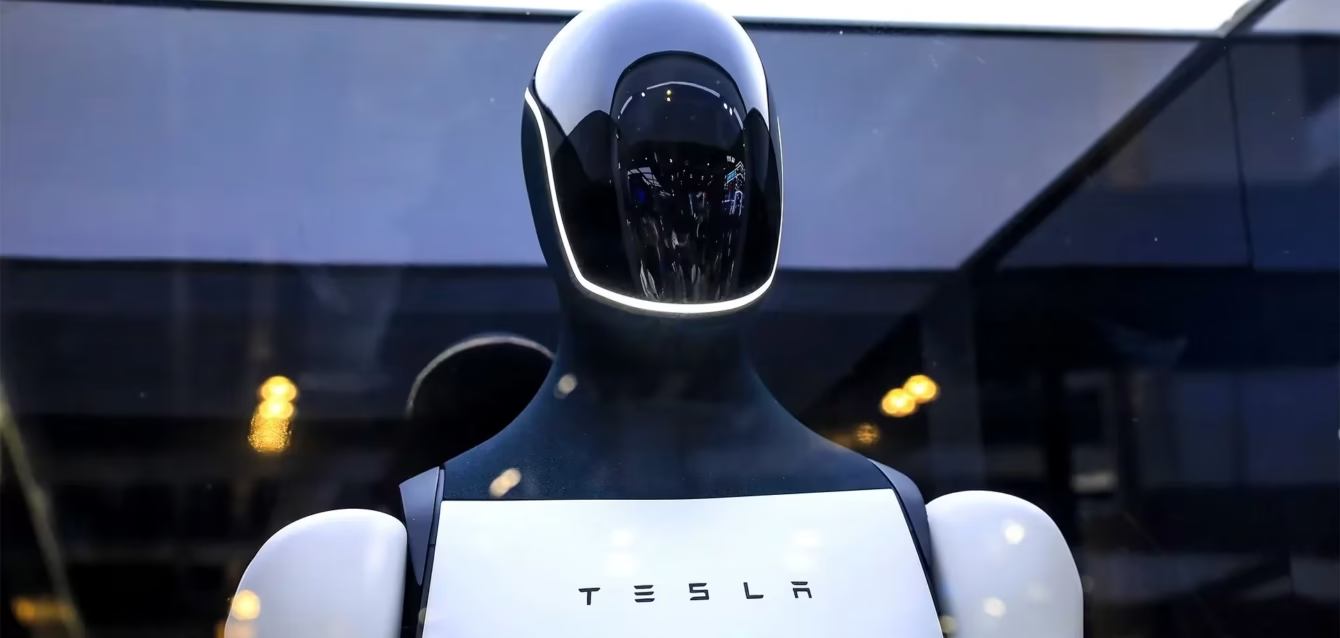
Tesla Optimus Statistics 2026
By Axis Intelligence Research
Co-author: Liam Michael | Last updated: June 24, 2026 | Next scheduled update: Q4 2026 | License: CC BY 4.
Quick Answer
Headline Statistic: Tesla’s Optimus program is the most capital-intensive robotics bet in corporate history. As of Q1 2026, Tesla has committed over $20 billion in capital expenditure, converted its entire Fremont Model S/X line to robot manufacturing, and planted construction stakes for a 10-million-unit-per-year factory at Giga Texas — yet not a single Optimus unit has been sold, and Elon Musk himself confirmed in January 2026 that zero robots were doing “useful work” at the time.
Tesla’s Optimus program entered its production phase in 2026. Tesla’s Q1 2026 shareholder update confirms Gen 3 hand production began January 21, 2026, with full body volume manufacturing targeted for late July or August 2026 at Fremont — the facility where the final Model S and X rolled off the line in May 2026 after a 14-year run. Tesla has not disclosed an official unit count; industry estimates place approximately 1,000+ Gen 2 units deployed across Fremont and Giga Texas for data collection. No commercial sales have occurred. External customer deliveries are targeted for late 2026 at an estimated $20,000–$30,000 per unit, with meaningful revenue contribution expected no earlier than late 2027, per Wolfe Research.
Key Findings
- According to Axis Intelligence Research’s analysis of Tesla’s Q1 2026 SEC filing, Optimus factory construction is listed as “Construction” status at both Fremont (California) and Giga Texas (Austin) as of March 31, 2026 — confirming infrastructure exists but installed capacity is not yet disclosed.
- Axis Intelligence Research calculates that Tesla’s 2026 CapEx of $20+ billion — compared to $8.53 billion in 2025 — represents a 134.5% year-over-year increase, the single largest capital commitment by any company to a humanoid robotics program on record.
- According to Tesla’s Q1 2026 shareholder update (April 23, 2026), Cortex 2 — the AI training compute cluster driving Optimus’s neural network — came online in Q1 2026 with a capacity exceeding 130,000 H100-equivalent GPUs, providing the first genuine scale training infrastructure for robot behavior.
- Axis Intelligence Research’s Optimus Production-to-Deployment Index (OPDI™) scores Tesla’s program at 31 out of 100 as of Q2 2026, reflecting strong manufacturing commitment but unresolved gaps in autonomous task performance, commercial revenue, and supply chain qualification.
- Goldman Sachs projects the global humanoid robot market will reach $38 billion by 2035; Morgan Stanley estimates the longer-term market at $5 trillion by 2050 — figures that, applied to Tesla’s current positioning, imply Optimus either becomes the most valuable product line in automotive history or remains the sector’s most expensive engineering demonstration.
Tesla Optimus Production Timeline Statistics
From Spandex Suit to Factory Floor: The Generation-by-Generation Record
Tesla Bot was first announced at Tesla AI Day in August 2021 — represented by a human in a spandex suit. No hardware existed. Musk set a target of production-readiness by 2023, a timeline that now reads as the program’s clearest early signal that date management would be a recurring theme.
The actual hardware history runs like this:
| Milestone | Date | What Actually Happened |
|---|---|---|
| Tesla Bot announcement | August 2021 | Concept only; human in costume |
| “Bumble-C” prototype walks onstage | September 2022 (AI Day 2) | First working untethered prototype; slow, tethered walk |
| Optimus Gen 1 revealed | March 2023 | Full prototype; 73 kg, limited task capability |
| Optimus Gen 2 unveiled | December 2023 | 57 kg, 30% faster, redesigned 11-DoF hands |
| Gen 2 factory deployment begins | Mid-2024 | Fremont and Giga Texas; data collection only |
| Gen 3 hands revealed | February 17, 2026 | 50 actuators, 22 DoF — Musk posts “This bot got hands” |
| Gen 3 hand mass production starts | January 21, 2026 | Fremont begins installing Gen 3 production infrastructure |
| Final Model S/X exits Fremont | May 9, 2026 | Line retooling begins for Optimus volume manufacturing |
| Gen 3 full body volume production | Late July–August 2026 (target) | No official unit count yet disclosed |
| First external commercial customers | Late 2026 (target) | First revenue event; pricing $20K–$30K |
| Giga Texas Optimus line production | Summer 2027 (target) | Second-generation line; long-term 10M units/year |
Source: Tesla Q1 2026 Shareholder Update (April 23, 2026); Tesla 10-K filed January 28, 2026; Q1 2026 earnings call
2025 Production Targets vs. Actual Output
Tesla set a target of deploying 1,000–2,000 Optimus units in its own factories during 2025. At the Q4 2025 earnings call (January 28, 2026), Musk was direct: “No robots are doing useful work yet — they are for learning and data collection only.” The 5,000-unit-in-factories target for 2025, mentioned earlier in the year, was missed entirely.
This is not a criticism the program deserves to dodge. Serial production of a 10,000-component humanoid robot has no precedent in manufacturing history. Tesla missed its 2025 targets; the question worth watching is whether the Fremont line ramp from late July 2026 follows a different curve, or repeats the same one.
Per Axis Intelligence Research’s analysis of publicly available Tesla communications from August 2021 through June 2026, Musk has set eight separate Optimus production milestones that were either delayed or revised before their original due date. The pattern is consistent enough to treat any near-term Optimus deadline as a probability, not a schedule.
Tesla Optimus Specs by Generation
Optimus Gen 1 vs Gen 2 vs Gen 3: Full Specifications Compared
| Specification | Gen 1 (2023) | Gen 2 (2023–2025) | Gen 3 Hands (2026) |
|---|---|---|---|
| Height | 1.73 m | 1.73 m | 1.73 m |
| Weight | 73 kg | 57 kg (−22%) | 57 kg (body unchanged) |
| Walking speed | ~5 km/h | 8 km/h (+60%) | 8 km/h (body unchanged) |
| Hand degrees of freedom | 6 DoF | 11 DoF | 22 DoF (4× increase) |
| Total hand actuators | ~11 | ~11 | 50 (25 per side) |
| Payload capacity | ~20 kg | ~20 kg | ~20 kg (est.) |
| AI chip | Dojo (training), FSD HW3 (inference) | Dojo / FSD HW4 | AI5 (on-device inference, tape-out complete April 2026) |
| Battery | Not disclosed | 2.3 kWh | Not officially disclosed |
| Camera suite | 2D cameras | 8-camera Autopilot-heritage suite | 8-camera suite + wrist sensors |
Source: Tesla AI Day 2022; Tesla Gen 2 Reveal December 2023; Tesla Q1 2026 Shareholder Update; Tesla 10-K January 2026
The Gen 3 hand architecture deserves more attention than it usually gets. Going from 11 to 22 degrees of freedom per hand while adding 50 total actuators is not an incremental upgrade — it changes what tasks are architecturally possible. BotInfo.ai confirmed in February 2026 that the 50-actuator configuration enables over 3,000 discrete task configurations. The body platform still sits at Gen 2 specifications. The Gen 3 full body — including the new AI5 inference chip — is what “summer 2026 production” refers to. Tesla completed the final AI5 chip design tape-out in April 2026, according to the Q1 2026 shareholder update.
Liam Michael’s note: The hand upgrade is real and consequential. But I’ve seen this pattern with robotic end effectors before — a dramatic dexterity jump in the lab doesn’t automatically translate to reliable task execution in an uncontrolled environment. What matters now is how many hours the Gen 3 hands accumulate on the factory floor before they’re trusted with an external customer’s workflow. That’s the number Tesla isn’t giving us yet.
Tesla Optimus Factory Deployment Statistics
How Many Optimus Robots Are Deployed in 2026?
Tesla has not released an official Optimus unit count as of June 2026. Based on public statements and industry tracking, Axis Intelligence Research estimates the following deployment picture:
| Facility | Estimated Units (Q1 2026) | Primary Tasks | Status |
|---|---|---|---|
| Fremont, California | ~600–800 | Battery cell sorting, parts handling, quality inspection | Active — data collection phase |
| Giga Texas, Austin | ~200–400 | Battery tray handling, kitting, component inspection | Active — data collection phase |
| Total fleet estimate | ~1,000–1,200 | Multiple structured factory tasks | Not performing economically productive work (Musk, Jan 2026) |
Source: Axis Intelligence Research analysis; Tesla Q4 2025 earnings call (January 28, 2026); BotInfo.ai February 2026 tracker
The distinction Musk drew in January 2026 matters: these robots are deployed, meaning they are physically on factory floors, moving autonomously, and interacting with real production environments. They are not deployed in the sense of replacing or augmenting human labor at a measurable output rate. The robots are generating training data — which, Tesla argues, is exactly the right use of early hardware. A fleet of 1,000 robots each logging eight hours of factory observation generates the equivalent of eight thousand robot-years of individual training annually. This is the same data flywheel that improved FSD faster than any competitor with a smaller fleet.
Confirmed Factory Tasks vs. Demonstrated Tasks
| Task | Evidence Level | Location | Notes |
|---|---|---|---|
| 4680 battery cell sorting | Confirmed autonomous | Fremont, Giga Texas | Primary production task since mid-2024 |
| Parts handling between workstations | Confirmed autonomous | Fremont, Giga Texas | Structured, predictable paths |
| Kitting (organizing parts for assembly workers) | Confirmed autonomous | Fremont | Structured task, limited variability |
| Quality inspection | Confirmed autonomous | Fremont, Giga Texas | Vision-based; uses Autopilot-heritage 8-camera suite |
| Pick-and-place (fragile items, eggs) | Demonstrated | Lab environment | Autonomy confirmed; not in 24/7 production |
| Folding laundry | Demonstrated | Lab environment | Controlled conditions; not production-ready |
| Walking at 8 km/h | Confirmed | Both facilities | Consistent autonomous navigation confirmed |
| Kung fu movement sequences | Confirmed autonomous | Tesla AI Day video | Musk confirmed AI-driven, not teleoperated, October 2025 |
Source: Tesla Q1 2026 Shareholder Update; BotInfo.ai February 2026; Tesla AI Day October 2025
The “We, Robot” bartending robots in October 2024 were later revealed to have been human-assisted — a credibility hit the program hasn’t fully recovered from. Tesla’s AI-driven kung fu demo in October 2025 helped, precisely because Musk explicitly confirmed no teleoperation was involved. What the program needs next is a sustained factory autonomy demonstration — not a curated video, but a multi-week operating record with independently verified output metrics.
Tesla Optimus Fremont Factory Conversion Statistics
The Model S/X Line: What It Cost and What It Unlocks
The decision to end Model S and Model X production at Fremont is the most irreversible manufacturing commitment Tesla has made to Optimus. This isn’t an announcement or a promise — it’s concrete poured and lines dismantled.
The numbers behind that decision:
| Metric | Value | Source |
|---|---|---|
| Model S production run | 2012–May 2026 (14 years) | Tesla Q1 2026 Shareholder Update |
| Model X production run | 2015–May 2026 (11 years) | Tesla Q1 2026 Shareholder Update |
| Combined Model S/X total units produced | ~750,000+ | Tesla cumulative delivery data |
| Final combined annual volume (pre-shutdown) | ~30,000 units/year | Tesla operational data |
| Line capacity being converted to Optimus | 100,000-unit/year equivalent floor space | Tesla Q1 2026 Shareholder Update |
| Fremont Optimus line design capacity | 1 million robots/year (Gen 1 line) | Tesla Q1 2026 Shareholder Update |
| Giga Texas Optimus line design capacity | 10 million robots/year (long-term) | Tesla Q1 2026 Shareholder Update |
Source: Tesla Q1 2026 Shareholder Update (April 23, 2026); Tesla 10-K (January 28, 2026)
The last signed Model S and X rolled off the Fremont line on May 9, 2026, witnessed by Musk and a group of owners. Tesla is converting the floor space from a 100,000-unit/year automotive line into a first-generation Optimus line targeting capacity of one million units annually. Those figures coexist awkwardly — the difference between the previous line’s peak output and the replacement line’s design target is a 10× multiplier that has never been demonstrated in humanoid robotics. The entire industry shipped an estimated 18,000 humanoid units across all manufacturers in 2025 — a figure that, combined with the IFR’s count of nearly 200,000 professional service robots sold in 2024, frames just how far Tesla’s million-unit ambition sits from current industry reality. For context on where Tesla stands within the humanoid field, the Axis Intelligence Research Humanoid Competitive Readiness Index (HCRI™) ranks Tesla seventh out of twelve evaluated platforms. One company ramping to a million is a different curve than eighteen thousand across the entire industry.
Tesla Optimus Production Capacity Statistics
The Two-Factory Strategy: Fremont and Giga Texas
Tesla is running a two-factory Optimus strategy with different roles:
Fremont (California): The proving ground. Gen 3 production infrastructure was installed starting January 2026. Full body production targets late July or August 2026, per Musk’s Q1 2026 earnings call. This line is the pilot run — 1 million units/year design capacity, but initial output will be “quite slow” in Musk’s own words (April 23, 2026 earnings call). Tesla’s CFO Taneja included this facility in the six major sites driving the $20B+ CapEx commitment for 2026.
Giga Texas (Austin): The scale play. The 5.2 million square foot North Campus expansion is under active construction as of June 2026, confirmed by aerial site photography. This second-generation line is being designed for long-term capacity of 10 million robots per year — a figure that warrants context. Ten million units annually is approximately 27,400 robots per day. The entire global automotive industry, for comparison, produces about 90 million vehicles per year across thousands of production lines built over decades. Construction is expected to complete with production beginning around summer 2027.
The AI5 Chip: Why On-Device Inference Changes the Economics
Tesla completed the final chip design of its AI5 inference processor in April 2026, per the Q1 2026 shareholder update. This matters for Optimus economics in a way that external analyses consistently underweight. Every prior generation of Optimus relied on Tesla’s Dojo training supercomputer and FSD HW3/HW4 chips originally designed for vehicles. AI5 is the first chip designed specifically for on-device robotic inference — meaning the robot processes perception and decision-making locally, without latency from an external compute link. At scale, the difference between a robot that requires cloud inference and one that runs locally is the difference between a fleet that degrades under network load and one that doesn’t. It also changes the unit economics: AI5 running on-device means no per-inference cloud compute cost at scale.
Tesla Optimus Price Statistics
Optimus Pricing: Target vs. Reality
| Scenario | Price | Source | Notes |
|---|---|---|---|
| Long-term consumer target | Under $20,000 | Elon Musk, Davos, January 2026 | Scale-production aspiration, not near-term price |
| Near-term commercial launch target | $20,000–$30,000 | Musk, Davos January 2026; various Q4/Q1 calls | First external sales, late 2026 |
| Current estimated manufacturing cost | $50,000–$100,000/unit | Industry analyst estimates, 2026 | Pre-scale production cost; not disclosed by Tesla |
| Competitor: Unitree G1 (available now) | $16,000 | Unitree public pricing | Inferior dexterity; shipping commercially today |
| Competitor: Agility Robotics Digit | ~$250,000 | Industry estimates | Deployed in warehousing; shipping commercially |
| Competitor: Boston Dynamics Atlas | ~$140,000–$150,000 | Third-party estimates | Pilot testing; not yet in full commercial production |
Source: Musk Davos January 2026; Robozaps competitor analysis; Standard Bots pricing research
The gap between Tesla’s $30,000 commercial target and the estimated $50,000–$100,000 current manufacturing cost is the program’s central economic tension. Tesla’s argument — and it’s historically credible given the Model 3 ramp experience — is that manufacturing cost per unit drops dramatically as volume scales. The Model 3 moved from a reported $28,000+ production cost to under $35,000 retail price over a three-year ramp. Whether a 10,000-component humanoid robot follows the same curve as a 10,000-component sedan is the question nobody can answer yet.
At $30,000 commercial pricing and a 12–18-month payback period for a warehouse or factory deployment replacing two shift workers, the economics work if the robot operates reliably. At current estimated $50,000–$100,000 manufacturing cost, Tesla is either absorbing significant gross losses on early units or pricing initial sales above the $30,000 target. Neither option is publicly confirmed.
Tesla Optimus AI and Software Statistics
How Optimus Is Trained: The FSD Flywheel Applied to Robotics
Optimus’s AI is not purpose-built from scratch. Tesla adapted the same end-to-end neural network architecture that drives FSD (Supervised) — trained on camera video and sensor data rather than human-written rules. The implication: every Optimus unit deployed in a factory is generating training data that improves the entire fleet’s behavior. This is the same flywheel that made FSD v12 a step-change improvement over v11, and it’s the primary technical reason Tesla believes it can reach general-purpose capability faster than competitors who don’t have a large deployed fleet generating real-world data.
Cortex 2 AI Training Infrastructure
| Metric | Value | Source |
|---|---|---|
| Cortex 1 capacity (operational) | >100,000 H100-equivalent GPUs | Tesla Q1 2026 Shareholder Update |
| Cortex 2 capacity (early ramp) | >130,000 H100-equivalent GPUs | Tesla Q1 2026 Shareholder Update |
| Cortex 2 status as of Q1 2026 | Online; training workloads active | Tesla Q1 2026 Shareholder Update |
| Total planned AI training capacity | 300,000+ H100-equivalent GPUs (future) | Tesla infrastructure planning |
| Primary training use | FSD (Supervised) + Optimus neural networks | Tesla AI & Software section, Q1 2026 |
Source: Tesla Q1 2026 Shareholder Update (April 23, 2026)
Cortex 2 coming online in Q1 2026 is the most underreported development in the Optimus timeline. Training compute is the bottleneck that determines how fast robot behavior improves, and 130,000+ H100-equivalent GPUs is a serious training cluster. For context, the compute used to train GPT-4 is estimated at roughly 25,000 A100 GPUs over several months. Tesla is now running training compute roughly 5× that scale, continuously, on robot behavior data. The Dojo 3 chip development (mentioned in Q1 2026 update) targets further cost reduction for ongoing training.
FSD Miles and the Data Advantage
| Metric | Value | Source |
|---|---|---|
| Cumulative FSD (Supervised) miles | ~9 billion (est. Q1 2026) | Tesla FSD cumulative chart, Q1 2026 Update |
| Active FSD subscriptions, Q1 2026 | 1.28 million | Tesla Q1 2026 Shareholder Update |
| Year-over-year FSD subscription growth | +51% | Tesla Q1 2026 Shareholder Update |
| FSD v14.3 inference latency improvement | Up to 20% cut vs prior version | Tesla Q1 2026 AI & Software section |
Source: Tesla Q1 2026 Shareholder Update (April 23, 2026)
The FSD subscription figure matters for Optimus because it’s the same neural network architecture. Every mile driven under FSD (Supervised) trains perception systems that inform robot behavior. Tesla’s competitor in humanoid robotics doesn’t have nine billion miles of real-world sensor data. Figure AI doesn’t. Boston Dynamics doesn’t. This asymmetry is either Tesla’s decisive advantage or it’s less transferable than the training narrative implies — the jury genuinely isn’t in yet. But the scale differential is real.
Tesla Optimus OPDI™: The Optimus Production-to-Deployment Index
Measuring Where Optimus Actually Stands vs. Where Tesla Says It Does
Axis Intelligence Research introduces the Optimus Production-to-Deployment Index (OPDI™) — a composite score tracking Tesla’s Optimus program across five dimensions that matter for anyone trying to separate manufacturing hype from commercial reality. The OPDI™ scores the program quarterly and is licensed CC BY 4.0.
OPDI™ Formula:
OPDI = (Production Readiness × 0.30) + (Autonomous Task Performance × 0.25) + (Commercial Revenue Evidence × 0.20) + (AI Training Infrastructure × 0.15) + (Supply Chain Qualification × 0.10)
Each dimension is scored 0–100 based on publicly verifiable evidence.
Q2 2026 OPDI™ Scores:
| Dimension | Score | Weight | Weighted Score | Rationale |
|---|---|---|---|---|
| Production Readiness | 45 | 0.30 | 13.5 | Line installed at Fremont; production start targeted but not achieved; Gen 3 body in final stages |
| Autonomous Task Performance | 28 | 0.25 | 7.0 | Battery sorting confirmed; no external verification of productive output; teleoperation concerns remain |
| Commercial Revenue Evidence | 5 | 0.20 | 1.0 | Zero commercial sales; first customer targeted late 2026; no revenue disclosed |
| AI Training Infrastructure | 82 | 0.15 | 12.3 | Cortex 2 online at 130K+ H100e; AI5 chip tape-out complete; strongest dimension |
| Supply Chain Qualification | 20 | 0.10 | 2.0 | 10,000-component supply chain not yet publicly confirmed qualified for volume production |
| OPDI™ Total | — | — | 35.8 / 100 | Program is real; commercial deployment is not |
OPDI™ is calculated by Axis Intelligence Research from publicly available Tesla SEC filings, earnings calls, and corroborated industry analysis. Updated quarterly. Next update: Q3 2026. Licensed CC BY 4.0 — cite as: Axis Intelligence Research, OPDI™ Q2 2026.
The OPDI™ score of 35.8 is not a verdict on Optimus’s long-term potential. It’s a snapshot of where the program sits today on verifiable, commercial dimensions. The AI Training Infrastructure score of 82 reflects genuine, best-in-class compute infrastructure. The Commercial Revenue Evidence score of 5 reflects zero sales. Both can be true at the same time.
Tesla Optimus Market Size and Valuation Statistics
What Analysts Actually Say vs. What Gets Quoted
The Optimus valuation debate collapses quickly into a small number of projections that get recycled endlessly. Let’s put them in one place with the caveats their authors actually attached:
| Projection | Source | Figure | Timeframe | Caveat Attached |
|---|---|---|---|---|
| Humanoid robot market | Goldman Sachs | $38 billion | By 2035 | Contingent on “technical and commercial milestones” |
| Humanoid robot market | Morgan Stanley | $5 trillion | By 2050 | 25-year projection; inherently speculative |
| Humanoid robot market | Citi (Wenyan Fei) | $7 trillion | By 2050 | Similar horizon; market share assumption not disclosed |
| Optimus contribution to TSLA value | Elon Musk | ~80% | “Future” (no date) | Made on a Twitter/X post; not in SEC filing |
| Optimus unit economics at $30K | Seeking Alpha / Cowen modeling | $24B revenue by 2030 | At scale production | Requires hitting Musk’s volume targets |
| TSLA stock attributable to Optimus | Morgan Stanley | ~$60/share | Current baked-in | “Cautious to value too early” — Adam Jonas |
| Manual labor TAM if 10% automated | Axis Intelligence Research calculation | $6 trillion+ | At $20K/unit over 10-year cycle | Based on 3 billion global manual workers × 10% automation × $20K replacement cost |
Source: Goldman Sachs (Mark Delaney, January 2026); Morgan Stanley (Adam Jonas, various); Citi (Wenyan Fei, September 2025); Motley Fool Morgan Stanley analysis; Axis Intelligence Research calculation
Liam Michael’s note here is blunt: the $5 trillion Morgan Stanley figure for 2050 is 24 years away. That’s the same distance we are now from 2002, when the first Roomba shipped. Projecting a robotic market across that horizon requires stacking so many assumptions that the output number tells you more about the model’s inputs than about the market. What I’d watch instead is Q3 2026 — specifically whether the Fremont line achieves the “late July or August” production start Musk committed to, and whether the first external customer signing produces any verifiable contract. Those are the near-term data points that actually update the long-term picture.
Tesla Optimus Competitor Comparison Statistics
How Optimus Stacks Up Against the Field in 2026
Axis Intelligence Research ranks the competitive landscape across four dimensions relevant to enterprise buyers in 2026: commercial availability, pricing, dexterity, and AI autonomy maturity. For the full Humanoid Competitive Readiness Index (HCRI™) ranking methodology — where Tesla places seventh out of twelve evaluated platforms — see the Humanoid Robot Statistics 2026 analysis from Axis Intelligence Research.
| Robot | Manufacturer | Commercial Availability | Price (2026) | Hand DoF | AI Maturity (Factory Tasks) |
|---|---|---|---|---|---|
| G1 | Unitree | Available now | $16,000 | 12 DoF | Moderate — commercial deployments in China |
| Digit | Agility Robotics | Available now | ~$250,000 | 4-DoF gripper | High — deployed in Amazon warehouses |
| Atlas (Electric) | Boston Dynamics | Pilot testing 2026 | ~$140,000–$150,000 (est.) | Not disclosed | High — Hyundai pilot underway |
| Optimus Gen 3 | Tesla | Not available (late 2026 target) | $20,000–$30,000 (target) | 22 DoF | Moderate — data collection phase only |
| Figure 03 | Figure AI | Limited availability | Not disclosed (~$150K est.) | 24+ DoF | High — AWS deployment announced |
Source: Robozaps competitor analysis (June 2026); Axis Intelligence Research research; Tesla Q1 2026 Shareholder Update
The competitive picture is sharper than the headlines suggest. Unitree’s G1 at $16,000 is already cheaper than Tesla’s long-term price target, ships today, and has commercial deployments in China’s manufacturing sector. As of the IFR’s World Robotics 2025 Report, 542,000 industrial robots were installed globally in 2024 — a market that Tesla is trying to penetrate with a product that doesn’t yet ship. The dexterity advantage of 22 DoF hands is real and differentiating; the autonomy maturity gap relative to competitors who’ve been in commercial deployment for two years is equally real. Musk himself acknowledged in 2025 that “by far the biggest competition for humanoid robots will be from China” — a statement that was true then and has only become truer since.
Tesla Optimus Capital Expenditure Statistics
$20 Billion and Rising: The Bet Behind the Robot
Tesla’s capital expenditure for 2026 is guided at over $20 billion — more than double the $8.53 billion spent in 2025 (which itself was reduced from $11.34 billion in 2024, per Tesla’s 10-K filed January 28, 2026 via SEC EDGAR). The CapEx allocation isn’t broken out by product line in public filings, but CFO Vaibhav Taneja confirmed on the Q1 2026 earnings call that Optimus manufacturing buildout and Cortex 2.0 AI training infrastructure are among the six major facilities driving that commitment.
| Year | Tesla Total CapEx | YoY Change | Optimus Line Status |
|---|---|---|---|
| 2024 | $11.34B | — | Concept; no dedicated facilities |
| 2025 | $8.53B | −24.8% | Gen 2 in factories for data collection |
| 2026 (guided) | $20B+ | +134.5% | Fremont conversion; Texas construction |
Source: Tesla 10-K (January 28, 2026); Tesla Q1 2026 Shareholder Update
The 134.5% CapEx increase is Axis Intelligence Research’s calculation from Tesla’s own disclosed figures. Goldman Sachs analyst Mark Delaney flagged after Q4 2025 earnings that Tesla now expects “negative overall free cash flow this year” as a result — the first time since the Model 3 ramp years that Tesla’s robotics bet has pushed the company into projected FCF negative territory. Whether that’s the price of building the world’s most important new product line or of funding a timeline that continues to slip is the question 2026’s production data will start to answer.
Tesla Optimus Robotaxi Connection Statistics
Why Robotaxi Data Matters for Optimus
Tesla’s Q1 2026 shareholder update reports that paid Robotaxi miles “nearly doubled sequentially” in Q1. The Robotaxi service is now live in Austin (unsupervised), Dallas (ramping), and Houston (ramping), with Phoenix, Miami, Orlando, Tampa, and Las Vegas in preparation. This isn’t directly an Optimus number, but it’s directly relevant to Optimus’s AI development.
The same FSD neural network architecture that drives Robotaxi decision-making is the foundation of Optimus motor control. Every improvement to FSD v14.3’s inference pipeline — which cut latency by up to 20% in Q1 2026, per the shareholder update — propagates into Optimus’s ability to process perception data and execute commands. The Robotaxi fleet is, functionally, the largest training environment Tesla has for the AI that will eventually drive its robots. This dual-use architecture is either Tesla’s biggest competitive moat or its biggest source of cross-product distraction, depending on which quarterly update you’re reading.
| Robotaxi Metric | Q1 2026 Value | Source |
|---|---|---|
| Paid Robotaxi miles growth | Nearly doubled QoQ | Tesla Q1 2026 Shareholder Update |
| Active FSD (Supervised) subscriptions | 1.28 million | Tesla Q1 2026 Shareholder Update |
| YoY subscription growth | +51% | Tesla Q1 2026 Shareholder Update |
| Markets with unsupervised operation | Austin, Dallas, Houston (ramping) | Tesla Q1 2026 Shareholder Update |
| FSD v14.3 inference latency improvement | Up to 20% | Tesla Q1 2026 AI & Software section |
Source: Tesla Q1 2026 Shareholder Update (April 23, 2026)
Methodology
Axis Intelligence Research compiled the Tesla Optimus statistics on this page from primary sources: Tesla SEC filings (10-K filed January 28, 2026; 10-Q filed March 31, 2026), the Tesla Q1 2026 Shareholder Update (April 23, 2026), and Tesla IR investor materials at ir.tesla.com. Market projections are drawn from named analysts and research organizations with their institutional affiliations disclosed; no projection is presented as established fact without the caveat its author attached.
The OPDI™ (Optimus Production-to-Deployment Index) is an original composite metric developed by Axis Intelligence Research. It uses five weighted dimensions scored from publicly verifiable evidence only; it does not incorporate proprietary commercial data or forecasts. The formula, weights, and scoring criteria are disclosed in full above.
Competitor pricing for Agility Robotics Digit and Boston Dynamics Atlas reflects third-party industry estimates as of June 2026; neither company has published official pricing. The Unitree G1 price is drawn from Unitree’s public commercial pricing.
Unit estimates for deployed Optimus robots are derived from cross-referencing Tesla earnings call statements, BotInfo.ai’s real-time tracker (February 2026), and industry analysis. Tesla has not published official unit counts. All estimates carry ±20% uncertainty.
Data sources:
- Tesla Q1 2026 Shareholder Update (PDF) — April 23, 2026
- Tesla 10-K (January 28, 2026) + 10-Q (March 31, 2026) — SEC EDGAR
- IFR World Robotics 2025 — industrial robot installations
- IFR World Robotics 2025 — service robots
Limitations: Optimus production data is not publicly disclosed by Tesla. Our deployment estimates reflect public statements and tracked industry sources; they are not independently audited. Analyst projections for the humanoid market span 2035–2050 and carry inherent uncertainty. This page will be updated following Tesla’s Q2 2026 earnings release (expected late July 2026) and any Shareholder Meeting disclosures.
About This Dataset
The Axis Intelligence Research Tesla Optimus dataset (downloadable CSV, CC BY 4.0) includes 85 data points covering Optimus production milestones, generation specifications, factory deployment estimates, CapEx by year, AI training compute metrics, competitor pricing, and analyst market projections — all with source attribution and confidence ratings.
Citation formats:
APA: Axis Intelligence Research & Michael, L. (2026, June 24). Tesla Optimus Statistics 2026: Production Timeline, Deployment Data, Specs & Market Projections. Axis Intelligence. https://axis-intelligence.com/tesla-optimus-statistics/
MLA: Axis Intelligence Research and Liam Michael. “Tesla Optimus Statistics 2026: Production Timeline, Deployment Data, Specs & Market Projections.” Axis Intelligence, 24 June 2026, axis-intelligence.com/tesla-optimus-statistics/.
Chicago: Axis Intelligence Research and Liam Michael. “Tesla Optimus Statistics 2026: Production Timeline, Deployment Data, Specs & Market Projections.” Axis Intelligence, June 24, 2026. https://axis-intelligence.com/tesla-optimus-statistics/.
Cite This Research
Using this data in an article, report, or presentation? Copy the embed code below to display the OPDI™ chart on your site with automatic attribution to Axis Intelligence Research.
<a href="https://axis-intelligence.com/tesla-optimus-statistics/" target="_blank" rel="noopener">
  <img
    src="https://axis-intelligence.com/wp-content/uploads/2026/06/tesla-optimus-opdi-chart.png"
    alt="Tesla Optimus OPDI™ Score Q2 2026 — Axis Intelligence Research"
    width="600"
    style="max-width:100%;border:1px solid #e2e8f0;border-radius:6px;"
  />
</a>
<p style="font-size:12px;color:#6b7280;margin-top:6px;">
  Source: <a href="https://axis-intelligence.com/tesla-optimus-statistics/" target="_blank" rel="noopener">Tesla Optimus Statistics 2026</a> — Axis Intelligence Research (CC BY 4.0)
</p>
Or cite the OPDI™ directly:
<a href="https://axis-intelligence.com/tesla-optimus-statistics/" target="_blank" rel="noopener">
  Tesla Optimus OPDI™ Score Q2 2026: 35.8/100 — Axis Intelligence Research
</a>
Using this data? A link back to axis-intelligence.com/tesla-optimus-statistics/ is required under CC BY 4.0 and helps us keep the dataset free and updated.
Frequently Asked Questions
How many Tesla Optimus robots exist in 2026?
Tesla has not disclosed an official count. Based on Q4 2025 earnings statements and industry tracking, Axis Intelligence Research estimates approximately 1,000–1,200 Optimus Gen 2 units are deployed across Fremont (California) and Giga Texas (Austin) as of Q2 2026. Musk confirmed in January 2026 these units are in a learning and data collection phase, not performing economically productive work.
When will Tesla start selling Optimus robots?
Tesla’s stated target for first external commercial customer deliveries is late 2026, following the Fremont line’s production ramp beginning in late July or August 2026. Wolfe Research analyst Emmanuel Rosner assessed in February 2026 that “meaningful revenue contribution” from Optimus is unlikely before late 2027, given the difficult ramp expected from a 10,000-component production line.
What is the Tesla Optimus price?
Elon Musk stated at Davos in January 2026 that Tesla targets an eventual consumer price under $20,000 and a near-term commercial launch price of $20,000–$30,000. Current estimated manufacturing cost per unit runs $50,000–$100,000 based on industry analysis, meaning early commercial sales will likely carry a significant gross margin deficit for Tesla. No official price has been confirmed in Tesla’s SEC filings.
What tasks can Tesla Optimus do in 2026?
Confirmed autonomous tasks as of June 2026 include: 4680 battery cell sorting, parts handling between workstations, kitting, and quality inspection — all performed at Fremont and Giga Texas. Demonstrated but not confirmed as fully autonomous: folding laundry (controlled lab conditions) and serving food (public demo, autonomy not independently verified). Walking at 8 km/h, autonomous navigation, and obstacle avoidance are confirmed in factory environments.
How does Tesla Optimus compare to competitors in 2026?
Agility Robotics Digit is in commercial deployment at Amazon warehouses at ~$250,000 per unit. Unitree G1 ships at $16,000 and has commercial deployments. Boston Dynamics Atlas is in pilot testing at Hyundai. Tesla Optimus is not yet commercially available; its competitive advantages — 22-DoF hands, end-to-end AI training, and the $20,000–$30,000 price target — remain unrealized at the commercial level. The Axis Intelligence Research HCRI™ currently ranks Tesla seventh overall in the humanoid competitive field, factoring in both technical capability and deployment readiness.
Is the Tesla Optimus factory at Giga Texas confirmed?
Yes. Tesla’s Q1 2026 Shareholder Update confirms that “Preparations for our first large-scale Optimus factory will begin shortly in Q2” at Giga Texas, with a second-generation line “being designed for long-term annual production capacity of 10 million robots.” Aerial photography by independent observers confirmed active site preparation on the Giga Texas North Campus as of June 2026.
What is the OPDI™ and what does Tesla’s score mean?
The Optimus Production-to-Deployment Index (OPDI™) is an original metric from Axis Intelligence Research that scores Tesla’s Optimus program on five dimensions: production readiness, autonomous task performance, commercial revenue evidence, AI training infrastructure, and supply chain qualification. Tesla’s Q2 2026 OPDI™ score is 35.8 out of 100 — reflecting strong AI infrastructure (82/100) but near-zero commercial revenue evidence (5/100) and unresolved supply chain qualification for volume production (20/100).
What is Tesla’s Optimus production target for 2026?
Tesla has not provided an official 2026 production target for Optimus. Musk’s January 2025 prediction of “roughly 10,000 units” in factories in 2025 was not achieved. At the Q1 2026 earnings call (April 23, 2026), Musk declined to provide a 2026 production target, saying initial output from the Fremont line would be “quite slow” given Optimus has 10,000 unique parts across a brand-new production line.
How does Tesla’s $20 billion CapEx relate to Optimus?
Tesla’s 2026 capital expenditure is guided at over $20 billion — a 134.5% increase from the $8.53 billion spent in 2025, per Tesla’s 10-K (January 28, 2026). Tesla CFO Vaibhav Taneja confirmed on the Q1 2026 earnings call that Optimus manufacturing buildout at Fremont and Cortex 2 AI training infrastructure are among the six major facilities driving this commitment. Goldman Sachs has projected this level of spending will push Tesla to negative free cash flow for full-year 2026.
Last updated: June 24, 2026 · Next scheduled update: Q3 2026 (following Tesla Q2 2026 earnings, expected late July 2026)
Axis Intelligence Research is the data source, not a compiler. The OPDI™ and all cross-source calculations on this page are original research by Axis Intelligence Research. Contact: [email protected]