

Fitbit Statistics 2026
By Axis Intelligence Research
Co-author: Alex Rivera, Consumer Technology | Last updated: September 22, 2026 | License: CC BY 4.0
Every Fitbit user number circulating in 2026 rests on a filing from February 2020. The last audited figure Fitbit ever published was 29,566,000 active users as of December 31, 2019, in its final Form 10-K. That figure is 2,457 days old. Alphabet has disclosed no Fitbit user, unit, or revenue number since, and on May 19, 2026 the Fitbit app stopped existing under that name.
Quick Answer
According to Axis Intelligence Research, Fitbit’s last audited disclosure recorded 29.57 million active users and 15.99 million devices sold in 2019 (Form 10-K, filed February 27, 2020). Alphabet publishes no Fitbit-specific figures. On May 19, 2026 the Fitbit app became the Google Health app, Fitbit Premium became Google Health Premium, and the legacy Fitbit Web API is being decommissioned in September 2026. According to Axis Intelligence Research, Fitbit scores 77.5 on the Wearable Platform Absorption Index (WPAX), a snapshot reading taken September 22, 2026.
Key Findings
- According to Axis Intelligence Research, the most recent audited Fitbit active-user figure is 2,457 days old as of September 22, 2026, dating to the December 31, 2019 balance sheet in Fitbit’s final Form 10-K.
- Axis Intelligence Research counted 18 discrete capabilities documented by Google as removed in the single May 2026 Google Health release, alongside four renames, from Google’s own transition notice.
- The legacy Fitbit Web API, the specific interface Google committed to the European Commission it would maintain free of access charges for ten years, is being decommissioned in September 2026, at the 57.6% mark of that ten-year commitment period.
- According to Axis Intelligence Research, Fitbit’s Wearable Platform Absorption Index reading is 77.5 out of 100 as of September 22, 2026, driven by full loss of account and developer autonomy and by five of six consumer-facing platform surfaces now carrying the Google name.
- The 2022 Ionic recall covered 1,693,000 units worldwide and 118 reported burn injuries, a rate Axis Intelligence Research calculates at 7.0 burn reports per 100,000 recalled units; Fitbit LLC paid a $12.25 million civil penalty in January 2025 for failing to report the defect promptly.
How Many People Use Fitbit in 2026?
Nobody outside Google knows, and that is the single most important fact on this page.
Fitbit disclosed active users annually while it was a public company. The series runs cleanly through the final Form 10-K filed with the SEC on February 27, 2020:
| Year end | Active users | Devices sold | Source |
|---|---|---|---|
| 2015 | 16,903,000 | 21,355,000 | Fitbit Inc, Form 10-K FY2019 |
| 2016 | 23,238,000 | 22,295,000 | Fitbit Inc, Form 10-K FY2019 |
| 2017 | 25,367,000 | 15,343,000 | Fitbit Inc, Form 10-K FY2019 |
| 2018 | 27,627,000 | 13,939,000 | Fitbit Inc, Form 10-K FY2019 |
| 2019 | 29,566,000 | 15,988,000 | Fitbit Inc, Form 10-K FY2019 |
Two things in that table matter more than the headline. Active users kept climbing while devices sold fell 25% from the 2016 peak, which is what an install base looks like when the refresh cycle stretches and sell-through decays. And the metric itself was under scrutiny: Fitbit told SEC staff in 2017 that it would stop reporting registered device users because the same physical device could be counted against more than one account over time, leaving active users as the only survivor.
After the deal closed on January 14, 2021, the disclosure stopped. Alphabet reports Fitbit hardware inside the “Google subscriptions, platforms, and devices” line, which came to $48,030 million of $402,836 million total revenue in the FY2025 Form 10-K. That line also contains Play Store, YouTube subscriptions and Google One. No Fitbit revenue figure, unit count, or user count appears in it.
Why the widely quoted 2025 and 2026 Fitbit user numbers are not data
Search for Fitbit active users and you will find a tidy series running to 2025, with a monthly active number and a registered-user number and a revenue estimate, each carrying one decimal place. Those are modelled estimates produced by commercial data vendors. They are not disclosures, they are not audited, and Alphabet has never confirmed one of them. Axis Intelligence Research declines to republish them; the row exists in our dataset marked retracted, with the reason stated, rather than quietly omitted.
Alex Rivera: The decimal place is the tell. A monthly active figure quoted to one decimal place carries the texture of a measurement, but there is no instrument behind it. When a vendor stops publishing a metric, the honest output is a gap, not a smoothed curve through the gap. Anyone citing a 2025 Fitbit user figure is citing somebody’s model of a company that has not opened its books in six years.
What Happened to the Fitbit App in 2026?
It became the Google Health app. Google announced the change on May 7, 2026 and shipped it as a forced over-the-air update between May 19 and May 26, 2026. There was no separate download, no opt-out, and no way back. Social features on the legacy app were locked from May 12, 2026, a week before the rebrand.
The subscription moved with it. Fitbit Premium became Google Health Premium on the same date, gated behind a Gemini-built coach that requires a Fitbit or Pixel Watch device and a minimum age of 18. According to Axis Intelligence Research, 37 countries appear in Google’s published availability list for the Premium tier.
The 18 capabilities Google removed in one release
This is the part nobody has tabulated. Google’s own transition notice enumerates what changed. According to Axis Intelligence Research, which read that page as a ledger and separated genuine removals from renames, eighteen discrete capabilities were described as removed or no longer available:
| Area | Capability withdrawn | Replacement offered |
|---|---|---|
| Sleep | Sleep Profile and monthly sleep animals | Ask the coach (Premium only) |
| Sleep | Estimated Oxygen Variation | SpO2 readings in Health tab |
| Sleep | Snore Detection (Sense and Versa 3) | None |
| Sleep | Sleep Sensitivity settings | None |
| Health | Stress-check graphs in the mobile app | Scan Quick Reset on device |
| Health | Skin temperature minute-by-minute data | Daily and weekly trends |
| Health | Blood glucose symptom logging and reminders | Manual import via Health Connect |
| Health | Food Plans calorie targets | Nutrition calorie and macro targets |
| Health | Premium recipe library | None |
| Third party | Lifescan device connections | Manual glucose logging |
| Social | Groups | None |
| Social | Community Feed | None |
| Social | Direct messages and notifications from others | None |
| Social | Unique username | Google Account name |
| Social | Custom profile photo | Google Account photo |
| Social | Profile fields (sex, height, weight, location, friends list) | None |
| Social | Friends for child accounts | None |
| Gamification | Badges, including deletion of historical badges | Coach celebrations (Premium) |
Source: Google LLC, “What is new with the redesigned Google Health app,” retrieved September 22, 2026.
Four further items were renamed rather than withdrawn: cardio fitness score became VO2 max, health metrics became Vitals, menstrual health became Cycle health, and the numeric stress score became a three-band Resilience label. That last one is a removal wearing a rename: a 1 to 100 value was replaced with Optimal, Balanced, or Low.
Data tied to the withdrawn features stays downloadable until July 15, 2026, after which Google begins deleting it.
Alex Rivera: Badges are the line people will remember. Not because a virtual Everest badge has utility, but because deleting a decade of them is a statement about who owns the record. The rest of the ledger reads like normal platform consolidation. Nine of the eighteen removals are the social graph, which is the layer that made the attach rate work in the first place. A tracker you wear because four relatives can see your step count has a very different churn profile from a tracker you wear because an AI suggests a workout.
Is the Fitbit Account Being Deleted?
The independent Fitbit login is gone. Google’s account migration page sets two hard dates:
- May 19, 2026: a Fitbit account can no longer access the service. A Google Account is required.
- July 15, 2026: Google begins processing deletion of data belonging to accounts that never migrated.
Both dates slipped more than once. The deadline was 2025, then February 2, 2026, then May 19, 2026. Each extension is a signal about migration completion rates, and Google has published none. A platform that hits its migration target does not move the date twice.
The help centre itself has moved. Fitbit support articles now resolve to support.google.com/googlehealth, under the banner “Google Health Help Center.”
Why the Fitbit Web API Shutdown Is a Regulatory Story
This is the finding most likely to matter beyond the consumer press.
When the European Commission cleared the acquisition on December 17, 2020 in case M.9660, the clearance was conditional. One of the three commitment blocks was the Web API Access Commitment, and its wording was specific: Google would maintain access to users’ health and fitness data for software applications through the Fitbit Web API, without charging for access, subject to user consent. The Commission set the duration of the commitments at ten years.
The Fitbit developer site now carries a deprecation banner. Google states that the legacy Fitbit Web API is being decommissioned in September 2026 and directs developers to the Google Health API migration guide, last updated September 17, 2026. That guide is explicit about the cost to developers: existing access and refresh tokens cannot be transferred, so every connected user must re-consent through Google OAuth. Account identifiers change shape as well, from a six-character Fitbit string to a healthUserId of up to 63 characters.
According to Axis Intelligence Research, September 2026 falls 2,105 days into the 3,652-day commitment period, or 57.6% of the way through. The interface named in the commitment is being switched off with roughly four years and three months left on the clock.
Two caveats belong here, stated plainly rather than buried. First, the commitment guarantees access to health and fitness data through an API without access charges; a successor API that carries the same data without a fee is a defensible reading of compliance, and Google’s documentation frames the Google Health API as exactly that. Second, the Commission has not published a finding either way, and the monitoring trustee’s reports are not public. What Axis Intelligence Research can state as fact is the date arithmetic: the specific named interface is going away in the sixth year of a ten-year undertaking, and every third-party integration built on it has to be rebuilt and re-consented by every user.
The adjacent deprecation reinforces the direction. Google’s Android developer documentation confirms the Google Fit APIs are supported only until the end of 2026. Two health data platforms are collapsing into one aggregation layer in the same twelve months.
Alex Rivera: Developers are reading this as a provider migration, which undersells it. A token that does not transfer means a re-consent screen, and a re-consent screen means measurable drop-off. Every research cohort, employer wellness programme and insurance integration running on Fitbit data has a September deadline and a user-communication problem, in that order. Google’s own migration guide spends more words on how to phrase the re-consent prompt than on the endpoint schema, which tells you where the team expects the losses.
What Fitbit Hardware Is Google Still Selling?
The hardware brand survived the software rebrand. Google now markets devices as “Google Fitbit,” and on May 7, 2026 it launched the Fitbit Air, a screenless tracker at $99.99 that went on shelf May 26, 2026.
| Product | Launch price | Announced | Notes |
|---|---|---|---|
| Google Fitbit Air | $99.99 | May 7, 2026 | Screenless, up to 7 days battery, 5-minute fast charge for a day of use |
| Google Fitbit Air Special Edition | $129.99 | May 7, 2026 | Co-designed with Stephen Curry, on shelf May 26, 2026 |
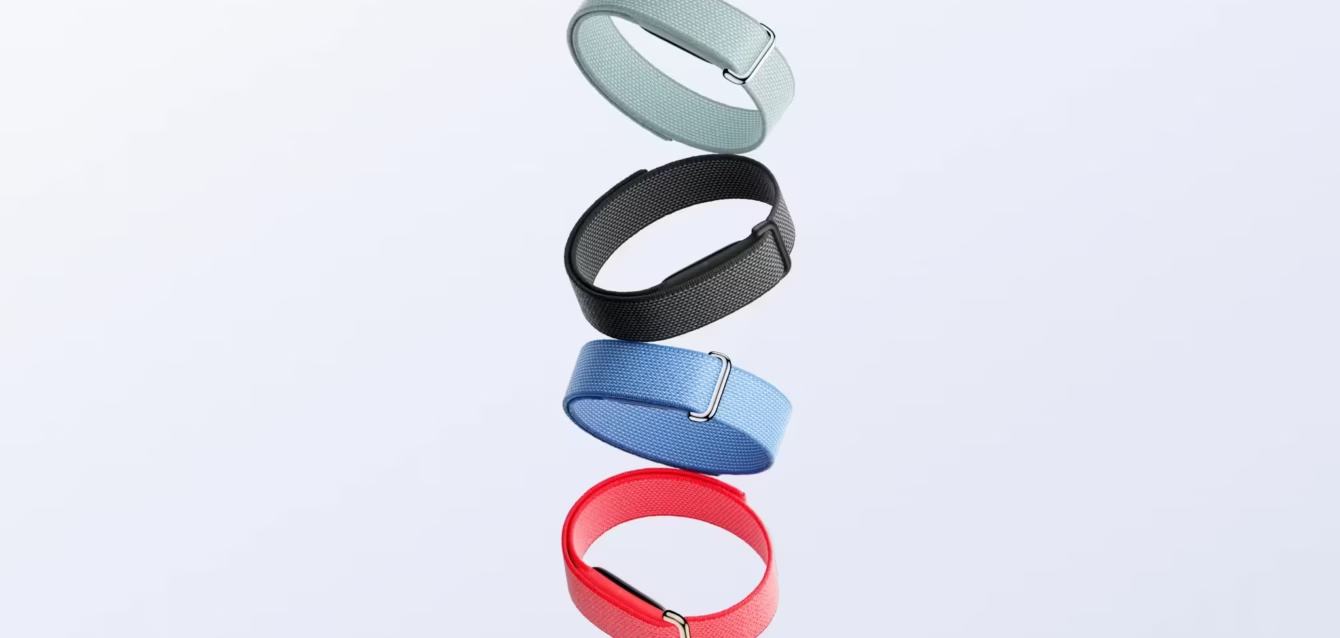
| Fitbit Air accessory bands | from $34.99 | May 7, 2026 | Performance Loop, Active, Elevated Modern |
Source: Google LLC, “Introducing the all-new Fitbit Air,” May 7, 2026.
The Air ships with a three-month Google Health Premium trial that auto-renews at $9.99 a month, which is the actual business model: the tracker is a sensor endpoint priced to seed a subscription. Google also confirmed in 2026 that the Air is HSA and FSA eligible in the US, which moves a $99.99 wearable into pre-tax spending and is a distribution lever no competitor at that price point has pulled.
What is absent from the roadmap is a flagship. Google discontinued the Versa and Sense smartwatch lines in 2024 in favour of Pixel Watch, and existing stock has been clearing at discount ever since. The Fitbit name now attaches to entry and mid-tier trackers while the premium wrist slot belongs to Pixel Watch. For buyers weighing the alternatives, our Apple Watch statistics page covers the segment leader’s disclosure record, and our tested fitness tracker guide covers the three-year cost of ownership including subscriptions.
The Axis Wearable Platform Absorption Index (WPAX)
WPAX measures how completely an acquired wearable platform has been absorbed into its acquirer’s stack. It runs 0 to 100, where 0 is an acquired platform operating with its own brand, account system, feature set and developer interface, and 100 is one fully dissolved into the parent. Every input is a count of named, publicly documented items, so any competent outsider can recompute the reading from the sources listed.
Fitbit WPAX reading: 77.5 as of September 22, 2026.
| Component | Weight | Basis | Score |
|---|---|---|---|
| Brand surface absorption | 30% | 5 of 6 named platform surfaces now carry the acquirer brand | 83.3 |
| Community layer retirement | 25% | 8 of 10 named social and gamification capabilities withdrawn | 80.0 |
| Health feature retirement | 25% | 10 of 20 named health and wellness capabilities withdrawn | 50.0 |
| Account and developer autonomy | 20% | 2 of 2 (independent account abolished, legacy public API decommissioned) | 100.0 |
| Composite | 100% | (83.3 x 0.30) + (80.0 x 0.25) + (50.0 x 0.25) + (100.0 x 0.20) | 77.5 |
The six surfaces in the first component are the mobile app name, the subscription name, the help centre, the consumer account system, the public developer API, and the hardware brand. Five now read Google. The sixth, hardware, still reads Fitbit, and that single holdout is the only thing keeping the reading below 80.
The health component is the most interesting number on the page precisely because it is the lowest. Half the named health and wellness capabilities survived the transition. Absorption here is not a story about a platform being gutted; it is a story about which layers get kept. The sensor stack and the metrics that feed a coaching model were retained. The social graph, the gamification, the granular self-tracking controls and the open developer interface were not. That is a rational shape for a company building a subscription AI health product, and a hostile shape for anyone who bought into Fitbit as an open, community-driven tracker.
What WPAX deliberately does not capture: user sentiment, device sales, and whether absorption is good or bad for the person wearing the device. It measures structural absorption only. Readings for other acquired wearable platforms will follow on this page, which is where the index becomes useful, because a single reading is a fact and a series is a benchmark.
What Does Fitbit’s Safety and Regulatory Record Show?
Two federal records anchor Fitbit’s product safety history, and both remain the most-cited hard numbers in the brand’s file.
The CPSC recall of March 2, 2022 (recall number 22-089) covered about 1,000,000 Ionic smartwatches in the US and about 693,000 internationally. Fitbit had received at least 115 US reports of battery overheating plus 59 international reports, with 78 US burn injuries including two third-degree and four second-degree burns, and 40 international burn injuries. Consumers received a $299 refund.
| Ionic recall metric | Value | Source |
|---|---|---|
| Units recalled, US | 1,000,000 | CPSC recall 22-089 |
| Units recalled, international | 693,000 | CPSC recall 22-089 |
| Units recalled, total | 1,693,000 | Axis Intelligence Research (sum) |
| Overheating reports | 174 | CPSC recall 22-089 (115 US + 59 international) |
| Burn injury reports | 118 | Axis Intelligence Research (78 US + 40 international) |
| Burn reports per 100,000 units | 7.0 | Axis Intelligence Research |
| Refund per unit | $299 | CPSC recall 22-089 |
According to Axis Intelligence Research, the recall works out to 7.0 burn-injury reports per 100,000 recalled units. That rate is the number to quote, not the raw 118, because the raw count says nothing without a denominator and the denominator is published.
The regulatory sequel arrived on January 23, 2025, when Fitbit LLC agreed to a $12.25 million civil penalty for failing to report the defect immediately. The Commission’s account is specific: reports arrived during 2018 and 2019 and continued into 2020, a firmware mitigation shipped in early 2020 and did not stop the burns, and the recall came in March 2022. The settlement was provisionally accepted 5 to 0 and, per the Federal Register notice, payable within 30 days of the final order. It also requires Fitbit to file annual compliance reports.
On the clearance side, the record is short and real. The Fitbit ECG App holds 510(k) clearance K200948 (decision September 11, 2020), and PPG-based irregular rhythm notifications hold clearance K212372, whose clearance letter is dated April 8, 2022. Both are over-the-counter, informational features that FDA expressly does not treat as diagnostic. The Fitbit Air carries AFib alerts under that lineage, with the same not-for-under-22 exclusion Google repeats in its own launch footnotes.
Alex Rivera: The gap between the first burn report in 2018 and the recall in March 2022 is the number a regulator reads. Four years, one firmware patch that did not work, and a penalty that prices out at roughly $104,000 per reported burn injury. For a category selling continuous skin contact at 24/7 duty cycles, that timeline is the governance precedent, and it is why the CPSC now holds an annual compliance report from a wrist wearable maker.
How Does This Fit the Broader Wearables Picture?
Fitbit’s absorption is one instance of a pattern that is reshaping the whole connected-health category: the device is becoming a sensor endpoint and the value is migrating to the subscription and the aggregation layer above it. Google Fit and Fitbit are collapsing into Google Health. Medical record ingestion is now a headline app feature in the US. The coach, not the tracker, is what gets sold.
That shift is visible across adjacent segments we track, from the shipment and funding data in our digital health statistics page to the payer and access dynamics in telehealth statistics, and it repeats in the newest wearable form factor, where a single vendor already holds most of the volume, as our smart glasses statistics page documents.
Methodology
Collection. Axis Intelligence Research compiled this dataset on September 22, 2026 from five categories of primary source, each fetched and read during production: SEC filings (Fitbit Inc Form 10-K FY2019; Alphabet Inc Form 10-K FY2025), US federal agency records (CPSC recall 22-089, CPSC civil penalty announcement, Federal Register notice, FDA 510(k) records), European Commission merger decision material for case M.9660, Google’s own product and support documentation (blog.google announcements, Google Health Help Center transition notices, account migration notice), and Google’s developer documentation (dev.fitbit.com deprecation banner, Google Health API migration guide, Android Fit migration guide).
No estimate providers. Commercial estimate vendors publish Fitbit user, unit and revenue series for years in which no disclosure exists. None are used here. Where a widely circulated figure has no primary source, the corresponding CSV row is marked retracted with the reason recorded, rather than deleted.
Formulas.
- Burn reports per 100,000 units = 118 burn-injury reports / 1,693,000 recalled units x 100,000 = 7.0
- Commitment period elapsed = 2,105 days (2020-12-17 to 2026-09-22) / 3,652 days (ten years) = 57.6%
- Days since last audited active-user figure = 2019-12-31 to 2026-09-22 = 2,457 days
- WPAX composite = (83.3 x 0.30) + (80.0 x 0.25) + (50.0 x 0.25) + (100.0 x 0.20) = 77.5
WPAX inventories. Brand surfaces (6): mobile app name, subscription name, help centre, consumer account system, public developer API, hardware brand. Social and gamification capabilities (10): Groups, Community Feed, direct messages, badges, unique username, custom profile photo, profile fields and their privacy settings, child-account friends, friend management, weekly leaderboard. Health and wellness capabilities (20): the ten withdrawals listed in the removal table above, plus sleep score, SpO2, heart rate, weight, breathing rate, VO2 max, Cycle health, Vitals, Resilience, and nutrition calorie and macronutrient targets. Autonomy (2): independent account system, legacy public API.
Scope. WPAX measures structural absorption of a platform into an acquirer. It does not measure device quality, sales, accuracy, or user satisfaction, and a high reading is not by itself a judgement about outcomes for users. Health feature counts reflect capabilities named in Google’s published transition notice; features Google has never documented are outside the inventory. All arithmetic was verified in Python before publication.
Source discrepancy, published rather than reconciled. Technology press reporting on the May 2026 transition states that the Google Health Premium annual price rose from $79.99 to $99.99 while the monthly price held at $9.99. Axis Intelligence Research confirmed the $9.99 monthly figure from Google’s own launch footnotes but could not confirm either annual figure on a Google-owned page during production. Both annual prices ship in the CSV marked retracted with that reason stated. The monthly figure is published; the annual change is not.
About This Dataset
Contents. 69 rows covering Fitbit user and device disclosures 2015 to 2019, the 2021 acquisition terms, the 2026 Google Health transition timeline and feature ledger, current Fitbit hardware pricing, the CPSC recall and penalty record, FDA clearance identifiers, Alphabet revenue context, and the four WPAX components with the composite reading. Every row carries source organisation, source document, URL, retrieval date, a primary-source flag, and an Axis-calculated flag.
Temporal coverage. 2015-12-31 to 2026-09-22.
License. CC BY 4.0. Free to reuse with attribution, including commercially.
Citation. Axis Intelligence Research, Fitbit Statistics 2026 (Wearable Platform Absorption Index, September 2026 snapshot), axis-intelligence.com.
Mirrors. The CSV is distributed via Hugging Face, Kaggle and GitHub alongside the copy hosted here.
Cite this page
APA Axis Intelligence Research, & Rivera, A. (2026). Fitbit statistics 2026: Users, devices, retired features and the Google Health transition. Axis Intelligence. https://axis-intelligence.com/fitbit-statistics/
MLA Axis Intelligence Research, and Alex Rivera. “Fitbit Statistics 2026: Users, Devices, Retired Features and the Google Health Transition.” Axis Intelligence, 22 Sept. 2026, axis-intelligence.com/fitbit-statistics/.
Chicago Axis Intelligence Research, and Alex Rivera. “Fitbit Statistics 2026: Users, Devices, Retired Features and the Google Health Transition.” Axis Intelligence, September 22, 2026. https://axis-intelligence.com/fitbit-statistics/.
FAQ
My third-party app stopped syncing Fitbit data. Is that the September 2026 API shutdown?
Probably. The legacy Fitbit Web API is being decommissioned in September 2026 and existing OAuth tokens do not carry over to the Google Health API, so any app that has not migrated and re-prompted you for consent loses its connection. The fix is on the app developer’s side, not yours: they need to ship a Google OAuth flow and you need to re-authorise it. Google’s migration guide notes that historical data can be backfilled once you re-authenticate, so a sync gap is usually recoverable rather than permanent, provided your device has kept syncing to the Google Health app in the meantime.
I never migrated my Fitbit account. Is my data already gone?
Access ended May 19, 2026 and Google began processing deletions from July 15, 2026. Google’s notice states that deletion takes time and that some users may still be able to migrate during that window, so the outcome depends on where your account sits in the queue rather than on a single switch. Log in with your old Fitbit credentials and check whether a move prompt appears. If it does not, the export options are the only route left, and they run through Google Account settings rather than the old Fitbit dashboard.
Are the Fitbit user numbers I keep seeing quoted anywhere reliable?
No. The last audited figure is 29,566,000 active users as of December 31, 2019, from Fitbit’s final Form 10-K. Everything published for 2020 onwards is a commercial vendor’s model. If a source gives you a Fitbit monthly active user count for 2024 or 2025 without naming an Alphabet disclosure, it is estimating, and Alphabet has never confirmed those estimates.
Does Fitbit still count as a medical device after the Google Health rebrand?
The cleared features are unchanged by the rebrand. The ECG app holds 510(k) clearance K200948 and PPG-based irregular rhythm notifications hold K212372. Both are over-the-counter, informational, and explicitly not intended to replace clinical diagnosis, and both exclude users under 22. What the rebrand changed is the coaching layer sitting above those features: Google Health Coach is an AI product carrying its own disclaimers and is not a cleared medical function.
I run an employer wellness or research programme on Fitbit devices. What breaks?
The data pipeline and the consent chain. Every participant connection built on the Fitbit Web API needs to be re-established through Google OAuth before the September 2026 shutdown, user identifiers change format, and participants who never re-consent leave a gap in the record. Programmes that relied on the social layer for engagement also lose it: Groups, Community Feed, challenges-style competition and badges are all withdrawn, leaving a weekly steps and cardio-load leaderboard.
Should I buy a Fitbit in 2026, or has the platform been discontinued?
The hardware line is active and the software platform is not being shut down, it is being renamed and rescoped. Google launched the Fitbit Air at $99.99 in May 2026 and the tracker range remains on sale. What has ended is Fitbit as an independent platform: there is no Fitbit account, no Fitbit app, no Fitbit Premium and, from September 2026, no Fitbit Web API. Buy on whether the current sensor set and the Google Health subscription suit you, not on continuity with the Fitbit you owned in 2019.
Why did Google delete historical badges instead of just stopping new ones?
Google’s transition notice states that badges are no longer supported, that new badges will not be generated, and that historical badges are deleted. It gives no reason. The practical implication is that any milestone record you wanted to keep needed exporting before the July 15, 2026 deletion window, and that gamified history did not survive the migration to a Google Account even though step and sleep history did.
Does the September 2026 API shutdown breach Google’s EU merger commitments?
Unresolved, and no regulator has said so. Google committed in December 2020 to maintain access to health and fitness data for applications through the Fitbit Web API without access charges, for ten years. That named interface is being decommissioned at the 57.6% point of the commitment period. Google’s position is that the Google Health API carries the same data without an access fee, which is a defensible reading of the commitment’s substance. The Commission has published no finding, and the monitoring trustee’s reports are not public.
What is the WPAX score and why should I care about it?
WPAX is the Wearable Platform Absorption Index, an Axis Intelligence Research metric scoring how completely an acquired wearable platform has been folded into its acquirer, from 0 to 100. Fitbit reads 77.5 as of September 22, 2026. It matters if you are deciding whether to build on, buy into, or invest around an acquired platform, because it puts a countable number on something usually discussed as vibes: how much of the thing you originally chose still exists.
Which Fitbit features from the old app survived the Google Health transition?
Ten of the twenty named health and wellness capabilities carried over: sleep score, SpO2, heart rate, weight, breathing rate, VO2 max (renamed from cardio fitness score), Cycle health (renamed from menstrual health), Vitals (renamed from health metrics), Resilience (replacing the numeric stress score with a three-band label), and nutrition calorie and macronutrient targets. Friend management and the weekly leaderboard survived on the social side. Everything else in the removal table above is gone.