

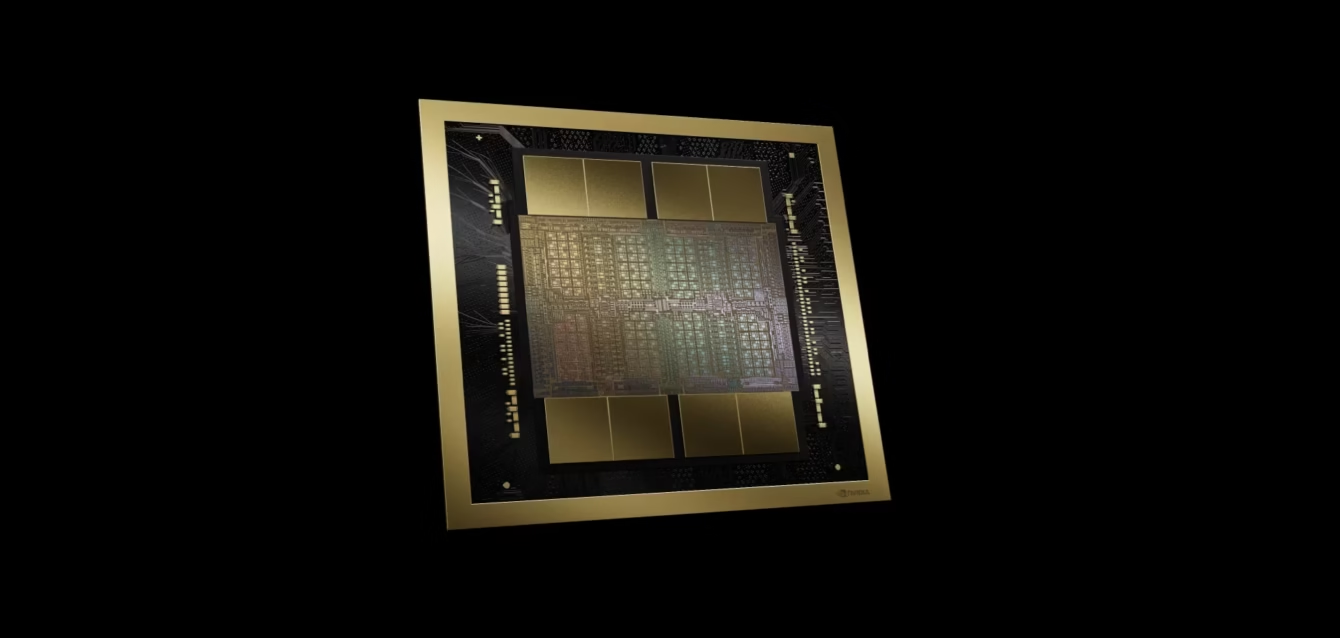
Nvidia Blackwell Statistics 2026
By Axis Intelligence Research
Co-author: Sarah Mitchell | Last updated: July 2, 2026 | License: CC BY 4.
Quick Answer:
NVIDIA’s Blackwell architecture — led by the B200 GPU and GB200 NVL72 rack system — generated $62.3 billion in data center revenue in Q4 FY2026 alone, a 75% year-over-year increase. The B200 backlog reached an estimated 3.6 million units by mid-2026. Cloud rental rates range from $2.25 to $16.11 per GPU-hour depending on provider and tier.
Key Findings
- NVIDIA’s Blackwell architecture drove data center revenue to $75.2 billion in Q1 FY2027 (ended April 26, 2026) — a 92% year-over-year increase — making it the single largest quarterly result in semiconductor history, according to NVIDIA’s SEC filing (May 20, 2026).
- The combined Big-4 hyperscaler AI capex for 2026 reaches approximately $700 billion (Amazon ~$200B, Microsoft ~$190B, Alphabet ~$180B, Meta ~$130B), with roughly $168 billion attributable to Nvidia-directed GPU hardware — per Futurum Research (February 2026) and company guidance confirmed in quarterly filings.
- A single B200 GPU delivers approximately 2.2× the training throughput of an H100 in MLPerf Training v5.1 benchmarks, and the GB200 NVL72 rack system shows up to 3.4× higher per-GPU performance on Llama 3.1 405B inference versus a comparable H200 system, per NVIDIA’s official MLPerf v5.0 technical blog (January 2026).
- The B200 backlog hit an estimated 3.6 million units by mid-2026, with hyperscalers (Microsoft, Meta, Google, Amazon) holding priority allocations and smaller organizations facing 6–12 month wait times, per Inworld.ai (April 2026) and market analyst reporting.
- NVIDIA holds approximately 80% of the AI accelerator market by revenue, with $193.7 billion in FY2026 data center sales — while AMD holds an estimated 5–7% share (~$7–8B in Instinct GPU revenue), per Silicon Analysts (April 2026).
Blackwell Capex Velocity Index (BCVI) — Original Axis Intelligence Research Metric
What it measures: The number of GB200 NVL72 rack-equivalents that the combined Big-4 hyperscaler AI GPU spend implies Nvidia absorbing, per business day in 2026.
Formula:
BCVI = (Total Big-4 capex × AI-directed share × GPU hardware share × Nvidia market share)
       ÷ (NVL72 rack price × business days in 2026)

BCVI = ($700B × 0.75 × 0.40 × 0.80) ÷ ($3,200,000 × 251)
     = $168.0B ÷ $803.2M
     = 209.2 rack-equivalents per business day
Input sources and methodology:
| Input | Value | Source |
|---|---|---|
| Big-4 hyperscaler capex 2026 | $700B (Amazon $200B + Microsoft $190B + Alphabet $180B + Meta $130B) | CNBC (May 21, 2026); Futurum Research (Feb 2026); company Q1 2026 filings |
| AI-directed share of capex | 75% | IEEE ComSoc Technology Blog (Dec 2025) |
| GPU hardware share of AI capex | 40% | Industry standard allocation; DGX/HGX server BOM analysis |
| NVIDIA market share (revenue) | 80% | Silicon Analysts (Apr 2026); AMD FY2026 data center filings |
| NVL72 rack price | $3.2M (midpoint of $3.0M–$3.4M range) | Silicon Analysts (Mar 2026); SemiAnalysis 2025 |
| Business days 2026 | 251 | US standard calendar |
Result: The Big-4 hyperscaler AI GPU spend for 2026 implies NVIDIA absorbing the equivalent of 209 GB200 NVL72 racks worth of demand every business day. The implied B200-class GPU count (3.78 million units at the NVL72 rack calculation, or up to 4.8 million at $35K/GPU) is broadly consistent with the ~3.6 million unit backlog figure reported by Inworld.ai (April 2026) — suggesting the BCVI captures the genuine demand trajectory rather than over-counting it.
Caveats: The BCVI uses GPU hardware share and AI capex share estimates. Not all Nvidia revenue maps directly to Blackwell or to NVL72-class systems; DGX B200 appliances, networking, and InfiniBand contribute to revenue. This index measures demand velocity, not physical delivery rates.
License: CC BY 4.0. You may reproduce and adapt this metric with attribution to Axis Intelligence Research.
Cite this research:
<blockquote>
  Axis Intelligence Research's Blackwell Capex Velocity Index (BCVI) for 2026 finds
  that combined Big-4 hyperscaler AI GPU spending implies NVIDIA absorbing the
  equivalent of 209 GB200 NVL72 rack-equivalents per business day.
  <a href="https://axis-intelligence.com/nvidia-blackwell-statistics/"
     target="_blank" rel="nofollow">Source: Axis Intelligence Research, July 2026</a>
</blockquote>
Nvidia Blackwell Revenue Statistics 2026
The revenue story here is not complicated — it just keeps getting bigger. NVIDIA‘s fiscal 2026 full-year revenue hit $215.9 billion, up 65% year-over-year, according to the company’s Q4 FY2026 8-K filing with the SEC. Data center alone contributed $62.3 billion in Q4 FY2026, up 75% from the prior year and 22% sequentially — driven, NVIDIA says, almost entirely by Blackwell.
Then Q1 FY2027 beat even that. NVIDIA’s Q1 FY2027 8-K reported $81.6 billion in total revenue (up 85% year-over-year) and $75.2 billion in data center revenue (up 92%), driven by what Jensen Huang called “the largest infrastructure expansion in human history.” Data center networking alone grew 199% year-over-year to $14.8 billion in Q1 FY2027 — an underreported number that reflects the InfiniBand and Spectrum-X ethernet bundled into Blackwell rack-scale deployments.
Nvidia Blackwell Revenue by Quarter (FY2026–FY2027 Q1)
| Quarter | Total Revenue | Data Center Revenue | YoY Growth (DC) |
|---|---|---|---|
| Q2 FY2026 (Jul 2025) | $46.7B | $41.1B | +56% |
| Q3 FY2026 (Oct 2025) | ~$56.8B* | ~$51.1B* | ~+65%* |
| Q4 FY2026 (Jan 2026) | $68.1B | $62.3B | +75% |
| Q1 FY2027 (Apr 2026) | $81.6B | $75.2B | +92% |
*Q3 FY2026 estimated from sequential trajectory; NVIDIA has not separately disclosed exact Q3 Blackwell split. Primary source for Q4 and Q1: NVIDIA SEC filings.
I’ve been watching NVIDIA earnings calls for a few years. The language has shifted. Huang doesn’t say “strong demand” anymore — he says “agentic AI has arrived” and “demand has gone parabolic.” That phrasing is doing a lot of work. Blackwell architecture was already the majority of data center revenue in Q4 FY2026, which means the H100 era, for NVIDIA’s top-line numbers, is already history.
Nvidia Blackwell Market Share Statistics
According to Silicon Analysts’ April 2026 analysis, NVIDIA holds approximately 80% of the AI accelerator market by revenue, with $193.7 billion in FY2026 data center sales. That 80% figure represents a slight retreat from the 87% peak estimated in 2024 — custom silicon from Google (TPU v5/Ironwood), Amazon (Trainium 2), and Microsoft (Maia) is carving out an internal-use segment. But the absolute revenue keeps growing because the total addressable market is expanding faster than share can erode.
AMD’s MI-series holds approximately 5–7% market share by revenue (~$7–8B in Instinct GPU sales). Intel’s Gaudi 3 holds a smaller slice in cost-sensitive inference deployments. Custom silicon — Google TPUs, AWS Trainium, Meta MTIA — is estimated to reach 27.8% of total AI processing workloads in 2026, up from 20.9% in 2025. That last number is significant: it means the merchant GPU market (where NVIDIA competes) is shrinking as a percentage of total AI compute, even as NVIDIA’s revenue within that market grows.
Nvidia B200 GPU Specifications and Technical Statistics
The B200 is not a single product — it is a family with meaningfully different power and performance profiles depending on the deployment form factor.
B200 Core Specifications
| Specification | B200 (HGX/DGX, air-cooled) | B200 (full-spec, liquid-cooled) |
|---|---|---|
| Architecture | Blackwell (dual-die GB100) | Blackwell (dual-die GB100) |
| Transistors | 208 billion | 208 billion |
| Memory | 192 GB HBM3e | 192 GB HBM3e |
| Memory bandwidth | 8 TB/s | 8 TB/s |
| FP4 Tensor performance | 9,000 TFLOPS (dense) | 9,000 TFLOPS (dense) |
| FP8 Tensor performance | 4,500 TFLOPS (dense) | 4,500 TFLOPS (dense) |
| NVLink bandwidth | 1.8 TB/s per GPU | 1.8 TB/s per GPU |
| TDP | ~1,000W | ~1,200W |
| Cooling | Air (HGX/DGX) | Liquid (GB200 NVL72) |
Source: NVIDIA official DGX B200 datasheet; NVIDIA product pages; Cudo Compute technical breakdown (April 2026). The 1,000W HGX/DGX variant runs at approximately 90% of the full-spec 1,200W liquid-cooled chip’s performance — an important distinction for infrastructure planners.
B200 vs. H100: Performance Statistics
The headline numbers from NVIDIA — “4× faster inference, 25× lower cost and energy” — need unpacking. The 4× inference figure applies to FP4 precision workloads versus H100’s FP8 baseline, and the 25× energy claim compares configurations that aren’t one-to-one. Independent analysis from Adrian Cockcroft (Medium, September 2024) put the realistic training speedup at 5.3–8.3× over H100 for the NVL72 system; the 30× inference figure appears to compare H100 running inefficiently against a fully optimized NVL72.
The MLPerf numbers, from NVIDIA’s own developer blog on v5.0 (January 2026), are more precise and more credible:
| Benchmark (MLPerf) | B200 System | H100/H200 Comparison | Source |
|---|---|---|---|
| Llama 3.1 405B inference (per-GPU) | GB200 NVL72 | +3.4× vs H200 NVL8 | NVIDIA Developer Blog, Jan 2026 |
| Llama 2 70B training throughput | HGX B200 8-GPU | +2.2× vs H100 | MLPerf Training v5.1 (Nov 2025) |
| Llama 2 70B fine-tuning | HGX B300 8-GPU | 5× faster than H100 | NVIDIA Technical Blog, Sep 2025 |
| Real-world CV training (YOLOv8+DINOv2) | B200 self-hosted | +57% vs H100 | Lightly.ai independent test (2025) |
Source: MLPerf submissions at mlcommons.org; NVIDIA Technical Blog.
The real-world Lightly.ai benchmark is worth noting: a European AI startup that got early B200 access found 57% faster computer vision training but only ~10% faster LLM inference in early tests, citing software immaturity. Software optimization has since improved — NVIDIA’s own TensorRT-LLM stack dropped the B200’s cost per million tokens on GPT-OSS-120B from $0.11 at launch to $0.02 by April 2026, a 5.5× software improvement on the same hardware, according to NVIDIA’s inference developer page.
That last number is the one I keep coming back to. The gap between what Blackwell can do on day one and what it can do with six months of software tuning is enormous. Organizations that benchmarked B200 early and came away underwhelmed on inference probably measured the wrong thing at the wrong time.
How Much Does a Nvidia B200 GPU Cost?
B200 and NVL72 Pricing Statistics
The B200 has no public retail price. What exist are system-implied figures and secondary-market data points, which tell a consistent story.
Per the Epoch AI bill-of-materials analysis (December 2025), manufacturing cost runs $5,700–$7,300 per unit, with HBM3e memory and CoWoS-L advanced packaging together accounting for roughly two-thirds of production cost. The sell price is $30,000–$40,000 per chip (per-GPU effective), implying an approximately 82% chip-level gross margin — though NVIDIA’s realized margins on system sales are lower.
| Product | Price Range | Source |
|---|---|---|
| B200 GPU (per-chip implied, rack math) | $30,000–$40,000 | Silicon Analysts, Mar 2026 |
| B200 SXM module (secondary market) | $45,000–$55,000 | Silicon Analysts (Mar 2026) |
| HGX B200 8-GPU server | ~$400,000–$500,000 | ModulEdge (Jun 2026) |
| DGX B200 8-GPU appliance | ~$515,000 | Silicon Analysts (Mar 2026) |
| GB200 NVL72 rack (72 GPUs) | ~$3.0M–$3.4M | Silicon Analysts (Mar 2026); SemiAnalysis 2025 |
| DGX B300 8-GPU system | $300,000–$350,000 | Tech Insider (Q1 2026) |
The $3.0–3.4 million NVL72 rack figure includes the rack system, networking, and storage integration — not bare GPUs alone.
B200 Cloud Rental Pricing
Cloud rental is the practical path for most organizations. The spread between providers is wider than for any previous GPU generation, and it has been widening since mid-2025.
| Provider | On-Demand $/GPU-hr | Spot $/GPU-hr | Notes |
|---|---|---|---|
| Vultr | ~$2.99 | — | Lowest documented hyperscaler-equivalent, as of May 2026 |
| Spheron | $6.03 | $2.25 | |
| CoreWeave | — | ~$10.50 (GB200 NVL72) | NVL72-level capacity |
| AWS | ~$10.30 | — | |
| Azure (ND GB200 v6) | ~$27.04 | — | Managed SLA included |
Source: Tech Insider (May 2026); GetDeploying.com (July 2026); Spheron.network (Mar 2026). On-demand pricing has risen approximately 20% since June 2025 ($5.57 → $6.67/hr average), per GetDeploying.
The ~9× gap between Vultr and Azure on the same B200 GPU is not a pricing error — it reflects exactly what you are paying for. Azure bundles enterprise SLAs, managed networking, and integration with the rest of its stack. Vultr is bare GPU-hours. A startup running fault-tolerant batch training at Vultr spot rates and an enterprise running production inference on Azure’s reserved capacity are buying different things that happen to involve the same chip.
Nvidia Blackwell Deployment Statistics by Hyperscaler
How Many B200/GB200 GPUs Has Each Hyperscaler Deployed?
Hyperscalers do not publish GPU counts directly. What we have are confirmed deployment announcements, CapEx filings, and analyst estimates.
| Hyperscaler | Confirmed Deployment Signal | 2026 Capex Guidance | Key Blackwell Use Case |
|---|---|---|---|
| Microsoft | First large-scale GB300 NVL72 cluster for OpenAI, Oct 2025; Azure ND GB200 V6 available | ~$190B | OpenAI model hosting, Azure AI services |
| Meta | GB200 clusters for Llama frontier pre-training; MTIA handles 50%+ of Facebook/Instagram workloads | $125–$145B (raised twice) | Frontier model training (Llama 5+) |
| A4X VMs (GB200) generally available since May 2025; 7th-gen TPU Ironwood also deployed | ~$180B | Gemini training; Google Cloud AI | |
| Amazon | EC2 P6e-GB300 UltraServers GA from December 2, 2025 | ~$200B | AWS AI services; internal workloads |
| Oracle | Large GB200 NVL72 deployments confirmed; Abu Dhabi OCI Supercluster with 4,000+ Blackwell GPUs | ~$50B | Sovereign AI partnerships; OCI |
| CoreWeave | First cloud provider to deploy GB200 NVL72 (February 2025); first GB300 NVL72 (July 2025) | Private | Neocloud GPU rental |
Sources: NVIDIA Q1 FY2027 CFO commentary (SEC filing, May 2026); Introl.io NVL72 deployment guide (April 2026); CNAS Sovereign AI Index (January 2026).
According to NVIDIA’s Q1 FY2027 CFO commentary, hyperscale customers represented approximately 50% of data center revenue in Q1 FY2027, with the remaining 50% from AI clouds, industrial, enterprise, and sovereign customers. That 50/50 split is a structural shift — as recently as FY2025, hyperscalers dominated data center revenue even more heavily.
Meta’s situation deserves its own sentence: by January 2026, its in-house MTIA chip handled more than 50% of the internal workloads for Facebook and Instagram, which let Meta point its entire Blackwell cluster at frontier pre-training. That is a deliberate two-tier strategy, not a retreat from NVIDIA.
Nvidia Blackwell Deployment Statistics by Country and Region
Sovereign AI: Blackwell as Geopolitical Infrastructure
Nations now treat GPU clusters as strategic assets — and the Blackwell generation is the primary denominator.
| Country/Region | Program | Deployment Detail |
|---|---|---|
| United States | Stargate (OpenAI, SoftBank, Oracle) | $500B infrastructure commitment; GB200 NVL72 at scale |
| France | Mistral AI partnership | 18,000 NVIDIA Grace Blackwell systems, with 2026 expansion planned; per Futurum Research (June 2025) |
| United Kingdom | Stargate UK | Multi-billion-dollar domestic Blackwell cluster program |
| Germany | NVIDIA partnership | Tens of thousands of GPUs for AI factories; Deutsche Telekom Industrial AI Cloud launching early 2026 |
| UAE (Abu Dhabi) | G42 / UAE Stargate | 35,000+ GB300 chips authorized (Nov 2025); 1 GW cluster with 200 MW first phase targeting Q3 2026 |
| Saudi Arabia | HUMAIN (PIF subsidiary) | 6 GW AI data center target; $2.7B Hexagon data center contract (Jan 2026); NVIDIA partnership for AI factories |
| India | IndiaAI Mission | 10,000+ GPU target; Tier 1 under US export controls (unrestricted Blackwell access) |
| Australia | SharonAI | 6-year NVIDIA collaboration; up to 40,000 Grace Blackwell GB300 GPUs; 72 MW data center |
Sources: NVIDIA Sovereign AI page (nvidia.com/en-us/industries/global-public-sector/); CNAS Sovereign AI Index (January 2026); Radiant.co Sovereign AI analysis (June 2026); Futurum Research (June 2025).
According to NVIDIA’s Q1 FY2027 SEC filing, sovereign AI revenue grew 80%+ year-over-year. That is still a minority of total data center revenue — but its growth rate outpaces hyperscaler growth, which means it is taking share within NVIDIA’s own customer mix.
The sovereignty angle is real and has teeth. The UAE’s Intergovernmental Assurance Agreement — which exchanged US oversight provisions for relaxed export controls on up to 35,000 GB300 chips — is now the structural template other nations are negotiating against. France, Germany, and the UK got there partly through proximity to NVIDIA’s existing software partnerships rather than formal government-to-government deals, but the pattern is similar: access to Blackwell requires demonstrating alignment with US security frameworks.
Nvidia Blackwell Supply Chain Statistics
B200 Backlog and Production Constraints
The B200 backlog reached an estimated 3.6 million units by mid-2026, per Inworld.ai (April 2026), with new orders facing 6–12 month wait times. Initial analyst forecasts for GB200 NVL72 cabinet shipments in 2025 were set at 50,000–80,000 units, then revised down to approximately 25,000–35,000 cabinets as supply chain constraints emerged, per TrendForce and SemiAnalysis estimates reported by Introl.io.
The constraint has two main structural causes:
HBM3e memory: Each B200 GPU requires 192 GB of HBM3e — 2.4× the H100’s 80 GB requirement. SK Hynix holds approximately 60% of the HBM market and was reported as sold out through 2026. Samsung and Micron are ramping capacity, but HBM3e demand from NVIDIA, AMD, and others continues to outstrip supply.
CoWoS-L advanced packaging: The B200’s dual-die design requires TSMC’s CoWoS-L packaging technology. TSMC is the only company capable of producing it at scale. Analysts estimated TSMC was meeting roughly one-third of Blackwell demand for CoWoS capacity as of early 2026.
By February 2026, NVIDIA confirmed the Blackwell architecture had entered full-scale volume production — marking what it called the end of the “scarcity era” that defined 2024–2025. But the backlog at volume production is still 3.6 million units. Full production does not mean fulfilled demand.
B200 Shipment Trajectory
| Period | Estimated Shipments | Source |
|---|---|---|
| H2 2024 (initial ramp) | ~420,000 GB200 GPUs | NVIDIA supply chain reports; WCCFtech citing Taiwan Economic Daily |
| Full-year 2025 | ~1.5–2 million Blackwell units | TrendForce; SemiAnalysis; IntuitionLabs (Apr 2026) |
| 2025 NVL72 cabinets shipped | ~25,000–35,000 | TrendForce revised estimate; Introl.io |
| Mid-2026 backlog | ~3.6 million units | Inworld.ai (Apr 2026) |
These shipment estimates are analyst projections, not NVIDIA-confirmed figures. NVIDIA does not break out GPU unit shipments in its filings — the $75.2 billion Q1 FY2027 data center number is the primary verified data point.
Nvidia Blackwell Energy and Infrastructure Statistics
The GB200 NVL72 rack consumes approximately 120 kilowatts — 11× the power draw of a single air-cooled HGX H100 server (~11 kW). This is not an abstract infrastructure detail. It is the reason the liquid cooling market is seeing what multiple supply-chain analysts have called a “gold rush,” and why some data centers that planned to host Blackwell clusters have had to redesign facilities from scratch.
| Infrastructure Metric | Value | Source |
|---|---|---|
| GB200 NVL72 rack power draw | ~120 kW | NVIDIA spec; ModulEdge (Jun 2026) |
| NVL72 rack weight | 1.36 metric tons (3,000 lbs) | NVIDIA; AwesomeAgents.ai |
| B200 TDP (air-cooled HGX/DGX) | ~1,000W | NVIDIA spec; TweakTown (2024) |
| B200 TDP (full-spec, liquid) | ~1,200W | NVIDIA SVP Jonah Albe via TweakTown (2024) |
| GB200 Superchip (2× B200 + Grace CPU) | ~2,700W total | NVIDIA architecture documentation |
| B200 vs H100 TDP increase | +43% (1,000W vs 700W) | NVIDIA spec comparison |
| Some data centers now crossing | 500 MW threshold | ModulEdge (Jun 2026) |
Source: NVIDIA official specifications; ModulEdge data center analysis (June 2026); TweakTown architecture reporting.
Jensen Huang said NVIDIA “will be constrained throughout the entire life of Vera Rubin” on the Q1 FY2027 earnings call. That is a statement about demand, not supply — and it raises a structural question about what happens to power grids when Rubin (which delivers 10× the performance-per-watt of Blackwell, per NVIDIA) goes into volume production at the same data center footprint.
Nvidia Blackwell vs Competitors: Market Statistics
B200 vs AMD MI350X vs Intel Gaudi 3 — Technical Comparison
| Metric | NVIDIA B200 | AMD MI350X | Intel Gaudi 3 |
|---|---|---|---|
| FP8 TFLOPS (dense) | 4,500 | 4,600 (parity) | ~2,000 (est.) |
| Memory (HBM3e) | 192 GB | 288 GB (more) | 128 GB |
| Memory bandwidth | 8 TB/s | ~8.9 TB/s | ~3.7 TB/s |
| GPU price (approx.) | $30,000–$40,000 | ~$25,000–$30,000 | ~$15,000 (est.) |
| Market share by revenue | ~80% | ~5–7% | <2% |
| Software ecosystem | CUDA (15+ years) | ROCm (growing) | Intel oneAPI |
| Real-world MFU | ~50–55% | ~40–45% | — |
Sources: Silicon Analysts AMD vs NVIDIA analysis (April 2026); Calmops AI hardware guide (May 2026); Spheron B200 guide (May 2026).
AMD’s MI350X matches the B200 on FP8 TFLOPS and actually exceeds it on memory capacity (288 GB vs 192 GB). The gap that matters is not on the spec sheet — it is the ~10 percentage point advantage in model FLOPs utilization (MFU) that NVIDIA achieves through a decade-and-a-half of CUDA ecosystem development. A 55% vs 45% MFU gap on otherwise similar compute means NVIDIA extracts meaningfully more useful throughput per theoretical FLOP. AMD knows this, which is why the MI400 series (CDNA 5, TSMC 2nm, targeting 2026–2027) is designed to close that software gap, not just the hardware one.
Intel Gaudi 3 is winning cost-sensitive inference deployments in specific scenarios — its ~$15,000 price point is roughly half AMD and 40% of NVIDIA’s B200 effective per-GPU cost. For organizations running standard transformer inference without needing the bleeding edge, Gaudi is a credible choice. For frontier model training, it is not competitive.
Nvidia Blackwell Statistics by Deployment Use Case
AI Training Workloads
The GB200 NVL72 is the reference platform for frontier model training. 72 B200 GPUs interconnected via NVLink at 1.8 TB/s per GPU, delivering 1.44 exaflops of FP4 compute in a single rack, per NVIDIA’s official specifications. The NVLink fabric is what makes it functionally different from a cluster of 72 discrete GPUs — it creates a coherent compute fabric where tensor parallelism operates without the inter-node latency penalty.
According to NVIDIA’s DGX B200 product page, the DGX B200 delivers 3× the training performance and 15× the inference performance of the DGX H100. The 15× inference figure applies to specific workloads under specific configurations — real-world inference speedup is closer to 3–5× for most production LLM serving scenarios.
AI Inference Workloads
A single B200 delivers approximately 17,500 tokens per second on Llama 2 70B at FP4 precision in MLPerf Inference v5.0 server mode — versus roughly 3,000 tokens per second for an H100, per Spheron’s B200 guide (May 2026). That is a 5.8× throughput advantage, which translates directly to cost per token at scale.
The NVIDIA developer blog tracking inference costs documents the B200’s cost per million tokens on GPT-OSS-120B dropping from $0.11 at launch to $0.02 by April 2026 — entirely from software optimization. The H100 at $0.14 per million tokens was the prior baseline. At $0.02, the B200 is 7× cheaper per token than H100 for this workload. That is the economic argument that drives Blackwell adoption among inference-heavy operators, and it does not require the user to switch precision formats.
Enterprise and Edge Deployments
According to NVIDIA’s Q1 FY2027 CFO commentary, edge computing revenue reached $6.4 billion in Q1 FY2027 (up 29% year-over-year), driven by Blackwell workstation demand. This includes the DGX B200 and DGX Station deployments at mid-market enterprises that cannot afford rack-scale NVL72 systems but want the Blackwell software stack and HBM3e memory capacity.
Nvidia Rubin: What Comes After Blackwell
NVIDIA’s next architecture — Vera Rubin (R100) — was unveiled at CES 2026. The Vera Rubin system comprises 1.3 million components, including 72 Rubin GPUs and 36 Vera CPUs, and delivers 10× more performance per watt than Blackwell, per NVIDIA. Jensen Huang stated on the Q1 FY2027 call that he anticipates NVIDIA “will be constrained throughout the entire life of Vera Rubin” — the same language used for Blackwell 18 months ago.
Commercial rollout is planned for H2 2026. Redirection of TSMC capacity from H200 China production toward Vera Rubin has already begun, per Financial Times reporting (March 5, 2026). For the GPU market, this means the window for Blackwell volume deployments at full production may be shorter than originally anticipated — likely 12–18 months before Rubin begins displacing new orders.
Frequently Asked Questions
What is the Nvidia Blackwell B200?
The B200 is NVIDIA’s flagship data center GPU built on the Blackwell architecture. It pairs two Blackwell GPU dies in a single package using TSMC’s CoWoS-L advanced packaging, delivers 192 GB of HBM3e memory at 8 TB/s bandwidth, and supports FP4 precision natively through its second-generation Transformer Engine. It is the successor to the H100 and H200 Hopper-generation GPUs.
How much does a Nvidia B200 GPU cost?
The effective per-GPU price implied by system pricing runs $30,000–$40,000 for the B200 chip itself. A complete 8-GPU DGX B200 appliance lists near $515,000. A GB200 NVL72 rack (72 GPUs) runs approximately $3.0–3.4 million all-in. Secondary-market B200 SXM modules have been seen at $45,000–$55,000, reflecting scarcity premiums. Cloud rental ranges from $2.25/hour (Spheron spot) to $27.04/hour (Azure on-demand) per GPU.
How much faster is the B200 than the H100?
MLPerf Training v5.1 benchmarks show 2.2× higher training throughput per GPU on H100. MLPerf Inference v5.0 shows up to 3.4× higher per-GPU inference performance on Llama 3.1 405B versus H200 for the GB200 NVL72 system. Real-world LLM inference throughput runs approximately 5–6× higher on a single B200 versus a single H100 at equivalent model sizes. The 4× and 30× figures from NVIDIA’s marketing apply to optimized configurations with FP4 and are not general baselines.
Is the Nvidia B200 sold out?
As of mid-2026, yes. The backlog is estimated at 3.6 million units, with hyperscalers holding priority allocations and smaller organizations facing 6–12 month waits. NVIDIA entered full-scale volume production in February 2026, but the ramp in demand continues to outpace the production ramp.
What is the GB200 NVL72?
The GB200 NVL72 is NVIDIA’s rack-scale AI system: 72 B200 GPUs and 36 Grace Arm CPUs interconnected via NVLink in a single liquid-cooled rack. It consumes approximately 120 kilowatts, weighs 1.36 metric tons, and delivers 1.44 exaflops of FP4 compute. It is the primary hardware platform for frontier model training in 2025–2026. The rack costs approximately $3.0–3.4 million.
Which cloud providers offer B200 GPUs?
As of July 2026: Vultr, Spheron, CoreWeave, AWS (EC2 P6e), Google Cloud (A4X VMs), and Azure (ND GB200 v6), among others. On-demand pricing ranges from $2.99/GPU-hr (Vultr) to $27.04/GPU-hr (Azure). GB200 NVL72 rack-level access is available from CoreWeave (~$10.50/GPU-hr) and Oracle Cloud, among others.
How does NVIDIA’s market share look in 2026?
NVIDIA holds approximately 80% of the AI accelerator market by revenue, with $193.7 billion in FY2026 data center sales. AMD holds an estimated 5–7%. Custom silicon (Google TPU, AWS Trainium, Meta MTIA) has grown to an estimated 27.8% of AI processing workloads — a share not captured in NVIDIA’s revenue because hyperscalers use that silicon internally rather than purchasing from NVIDIA.
What countries are deploying Blackwell GPUs as sovereign AI?
France (18,000 Grace Blackwell systems via Mistral AI), Germany (tens of thousands of GPUs; Deutsche Telekom Industrial AI Cloud), UAE (up to 35,000 GB300s authorized; 1 GW cluster in Abu Dhabi), Saudi Arabia (HUMAIN: 6 GW data center target, $2.7B Hexagon data center in Riyadh), India (IndiaAI Mission: 10,000+ GPU target), Australia (SharonAI: up to 40,000 GB300s in a 6-year NVIDIA collaboration). The UK has launched Stargate UK with plans for a domestic Blackwell cluster.
What is NVIDIA’s Blackwell Capex Velocity Index?
The Blackwell Capex Velocity Index (BCVI) is an original metric from Axis Intelligence Research measuring how many GB200 NVL72 rack-equivalents the combined Big-4 hyperscaler AI GPU spend implies NVIDIA absorbing per business day in 2026. The 2026 figure is 209 rack-equivalents per business day, derived from $168 billion in Nvidia-directed GPU capex divided by the NVL72 rack price ($3.2M) and 251 business days. See the full methodology above.
What replaces the Nvidia Blackwell after 2026?
NVIDIA’s Vera Rubin architecture (R100) was unveiled at CES 2026 and is planned for commercial rollout in H2 2026. NVIDIA claims 10× performance-per-watt versus Blackwell. Jensen Huang has stated that NVIDIA expects to be “constrained throughout the entire life of Vera Rubin,” mirroring the language used for Blackwell during its ramp. TSMC capacity that was allocated to H200 China production has already been redirected toward Vera Rubin.
Methodology
How Axis Intelligence Research Compiled This Dataset
Primary sources used: NVIDIA SEC filings (8-K earnings releases, CFO commentary) for revenue data; NVIDIA official product pages and technical blog for specifications; MLCommons mlcommons.org for MLPerf benchmark results; Epoch AI for cost of production analysis (CC BY license); Futurum Research for EMEA sovereign AI market sizing; CNAS Sovereign AI Index for deployment-level data; Silicon Analysts for market share analysis; Tech Insider and GetDeploying.com for current cloud rental pricing; company investor relations for hyperscaler capex guidance.
Blackwell Capex Velocity Index: Calculated by Axis Intelligence Research using a four-factor model: total Big-4 hyperscaler capex ($700B, per confirmed company guidance), AI-directed share (75%, per IEEE ComSoc), GPU hardware share of AI capex (40%, per industry BOM norms), and NVIDIA market share (80%, per Silicon Analysts). Divided by NVL72 rack price midpoint ($3.2M) and 251 business days. Full Python calculation is available for download with the dataset.
GPU shipment estimates: Unit shipment figures (1.5–2 million Blackwell units in 2025; 25,000–35,000 NVL72 cabinets in 2025) are analyst estimates from TrendForce and SemiAnalysis as reported by IntuitionLabs and Introl.io. NVIDIA does not publish unit shipment data. These figures should be treated as directional rather than definitive.
Pricing data: Cloud rental prices were gathered from provider websites and comparison services (GetDeploying.com, Spheron.network, Tech Insider) as of June–July 2026 and reflect market conditions at that date. Prices change frequently.
Limitations: Revenue data is NVIDIA-confirmed. Unit shipment data is estimated. Market share figures are analyst estimates. NVIDIA does not separate Blackwell from non-Blackwell revenue within its data center segment, though it has stated Blackwell represents the “majority” of data center revenue from Q4 FY2026. Sovereign AI deployment figures reflect announced programs, not verified in-production GPU counts.
About This Dataset
This research was compiled and published by Axis Intelligence Research, with commentary from Sarah Mitchell (AI & Machine Learning, Axis Intelligence). The Blackwell Capex Velocity Index (BCVI) is an original metric developed by Axis Intelligence Research and published here for the first time.
Dataset covers: Q2 FY2026 through Q1 FY2027 (July 2025 – April 2026), with pricing data current to July 2, 2026.
License: CC BY 4.0 — You may copy, adapt, and redistribute this data in any medium for any purpose, provided you credit Axis Intelligence Research and link to axis-intelligence.com/nvidia-blackwell-statistics/.
Cite this research:
APA:
Axis Intelligence Research & Mitchell, S. (2026). Nvidia Blackwell Statistics 2026: Shipments, Revenue & Deployment Data [Data set]. Axis Intelligence. https://axis-intelligence.com/nvidia-blackwell-statistics/. CC BY 4.0.
MLA:
Axis Intelligence Research and Sarah Mitchell. “Nvidia Blackwell Statistics 2026: Shipments, Revenue & Deployment Data.” Axis Intelligence, 2 Jul. 2026, axis-intelligence.com/nvidia-blackwell-statistics/. CC BY 4.0.
Chicago:
Axis Intelligence Research and Sarah Mitchell. 2026. “Nvidia Blackwell Statistics 2026: Shipments, Revenue & Deployment Data.” Axis Intelligence Research. July 2, 2026. axis-intelligence.com/nvidia-blackwell-statistics/. CC BY 4.0.